Can dogs have ginger? Yes, but there are some important caveats. When given in the correct form and amount, ginger has many benefits and is safe for most dogs. Learn how ginger can help your dog, the forms of ginger that are—and aren’t—safe for dogs, the side effects to watch for, and which dogs shouldn’t have ginger. Integrative veterinarian Dr. Julie Buzby answers your questions.
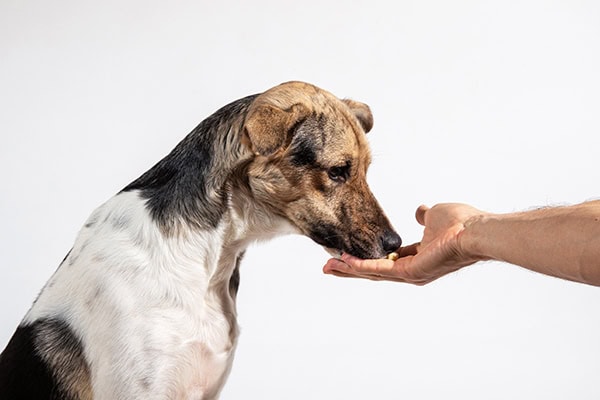
Ginger is a staple in many households, not only for its contribution to a variety of dishes, but also for its soothing effects on digestion. This might make you wonder, can dogs have ginger, too?
The short answer is yes, but only in the right form and amount. Here’s what dog parents should know before sharing this spicy root with their dog.
What is ginger?
Ginger comes from the root of a tropical plant called Zingiber officinale. People commonly use it as a spice for cooking and as a natural herbal remedy.
The active compounds in ginger such as gingerols and shogaols have antioxidant and anti-inflammatory effects. Therefore, ginger has been used for centuries in human medicine to help with nausea, digestion, inflammation, cognitive (brain) support, and circulation.
Can dogs eat ginger?
Yes, with some exceptions. Most dogs can eat ginger and enjoy its health benefits, provided you give them the right amount and type of ginger. Like in humans, ginger may be a helpful holistic anti-nausea remedy for dogs as well as a way to improve comfort in arthritic dogs, and support dogs with other conditions. (We’ll discuss why some dogs should not eat ginger later in this article.)
Is ginger good for dogs?
The primary reasons that ginger is good for dogs are its anti-inflammatory properties and its ability to soothe the digestive tract. However, it has other benefits, too.
Note: It is important to understand that there are very few studies looking at the use of ginger in dogs. Most of the benefits discussed below are extrapolated from human literature.
Ginger may reduce nausea and soothe upset stomachs
People have used ginger for centuries to help soothe upset stomachs and decrease nausea, and it may work that way for dogs, too. For example, some dog parents use ginger with their vet’s approval as a natural carsickness remedy for dogs.
And it may also help soothe mild GI upset from a variety of diseases and decrease vomiting in dogs undergoing chemotherapy. (In fact, one of the few studies on ginger in dogs, which was published in the Journal of Ethnopharmacology, showed that ginger extracts had anti-emetic effects in dogs treated with the chemotherapeutic agent cisplatin.)
However, it is important to understand that many dogs who are nauseous or vomiting may need veterinary care, not just ginger. Left untreated, some causes of vomiting such as GI obstruction, hemorrhagic gastroenteritis (HGE in dogs), and organ failure can quickly become dangerous.
If your dog has more than mild short-lived GI upset, call your vet instead of reaching for the ginger.
Ginger may help promote gastrointestinal health
Ginger might also play a role in promoting overall healthy gastrointestinal function. It may reduce inflammation associated with poor gut health and help improve blood flow in the GI tract. Plus, it is a carminative herb, meaning that it helps reduce gas, gas-related pain, and bloating.
Again, ginger might be a good option for a slightly gassy dog. But ginger isn’t a treatment for life-threatening bloat in dogs (gastric dilation and volvulus or GDV). Dogs with a GDV need an emergency vet visit.
Ginger may act as a natural antioxidant
As a natural antioxidant, ginger fights free radicals in your dog’s body. This is helpful because in high enough numbers, free radicals can damage healthy cells, contributing to the development of heart disease, cancer, cognitive impairment, and more.

Ginger may help provide natural pain relief
Ginger may act as a natural pain reliever and anti-inflammatory. It contains compounds that appear to block the same inflammatory pathway, cyclooxygenase (COX), as nonsteroidal anti-inflammatory medications (NSAIDS). (This does not necessarily mean ginger works equally as well for reducing pain and inflammation as NSAIDS, though.) Plus, it may reduce other inflammatory signals.
By limiting inflammation, ginger may help reduce pain, swelling, and joint stiffness. This can be beneficial for osteoarthritis in dogs and other joint problems or inflammatory conditions.
However, ginger is not the sole solution if your dog is experiencing joint pain. Instead, it is often part of the solution for pain management in dogs along with pain medications, supplements, integrative medicine approaches, and environmental modification.
Ginger may help support the cardiovascular system
Ginger may help lower blood pressure and promote healthy blood flow to support cardiovascular health. Additionally, it has the potential to act as a mild anticoagulant (blood thinner).
What kinds of ginger can you give your dog?
Before giving your dog ginger, it’s important to know which forms of ginger are safe for dogs.
1. Fresh ginger = safe
Fresh ginger is one of the most common forms and can be found at most grocery stores. Generally, it is safe for most dogs to eat fresh ginger in moderation. It can be raw or cooked, but sure to peel it completely before you feed ginger to your dog. And start with a very small amount.
2. Ginger powder = safe if ginger is the only ingredient
Ginger powder is made from ground, dried ginger root. It is available as a food ingredient or as a supplement. As long as it is pure ginger, ginger powder is safe for most dogs in moderation.
The thing to be aware of is that sometimes, whether marketed for food or as a supplement, “ginger powder” is made by mixing ginger with other spices. Although ginger is safe, these other ingredients may cause stomach upset or be toxic to your dog.
Therefore, it is important to always check the ginger powder bottle to ensure there are no other ingredients before giving it to your dog. And if you do see other spices listed, don’t give it to your dog.
Also, remember that ginger powder is more concentrated than fresh ginger. So, you will give your dog smaller amounts of ginger powder.
3. Ginger tablets or capsules = safe if pure ginger
You can also find ginger in the form of tablets or capsules that are usually intended for use as a supplement. Just like with ginger powder, pure ginger tablets or capsules are safe for most dogs in moderation.
However, some tablets and capsules may contain additional ingredients that are toxic to dogs. Always carefully inspect the ingredient list so you know exactly which active and inactive ingredients are present. If the supplement is not pure ginger, do not give it to your dog without your veterinarian’s approval.
If you aren’t sure about the ingredients, bring the bottle (or a picture of the label) to your veterinarian. Your vet can examine the ingredients and discuss any possible concerns with you.
4. Concentrated ginger extracts (liquid tinctures or essential oils) = diluted pure ginger versions can be used carefully
Concentrated ginger in a liquid or essential oil is becoming more common for human use because people like diffusing ginger throughout the home or adding a few drops to their water. However, these forms of ginger can be trickier to use for dogs.
Like other forms of ginger, liquid and essential oil ginger can have other spices or ingredients added to it. Be sure to use only pure ginger for your dog.
Also, concentrated liquid ginger is very strong—small amounts may be very large doses. Thus, it is important that you dilute any form of liquid ginger with water and measure it carefully before giving it to your dog.
Also, as with other essential oils, never apply ginger essential oils directly to your dog.
5. Ginger treats = safety depends on the ingredients
There are a wide variety of ginger treats and foods available, and it isn’t possible to discuss each one. However, there are some general rules you can follow to decide whether a ginger treat is safe for your dog.

Avoid ginger treats for humans
If it is a ginger candy, baked good (like ginger snaps or gingerbread), or other treat that is made for humans, it is highly likely that you should not give it to your dog. Many ginger-containing human foods, candies, and treats have other ingredients that are not safe for dogs.
One of the most dangerous is the sugar substitute xylitol (or birch sugar), which is highly toxic to dogs. However, other ingredients can be problematic, too. Thus, it is best to err on the side of caution and avoid giving your dog any human ginger treats.
Ginger dog treats may be safe
On the other hand, it is likely safe for your dog to occasionally eat ginger treats or biscuits specifically made for dogs when given in moderation.
But keep in mind that many treats and supplements are not strictly regulated. This means the amount and quality of ginger can vary from product to product, or even within a single dose of a treat or supplement. Therefore, it is important to research any new treats or supplements and always buy them from a reputable and trusted source.
6. Pickled ginger = do not give to dogs
Pickled ginger, which is made with vinegar and sometimes other ingredients, should not be given to dogs. The acidity of pickled ginger can cause irritation and inflammation to the gastrointestinal tract of a dog. Plus, the salt and sugar content can also be a problem, especially if the pickled ginger contains xylitol.
If your dog accidentally consumes pickled ginger, please call your veterinarian or a pet poison control center for advice. A small amount of pickled ginger that doesn’t contain xylitol or other toxins may not be a problem. But consuming larger quantities or products with toxic ingredients may require immediate intervention.
TIP: If your dog eats pickled ginger, bring the food container or a picture of it and its ingredients with you to the veterinarian. This will help your veterinarian know exactly what your dog ate and be better prepared to treat your dog appropriately.
7. Ginger ale = do not give to dogs
Ginger ale is another form of ginger that you should never give to dogs. Just like pickled ginger, ginger ale is almost always made with additional ingredients and sweeteners that could be dangerous to dogs.
While a drink of ginger ale may help your upset stomach, there are better and safer options for your dog, like pure ginger powder or ginger root.
8. Ginger tea = depends on what else is in it
Ginger tea may or may not be safe for dogs. Tea made with only dried, loose ginger is usually safe for dogs in small amounts. But if tea is made with black tea, other spices, or other ingredients, it should not be given to dogs.
How do you give your dog ginger?
Regardless of the form, dogs generally take ginger orally (by mouth). For example, you might grate a small amount of fresh ginger over the dog food or sprinkle ginger powder on it. While you can give your dog ginger without food, adding it to a meal makes it easier to get your dog to eat it and reduces the chances of an upset stomach.
Note: Some dogs do not like the flavor of ginger. It may take some trial and error to find a form or way to disguise it (like canned food) that your dog finds acceptable.
How much ginger should you give your dog?
While you can find a range of doses of ginger online, there isn’t a clear answer or any scientific guidelines surrounding ginger dosing for dogs. The best way to know how much ginger to give your dog is to bring the specific ginger you want to use to your veterinarian.
He or she can advise you on the amount that is safe for your dog based on how concentrated the ginger is and your dog’s size and medical conditions. Generally speaking, a small dog is going to need a lower dose than a larger dog, and the more concentrated the product, the smaller the amount will need to be.
Just like any supplement or new food, it’s important to start out slowly. Give small amounts and see how your dog reacts. If he or she does well, you can work up to the full dose. But if you notice any side effects, stop giving the ginger and consult your veterinarian.
What are the side effects of ginger for dogs?
While ginger is generally safe for most dogs in small amounts, it is important to be aware of any potential side effects. The most common side effects of ginger are skin irritation and stomach upset. Dogs with stomach upset may experience nausea, vomiting, diarrhea, gas, or abdominal pain.
These side effects of ginger are usually minor. But some dogs may also be more sensitive to ginger than others, especially if they have a history of digestive problems. Side effects are also more likely at higher doses of ginger. Should your dog experience any side effects, stop using ginger immediately and let your veterinarian know. He or she can advise you on how to proceed.

Rarely, a dog will have an allergic reaction to ginger. Symptoms may include facial swelling, drooling, panting, hives, difficulty breathing, vomiting, or loss of consciousness. If you suspect your dog is having an allergic reaction, call your veterinarian promptly (more mild reactions) or immediately head to the vet or emergency hospital (more serious reactions).
Which dogs should not have ginger?
While ginger is safe for most dogs when used appropriately, dogs with certain health conditions should not have ginger. These include:
- Allergy to ginger: Allergic reactions can be life-threatening.
- Clotting disorders: Since ginger has mild blood-thinning properties, it can worsen conditions like Von Willebrand disease and immune-mediated thrombocytopenia ( ITP in dogs). Thus, dogs with clotting issues should not have ginger.
- Gallbladder disease: Ginger may stimulate the gallbladder to produce more bile, which could potentially worsen gallbladder disease.
- Diabetes: Ginger may affect blood sugar levels. Thus, you should talk to your vet before using it in dogs with diabetes.
- Heart disease or abnormal blood pressure: Because ginger may affect blood pressure and other aspects of the cardiovascular system, it should not be used in heart disease in dogs without the veterinarian’s approval.
- Pregnancy and lactation:: Ginger can cause uterine contractions that could affect pregnancy. Plus, its safety has not been studied in pregnant or nursing dogs.
- Going to have surgery: Due to its mild anticoagulant effects, ginger may increase the risk of bleeding during or after surgery.
Are there certain medications that don’t mix well with ginger?
Because ginger can interact with some medications, you should always talk to your veterinarian before feeding ginger to your dog. Be sure to tell your veterinarian about any medications, supplements, vitamins, or herbs that your dog is taking.
The two biggest drug interactions to keep in mind are:
- Non-steroidal anti-inflammatories (NSAIDs): NSAIDs such as meloxicam, carprofen for dogs, firocoxib, and grapiprant can have blood-thinning properties. Thus, giving NSAIDS along with ginger, which also may act as a blood thinner, may be dangerous and lead to abnormal bleeding.
- Blood-thinning (anticoagulant) medications: Along the same lines, ginger can potentially interact poorly with anticoagulant medications, increasing the risk of bleeding.
However, there could be other medications, herbs, or supplements that don’t mix well with ginger, too. This is why it is so important for your vet to know everything your dog is taking.
Ginger: A root with benefits and boundaries
Ginger can be a safe and beneficial natural supplement for dogs when used correctly. In small amounts, it may help support digestion, reduce inflammation, ease nausea and car sickness, and promote cardiovascular health. These benefits make ginger a popular ingredient in some holistic dog-friendly remedies and supplements.
However, ginger is not right for every dog, and there is no universal dosage. Giving too much can lead to digestive upset, and some dogs—such as those with certain medical conditions or those taking contraindicated medications—may need to avoid it altogether. Thus, it is important to consult your veterinarian before using ginger to ensure it’s a safe and appropriate choice for your dog’s individual needs.
Do you give your dog ginger?
Please comment below

