Imagine if your dog swallowed chicken bones after raiding the trash. Would you know what to do? If not, you soon will. Integrative veterinarian Dr. Julie Buzby discusses the dangers of chicken bones and what to do next if your dog eats a chicken bone.
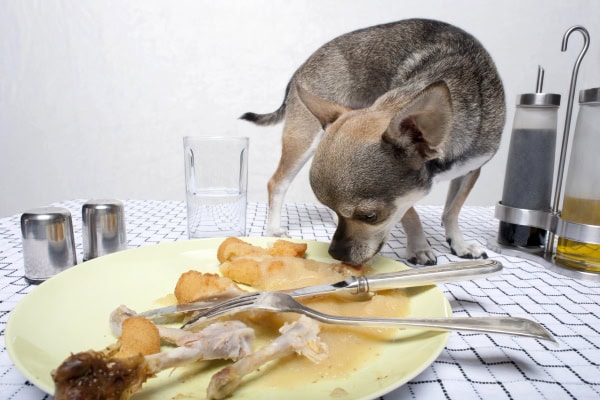
Even the best-behaved dogs slip up every once in a while. The irresistible scent may overwhelm their willpower, leading them to indulge in a potentially dangerous temptation—chicken bones.
We know that chicken meat is safe for dogs in general (as long as they aren’t allergic to it or don’t eat enough fat and skin to get pancreatitis). Plus, wild animals eat bones all the time. So, you might be wondering if it’s such a big deal if your dog eats a chicken bone on occasion.
As you will soon find out, sometimes it works out ok. But other times, there can be some pretty serious health issues when a dog swallows chicken bones.
My dog ate a chicken bone. What should I do?
Before we get to why chicken bones are dangerous, let’s talk about what you need to do if your dog eats chicken bones.
1. Stay calm
It can be easy to get worked up when you see your dog doing something he or she shouldn’t. However, if you rush toward your dog in a panic, he or she is more likely to quickly gulp down the chicken bones.
2. Try to get the bones away from your dog (if applicable)
If you catch him or her in the act, sometimes your dog will drop the bones if he or she knows the command “drop it” or if you offer a higher value food item.
Should that approach fail, calmly and carefully open your dog’s mouth to see if you can intervene before he or she swallows the bones. But remember to be careful that your dog doesn’t accidentally bite down on your hand in the process.
3. Assess your dog
Since dogs can choke on chicken bones, ensure your dog is breathing normally and not coughing or turning blue. Also check for any other symptoms such as pawing at the mouth, gagging, or vomiting.
4. Head to the vet or give your vet a call
If your dog is choking or showing other concerning symptoms, he or she needs to get to the vet ASAP.
However, even if your dog is acting fine, it is still a good idea contact your vet if you saw your dog swallow chicken bones or you just found evidence that your dog ate chicken bones. Please do not take a “wait and see” approach without talking to your vet. Chicken bones can sometimes be dangerous.
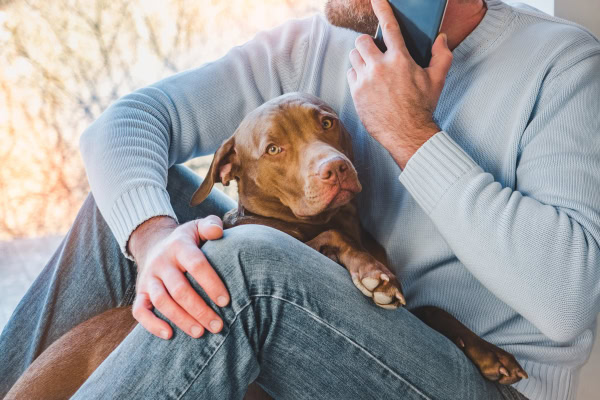
Be ready to tell the vet:
- Whether the bones are cooked or raw
- Which bones the dog ate (wing, leg/thigh, neck, the whole carcass, etc.)
- About how many bones your dog ate
- How long ago the dog swallowed the chicken bones
After getting that information, the vet can advise you about what is best for your dog’s particular situation. Sometimes the vet may recommend giving your dog some bread to coat the bones and ensure your dog stays hydrated. But other times, a vet visit may be in order. This is one of those problems where there isn’t a one-size-fits-all solution.
As we will discuss more later on, do NOT try to make your dog vomit up the bones, and do NOT feed your dog cotton balls to cushion the bone fragments.
Why is it so bad if my dog swallowed a chicken bone?
Dogs’ stomach acid is capable of breaking bones down, especially cooked chicken bones. Thus, in some situations, it is possible for dogs to digest the bones like they would any other food.
Other times, however, a dog can have serious, even life-threatening complications from eating chicken bones. Unfortunately, it can be hard to predict which outcome a dog will face.
Choking on a chicken bone
The most immediate danger after eating chicken bones is choking. This can be true choking, where the bone gets stuck in the back of the dog’s throat or windpipe, blocking the airway. Alternatively, the bone or bone fragments might lodge in the esophagus, causing an esophageal obstruction. People sometimes call that choking, too.
If your dog has a bone blocking the airway, he or she might be coughing, gagging, pawing at the face, or turning blue due to lack of oxygen. This is different from dogs with an esophageal obstruction. They are typically drooling, swallowing hard, having trouble swallowing, or gagging, but are not having issues breathing.
True choking is an emergency. Depending on the situation, the vet may advise performing the dog Heimlich maneuver, as described in Dog Choking? Learn How to Save Your Dog’s Life. Otherwise, a dog who is choking or showing signs of distress should be taken to the closest veterinary hospital or emergency clinic immediately.
Irritation or obstruction of the esophagus, stomach, and intestines
If your dog eats a chicken bone and does not have any signs of choking, the next concern is the digestive tract. Chicken bones are hollow and very fragile, so they can easily splinter. Sharp bone fragments can irritate or get lodged in the sensitive lining of the esophagus or stomach. The damage from splintered chicken bones may even cause significant bleeding.
Consumption of chicken bones can also put dogs at risk for intestinal obstruction. A small dog or puppy, especially, may have difficulty passing bones since their intestines are narrower. Left untreated or caught too late, an intestinal obstruction can lead to life-threatening intestinal perforation.
What about the bones poking through the dog’s intestines?
It’s entirely possible for bones or bone fragments to significantly damage the upper GI tract (mouth, stomach, esophagus). But the stomach contents are acidic enough to break down these bones before they move on to the small intestine. Thus, it is extremely unlikely for the sharp edges of chicken bones to perforate the intestines.
However, intestinal obstructions from chicken bones can lead to perforations if they are not promptly treated.
Food-borne illnesses
If dogs eat raw chicken bones, they also could be at risk for food-borne illness from bacteria such as Salmonella or E. coli.
Pancreatitis
Especially if the dog gets into chicken skin and fat in addition to the bones, he or she could end up with pancreatitis in dogs. This potentially life-threatening inflammation of the pancreas can cause vomiting, diarrhea, and abdominal pain.
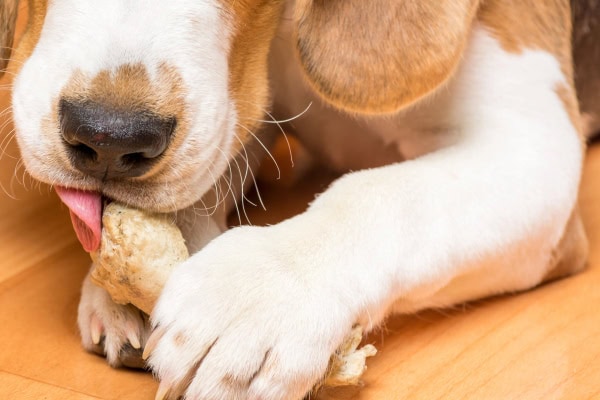
What are the signs of problems from eating chicken bones?
While some dogs may be able to digest chicken bones without an issue, others may get very sick or even die.
Some signs of a problem after a dog eats a chicken bone include:
- Respiratory distress—Turning blue, gasping, or collapsing due to airway obstruction
- Vomiting or retching—Dogs may vomit stomach acid, food, or foam, or may be unproductively attempting to vomit
- Regurgitation—Passively expelling undigested food from the esophagus, which is a signal of esophageal problems
- Being a lethargic dog—The dog just feels “off”
- Nausea—You might notice the dog licking lips or drooling
- Diarrhea—There might be dog diarrhea with blood or without blood
- Loss of appetite—The dog may not feel like eating due to nausea, pain, or fullness from a lot of chicken bones
- Dark, tarry stool (melena)—This is a sign of upper GI bleeding (from the stomach or small intestine)
- Abdominal pain—The dog may assume a “praying” or “play bow position”
Make an appointment with your vet or head to the emergency vet if you see these symptoms. Dogs who are struggling to breathe, vomiting profusely, extremely lethargic, or otherwise seem significantly ill typically need an emergency vet visit. If in doubt, it is always better to head to the vet sooner rather than later.
Work with your vet to figure out the best treatment approach
Once you know your dog has eaten a chicken bone (and assuming he or she isn’t choking), the best thing you can do is call your veterinarian or local veterinary emergency clinic. They will give you sound advice based on your unique circumstances.
Home remedies for dogs who ate chicken bones
If your dog has recently eaten the bones, the vet may suggest feeding your dog white bread or soft food. The goal is to have the bread or canned food bind around the bones and minimize the risk of damage from sharp edges or bone fragments. This is most effective when done soon after the dog eats the bones.
It is also a good idea to ensure your dog has access to fresh, clean water at all times. Staying hydrated can help the bone material move through the intestinal tract efficiently.
Do NOT feed your dog cotton balls if he or she ate chicken bones
One of the biggest myths surrounding a dog eating chicken bones is that you should feed the dog cotton balls soaked in milk or olive oil. The intention is to protect the GI tract from sharp bone fragments. However, the cotton balls will likely bring more harm than good. They are not as easily broken down in the stomach and are more likely to cause an intestinal obstruction than the bones themselves.
Do NOT induce vomiting if your dog eats chicken bones
It is also a myth that you should try to get your dog to vomit up the chicken bones.
One of the biggest dangers of eating chicken bones is damage to the esophagus and/or stomach lining from sharp bone fragments. Inducing vomiting doubles that risk by forcing those sharp fragments through the esophagus a second time. Plus, the bones could get stuck in the esophagus.
We instead want to help the bones pass safely through the GI tract.
What to expect at the veterinary appointment
Even with at-home treatment, it’s a good idea to get your pup checked out if he or she swallows a chicken bone. The veterinarian can examine your dog’s mouth to make sure there are no injuries or stuck bone fragments. He or she may also recommend an X-ray to see if there are any bones visible within the digestive tract.
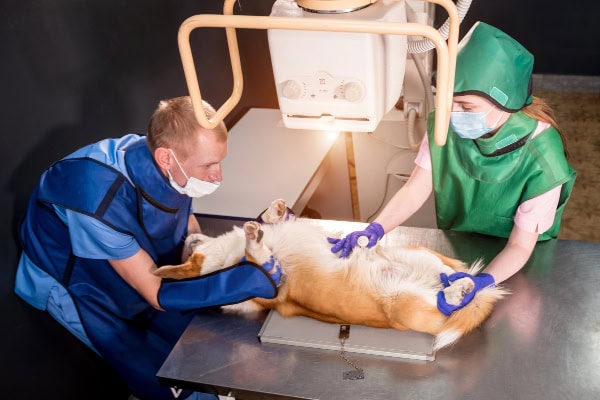
In some instances, the vet may suggest gastrointestinal endoscopy for dogs, too. During this procedure, the vet will pass a small camera through the mouth, down into the esophagus, and then to the stomach. This allows the veterinarian to see if there is any damage to the stomach or esophagus. And the vet can ensure there are no bone fragments stuck in the upper GI tract.
Based on the results of the tests, the vet will make a treatment plan. Since dogs can sometimes digest chicken bones, the vet may recommend careful monitoring if the bones don’t seem to be causing any issues. If indicated, he or she may prescribe medications that protect the GI tract and/or pain medications. However, because the acidity of the stomach is what helps break down the bones, it may not be a good idea to give the dog antacids.
Rarely, the dog may need surgery to remove the chicken bones. This tends to be the case if a small dog ate a large amount of bones (or a large bone), the bones are stuck somewhere in the GI tract, or they are causing damage or symptoms.
Keep your dog from eating chicken bones
Thankfully, it usually works out ok if your dog swallows chicken bones, but you still need to take it seriously. As much as he or she may seem to appreciate it, feeding your dog chicken bones is a bad idea. Plus, it is important to take precautions to keep your dog from getting into the trash or going counter surfing to eat chicken bones.
However, if he or she does happen to sneak some chicken bones, try to remember to stay calm. Then assess your dog for signs of an emergency, such as choking, and call your veterinarian for guidance. Remember to give yourself (and your dog) some grace, too. Sometimes these things happen despite all the precautions.