Wondering if Pepto-Bismol for dogs is a safe way to soothe your pup’s upset tummy? Unfortunately, the answer is typically “no.” Integrative veterinarian Dr. Julie Buzby explains how a seemingly innocent Pepto-Bismol tablet almost led one of her patients to have an unnecessary surgery. She also discusses six other reasons to avoid the temptation to give your dog Pepto-Bismol.
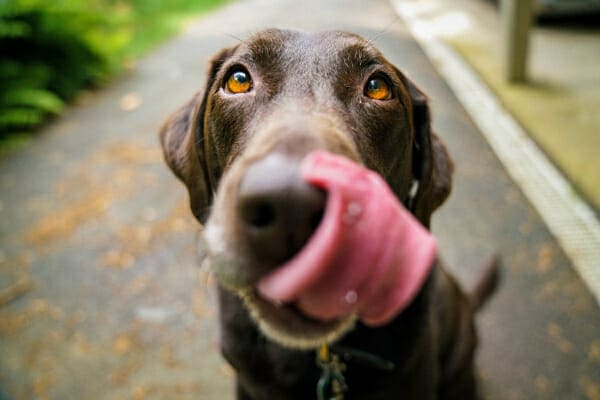
There are some cases in every veterinarian’s career that he or she will likely never forget. Stewie was such a case for me. This five-year-old chocolate Labrador Retriever had a zest for life and a smile on his face. But he also had a propensity for getting into trouble. That’s what landed him on my surgery table, anesthetized, with his belly shaved and scrubbed in preparation for abdominal exploratory surgery. Or so we thought…
I’m sure my vet nurses were a bit shocked and confused when I walked into the operating room and said, “Wake him up!” After all, I hadn’t done the surgery yet. And the last thing I had asked them was to prep him for surgery because he had a coin in his stomach that was making him sick.
SPOILER ALERT: What we thought was a coin was actually a Pepto-Bismol tablet.
I do want to tell you the rest of Stewie’s story and how I came to that startling revelation just in the nick of time. But first let’s address the questions that probably led you to this article.
Is Pepto-Bismol as good for dogs as it is for people? Should I reach for that bottle of pink liquid the next time my dog is experiencing tummy troubles?
What is Pepto-Bismol?
Most people are probably familiar with Pepto-Bismol and perhaps have taken it themselves for a GI ailment. The active ingredient is bismuth subsalicylate and it is is available as a liquid or tablet. While the exact mechanism of action is not completely understood, Pepto-Bismol seems to have antidiarrheal, antibacterial, and anti-inflammatory properties in humans. It may also have similar affects in dogs.

Is Pepto-Bismol safe for dogs?
It’s no surprise then that dog parents may wonder, “Can I give my dog Pepto-Bismol for diarrhea?” or “Can I give my dog Pepto-Bismol for vomiting?” After all, it works great for human digestion problems, so why not give it to a dog, too?
In my opinion, Pepto-Bismol should be reserved primarily for human GI ailments, and it should not be given to dogs. There are much better options available for stomach troubles in dogs. Plus Pepto-Bismol, like many medications, does come with some risks and side effects for dogs.
And yet, some sources on the internet and some veterinarians will say that a dose or two of Pepto-Bismol is probably ok. Let’s get into the nitty-gritty on why I’m not a fan of Pepto-Bismol for dogs.
6 reasons why Pepto-Bismol and dogs don’t mix
To help you understand why I take the stance I do, I want to share with you six potential problems with giving Pepto-Bismol to your dog.
1. Pepto-Bismol tablets can look like foreign metal objects on X-rays
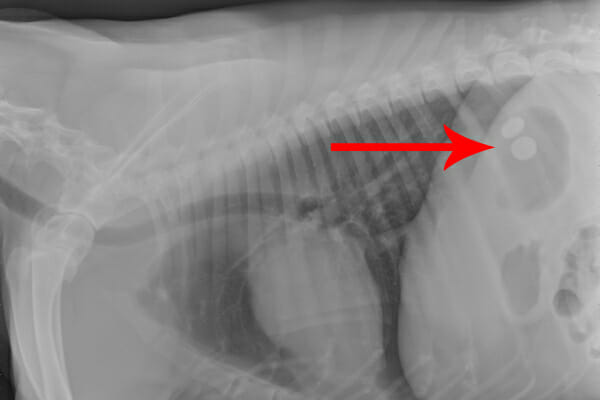
You already know this from the abridged version of Stewie’s story in the introduction, but it still bears repeating. If you give your dog a Pepto-Bismol tablet and your vet doesn’t know about it, your dog could end up having unnecessary abdominal surgery. The Pepto-Bismol tablet looks exactly like a coin, battery, or other metal object on X-rays.
2. Pepto-Bismol can turn your dog’s stool black
It can be concerning as a dog parent to suddenly discover that your dog’s stool is dark grey or black. But that is exactly what can happen to some dogs who are given Pepto-Bismol. In many cases it is just a harmless pigment change that occurs when the bismuth in Pepto-Bismol combines with sulfur in the digestive tract.
However, dark or black stool can also mean the dog has melena (i.e. digested blood in the stool from GI bleeding). If your vet doesn’t know that your dog had Pepto-Bismol, he or she might think the stool is that color because your dog is bleeding from the GI tract. That could lead to a variety of tests and treatments that may not be indicated. It also makes it a bit more challenging to detect actual melena.
3. Pepto-Bismol can cause GI ulcers
We just finished talking about how Pepto-Bismol can make it look like your dog has GI bleeding, but in some causes it can actually cause gastric ulcer disease in dogs and gastric bleeding too. One of the ingredients of Pepto-Bismol, salicylic acid (i.e. aspirin) can make a dog more likely to have GI ulcers which may bleed.
The risk of GI ulceration increases if the dog is already taking aspirin or dog-specific non-steroidal anti-inflammatory drugs (NSAIDs) for arthritis pain in dogs, torn ACL in dogs, hip dysplasia in dogs, IVDD in dogs or another painful condition. Using Pepto-Bismol with steroids like prednisone for dogs also presents a GI ulcer risk.
4. Pepto-Bismol can interact negatively with other medications
In addition to the increased risk of GI ulceration when combined with NSAIDS, Pepto-Bismol also doesn’t play nicely with a variety of other drugs. It can increase the risk of abnormal bleeding in dogs who are on anti-coagulants. Additionally, it reduces the amount of certain antibiotics (mostly tetracyclines like doxycycline) that is available for the body to use. This may make treatment for some infections less effective.
Pepto-Bismol also should be avoided in dogs who are taking ACE inhibitors (sometimes prescribed for medical conditions like kidney disease or heart disease in dogs), some diuretics (i.e. medications that remove fluid from the body), and digoxin (a medication used for heart conditions). If your dog is taking omeprazole for acid reflux in dogs, the body may absorb more of the Pepto-Bismol than normal, which could be problematic.
5. Pepto-Bismol is not safe in pregnant or nursing dogs
The salicylic acid found in Pepto-Bismol may be detrimental to the fetus or nursing puppy. That’s why it is best not to give it to pregnant or nursing dogs.
6. Pepto-Bismol may interfere with laboratory tests
In addition to showing up on X-rays, Pepto-Bismol may cause incorrect results on urine glucose and ketone tests. This can make it harder for the vet to get an accurate picture of what is going on with your dog.
If Pepto-Bismol isn’t a good idea for dogs, what should I do for GI upset?
At this point, you have a pretty good idea that reaching for the Pepto-Bismol wouldn’t be the first thing I would recommend if your dog is having some tummy troubles. Instead, consider contacting your dog’s veterinary team for advice.
They may recommend trying symptomatic treatment with a bland diet or feeding a small amount of food and water at a time. Alternatively, based on your dog’s symptoms or history, the veterinary team may suggest making an appointment with the vet. Ideally, don’t give your dog any medications before talking to the vet or veterinary team.
What if my dog already had some Pepto-Bismol?
Let me be clear—this article is not intended to scare or shame anyone. So don’t panic or feel bad if you already gave your dog some Pepto-Bismol. Just be honest with your vet about it. At the appointment, ensure you let your vet know:
- When you gave the Pepto-Bismol (date and approximate time).
- The Pepto-Bismol dosage you used.
- The total number of doses.
- If it was the liquid or the tablets.
- If your dog’s symptoms have improved, worsened, or stayed the same.

To help you understand the importance of clear communication with the vet about any medications your dog may have been given, let’s wrap back around to Stewie.
Tummy troubles for Stewie
Stewie’s family brought him to see me because he had been vomiting and he wasn’t his typical happy Labrador self. He also wasn’t eating. That told me there was probably some sort of big problem. Anyone who has ever met a Lab knows they love to eat. And Stewie was usually no exception to that rule.
Stewie had been my patient since he was a little brown ball of fur and puppy kisses. So I knew and loved him and his family quite well. They were understandably worried about Stewie, and I was too. He was looking rather sad as he sat on the floor of the exam room.
The first thing I did was to take his dog vital signs, including his TPR. This stands for temperature, pulse, and respiration. An increased pulse or respiratory rate can be signs a dog is in pain , but luckily for Stewie, his TPR was normal. As it stood then, it seemed like he was definitely feeling pretty bleh but not painful per se.
The next thing I did was to examine him from head to tail. Stewie’s belly was a bit tender when I palpated it but I didn’t feel any obvious enlargements of any of the internal organs. His gums were pink and a bit sticky, which is consistent with dehydration. That made sense to me. He wasn’t eating or drinking and had been vomiting for the past day or so. Since his physical exam didn’t lead me to a specific diagnosis, it was time to move on to some additional testing.
Diagnostic testing reveals the culprit…or so we thought
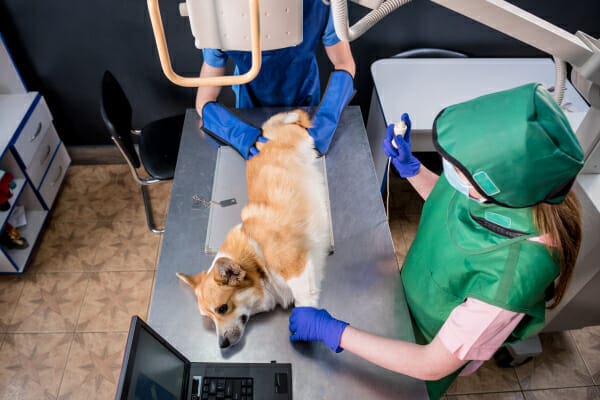
I wanted to start with two tests for Stewie—bloodwork and X-rays. Thankfully, his bloodwork all looked good. Since bloodwork can detect a host of reasons for vomiting and lack of appetite, it was a relief that everything was normal there. His X-rays, however, did show an abnormality. Stewie had what we call a metal opacity in the region of the stomach. The term metal opacity refers to a bright white spot on X-rays that is typically associated with a metal-containing object.
I thought to myself, “Oh this explains everything! He’s eaten a penny or a nickel.” I couldn’t tell exactly what kind of coin (or other round metallic object) it was based on the X-rays, but there was definitely something in his stomach that didn’t belong. Some coins contain metals that can make a dog sick. Other coins or objects can cause enough inflammation to cause GI symptoms. Either way, I advised his owners that it probably needed to come out one way or another.
After talking to his owners, we decided to put him on IV fluids and continue to observe him in hope the object would start making its way out naturally. However, it remained in the stomach throughout the day so I recommended taking Stewie to surgery to remove the object. His owners agreed and my vet nurses started to get him prepped.
Revelation in the form of a phone call
It just so happened that I took a phone call from a veterinary colleague while my vet nurses were getting Stewie anesthetized and ready for surgery. In the course of the conversation, I said, “I gotta go because my dog’s prepped and ready for an abdominal explore. He ate some sort of a coin or something. On the X-rays it’s very clear that there’s this round opacity that’s consistent with metal in his stomach.”
And he said, “Wait a second, are you sure it’s not a Pepto-Bismol tablet?” To me, it was a crazy statement. He might as well have said, “Wait a second, are you sure the dog didn’t run the Boston Marathon?” It seemed to have no correlation to anything. I’m thinking, “What does a Pepto-Bismol tablet have to do with this metal opacity? I’ve seen Pepto-Bismol. It’s pink, and I’m sure I could break it with my fingers.”
He went on to say, “Yeah, Pepto-Bismol tablets can look like a round metal opacity on X-rays.” And I thought, “Oh my heavens!” And I said, “I don’t know if he got Pepto-Bismol but I’m sure going to ask!” And so we hung up.
The real identity of the “coin” in Stewie’s stomach
I immediately called Stewie’s parents. When I had taken his history, I asked them specifically if there was anything they had given Stewie. This is a really important question. There are plenty of things that dog parents may think are harmless and give their dog without a second thought. But it may turn out that these substances are toxic, could interfere with diagnostics, or may interact poorly with other medications the vet may want to use.
Stewie’s mom had originally said, “No we haven’t given him anything.” But when I called and said, “Is there any possibility that he had a Pepto-Bismol tablet?” She said, “Well I didn’t give him anything, but you know what? He was at work with me the previous day when this started. I can ask.”
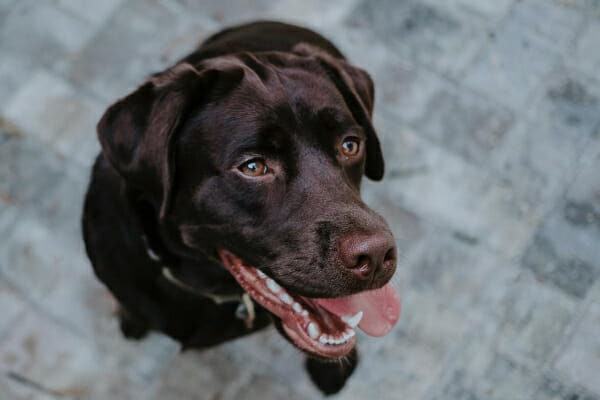
As it turns out, Stewie’s grandmother (who works with his mom) had Pepto-Bismol tablets in her desk when all of Stewie’s GI signs started. His grandma thought, “Oh what’s the harm? I’ll give him one to see if it helps him.” So Stewie’s mom called me back and said, “Yeah he’s had one Pepto-Bismol tablet. He did, I didn’t know it, but he did.” And I said, “That’s what we saw on the X-rays, so he does not need surgery at this point.” Stewie’s mom was relieved.
As soon as I got off the phone, I headed into the surgery suite to tell my vet nurses to wake Stewie up. Since he was still a pretty sick pup, we hospitalized him for supportive care for the next 24 hours. Soon he was feeling better and back to his usual happy, goofy self. And we all learned a lesson about Pepto-Bismol that we won’t soon forget.
The moral of the story
As a dog parent, there are two things I hope you’ll take away from this story:
- First, ideally you should never give your dog any medication without consulting with your vet. Just because a medication works for you doesn’t mean it will be ok for your dog.
- Second, it is important to disclose any medications, supplements, vitamins, treats, or anything else that you give your dog, even if you don’t think it is a big deal. Also, ask family members or friends if they gave your dog anything you were not aware of.
Had I not been talking to a fellow veterinarian just prior to surgery and had Stewie’s mom not dug deeper to find out that he had in fact been given Pepto-Bismol, Stewie would have had a surgery he didn’t need. Luckily for him, the events transpired the way they did. He didn’t come home with a line of stitches. But not all dogs will be that lucky.
So before you reach for Pepto-Bismol, or any other over-the-counter medication, keep this article and Stewie’s story in mind. A quick call to the vet is better than a regrettable trip to the medicine cabinet.

What do you do if your dog has an upset stomach?
Please comment below.


I have a 9 year old Boxer pit bull mix. I woke this morning to him acting very uncomfortable and threw up about 3 or different times. He’s been known to eat grass but today he really was eating it. He hasn’t wanted to eat today and I’m on disability and have no way to get him to his until the 3rd of next month.. He has sensitive stomach. What can I try to get him to eat some broth tomorrow. using a turkey baister to get chicken broth down him. any advice
Hi Michael,
I am sorry your dog is struggling with upset stomach and GI issues. Since I haven’t examined him myself, I can’t make specific recommendations. I know you are in a difficult position with wanting to do what is best for your pup but limited by financial constraints. Depending on what is causing the vomiting, it may not be a good idea to force feed your dog. Some conditions such as pancreatitis or a blockage can turn into a life-threatening emergency if treatment is not started quickly. My best advice is to reach out to your vet and see what the options are to have your dog evaluated. They may be willing to work with you on payment options or have information for other resources to contact for assistance. How is your boy feeling today? Praying for a positive outcome and all is well.
My 9 yr old mixed breed dog has started voraciously eating grass and her tummy seems a bit harder? There is no vomiting or diarrhea. She is pooping but a little less than normal. She is also panting a bit, but not excessively. She is peeing normally too. I am just concerned about the sudden and urgent grass eating, some lethargy, and a recent “yelp” for no observable reason. I am going to give her a little scoop of pumpkin puree to see if it helps. Is there anything else I should do? Is this a vet visit/emergency?
Hi Shari,
You are right to be concerned about your dog’s recent obsession with eating grass. Some dogs just like the taste and will graze when outside. But a sudden urge to compulsively eat grass can be a sign of GI issues. Also, increased panting can be a sign of pain or discomfort. This all may pass on its own with some time, but it has me worrying that there could be a more serious issue. It is probably best to have your girl evaluated by your vet. They can rule out an intestinal blockage or other issues like pancreatitis. I hope your senior girl is feeling better today and her strange behaviors have resolved. Best wishes!
My 4 month old puppy has had watery, gushy diarrhea for 24 hours now. He has moments of acting normal then he’s tired. I’ve given him cooked chicken and white rice, tried giving pumpkins and some banana. Nothing is helping it stop. Any advice?
Hi Britt,
I am sorry your puppy is struggling with diarrhea. My best recommendation is to have him evaluated by your vet. There are many causes of diarrhea such as viruses, bacteria, parasites, etc. Without knowing the cause there is no way to know which treatment will work best. Also, sometimes just changing your puppy’s diet can cause GI upset and diarrhea. I hope you can get an appointment to see your vet as soon as possible and you can get things resolved quickly.
My 1 1/2 yr old lab has vomited her green chewy last night at final potty break before bed. I was awakened by her vomiting several times this morning 5:30a until now 7:07a in 3 waves. She ate normal and dedicated normally this morning. The last vomit was just foamy bile. Not sure if I should feed her small meal or take her in. She is acting normal, besides upset tummy . I give her Bernie’s perfect poop on her food for help with digestion. Haven’t had any prior issues. Please advise.
Hi Stacey,
You are right to be concerned about your Lab’s vomiting issues. I always worry that they may have eaten something that cannot pass through the GI tract and has caused a blockage. It is probably a good idea to have her evaluated by your vet. Did you end up taking her for an exam? How is she feeling today? I hope your pup is back to normal and feeling great. Feel free to leave an update if you have a chance.
Those greenies are scary dangerous!
All tree of my dogs got into the trash so I’m not sure what they ate but the all have runny diarrhea, I’ve been giving them pepto Bismal. Doesn’t seem to be helping I can’t afford to take all three to the vet.
Hi Jayne,
I understand your financial concerns with having your dogs examined by your vet. Unfortunately, there may not be an over-the-counter solution for this GI issue all three of your pups are experiencing. You can try a bland diet of plain boiled chicken and rice for a couple days to see if that helps. If the diarrhea does not resolve, you will need to get medical treatment and make sure there is nothing more serious happening. Best wishes and good luck.