Trigeminal neuritis in dogs (i.e. dropped jaw in dogs) affects a dog’s ability to use the jaw muscles to close the mouth. Integrative veterinarian Dr. Julie Buzby explains the signs, diagnosis, treatment, and prognosis to help clear up some of the mystery surrounding this disease.
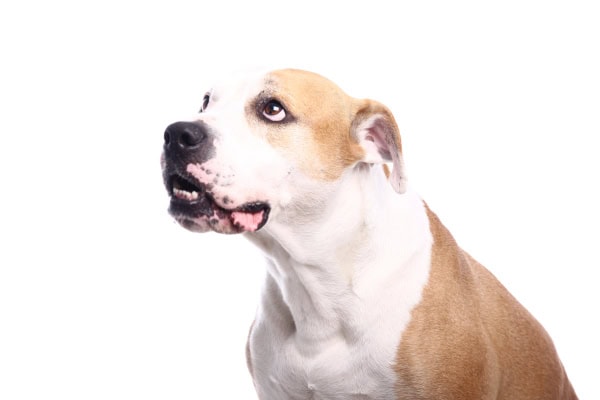
Some conditions in dogs have subtle symptoms, but trigeminal neuritis is not one of them. The signs come on suddenly and are quite dramatic. Dogs who develop trigeminal neuritis—also called trigeminal neuropathy, trigeminal neuralgia, or dropped jaw in dogs—cannot close their mouths.
Seeing your dog’s mouth hanging open can make your jaw drop in surprise. But as you will soon discover, the outlook for dogs with trigeminal neuritis isn’t nearly as dire at it may seem.
What is trigeminal neuritis in dogs?
Trigeminal neuritis in dogs is a condition where the trigeminal nerve, which controls the jaw muscles, becomes inflamed, leading to the dog being unable to move his or her jaw. As a result, the dog’s mouth hangs open. This explains why trigeminal neuritis is also called dropped jaw.
Overall, trigeminal neuritis is the most common neurological cause of paralysis of the jaw in dogs.
To understand trigeminal neuropathy, we must take a look at the trigeminal nerve itself. There are 12 paired cranial nerves that provide motor and sensory functions for the head and neck. The trigeminal nerve is the fifth cranial nerve (CN V).
There are three branches of the trigeminal nerve. Two provide sensation to the eyes, nose, mouth, and face. And one branch, the one most clearly affected by trigeminal neuritis, provides both facial sensation and motor function to the chewing muscles (i.e. muscles of mastication).
However, in trigeminal neuritis, the trigeminal nerve becomes inflamed, which affects its function. Based on the jobs of the trigeminal nerve, it would only make sense then that trigeminal neuritis impacts a dog’s ability to move his or her jaw (and sometimes feel his or her face).
What causes trigeminal neuritis in dogs?
Trigeminal neuritis is an idiopathic condition that is usually bilateral (i.e. affecting both sides of the face). The word “idiopathic” means we don’t know what causes it. However, some vets believe that it could be immune-mediated or related to a viral infection.
Interestingly, in a study of 29 dogs with trigeminal neuritis, Golden Retrievers were overrepresented. But otherwise, no age, sex, or environmental factors (e.g. season of the year or recent vaccinations) seem to be linked to trigeminal neuritis.
Unfortunately, because we don’t know the underlying cause of idiopathic trigeminal neuropathy, there are not really any good ways to prevent it from happening.
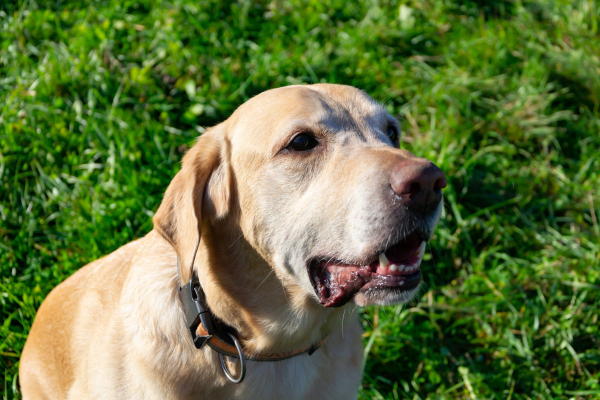
What are the symptoms of trigeminal neuritis in dogs?
As you may infer from the name “dropped jaw,” clinical signs of idiopathic trigeminal neuritis primarily revolve around loss of jaw motor function. However, about 35% of dogs will also have changes to the sensation of their face.
Some of the symptoms of trigeminal neuritis include:
- Inability to close the mouth—This is the most characteristic symptom of trigeminal neuritis and also the most obvious.
- Difficulty eating and drinking due to jaw paralysis—Affected dogs may still have tongue function but cannot pick up and chew food due to lack of jaw function.
- Excessive drooling—The dog may drool more due to not being able to close his or her mouth.
- Decreased facial sensation—While difficult to notice as a dog parent, affected dogs may not be able to feel their nose, eyes, or face as well as normal (or at all).
- Difficulty picking up toys or other objects—Since the jaw muscles don’t work, the dog can’t grasp items with his or her mouth.
- Horner’s syndrome in dogs—About 8% of dogs with trigeminal neuritis will also have signs of Horner’s syndrome including a sunken eye, droopy eyelid, constricted pupil, and elevated third eyelid in one of their eyes.
If you see these symptoms, please make an appointment with your veterinarian.
How is trigeminal neuritis in dogs diagnosed?
Your veterinarian will start with collecting a history and performing a physical and neurologic exam. As part of the history, the vet will want to know if your dog is current on his or her rabies vaccination and if your dog has contact with wildlife. These questions are important because rabies can also cause a dropped jaw in dogs and is transmissible to humans.
Physical and neurologic exam
On the physical examination, the vet will be looking for signs of orthopedic problems that could also cause a dropped jaw. Two examples are a dislocated or broken jaw.
Then the vet will use the neurologic exam to assess your dog’s ability to close the jaw or feel the face. Plus, he or she will look for any other neurologic problems.
This history and examination is important because trigeminal neuritis is a diagnosis of exclusion. That means that there is no specific finding on blood work or imaging that can diagnose it. Therefore, the vet will reach a diagnosis based on ruling out other conditions and taking into account the clinical signs, examination findings, and other clues.
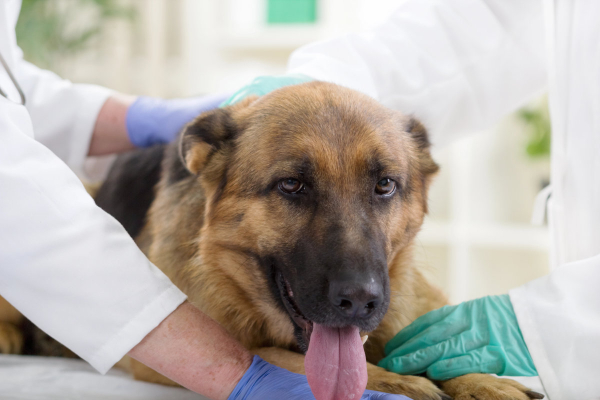
Diagnostic testing to rule out other conditions
As part of ruling out conditions that can cause similar symptoms, the vet may recommend several diagnostic tests. They include blood tests for dogs, urinalysis, and/or imaging such as X-rays, MRI, or CT. These tests can help rule out other diseases like jaw fractures or dislocations, cancer, infections, head trauma, or brain inflammation.
Oral exam under sedation
Your vet may also recommend sedation or anesthesia in order to perform a thorough oral exam on your dog. Even if their jaw muscles are impaired, it can be challenging to do a comprehensive exam of the mouth of awake dogs. Thus, sedation gives the vet a much better chance of getting the information he or she needs.
How is trigeminal neuritis treated in dogs?
Just like there isn’t a diagnostic tests specific for trigeminal neuritis, there also aren’t any ways to directly treat it. Instead, treatment for trigeminal neuritis focuses on supportive care. The most important aspect of supportive treatment for dogs with trigeminal neuralgia is ensuring they receive sufficient nutrition and hydration.
How do you feed a dog with trigeminal neuritis?
If your dog has dropped jaw, it is critically important that you and your veterinarian monitor your dog’s eating and drinking. You need to be very proactive about preventing dehydration and making sure your dog is getting enough calories.
It takes weeks for trigeminal neuritis to resolve. So feeding your dog will be an ongoing project.
Make a gruel
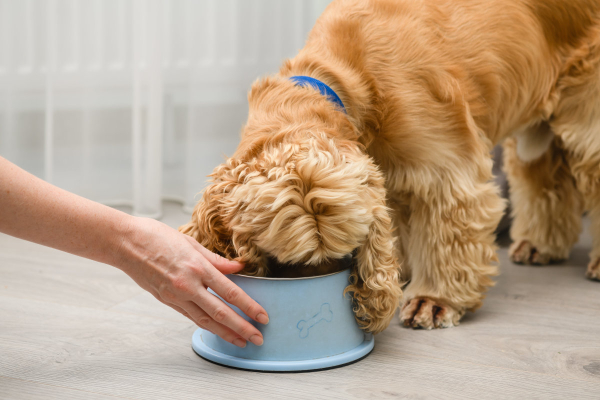
Many dogs with trigeminal neuropathy still have enough tongue function to lap up liquids. This means they can drink water and lap up canned food made into a gruel. This hand feeding process can be pretty messy though!
If your dog is eating this way, it is important to keep a close eye on how much food and water your dog is actually able to swallow. Should you have any concerns about how much your dog is taking in, please consult your vet promptly.
Use a feeding tube
Sometimes dogs may be attempting to eat or drink but not actually getting enough to keep up with their needs. Or they may not be able to eat or swallow well at all. In those cases, the dog may need a feeding tube.
It may sound intimidating, but feeding tubes are minimally invasive, well-tolerated, and very effective tools to temporarily allow us to bypass the mouth to provide nutrition and hydration. Dogs do not have to stay in the hospital the entire time the feeding tube is in place. And it is surprisingly simple to learn how to use a feeding tube at home.
How else can you care for a dog with trigeminal neuritis?
Veterinarians have also tried treating trigeminal neuritis with steroids like prednisone for dogs. But there is not currently evidence to demonstrate that it makes a difference in the course of the disease.
For some dogs, it may be helpful to make a tape muzzle to hold the mouth partially closed while the dog is recovering. And dog parents can carefully open and close the jaw to help decrease muscle loss. Plus, chewing on soft toys (when the dog is able to) can also help ward off muscle loss or stiffness.
Does trigeminal neuralgia go away in dogs?
Fortunately, most dogs fully recover from trigeminal neuritis in about one to two months. Typically within two to three weeks of diagnosis they are able to eat on their own. And on average, dogs recover in three weeks. However, it may take up to 10 weeks for recovery in some dogs. And very rarely, trigeminal nerve function does not return.
Since trigeminal neuritis is self-limiting (i.e. goes away on its own) the prognosis is usually good. As long as you are able to ensure adequate nutrition and hydration, most dogs with drop jaw do very well with just time and supportive care.
Sometimes trigeminal neuritis can reoccur. However, this does not seem to be common.
Hope for dogs with trigeminal neuritis
Although it looks very scary and comes on seemingly out of nowhere, there is a lot of hope for dogs with trigeminal neuritis. This is a situation where the body has amazing ways of healing itself when given time and good nursing care.
So if your dog suddenly loses the ability to close his or her mouth, do not panic! Instead, make an appointment with your vet right away. He or she can guide you through the next steps to give your pup the best support.
While it might be a big time commitment at first to ensure your dog is getting enough food and water, remember that this isn’t forever. Chances are good that in a month or so, trigeminal neuralgia will be resolved and things will be back to normal.
Has your dog had trigeminal neuritis?
Please comment below.

We are 6 days in and everything in article that is above is true.
Onset – out of the blue
Jaw – Even on both sides but dropped.
No other facial symptoms.
6 year old Black Mouth Cur Female – Healthy and athletic.
She seems bright and alert. Troubles eating and drinking but seems to be and wants to eat and drink out of a big tub we have vs the water bowl inside. So – that is what I have so far.
seen the vet yesterday. We found no infection or trauma. Just her back of her jaws seemed like they had inflammation. She could feel that in the exam.
So it sounds like hydration and food intake.
Move the mouth to keep it supple. I am guessing I will give that a week.
Dear Stacey,
I am sorry your girl is experiencing this worrisome condition. Praying for healing and that you will start to see improvement soon. Wishing her a speedy and full recovery.
My dog has just got this. I am out of my mind worried and I could not get an appointment today as they deemed it not urgent enough, this close to Christmas. I have an appointment tomorrow morning. It came out of the blue and I managed to diagnose it myself with the help of Google Gemini.
Dear Liz,
I understand your worry for your pup and am sorry they are experiencing this terrible condition. Hoping the appointment with your vet will go well and they can start the appropriate treatment. Wishing you both the best and praying for a positive outcome for your dog.
Thank you. It is several days later now, and I am over the initial shock. When I got in to see to the vet, they immediately said there was nothing they could do and referred us to another practice 80 miles away. We were given an appointment the same day, and he was admitted, sedated, and scanned. The scan involved taking 3,500 x-ray images which also worries me – but that is another topic. There was no underlying cause found, thank God, and it was therefore diagnosed as trigeminal neuralgia.
Because he had not been able to eat nor drink, it was decided that a feeding tube should be fitted to his oesophagus immediately. We have been feeding him this way for a week. He has been very good and has returned to his normal energetic self, but his jaw remains dropped. I wake up every morning hoping it will be better, but so far it is the same.
The only progress has been that we are now able to feed him soft food by hand through his mouth, but water still has to be administered through the tube. I guess this means there is some improvement but not enough to drink water. Having watched his behaviour so carefully we can see that drinking is more challenging than eating soft food, (hard food remains impossible) and it is probably going to be the last thing that improves.
Dear Liz,
Goodness, that is a lot to deal with! I am glad you were able to get a definitive diagnosis, and your boy is responding well to the feeding tube. I appreciate you taking the time to share your experience as this will be helpful to others facing a similar situation. Hoping your pup will continue to improve and praying for a full recovery. Thanks for the update and keep in touch!
My 7 year old black lab was just diagnosed with this yesterday, October 16th 2025. He is raw fed so I now hand feed him and yes it’s a slobbery, slimey adventure. He also has an insatiable thirst, which concerns me. My vet assures me this is a normal occurence with this condition. I would like confirmation that his is a normal occurence? He always has access to water and yes most of it ends up on the floor, I’m assuming some water is getting in as he is still peeing…..I do check his skin for dedydration and so far so good. I didn’t read all the comments but I was wondering if anybody else noticed the insatiable thirst? I also wondered if pain is or could be a problem, my vet said no? Another question I have is could this condition possibly affect his hearing? Thank you.
Hi Lynn,
I am sorry your Lab has received this difficult diagnosis. He is lucky to have you taking such good care of him (slimy feeding and all!). While an increase in water intake is not a symptom of this condition, it is reasonable to assume if your boy cannot drink as much as he would like then he may keep trying to drink excessively though not all of the water is making it into his stomach. Pain should not be an issue as this condition is due to the nerves not working and pain is usually caused by nerves that are firing too frequently. Trigeminal neuritis will not affect your dog’s hearing as this specific nerve does not connect to the ears. If your dog does have changes to his hearing, then I would start to suspect a much broader problem (brain issue or polyneuropathy) that would need more in-depth testing to find out why more than one nerve is being affected at the same time. Hoping your boy will start to show gradual improvement over the next few weeks. Praying for continued healing and wishing him all the best!
My 10 yo Labrador Doodle Rambo was diagnosed with severe skull atrophy .by primary Vet at annual exam. Followed up with Neurologist and MRI exams. No bad neurological symptoms were displayed and the MRI did not determine what caused the atrophy. Rambo is eating normally but now seems to be drinking excessive amount of water and peeing more. Vet & Neurologist agreed to prescribe ear Drops and antibiotic for ear debris and low does steroid for Trigeminal Neuritis. Rambo doesn’t display any face dropping and other than 7 lbs weight-loss over several months you would never know he has a health problem. I’m waiting now to see if his prescriptions need to be refilled and just heart-sick worrying what is to come next.
Dear Robin,
My heart goes out to you as you face this difficult situation with your senior guy. Rambo is lucky to have you taking such good care of him and advocating for his health and well-being. Hoping the medications will improve your boy’s condition and lessen the severity of his symptoms. Praying for healing and a positive outcome.
Our Great Dane, Duke just came down with this a couple days ago. We were terrified how quickly it came on. We ran him to the emergency vet in the middle of the night. After a bunch of tests – blood and x-rays this is what he was diagnosed with. While he was up there they gave him a bag of liquid under the skin as he was partially dehydrated. They sent us home with some giant syringes to see if that would help with feeding but he is a big boy and does not like that method. We are making him some home cooked food with some added vitamins and running it in a blender to get a yogurt type consistency. He likes this better but with those big jowls, he sure does make a mess. Which is fine, he is worth all of it and more.
Hi Michael,
I am sorry Duke is struggling with these severe symptoms. I am glad you have figured out how to get food into him consistently. Hoping he will start to improve and praying for a full recovery for your sweet boy. ♥
My dog (rescued terrier mix 3YO) has had drop jaw for six months. No real problems eating or drinking. At this point, we assume it’s not going to go away. Not really getting much info – vets have said should go away. Haven’t pursued a CT scan due to cost. Any help is appreciated-
Hi Debby,
I am sorry your pup has been living with this condition for so many months. Is he currently taking any medications or supplements? Even if you can’t pursue a CT scan it could still be helpful to schedule a consultation with a veterinary neurologist. They may have ideas about other testing or treatments to improve your dog’s quality of life. I am glad your boy is able to eat and drink without much trouble. Praying for healing and many happy years ahead.
Further to Jazmins story, I took her to a doggie chiropractor and I noticed a little change for the better after. She was able to eat a little better.. I find a gruel doesn’t work, very messy and it gets all over the place. I cut up cooked salmon, cooked burger, egg omelet, etc in small pieces and have a raised feeding station. She does OK Takes longer than normal tho I will continue with chiro, try acupuncture , maybe just osteoarthritis. Anything to help her, hence us !
Hi Jessica,
I am glad you noticed an improvement after the chiropractic session. You may be onto something even if it’s just treating the arthritis. Wishing you both all the best and feel free to keep us updated on how things go.
Thankyou Dr Buzby for this article. We are pretty sure our Jazmin has this. I took her to the vet with these symptoms and did every test only to still not know ! Then I came across your article and it seems to fit. She’s on day 7 now I will always take care of her and am experimenting Feeding is quite the ordeal Me and her have to practically shower after Lots of laundry ! Then there’s the fear she won’t get better, takes an emotional toll. Does prednisone help ? And what about treatment with an osteopath ? Acupuncture ? Any other ideas ? Ill try anything as this is very hard on Jazmin and me, thankyou , Jessica
Dear Jessica,
I am sorry Jazmin is dealing with these worrisome neurological symptoms. She is very lucky to have you taking such good care of her and continuing to advocate for her health and well-being. I definitely think pursuing alternative therapies could be a good idea. You may want to find a holistic or integrative vet in your area. There may even be one that practices Traditional Chinese Medicine. Hoping you can find a way to restore your sweet girl’s quality of life. Praying for healing and a clear path forward.
my Golden was just diagnosed with this as well. I’ve started him on soft food, but unfortunately he also has a weak stomach so he hasn’t been feeling very good. any suggestions?
Hi Karen,
I am sorry your Golden is struggling to eat since the neuritis began. A sudden change in food can cause GI upset in any pup but there are a few ways to try and make it a bit easier. You can add water to his original dry food to soften it and see if he manages to eat it. After softening the dry food, you can slowly add some of the canned (a little more each day) to allow his body time to adjust. It is also a good idea to use probiotics to help keep things in balance and restore normal gut flora. Hoping this will pass quickly and praying for healing for your sweet boy.
My pitty was just diagnosed w this in conjunction w salmon poisoning. He can eat soft food w no assistance but the water is more difficult. Last night we started seeing dilute blood in his water bowl and took him back in. It seems since he’s overworking the tongue (to compensate for little jaw control) he’s inflamed the underside of his tongue and bleeds a little. Just thought I’d mention this cuz no one else had.
Also, idk if this is related to the neurological condition or just cuz he’s been sick, but he is having very vivid dreams. He usually is a very quiet sleeper, but now he whines, barks (slightly), and moves his legs almost every time he sleeps.
Hi Heather,
I am sorry your boy is experiencing these worrisome symptoms. Thank you for mentioning the toungue issue. I am not sure I have seen this in any of my own patients. Hoping you have seen some improvement and praying your boy will make a full recovery. Wishing you both all the best and keep up the good work!
I’ve been to the vet and she examined my dog. She advised I watch and wait. She is struggling to drink and eat but she’s coping, it just takes her a long time, her mouth is open about an inch permanently. When I saw the vet I. mentioned her eye appeared a little odd, she confirmed that one of her pupils was smaller. Since then her third eyelid is up, and her eye appears sunken. I don’t know if I should take her back or just wait and see if in time it gets better. She’s not in pain and is still keen to exercise and is still eating well….
Hi Lynda,
I am sorry your girl is dealing with this worrisome condition. The eye changes you mention sound like Horner’s Syndrome which can be related to the neuritis. There really is no treatment for it and most cases resolve as the neuritis improves. Here is a link to another article with more information: Horner’s Syndrome in Dogs: Causes, Symptoms, Treatment
Hoping your girl has been able to maintain her quality of life. Praying for healing and a full recovery.
My 6 year old lab is going through this right now. I am a nurse and when we have people with swallowing difficulties we make thickened water. So I mix water with gelatin and spoon feed her the gelatin. She really likes it and takes it easily.
I just wish I could see some improvement it’s only day 5. She has a droopy bottom lid that arrived on day two. But hasn’t progressed to full blown horners. I just keep her bottom lid lubricated twice daily.
It’s so sad to see my usually happy go lucky girl so sad.
Hi Ann,
This is such great advice! I have never thought about using gelatin to thicken water to make it easier for them to “drink”. Thank you for sharing your experience with us. Praying you will start to see improvement soon and wishing your girl all the best at making a full recovery. ♥
My 10 yr old Chesapeake was diagnosed with TN 2 days ago, my main concern is hydration,
he can still pick up a couple of his kibble when I drop 4 or 5 at a time on the floor, in his bowl he just soaks it with saliva and is unable to pick it up. For his dinner I cook him meatballs,
1 lb ground beef or bison, 2 eggs, a little parsley and a little panko, then drop them in his mouth, for water I alternate with crushed ice and hold his drooping jaw together as much as possible, tilt his water bowl or small bowl and use the syringe (he fights me with that) My vet said to run my finger over his gums and if they feel tacky it means he is not getting enough water.
Dear Christina,
My heart goes out to you as you battle this terrible disease in your beloved pup. He is very lucky to have you taking such good care of him and going the extra mile to give him a shot at recovery. Praying for healing and hoping for continued success. Bless you and your sweet boy.
my dog Odie a day ago was at the vet his bottom jaw won’t stay shut, he always tested positive for the bacteria for Lyme disease, he tries to eat he does eventually after his saliva is all over it and everywhere on the floor in big galbs when he drinks it always the same , I am worried so much I called my vet again bc he would eat inside the vets office at all when she wanted to see him do it , idk if it’s all bc of the Lyme disease or both
Hi Janelle,
I am sorry Odie is experiencing these worrisome symptoms. I agree this is concerning and think more investigation may be needed. Since your vet was not able to witness this strange behavior, maybe you can catch it on video? Hoping for quick answers and a clear path forward. Wishing you and your sweet boy all the best.
My dog currently has this issue. I have stumbled across your article as I was looking to see if he could drink from a hamster style water dispenser for dogs because he can’t drink from a water bowl as he loses a lot more water back into the bowl than he gains. (He relies on the snow outside for his water intake now). He is trained to drink from a standard water bottle (think bottle feeding a calf), but it’s very messy as at least half ends up on the floor. He also can eat soft food with a modified soft muzzle on that we trimmed back so he didn’t get food on it. He prefers to not wear the muzzle though.
Your article is clear and concise about this affliction. Thank you for this. I think it will help people scared like we were that their dog had a stroke. (That’s what we thought as we came back Christmas Day and his mouth was hanging open and he also has Horners Syndrome, so his face looks different and paralyzed, almost).
Dear Randi,
I am so sorry your pup is struggling with the effects of this terrible disease. You are doing a great job troubleshooting and finding ways to help him maintain his quality of life. Your boy is very lucky to have you taking such good care of him. Thank you for the kind words and for sharing your experience with our readers. Wishing you continued success and praying for healing for your sweet boy.
Thank you for this article. My dog was just diagnosed with ITN. My main concern is if she is drinking and getting enough food. Bc I stress over this so much I switched her to raw food. I cook it about half way and roll into balls and hand feed it to her. I just want to make sure she is getting enough nutrients still. But now I read that raw is not the way to go. Can you help me on what I should be feeding her? She is not able to eat her kibble anymore.
Hi Amber,
I am sorry your girl is struggling with the effects of TN. If you need to be able to make “meat balls” but want to avoid raw, I highly recommend using canned dog food. You can use the same brand of the kibble she is used to so hopefully there won’t be much GI upset from suddenly switching her diet. Hoping you will start to see improvements soon and praying for a full recovery for your pup.
Thank you so much for this article! Our 6 year old golden retriever all of a sudden was unable to close his mouth and despite ultrasounds, bloodwork, and xrays there was no explanation until we found this article and others to bring to our vet. They finally confirmed this diagnosis and we are working through week 1 of assisted feeding and drinking. While being very sad to see and scary to experience, it is comforting to know that he should recover in time. Hoping and praying for anyone else going through this diagnosis!
Hi Kendall,
Goodness I am so sorry your boy had to endure the effects of this difficult condition. I am glad the article helped to guide conversations with your vet and together you found a way to start treating this disease. How are things today? Was your boy able to make a full recovery? Wishing you both all the best and give your sweet boy a hug for me!
This has just recently happened to our 1 year old lab. He can eat his food (slowly) but he can not lap up water, just lick it, so we have to give him water with a syringe. We are almost a week in and hoping that it will resolve in a couple weeks, makes me so sad for him and scared it won’t get better!
Dear Tara,
I am so sorry your young pup is struggling with the effects of this terrible disease. Praying for continued improvement and healing for your sweet boy. ♥
My 8 year old mixed breed dog was diagnosed with trigeminal neuritis in mid Sept 2024. Her motor function came back within a few weeks but sadly her sensory function did not, and we are 8 weeks out from presentation. As a result, we had to do a partial glossectomy since she chewed up her tongue and most recently, she developed corneal ulcers since she wasn’t making tears. We tried a short course of steroids after a month that has no effect, and she’s had a spinal tap and two MRIs. Luckily she can still drink and eat, although it’s dysfunctional. Her neurologists say this is the worst case they’ve ever seen. At this point, we don’t know if she’s going to recover but I’m still holding out hope.
Dear Ann,
I am so sorry your sweet girl is suffering with this terrible disease. I can only imagine how heartbreaking it must be to see her struggle and know there isn’t much else you can do to help. Thank you for being willing to share your experience with us. It is important for others to know what complications they need to be monitoring for. Praying your pup can continue to improve and wishing you both all the best for brighter days ahead.
My 9 year old goldendoodle was diagnosed last October with trigeminal neuropathy and unfortunately it flared up again on July 4th this year. I will give some advice as this is my 2nd time dealing with this. Placing a rubberband on his mouth has helped him eat without me hand feeding him. Putting your dog on a steroid does help during this awful 4-6 weeks.
Additionally my vet let me take fluids home and once a day I have to put a needle in his back and give him fluids along with syringes of water throughout the day and he stays hydrated. I’m a busy person with a baby and working full time. As long as you stay on top of it your dog will be okay, just don’t give up on it. It takes a lot of patience. Typically it doesn’t come back, but in my case my dogs lymph nodes are very swollen along with trigeminal neuropathy.
I hope this helps someone that’s needing advice.
Hi Alicia,
I am sorry your boy is living through another flare up of this difficult condition. What a blessing you have found some ways to make caring for him during this time a bit easier. I would offer a word of caution to other readers about putting a rubber band around their dog’s mouth/muzzle. This can cause serious harm and definitely cannot be left on. I understand there are probably ways to make this work in a safe way, but I just can’t recommend it to others out of an abundance of caution. Thank you for sharing your experience. Wishing you and your sweet boy continued success and many happy years ahead.
Thank you for this article! My almost 9 year old German Shepherd was diagnosed with this on Tuesday. It came on suddenly on Monday. It’s accompanied by Horners. He is definitely not acting like himself at all. He’s quite depressed. I have 2 questions. The first, he’s a big boy,121 pounds. I’ve been making him a liquidly gruel from the vet recommended canned food, along with cooked chicken or eggs. I’m concerned about his hydration. He’s unable to eat or drink at all on his own. So I’ve been measuring out what I’m feeding him. Approximately how many cups do you think I should give him per day? I’ve been trying to do between 1.5 -3 every couple hours. So far his urine is clear and he has quite a bit in the mornings. Secondly, he’s been on Librela for about 6 months. I know that it can cause neurological issues, have you heard of many dogs who are on it developing trigeminal neuritis? Thanks for your help!
Hi Rachel,
I am sorry your big guy is experiencing this worrisome neurological condition. I understand your concern about ensuing he is eating enough calories and staying well hydrated. Unfortunately, without knowing your boy’s body condition score and the nutrition details of the foods he is eating, I can’t really give specific recommendations about how much food is appropriate. This would be a great question for your vet. They should be able to calculate your dog’s daily requirements of calories and offer guidance on how much protein, fat, etc. he should consume each day. As for your question about Librela, most of the neurological issues that have been reported (as far as I know) seem to be weakness or paresis in the rear limbs with some experiencing overall weakness. But I have not heard of a case of trigeminal neuritis. Hoping your boy will start to improve and praying for a full recovery. Best wishes to you both and keep up the good work!
Thank u for this informative article! I have never even heard of this condition. Thank u also for presenting it in a positive (ie. no panic required) manner.
The only question I have for you is – do your clients say that learning to use a feeding tube is surprisingly easy? Vets often over-estimate the skill of lay people like myself to do things which vets & techs find simple.
Again, great article.
Hi Robin,
Thank you for the kind words and great feedback about the article. I am so glad you asked this question! Learning to use a feeding tube can be intimidating, but once you do it a couple times it does become fairly easy and less stressful. The vet places the tube and ensures it is secure. All that is done at home is attaching a syringe with the liquid diet to the end of the tube and pushing the plunger to send the food through the tube and into the stomach or esophagus. I have never had a client that couldn’t handle this at home or that said it was too difficult. Thank you for bringing up this great point and discussion. Best wishes to you and yours!
my dog hasn’t had this but I have had instances of trigeminal nualgia (sp). this is extremely painful. makes me wonder how much pain the dogs have.
Hi Bonnie,
I am so sorry you have experienced the pain of trigeminal neuralgia. Fortunately for dogs, they seem to get the opposite effect and have decreased sensation to their face when this nerve becomes inflamed. Hoping you are doing well and wishing you all the best!