Looking for delicious homemade dog treats to stuff in your dog’s holiday stocking? Look no further! Integrative veterinarian Dr. Julie Buzby shares her favorite peanut butter pumpkin dog treat recipe. This recipe has been reviewed by a board-certified veterinary nutritionist and also received “four paws up” from our canine taste testers.
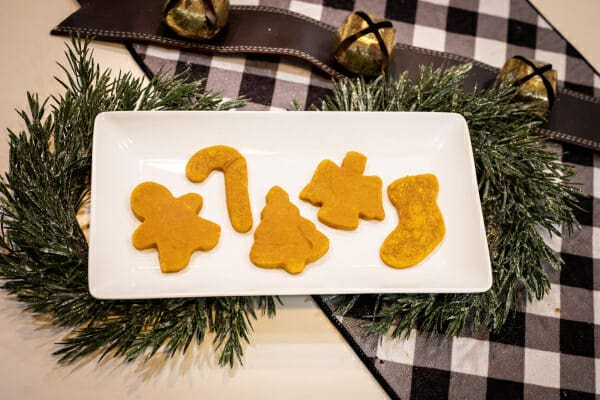
Dogs are part of our families, and we love including them in our holiday traditions. Many of our winter traditions involve lots of cookies, and I wanted to share my favorite way to safely provide holiday treats for our pups.
A friend and colleague, who happens to be a board-certified veterinary nutritionist, looked over this peanut butter “pup-kin” holiday cookie recipe to ensure that these treats are safe to share.
After all, I’m pretty sure if my dogs could talk, they would agree that all they want for Christmas is treats! And the last thing on my wish list is a sick pup. That’s why pet parents and their dogs appreciate this vet-approved cookie recipe!
Why choose these pumpkin dog treats?
The recipe shared below is one of my favorite treats to make for my dogs. First off, they contain a generous helping of pumpkin. Canned pumpkin for dogs has many excellent health benefits, especially for the digestive system. It is rich in fiber, vitamins, and minerals. Plus, it is tasty!
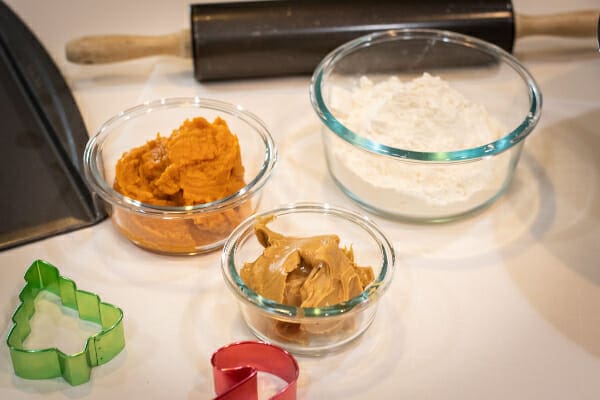
Second, it is easy to make these treats holiday-specific. You can use Christmas cookie cutters, Valentine’s Day cookie cutters, Easter cookie cutters…you get the idea. Your dog may not notice that he or she is eating a Christmas tree-shaped cookie or an egg-shaped cookie. He or she will just know that it is yummy. But you can take satisfaction in having a tin of cute holiday-themed cookies for your dog. It’s one of my favorite dog Christmas gift ideas!
Homemade holiday dog treat recipe
So, without further ado, here is the recipe for my super easy, 3-ingredient peanut butter pumpkin dog treats:
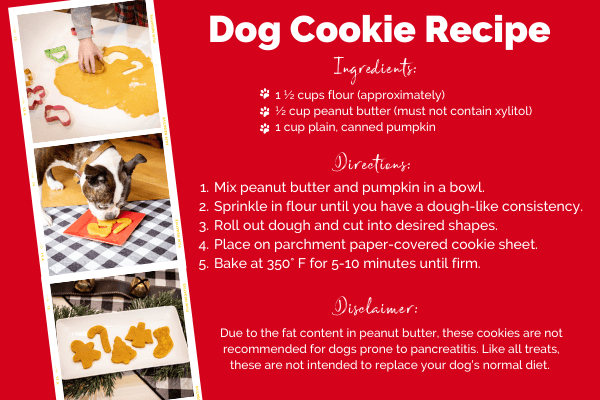
Peanut Butter Pumpkin Dog Treat Recipe
Prep: Preheat oven to 350° F
Ingredients:
- 1 1/2 cups flour (approximately)
- 1/2 cup peanut butter (must not contain xylitol!)
- 1 cup plain, canned pumpkin
Directions:
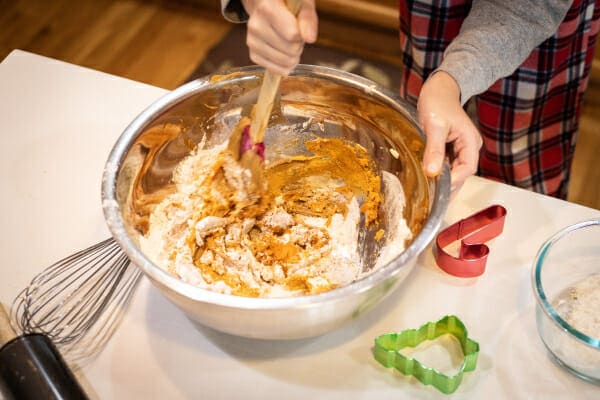
- Mix peanut butter and pumpkin in a bowl.
- Sprinkle in flour until you have a dough-like consistency.
3. Roll out dough and cut into desired shapes.
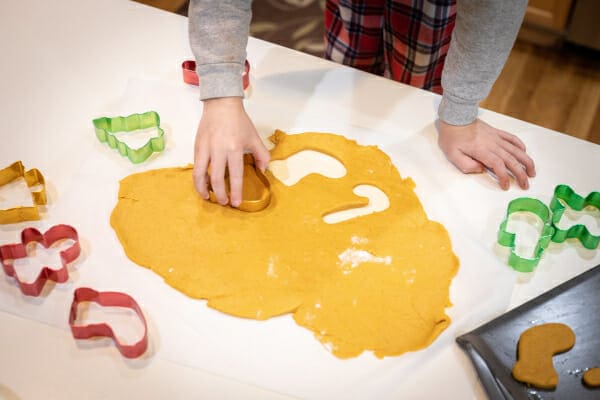
4. Place on parchment paper-covered baking sheet.
5. Bake at 350° F for 5-10 minutes until firm. Baking time may vary by oven and cookie size. Be sure to allow the cookies to cool to room temperature before offering them to your dog!
Note: Due to the fat content in peanut butter, these homemade dog treats are not recommended for dogs prone to pancreatitis. Also, like all treats, these are not intended to replace your dog’s normal diet. Consult your vet if you are unsure whether these homemade treats are appropriate for your dog.
Nutrition and safety tips
As part of our commitment to provide accurate, veterinarian-approved information, we asked a board-certified veterinary nutritionist to review the pumpkin and peanut butter holiday dog treat recipe. He approved the recipe and even provided the nutritional information!
By his calculations, if a batch makes 25-30 cookies, each one will contain approximately 50-60 kcal (what we call calories).
This calorie count can be helpful if you are trying to help a dog lose weight. It is also good to know if you are being careful to maintain your dog’s slim figure. Keep in mind that calories from treats should not exceed 10% of the daily caloric intake. For a tiny dog, this may mean that you will want to either find a small cookie cutter or only give your dog part of a treat each day.
Check ingredients carefully
Additionally, you do need to do some label reading when picking ingredients. Some brands of peanut butter—even those labeled as natural peanut butter—contain the artificial sweetener xylitol (i.e., birch sugar). Xylitol is toxic to dogs, so you must ensure you use xylitol-free ingredients any time you make peanut butter dog treats.
You also need to use plain canned pumpkin, not pumpkin pie filling. Not only does pumpkin pie filling have a higher calorie count and sugar content, but some may contain xylitol or other ingredients and spices that may not be good for your dog.
Finally, if your pup may be prone to pancreatitis in dogs, these treats may not be the best choice. With peanut butter as a main ingredient, they are certainly not a low-fat food. Extra snuggles or your dog’s vet-approved low-fat treats might be the safest ways to show a pancreatitis-prone pup some love.
Happy baking!
I hope your dog enjoys these “pup-kin” holiday treats as much as mine do. And don’t feel like you can only make these for recognized holidays. While all treats should be given in moderation, you can celebrate “Dog Appreciation Day” anytime you want.
“Bone” appétit!
FAQs
In short, no. You cannot use pumpkin pie filling for dog treats. It’s very important that you pay attention to the difference between canned pumpkin puree and pumpkin pie filling. Both are made from pumpkin, but pumpkin pie filling has lots of added sugar, spices, and other ingredients. Use plain, canned pumpkin. (Check the label. Pumpkin will be the only ingredient.)
Please make sure you read the ingredients very carefully any time you make homemade treats for your dog. Substituting pumpkin pie filling for the canned pumpkin in this recipe not only drastically changes the nutritional information but also may make the cookies unsafe for your dog.
I don’t know that I’d say peanut butter is good for dogs, but it usually isn’t dangerous (as long as it is xylitol-free). Peanut butter does not contain essential nutrients that your pup can’t get from dog food, but it is generally safe to give as a treat.
Peanut butter is calorie-dense and has a high fat content, so your dog may pack on some pounds if he or she is eating it frequently or in large amounts. The high fat content also makes peanut butter an unsafe snack for dogs who may be prone to pancreatitis.
Whenever you make these cookies or other peanut butter-based treats, remember to carefully read the ingredients to make sure the peanut butter you’re using doesn’t contain xylitol (aka birch sugar). Xylitol is extremely toxic to dogs, even in small amounts.
Pumpkin puree can provide several health benefits for dogs. It contains fiber, vitamins, and minerals that can be healthy supplements to your dog’s normal diet. Pumpkin is great for digestive health and blood sugar regulation. It can also help some dogs with weight loss and anal gland health.
Like with any “people food,” be sure to read ingredients carefully and to contact your vet if you’re unsure whether an ingredient will be safe for your dog. It is very easy to confuse canned pumpkin puree with canned pumpkin pie mix, and the two have very different effects on dogs’ health!
And although pumpkin can provide some nutritional benefits, it should not be a significant portion of your dog’s diet. Talk to your vet to make sure you’re providing a healthy, balanced diet for your precious pup.
In general, yes, flour-based treats are fine for dogs to eat. Of course, all treats should be given in moderation, and some dogs may have allergies or sensitivities to certain ingredients, including flour. I recommend feeding your dog a small treat first, then making sure he or she doesn’t have any adverse side effects, such as diarrhea or vomiting, before giving more.
For the recipe above, several different types of flour will work and still be safe for your dog.
All-purpose flour, whole wheat flour, and almond flour would all be fine to use to make these cookies for your dog.
These treats have a shelf life similar to other homemade “people” cookies. I recommend storing them in an air-tight container. They will last approximately five days at room temperature, about two weeks in the refrigerator, and up to three months in the freezer.
Have you ever made homemade dog treats?
Please share below.
This post was originally published on December 6, 2021 and updated on November 24, 2025.


How long are these treats good for? What are the storage instructions?
Hi Tara,
The information you are looking for was in the very last paragraph of the article:
“How long do homemade pumpkin dog treats last?
These treats have a shelf life similar to other homemade “people” cookies. I recommend storing them in an air-tight container. They will last approximately five days at room temperature, about two weeks in the refrigerator, and up to three months in the freezer.”
Hope that helps!
Hello,
You’ve okayed Cranberries, what about Blueberries?
Thank you
Hi Kim,
This is a great question. Blueberries are non-toxic to dogs and can make for a healthy treat. If you are interested in finding other fresh foods that you can safely offer your pup, I encourage you to take a look at these other articles:
1. 14 Vegetables Dogs Can Eat (And May Just Love)
2. Thanksgiving Food For Dogs: 10 Dogs Can Eat & 10 to Avoid
3. 11 Best Foods to Hide Dog Pills In: A Vet’s Recommendations
Wishing you and yours all the best!
Matteo spends lots of time snoozing and seems quite comfortable but I miss interacting with him. He is 10 or 11 and sometimes barks at nothing and gets so he wants to go in the yard over and over and seems a little lost out there. I figure he is having senior moments. So I visit him on the couch or his chair dozens of times a day to snuggle and coo him which he loves. I make the most of the time we have left also by throwing his favorite ball as much as I can and going for walks ( I am very arthritic)! He is by far the favorite dog of my life. Oh, and yes, he gets very good “nummy nums” like beef and femur bones aside from a quality dry dog food, on birthdays and holidays.
Hi Sarah,
Matteo sounds like a very sweet boy and a big part of your life. I agree these do sound like “senior moments” or what we would call dementia/canine cognitive dysfunction. I will attach links to other articles with more information on how you may be able to help Matteo maintain his health and well-being. Thank you for sharing his story with us. Wishing you both many happy days ahead and give your boy a hug for me. ♥
1. Canine Cognitive Dysfunction Checklist: Could Your Dog Have Dementia?
2. Signs of Dementia in Dogs: Stages, Symptoms & Treatment
3. MCT Oil for Dogs Can Help Dogs with Dementia or Epilepsy
Would it be ok to add dried, no sugar added, cranberries to this recipe!p?
Hi Sandra,
Yes, it is ok to add cranberries in small quantities. In larger amounts they can cause some stomach upset. Some dogs don’t like them due to their tart taste so you might want to try some out with your pup before you add them to the entire batch. Good luck!