A recessed vulva in dogs may only be a cosmetic problem for some dogs. But in some cases it also can contribute to urinary tract infections, vaginitis, and superficial skin infections. Integrative veterinarian Dr. Julie Buzby is here to explain. Discover how to recognize a recessed vulva (i.e. hypoplastic vulva), when surgery (vulvoplasty) may be the optimal treatment, and what you can do to help prevent secondary issues for your dog.
My client, Mrs. Jefferson, adopted a 6-year-old German Shepherd, Nova, and brought her in for an appointment. When I asked how things were going at home, I could see Mrs. Jefferson was stressed. She explained that Nova was house-trained when she was adopted.
However, over the past week, her dog had started having accidents in the house, even if she had just been outside. Mrs. Jefferson also noticed that her dog was licking her hind end more than normal.
Overall Nova appeared to be an extremely healthy and happy-looking girl. But while I was examining her, I did notice the dog had a recessed vulva. My client was quite surprised when I told her this may have been contributing to her dog’s recent accidents in the house.
What is a recessed vulva in dogs?
A recessed vulva is a common problem in female dogs—especially those who are overweight. Also known as a hypoplastic vulva, hooded vulva, or juvenile vulva, it can affect any dog breed. However, it tends to be more common in medium to giant breeds. Also, there may be a genetic component.
What causes a recessed vulva in dogs?
A recessed vulva in dogs occurs when the conformation of the vulva is abnormal. More specifically, a recessed vulva is one that is tucked up further between the dog’s hind legs and/or buried by the skin folds that surround the vulva. This is in contrast to a normal dog where the vulva is fairly distinct when looking at the dog from behind, especially if the dog has short hair.
Other than appearing different visually, a hooded vulva in dogs may or may not cause any issues. In fact, most dog parents do not even know that their dog has a recessed or juvenile vulva until a veterinarian discovers it during a physical examination. Sometimes it is an incidental finding. But in other cases, the recessed vulva can cause other problems that may prompt a vet visit.
Before we go any further into the specifics of recessed vulvas in dogs, I want to run through some relevant anatomy to ensure everyone is on the same page.
The word “vulva” denotes the cone-shaped haired skin that sits between a female dog’s hind legs. Inside the vulva is the opening of the vagina. Plus, the external urethral opening lies on the floor of the inside of the vulva. The vulva is the common exit for products from the urinary tract (urine) and the reproductive tract (bloody discharge or puppies).
What are the signs of a recessed vulva?
To understand the signs of a recessed vulva, first we need some basic anatomy of the vulva. This can help predict various conditions that may occur because of a recessed vulva.
The biggest issue is that the folds of skin around the vulva can trap urine, debris, and bacteria in the vulva and skin folds around it. As a result, a recessed vulva can lead to skin problems, vaginitis, and urinary tract infections (UTIs) in dogs. Each of these conditions has slightly different symptoms.
Inflamed skin
Inflammatory skin disease tends to be the most common symptom in only mildly affected dogs. This might show up as red, irritated skin which results in scratching and excessive licking of the area.
Skin infections
As inflammation progresses, it may develop into a skin infection (i.e. perivulvar dermatitis). This is especially likely to happen in dogs who already have allergies or skin disease, but can occur in any dog.
These skin infections are very similar to those that dogs can develop in other places, like their ears (i.e. otitis in dogs), armpits, or belly. Due to the excessive skin folds, the vulva is a moist, warm environment that is ideal for bacterial and yeast growth. One or both of those microbes can cause a skin infection.
Unfortunately, this issue tends to snowball. This is because scratching and licking breaks down the skin’s natural barrier, which can lead to further infection and inflammation. This intensifies the itchiness, which leads to more licking and scratching, which only continues to worsen the moist dermatitis.
Vaginitis
As bacteria continue to live on the surface of the dog’s vulva, they can eventually migrate up into the vagina, causing vaginitis in dogs (i.e. inflammation of the vagina). Signs of vaginitis include:
- Excessive licking of the vulva
- Staining/color change of hair around the vulva
- Scooting on the floor
- Foul odor
Urinary tract infections
The infection can also progress to a female dog’s urinary tract since the opening of the urethra is located in the vulva. If this happens, the resulting urinary tract infection can cause signs such as:
- Urinary incontinence in dogs
- Inappropriate urination
- Excessive urination
- Straining to urinate
- Blood in the urine
- A change in urine smell or color
These symptoms may give you a starting point. But as with any problem or disease, the clinical signs will vary with every dog. If you suspect that your dog may have a recessed vulva or a problem secondary to it, please consult your veterinarian.
How is a recessed vulva diagnosed?
During a physical exam, your vet will evaluate the conformation of your dog’s vulva. Then he or she can decide whether or not your dog has a recessed vulva. No further diagnostics are needed to diagnose a hooded vulva in dogs.
However, your vet may recommend a variety of additional diagnostics if he or she suspects the recessed vulva may be causing secondary problems.
In order to diagnose skin infections, your veterinarian may use a skin cytology or a skin culture.
For a cytology, the vet will collect cells and debris from the surface of the skin. Then he or she will examine the collected material under a microscope to look for bacteria or yeast. If an infection is present, a culture and sensitivity test may be needed to guide antibiotic selection.
If your vet suspects your dog has a UTI, he or she may start with a urinalysis. This test will look for red blood cells, white blood cells, and bacteria in the urine. A urine culture and sensitivity test can help with choosing the appropriate antibiotic.
Additionally, your vet may suggest an X-ray to look for bladder stones, an ultrasound to look for bladder cancer in dogs, or bloodwork to assess your dog’s overall health.
What is the treatment for a recessed vulva?
Once the vet diagnoses your dog with a recessed vulva, he or she will discuss what—if anything—should be done about it.
If the hooded vulva is an incidental finding on the physical exam and the dog is asymptomatic, the plan might simply involve watching for signs of skin infection, vaginitis, or urinary tract infections.
If the dog has one of these secondary problems at the time the vet diagnoses the recessed vulva, then the vet will recommend a treatment plan specific to that problem. This may include oral antibiotics to treat a skin or urinary tract infection. Treatment may also include special medicated shampoos, mousses, sprays, or wipes if your dog has a skin infection.
For mild cases, a hooded vulva may be improved with weight loss. Fatty tissue in the perineum (the area between the vulva and anus) can cause deeper skin folds around the vulva. Losing weight may help to minimize the appearance and clinical signs of a recessed vulva in some dogs.
In a dog with a severely recessed vulva that is causing secondary issues, surgery is usually the most recommended treatment option. This surgery is called an episioplasty or a vulvoplasty surgery.
Vulvoplasty: Surgery for dogs with a recessed vulva
Think about vulvoplasty in dogs as medically necessary plastic surgery. In this procedure, the veterinarian removes the extra skin around the vulva in a crescent moon shape. Suturing the incision back together tightens the remaining skin, which pulls the vulva up and out.
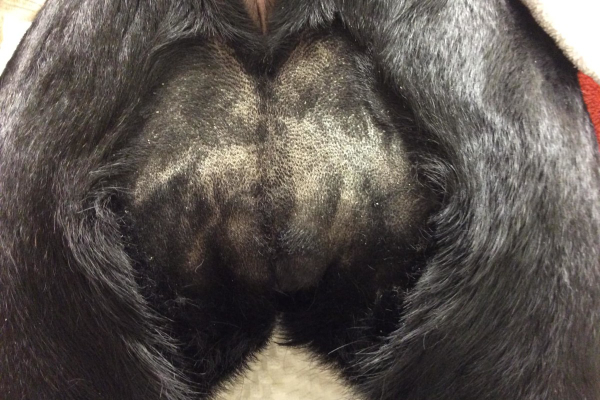
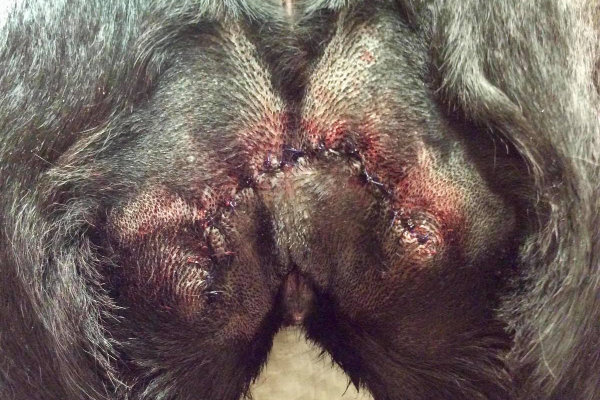
To see a vulvoplasty dog before and after surgery, check out the photos below of one of my colleague’s patients.
Dog vulvoplasty aftercare
If your pup has been diagnosed with a hooded vulva and surgery is planned, you may be wondering what post-op care looks like. How painful is vulvoplasty for dogs? How long before she can go back to normal activity?
After canine vulvoplasty surgery, the recovery time is usually about 10 to 14 days. During this time, it is important to follow your veterinarian’s directions. One important step is administering the pain medications and anti-inflammatories as directed so your dog can heal comfortably.
Although it may look gruesome in the photo above, vulvoplasty in dogs is not a particularly painful procedure. The veterinarian performing the surgery is only cutting skin and fatty tissue, so they don’t need to disturb any muscle layers. While I certainly send home all my vulvoplasty dogs with post-op pain meds, I don’t consider this procedure more painful than, say, a spay.
For dog parents, a very important post-op care consideration is keeping the incision clean and dry during the healing period. This means the dog should not have baths, go swimming, or lick the incision.
Many dogs are itchy and licking this area before surgery due to skin infections and inflammation; stitches only make them more prone to licking! The safest way to protect the incision is for the dog to wear an E-collar (i.e. cone).
Also, it is very important to keep your dog calm. If she is too playful after surgery, this may pull on the sutures and irritate the incision. When this happens, the incision can open up and heal inappropriately.
Dog vulvoplasty success rate
The good news is that for many dogs, if they heal properly, a vulvoplasty is curative. A study published in the Journal of the American Animal Hospital Association showed that 82% of dog parents indicated the results of a vulvoplasty were at least satisfactory.
In the sample population (which was admittedly small with only 34 dogs), UTIs, vaginitis, and skin infections all decreased significantly after the vulvoplasty. However, urinary incontinence, while reduced after surgery, did remain more of a concern than the other problems.
Dog vulvoplasty cost
Canine vulvoplasty surgery generally costs anywhere from $700-$3,000. The wide range in price is due to many variables. These include the severity of the recessed vulva, the size of the dog, and whether the surgery is performed by a general practitioner or a board-certified surgeon.
Although recessed vulva surgery costs money, keep in mind that continually treating secondary infections is costly too. Over several years of continued infections, treatments may even end up costing more than the surgery. Plus, these infections cause your dear dog discomfort. This can cost you and your dog some good days. When considering all these factors, surgery for a recessed vulva may be the right decision for some dogs.
Are there ways to prevent issues with a hooded vulva in dogs?
As explained above, surgery can reduce secondary problems in dogs with significantly recessed vulvas. However, there are some other steps you can take to manage a recessed vulva if your dog has a milder case. They include:
- Keeping the vulva clean and dry.
- Wiping your dog’s vulva with medicated wipes or baby wipes after she goes outside.
- Taking your dog to the vet whenever you notice excessive licking or scooting. Your vet can manage mild irritation of the vulva before it turns into an infection.
- Managing underlying allergies with allergy medicine for dogs and other strategies suggested by your vet.
- Using medicated shampoo for bathing your dog.
- Managing your dog’s weight. (I recommend starting by finding your dog’s body condition score and talking to your vet about how to help a dog lose weight.)
- Talking to your vet about the right time to spay your dog. Hooded vulvas are more common in spayed dogs. But this must be weighed with the risks of developing other conditions such as mammary cancer and pyometra that can be reduced or prevented by spaying early.
- Avoiding breeding your dog. While a dog with a recessed vulva can have puppies just like a normal dog, recessed vulva may have a genetic component. This means there is a chance the female puppies would have a recessed vulva, too.
Back to Nova
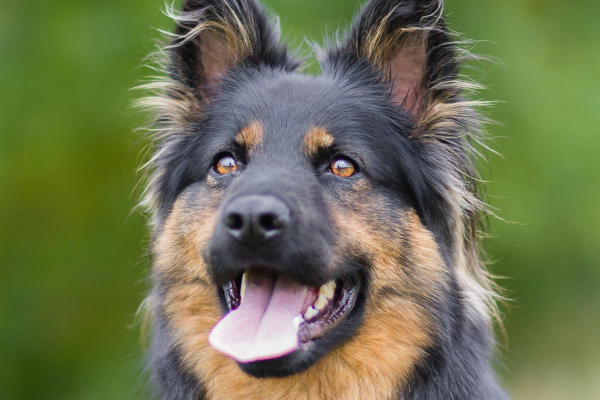
Now that we finished discussing much of the same information as I did during my appointment with Mrs. Jefferson, let’s go back to Nova. As it turns out, Nova had a UTI, which is why she was having so many accidents in the house. I prescribed some antibiotics to treat the UTI and recommended my client use medicated wipes around Nova’s vulva.
Even though my client was very diligent about keeping Nova clean, her dog had a few more episodes of recurring UTIs and mild skin infections. This lead me to recommend pursuing a vulvoplasty surgery for Nova. Thankfully, Mrs. Jefferson had purchased pet insurance for her dog upon adoption, and she was able to move forward with surgery.
Nova had her vulvoplasty and recovered very well. Since then, my client said that her dog is much happier because she is not dealing with an irritated vulva and recurrent UTIs.
Work with your veterinarian
If your dog has a recessed vulva, work closely with your veterinarian to figure out the best plan. Maybe you just need to keep an eye on your dog for symptoms. Or perhaps the vet will want you to use some of the management steps we just discussed. Maybe a vulvoplasty is the best option.
Regardless of which category your dog falls into, you can feel confident that together you and your veterinarian can keep a recessed vulva from interfering with your dog’s health and comfort.
Does your dog have a recessed vulva?
Which management strategies have worked best? Please comment below.
Editor’s note: This post was originally published July 7, 2022. It has been updated to include more information on vulvoplasty surgery.


I thought I was purchasing Chloe at 8 weeks old l and she has been having basic service training by the the woman who reportable normally sells and trains German Shepards from the Breeder she works for that is located in a nearby state, but does her work 2 hours away on a farm.. Ihad good reviews fr9m a friend and was about to buy a German Shepard. I changed my mind when she didn’t recommend one for a Service Dog as I wanted to stay away fr9m a breed where people c9mplained he looked aggressive (he wasn’t, however the Town made me euthanize him after another dog attacted him but was smaller. This Trainer said she could find me a yellow Labrador Retriever from a reputable breeder. I thought I owned the dog after a couple months of training. I trained all 4 of my previous dogs, but I thought it might make it easier to have her begin it for $2,800 (the dogs cost with papers from champion parents t that she said had no confirmation assuring issues or I wouldn’t have bought her. A dog with issues wouldn’t be used for a service dog. I asked her to send the paperwork right away when I made the $509 deposit. Then she picked her up and took her to train at her farm.. I was really sick and was having some head injury issues with finding the papers, but she was so highly recomended I thought she sent them.
I called her to tell her I wanted to come up to get her near the end of September. She kept moving the date out because she wasn’t going to be available. we had arranged to get her onhe 1st week on July. However, she couldn’t make it that weekend or the next…ahe then agreed to bring the d9g too me. because I was sick, but was still wanting to have her.
That’s when I noticed I was having trouble getting a call back. She then said we could sing the papers making me owner. That was a surprise as I made all 4 payments thinking I owned Chloe and was continuing to pay for training, as it turns out I didn’t even own her. I was still ok with it all till she explained that Chloe had a hooded uretha (I hope that’s the right word) and that she had noticed it the day she took her to her farm, but the other breeder never mentioned on her conformation. She had already created Chloe with 2 10 rounds of antibiotics, She never took her to a vet, only spoke on the phone. I told her I was angry she didn’t tell me right away, as I certainly wouldn’t have bought her. She remarked “Well, just didn’t have to tell you, which really made me distrust her more. Chloe had been dragging her but. peeing in her crate after she was already trained for. lots of kicking when it came back. She said it was normal and should out grow it after her 1st period. I since looked it up and I even told her after being told “You can’t expect a Service Dog to perform well and help me when I really need her if she happens to be sick at the same time. plus I don’t drive so I can’t run to the vet easily. She can’t help me if she is miserable too. We hung up…then the next day she sent me another bill for October, which I was hoping to avoid. I had asked her to send all the info she hadn’t before and I wanted an opinion from her vet on how bad it was. I’m so disappointed as I hadn’t been without a servise dog, and was really starting to love her from afar. If I took delivery and the problem comes again, I’ll already be in love with her. Years ago I had a Rottweiler where she had hip dysplasia and found I couldn’t just put her down. I kept her untill the vet reminded me she was ready.
I don’t think its fair that I should have to take her and then wait for the inevitable. She said the contract gives me options for a problem with help. I can’t handle all this! Please advise me…
Dear Sandra,
I am sorry you are in this difficult situation. Forgive me if I have misunderstood some of what you wrote, but have you physically seen this dog? It would seem to me that you would be entitled to take this puppy to a vet of your choosing and have it evaluated. The vet can let you know if a recessed vulva is present, and if so, what the options would be for treatment. I am not sure I would trust what this trainer is telling you or even believe anything presented on paper. The trainer needs to give you time to do your own investigation and then make a choice about whether to keep this puppy or not after you are fully informed. I hope you can find a way to sort through all this confusion and misinformation. Praying for a positive outcome for you and this innocent puppy.
My 12 year old schnauzer is diabetic and has inverted vulva which has just become a problem b/c of her glucose getting high
I am not going to have surgery so I’m hoping to resolve by keeping area dry, using wipes after urination, and maybe have her wear panties at night b/c that’s when she licks the most when her sugar is high, also working on getting her sugar lower
Dear Lisa,
I understand your concern for your senior pup. Hoping her diabetes can become better regulated and praying for relief for your sweet girl. ♥
Hello, thank you for addressing this issue. We have an 11yr old who also has Addison’s Disease alongside her recessed vulva. Our Vet recommended surgery if we had on going issues, which luckily we haven’t. This last year though, the excessive licking and discoloration has been a problem. She is about 20 pounds overweight, so she can’t get to the area to lick without a lot of squirming around and we usually don’t let her lick for very long. I’m worried that it is now vaginitis, but I don’t think any issues with a UTI since she has zero incontinence issues or foul smells, blood in urine. The skin does look to be a bit raw, so we used an antibiotic cream mixed with hydrocortisone and cleaned it with chlorhexidine wipes. What is the best solution for vaginitis alongside a humid climate? Could we keep Vaseline on it after a bath or is that trapping the moisture?
Thanks for your help, greatly appreciated.
Hi Robyne,
I am sorry your senior girl is having these ongoing issues with her recessed vulva. It sounds like you are doing all you can, and I understand how frustrating it can be when dealing with a chronic medical condition. I would not use Vaseline as it is very important to keep the area dry. It is possible the antibiotic cream may be adding too much moisture to the skin as well. Sometimes medicated wipes work best, and chlorhexidine is great because it has a drying effect too. I strongly recommend a follow up visit with your vet. You really need to know if this is truly vaginitis (infection/inflammation inside the vulva) or just a skin infection on the outer surface. Oral antibiotics may be needed to initially get things under control and then you can continue at home treatments for maintenance. Hoping for clear answers and an easy solution. Wishing you both all the best!
Hello,
My girl Lola has a recessed vulva. I’ve been managing to treat her mild skin fold issues at home but sometimes need the Chlorhexidine wipes to clear things.
Are these the best antibacterial/antifungal wipes or is there another option? (I saw in other replies you mention medicated wipes). Im worried about antibacterial resistance.
I am already wiping and drying her after every pee and find trimming the hair around the vulva helps with airflow.
Would you suggest weekly shampoos or should the wipes be enough?
Hi Basia,
I am sorry Lola is living with this difficult condition. It sounds like you have a good routine in place and are doing well with managing at home. I think the chlorhexidine is just fine, but it can sometimes over dry the skin. For this condition I am not sure that would be a negative side effect. It wouldn’t hurt if you wanted to try a medicated wipe instead. Some dogs need a weekly shampoo to keep things maintained. If you aren’t already using shampoo every week, I wouldn’t start unless you are seeing breakthrough issues with the wipes. Lola is lucky to have you taking such good care of her. Wishing you all the best and keep up the good work!