Protein-losing enteropathy (PLE) in dogs is a syndrome in which excess protein is lost through the GI tract for a variety of reasons. Integrative veterinarian Dr. Julie Buzby discusses the signs to watch for and some of the conditions that lead to PLE. Plus, she walks you though the diagnostic process, explains what treatment entails, and discusses the prognosis for dogs with PLE.

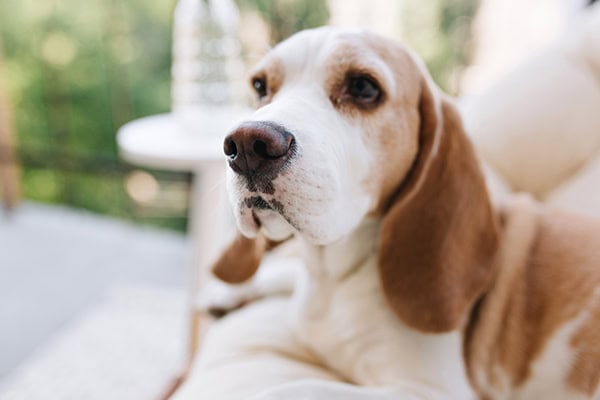
One of my favorite patients, Buddy, was an endearing mix between a Basset Hound and Labrador Retriever. He had the big block head of a Lab and the short stubby legs of a Basset Hound, all paired with a personality that made it difficult not to smile when he walked into the exam room.
The reason for his visit—soft stool—sounded deceptively routine. Occasional changes in stool consistency are common in dogs, and by themselves, they don’t necessarily suggest serious gastrointestinal disease.
But Buddy’s physical exam revealed another new finding that was much more concerning. His abdomen was noticeably distended in a way that made me suspicious of fluid accumulation.
When I put the ultrasound probe on his belly, my suspicion was confirmed. This begged the question of why my sweet patient had fluid building up in his abdomen. After a hard conversation with his mom and dad and some additional diagnostics, we had our answer. Buddy had protein-losing enteropathy, or PLE.
What is PLE in dogs?
The term protein-losing enteropathy (PLE) describes a group of gastrointestinal diseases in which a dog’s intestines lose an abnormal amount of protein. That loss matters because proteins in the bloodstream, particularly a protein called albumin, play an essential role in keeping fluid inside the blood vessels.
PLE is a syndrome not a single disease
One important thing to understand about protein-losing enteropathy is that it is a syndrome, not a specific disease. A disease is a particular disorder with a specific underlying cause. A syndrome, on the other hand, is a collection of signs and physiological changes that can result from several different diseases.
Think of PLE as describing what the gastrointestinal tract is doing, rather than exactly why it is doing it. In dogs with PLE, the intestines are allowing an abnormal amount of protein to escape from the bloodstream into the gastrointestinal tract, and ultimately leave the body.
Why is it a problem if a dog is losing protein?
Understanding the consequences of PLE requires a quick look at the protein albumin and its role in fluid distribution.
Think of the blood vessels in your dog’s body as a network of tiny, flexible pipes carrying fluid and everything the body needs to function. Some fluid naturally moves out of the blood vessels and into surrounding tissues. And then it moves back in again. Keeping that fluid in the right place requires a careful balance of two forces, oncotic pressure and hydrostatic pressure.
Oncotic pressure keeps fluid in blood vessels
One of the forces helping keep fluid inside the blood vessels is called oncotic pressure. Albumin is the most important protein contributing to oncotic pressure in the bloodstream.
It may help to imagine albumin as a sponge within the blood vessels. Because albumin is a relatively large protein that normally remains inside the blood vessels, it pulls or holds water within the vessels.
Hydrostatic pressure pushes fluid out of blood vessels
At the same time, the pressure generated by blood moving through the vessels, called hydrostatic pressure, tends to push fluid outward through the vessel walls.
When there is plenty of albumin in the bloodstream, its contribution to oncotic pressure helps counteract the outward push of hydrostatic pressure. The result is a healthy balance. Fluid can move between the bloodstream and tissues, but excessive amounts don’t accumulate outside the vessels.
Albumin loss due to PLE decreases oncotic pressure
In dogs with PLE, albumin is lost through the gastrointestinal tract. The “sponge” isn’t as effective at helping keep fluid within the bloodstream. When that happens, the balance shifts and more fluid moves out of the blood vessels and into surrounding tissues or body cavities. This can result in edema (swelling) and ascites (accumulation of fluid within the abdomen).
These fluid shifts are one reason PLE can be much more serious than its gastrointestinal signs might initially suggest. What begins with disease in the intestines can ultimately affect the distribution of fluid throughout the entire body.
What causes PLE in dogs?
Remember, PLE is a syndrome and not a specific disease. Thus, there can be many underlying causes. The most common causes include chronic inflammatory enteropathies and intestinal lymphangiectasia, although other intestinal diseases can also lead to PLE.

Chronic inflammatory enteropathies
Chronic inflammation of the intestinal tract is one of the most common causes of PLE. You may hear veterinarians use several different terms for these conditions.
Chronic enteropathy (CE) is an umbrella term for gastrointestinal disease that persists over time. Within this category are different forms of chronic enteropathy, including food-responsive GI disease and inflammatory bowel disease (IBD in dogs).
Traditionally, the term IBD has been used to describe chronic intestinal disease associated with inflammation identified on intestinal biopsies. More recently, veterinarians have begun to prefer the broader term chronic inflammatory enteropathy (CIE) because it better reflects the range of chronic intestinal disorders we see.
Chronic inflammatory intestinal disease can damage the intestinal lining enough to allow significant amounts of protein to escape into the gastrointestinal tract. However, not every dog with chronic enteropathy develops PLE. Protein loss occurs when the intestinal disease is severe enough to disrupt the normal intestinal barrier or lymphatic system.
Intestinal lymphangiectasia
Intestinal lymphangiectasia is another important cause of PLE. The lymphatic system normally transports fats and other substances from the intestines. And then it eventually returns lymph and the proteins it contains back to the bloodstream.
When intestinal lymphatic vessels become abnormally dilated or damaged, lymph can leak into the intestinal tract. Because lymph contains proteins, this can result in significant protein loss.
Cancer and other infiltrative diseases
Certain cancers can damage or infiltrate the intestinal wall and cause protein to be lost into the gastrointestinal tract. Intestinal lymphoma in dogs is the most common cancer affecting the GI tract that can manifest as PLE. Other cancers like carcinoma can less commonly cause these same signs.
Infectious or parasitic diseases
Infections and intestinal parasites can occasionally cause PLE by creating enough inflammation or damage to the intestinal lining that protein leaks from the bloodstream into the gastrointestinal tract. Potential causes include:
- Intestinal parasites, particularly hookworms, which can damage the intestinal lining and cause blood and protein loss. Heavy parasite burdens are especially problematic in puppies and dogs who don’t receive consistent parasite prevention.
- Bacterial infections, such as Salmonella, Campylobacter, and certain strains of E. coli, can cause significant intestinal inflammation. And in severe cases, they may contribute to protein loss.
- Fungal infections, including gastrointestinal histoplasmosis, can cause substantial inflammation and infiltration of the intestinal wall. Histoplasmosis is particularly important in dogs living in or traveling through areas where the organism is found in the environment.
Whether or not an infectious or parasitic cause is high on your veterinarian’s list depends on factors such as your dog’s age, geographic location, travel history, and parasite-prevention protocol.
Finding the cause of PLE matters
The important takeaway is that PLE can have numerous causes, and finding the underlying disease is essential to treatment. Two dogs may both have PLE while requiring very different approaches to get their disease under control. Understanding the potential causes gives your veterinarian a roadmap for figuring out what is happening in your individual dog.
Which dogs are at risk for developing PLE?
Protein-losing enteropathy can occur in dogs of many ages and breeds. But some breeds may have an increased predisposition to one of the causes we just discussed.
Breeds reported to be predisposed to PLE include:
- Yorkshire Terriers: Yorkies have a particularly increased risk of intestinal lymphangiectasia as their cause of PLE.
- Soft-Coated Wheaten Terriers
- Norwegian Lundehunds
- Basenjis
- Maltese
- Chinese Shar-Pei
- Rottweilers
- Border Collies
- German Shepherd Dogs
This list isn’t meant to suggest that these breeds will develop PLE, or that other breeds are protected from it. So don’t panic if your furry family member’s breed is on this list.
Rather, the point is that knowing about breed predispositions can help your veterinarian recognize PLE and its underlying causes sooner. For example, chronic gastrointestinal signs like diarrhea, weight loss, and poor appetite, plus low blood protein levels in a Yorkie may quickly lead your vet to put PLE at the top of the differential diagnosis list.
What are the symptoms of protein-losing enteropathy?
Since PLE is a problem at the level of the GI tract, the most common signs are gastrointestinal in nature. Depending on the underlying cause, these GI signs may be persistent or may come and go.
Additionally, you may see signs related to fluid shifts due to low blood albumin.
GI symptoms of PLE
Common gastrointestinal signs of protein-losing enteropathy include:
- Chronic or intermittent diarrhea: The dog may have soft stools or runny diarrhea that doesn’t seem to resolve or keeps coming back.
- Vomiting: You might see affected dogs licking their lips due to nausea or the dog might vomit occasionally.
- Decreased appetite: Some dogs don’t want to eat as much as usual.
- Weight loss: Over time, you might notice your dog is looking thinner or drops a level on the dog body condition score (BCS) chart.
- Poor body condition or muscle loss: The body may break down muscle tissue in an effort to make more protein to replace what is being lost. As a result of the potential muscle loss and weight loss, your dog’s bones may seem more prominent.
Systemic symptoms of PLE
PLE isn’t just a gastrointestinal problem. As we discussed earlier, significant protein loss can affect the body’s ability to keep fluid within the blood vessels. Once that “sponge” inside the bloodstream becomes depleted, fluid can begin to accumulate where it shouldn’t.
This can manifest in the following ways:
- Edema, or swelling, often of the lower parts of the body like the legs and chest
- Abdominal distension (a pot-bellied dog appearance) from fluid accumulation in the abdomen (ascites)
- Difficulty breathing if fluid accumulates around the lungs (pleural effusion)
When do you need to seek veterinary care?
This is an important time to point out that some dogs with PLE don’t initially look dramatically sick. A dog may have relatively mild or intermittent diarrhea while quietly starting to lose a significant amount of protein. For this reason, persistent gastrointestinal signs, unexplained weight loss or changes in appetite warrant further investigation in the form of a veterinary visit.

On the other hand, a suddenly distended abdomen, significant swelling, or difficulty breathing can be much more immediately dangerous. If you see them, make an emergency vet visit right away.
How will the vet diagnose PLE in dogs?
Diagnosing PLE is a bit like putting together a puzzle. Your vet will use the history, physical examination, bloodwork, imaging, and sometimes intestinal biopsies to determine whether a dog is losing protein through the GI tract and, if so, what is causing it.
History and physical exam
The first step is a thorough history and physical examination. Your veterinarian will want to know about the gastrointestinal signs, how long they’ve been present, changes in appetite or weight, diet, medications, parasite prevention, travel and environmental exposures, and anything else that might give clues to the specific underlying disease.
During the physical exam, your veterinarian will assess your dog’s muscle mass and check for any swelling or a fluid wave when palpating your dog’s belly. Plus, he or she will look for signs of dehydration in dogs or other systemic illnesses.
Then it is time to start down the road of diagnostic testing. The first step is determining if the blood protein levels are low. If so, the vet will run more diagnostics to find out where the protein loss is occurring, and why it is happening.
Initial diagnostics to detect low protein
The veterinarian will run some initial blood tests for dogs such as a complete blood count (CBC) and chemistry panel, which both provide vital information.
The chemistry panel is particularly helpful because it measures total blood protein and albumin levels. Dogs with PLE will have low total protein (hypoproteinemia) and low albumin (hypoalbuminemia). Globulin is another blood protein that is often low as well, but globulin levels can be normal or even increased.
Depending on the underlying disease process, your veterinarian may also see abnormalities such as low cholesterol, electrolyte changes, or high liver enzymes in dogs.
The CBC, which measures red cells, white cells, and platelets, can provide additional clues. Some dogs may have a mildly low red count (anemia in dogs), changes in their white blood cell counts associated with inflammation, or a low lymphocyte (type of white blood cell) count.
None of these findings is specific for PLE. But together they help your veterinarian understand the bigger picture.
Diagnostics to track down the source of the protein loss
If lab work confirms low protein levels, your veterinarian then needs to find out where the protein loss is coming from.
We have spent the greater part of this article focusing on protein loss via the GI tract. But protein can also be lost through the kidneys. Or the protein levels can be low if the liver is not making proteins normally. Thus, the vet needs to be able to distinguish between these different reasons for low blood protein levels.
To evaluate the liver, the vet will start by looking for indicators of liver issues on the chemistry panel. These may include abnormal liver enzymes levels or lower-than-normal amounts other products made by the liver like cholesterol and glucose. When more specific liver testing is required, the vet may recommend a bile acids test to asses liver function.
If your veterinarian is suspicious of GI protein loss and has ruled out liver dysfunction, then the last step is to perform a urinalysis to rule out protein loss in the urine.
Finding the cause of the PLE
If the liver or the kidneys aren’t the culprit, the vet will focus his or her attention on the GI tract.
GI tract imaging
The next piece of the diagnostic puzzle often comes from the abdominal ultrasound. This type of imaging allows your veterinarian to take a closer look at your precious pup’s intestines and the other abdominal organs.
Ultrasound cannot diagnose every cause of PLE, but it can provide valuable clues to support the diagnosis. These can include:
- Thickening of the intestinal wall
- Abnormal or thickened intestinal mucosal layers
- Prominent or dilated intestinal lymphatic vessels
- Changes in the normal layering of the intestines
- Enlarged abdominal lymph nodes
- Free abdominal fluid (ascites)
It is important to know, however, that some dogs with PLE can have relatively normal-looking intestines on ultrasound. Thus, a normal ultrasound does not rule out PLE.
Testing for parasites or infectious diseases
The vet will also want to ensure he or she is not overlooking a treatable infectious or parasitic cause of the gastrointestinal disease. For example, the work up may include fecal tests for dogs to look for intestinal parasites. Depending on your beloved canine companion’s specific history, your veterinarian may also suggest additional testing for other infectious diseases.
GI panel or other diagnostic tests
Additional blood testing may also help guide the investigation and treatment. A GI panel, for example, can assess levels of cobalamin (vitamin B12) and folate. This helps provide information about intestinal function.
Also, cobalamin deficiency is relatively common in dogs with chronic intestinal disease. Detecting it is important because a low cobalamin level may influence the treatment plan.
Intestinal biopsies
Sometimes, the history, bloodwork, imaging, and other testing provide a strong enough picture to begin treatment. But if the goal is to reach a definitive diagnosis, the vet may offer intestinal biopsies.
Biopsies allow a veterinary pathologist to examine the intestinal tissue under a microscope and look for things such as inflammatory cell infiltration, lymphatic dilation, abnormal changes to the intestinal lining, or evidence of cancer and other infiltrative diseases.
There are two primary ways to obtain intestinal biopsy samples:
- Endoscopic biopsies are collected using a flexible camera passed through the mouth or rectum into the gastrointestinal tract. They are less invasive than surgery and generally have a shorter recovery time. However, the samples are relatively small and are limited to portions of the GI tract that can be reached with the scope.
- Surgical biopsies require abdominal surgery but allow the veterinarian to collect larger, full-thickness samples from multiple areas of the gastrointestinal tract. This can be particularly valuable when disease may involve deeper layers of the intestinal wall or when the ultrasound findings suggest a focal lesion. The tradeoff is that surgery is more invasive and requires a longer recovery.
What is the treatment for PLE in dogs?
Treating PLE means treating the underlying problem. Once the vet understands why a dog is losing protein, he or she can choose a treatment plan tailored to that cause. As a result, the right treatment can look very different from one dog to another.
Treating chronic inflammatory enteropathies
For dogs with chronic inflammatory enteropathies, diet is often an important part of treatment. Depending on the individual dog, this may be a highly digestible diet, a novel-protein diet, a hydrolyzed-protein diet, or a home-cooked diet.
Some dogs also need medications to control intestinal inflammation. Typically, the vet will use corticosteroids like prednisone for dogs with or without a secondary immunosuppressive agent.
Managing intestinal lymphangiectasia
When intestinal lymphangiectasia is responsible for PLE, dietary management becomes even more important. A prescription low-fat diet can help reduce the flow of lymph through the intestinal lymphatic system and decrease further protein loss. Some dogs may also require additional medications or supplementation depending on the severity of their disease.
Addressing parasites, infection, or cancer
For PLE due to parasites or an infection, the vet will direct treatment toward eliminating the specific infectious organism. And when cancer is the underlying cause, treatment may involve chemotherapy.
Providing supportive care
Dogs with severe protein loss may also need supportive care while the underlying disease is brought under control. This can include nutritional support, vitamin B12 supplementation when levels are low, and other medications or supplements tailored to the individual dog’s needs.
If significant fluid accumulation develops, such as ascites or pleural effusion, your veterinarian may need to remove the fluid while working to correct the underlying protein loss.
Medications to reduce the risk of clot formation
One important complication of PLE is thromboembolism, or the formation of blood clots. Dogs with significant protein loss also lose a protein called anti-thrombin that helps prevent inappropriate clotting. Thromboembolic disease isn’t inevitable. But it is an important risk for veterinarians to keep in mind when managing dogs with PLE.
Depending on a dog’s individual risk factors and disease severity, your veterinarian may recommend medications to help reduce the risk of clot formation.
Working with your vet
PLE often requires ongoing management and close collaboration with your veterinarian. Some keys to tracking your dog’s progress are regular monitoring of albumin levels and clinical signs. Based on that information, and feedback from you regarding medication side effects, how your dog is eating the diet, etc., your vet can adjust the treatment plan as necessary.
What is the prognosis for dogs with PLE?
Hearing that your dog has protein-losing enteropathy can feel scary. But PLE does not automatically mean a poor outcome. Prognosis depends on the underlying disease, how severely an individual dog is affected, and how well they respond to treatment.
In a recent Journal of Veterinary Internal Medicine study of 195 dogs with PLE, the median survival time was just over two years for most breeds of dogs aside from Pugs, who had a much poorer prognosis.
Importantly, this is a population statistic, not a prediction for an individual dog. Some dogs respond very well to treatment and can enjoy a good quality of life for years. Others have more severe or difficult-to-control disease.
That’s why I don’t want the families I counsel to focus too much on a single number. Once we identify the underlying cause and get the protein loss under control, we have a much better idea of what to expect long term.
Overall, PLE is a serious diagnosis, but it isn’t necessarily a hopeless one. Finding and treating the underlying disease gives your vet the best opportunity to get the protein loss under control and help your precious pup get back to feeling their best.
Back to my PLE patient
And what about my sweet patient?
For Buddy, the pieces of the puzzle began to come together with each step of the workup. His physical examination raised the initial concern, his bloodwork revealed the protein loss, and his abdominal ultrasound showed changes consistent with PLE, along with the abdominal fluid that first caught our attention.
His distended abdomen was a visible clue to an invisible problem—his gastrointestinal tract was losing precious protein. But discovering his PLE wasn’t the end of his story. It was the first step to figuring out why he was losing protein and, importantly, what we could do about it.
After discussing the diagnostic options, his devoted dog parents decided not to pursue intestinal biopsies. Instead, we focused on treating the most likely underlying inflammatory disease. I started him on immunosuppressive medications along with a hypoallergenic, low-fat diet. And I’m happy to report that he is doing well!
These days, you would never know how sick he was by looking at him. His favorite activities are back on the schedule. And that expressive Basset-Lab face is once again doing what it does best—looking completely innocent while keeping a close eye on whatever his people are eating.
PLE doesn’t have to be the end of your dog’s story
My patient’s story is a good reminder that a diagnosis of PLE doesn’t have to be the end of the story. It can take patience, careful monitoring, and some trial and error to find the right treatment. But many dogs with PLE can be managed successfully and keep on living life to the fullest.
Was your dog diagnosed with PLE?
Please share below.

