High liver enzymes in dogs can have a multitude of causes, and the outlook may vary significantly. To help you sort through your dog’s liver enzyme elevations, integrative veterinarian Dr. Julie Buzby explains the four main liver enzymes (ALT, AST, ALP, and GGT) and discusses the causes, diagnosis, treatment, and prognosis for high liver enzymes in dogs.
I remember during my second year of veterinary school being a bit discombobulated by the alphabet soup that is the liver enzymes. ALP, ALT, AST, and GGT…Oh My!
Luckily, with 25+ years of experience under my stethoscope, I can now look at chemistry panel results and not bat an eye. It has become almost second nature to interpret high liver values and counsel my worried clients on what we should do next.
I know, though, that even most knowledgeable dog parents can feel overwhelmed if their veterinarian discovers their beloved canine companion’s liver enzymes are high. That’s why I wanted to share some of my expertise and insight with you.
Hopefully, this information will help you confidently advocate for your pup as you work closely with your family veterinarian to navigate the slightly murky waters of elevated liver enzymes in dogs.
- What are high liver enzymes in dogs?
- What does the liver do?
- What are the common liver enzymes in dogs?
- How do vets interpret high liver enzymes?
- What causes high liver enzymes in dogs?
- How worried should you be about high liver enzymes?
- What diagnostics will my vet use if my dog has elevated liver enzymes?
- How do you treat elevated liver enzymes in dogs?
- Will my dog need long term care or monitoring?
- What is the prognosis for elevated liver enzymes in dogs?
- Work with your veterinarian
- What was the cause of your dog's high liver enzymes?
What are high liver enzymes in dogs?
First, let’s get some terminology down. When your vet says that your dog has “high liver enzymes,” this isn’t a specific diagnosis. Instead, elevated liver enzymes (i.e. an increase in ALT, AST, ALP and/or GGT on bloodwork) are merely a symptom that can point to quite a long list of diseases or conditions.
These conditions can be things directly affecting the liver. But they are just as likely to be diseases in other parts of the body altogether. And to add to the confusion, there are many factors to consider when determining if elevated liver values are no big deal, or if they might indicate a serious problem.
Think of it this way. While high liver values are not inherently “bad,” they are still something you and your vet should take seriously. Elevations in liver enzymes can sometimes serve as an early warning sign of liver problems or other health issues. And as with other conditions, the sooner your vet finds and addresses the problem, the better the outcome usually is.
We’ll get to the nitty gritty of the liver enzymes and what they might mean for your dog in a bit. First, a primer on the liver will be helpful.
What does the liver do?
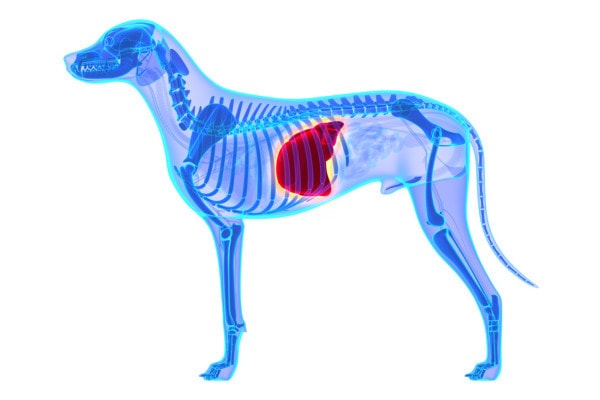
The liver is one of the larger organs in the body. And it sits tucked up in your dog’s abdomen under the ribs, snuggled between the diaphragm and the gastrointestinal (GI) tract. The liver is a powerhouse organ that performs literally hundreds of tasks. So it is no wonder it needs to take up a fair bit of space in the abdomen.
Among other things, the liver:
- Filters toxins from the blood
- Processes the nutrients from the food your dog eats
- Stores leftover energy from food for later use
- Makes proteins needed for vital processes like blood clotting
The gallbladder
The liver also has a buddy—the gallbladder—which is a small, pear-shaped organ tucked into the liver. The gallbladder’s main job is to store bile, a fluid the liver produces to aid in digestion.
More specifically, bile is essential for digesting fats. When your pup eats a meal that contains fat, the gallbladder contracts. This squeezes a bit of bile through the common bile duct and into the small intestines. There, bile helps break the fat into smaller pieces that the GI tract can absorb. Then, as blood from the intestinal tract flows through the liver, the liver pulls out some of the bile components to reuse them again.
The gallbladder and all the bile ducts (i.e. pathways the bile follows through the liver tissue) make up the biliary system.
Liver enzymes
Additionally, the liver contains many enzymes. Enzymes are like tiny, special workers in your dog’s body. Imagine them as little helpers that do specific jobs to keep things running smoothly.
Since the liver has so many jobs to do, there are lots of different enzymes that work within the liver. These enzymes are typically detectable in the bloodstream at levels that fall into a “normal” range. But in some situations (e.g. liver injury or disease), liver enzymes leak out of the liver and into the bloodstream in higher amounts than normal.
A chemistry panel can pick up on these increased enzyme levels, alerting the vet to the fact that the dog has high liver enzymes.
What are the common liver enzymes in dogs?
Typically, when your vet says your dear dog has high liver enzymes, he or she is talking about alanine aminotransferase (ALT), aspartate aminotransferase (AST), alkaline phosphatase (ALP) and gamma-glutamyltransferase (GGT). These are the liver values that a common blood chemistry panel usually measures.
Sometimes a dog will just have an elevation in one liver enzyme. But in other cases, all the liver enzyme levels may be higher than they should be. Which liver values are elevated can give clues to the underlying cause, so it is worth understanding a bit about each enzyme.
Alanine aminotransferase (ALT)
ALT (alanine aminotransferase) is an enzyme that is found primarily inside liver cells (i.e. hepatocytes). However, muscles, the kidneys, and red blood cells also contain small amounts of ALT.
When the liver is healthy, ALT levels in your pup’s blood are low because most of the ALT stays inside the liver. However, if something is wrong with your dog’s liver, such as liver injury or inflammation, the liver cells can release ALT into the bloodstream. This makes ALT a sensitive marker of injury to liver cells, especially since, out of all the liver enzymes, it is the most specific indicator of a problem within the liver itself.

Since ALT is fairly liver-specific, there really aren’t many other issues besides liver damage that can cause elevations in ALT. Occasionally, severe muscle damage may cause ALT values to be high. But if this is the case, usually your veterinarian will see other obvious changes on the chemistry panel, such as a concurrent severe elevation in a muscle enzyme known as creatine kinase (CK).
Also, it’s worth knowing that the body clears ALT from the bloodstream quickly. This means if ALT is high, then the liver has suffered a recent injury or insult. This trait also makes ALT especially useful when monitoring a dog’s recovery after an acute liver injury because ALT levels decrease quickly once liver damage ceases.
Aspartate aminotransferase (AST)
AST (aspartate aminotransferase) is another enzyme that is found inside liver cells. It also occurs in moderate amounts in several other types of cells, like those within the heart and the muscles. AST generally increases in parallel with ALT. However, AST is less specific for liver injury than ALT because AST levels can also rise due to an insult to the heart, muscle, or from red blood cell destruction.
AST levels stay elevated in circulation for an even shorter time than ALT. This means AST levels will go down and (hopefully) normalize even faster than ALT levels in patients who have suffered a sudden and severe insult or injury to their liver that has now resolved.
Alkaline phosphatase (ALP)
ALP (alkaline phosphatase) is an enzyme found in liver cells too. But only certain liver cells—those that line the bile ducts within the liver—contain ALP.
While an elevated ALP in dogs often indicates a problem with the liver, gallbladder, or the flow of bile, it is not nearly as specific of an indicator of a problem in those organs as some of the other liver enzymes. Bone also produces ALP, so growing young dogs often have a mildly elevated ALP. Plus, ALP elevations also occur in patients with bone infections or bone cancer (i.e. osteosarcoma in dogs). And since high steroid levels can cause ALP levels to rise, dogs with Cushing’s disease in dogs and those receiving oral or topical steroids also commonly have increased ALP values.
This is just a snapshot. Many disease processes, both within the liver and in other parts of the body, can cause high ALP values. And mild to moderate ALP elevations can even be present with several age-related benign conditions.
So if your pup only has an elevated ALP, take a deep breath, check out my high ALP in dogs article, and know that the odds are in your favor that your furry family member will have a favorable prognosis.
Gamma-glutamyltransferase (GGT)
GGT (gamma-glutamyltransferase) is also present in the liver cells lining the ducts where bile flows. It specifically works within the outer lining, or cell membrane, of those cells. Just like ALP, elevations in GGT are a marker of a problem with the flow of bile. The issue usually occurs either as the bile flows through the liver or as it exits the gallbladder.
In dogs, GGT is more specific for disease within the gallbladder or liver than ALP. And its levels are less likely to be high from other non-liver or non-gallbladder-related problems.
How do vets interpret high liver enzymes?
Often a chemistry panel will measure all four of these liver enzymes (plus many other values too). Being able to look at the ALT, AST, ALP and GGT at the same time is helpful for the vet because there are several patterns of enzyme elevations that can provide clues about the source of the issue.
1. Hepatocellular pattern
A hepatocellular pattern happens when the main elevations are in ALT and AST. Since both of these enzymes live inside liver cells, concurrent elevations in ALT and AST levels suggest that something has damaged the liver cells themselves.
2. Cholestatic pattern
In a cholestatic pattern, enzymes like ALP and GGT are higher than the ALT and AST levels. This pattern tends to indicate that there is a problem with the bile ducts or the flow of bile from the liver to the small intestine. This bile flow “traffic jam,” which can be caused by conditions like gallstones or a blockage in the bile ducts, is also called cholestasis.
3. Mixed pattern
However, sometimes things are not so cut and dry. Dogs may have a mix of liver enzyme elevations, including both hepatocellular (ALT and AST) and cholestatic (ALP and GGT) enzymes. This can suggest a combination of liver cell damage and issues with bile flow.
What causes high liver enzymes in dogs?
There are some specific diseases and conditions that tend to cause each pattern of elevated liver enzymes. This makes the pattern method useful when searching for the reason for the increased liver values.
However, there is also a second, equally useful approach to organizing the causes of increased liver values in dogs. It involves separating them into problems that are directly related to the liver and/or gallbladder (i.e. hepatobiliary) or that are not a primary liver or gallbladder problem (i.e. extra-hepatic). With the extra-hepatic causes, the liver enzyme elevations are due to the secondary effects of a disease or illness in another organ system.
Using a combination of both approaches, let’s take a look at the various causes of high liver enzymes in dogs.
Causes of a hepatocellular pattern
As a review, in a hepatocellular pattern, the ALT and AST are more elevated than the ALP and GGT.
Hepatobiliary causes
Some common hepatobiliary causes (causes related to liver disease in dogs or gall bladder problems) of a hepatocellular pattern include:
- Chronic hepatitis
- Cholangiohepatitis (i.e. inflammation of the liver and biliary system)
- Copper hepatopathy
- Infectious causes
- Leptospirosis
- Infectious canine hepatitis
- Histoplasmosis
- Toxins
- Sago palm
- Blue green algae toxicity in dogs
- Amanita mushrooms
- Aflatoxins
- Xylitol toxicity in dogs
- Heavy metals
- Hepatotoxic Medications
- Ketoconazole
- Azathioprine
- Carprofen for dogs
- Acetaminophen
- Certain chemotherapy medications
- Congenital portosystemic shunts (i.e. abnormal blood vessel that connects the liver and systemic circulation)
- Microvascular dysplasia (i.e. congenital abnormality of the microscopic blood vessels in the liver)
- Liver cancer in dogs
- Systemic cancer
- Lymphoma in dogs
- Histiocytic sarcoma
- Mast cell tumors in dogs
- Any cancer that has metastasized to the liver
Extra-hepatic causes
Some common extra-hepatic causes of a hepatocellular pattern are:
- Pancreatitis in dogs
- Gastroenteritis
- Congestive heart failure
- Dental disease in dogs
- Inflammatory bowel disease (IBD in dogs)
- Anaphylaxis
- Sepsis
- Seizures in dogs
- Trauma
Causes of a cholestatic pattern
In a cholestatic pattern, remember that the GGT and ALP are more elevated than the ALT and AST.
Hepatobiliary causes
Some common hepatobiliary causes of cholestatic pattern include:
- Nodular hyperplasia (i.e. a benign condition that is common in older dogs)
- Vacuolar hepatopathy in dogs
- Cholangitis (i.e. inflammation of the bile ducts)
- Gallstones
- Gallbladder mucocele in dogs
- Liver or gallbladder cancer
Extra-hepatic causes

Common extra-hepatic causes of a cholestatic pattern are:
- Medications like steroids (i.e. prednisone for dogs) and certain anti-seizure drugs
- Pancreatitis
- Inflammatory bowel disease
- Diabetes mellitus in dogs
- Hypothyroidism in dogs
- Cushing’s disease in dogs
However, real life is often messier, and not every dog reads the textbook. So it is important to remember that these categories are not hard and fast, and that many dogs will have a mixed pattern of enzyme elevation.
How worried should you be about high liver enzymes?
When looking at this huge list of causes, it can be easy to start to worry or feel overwhelmed. However, while high liver enzymes in dogs shouldn’t be ignored, it will hopefully ease your mind to know that there are some causes, like benign nodular hyperplasia, that really are no big deal. And there are even more conditions that affect liver values, but once identified, are easy to treat with no long-term negative consequences.
Here’s are some factors to consider when you and your veterinarian are deciding how concerned you should be about elevated liver enzymes:
The magnitude and persistence of the elevations
If your dog’s liver enzymes remain consistently elevated over multiple vet visits, this is a cause for concern. And so is a “significant elevation” in the liver values. Generally, the consensus is that if the value is more than three times the high end of the reference range, this counts as a “significant elevation.”
In short, a single mild elevation may not be alarming. But ongoing or significant increases in liver enzyme levels should prompt further investigation.
Your dog’s symptoms (if any)
Often, the vet may find high liver values on routine bloodwork in dogs who are otherwise feeling fine. This is typically less concerning than if the dog is showing signs of illness.
As a point of interest, high liver enzymes themselves don’t even cause symptoms that you can observe directly. Instead, the symptoms you might notice are usually related to the underlying cause of the elevated liver enzymes.
High liver enzymes that are accompanied by the following clinical signs are concerning. And they may indicate a more serious health issue.
- Jaundice (i.e. yellowing of the eyes, gums, or skin)
- Vomiting
- Diarrhea
- Being a lethargic dog
- Loss of appetite
- Increased thirst in dogs
- Abdominal distention (i.e. a pot-bellied dog appearance)
It’s important to note that these symptoms are not specific to liver disease and can occur in various other health conditions. If you observe any of these symptoms in your dog, especially if they persist or worsen, it’s crucial to consult with a veterinarian.
Pre-existing conditions
Dogs with pre-existing health conditions like diabetes, Cushing’s disease, or inflammatory bowel disease may be at a higher risk of liver problems. Elevated liver enzymes in dogs with these or other underlying health conditions should be closely monitored and promptly addressed.
Changes in behavior
If liver disease progresses to liver failure, this can manifest as neurologic changes like confusion, disorientation, dull mentation, or even seizures. Therefore, you should always discuss any significant changes in your dog’s behavior with your veterinarian.
Age and breed
Your veterinarian will always consider the age and breed of your furry family member when deciding how concerned they are about elevated liver values. For example, puppies can have a mildly elevated ALP because they are growing. This isn’t a cause for concern.

Additionally, some dog breeds are more prone to certain liver conditions. For instance, Yorkies are the poster children for both portosystemic shunts and microvascular dysplasia. And Labradors are known to have both chronic hepatitis and copper hepatitis. Thus, if you have a breed with a known predisposition to liver issues, your veterinarian is likely to recommend being more proactive about working up any elevated liver values.
Follow your vet’s guidance
Your veterinarian will discuss these factors with you and make recommendations about how to proceed. Sometimes the answer might be to recheck the values in a few weeks or months. And in other situations, the vet may feel it is important to dig deeper to find the cause of the elevations right away.
What diagnostics will my vet use if my dog has elevated liver enzymes?
If your dog’s bloodwork shows high liver enzymes and the vet recommends investigating further, the good news is that despite the daunting list of different causes of liver enzyme elevation, the steps involved in the diagnostic work-up are relatively similar across the board.
Blood tests
If your vet has not already done so, he or she may recommend a chemistry panel, complete blood count (CBC), and urinalysis as the first step. The veterinarian will likely pay close attention to certain values on the chemistry panel, such as bilirubin levels, BUN, albumin, cholesterol, and glucose. All of these numbers can help assess liver function (which is not something the ALT, AST, ALP, and GGT levels can tell you about).
The vet may also recommend a bile acid test. This is another non-invasive laboratory test that checks for liver dysfunction. With this test, the vet draws a blood sample before and after the dog eats a small meal. The bile acid numbers before and after eating give the vet an idea of how well the liver is able to recycle and process bile. If the bile acids levels are high, this indicates the liver is not functioning optimally.
Additionally, if the vet suspects an infectious disease like leptospirosis, he or she may perform specific blood tests to check for antibodies or the presence of the infectious agent.
Finally, since liver disease can affect blood clotting, the vet may recommend performing a coagulation profile. This blood test can assess clotting times and ensure the liver is producing the necessary clotting factors. (However, a coagulation profile requires special tubes, handling, and a special machine, so it may only be available at certain veterinary hospitals.)
Imaging
Imaging of the liver is almost always helpful in cases of elevated liver values. An abdominal ultrasound tends to provide more diagnostic information than abdominal X-rays. Ultrasound has the advantage of being able to evaluate the size and shape of the liver and check for abnormalities like tumors, gallstones, or blockages in the bile ducts. Plus, ultrasound can reveal subtle changes that might suggest that other underlying conditions, like pancreatitis or Cushing’s disease, are at play.
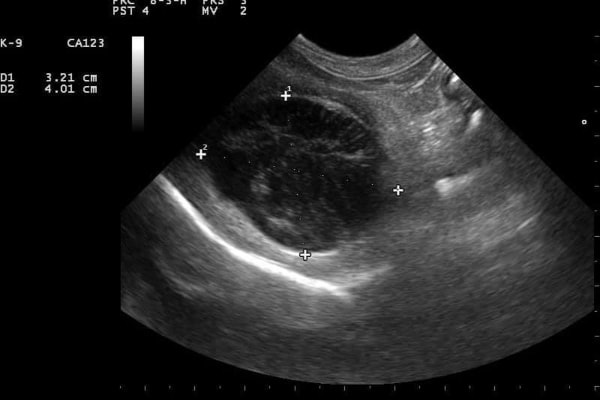
Additionally, in some complex cases, for instance if the vet suspects a liver shunt, he or she may recommend a CT scan. This can be a good way to provide more detailed images of the liver, blood vessels, and surrounding structures.
Sampling the liver
Obtaining a sample of tissue from the liver can help the vet look for cancer or inflammation, or for the build-up of copper seen in dogs with copper hepatopathy. There are two possible sampling methods.
One is a fine needle aspirate (FNA), which involves using a small needle to pull some cells out of the liver under ultrasound guidance. The other is a liver biopsy, a procedure in which the vet obtains a small piece of liver tissue for evaluation.
Many veterinarians start with liver aspirates before considering liver biopsies. This is the case because the vet can often perform the FNA with only mild sedation, and it is generally considered to be a low risk procedure. FNAs are good at checking for certain cancers and are non-invasive. But they don’t provide a large enough sample to assess for inflammation or to check copper levels.
On the other hand, liver biopsies provide a larger sample of tissue and are often the best way to determine exactly what is going on in the liver. However, they are a more intensive diagnostic. A liver biopsy comes at a higher cost and has an increased risk of bleeding, as well as the need for general anesthesia.
Work with your veterinarian (and possibly a specialist)
The specific tests that your veterinarian recommends will depend on your dog’s history, physical exam, and lab work. Often the veterinarian can perform some of the preliminary testing in-house. But there may be times when your vet may refer your beloved canine companion to a veterinary specialist near you for additional testing, procedures, or follow-up.
How do you treat elevated liver enzymes in dogs?
After reaching a diagnosis, your vet will work with you to formulate a plan.
Remember that high liver enzymes are a symptom of some other problem—either within the liver or in another organ system. Thus, the treatments can vary widely depending on the suspected cause of the elevations and your dog’s situation. As discussed above, your veterinarian will take into account which values are elevated, the magnitude of the elevation, and the dog’s symptoms, age, and breed, when creating the plan.
In some cases, benign neglect and monitoring are enough. But in other cases (for example, where values are consistently and significantly elevated), finding and addressing the root cause is essential.
When it comes to treatments, some of the options that might be on the table include:
Special diet
In some cases, dietary changes can help support liver function. Your veterinarian may recommend a special prescription diet formulated to support liver health. These diets are designed to reduce the workload on the liver and provide necessary nutrients.
Medications
Medications for liver disease tend to fall into one of three categories—medications to treat the underlying cause of the disease, medications to support liver function, or medications targeted toward any unpleasant symptoms your dog is experiencing.
Some examples of the different medications in each category include:
Treating the underlying condition
- Antibiotics to treat bacterial infections
- Immunosuppressive medications to treat certain inflammatory or immune-mediated liver diseases
- Chemotherapy medications to treat cancers affecting the liver or gallbladder
Supporting the liver
- Antioxidant medications like Denamarin®, Milk Thistle, and SAM-E to help support liver function
- The medication ursodiol to improve the flow of bile
Managing symptoms
- Anti-nausea medications to treat nausea or vomiting
- Appetite stimulants for dogs to improve a poor appetite
- Pain medications for painful conditions like pancreatitis
- Fluids to improve hydration in dogs who are not eating and drinking or who are losing fluid from vomiting or having diarrhea
Management of the underlying condition
If the high liver enzymes are related to another health issue, such as diabetes, Cushing’s disease, or pancreatitis, treatments aimed at managing those underlying conditions are crucial.
Surgery
In certain situations, surgery may be necessary to address issues like liver tumors, portosystemic shunts, gallbladder mucoceles, or bile duct obstructions.
Will my dog need long term care or monitoring?
During the treatment period (and beyond), working closely with your veterinarian and following his or her recommendations is so important. Depending on the situation, this may mean giving medications or a special diet, potentially long-term. And your vet will probably instruct you to monitor your dog carefully at home and report any changes or concerns promptly.

Additionally, chances are good that your vet will want to recheck your dog periodically. This is an important way for him or her to track your dog’s liver enzymes and make changes to the plan as needed.
What is the prognosis for elevated liver enzymes in dogs?
When your veterinarian tells you that your dog has any blood work abnormality, it is normal to feel concerned. Elevated liver values don’t have to be scary, though. There are many treatable causes. And to add to the good news, the liver has some regenerative capacity. This means that even if your dog’s liver is severely damaged, there is a chance that, with appropriate treatment and time, your precious pup can regain some of the liver function he or she lost.
However, occasionally, despite prompt diagnosis and aggressive treatment, the underlying cause of a dog’s liver disease is severe enough to carry a grave prognosis.
Some of the factors that can affect prognosis include:
Underlying cause
The most crucial factor in determining the prognosis is the specific cause of the elevated liver enzymes. If the cause is something treatable, like a bacterial infection or a negative reaction to a medication, the prognosis may be very good with prompt treatment.
The degree of illness
If your dog has severe elevations in liver enzymes and is feeling extremely sick at the time of diagnosis, the prognosis may not be as favorable as in cases where the elevation is mild and caught when the dog is still asymptomatic. Plus, if there are other health issues or diseases present in addition to the high liver values, this can negatively impact the prognosis.
Work with your veterinarian
Now that you know the ABCs of high liver enzymes in dogs, you are equipped with the knowledge you need to advocate for your pup. Hopefully, you can breathe a little easier knowing that in many cases, with the right diagnosis and treatment, dogs with high liver enzymes can improve and lead long and healthy lives.
As discussed, your veterinarian will be your best source of information regarding your pup’s specific case and prognosis. He or she can work closely with you to develop a treatment plan and provide guidance on how you can best support your furry friend’s health. Together, you can help your dog keep living his or her best life, despite high liver enzymes.
What was the cause of your dog’s high liver enzymes?
Please comment below.


Splash is 4 and was dx 2/1/25 with IMPA. She has since recovered and is no longer prescribed any medications for this dx, since 9/2025. She visited her GP vet the middle of May and I also have Splash’s doctor perform a CBC and CMP. She can no longer receive live vaccines d/t her hx of IMPA. The only elevations were the AST (62) and CK (488). From the information I read above, it does not appear she is demonstrating any liver involvement. Her doctor wanted to try her on a hepato medication but her ALT is normal (39) GGT (3). Splash is a rescue and has seven different breeds. The only thing I noticed, on her lab work, Hemolysis (1) and Lipemia (1). I don’t know if I should be concerned, considering her IMPA hx. I am also thinking I will have her labs redrawn in two months to do a comparison. What are your thoughts.
Hi Janine,
I understand your concern for Splash and think she is very lucky to have you advocating for her health and well-being. I am glad her ALT and ALP were normal on lab work, but AST is also a liver enzyme so your vet’s recommendation to start a liver supplement or hepato medication is probably a good idea (I like to err on the side of caution). Here is an article that explains more about lab work results and how to interpret them: Understanding Blood Tests For Dogs: Blood Chemistry, CBC, & More
While I don’t think it’s time to start worrying, it may be good to do some more in-depth investigation. Repeating labs in a couple of months sounds like a great idea and you can also talk to your vet about the option of an abdominal ultrasound to see what the liver looks like physically. Hoping all is well and praying for a long and happy life for your sweet girl.
My miniature Schnauzer is 6 years old. He became very sick and he had his gallbladder removed in December 2025. in doing that surgery they discovered he had a congenital liver deformity and only has half of his liver. He has been on antibiotics but his alt, AST and GCT are going back up so IMS says he probably has an infection in the part of the liver that was attached to the gallbladder.
unfortunately the cost of doing the biopsy is prohibitive at this time. So I’m just here researching any other kind of treatments I can give to supplement his liver. He’s already on Denamarin and Ursodiol.
Hi Janice,
I understand your concern for your pup and think he is very lucky to have you advocating for his health and well-being. How are things today? Hoping the Denamarin and Ursodiol were able to improve his liver function. Praying for healing for your sweet boy. Feel free to leave an update if you have a chance.
Hi, and thank You so much fort this informative article.
We have a 3 yo old parsonrussel and she had gallbladder issues and bladder was removed last August. She has no symptoms but we are currently fighting with very high liver enzymes (especially ALT, over 1500) and are on our way to liver biopsy this friday. Ultrasoud looked normal and liver seemed normal in gallbladder operation and also values were ok before. Hopefully we’ll be wiser soon and our girl will have good times ahead <3
Hi Marjo,
I am sorry your young pup is facing these unknown issues with her liver. Hoping the biopsy will offer answers and a clear path forward with treatment. Praying for healing and many happy years ahead for your sweet girl.
So glad I came across this article. Very well explained! I had to take my 10 and half month old Doberman to the emergency this weekend. They performed the test and found liver had elevated levels of ALT and it was way high >600. Vet has suspected that it can be due to the raw diet and told us to stop the raw and put him on kibbles. We will do another test in 4 weeks to check the levels. I am worried for my baby Louis. He is so young and I don’t know what is causing the issue. Truly hoping that it is only the diet and curable.
Dear Rupinder,
I am so sorry your young puppy is experiencing these worrisome liver issues. Praying for healing and favorable results at the next recheck. Feel free to keep us updated on how Louis is doing. Bless you and your sweet boy.
Did you figure out if it was raw
Our pup is 9 yrs old. GSP female. She tore her ACL and went in for surgery. When they did labs her alp was 1,109 cholesterol 398 and lipase 4,881. Our vet put her on Hills digestive food. In Feb we had to taker her to the er for vomiting. They gave her fluids and crated her abdominal area and drew labs. Then her alt was 1,731 and her alp was now 5,064. She had a ct scan done and. nothing was found. The dr put her on the Denamarin and Ursodiolin almond oil suspension. I asked the dr to put her on antibiotic because I had read that liver disease was not common in GSPs but if they had high levels there could be an infection. He gave us 10 days and then when she was finished we waited a few weeks and had labs drawn again. March 13th her alp was 1,646 and her ggt was 22. Cholesterol 531. I’m hoping and praying the levels are continuing to drop. With the almond oil we have noticed that her stools are very runny and grey. I’m hoping that’s due to that oil. It would be nice if she got back to normal range levels and she could be off those meds.
Hi Susan,
I am sorry your Pointer is having these unknown liver issues. What a blessing she is responding favorably to the medications and things are headed in the right direction. Praying for continued success and hoping she can start to wean off the Ursodiol soon. Feel free to keep us updated on how things go. Best wishes to you both. ♥
My 8 year old lab went to the vet for limping and found in an xray she has arthritis. She started her on Novox 4 weeks ago. She had bloodwork done a few days ago and her ALT was 224 AST 177 and ALP 1124. They told me to stop the Novox and gave an RX for Denamarin and amoxicillin. They’d like to recheck in a month. Is it likely that the Novox (carprofen) caused this elevation? I’m wondering if we should recheck after she’s been off of the Novox for a month before starting the other things to see if the values go down. They did mention an ultrasound next if this doesn’t help. She seems fine otherwise. She does seem much more picky about food over the past few months. I will add she got very sick for a few days a few months ago. I’m not sure if that’s related. She wasn’t eating and threw up for 2 days. She hasn’t had that again since though.
Hi Denise,
I am sorry your pup is experiencing this worrisome liver issue. Yes, it is very likely that the carprofen has caused this elevation in liver enzymes. While taking an NSAID always carries a slight risk to the liver (for humans and dogs), most dogs do just fine and never have an issue. Unfortunately, it may be that your girl is one of the unlucky ones that is sensitive to these types of medications. It is also very possible that the timing of this liver problem is a coincidence, and the underlying cause has yet to be found. I think your vet’s recommendation to start Denamarin (a liver protectant) and the antibiotic (to rule out the possibility of a liver infection) are great ideas and I definitely would not wait. Hoping the recheck will show favorable results and praying for a positive outcome for your sweet girl.
HI Dr. B.–
So glad I happened upon your so informitive article!!
My 11 yr, 6lb Chi-cross has had mildly elevated liver enzymes since 2022. Started at ALT 279, then changed to low copper Just Food For Dogs fish/sweet potato. ALT dropped to 149 last summer, and this past January, back up to 171.
Other blood work shows her platelets are a bit high, just above reference. The last two tests, her Reticulocyte Hemo has been just below reference (22.5) Also, past two tests Urinyalisis Specific Gravity is low. And PH is higher (8.0).
Most of her values, including ALL THE OTHER LIVER VALUES, are in range–including total BUN and Albumin.
My vet wants to do detailed diagnostics, which is good, but I don’t want to put my poor pup thru painful needle aspiration nor biopsy.
My thought is to do the ultrasound without the aspiration, and if there are further findings, then will have to move forward with something more invasive. 2022 Ultrasound, all was normal.
She is healthy, super active for her age, eats well, holds weight, no edema. Had her share of dental issues, but most teeth are gone.
The platelets being high and Specific gravity low (both the past two tests) lead me to think there’s an infection? Or could this be gall bladder, despite the enzymes not really defining gall bladder prob? She is on Milk Thistle, and no other drugs.
Thank you if you have any further suggestions.
Hi Kylee,
I understand your concern for your pup and think she is lucky to have you advocating for her health and well-being. Without being able to examine her myself, it is hard to offer specific conclusions and recommendations. I would not suspect an infection based solely on these lab work values. I do think the repeat ultrasound is a good idea and hope it will offer some definitive results. Praying for clarity and patience as you investigate this puzzling situation and wishing your sweet girl all the best.
Great explanation. Helped me understand more about my 6 year old stumpy tailed cattle dog’s readings. Although a pure bread our boy is a giant at more than double the height and length of his bread. At 18 months he was diagnosed as having copper storage disease from a biopsy. Initial Alt 290. At 5 years now his readings 6 weeks ago were over 3000 with several other markers raised. He has chronic inflammatory hepatitis. After 4 weeks on prednisolone his Alt decreased dramatically to 420. He is quite distressed on cortisone and do not wish him on it long term. Our boy has had 5 months now of Trientine chelation where his liver enzyme results continued to climb. He had a severe reaction with hospital admission from just 3 days on D Penicillium. I appreciate your posting this, simplifying a hard to get a handle of topic.
Dear Jan,
I am sorry your boy has been through so much since his diagnosis. He is lucky to have you taking such good care of him and continuing to advocate for his health and well-being. I am glad you found the article to be helpful and informative. Thank you for the great feedback. Wishing you both many happy years ahead.
My female GSD has just turned 9 years old. She suddenly stopped eating, only chicken jerky treats a bit. Acts somewhat lethargic but still follows me around with her ball or stuffed animals. She has diarrhea now. Vet did a complete blood panel on her and an ultrasound.
Sleen is slightly abnormal and liver enzymes are slightly high. Still they don’t know what is wrong.. Vet wants to do a biopsy but I’m afraid to do it. Vet says could possibly be cancer. Had given her Entyce (appetite stimulant) & Ondansetron to get her to eat. Have spent alot of money on tests & still they don’t know what is wrong with her. I don’t know what to do next.
Dear Bridget,
I am sorry you are facing this difficult situation with your senior Shepherd. I understand the conflicted feelings that come with trying to make these kinds of decisions. Unfortunately, there really is no right or wrong way to proceed. If you want to continue testing to get a definitive diagnosis, then a biopsy would be the next step. It is also ok to wait and see how things change with time. You can do routine ultrasound monitoring to watch for changes in the liver and spleen as long as you understand that things can change very quickly (a lot can happen in a month). The thing I use to determine how to proceed with my own patients is I ask myself, “Will the answers I get from this test change the treatment recommendation?”. You have to decide that if your girl receives a cancer diagnosis, will you pursue surgery, chemo, etc. or would you opt for comfort care? If surgery or chemo is something you would consider, then getting a diagnosis sooner rather than later would be wise. If you would rather focus on comfort care, then watching and waiting makes the most sense in my opinion. Praying for clarity and strength as you navigate this emotional path. Bless you and your sweet girl.
Hi- my GSP’s spleen ruptured 3 weeks ago and first ultrasound showed a large mass (8-10cm). Of course when this happens, the first concern is hemangiosarcoma. We did blood tests, x-ray, which didn’t show metastasis, CT scan which didn’t show metastasis and he went straight to surgery. These decisions were taken within a matter of hours. His surgery was successful, and when biopsy came back, Jasper was in the lucky percentile who only had a hematoma.
I write all this to say to the OP, we all have different risk appetites, and each case is different but the sooner a concerning anomaly is addressed, hopefully the better.. For example, if the spleen is under stress, being able to tackle that before it ruptures would be great. Acting immediately saved Jasper’s life.
Hi Kristina,
What a blessing Jasper made it through surgery successfully and received such amazing results from the biopsy. Thank you for sharing your story and offering support to others. Wishing you and your sweet boy many happy years ahead. Give Jasper a hug for me! ♥
My 8 year old chihuahua poodles ALT and ALP have very slowly, been creeping up on the last few months. ALP is now at 300 and ALT is 230. My dog acts completely normal . All other labwork was fine and normal. We cannot figure this out. He has been in denamarin and Hepato RX for three months now. He did have a round of carprofen for a week from Dec 24-jan 1 as he had an eye ulcer. But his ALP was 219 in October and his ALT was 127. So very slight elevations. My internal med doc did ultrasound and every organ is pristine. So we started him on ursodial to see where that takes. He takes cyclosporine eye drops daily as he has dry eye hit those are localized to the eye the Opthamology doctor said . He is on board certified vet nutritionist fresh food diet from Dr Laura Gaylord which is all organic and wild caught. No idea what the heck! Would you have any insight? I am
Hesitant to do a liver biopsy. But my internal medicine doctor suggested next time if this persist, she has a special test to tell her where the ALP is coming from more so. And we could do bile acids
Hi Amanda,
I understand your concern for your pup and think he is lucky to have you advocating for his health and well-being. You are doing an amazing job of being proactive and trying to dig deep for answers. I wish I could offer additional guidance, but you have already done all the things I would normally recommend. Sometimes we catch things so early in the disease process that there just aren’t enough “abnormalities” to make a diagnosis. While I know this is frustrating, it isn’t necessarily a bad thing. I would continue to trust the expertise of your specialist but make sure you are comfortable with the plan going forward. It is ok to “push pause” on the diagnostics and recheck lab work after a period of time if you don’t feel good about a biopsy. Praying you can find the answers needed to ensure your boy has many happy days ahead. Bless you both and keep up the good work!
Thank you for the article. my 16 years old poodle name Slinky was happy until this past Sunday. he stop eating, sad, isolated and very agitated. We planned to bring him to the veterinarian on Monday but that Monday around 10 am he started seizing. We took him immediately to the vet and they started working on him. The Dr order labs and x-ray but more seizures appeared despite medication.
labs results were received and basically said that all liver enzymes were not even quantified and WBC was on the 40s.
Dr said that either a bad infection or cancer was suspected. Dr ordered an ultrasound and a liver mass was discovered, also fluid in the abdomen either free fluid or blood was encountered.
Dr told us that liver cancer was most likely the causes of slinky’s condition and probably prognosis was not good for Slinky. Also Slinky keep seizing, Here I decided to stop slinky’s suffering despite that he was “normal ” 24 hours before.
I feel guilty of letting him go in that short hours time frame, and probably I will never know if I did the right decision.
Dear Rafael,
I am so sorry for the tragic loss of your beloved Slinky. From what you described, you definitely made the most loving decision you could by offering him peace and sparing him from further suffering. I can only imagine how much you miss him and understand how your mind tends to ponder all the “what ifs”. Please don’t let guilt weigh heavily on you. I would have made the same choice for one of my own. I hope with time the grief will fade. May Slinky’s memory stay with you always and continue to be a blessing in your life.
Grieving the Loss of a Dog After Euthanasia (& Finding Peace)
My 9 y.o. Chihuahua had 1 episode of vomiting and disinterest in food 4 weeks ago. We took her to the vet and her ALT was 643 and ALKP 690, WBC 4k and tbili 0.5. Vet recommended an ultrasound which came back normal with moderate gallbladder debris. She was started on Amoxicillin. 2 weeks later her liver enzymes were rechecked and her ALT was 348, wbc back to normal. We were advised to continue Amoxicillin x 3 weeks and Mirtazapine every 24 hours as needed. About 4 days later she vomited after her pm dose of amoxicillin 2 nights in a row and at that time we noticed the med was expired and got a new bottle. Since the emesis she has been less interested in food and has required daily dosing of mirtazapine to eat (which is very effective, almost immediately). Without mirtazapine, she will always eat boiled chicken no problem. We also decided to start famotidine after the last vomiting and she hasnt vomited since starting new bottle of amoxicillin. Could this be part of the healing process or could her liver enzymes have quickly increased again despite treatment? She is drinking, urinating and having regular bowel movements. Activity slightly less but not lethargic. We have denamarin but are nervous to start it due to the potential GI side effects of decreased appetite. Trying to be patient but also hard not to get nervous when things were starting to look better before the vomiting with the expired amoxicillin. We have a follow up with our vet first week of January for lab recheck.
Hi Lindsay,
I am sorry your Chihuahua is facing these worrisome issues with her liver. While I can’t say for certain, I am suspicious that the liver enzymes may have continued to rise despite treatment. I definitely wouldn’t think the amoxicillin being expired caused the vomiting. Numerous studies have shown that most medications are still perfectly safe and completely effective for several years past their expiration date (with very few exceptions). It’s just that the FDA has strict rules about the expiration dates used and it can cost pharmaceutical companies too much money to do the testing required to have the expiration dates extended on their products. If you would rather go ahead and have the blood work done now, your vet should be able to accommodate the request. Don’t hesitate to ask for things that would offer you peace of mind. Praying for good results and a clear path forward. Best wishes to you and your sweet girl.
Hello,
My dog Riley, a miniature daschund turned 1 in September and was set to receive his Neuter procedure this week but upon a diagnostic test, he had elevated ALT level was 364, ALKP 57.0 and GGT 6.0.
The vet could not do the surgery which I am grateful we caught this before they did anything but they highly recommended ultra sound and further testing. Due to the costs of the specialty care, I am wondering if I should go the other route the Vet suggested which was to deliver medicine for a 30 day period and have him rechecked? Or would it be best to do the ultrasound right away?
Hi Ashley,
While I know it is stressful to need to sort out what to do about the elevated ALT, I’m so thankful your vet did the preanesthetic bloodwork! I agree with the options your vet offered. An ultrasound and additional testing would give your more information now, which could allow you to know what you are dealing with sooner. However, it also isn’t necessarily wrong to give the medication (I imagine it is something like Denamarin?) for a month and recheck the values to see how they have changed. Keep in mind that if you do go the medication route and notice any symptoms, it is important to follow up with your vet promptly for additional testing. I hope that everything checks out well for your sweet Riley whichever route you take!
Thank you for very much! Yes we will try the medication first, we follow up next week to get the prescription.
We will certainly continue to monitor for any symptoms or changes in behavior.
Sounds like a great plan Ashley. I hope Riley does well on it!
Hello!
Our 6 yr old golden doodle has had elevated ALT for around a year now. In Sept, it was 250. She was on Denamarin, but we decided to try more milk thistle and another liver support supplement before doing further tests. From Sept to now, it went down to 225, but the vet still wants to do an ultrasound and liver biopsy. I am okay with the ultrasound, but wonder if the biopsy is necessary since she is perfectly healthy otherwise and all of her other labs are normal?
Thank you for any advice you can offer!
Hi Susie,
I understand your concern for your pup and think she is lucky to have you advocating for her health and well-being. Is your vet wanting to do a surgical biopsy (surgically open the abdomen and remove a piece of liver) or an ultrasound guided aspirate (stick a needle through the skin into the abdomen to get a small sample of liver cells)? The reason I ask is because a surgical biopsy seems a bit invasive at this point, but an aspirate is easily done and could be a good idea. I am glad your pup seems fine and isn’t showing any symptoms and your vet is taking a proactive approach to getting answers. Hoping you can get enough information to find a clear path forward. Feel free to keep us updated on how things go. Best wishes to you and your sweet girl.
Our 12 year old Maltese Chihuahua cross was initially at vets for loss of weight and suspected dementia, he was rebooked for dental extraction. His bloods then showed elevated liver enzymes, the following ultrasound showed an extremely large mass. We have home with us and he’s on antibiotics, pain relief & antinausea medication. We decided after consultation with our very caring vet, against biopsy and further treatment/prognosis, with the option to take him back this week for end of life consultation. We don’t know if we’ve asked all the right questions, if we should now do biopsy, or if this really is it. Is it possible the mass is from the teeth issue and can be treated or is it more likely it’s cancerous and we should let him go?
Dear Gen,
My heart goes out to you as you face this impossibly difficult situation with your senior pup. Having a quality-of-life evaluation done by your vet can be the best way to get an honest opinion about your dog’s current condition. While I can’t say for sure if the abdominal mass is benign or malignant, I can tell you that it is definitely not related to the dental disease. Treating dental disease can help decrease liver enzymes if the enzymes are only mildly elevated due to the bacteria and infection spreading through the blood stream from the mouth. But if liver enzymes are elevated from a mass or cancer, cleaning and/or extracting the teeth won’t do much to improve the issue. I will attach links to other articles with more information that may help to prepare you for the conversation with your vet. Wishing you clarity and strength for the tough decisions ahead. Bless you and your sweet boy.
1. Liver Disease in Dogs: Signs, Symptoms, Causes, Treatment
2. Liver Cancer in Dogs: Types, Treatment, and Prognosis
3. When to Euthanize A Dog With Liver Failure: A Vet’s Advice
My 9 yr old Havanese has an ALT of 336 and an ALP of 2311.. He has no symptoms and the rest of his blood work is normal. I have an ultrasound scheduled, but fearing the worst. Could this be something that’s not so bad that can be managed?
Hi Erin,
I understand your concern for your pup with these elevated liver enzymes. Yes, there are conditions that can affect the liver that respond well to treatment. I am glad you have an ultrasound scheduled and hope it will offer some definitive results. Wishing your sweet boy all the best and praying for many happy days ahead.
My 9 year old lab mix has a slightly elevated ALT and an ALP of 3,300 and is showing no symptoms and her other blood work is normal too! I have more testing scheduled for her tomorrow. I wish you the best and hope we both get some good news.
my baby has high alp over 2.000. all other bloodwork is normal. today he was tested for Cushing and test was normal. he had a ct scan and he does have gall stones. he is currently being treated with ursodiol. denamarin and milk thistle. He eats and plays and seems to be ok but I’m still concerned. He is 13 yrs old.
Hi Connie,
I am sorry your boy is dealing with this worrisome condition. Hoping the medications will offer some improvement and praying for a full recovery. Feel free to keep us updated on how things go.
Hello, I also have a Havanese who was in a lot of pain on Sunday so brought her to the Emergency Vet clinic and it showed high alt and high alkp levels. I feel like it could be pancreatitis even though the pancreatic lipase showed normal from what I understand. Blood test do not necessarily show pancreatic problems and even imaging only shows pancreatic problems if it is very inflamed as the tissue is quite dense. In any case, if you could let us know what the imaging results show and wishing your Havanese many healthy, happy days ahead.
Dear Lisa,
I am sorry your girl is in pain and facing this unknown issue with her liver. Hoping for clear answers and a way to offer comfort and relief. Bless you both. ♥
My Pug, Rex, became suddenly ill, literally overnight, in late July.. He was fine on Thursday. Friday morning he seemed fine, barking for his breakfast as usual, “gobbled” it up and then, about 20 minutes later he vomited.. I waited a couple of hours, monitoring him. He seemed OK and was acting hungry, so I gave him a small portion of food which he ate, but in less than 10 minutes, he vomited again. As soon as the vet’s office opened, I called and she said to bring him right in. She did an exam, in-house blood work and took abdominal and chest x-rays. Since Rex had just had his annual “well dog” exam, x-rays and outside lab blood work 3 weeks prior, and everything was normal, she was concerned because his liver enzymes were elevated from the previous report, but still in the normal range and he had a fever of 103.. Also, she showed me his earlier x-rays and compared them to the ones she took that morning. In his x-rays from a month earlier, all his organs were clear and appeared normal. In the x-rays that morning, nothing was clear. She said whatever happened was sudden and could be a massive infection or something worse but that he was very ill. She gave me 2 options. She could call the Specialty Hospital for an emergency admisision, or start him on antibiotics and cerenia for nausea. She had already given him pain meds and fluids because she said he was very dehydrated. After explaining that the specialty center would most likely only monitor him till Monday and then do an ultrasound si I could either take him home and, if he got worse, bring him back Saturday morning. If he improved, she wanted to see him again Monday morning. I did not want him to wake up in a strange place around people he didn’t know, unable to find me, so I opted to take him home. I stayed up all night watching him sleep, at times checking to see if he was even breathing. He was. My fear was that he was dying. Next morning I carried him outside to potty since he had not gone since Friday morning. He couldn’t even stand up. He wouldn’t drink water or even touch a scrambled egg, which the vet said to try. I took him back to the vet as soon as the clinic opened and told her I thought he was dying. She and another vet examined him again. Both vets agreed that whatever happened was catastrophic and I agreed with them that the kindest thing to do was to let him go. he did not even flinch when the sedation shot was given. In my heart, I thought he was already gone before the second shot was given. I never knew how old Rex really was because I rescued him 8 years prior and the vet estimated him to be 4 or 5 years old at the time, definitely getting to the end of his life expectancy, but I’m still feeling guilt. Were there signs in those few weeks following his well dog visit that I missed? Or if it truly was sudden and catastrophic, should I have agreed to having a necropsy done? At the time, I wanted my Rex to have an individual cremation and I wanted him back in an identical carved wooden “casket” with his name on it, just like the ones all my previous Pugs had come home in over the past 23 years. I did NOT want just a piece of paper returnned with a definitive cause of death on it. Our vet clinic does their own individual cremations so I left Rex there on Saturday and he was ready to come home for the last time on Tuesday. Any insight you can offer will be greatly appreciated. I need to feel closure so I can stop feeling guilty that if I’d been more observant, maybe there were earlier signs that I missed that might have been treatable.. Thank you for any insight you can offer. .
Dear Sandie,
My heart aches for you with your tragic loss of Rex. While I have no way to know what could have caused his rapid decline, I agree that it was something catastrophic and sudden. I don’t see how you could have done anything different and applaud you for taking such quick action when you noticed there was a problem. You made a loving choice to offer Rex peace and freedom from suffering. I am certain he knew how much he was loved and that your presence was a comfort during those final moments. As time passes, I hope your heart can begin to heal and the grief will fade. May your sweet boy’s memory stay with you always and continue to be a blessing in your life. ♥
Hi Doctor-Thank you for this informative article. I have a 13 year old schnauzer mix (Jelly) who I’ve been managing high ALT and ALP liver values for since 2021. In 2021, after completing a combination of Denamarin and Ursidiol and continuing to have elevated values, an ultrasound was completed and didn’t indicate cancer. Since then, she has been on a liver specific diet (Hills l/d dog food) and we’ve tried the combination of Denamarin and Ursidiol for 1 month at a time three separate times. (This approach has always improved/stabilized these values)
Her most recent bloodwork showed values elevated higher than they have previously (ALT:230 ALP: 2,700). We’re planning to get her on Denamarin and Ursidiol for another month, and to test her values again hoping that they’ve stabilized. I noted in your article that there are a few other tests that might be helpful, and aren’t invasive: a CBC blood test, urinalysis, and a bile acid test. Would you recommend these, or any other tests at this point? She shows no other signs/symptoms of concern, but consistently has high ALT and ALP values for the past four years or so.
Hi Bethany,
I understand your concern for your pup as you monitor these chronically elevated liver enzymes. A bile acids test could be very helpful in eliminating other possible causes of liver dysfunction and the CBC and urinalysis should be part of every senior dog’s routine yearly lab work. Also, has your boy been tested for tick borne diseases? Hoping you can continue to partner with your vet to keep investigating. Praying for some new information to come to light that will offer a clear path forward.
ALT >5000, literally off the chart! Also ALP >993. No answers yet as to the cause. She stopped eating and in the past 10 days has only nibbled a little here and there. Not lethargic, no vomiting, diarrhea on and off. She is still playful and enjoys her walks. Currently on Antibiotics, pain meds, and appetite stimulant. We go back for yet another vet visit in two days for retesting, I seriously expected her to quickly decline in health but she appears stable. 7ish year old Kelpie from the local shelter. She has only been with me for 4 months. Sweetest little girl.
Dear Jasmine,
I am sorry your pup is experiencing this unknown issue with her liver. Hoping you can continue to partner with your vet to find the answers needed. Praying for a definitive diagnosis and a clear path forward with treatment. ♥
My 15 year old dog was having hip pain. Took to vet she said he had pinched nerve in spine and no reflexes in back paws.also liver enzymes are up . She gave him pain pills,muscle relaxer and inflammation pills and said this would be for palliative care. I am so nervous now .she said he had 6 to 9 months to live . I’m just so upset .Im assuming these drugs will cause liver enzymes to increase and maybe that’s why she gave the death deadline . I just don’t know . He’s acted like a puppy since on the meds but I think he threw up just fluid out n my bedroom . Now I very nervous .
Hi Tammy,
I am sorry you dog is experiencing these worrisome issues. I wish I could offer some insight or advice, but without knowing the case details it is hard to give specific recommendations. It would be good to discuss your concerns with your vet and ask for some clarity about the prognosis they gave. Hoping there is a way maintain this improved behavior in your pup. Bless you and your sweet boy.
How is your little one doing? Mine is turning 8 Shih Tzu Leia, she seems comfortable and I took her in ALT – 716 next visit even higher 776. Save issues as yours seems fine easy and gets excited but been down and really lazy lately! Took her today to get an ultrasound so hopefully some good news! Hope your baby is doing well! And if you have any suggestions I would love to hear!
Hi Ashleigh,
I am sorry Leia is facing this unknown issue with her liver. Hoping the ultrasound will offer some insight. Wishing you both all the best and feel free to leave an update if you have a chance.
We noticed a few weeks ago, when our 4 year old French bulldog was resting, sitting still or sleeping he seemed to be shivering (otherwise fine). This ‘shivering’ became worse, almost like involuntarily shudders (when still or at rest). Otherwise eating fine and being himself. We noticed he was drinking more. And urinating more as a result. We took him to the vets who suggested blood tests. Picked up elevated liver enzymes. Which they said is unusual in a dog of his age. They’ve recommended an ultrasound of liver and a bile test. But we need to wait 4 weeks for the tests. After waiting 10 days for the blood results. He’s still ‘shivering’ at rest, drinking lots, urinating more (a few times in the house which he hasn’t done since a puppy), but he also does seem to be losing some weight. He’s overall ok in himself, but still ‘shivering’ and not 100%. He’s still eating and his toilet habits are fine (apart from urinating more due to excess drinking). We are trying to get referred to get him seen to quicker (hopefully). Does any of this sound familiar? We are going down a Google wormhole. We feed him a mostly raw food diet. Is there anything we should be doing while we wait?
Hi Megan,
I understand your concern for your pup and think it is wise you are being proactive with testing. Ultrasound sounds like a great next step and hopefully it will offer some definitive results. With the symptoms you mention, I also recommend you talk to your vet about the possibility of Cushing’s disease. Here is a link to another article with more information: Cushing’s Disease in Dogs: Symptoms, Diagnosis, Medications
Wishing you and your sweet boy all the best and feel free to leave an update if you have a chance.
Thank you so much for this article! My Pomeranian is only 4 but had his ALT at 3 times the norm since he was 2 with some improvements but we’re now back at ALT 176. We did the abdominal ultrasound 2 times and found nothing. The vet suspects that there might me a shunt, but so far no further exams are planned as the CT scan is expensive (I live in Belgium) and they say there’s no guarantee that it will show anything either. The biopsy is invasive and so far not in the agenda. My pup shows no symptoms except that he lost some weight again on a new freshly cooked diet. And so this leaves me with a question, what is the best course of action? If I leave this as it is and only do bloodwork every now and then as is suggested to monitor the enzyme levels with some occasional liver supplements what is the prognosis long term? Do these levels get worse with age if left untreated? Also is it reasonable to dig deeper and do those invasive exams while he’s still young or be faced with more risks later due to older age? And finally what kind of diet is best for my dog? Had him on Hills liver care before switching to freshly cooked Butternut Box brand as he wouldn’t eat Hills anymore. Thank you!
Hi Nonna,
I am sorry you are facing this difficult situation with your young dog. He is very lucky to have you advocating for his health and well-being. Without having a definitive diagnosis there is no way to know what the long-term prognosis would be. Also, without knowing the cause, you can’t start the appropriate treatment and any condition left untreated will probably progress and worsen with time. Ultimately, you will have to either pursue further investigation and testing or choose comfort/palliative care. Has your vet mentioned testing for Cushing’s disease, tick borne diseases, or Leptospirosis (not sure if it is prevalent in your area as it is in the US)? Hoping you can find the answers needed to ensure your boy has many happy years ahead. Praying for healing and wishing you both all the best.
This has so much useful information!
My 3 year old, 2Ib Pomeranian girl Peep started having focal cluster seizures in May of this year. She has just had blood work done to rule anything out and I’ve been told that her GGT is at 14, which the vet said is slightly out of the normal range (she said up to 11), the A enzyme tests were all within the normal range.
She is a very picky eater but no other symptoms of illnesses. Do you think this slightly higher enzyme could be a symptom of anything to cause seizures? Thank you! X
Hi Laura,
I understand your concern for your pup and think she is lucky to have you advocating for her health and well-being. While this elevated enzyme could be an indicator of something more serious, there is really no way to know for sure with just the GGT alone. You will probaby need to do some more indepth testing such as abdominal ultrasound or additional lab work to try and get the answers you seek. Hoping all is well and wishing your sweet girl many happy years ahead.
I am so glad I found this article. My 12 year old schnauzer mix, Lucy is suffering from high liver enzymes and high calcium. She was diagnosed with diabetes in January of this year. It has been a quick decline for her. I would guess her age and maybe being diagnosed when the disease was possibly advanced. Since January she has become blind and now the liver issues. Her vet prescribed her on Sam-E and it did not help. In fact, her enzymes are even higher and so is her calcium. We have opted to not look further into this because of her overall health. She is still so sweet, but she is not the same dog. Her quality of life has greatly diminished. She doesn’t play, doesn’t interact much with us as she used to and sleeps more than she ever has. She has some good days but there are more bad than the good. Our vet has been very upfront, and we have appreciated his honesty about things. He said we need to enjoy her until it’s time to say goodbye. Our vet said to watch her eating and that when she starts to not eat that it is likely time. Right now, she still eats, it is decreasing but not to the point of concern. We know that can change at any time. My husband and I have talked about “when” for a while now and struggled with the idea of it. But now that we have had the discussion with our vet, we feel more at ease about it even though it is going to be so hard to say goodbye when the time comes. Maybe we should have already done it, I don’t know…I have had her since she was 4 months old. It’s going to be a sad day for sure!
Dear Sharon,
My heart aches for you as you prepare to spend these final days with your beloved Lucy. What a blessing you have such a great partnership with your vet, and you can rely on his advice and guidance. I will attach links to other articles with more information on how to know when to say goodbye. Try to continue making the most of the time you are gifted. Wishing you and Lucy comfort and peace. ♥
1. Using a Quality of Life Scale for Dogs
2. Signs Your Dog With Diabetes Is Dying
3. When to Euthanize A Dog With Liver Failure: A Vet’s Advice
4. How Will You Know When It’s Time to Euthanize Your Dog? 5 Caring, Heartfelt Messages
5. Preparing for Your Dog’s Euthanasia: 10 Thoughts for Peace
Hello! Thank you for this article!
One week ago my baby girl a 10 year old dachshund chihuahua mix, 19 pounds was diagnosed with diabetes, pancreatitis and had DKA. She was hospitalized for three days to receive treatment. Since getting her home her glucose levels have been in the high 200’s-mid 400’s, we just upped her dosage to 3 units from two. The week leading up to her hospitalization she was eating but did not want food, so she was not eating as much this continued while she was in the hospital as well. Two days ago she started wanting food again and began eating her regular amount. We have been steaming cod for her and hills I/d. Yesterday we had a senior dog panel done at her regular vet and it showed elevated liver enzymes, the highest are AST 222 and ALT 190. We are having an abdominal ultrasound done on Wednesday – but very worried about our girl. Wondering if you think this is linked to diabetes and pancreatitis and will return to normal once her levels are regulated.
Dear Hayley,
I am so sorry your senior girl is facing these difficult issues. I understand your concern and am glad your vet is being aggressive with testing and treatment. The elevations in liver enzymes could be due to pancreatitis but not necessarily. An abdominal ultrasound is exactly what I would have recommended next. What did you find out? Was your vet able to get some answers? Hoping things have stabilized and your girl is improving. Wishing you both all the best and feel free to leave an update if you have a chance.
Thank you so much for the detailed article of high liver enzymes. My 13 yr old Chihuahua has an ALT-521, ALKP>2000, GGT- 193, AMYL 1869. , LIPA-5054. Was told today could be Liver C. To have ultrasound on Wed. He was recently diagnosed in CHF as well and on heart pills and Steroids. over the weekend he started having severe bloody diarrhea, lethargic, sleeping alot, unable to stand with out assistance. My question to you, How aggressive should i be to continue getting ultrasound, repeat labs (other than to rule out Cancer. I love this little guy, but don’t want him to suffer unless there’s still hope.
Dear Barbara,
My heart goes out to you as you face this difficult situation with your senior pup. From what you describe, I am concerned that he may be nearing his final days. You would need to work closely with your vet and allow them to help you prioritize testing verses comfort care. It may be that getting a diagnosis is not important at this stage. I will attach links to other articles with more information. Praying for clarity and peace. Bless you.
1. Using a Quality of Life Scale for Dogs
2. Signs of a Dog Dying of Heart Failure
3. Signs A Dog is Dying of Cancer (Plus Advice for 8 Common Cancers)
4. Dog Hospice Care Can Bring Peace and Dignity to Your Dog’s Final Days
Thank you for your article. My 11 year old husky had normal liver values in April, but had elevated values in June when he went in for his dental cleaning. The vet recommended waiting on the cleaning and did a bile test. The test showed elevated values with fasting, but normal after eating. The vet prescribed Demarin, which he took for about 3 weeks. After a month, we went back for the dental cleaning and the liver values were still elevated, so no cleaning was performed. The vet did see a broken molar and told us to watch for abcess. Is it possible the liver values are elevated because of the broken molar? Our dog is acting normal, but has terrible breath.
Hi Rebekah,
I understand your concern for your Husky and think it is good you are searching for advice. While dental disease can affect liver function, I would not expect the broken molar to be causing these issues. Since the lab work recheck did not show any improvement, it may be time to discuss more in-depth investigation. You can talk to your vet about an abdominal ultrasound or even consider a consultation with a specialist if needed. I am glad your boy is acting normal and hope you can ensure he remains happy and healthy for many years to come. Best wishes to you both.
Hi Dr. Buzby,
This article is so informative, thank you! I came across it when I got a call from the vet explaining my dog has severely elevated liver enzymes. Specifically, her ALT is 488 and her ALP is 5,672 (yes, in the thousands). She is an 11 year old black lab mix and I haven’t noticed anything unusual in her behavior but it’s hard to tell with her. She changes her attitude often, sometimes needy, sometimes independent, sometimes bossy. I love all her personalities but it’s made me realize I struggle to know when something is actually wrong. The vet is referring her to an ultrasound but I can’t wait that long to know what we are facing. The only thing I could really say is her bowel movements are pretty mushy, and have been for a long time. Not runny, but not solid enough to not smear the grass (sorry for the gross description). She’s a lab so her appetite has always been unstoppable, her drinking and eating are normal and she’s not urinating too frequently. I am so worried with how high these numbers are. I am hoping you could provide any insight as to what may be coming next so I can prepare myself.
Thank you so much,
Hi Alix,
I understand your concern for your senior girl and think it is good you are advocating for her health and well-being. Unfortunately, there are just too many possible causes to offer specific conclusions without pursuing more in-depth testing. An abdominal ultrasound is a great next step. It could offer a definitive diagnosis, but even if the results are normal, you will have ruled out some of the potential causes. It could be a good idea to go ahead and start your pup on a liver supplement and probiotics may help to correct her ongoing abnormal bowel movements. Hoping you can get the answers you need and praying for a clear path forward.
This was a very helpful article and probably even better than the ER vet explained it.
We are currently awaiting an ultrasound but our 6 year old dog had inappetance and the test results were horrifying.
After 3 days in the ER Clinic on meds and fluids, we are awaiting transfer to internal medicine to get an ultrasound.
Last night, her values were:
ALT 1,306 (down from 1,755)
ALP 2,970 (down from 3,215)
GGT 171 (down from 222 which was the highest the vet had ever heard of!)
Hopefully we’ll get a diagnosis soon.
Hi Gwen,
I am sorry you are in this difficult situation with your pup. I agree, those results are shocking. What a blessing the fluid therapy was able to help reduce the liver enzymes and I think an abdominal ultrasound sounds like a very good idea. Hoping you get a definitive answer and are able to move forward with surgery or the appropriate treatment. Feel free to leave an update and let us know what you found out and how things are going. Praying for a positive outcome for your sweet girl.
Since July last year, Wasabi a chihuahua (now 2 years old and 3 kg) has been experiencing recurring episodes every 10 to 20 days — sometimes they pause for up to two months, but then return. Each episode starts with loud stomach gurgling, followed by a complete refusal to eat for 12–24 hours, bile vomit . Toward the end of each episode, he begins circling and stretching as if uncomfortable or trying to settle. Despite this, he remains alert, playful, and otherwise ok ( but not completely himself)— the only signs are appetite loss and that specific behavior.
We’ve done extensive testing so far:
Bloodwork: All results are normal except for mildly elevated ALT (between 143–186 over different tests). After a month on milk thistle, ALT dropped to 118( April 25).
Two abdominal ultrasounds: Both came back normal. Liver size is normal, no pancreatitis or abnormalities.
Bile acids test (Feb 2025): Slightly elevated — 16 pre-meal and 39 post-meal.
Ammonia: Normal.
Food intolerance/allergy test: Negative for all tested items.
At the moment, I’ve stopped all kibble and am feeding him a home-cooked diet of chicken, white rice, and pumpkin, along with probiotics and milk thistle intermittently.
In addition to the digestive episodes, Wasabi is also frequently itchy and constantly licking his paws — although there’s no redness or visible irritation. This adds another layer of mystery, especially since the allergy test came back completely clear.
So far we are working very hard with vets to diagnose and give medication to help him.. will be grateful if u can provide any guidance
Hi Carol,
I understand your concern for Wasabi and am so sorry he is having these chronic GI issues. I can only imagine how worried and frustrated you must be to still have so many unanswered questions despite all the testing and treatment that has been done. You have already tried everything I would normally recommend. Maybe it’s time to consider alternative therapies? Is there an integrative vet or one that practices Traditional Chinese Medicine in your area? Are you currently working with an internal medicine specialist? If not, I encourage you to consider a consultation. They can offer additional diagnostics such as endoscopy and even do biopsies of the inner lining of the stomach or intestines. Hoping you can get the answers you need. Praying for healing and relief for your sweet boy.
Thank you SO much for this very thorough, incredibly well written article! Our 2 1/2 year old Springer Spaniel was found to have mildly elevated ALT in pre-anesthesia labs for teeth cleaning. Her gums are fairly healthy, no bleeding with toothbrushing. She does have a cracked tooth. She is deceptively healthy appearing with lots of energy and none of the symptoms you mentioned. There are no other labs that are out of the normal range, including in the CBC and the rest of the metabolic panel. We’ve done a couple follow up bile salts tests and the ALT has continued to creep up, most recently it was 286. The abdominal ultrasound was normal. We took her off her oral anti-parasitic to a topical one for four months now. She is getting repeat testing again on Tuesday. They suggested a triple medication for her for infection and inflammation, which I initially resisted. I don’t want her on antibiotics if it is not necessary. Perhaps a different food? A liver bx seems awfully invasive, but maybe if it is done at the same time as her teeth …
My heart goes out to all of those who have written to you whose dear family dogs are experiencing so much more sad, extreme situations.
Dear Tamlyn,
I am so sorry you are facing this puzzling situation with your young girl. I understand your concern and am glad your vet has been willing to do so many diagnostics to try and get an answer. What a blessing your pup is acting normally and is otherwise healthy. I agree, a liver biopsy at this stage may be more than what is needed. I strongly encourage you to ask about a consultation with an internal medicine specialist. They can offer insight and recommendations on how to proceed. Praying for answers and a clear path forward. Wishing you and your sweet girl many happy years ahead.
My 12-year old Chihuahua, Albert, threw up about 5 or 6 times yesterday. I took him to the vet today & his AST was elevated to the 800’s but all other labs were normal. The vet recommended either a hospitalization for treatment or management at home with medications. He perked back up today and ate the bland foot I gave him with no more vomiting, but I’m worried about the elevated number. I think I will try the home medications for now and some dietary changes. Is there anything else I should do at home for him? Are there any specific diet alterations I should make for him?
Hi Samantha,
I understand your concern for Albert and think he is very lucky to have you advocating for his health and well-being. There are no specific dietary changes I would recommend at this time but agree the at home medications sound like a good idea. If your vet did not prescribe a liver supplement such as Denamarin or something with Milk Thistle, then I would highly recommend you bring this up for discussion. Hoping Albert will start to improve and wishing him all the best at a full recovery. Take care and keep up the good work!
Thanks for the article..my dog suffered a vestibular event on Sept 16 where she may have fell or could not get up off her bed. she soaked the bed with urine and also vomited. I had noticed rear leg weakness, ear flipping and some tripping on stairs due to stiff rear legs the weeks leading up.
For over 3 years I had maintained her ALT at 255-260 using hepato support 2 x daily. that night in the emergency vet her ALT came back at 389 ( up from 260 July 15 or so)
I deeply suspect Librela injection given on July 15. the day after it she vomited. now Sept 24 ( yesterday) her ALT is 600.
I should mention she is still recovering from the vestibular event. she didn’t eat many days and I was hand feeding her. she drank lots of water, however. I know the whole thing was very stressful and she doesn’t seem herself. she lost 4 pounds, she’s 49 lb down from 52.7. ( taken Sept 4).
she did take meclizine and moropitant (sp ) for a week.
the vet says it could be cancer. it seems too tied to this vestibular event and it’s possible cause. it went up so fast after being stable.
going to add Sam-e 225mg to her regimen. also thinking about lion’s mane.
she did have a spindle cell sarcoma treated in 2019..margins were not clean but she had stereotactic radiation and for all purposes has been cancer free for 6 years..
is there hope with Sam-e this can turn around and that the stress, weight loss and recovery from the vestibular event caused this escalated of her ALT?
sorry this is long..
oh my dog is nearly 15 mixed breed. I love her so much and want her to be happy and pain free. so if the good possibility this can only be cancer I will let her go not put her through any treatment.
Dear Susannah,
I understand your concern for your senior pup. While I can’t offer specific conclusions, I can say that I have never seen a vestibular episode cause the liver enzymes to become elevated. I would be very surprised if this was the cause of the new liver changes. Cancer is definitely a possibility but so are many other things (hepatitis, tick borne disease, gall bladder issues, etc.). Sam-e is wonderful, but I am not sure it will be enough to completely resolve the issue. I highly recommend you talk to your vet about possibly scheduling an abdominal ultrasound. It could be very helpful in getting a definitive diagnosis. Praying for clear answers and an easy solution. Bless you and your sweet girl.
Hello, Dr. Buzby!
Thank you for the informative article!
I have a question about my 11 year old chihuahua.
He vomited and then had loose stools (not in the same day) but was acting fine and had apetite. This happened again in a few days so we ran CBC-which came out normal.
There was a few incidents like that the following 20 days-we took cPl and was negative. But he was losing weight. After those 20 days we did new CBC plus ultrasound. The ALP was 2000+ the ALT was slightly elevated, AST was normal. The ultrasound findings were-enlarged liver,corrugated duodenum, enlarged mesenteric lymph nodes,which i think I could see one of through the belly.
I have been to 3 clinics they think it can be cancer,just by the written can you say your opinion?
Thank you!
Dear Sylvia,
I am so sorry you are facing this difficult situation with your senior guy. Of course, without playing a personal role in your pup’s medical care I can’t make specific conclusions. But as I was reading your comment, I was already getting suspicious about cancer before I realized you mentioned in in the last sentence. With the symptoms (especially weight loss) and the enlarged mesenteric lymph nodes, cancer would be high on my rule out list. Hoping you can get some definitive answers so you will know the best path forward with treatment. Remember that palliative care and hospice is always a loving option should you be facing decisions about quality of life. Try not to stress about the “what ifs” and make every day count. Wishing you both comfort and peace.
Hello Doctor,
Thank you for this wonderful article. My 12 year old dog Maxwell has elevated ALT (146), ALP (470), GGT (20), Cholesterol (357), Lipase (439), and platelets (621). He had bloodwork in January and he just had bloodwork this week (May 2025) that is significantly higher than that of January. He also has what they think is a meibomian gland tumor on his upper eyelid, that he has had for several years. It seems to be getting slightly bigger. The doctor also felt a mild increase in the left submandibular lymph node that we have to watch. He has been acting normal. Nothing out of the ordinary. He seems to just be annoyed by the upper eye a little, and he itches/scratches it. I was thinking of having it removed, so they performed health profile of bloodwork and found the elevated levels.
The doctor suggested an ultrasound of the abdominal region, or repeat bloodwork in a month. Given everything, I was just wondering your thoughts, and what steps I should possibly take next, understanding you cannot diagnose him. I appreciate your time very much and the abundance of information you provide on your website. Thank you.
Hi Jackie,
I am sorry Maxwell is facing this unknown issue with his liver. What a blessing your vet performed preanesthetic lab work and was able to catch these elevated values before your pup started showing symptoms. While the meibomian gland tumor probably does need to be removed, I would wait until your vet has time to address the liver issues first. An abdominal ultrasound is a good idea and could offer more specific information. Hoping for clear answers and an easy solution. Feel free to leave an update and let us know how things are going.
Chihuahua,11 years old,male.
Hello, Dr. Buzby,
Thank you for the informative blog, everything is explained perfectly!
But I cannot help but read and feel regret…
I lost my 11 year old angel and the reason is unknown… 3 clincs suggested lymphoma but I feel like it is my neglect (not on purpose,but he always had stomach problems and I tried to give him Omeprazole as usual to get better).
He vomited but acted normal,then had diarhea,but normal and running again.
CBC showed normal everything exept amylase it was around 1000, but the vet said he was fine,no need for anything.
Took him to another vet we had cPL and it was negative.
Later the ultrasound found enlarged liver and “things” that the vet described as enlarged mesenteric lymphnodes,also corrugated duodenum..later I saw that in his paper the doctors started writing “obs.Lymphoma”.
ALT was 195 (little higher)
AST was 43 (normal)
GGT 82 (high)
but ALP was 1356 (very very high).
He was on antibiotics, special food, supplements…but still losing weight.
No yellowing of the skin or eyes. In my contry I haven’t heard of bile duct test,but the vet looked through ultrasound afer he ate and said that the gallbladder was “secreting normaly”. Also the nodes shrunk from 2 to 1 cm after 4 days of corticosteroid.
If you can say your opinion I will greatly appreciate it. Thank you!
Dear Sylvia,
I am so sorry for the loss of your beloved pup. I know it is hard to find peace when left with more questions than answers. Without playing a personal role in your dog’s care, it is hard for me to offer definitive conclusions. But from what you have mentioned, this does sound like GI lymphoma to me. Please try to offer yourself some grace. There is nothing you could have done to prevent this and your boy definitely did not pass from neglect. I hope with time your heart can begin to heal, and the grief will fade. May his memory stay with you always and be a blessing in your life.
Hi! My 9 year old Shorkie has had high liver enzymes in the past and ultrasounds show an enlarged liver. She has been tested twice for Cushings which were negative both times. We have just been monitoring it since she has not had any symptoms. About 3 months ago we got a baby bunny and Bailey (my dog) was not very happy. I think she felt replaced and was having a lot of anxiety. She also would eat his poop no matter how hard I tried to avoid it. About a week and a half ago she started having stomach issues and pooping in the house (unusual) and seemed disoriented. I took her to the vet and her liver enzymes had increased again. The repeat ultrasound shows the liver had enlarged further and the pancreas and stomach showed inflammation. Thankfully no masses were seen. She is on medication and we are going to recheck her bloodwork and test her again for Cushings. My question is concerning the reason her liver enzymes went up. Does stress and anxiety have an effect on the liver enzymes? Do you think the stress of the the bunny cause some changes in the liver? Thank you so much!! I just want to know how to get her better!
Hi Jessica,
I am sorry Bailey is experiencing this worsening of her liver function. Stress and anxiety can definitely affect the body and decrease the effectiveness of the immune system. With that being said, I would not expect stress over the introduction of your new bunny to be able to enlarge the liver. I am fairly certain this is just a progression of her preexisting liver issues and would have happened whether you got the bunny or not. I am glad your vet is staying on top of things and hope the medication will be able to get things under control. Hoping for favorable results at the next recheck and praying for healing for your sweet girl. ♥
Hi my senior girl just had bloodwork done because all of a sudden she has weakness in her back legs as well as weight loss on top of increased appetite and thirst. Her ALT is 1948; AST is 136, ALP is 9555 and GGT is 112 and Cholesterol is 700. This is the first time this has shown in her blood work. Vet will do an ultrasound on Friday. I am very concerned because her symptoms seemed to come on quickly. What would cause those numbers to be so high? She is my baby……
Hi Beth,
I understand your concern for your pup and am glad your vet is recommending more in-depth testing. As the article mentioned, there are numerous causes for liver enzymes to be elevated. There is no way to know what the cause is without further testing to try and pinpoint a diagnosis. Hoping you can get the answers needed to find a clear path forward with treatment. Best wishes to you and your sweet girl.
Hi. I think my 2.5 yo female shiba (16 lbs) may have had a seizure on saturday 4/5. My puppy cam caught it and it lasted about 30 seconds. However, it was very violent. The thrashing was loud. Called emergency vet and they said monitor. Went to the regular vet Monday and they saw video. Vet didn’t think it was a seizure but didn’t say what it was. So, unsure even with video…. Ran labs and ALT was 855! Rather high in my opinion. We started Denamarin and will recheck bloodwork in a month. We left the vet very confused and wondering if we did something wrong or if there is just something wrong and no one knows or no one is saying. Very worried about her. She still plays, eats, and toilets the same. No changes there. I am wondering if the violent thrashing (and I believe it was a seizure as she released a small amount of urine and stool) could have caused the liver to be bruised. Or perhaps it is the seizure that elevated the liver enzymes. Very unsure where things stand.
Thank you for writing this article. It did help explain a little more details than I got from the vet. Any suggestions are welcomed. Thanks Dr. Buzby.
Hi Shiba mama,
I am sorry your girl experienced this worrisome neurological event and understand your concern. I would assume the elevated ALT is either a symptom of what caused the seizure or an incidental finding. Luckily, I have never known a dog to thrash around hard enough to be able to bruise their internal organs. Usually that would require a fall from a tall height or being hit by a car. I think starting Denamarin is a great idea and I hope the recheck will show favorable results. If things progress your vet will probably recommend testing such as an abdominal ultrasound or additional lab work. Here is a link to another article with more information: Grand Mal Seizures in Dogs: Causes, Treatment, and Prognosis
Wishing you both all the best and praying for a clear path forward.
Thank you so much for Sharing this information it has been very helpful to understand my dogs Liver enzyme values. I have a 12 year old Shorkie that lost His appetite about two weeks ago. He has always been a finicky eater, so that is why we took a while to take him to the vet until this week. since he had his annual exam in November 2024 he showed no signs of illness. Always kept his yearly health checks and healthy weight.This week 3/10 we got bloodwork done and he shows elevated enzymes (ALT 290/ AST 130/ ALP 555/ GGT 19/ bilirubin total .2) . The second issue is that his cbc showed anemia (RBC 4:54,/ platelets 77/ normal WBC 8.8) . Vet recommended xrays and ultrasound that show an enlarged liver and a mass of 3cm in the vicinity of one kidney couldn’t tell if it is attached to the kidney or not. The liver though larger than normal by 2 inches looks normal in one side and a spotty on the other side. Since my baby is weak due to the anemia we decided palliative care for now. Prednisone, iron, k vit, denamarin for the liver, and appetite stimulant. He seems better but still very tired due to anemia. Since he was not eating much he has not had a bowel movement for 3 days and the ultrasound showed food moving in intestines.. . We fear that due to low platelets even a fine aspiration needle to take a sample of the mass may cause more damage than is worth. At this point we are assuming we are dealing with cancer and it may be spreading. Any other suggestions for other supportive non invasive treatments to ask our vet about are greatly appreciated. Thank you in advance for your guidance.
Dear Paola,
I understand your concern for your senior pup. From what you describe, you are already doing everything I would normally recommend. I will say that some readers have talked about using Turkey Tail Mushroom supplements to help with certain kinds of cancer. I am not sure if what your dog is facing would be responsive to this type of treatment or not. When trying to treat anemia and offer palliative care for cancer, steroids are usually very effective. The problem your pup is facing is that steroids are very detrimental to liver function. I guess you could keep them in mind as a last resort. Hoping you can find the best way to keep your sweet boy comfortable and maintain his quality of life. Feel free to keep us updated if you have a chance.
We brought our dog to a hospital back in September because she had been vomiting and had diarrhea for 3 consecutive days. Her vet suggested the hospital since his office was closed for the weekend. She was treated and I was as sent home with meds, short term diets recommendations and a discharge report. I advised that Vet and confirmed with him that the report would be sent to him for review. His staff confirmed receipt and informed me that the vet would be in touch if any follow up was required. I did not look at the blood tests results line by line as I don’t know one from the other. Long story short. I never heard from the vet, the report indicated a ALP level of 356, a comment by the hospital physician that the level was moderately high and should be monitored. Nothing was ever done and we had no knowledge of the liver enzyme issues until last week when we brought her to the vet because she stopped eating and was moving slowly. A blood test was taken and her ALP was over 1800. $4000k and three days later we had her euthanized because she was in distress. He vet medical records indicate receipt of the hospital report on 9-16 and says “closed” on 09-24. To me that means someone reviewed it.
Should the vet had taken action when he saw that the ALP was 356?
Dear Scott,
I am sorry for the tragic loss of your beloved pup. It is normal to ponder the “what ifs” while grieving and I can see why this situation has left you feeling uneasy. An ALP of 356 is definitely elevated but not necessarily alarming. This could have been due to the GI upset your dog was experiencing when you took her to the ER. The recommendation to monitor the level is exactly what I would have recommended as well. It is common to recheck lab work in 3 to 6 months to see how things are trending. Some vets will prescribe a liver supplement, but others will wait until things are more advanced. I am surprised things progressed so quickly, and your dog’s health took such a dramatic decline. I am sure your vet was just as caught off guard. If lab work had been rechecked there may have been a chance to catch this early, but not necessarily. It really all depends on the underlying cause. Again, I am very sorry for all you have endured. I hope with time your heart can begin to heal, and you can find peace. Bless you. ♥
I have a 2 year old 4 pound Yorkshire Terrier. She has over time had elevated liver enzymes since we got her at 12 weeks old. This last test showed her ALT to be 430, and her BUN 38. We live in Florida and thought maybe the water caused it but this last year we have only given bottled or filtered water. She was pad trained, but now seems to have totally forgotten it, and she also seems confused sometimes. She shakes and is scared of everything, loud noises, new items, etc., It worries me of course. The Vet wants to re-check her blood in a month. Not sure what to do.
Dear Marlene,
I understand your concern for your young pup. I am glad your vet is planning to recheck lab work and hope the results will be favorable. If things have not improved, it may be time to consider an abdominal ultrasound or even a referral to an internal medicine specialist. Wishing you both all the best and praying for a positive outcome for your sweet girl.
In Aug./Sept. 2024, my Shih Tzu (8-9 months then) ingested a mushroom (never had a positive ID on what genus/species). I immediately took him to Banfied inside PetSmart and they pumped his stomach. During a routine visit about a month or 2 later, I was told his liver enzymes (ALT) were elevated. I’ve since been to 2 other vets and they both concluded that my dog’s liver enzymes are elevated and he was placed on Denamarin. Denamarin has helped, but the closest his ALT levels were normal was 125 about a week after being neutered (2/20/25). His current vet wants to do an ultrasound, but I’m leary of spending that amount of money with no guarantee he could rule out PSS or vascular dysplasia. So far, the current has been able to rule out cancer and any endocrine-related issues. What else can be done before resorting to an expensive imaging?
Hi Veronica,
I am sorry you are facing this difficult situation with your young dog. I understand you want to make wise choices with the testing options that are available and that finances always play a role in the decision. With that being said, I agree with your vet. Ultrasound is the best next step in trying to get a definitive diagnosis. While the results may turn out to be “normal”, that in itself will help to rule out some of the possible causes. You can always ask for a consultation with a specialist if that would help to ease your mind. Hoping for clear answers and praying for a positive outcome for your sweet boy.
My 13 year old dachshund/ Shepard mix was recently diagnosed with high liver enzymes after blood work. Now my once very active dog is not at all. Along with that, she has started to have seizures and is not eaten well at all. She is however still drinking. My vet did mention having a CAT scan done, but I cannot afford that at all. I don’t know what to do and it’s tearing me apart 😢. Please help.
Dear Da,
I am sorry your senior girl’s health is declining, and you are facing this difficult situation. You can ask your vet about an abdominal ultrasound or more in-depth blood work to try and get additional information and answers. If nothing else, you can pursue palliative care to ensure she remains comfortable and pain free for whatever time she has left. Praying for a clear path forward and strength to make the tough choices ahead. Wishing you and your sweet girl all the best.
My Doberman is 8 years old; I took her in for teeth cleaning and yearly bloodwork. Her Alt is 193 AST 98 Amylase 318 Creatine Kinase 268 Hematocrit 61 I don’t know what to think is she dying!! I have not heard from my vet and this test was done on 2/20/25 I have called about results and no phone response as of yet!! I am a little miffed about this , should I just blow her off and take my dog to an internist? Today is 3/2 /25
Hi Susan,
I am sorry you are having trouble getting in touch with your vet. If the lab work was sent out and not done in house, it can take a few days to get results back. This would mean it had been less than a week since your vet received the results. I am not sure why they have not called you back. It may be that there is something happening in their personal life that has kept them away from the clinic. Also, while these results are abnormal, none are extreme or life threatening. Is your girl acting normally? Is she exhibiting any symptoms or signs that would make you think her life was in danger? It is always your choice if you want to pursue a second opinion or changes vets to find one that is a better fit for you and your pup. You may need a referral letter to see a specialist but I’m sure you could request one with no issue. Hoping you can get the answers you need to make the best choice for your girl.
My dog is 14 year old terrier mix. He was diagnosed with Cushings almost three years ago and has maintained his levels very well so far. Yesterday he was seen and had lost a lot of weight and just wasn’t looking well. He had a full blood panel done and I was told today his liver count is very elevated. I was a bit upset cuz I guess there was a few things in his bloodwork that weren’t good so I didn’t catch everything that was said but what I heard was that his liver count is over 4000 and last time it was just over 2,000. So he is being scheduled for an ultrasound as well as an ACTH test to determine if the Cushings meds need to be adjusted. I am hoping he just needs his meds adjusted higher and that there isn’t more going on but I am very concerned.
Hi Lisa,
I understand your concern for your senior guy. I am glad your vet has recommended an ultrasound and some additional testing. Feel free to leave an update and let us know how things are going. Praying for favorable results and an easy solution.
Hello, thank you for this very informative article. Our 8.5 year old Border Terrier has had a bile test today and the results of one of the liver tests (we are unsure which one and have asked for specifics) is 158 before food and 200 after which we have been told is alarmingly high. He was tested because he has a skin condition and everything else is absolutely fine on his bloodwork. The vet recommended an ultra sound referral but this is hugely expensive and we would like to try with a diet and supplements because we have been changing his food a lot lately due to this skin condition as we suspected that it was an allergy to grain. He went from an expensive
formulated plant based food to pretty cheap meat options and all different brands from supermarkets which he has never had. he hasn’t exercised as much as he should lately due to refurbishment works happening at home which may have also been stressful for him and we are wondering if we give him his old food which he has had for years (which is very similar to the food prescribed for liver issues upon checking, low fat and low protein) and make sure he exercises more with a supplement recommended by the vet then re test in 4 weeks it could change things for him. he has no symptoms apart from the skin thing which we continue try to resolve, he is very happy, plays like a puppy, eats, poos, wees etc. so we don’t want to do anything too intrusive at this stage. please could you advise what you think. many thanks. Carla
Hi Carla,
I understand your concern for your pup. While diet could be contributing to these liver issues, I would be very surprised if there was not something else as the underlying problem. If finances are limiting your options, then trying supplements and adjusting your dog’s diet may be best. Ultrasound is very simple and is less invasive than taking a blood sample, so I would not avoid it due to worries about it being intrusive. Hoping you can find the answers you need to get a definitive diagnosis for your boy. Best wishes and good luck!
Dr. Buzby,
Our 8 year old cocker spaniel had elevated liver enzymes in September 2024 and it was suggested that she take Nutramax Denamarin Liver Health Supplement for Dogs to help bring them down. We just had a follow up test in January 2025 and her Alt is 138, ALP is 653, Cholesterol is 619 and the BUN is 13 and the AST is 30.
In September, the ALT was 62, ALP was 405, Cholesterol was 511 , BUN was 11, AST was 24.
Her doctor is recommending an ultrasound of her abdomen.
By all appearances, she is active, healthy and happy.
What are your thoughts?
Thank you so much for the great article on liver enzymes.
Hi Richard,
I am sorry your girl is facing this unknown liver issue, and I am glad your vet is taking such a proactive approach. From the results you posted, it seems as though this liver condition is progressing despite the addition of Denamarin. I agree the next best step in getting a diagnosis is to pursue an abdominal ultrasound. I am glad your girl is not showing any signs of sickness and seems to be feeling well. It would be great to get a definitive diagnosis and start the appropriate treatment before her condition declines enough for her to have symptoms. The goal is to catch things early and prevent a major decline in health. Wishing you both all the best of luck and praying for a clear path forward.
I’m so worried about my girl. She is a 12 year old shepherd mix who starting showing decreased appetite a couple of weeks ago, but would still eat occasionally. After not eating for 3 days and noticing how much water she was drinking and increased urination to the point of having accidents in the house, she was taken to the vet where blood tests were
ALT 826
ALP 2000
GGT 20
Bilibrubin total 14.6
Her SDMA was also elevated. She received IV fluids and was prescribed Denamarin, Cerenia and antibiotics. No imaging was done, but she has a follow up appt next week. I’m not seeing any improvement as of yet. I took her in to the emergency vet this weekend and the vet was concerned about multi organ involvement since her SDMA was elevated. I’m at a loss as to what to do next. One vet says she may be ok and another says it is her time. I just want to do the right thing for her.
Dear Karen,
I understand your concern and confusion about this situation with your girl. While her condition may be treatable, if she will not eat, your options may be very limited. Whenever the kidneys and liver are both involved, I like to rule out leptospirosis since it is contagious to humans. Hoping you were able to get a definitive diagnosis and start the appropriate treatment. Praying your girl is still with you and that she is in recovery.
My 4.5 years male lab SGPT 946, SGOT 157, alkaline phosphate 835 & my vet is saying these values are recoverable.
I’m worried, so pls share your opinion.
Hi Vishal,
I understand your concern for your pup. I have definitely seen results much higher than these that end up returning to normal with the right treatment. Ultimately, whether your pup can recover or not depends on what the underlying cause turns out to be. If your vet thinks a positive outcome is possible, then I would trust their expert opinion and take things one day at a time. Wising you both all the best!
Hi my yorkie fell sick very quickly overnight with vomiting and trying to go to the toilet but not succeeding. She was hunched in the morning and not eating or drinking. Took her straight to the vet, bloods were done and stayed in for fluids and antibiotics.
Still off in the evening at home and not eating but drinking.
Liver enzymes are:
ALT >1000 can only read up to 1000
ALKP 290 range 23-212
GGT 17. range 0-11
TBIL 21. range 0-15
I am hoping she has a stomach virus.
Thanks
Hi Sheryl,
I am so sorry your little pup is experiencing these worrisome symptoms. I am glad you were able to get her to the vet quickly to start testing and treatment. GI viruses in dogs don’t usually cause these types of changes to the liver. If your girl is still not feeling well, I strongly recommend you talk to your vet about more in-depth testing such as an abdominal ultrasound. Hoping for clear answers and praying for a positive outcome.
My 4 year old mixed breed is suffering from incredibly high liver enzymes. Our vet has not been able to find a cause. We had an ultrasound done with inconclusive results. Her only symptom is little to no appetite. She is otherwise acting normal. Any suggestions would be appreciated. She is on Amoxicillin/Clavacillin, she started Urisodiol on Monday and she is taking Denamarin. They also tried to give her Baytril but they are flavor tabs and she refuses it. Thank you very much
Hi Carolyn,
I am sorry your young dog is having these issues with her liver. Without playing a personal role in her medical care it is hard to offer specific recommendations. If your vet has performed all the testing they know to do and you are still left with more questions than answers, it may be time to think about a referral to a specialist. Wishing you and your sweet girl all the best of luck and praying for a positive outcome.
Thank you for the read, its very informative and honest.
My pomsky who just turned 13 yrs. today has not eaten as much as a small treat in 5 days but hes still drinking. he is very lathargic and weak. Has a hard time standing withought just droping down.
I had him to see his vet last week when i first noticed some changes in him such as, vomit of bile, lack of appitite and not wanting to do anything he normally does but, he was still eating at that time. they had given me antibiotics for a tooth that was infected along with, pain meds and anti nausia and told me if things worsen to bring him back. I brought him back 4 days later.
A little bit of his history – Back in february of this year 2025, i had him to his vet, i noticed his mouth swelled a bit and the white of both his eyes were reddish. they told me he had a tooth infection and gave me antibiotics for it and eye drops for his eyes. I was given an estimate for his dental surgery of almost $3000.00. as they recommended the tooth to be pulled. He has had dental surgery a couple times before because they tell me his breed is known for problems in the gums like this.
Im on disability, therefore, had to save to get the surgery done. they told me he would be ok during the saving process as long as the infection has cleared. when i had enough saved which was back in april, i took him to his surgical consult for the prep. During the consult, i was informed his liver enzymes were elivated and he had a slight irragular heart beat so further testing had been done before they could perform the surgery.
After further tesring i was informed he may have cushings and wanted to do further testing. his eyes where still discolored but that didnt seem to concern his vet and they gave me a different eye drop to use.
after going back and fourth over the past 4 mths bringing us to this day. My baby went from, eating, runing playing and loving his walks to what seems like over night, no longer eating, wont go for his walks, sleeping all day, loosing weight and his eyes still discolored.
I rushed him to emerg where i was told both his liver and kidneys are in distress due to the extreem high elevation in enzimes after the bloodwork & ultra sound was done. I was also informed, his eyes where discolored because he has jandus and that he is at the end of his life. The vet who saw him on this day had no compassion at all and told me to have him put down. I was furious! How dare he! he should have given me the option to further investigate to see what can be done to get my baby better, not just give up!
I question, How can this be, he was runing, playing, one min. and just not 24 hrs later he made such a dramatic change that now im being told my baby is going to be leaving me?
Im left to question myself now if i should have done somthing more, what did i do wrong or what did i miss?
Im not ready to let my baby go, i feel lost and helpless and dont have the courage or the strength to have him put to sleep. Im not trying to be selfish, im just extreemly heart broken and want the doctors to do what they can to fix him and make him feel better but they say they cant. My i ask what your take is on this?
Dear Angela,
My heart aches for you as you face this difficult situation with your beloved pup. I understand you want your vet to fix him and would do anything to give him more time. But from what you described, it sounds like your boy is nearing his final days and letting go may be the most loving option. I will attach links to other articles with more information and great comments from other readers as well. Praying for clarity and strength as you navigate this emotional path. Bless you and your sweet boy. ♥
1. When to Euthanize A Dog With Liver Failure: A Vet’s Advice
2. Using a Quality of Life Scale for Dogs
3. Signs Your Dog is Dying: A Caring Message to Bring You Peace
4. How Will You Know When It’s Time to Euthanize Your Dog? 5 Caring, Heartfelt Messages
5. Preparing for Your Dog’s Euthanasia: 10 Thoughts for Peace
Carolyn-
We are in a very similar situation. We tried amoxicillin for 2 weeks with no improvements, She is also 4 and her scores increased drastically. We are now trying urisodial and Ursodeoxychic acid for 2 weeks and a possible CT scan to look for shunt. Have you had any changes?
Dear Laurie,
I am sorry your girl is facing this unknown issue with her liver. Hoping the new medications will have favorable results and you can get some much-needed answers. Wishing your sweet girl all the best and praying for a full recovery.
Hello my six year old Doberman male was taken in to be neutered because of a recurring bph issue, was given doxycycline and galliprant now has high liver enzymes was told to stop medication and get re-tested so I changed his diet to one for the high liver enzymes but just wondering if you could tell me how long to wait to have him tested again? Thank You
Hi Steve,
I am sorry your Doberman has been through so much over the past few months. There is no set amount of time to wait before rechecking lab work. Generally, I usually recommend 3 to 6 weeks, but each vet has their own recommendations based on their personal experience. The only risk with retesting early is you might end up with the exact same results as the previous lab work. Hoping all is well and praying for a positive outcome for your sweet boy.
Hi everyone I have 13 year old Shih Tzu who has hi AlT of 361 and AST of 83 . She had a ultrasound done her liver looked good . She on hepatic Royal Canin dog food now to see if that could be from food. Use to make her food . If this dont work he wants a biopsy. I am not sure because of her age . Do you think the food will bring it down ? She also has arthritis.
Hi Deborah,
I am sorry your senior pup is dealing with early signs of liver dysfunction. What a blessing the ultrasound looked normal. I am not sure if the hepatic diet will correct these changes or not, but it is definitely worth a try! Hoping for favorable results at the next recheck and praying for a positive outcome for your sweet girl.
Dear Dr. Buzby:
Thank you very much for such an informative and easy to digest article.
My 10-year-old mini schnauzer had a severe dental issue last year which led to removing all but two lower canines in early June 2024.
He had routine blood test pre (MAY) and post procedure (JUL). Turned out that his blood ALT and ALP were high. His vet ordered another follow-up test in December and again after four weeks (Jan 2025). He was on low-protein, low-fat, home-cooked diet during the alarming four weeks.
His ALP results were 972 (May) to 1005 (Jul) to 2294 (Dec) to 927 (Jan)
His ALT results were 42 (May) to 98 (Jul) to 157 (Dec) to 185 (Jan)
Albumin results were 0.7 (May) to 1.2 (Jul) to 1.2 (Dec) to 4 (Jan)
Creatine Kinase results were 199 (May) to 238 (Jul) to 143 (16 Dec) to 208 (14 Jan)
Other blood test results remain normal. Cholesterol is a bit high, but controllable. He behavior does not change, except he may have been drinking more than usual, but still not too much.
At this point my vet suggested we monitor the blood work again in three months. With the above numbers, may I seek your opinion how you would proceed? What kind of supplements I should be giving?
Your kind advice is greatly appreciated.
Natjaree
Dear Natjaree,
I understand your concern for your Schnauzer with these elevated liver enzymes. I think your vet’s plan for ongoing blood monitoring is wise. Also, if you wanted to pursue more in-depth testing, you could ask about an abdominal ultrasound to see if the liver has any obvious physical abnormalities. I like to have all my patients with liver dysfunction taking a liver supplement. Denamarin is one of my favorites as it not only helps to heal the liver but also protects it from ongoing damage. I hope the next recheck will show favorable results. Praying for healing and a positive outcome for your sweet boy.
My 8 year old Beagle just had his gallbladder removed a week ago 12/24/24. We went in for his follow up blood work and the results show he has elevated levels. He has been on Ursodiol since his surgery. He is not overweight or had any medical issues. Is there a chance these levels are elevated because of his gallbladder?
ALT 1,452
AST 109
ALP 968
GGT 199
Hi Walter,
I am sorry your Beagle is facing these potential liver issues. What a blessing his surgery was successful, and he is on track to make a full recovery. It is very possible for these elevated enzymes to be lingering from the previous gallbladder disease. Your vet may decide to give this more time to stabilize and then recheck lab work again, or it may be worth taking a peek with ultrasound to see what the liver looks like. Either way, I am praying for continued healing and wishing you all the best of luck!
My 16 year old cockapoo has high liver enzyme
ALT 441
AST 60
ALP 744
GGT 14.
We have him on liver support meds and wondering if there is something’s else we should be doing.
Hi Monica,
I understand your concern for your senior pup with these elevations in his liver enzymes. Has your vet scheduled a date to recheck lab work? Usually, we will try liver support medications for a few weeks and then recheck lab work to see if the liver enzymes have decreased. If things remain unchanged or have progressed, then further testing is typically pursued. Your vet may recommend abdominal ultrasound or x-rays. It sounds like you are in the beginning stages of getting a diagnosis. Hoping for clear answers and praying for a positive outcome for your sweet boy.
ALT 3828
AST 391
ALP 7059
GGT 174
Bilirubin 5.5
My 12 yr old Boston Terrier starting losing weight, acting lethargic, loss of appetite around 10 days ago. She had an abdominal US and they found a small 2cm mass on her liver. Not any obstruction or gall bladder issue. 2 vets have been stumped on what her diagnosis could be. No toxins or infections that we know of. Healthy dog otherwise. She does take a monthly adequan shot for arthritis.
Any thoughts?
Hi Jaime,
I understand your concern for your senior pup with this unknown liver issue. Without playing a personal role in her medical care it is hard to offer specific advice or conclusions. I know you mentioned there are no toxins or infections that you know of…. but has she been tested for these types of things? If not, I would recommend testing for tick borne diseases and trying to rule out other conditions such as leptospirosis, Cushing’s, etc. Don’t forget you can always ask for a referral to a specialist if needed. Hoping you can get a diagnosis and find a clear path forward with treatment. Feel free to keep us updated on how things are going!
Hi. Thank you for the article. It appears that my first question disappeared when I added a second comment. My 65 pound, 8 1/2 year old golden retriever, Buddy, had an episode of vomiting on Sunday (12/22) I was remiss in not giving him a bland diet that evening. I fed him his regular dinner and he ate normally. Later that night at 8:30p he threw up his dinner. In the middle of the night 1:20a and 2:30a he threw up some bile. I couldn’t get him in to my regular vet so I went to a different vet who got me in right away on Monday 12/23. He did a physical exam (which was normal. Normal temp, no abdominal issues, alert, etc). He also did a CBC and Chem Panel. Buddy’s ALT was significantly elevated at 786 (his level in June 2024 was 40). His creatinine was 1.5 (slightly elevated from 1.4) and his glucose was 122 (up from 101). All his other numbers were normal. I suspect he might have eaten something. I have no idea what because he is with me all the time. (Unless it was in the backyard?) He has not vomited since the middle of the night/early morning 12/23. I put him on chicken and rice bland diet for Monday/Tuesday and into Wednesday. He loved it. I started transitioning him back to his regular food slowly on Wed/Thursday. Today he had his regular food in the morning. He pooped normally yesterday morning and this morning. He has been eating and drinking normally. He might seem a little tired, but likes to play and went on his walk with good energy.
My question is this. The vet I saw wants to repeat the blood work in 2 weeks. My regular vet was sent the results, from the other vet clinic, and wants to see Buddy on Monday (1 week). MY QUESTION: Would an ALT level be back to normal in 1 week? Or would it be more appropriate to wait for two weeks? Could it be trending down in a week? Would it be more useful to wait until the full two weeks for an exam and blood work? Or should I have blood work done in 1 week and in 2 weeks? Buddy does not have any other health issues (congenital heart murmur that is very slight) and he just was diagnosed with pigmentary uveitis (early stage in the anterior chamber, 4 months ago. He is on .1% diflocenac eye drops 1x per day and on December 9, the eye doctor added .1% dexamethasone (steroid) eye drops 1x per day. I called her after the vomiting incident and she assured me that an increase in liver enzymes (ALT) would NOT be from the eye drops. I wondered if there was an outside chance that the dexamethasone eye drops could be the cause of the high ALT. THANK YOU!
Hi Nancy,
I wanted to assure you that your question did not disappear. All comments that are submitted are pending until I have a chance to review them and respond. I did see all three of your comments that were submitted. While it may be possible for steroids in eye drops to have a mild systemic effect, I would not expect them to cause this type of elevation in liver enzymes. I am not sure that there is much difference in rechecking lab work in one week verses two weeks. Your vet is probably more interested in trends rather than expecting things to be completely resolved. Overall, I hope you will start to see improvement and pray for favorable results at the next vet visit. Wishing Buddy all the best of luck!
Hi …..
My 5and half yr old Daschund was diagnosed epileptic about 11 months ago after two seizures in 6 weeks.
After 11 months on epiphen tablets and 3 monthly blood tests vet phoned me today saying her liver levels are 1000…she has had no more seizures since being on the tablets and has recommended I cut her dose from 2 to 1 half tablets twice a day..she wants more tests in 4 weeks and a liver test in 12 weeks time.
Will her liver regenerate..I am so worried for her.
Thanks.
Hi Kevin,
I am sorry your Dachshund is living with epilepsy and now the medication is causing some negative side effects. It is possible for the liver to recover if it is just experiencing some dysfunction. But if there has been some actual liver damage, then the enzymes may remain elevated even after discontinuing the medication. The good news is just because the liver is struggling a bit, doesn’t mean it will progress or that your girl will have any symptoms. Many dogs live with elevated liver values for years and seem completely normal and live happy lives. I would recommend talking to your vet about starting a liver supplement such as Denamarin. Not only does it help the liver to function better but also acts as a protectant. Hoping you get favorable results at the next blood work recheck. Wishing you and your sweet girl all the best!
My almost 2-year old poodle has no symptoms but has a 1500 ALT, 785 ALP and 309 CK on his routine check up. Other blood tests are normal. On a 4-way test, he tested positive for 2 types of blood parasites (EHR and BAB) and leptospirosis. Although for lepto, the vet said it may be his vaccination that caused the positive result. He was prescribed doxycycline to be taken for 28 days and other liver supplements. After 2 weeks, on his follow up check up, his ALT levels are still 1500 but ALP and CK values lowered but still above normal. He is now on hepatic diet. I’m worried why his ALT is still high despite taking the antibiotic for 2 weeks already. He is feeling fine though.
Hi Viel,
I understand your concern for your young dog with these elevated liver enzymes. It can take several weeks (sometimes months) of treatment before things start to return to normal. It is also possible for there to be some lasting liver dysfunction after dealing with so many diseases at once. I am glad your boy does not currently have any symptoms and hope he will continue to feel well. Wishing you all the best and praying for a positive outcome for your sweet boy.
Thank you for this very informative article. I have a 2 year old, 14 pound Bichon. She has not been feeling well in the last week (some vomiting and diarrhea) and after a blood panel was done, her ALT was 1,106. All the other liver enzymes are only slightly elevated. She had a blood panel done 11 months ago and all liver enzymes were fine at that time. With such a high ALT level, is it possible that she ate something poisonous outside? She is being treated with antibiotics (although her WBC count was fine) and Denamarin. She has been acting normal. In your opinion, what could be the cause of such a high ALT level with everything else being normal?
Hi Kati,
I am sorry your young dog is facing this unknown liver issue. I understand your concern and think it is good you are being proactive with testing and care. A toxin or poison is definitely a possibility, but there are also many other things that can cause liver problems. Since the lab work from 11 months ago was normal and now all the other liver enzymes are slightly elevated, I would not consider everything else to be “normal”. This sounds like it will need more in-depth investigation. Your vet may decide to send off additional lab work, test for tick borne diseases, perform an abdominal ultrasound, or even send a referral to an internal medicine specialist. Hoping you can get the answers you need to start the appropriate treatment. Praying for a clear path forward and a positive outcome for your sweet girl.
My dog has had consistent high ALT values. We have done ultrasounds, fine need aspirates etc. she has been on milk thistle, her er I’m trying to add Sam E. I got done denamarin but is that enough milk thistle AND Sam E? I’m honestly at a loss. I’ve read so many different things regarding dosages for liver disease. My girl is 60 pounds.
Hi Christine,
I am sorry your girl is having these ongoing issues with her liver. Unfortunately, without playing a personal role in her medical care I can’t give specific dosing advice for these supplements. I have had great success with Denamarin and it has a flavor that seems to be well liked by most of my patients. I hope you can find a way to get these liver problems under control. Wishing you and your sweet girl all the best and praying for many happy days ahead.
Hello Dr. Buzby,
Thank you for your explanation and recommendations with this issue. My 7 yo mix poodle has 282 ALT, this month Oct 2024. Last May 2024 his ALT was normal. He was diagnosed with pancreatitis May 2023. I am concerned with how this high ALT could cause inflammation of his bowel., intestine tract? he recently had episodes of bloody poop and diarrhea. I appreciate your thoughts and feedback.
Thank you
Hi Roxanne,
I understand your concern for your pup with these elevated liver enzymes. Without playing a personal role in his medical care it is hard to make specific conclusions. I can say that I am not normally concerned with a high ALT causing bowel inflammation. But rather would be worried that pancreatitis could cause a liver problem or suspect the bowel inflammation and high ALT were both symptoms of something else entirely. This issue may need more in-depth testing such as additional lab work or even an abdominal ultrasound. You can also ask for a consultation with a specialist if needed. Hoping you can get the answers you need to ensure your pup remains happy and healthy for many years to come. Best wishes to you and your sweet boy.
When I took our rescue (Staffy/Cattle dog mix adopted at 5 years old, so there’s a lot we don’t know about his hx) to the vet last year for his check up the vet said he had slightly elevated liver enzymes but nothing to worry about. We started him in Milk Thistle just in case. This year (he’s now 8.5 years old) at his check up we got these results. AST 181, ALT 1484, ALP 425. Everything else was normal. The vet said he was in surprised because of how well our dog was doing otherwise. We started him in Denamarin 2 weeks ago. He is now drinking more water and his urine volume has greatly increased. He had diarrhea this morning, but he has always had some intestinal issues whenever we change something in his diet. Otherwise he is still behaving normally. No other symptoms..
We are supposed to go to get him checked again at the end of the month.
1) Because of his increase in water intake/urine, and recent diarrhea (so far only once) should we make an appointment for sooner? 2) Could his Fluoxetine be the cause?
Hi Rose,
I understand your concern for your pup with these elevated liver enzymes. I wish I could offer some great insight but without playing a personal role in his medical care it is hard to make specific conclusions and recommendations. I like to err on the side of caution, so if you have any lingering concerns about how things are going, I would go ahead and contact your vet. How are things today? Hoping you were able to get the answers needed to ensure your boy was properly treated. Wishing you all the best and praying for a positive outcome.
Our beautiful 3 days following a liver issue, I didn’t really even understand how sick he was. Money stopped me from helping him survive his illness. I didn’t know something could hurt so much.
Dear Mark,
I am sorry for the loss of your beloved boy. Praying for healing for your heart and wishing you comfort and peace.
My 7 year old Lab’s ALP levels have increased steadily in the past three months. They were in the 700’s in May and the vet gave her anti inflammatory meds&antibiotics for two weeks. She responded well but her levels had increased within that time. Her bloodwork was sent out to check for leptospirosis and prescribed denosyl. Leptospirosis was ruled out. In June her levels had once again increased to over 800 and the vet recommended dropping the denosyl and trying a liver specific diet. As of yesterday, her levels have increased to 993. Our vet is supposed to be in touch for follow up on Monday. Was just wondering what steps you’d recommend that we take or what questions to ask at this point? Thx so much!
Hi Bev,
I understand your concern for your Lab with this increasing ALP. I am glad you aren’t facing a leptospirosis diagnosis as it is very contagious to humans. Without playing a personal role in your dog’s medical care, it is hard to make specific recommendations. The next steps may include an abdominal ultrasound or even a consultation with an internal medicine specialist. Hoping your vet was able to offer guidance and praying for clear answers. Best wishes to you and your sweet boy and feel free to keep us updated on how things are going!
My old English Bulldog will be 6 on the 29th of Dec. his alt was 358, his other liver numbers are also high. He is on phenobarbital. His level was 38 this morning. . He has severe epilepsy. We have gradually increased his dosage over the last 4 years. He takes 2 60mg morning and night, and one and a half potassium bromide. He is on an allergy pill, fluoxetine 40mg once a day, diazapram oral as needed, and diazapram liquid shot up his rear when actively seizing. He is a rescue. Got him at 4 months, he had a cleft pallet which we had fixed. He suffers from dry eye disease. He is sensitive to food, allergic to chicken. He is actually on neurological food now. This morning is when I got his new liver levels. My vet said that at his current rate he this is probably his last year. Going to try to decrease his phenobarbital by a half a pill a day, and we added something for his liver. My question is when I stop trying to fight. The liver pill is 110, for 30 days on top of all his other meds. Going back in a month to recheck his levels. He can’t have any flea or tick meds, and we can’t use any kind of insecticide around where he will be as it causes seizures. Stress causes seizures, even when it’s something he seems to enjoy. We no longer take him anywhere we go because it always caused him to seizure. We have someone come to our home to care for him. My husband says at some point I have to accept the inevitable, I am just not ready.
Dear Christina,
My heart goes out to you as you face this difficult situation with your Bulldog. This is just too much for any one person to try and bear. I am sorry your sweet boy has been living with so many complicated issues all at the same time. Honestly, it sounds like you may be facing a choice between palliative care and humane euthanasia. Have you considered trying an MCT oil to help with the seizures? There is research that shows it can help reduce frequency and severity and allow dosages of medications to be reduced. Also, you could look into CBD oil products. I always recommend ElleVet since they are the only veterinary CBD company that actually has research to back their products. I will attach links to other articles with more information. But ultimately you have to trust your intuition as you know your boy better than anyone. It is ok to say goodbye before all joy is lost and the only thing that remains is pain and suffering. And please make sure you are taking care of yourself! Caregiver fatigue is very real, and your quality of life matters too! Praying for clarity and strength as you navigate this emotional path. Bless you and your family. ♥
1. Using a Quality of Life Scale for Dogs
2. CBD Oil for Dogs: Facts, Benefits, Concerns [2024]
3. MCT Oil for Dogs Can Help Dogs with Dementia or Epilepsy
4. When Caring For A Sick Pet Becomes Too Much: Pet Caregiver Fatigue
5. How Will You Know When It’s Time to Euthanize Your Dog? 5 Caring, Heartfelt Messages
Hello my I have a frenchie 6 years old she recently had a UTI and been giving antibiotics and anti inflammatory medications we just had her blood work and her enzymes liver are super high the vet recommended to go to an hospital to do further testing. I was googling too and it saying that the levels can be high because of the antibiotics and anti inflammatory she is taking. Do you recommend waiting after she is done with the medication and have her test her blood again or should I be concern now?
Thank you
Matt
Hi Matt,
I am sorry your Frenchie is facing this unknown issue with her liver. While it may be due to some of the medications she has been taking, I would hate to assume this and end up allowing her condition to worsen by waiting. If your vet thinks this needs to be investigated, it may be best to go ahead and schedule a consultation with the other hospital. Ultimately, you have to trust your intuition as you know your girl better than anyone. Hoping you can find the advice you need to make the best choice for your sweet girl. Wishing you both the best of luck!
Hey Julie, so I took her to another vet (the one she was treated for the UTI) I shared with her the blood test results after she saw the results with the elevated liver enzymes she prescribed her to be on Clavamox antibiotic ( after she is been on that for 8 days to treat her UTI) for another 4 weeks and also Denamarin supplement for liver support. And re test her blood again after she said if the level will still be high the next step is to do ultrasound for the liver and put her on steroids.
I guess now my questions is it normal for her to be on antibiotics for 4 weeks? Especially after she been on it for 8 days already
Meaning total of 5 weeks. In this point I want to trust the vet but I’m also concerned about my dog being on that antibiotics for so long :/ any advice
Hi Matt,
I am glad you had your girl evaluated by another vet and they were able to recommend a new course of treatment. It is normal to do long term antibiotics if there is any indication that a UTI may be difficult to clear or there is suspicion of an unknown source of infection. I really like Denamarin and think that was a good addition to your dog’s medications. Hoping the next recheck will show improvement and wishing you and your sweet girl all the best. Keep us updated on how things are going if you have a chance.
Hello,
Our dachshund has been found with elevated ALT values (approx 2200) when feeling lethargic. He was in hospital for 2 days and then released as he was stable. As he got out, we diagnosed another issue related to his legs (pretty much stopped working), so we took him back to the hospital and they then diagnosed a hernia in his back through a CT (which was risky because of the anaesthesia). After many back and forth, we decided to operate. The operation went really well and he covered well. Despite the anaesthesia, his liver value went down to 900.
A week later, he threw up some liquid 3 days in a row and we decided to take him back to the hospital. His ALT value got elevated again to 1800. I am completely at loss with trying to figure out what it is and same thing for the doctors with are working with.
The ultrasound drew the doctors more towards a suspicion of an acute toxic
hepatopathy. But now that it has been 2 weeks and the liver is not improving, I believe we are missing something. He was also tested for Addison’s disease but is negative for that too. The positive thing is that his liver seems to react well to IV fluids.
What can we test for in your opinion? What could be something rare that our doctors are missing?
Thank you so much for your help.
Dear Louisa,
I am sorry your Dachshund is having these recurring issues with his liver. I wish I could offer some insight but unfortunately, I am just as puzzled as you and your vet. If you haven’t thought about asking for a referral to an internal medicine specialist, this may be a good time to pursue something like that. Is your boy taking any liver supplements such as Denamarin or milk thistle? Has he been tested for tick borne diseases or leptospirosis? Hoping you can find the answers you need to ensure he gets the right treatment and medical care. Wishing you all the best of luck and praying for a positive outcome.
Thank you for this very educating post. We have a mini dachshund, she is only 2 and is experiencing high liver enzymes. We have been feeding her only farmer’s dog for the last few months. She also eats her own feces, we try to stop her but it’s hard when we aren’t home. Her ALT is 453 and her AST is 60. Her Potassium is 5.6 and Na : K Ratio is 27 so those were elevated as well. And then it says “Hematocrit” is 57.4. We are getting an ultrasound on Friday to do some further testing. I am trying to stay calm but I am very worried. She is very young so I don’t know why she is having these issues so I hope it is nothing too serious. We are being very proactive about this and will follow the vet’s orders, but any other advice/peace of mind is appreciated!
Dear Hallie,
My heart goes out to you as you face this unknown situation with your young pup. I am glad your vet is planning to pursue further testing and I think an ultrasound is a great next step towards getting a diagnosis. Hoping you get the answers you need to find a clear path forward. Wishing you all the best and praying for favorable results.
Hallie I had a very smart vet recommend feeding my dog some crushed pineapple to stop the eating of feces. This was many yrs ago I cant recall if it worked. Worth a try .I would first ask ur vet tho. As I recall it was a common thing, something about the dog was lacking certain enzymes that caused the behavior and the pineapple HAS those enzymes. As I very vaguely recall, the suggestion was about 1 Tablespoon for my 50ish lb dog. I would suggest perhaps trying a LEVEL 1/4 teaspoon or 1/2 teaspoon for a 10lishb dog. Similarly maybe LEVEL 1/2 teaspoon or 1 teaspoon for 20-30 lb dog, these are mere guesses tho so best to try the lower amounts and if ur pup is struggling w/liver stuff its really best to check w/ur vet, although they may not know the crushed pineapple thing. If ur vet doesnt know, since its just crushed pineapple & ur dog already eats human food, it may be worth the risk to try a tiny bit of pineapple. I think it was a daily dose thing as obviously once the pineapple leaves the system then ur pup would again be lacking the enzyme and be out of balance again w/the urge to eat the feces again. Also u may want to consider trying Just Food For Dogs, Im researching to switch from kibble and noticed they have a liver support formula they also offer custom options, you can find these both at top of their web page under SHOP – Specialty . I also like and am considering Bibim Paws ORGANIC that small biz owner seems very thorough with the material/info she offers on her site and has a health story that inspired her brand. She seems to also work w/holistic vets to use supplements in her line, offers FREE make at home recipes, many various options which is unique. Hope this helps and best of luck w/the health issues!
We were always feeding our dog Farmers Dog which caused him to have pancreatitis. He has had struggles with moderately elevated ALT and ALP since then.
Hi Kerri,
I am sorry your pup has had issues with pancreatitis and liver dysfunction. I hope you can partner with your vet to make some diet changes and help your boy stabilize. Wishing you all the best of luck and praying for healing for your sweet boy.
Thank you for this detailed information. My 15 yr old mixed breed (normally a bit overweight 37lbs) has been found on arecent ultra sound to have enlarged liver with apparent mass on one lobe. Blood panels have shown her to have elevated liver values for the past 4-6 years, but not extremely so. It was never considered a cause for concern, just something to watch over time.
She now has a bloated abdomen, lethargy, decreased appetite, and has begun to have limb tremors when resting. I’m waiting on the results of another blood panel from today’s clinical exam. The info you’ve shared here will help me as I discuss the results with her vet and make decisions about her (probably palliative) care going forward. Much appreciated.
Dear Anne,
My heart goes out to you as you face this difficult situation with your senior girl. I am glad your vet is being thorough with testing and hope you will get some answers soon. Praying for clarity in your decision making. Bless you and your sweet girl.
Hello, my 5 months old puppy ate half the soap bar, i took him to vet they induced the vomit. His bloodwork showed ALT level 291 u/L and GGT 4 U/L. Do you think this could be because of soap and rhe levels will fall back to normal? Thanks
Hi Ansh,
I am sorry your puppy has caused you so much trouble! There is no way to know if the soap caused these changes to the liver enzymes, but it is definitely possible. Hoping your vet is planning to recheck labs again soon and praying for good results. Wishing you both the best of luck and give your sweet boy a hug for me.
my 9-year-old Maltese has torn his cruciate ligament upon doing blood work pre-surgically we found his Alt at 685 his calcium was also High they did an ultrasound and a very specific blood panel that got sent off to another country at a special University to be examined those results came back wonderfully in that no visible tumors were seen and has calcium had returned to normal brought him in for one more blood panel to check those liver enzymes again before booking the cruciate ligament surgery and suddenly within 12 days his alt has gone up to 8:05. I keep insisting it must be the medication he’s on in the beginning he was on medicam we took him off of that and put him on gabapentin the vet is insisting Gabapentin does not get filtered through the liver but everything that I’m reading suggests otherwise
.. he has a history of crashing under anesthesia and I don’t want to do a massively invasive biopsy prior to doing his cruciate ligament. I cannot stand watching him hop on three legs in pain and I don’t want to potentially kill him with a liver biopsy with his history. I’m so confused and I don’t know which way to turn
Hi Tee,
I understand your concern for your little pup and can see why you are conflicted about how to proceed. Your vet is correct that gabapentin is not filtered by the liver but rather by the kidneys. It is possible that the Metacam could have caused some liver issues initially and now you are just seeing a progressive worsening of the liver dysfunction that is unrelated to the gabapentin. Of course, without playing a personal role in your dog’s medical care it is hard for me to make specific conclusions. It seems as though you are more worried about the liver biopsy than the cruciate surgery. But I would say that with the elevations in this liver value, it could make your boy too big an anesthesia risk to proceed with the cruciate surgery without more in-depth investigation. It may be time to get a specialist involved to discuss what options are available. Your vet should be able to make a referral or schedule a consultation if needed. Hoping you can get the answers needed to find a clear path forward. Wishing you all the best of luck and praying for a positive outcome.
I have full CBCs every 4 months on my dogs and track all the results in Excel so I have years (7 years in this case) of data at a glance which helps me notice trends in changes more easily. It was clear when, over the years, his Kidney values were increasing (below need for dietary changes, but trending towards the fact I would need to at some point). On 4/18, his last blood test, his liver values were the same as always, low and diagnostically insignificant. I spend a week reviewing bloodwork and then have the regular exam so I can bring educated concerns to the table with my vet. On 5/16, I noticed he was “not himself”. Nothing really major, just those things a pet parent knows. I got in for another look with my vet. Liver values were off the charts (oddly, kidney values had actually improved slightly). After further investigation with Ultrasound, it was found that he had an actively bleeding tumor on his liver. On 5/20, there were still no changes (clinically), but physically, he had gone downhill (was struggling to stand, moved in labored and small incremental strides (kinda like old people when they fear taking too large of a step because they do not want to fall) and lethargy had become noticeable to even the most unobservant eyes.
He is no longer suffering.
My question is…WHY put in the cost and effort of such frequent CBCs (I mean, they are $227) if they are not going to help with diagnostics of something so major? There was ZERO indication of even thinking about his liver health just a month before this aggressive, bleeding liver tumor reared itself.
There was, beyond a doubt, no injury, no ingestion of something forbidden…no indications whatsoever. He ate a species appropriate diet (formulated by a veterinary nutritionist) of the greatest quality (all of his food was of a quality that many Americans cannot even afford to feed themselves, his protein/animal sources were highly varied).
He was well cared for, thoroughly evaluated for lumps and bumps, minimally vaccinated and never received chemical treatments for, well, anything. Proper lump/bump checking, daily tooth brushing, proper grooming with nothing but safe soaps. Do not treat my yard with synthetic poisons-45% vinegar is about as toxic as I get for yard chemicals-and do not clean with toxic products-regular 5% vinegar or diluted 7% peroxide. I live out in the country with 12 acres of fresh air and exercise is plentiful.
I could go on, but I think you get the point.
But back to my question…WHY go thru the expense and research of all this if in the end, it does not help with signs of development/progression of diseases before it is too late?
Paws Up!
Dog Momma
Hi Jacob,
I am sorry for the loss of your boy. I understand your frustration with how things progressed. I generally do not recommend blood work this often for my patients. The only time I have lab work performed this frequently is if there is already an issue that is being treated and I need to monitor things closely. Even though lab work can’t catch every disease in the early stages, it does allow us to find some problems before symptoms arise. It is better to be proactive and know that it isn’t 100% effective than to give up all together. It is normal to ponder all the “what ifs” while working your way through grief. I hope with time your heart will heal and I pray for your comfort and peace. Keep up the good work and don’t lose hope!
My 5 year old girl Blueberry Muffin (half aussie half cattle dog) has elevated ALT (883) and GGT (21), bilirubin (2.4), and cholesterol (389). I brought her into the emergency vet 2 weeks ago—that’s where I got these numbers from. She was acting lethargic and she threw up some foamy yellow stuff. They gave her fluids, anti nausea meds, and sent us home with denamarin and something else I think it was a probiotic. She finished her two week treatment of denamarin (425mg tablet once a day) two days ago. Now I’m supposed to have a follow up panel done with our regular vet. I don’t know if I’m being paranoid, but tonight she seems to be a little weird. A little off. She still wanted to go on a walk, and happily accepted her daily treat (small milk bone treat) from our neighbor. She hasnt touched her dinner, but she didn’t eat her breakfast until this afternoon around 3 or 4 (despite it being in her bowl since 7am) so maybe that’s why she hasn’t touched her dinner yet. But. I asked the vet to send me her results so I’m going over them now and wondering what the vet suspected based on her levels. When I brought her in two weeks ago (May 23)Everything else looked good. She had an ultrasound and they didn’t find any abnormalities. Our regular vet can get us in, in a week. But should I do an urgent care appointment instead and get her in, like today or tomorrow? Instead of waiting a whole week? I worry easily but I believe I know my dog and I am taking every precaution. Thank you for reading this. This page about the specific liver enzymes and their function has been really informative.
Hi Sarah,
I am sorry your girl is exhibiting these worrisome changes to her behavior, and I understand why you are concerned. Without examining your pup myself, it is hard to know if this is an emergency or if it is ok to wait a week for the appointment. Generally, I like to err on the side of caution and would rather you get her evaluated sooner rather than later. Hoping all is well and praying for clear answers. Bless you and Blueberry Muffin. ♥
Thank you for this information and forum to address issues with our Fur babies. We have an 8 1/2 yo spayed female lab mix with elevated liver enzymes (ASP highest at 1195 dx’d 9/23) and as of todays date is still elevated at 800). ALT at 124 from 137. She has biliary sludge and a splenic tumor (visualized via US). She has been on Denamarin, Ursodiol since diagnosis as well as a round of ABX. Our vet referred us to specialty surgeon to remove splenic tumor, however, we are struggling with putting her through such a surgery with a possible poor diagnosis and subsequent prognosis. Our “gut” feeling is hemangiosarcoma with mets. However, is there something else we could be missing. Thank in advance for your consideration.
Hi Kathy,
I am sorry your girl is having so many issues at once. It sounds like you have been very thorough with testing, and I feel like you are on the right path. I cannot think of anything else to rule out at this point and understand why you are conflicted about whether to pursue surgery or not. It is ok if you decide to focus on comfort care and choose palliative services instead of treatment. Unfortunately, in these situations, there truly is no one right or wrong answer. I encourage you to trust your intuition as you know your girl better than anyone and to go with the choice with which you can be at peace. Try to make the best of the time you are gifted. Bless you and yours. ♥
Thank you for this article. My 11 year old mixed breed dog (20% miniature Schnauzer) started feeling ill in November. She had elevated ALT and ALK Phosphatase. We did an ultrasound and saw gallstones. We thought that was the cause and started her on Ursodiol. A month later she refused to eat and vomited. Her ALT was incredibly high and Alk as well. She was hospitalized with fluids and started antibiotics and Denamarin. She got immediately better. We took her off the antibiotics and it went right up again. Then we thought it could be Leptospirosis. We did another round of antibiotics for 6 weeks. She got a lot better and we determined it wasn’t leptospirosis. However, after taking her off antibiotics the second time, she had to be hospitalized again with the elevated ALT and Alk. She’s back on Clavamox and Metronidazole and we are going to an internist in two days. However, I am afraid that this time the antibiotics are not working as well, as she was eating unenthusiastically this morning. Do you have any ideas of what it could be? Right now our veterinarian thinks it is a bacterial infection of the gallbladder. In the last two ultrasounds, the gallbladder doesn’t look “smooth” is what I was told. I’m just wondering if it is the gallbladder or what other issues it could be.
Dear Ellen,
I am so sorry your senior girl is facing this unknown issue with her liver. Unfortunately, I am at a loss as to what could be causing these problems. I think a visit with a specialist is the best next step to getting a diagnosis. Hoping you were able to get the answers you needed to find a clear path forward with treatment. Praying all is well and feel free to leave an update if you have a chance.
My 3 year old Australian Shepherd has epilepsy. He had a one hour seizure when he was one year one month old, He had a $10,000.0. dollar work up at MS State University vet school and is taking Levetiracetam ER 1,000mg and Phenobarbital 97.5mg BID. We have had no seizures since that and is a 80lb thriving dog. We have perfect PHBR level 26.6 up/ml but now 3/30/2024 : GLOB 4.7 g/dl, ALT 134 U/L and TIBL 1.3 U/L. .Before that normal 3/28/2023 it was GLOB 3.7 g/dl ALT 81 U/L and TBIL o.8 U/L. My vet believes it is the Phenobarbital that is causing it and wants to start us on another medication. Denamarin. They do not want to “rock the boat” and take him off the phenobarbital which they think is causing the problem. Any thoughts on or an alternative option for the best out come for my beloved pup?
Hi Teresa,
I am sorry your young dog is living with epilepsy but what a blessing she responded to well to the medications and things seem to be under control. I understand your concern with these rising liver values. It can be tricky to weight the benefits verses the risks when it comes to seizure medications. While there are a few other options for seizure medications, I agree it may not be best to “rock the boat” at this stage. The specialists at MS State are amazing and I would definitely defer to their expert advice. Hoping you can find the best way to maintain your boy’s quality of life. Wishing him all the best for many happy years ahead.
my 5 year old dog was injuried when hit by a car. He suffered no fracture/broken bones but did bruise his lungs, and when examined his blood work, his liver enzymes were high,. He’s on carprofen and needs his C rechecked on Friday. will he have liver problems or will they return to normal.
Hi Suzanne,
I am sorry your pup has endured so much over the past few weeks. Unfortunately, there is no way to know if the liver issues will resolve or turn into a chronic problem. Did your dog have lab work prior to the car accident that showed his liver was functioning normally? The reason I ask is just because these enzymes were elevated after the accident, doesn’t mean it was necessarily caused by the accident. It is possible this liver dysfunction was present prior to your boy being hit by the car. Hoping his recheck shows an improvement in liver function and this will all be a thing of the past. If, however, his lab work has not improved, I would recommend some follow up testing (more lab work, ultrasound, etc.), adding in a liver supplement such as Denamarin, and maybe discontinue the carprofen or switch to something more liver friendly. Wishing you all the best and praying for a positive outcome.
We adopted our female lab/German shorthair pointer/Pyrnees mix from a shelter 3 years ago when she was 10 years old. Her teeth were in horrible condition. A pure black wall surrounded all the teeth (could not see where one tooth started and another began side side-by-side). Her breath was unbelievable. Before we picked her up, the shelter cleaned her teeth and pulled 4 teeth. Within a year, she had to have 6 more pulled. Her first wellness check after adoption showed ALT at 400 and it has gone up ever since. Vet has her on prescription Science Hills Digestive Dog Food (low in fat)., and Galliprant. We also had her on Denamarin from day one but vet felt this wasn’t helping so took her off a few months ago. ALT still continues to climb and is at 1400. She eats well, drinks normally, stools and urine all normal looking. She is now 13, very active and weighs 80#. .Could she have had periodontal disease caused these high ALT numbers and/or the Galliprant have affected her?
Hi Calista,
I understand your concern for your senior girl with this ongoing issue with her ALT. I wouldn’t expect Galliprant to be a problem as it was designed to be used in senior dogs that can’t take other NSAIDs because of renal or liver insufficiency. Periodontal disease can definitely affect the liver and other internal organs. While lasting effects are possible, I usually see an improvement in these levels after a thorough dental cleaning is performed. The fact that your girl’s ALT is remaining high despite a diet change and Denamarin makes me think more in-depth investigation is warranted. It may be time to talk to your vet about abdominal ultrasound or lab work to check for tick borne diseases. A consultation with a specialist is always an option as well. Don’t hesitate to advocate for your pup and make your concerns and wishes known. Hoping for answers and a clear path forward. Wishing you both the best as you navigate this unknown path.
Our dachshund Leah will be 11 in September. Last week we noticed she had been drinking and urinating a lot. Seemed like she was having to urinate every 30 minutes. I thought it was diabetes and brought her to the vet, and turns out she as elevated liver enzymes, but I don’t know which enzymes or the values. She seemed like she gained a lot of weight over the winter months, and just seems uncomfortable and lethargic. However, when she’s outside she’s still enjoying exploring and seems a bit more like herself. The vet suggested we start her on medication, but we’re still waiting for it to come in. Over the weekend she started getting diarrhea and seems like she has an upset stomach. Should we be concerned about her prognosis? Or will medication and a diet help us get a few more years with her?
Hi Ashley,
I am sorry your Dachshund is experiencing these worrisome symptoms. Without having a diagnosis or knowing what medication Leah is taking, it is hard to say if the treatment or a diet change will be beneficial. Has your vet mentioned anything about Cushing’s disease? If not, I would encourage you to bring up the topic and see if they think it could be a possibility. Here is a link to another article with more information: Cushing’s Disease in Dogs: Symptoms, Diagnosis, Medications
Hoping you can find the answers you need to ensure your sweet girl has many happy years ahead. Wishing you all the best of luck and feel free to keep us updated on how things are going.
My almost 13 year old “puppy-like” chihuahua Brittney has been fine and having a blast… however on Wednesday, very suddenly with no signs of illness prior began to vomit this went on for several hours and she appeared very lethargic. I took her to the emerg and they have kept her since Tuesday (it is now friday) her liver enzymes were about 3800! and she has refused to eat for them however I was able to visit and got her to eat about half a packet of moist food last night and she brightened up to her normal self.
Her “jaundice levels” (cant remember the formal name – were also a bit up however she is not yellow, eyes, gums or skin. And her white blood cells slightly elevated as well. Otherwise her other vitals and pancreas are fine. I am not certain that they ran the test for the mold/bacteria yet (cant remember the name for that) and she has an ultrasound done yesterday and waiting for results to hopefully come today.
She has never shown any sign of being ill up until that very moment at 6pm on tuesday evening and has had many blood tests completed in the last few years for teeth removal several times and spading etc. So I am hopeful to think this was something she got into or rolled in… she is not the type of dog to put things in her mouth that isn’t her own food or treats. But she is the type of dog to roll/rub her face in weird smells in our backyard. Which is about 3/4 an acre. Often comes in covered in bird poop and mysterious muck on her face and body. That same day she got ill, this was also the case. They will likely do another blood test in the coming days to see if the enzymes have dropped. Of course the $$$ is just going up and up and up… and I know it is important to rule out cancer and grave diseases however is there a point at all that some tests may be unnecessary and would you happen to have any input at all on the situation or pattern of circumstance rather?
Thanks in advance!
Hi Courtney,
I am so sorry Brittney experienced this worrisome liver crisis. I honestly have no idea what could have caused these severe symptoms especially with such a sudden onset. Of course, a toxin or poison is high on the list. I understand your concern with the financial aspect. Unfortunately, I don’t know any other way to proceed with treatment besides what your vet has already recommended. How are things today? Was Brittney able to recover? Hoping all is well and praying for a positive outcome. Feel free to leave an update and let us know how she is doing.
My 10 year old Pomeranian recently had very dark bright yellow urine. I was concerned and called the vet immediately. Her ALT is around 4000! She had other sky high values but I cannot recall which ones! One was over 2500 and the other was 11. She is otherwise asymptomatic eating drinking etc. she came home on antibiotics anti nausea and denamarin. She is scheduled for an ultrasound this week but I’m thinking this needs to be done like today!
Hi Colby,
I understand your concern for your Pomeranian with these abnormal results on her lab work. I know it can be hard to remain patient and stay calm while waiting for testing to take place. You are doing a great job in advocating for your senior girl. Hoping a definitive diagnosis can be made and there is a clear path forward. Wishing you both all the best and praying for complete healing.
What was the outcome?
Oreo is a 13 yo cattle dog mixed. shes been on phenobarbital, zonasamide and topiramate since she was 2 yo. We have been using denamarin the same time around. Her ALP has been on a higher level which we expected (300++ but never above 400). Her pheno level is between 25-29. However last year her ALP was 799 but all the other three AST, ALT and GGT were normal per usual.
A week ago we did another routine blood work. Her ALP went down to 526 but her AST went from 29 to 68. Her ALT is 103 (last year was 55) and her GGT is 1 and it was 6 last year.
She became very picky in the morning. she refused to eat her breakfast unless if i add something she likes (salmon, eggs) but no problem at dinner time. her energy level is still pretty good considering her age and she has a ruptured ACL. still very playful. she goes on walks 3x a day.
are these signs on early liver disease?
Thank you for taking the time to read and hopefully I’ll get a reply.
Hi Theresia,
I am sorry your senior girl is facing this difficult situation with her liver. It is hard to make specific conclusions about her liver function just off of these lab work results. It may be time to consider a referral to a specialist or discuss more in-depth testing with your vet. Does your vet have access to ultrasound? Abdominal ultrasound is a great way to get a look at the physical characteristics of the liver itself and could help rule out several potential causes. Hoping Oreo will be able to keep fighting and wishing her all the best for many happy days ahead. Feel free to leave an update if you have a chance.
My 8 year old chi-weinee was healthy until the vet gave her 9 mg of depomedrol (she is 9 pounds) 7 weeks ago. She still has extreme thirst and extreme hunger. Earlier this week, her blood work shows ALT of 817, ALKP of >2000 and GGT of 125 and cortisol < 0.5. My vet gave me denamarin and I am supposed to get recheck of blood work in 2 weeks. My vet will not agree with my feelings that it was too much depomedrol for her and that is what has changed my beloved girl. I am praying that she recovers from this. If she does, I am finding another vet to take care of her.
Hi Diane,
I am so sorry your little pup is having trouble with her liver. Unfortunately, without playing a personal role in her medical care it is hard for me to make specific conclusions. What did her liver values look like on her blood work prior to the depo injection? What issues was she experiencing that the steroids were being used to treat? Hoping the Denamarin will be able to work its magic and her liver enzymes will have improved at the next recheck. Wising you all the best and praying for a positive outcome.
Hi Dr. Buzby,
Excellent article! The best I’ve found on the subject after spending hours researching.
My 15.5 year old dachshund was recently diagnosed with Cushings and we started him on Vetoryl about two weeks ago. His bloodwork on 3/21/24 showed ALT of 167, ALP of 522, GGT of zero and Bilirubin of 2.5. Prior to his Vetoryl, his values from 2/7/24 were ALT of 77, ALP of 601, GGT of 5 and Bilirubin of .1.
It appears his ALT and Bilirubin went up and the other values went down. I interpreted these results that it was trending in the right direction. However, the vet thinks he has an additional liver or gallbladder disease. In addition to Cushings. We are starting him on Denamarin. The vet wants him come back for more bloodwork and an ultrasound on April 4.
How would you interpret these results with certain values increasing and others decreasing? How long would the Denamarin take to start to work? Should we wait longer to do bloodwork?
Thanks so much for your expertise!
Hi Holly,
I understand your concern for your Dachshund and applaud you for taking such an active role in advocating for his health and well-being. I think these numbers are enough to be suspicious about other liver issues but there truly is too little information at this time to make specific conclusions. I think your vet’s plan to continue monitoring liver values sounds good and trying a course of Denamarin is reasonable and what I would have recommended as well. Since Denamarin is not a medication but rather a supplement, it can take several days to weeks for it to have full effect. Denamarin doesn’t work in every case, and it really depends on what is causing the issues to begin with. Hoping the recheck showed favorable results and there is a clear path forward with treatment. Feel free to leave an update if you have a chance. Best wishes to you and yours!
Hi Dr. Buzby,
Thanks so much for this great article! Our pup Scruples has an elevated ALT level of around 250 that’s been persistent over two vet visits a couple of months apart. He’s also had periodically recurring chronic GI issues that present as frequent has build-up (occurring at least once most days during an episode), enough that his abdomen becomes visibly distended until he’s able to pass gas several times (we’re extremely careful to watch for any signs of GDV and keep him from exerting himself during these times). Our vet has previously said that IBD could be a cause of his GI issues, and I see you list IBD as a possible cause of elevated ALT as well. We’ve tried a 100% hydrolyzed protein diet to no avail. She now wants to perform a prophylactic gastropexy, and at the same time take biopsies of both his intestines and liver. Does this course of action sound good to you? Is there anything else you’d recommend?
Thanks again!
Hi Bryan,
I understand your concern for your pup with these chronic GI issues he is facing. Without playing a personal role in his medical care it is hard to make specific recommendations. It may be time to ask for a referral to a GI or internal medicine specialist. Before proceeding to invasive procedures, has your boy had an abdominal ultrasound? While biopsies may be the best way to get answers, there could be other testing that a specialist would want to have done first. I completely understand why your vet is pushing for the gastropexy. I would hate to think that something could have been done to prevent GDV and yet it was passed over. Honestly, Scruples is a bit of a complicated case and I’m not sure there is truly a right or wrong way to proceed. This is when I like to defer to a specialist! While you wait for answers, I would highly recommend you try a probiotic supplement if that is not included in his prescription diet. Hoping you can get a definitive diagnosis and there is a clear path forward with treatment. Best wishes and good luck!
My 1.5 year old toy poodle, Bentley went in to get neutered today. His bloodwork came out perfect with the exception of his ALT. His ALT was high: 303 (reference range given was 10-125 U/L). I opted to do a bile acids test and his test result was “HIGH” again. I took home denamarin and scheduled an ultrasound, the soonest I could get one is in a week. He is behaves completely normal, plays, runs, eats and drinks normally so it was a shock. My vet assured me that he will be okay and I that I need to take it one step at a time. I’m terrified that I will have to say goodbye to him.
Hi Sierra,
I understand your concern for Bentley with this elevated liver value on his blood work. Your vet is absolutely right, you have to take it one step at a time. It sounds like they are being very thorough with testing. I am hopeful you will get the answers needed to find a clear path forward. Wishing Bentley all the best and praying for many happy years ahead.
Hey Sierra! How is Bentley doing? I’ve experienced something very similar with my 7 month old puppy. She is scheduled for an ultrasound next week.
Hi! How is your puppy doing now? Hopefully, very well! I’m in a very similar situation with my 7 month old Havanese. All her numbers are good except for her ALT, which was 180.
My 5 year old Boston went into the vet for a limp on her front leg. Was prescribed meticam for 7 days. The vet tested her blood before giving her the meds and everything was good. Gave meticam off an on for a month but every time she came off it you could tell she was sore and had trouble going up and down stairs. Took her back to the vet a month later and she had a fever of 40.5 and her Alp was over 2400 u/l. Alt was 461 u/l ALB was low 20 g/l and TBIL was elevated 15 umol/l. Vet treated her with an antibiotic and liver diet and a liver support denamarin. We retested in a week and her levels were even higher. Also did a bile acid test which came back normal. Just had an X-ray done and vet thinks she had arthritis in her shoulder and potentially her spine has injury as you don’t see any gaps between some of bones on her spine. Had a few vets look at her blood work and nobody seems to have any ideas. She is healthy otherwise but is sore and in pain with her back and leg issues. Would meticam increase her liver enzymes?
Hi Jennifer,
I am sorry your Boston is having these issues with her liver, and I understand why you are concerned. Yes, Metacam is an NSAID which all have the potential to affect liver function. Now, without some more in-depth testing, there is no way to know if the Metacam is to blame or if there is something else contributing to this problem. It may be a good idea to talk to your vet about an abdominal ultrasound or scheduling a consultation with a specialist. Hoping you can get some answers and proceed with the recommended treatment. Wishing you and your sweet girl the best of luck and praying for a positive outcome.
My 13-year-old pup just got his teeth cleaned and got a verrrrrrrrry mildly elevated ALT value of 131 (reference range given was 10-125 U/L). We just recently changed his diet and I wonder if that might be the cause? He’s asymptomatic and I don’t know if I ought to re-check those levels in a month, three months, six months, or get all concerned now and go talk to my vet about it! He’s our baby. =)
Hi SW,
YES…. I encourage you to talk to your vet! They may be able to offer insight that would give you peace of mind. Was the elevated ALT on the pre-anesthetic lab work? If so, just having your boy’s teeth cleaned and resolving any dental disease could be enough to bring the liver enzymes back down to a normal level. Dental disease can cause issues with the liver and other internal organs. I do think rechecking lab work in a month or two is wise. This way you can take action quickly if the levels have increased further. Also, you can talk to your vet about the possibility of starting a liver supplement. Supplements such as Denamarin can be very helpful in restoring liver health and function. Your pup is lucky to have you taking such an active role in advocating for his health and well-being. Wishing you the best of luck and keep up the good work!
My dog was diagnosed with pancreatitis, but wasn’t improving after a couple of days. I took her to the emergency vet because she wasn’t peeing or drinking. So they ran some bloodwork and found her alt and alp were EXTREMELY HIGH. Like in the thousands. He also gave her an ultrasound which indicated liver inflammation. He started her on denamarin, two antibiotics, and cerena. So far she’s acting completely herself. The weird thing is her bilirubin levels were normal and she’s not jaundiced at all. Her daytime vet isn’t super concerned and started her on 30 days of denamarin as well. He will check up on her at the end of the last dose to see if the liver enzymes have went down. Any advice or clue as to what is going on? She’s a 5 year old golden retriever and she does have seizures but it’s completely unrelated to this.
Hi Abby,
I understand your concern for your Golden with all of the issues she is facing. Because of where the pancreas is located and since it helps with digestion, it is not uncommon for it to cause issues with other internal organs when it becomes inflamed. I can’t say for certain that the liver problems and pancreatitis are related, but it is possible. I think your vet’s recommendation to recheck lab work after finishing the Denamarin is a good idea. If the liver enzymes are still elevated or have not improved, it may be time to think about more in-depth testing or a referral to a specialist. Hoping all is well and your girl is living her best life. Feel free to leave an update if you have a chance.
One year old Kirby, Cockapoo has high liver enzymes ALT OF OVER 960? The vet prescribed antibiotics which did not help. Kirby is picky about what he eats and only will eat human foods.
The AlT went from 425 to 460 and now it is over 960. The vet will order a scam to see what is going on in my young puppy. He has not signs of illness whatsoever. I am so very worried about my puppy as he is very unusual and sweet and acts like a human little boy and is very, very intelligent. The creatin was a little elaivated.. Worried to death. I pray alot and so does several friends in the neighborhood. He does not have that Lep disease however.
Jennifer A.
Dear Jennifer,
I am sorry Kriby is having issues with his liver at such a young age. The ultrasound is a good idea and I hope it will offer some definitive answers. Feel free to leave an update as new information comes to light. Praying for your strength as you navigate this hard path and healing for Kirby.
We have a 9 month old wheaten terrier that just came back with 960 ALT. Very worried. She’s having an ultrasound on Wednesday. Prayers please.
Dear Kathleen,
I will be praying for your young pup! Hoping for answers and a clear path forward. Feel free to keep us updated as new information is available!
my pitty threw up Thursday night, seemed a little blah the next day. atr really well last night. woke up to pee and poop this am… not sure which dog did it. would not eat this am. very lethargic. vet at 11:30. nxrays show possible mass on liver. liver enzymes 2000 for the one that is supposed to be 150. very low white cell count. gave her subcutaneous fluids, anti nausea and gapapentin for pain.. wants ultra sound monday. she might have also got into so.e onions the night she threw up. I hope her condition does not worsen, but it also sounds like she’s a very sick dog with not much hope to get better. I’m heart sick.
Dear Kim,
I am sorry your girl is facing this unknown liver issue. I can only imagine how worried you must be. I am glad your vet is recommending more in-depth testing and think an ultrasound is a great idea. Hoping you were able to get some answers and make a plan for how to proceed. Feel free to leave an update if you have a chance. Praying for comfort and peace.
My baby girl, Zuzu Bailey, is only 1 year and 3 months with an elevated ALT of 208. Last month she was in the normal range at 98. She has been checked several times over the past year because it fluctuates between normal and elevated. Our vet just put her on an antibiotic. Although she is asymptomatic, I am absolutely terrified that this won’t work and that something else is very wrong. We just love her with all our heart!
Hi Heather,
I understand your concern for your young pup. Has your vet discussed the possibility of trying a liver supplement? I have seen great results in my own patients with Denamarin. Also, it is ok to be honest with your vet about your worries. If you are wanting to pursue more in-depth testing, make sure they are aware of your wishes. It may be a good idea to run additional blood tests or even think about an abdominal ultrasound. Hoping you can get the answers you need to ensure your sweet girl remains happy and healthy. Wishing you and Zuzu Bailey all the best!
Thank you so much for the article. I have a 2 year old chihuahua mix Rose. Routine blood work showed elevated ALT 158. Doctor put her on medication for a month and we repeated bloodwork. The repeat result was almost the same ALT 160. Doctor said to stop medication and now we are going for ultrasound. The doctor is puzzled as to why such a young dog would have this issue. She did not get into anything toxic. We give her fresh food. My question is what could be causing elevated ALT only? No other enzymes are elevated. The only thing I notice that GGT was not on the bloodwork panel. Would it make more sense to do the ultrasound with aspirate? I am reading a lot of these comments and ultrasound is not showing much. Rose is doing well otherwise. The only thing I notice is maybe excessive drinking?
Hi Alla,
I understand why you are concerned for your pup with this strange abnormality on her lab work. Without playing a personal role in her medical care it is hard for me to make specific conclusions and recommendations. I do think the abdominal ultrasound is a good next step. Also, I am curious about the possibility of your girl having Cushing’s disease. This could be good to discuss with your vet and get their expert opinion. Hoping you are able to get some answers and find the best way to ensure your girl remains happy and healthy for many years to come. Feel free to keep us updated as new information comes to light.
My little buddy is 12 1/2 years old. He is a cancer survivor, anal gland cancer, had surgery to remove gland involved, all margins were clear, and underwent 5 months of chemo, later developed heart failure, now has leukemia. I know he is slowing down. He has been having some poop problems, often times poop is very soft, but formed, and then in process of evacuation , poop is very loose and mucousy, and is often times difficult to completely empty his bowel. His poop yesterday was really off colored, a little bit gray but not still brownish. I also noticed this past week something was off, and monitored and treated his symptoms, and even took him to the vet to get, help. He had started limping and his head is tilting to one side. I did mention this to the doctor on call. Of course, I am thinking the worse, that the cancer has returned to another part of his body, as it has been 4 years since the anal gland cancer diagnosis. It is too early to tell, but the vet did say th gait that he exhibited looks more skeletal, arthritis , than perhaps a neurological issue. He was put on vetprofen, and only took one pill. After several hours he became very sick. We rushed him to the emergency vet hospital and bloodwork indicated very high liver enzyme levels. He was treated overnight with fluids and an antibiotic drip metronidazole and was sent home with pill form of med. We are praying for the best, but are not sure what to do. He doesn’t seem to be in any pain today, but is very lethargic. I will be taking him to his own doctor tomorrow for a follow-up. I guess, my question would be, when will we know it is time to make that dreaded decision to have him put down. We don’t want him suffering and do realize that having to make this decision is a great act of love. We are at a loss, as to know what to do; should we wait and see, or continue to try to keep him healthy and productive. I am not sure which liver enzyme was elevated so, we are not sure what is going on with the liver. How long would his life expectancy be if it were liver related, not cancer and not relative to other underlying organ illnesses?
Dear Glenda,
I am sorry your pup has endured so much in his lifetime and is now facing a new issue with his liver. Unfortunately, without playing a personal role in your dog’s medical care, it is hard to make specific conclusions and recommendations. As long as your boy is not suffering, it is ok to give this some time to see how his body will respond. Your vet will be able to tell you if they think he is suffering and if saying goodbye is the most loving option. Without a definitive diagnosis for this liver problem, there is no way to know what the prognosis is or what you should expect moving forward. I am hoping the visit to your vet tomorrow will offer some answers to your questions and put your mind at ease. Praying for a positive outcome and wishing you both the very best.
Hi, I just had a blood test done on my 10 year old Husky/Heeler mix who is scheduled for her dental cleaning on Feb 6th.. The blood test shows she has a high ALP of 229. The rest of her results were all within normal range with the exception of her Cholesterol which was 370. Even tho she is 10 years old, she gets walked every day, sometime twice a day. I can say that she has slowed down which I attribute to her age. She will be going in for her Dental on the 6th which they say she will be fine. They said the high ALP might be due to her age. They are recommending maybe doing a fasting blood test to check again. Should I be concerned. Should she have an x-ray or ultrasound of the liver or is this only a minor concern since all her all other levels are fine.
Thank you.
Hi Tara,
I understand your concern for your girl with this abnormal result on her lab work. While more in-depth testing may be needed at some point, for now I would not be too concerned with only the ALP being elevated. Many times, dental disease in itself can cause this mild elevation and you may see this resolve after the dental cleaning is performed. My best advice is to recheck lab work in another month or so and see if there have been any changes. Wishing your girl good luck with her dental procedure on Tuesday!
Hi Dr., My pup Jet had alt of 780 when we went to ER on New years eve due to diarrea not going away (no vomit) they infused her for dehydration, x-rays and BW. i followed up with my vet the following tues days bc she hadnt pooped for 2 days. i was told the metro pill they gave her could stop her bowel movements. I then came back to vet as recommended for a new panel of bloodwork on 1/16 later and was told due to the ALT enzymes being so high and to check gallbladder. Yesterday was ultra sound and i breathes easier bc no masses were found or inflammation. My vet mentioned biopsy liver and hepatatic things, i was shaking as he spoke to me and cant remember it all. I did tell vet that at ER her ALT was 780 but the new BW they did just a little over 2 weeks later it was down to 629. He didnt know that s he said thats a great sign. the only thing changed was taking kibble out of her diet, He put her on denmarin bc i didnt want to put her back on metro as it comatosed her and made her not herself for the few days i let her be on it. Is there any foods that i can add to her food that will help then also go down. i know about milk thistle but the denmarin has that already i believe. im just wondering if theres a superfood to add. if you are able to respond, thank you .
Hi Melissa,
I am sorry Jet has been through so much over the last month. I am glad her blood work is slowly improving and nothing abnormal was seen on the ultrasound. I am not sure of any foods that are specifically beneficial for liver problems. I think Denamarin is great and glad to hear that is already part of your dog’s treatment regimen. Hoping Jet will continue to improve and praying for a full recovery. Wishing you both the best of luck and keep up the good work.
hello my 2yr old great Pyrenees suddenly dinner eat dinner nor breakfast had one episode of emesis then I took him to the vet. his liver enzymes ALP 293 and ALT was 2000 rest of chem panel and CBC was normal. 30 days later his ALP is 85 and ALT is 657 but now BUN is 26. Although much better should I still be very concerned. My vet had not actively tx him I put him on milk thistle? any thoughts?
Hi Donna,
I understand your concern for your young pup with these elevated liver enzymes. I am glad the milk thistle seems to be helping! Without playing a personal role in your dog’s medical care, it is hard to make specific conclusions and recommendations. You may want to consider pursuing more in-depth testing to try and get a definitive answer. I would talk to your vet about tick borne diseases and leptospirosis. Also, an abdominal ultrasound could be helpful if these values remain abnormal. Hoping this issue will correct itself and praying for a positive outcome. Best wishes to you and your sweet boy.
Hi- our Border Terrier, Waffles, just passed this past Saturday. I’m struggling w/ being the one that had to make that decision and I guess I’m just hoping that it was the right decision. He’s been lethargic, sleeping, and slowing down for the past several months and stopped eating about 3 weeks ago. After 1.5 days of not eating, we took him to the vet and they did a full blood work-up and his liver enzymes were “off the chart”, well over 800. He did 2 full days of hydration IV and after 3 days of still barely eating, his liver enzymes hadn’t gone down at all. The vet did a ultrasound to check for tumors and there were none. She was baffled and started mentioning “quality of life”. We started some meds to help his nausea (what he did eat he threw up) and we just babied him and waited to see what would happen. He continued to decline. He had lost a lot of control over his bowels and his mobility was rough, hard time getting up off of the ground. We decided it was time. It was a beautiful passing at home w/ loving vets and his whole family present….but man, I’m struggling with this. Did I make the decision too quickly? Could he have recovered somehow? I just didn’t want it to become an emergency situation where we were rushing and had no control- I’ve done that w/ a kitty and it was awful. I’m really not sure why I’m writing this novel, but thank you if you happened to get to the end of it.
Dear Jill,
I am so sorry for your loss of Waffles. I know you would have done anything you could to restore his health, but I do think you made the right decision in saying goodbye and offering your boy peace and rest. What a blessing his passing was smooth and peaceful. I am certain your presence in his final moments was a comfort. May his memory live on and continue to be a source of joy in your life. Wishing you all the best as you continue life’s journey. ♥
Our 9 year old Havanese is currently hospitalized since Monday. Hoping to bring him home today or tomorrow. He started turning away treats last week and by the weekend was eating anything and vomited twice on Sunday. We took him to the veterinarian on Monday. Blood work showed alkaline phosphate 1500, ALT 3000 and GGT 31. He’s now in the hospital on IV and meds. Doctor didn’t see any stones on gallbladder or tumors on liver on ultrasound. The doctor told me this morning he’s still not eating so she may give him an appetite stimulant and will redo labs today. No fever, vomiting or diarrhea which is good. I’m trying to figure out the case. Can a bacterial infection raise liver enzymes this much? End of December he developed a cyst on eyelid (chalazion). It got larger within a couple weeks and week before last must have ruptured as it’s gone. Then the following week (last week) is when he started to turn away food. I’m wondering if maybe he developed a bacterial infection when it ruptured? I wish we had taken him to the veterinarian when we first noticed the cyst on eyelid. He’s the most intelligent and sweetest dog I’ve ever had and the thought of losing him in very painful to my family. I pray that he starts to eat and labs some improvement.
Hi Brent,
I understand your concern for your boy and wish I had some answers. Unfortunately, without playing a personal role in your dog’s medical care it is hard to make specific conclusions. I can assure you this liver problem did not come from the eyelid cyst. In order for something like that to cause a problem with the liver it would have had to cause sepsis and also affect other internal organs or would have to be a metastasis from a primary liver cancer. If an eyelid tumor was infected to the point of causing sepsis you would see massive changes and problems to your dog’s face and eye. It may be time to think about scheduling a consultation with an internal medicine specialist. Also, has your pup been tested for tick borne diseases or other blood parasites? Any chance he got into something toxic or poisonous? These are just what come to mind as things that should be ruled out. Hoping you can get some answers and pursue the appropriate treatment. Wishing your sweet guy the best of luck and praying for a positive outcome.
Hi Brent
My dog has had the same numbers last september and was in hospital for a whole week, even had a feeding tube put in. She recovered from that, which was a relief. The vet could not tell if she had a bacterial infection or toxicity – only a liver biopsy would tell and we decided against it as it would not change the treatment course they were giving her.
Yesterday we had another blood test as she has been a bit up and down, and the enzymes are very high again. Not sure what is causing it, but I am thinking an underlying condition.
Hang in there! Its so stressful when they are sick.
All the best
Hi Roberta,
I am sorry your girl has had so many issues with her liver over the past year. Hoping you can continue to partner with your vet to find the cause and decide on the best course of action. Thank you for offering encouragement and support to others. Best wishes to you and your sweet girl. ♥
My whippet bitch, 9.5 years old have got a very elevated ALT 686 U/L but is showing no signs of illness. We did an ultrasound scan to see what is going on in the liver, and found no abnormalities there. However, the vet found something on the gallbladder she is unsure of, and is going to discuss with some other vets. I am of course very worried, and is fearing cancer.
The dog is on a special diet because of kidneys ( SDMA is 22 but CREA and UREA is still showing normal levels). She gets Onsior or other antiinflammatories occasionally because of back problems, but only the prescribed dose, and not more than a few days at a time.
She has a very good appetite, drinks normal and is not bothered with diarrhoea or nausea. She looks good, no potbelly. I can see she has lost some muscle, but I guess that is normal as she is on a low protein diet, and is a lazy type.
Hi Cathrine,
I am sorry your pup has these abnormally elevated liver enzymes. I think the ultrasound was a good idea and hope your vet can get some help with the interpretation of the images. Feel free to leave an update as things progress. Praying for answers and a clear path forward.
hello
our dog is 6 years old the past 8 months his liver enzymes is elevated it is now 334 the vet put her on DeMarini and urisdol on dec 3 we have another bloodwork in February to recheck the bloodwork for that the past couple of weeks she has vomited but she is acting good happy eating pooping doing everything normal so we are now concerned because of the vomiting that it could be the liver getting worse could it be the medication also that is causing that we are so worried we love her so much 🙁
Hi Lucy,
I understand your concern for your pup. I am glad she seems to be feeling ok despite the vomiting. Hoping the medication will help to get things stabilized and praying for good news at the recheck appointment. Best wishes!
My dog has been diagnosed with Cushings and at first git very sick. Very high ALT readings. In veterinarian hospital for a couple of days on meds, testing, etc. She is on Denamarin fir that with no issues. Vet put her on Mitatane for Cushings and now she’s back in hospital with vomiting, etc All the signs of Cushings….pot bellied stomach, etc. Her ALT is ay about 900’s. High. They are trying to figure out what is making her go from being better to so sick. Ultrasound has been done, etc.
Could it be the Cushings med…I know it is like a chemo drug. Denamarin has not affected her but is also not keeping the liver low. More tests today. She is a 37 pound Beagle/Basset p, age 13.
Any help is appreciated. Loved your article.
Hi Donna,
I am so sorry your senior girl is not feeling well and dealing with such severe symptoms. I wish I had the answers you are looking for but unfortunately without examining your girl myself, it is hard to make specific conclusions. While I would not suspect the medicine to be causing these issues, I can’t completely rule out the possibility. This may be a good time to think about a consultation with a specialist. Your vet should be able to make the referral if that is something you would like to pursue. Hoping you can get the answers you need to ensure your pup is on the road to recovery. Wishing you both the best as you navigate this difficult path.
My dog was recently hospitalized too with an ALT of 3,600!!!(off the chart but we sent it out for further testing). I give her vetoryl for cushings normally. Started getting her an IV of fluid everyday, 2 nausea medicine, liver supplement, gallbladder supplement, appetite stimulant & 2 antibiotics. She was still yellowish on her belly and eyeballs. I had this weird gut feeling it was the Vetoryl (cushings med). I took her off the vetoryl, continued everything else, and clinically she was about 50% better about 4 days later and now she’s almost back to normal. ALT still super high (had to send out again), but assuming it’s dropping bc her other bloodwork was much better than it had been. I looked everywhere to see if there was a connection btwn the cushings meds and high ALT. I wouldn’t be surprised if it is in fact a rare negative reaction to it!
Hi EB,
I am so sorry your dog had these severe complications. Recently I have had several people write in with a similar experience. I think you may be right about a connection between an elevated ALT and a possible reaction to Vetoryl. This is sad and scary as it is the best treatment for Cushing’s that is currently available. Hoping new information will come to light and praying for continued healing for your pup.
How can we connect more? I would love to speak to you more about this as Imm convinced the vetoryl causes this. Thankfully my vet is amazing and brought her back to life but the ER vet basically told me I would have to put her down. awful. the whole experience was awful. Would love to figure out a way to make this more well known if this is in fact a thing..
My 2 year old frenchie had an ALT of 1.51 which the vet told me was slightly elevated. We did a blood recheck six weeks later and the ALT has risen to 1.68. With that, the vet has us using Denamerin Advantage and an ultra sound in two weeks. We have no idea what he could have ingested that would cause a problem other than a possible food change that we made. Of course we are very concerned as to what could be causing the ALT to rise.
Hi Eric,
I understand your concern for your pup. I am glad your vet is taking such a proactive stance and is moving forward with ultrasound. Hoping you get some answers and can find a clear path forward. Praying for a positive outcome and many happy years ahead for your sweet boy.
Thank you so much for this detailed article!! I always research issues and found this to be very helpful and full of great detail. I will work with my vet on my aging dogs very high liver enzymes. I feel better equipped now to be able to understand any tests or treatments.
Thank you again – this has been amazingly helpful.
Hi Kathy,
Thank you for the kind words! I am glad to hear the article was informative and will help to empower you to continue to advocate for your dog’s health and well-being. Keep up the good work and I wish you nothing but the best!
This article is so helpful! My senior Maltese had ALT 1,077 with AST 380 and ALP 3,000. I was very worried to say the least. While his vet explained things well, he understandably couldn’t go into this depth of detail. Reading this really gave me a way to plan for various scenarios and prepare myself, mentally and financially.
For now, he is on Denamarin and Urisodol with a blood panel recheck in one month. He is much improved but not out of the woods, and I suspect Cushing’s as underlying cause.
Thank you for this excellent article, it really helped me understand and plan, and know what questions to ask going forward. Much appreciated!!
Hi Lynn,
Thanks so much for your kind words about the article! I’m so thankful that it was able to help supplement what your vet told you and prepare you for whatever the future may hold. It sounds like your vet has a great plan for your pup, and I hope that he is back to his old self soon!
Our 8.5 year old CKCS was diagnosed with Cushing Disease. He has had two ACL surgeries (one on each hind leg). He has been on Galliprant and other steroids for this issue. He has been Vetoryl for Cushings for around 3 weeks. We can see a remarkable improvement in Winston’s condition. He has more energy and muscles are stronger., not panting as much, etc. Do you have any recommendations?
Hi Dottie,
I am glad to hear your pup is responding well to the Vetoryl and you are seeing an improvement in his symptoms. I am not sure I understand what sort of recommendations you are looking for. Feel free to leave a follow up comment with any questions. I’ll do my best to address them or point you in the right direction to the information you need.
A very much by chance enzyme diagnosis…
Within a week of adopting a one year old Great Pyrenees/Lab mix puppy (90 lbs and full of energy), he found his way into a compost bag. There was mold and while he didn’t ingest much while tearing the bag apart, he did have a reaction to a toxin in the mold which was discovered through bloodwork. His enzymes levels were slightly elevated. He presented with head shaking/tremors which, over the course of three hours occurred four times with a duration of approximately twenty seconds each time. The symptoms completely disappeared over the next six hours waiting my turn in veterinary ER. Had I not been home, I may never have even known about his toxic encounter except for the torn bag mess in my side yard.
I do not have the lab results in hand.
We were sent home with S-ADENOSYL-225 SAMeLQ as “liver support”.
He has had no apparent lasting issues and will have bloodwork repeated at his next exam. He is happy, healthy and rambunctious as any pup I’ve ever encountered, gets daily long walks and a healthy variety of food.
My questions : Is this a common complaint? Does this minimal treatment seem appropriate?
I truly appreciate and look forward to your email/informative columns having first finding toe grips for a dog I had several years ago (she had a slightly torn bicep).
Thank you for all you do!
Hi Victor,
It sounds like your pup experienced an acute liver injury due to a toxin that was ingested in the mold. It is common to offer supportive care in these instances and give the liver a chance to recover. The supplement you mentioned is wonderful and is exactly what I would have prescribed in this case. I think the decision to recheck lab work at the next appointment sounds perfect. This will let you know if the liver has healed or if there will be ongoing issues. If ongoing issues are suspected, then the next step in treatment can be discussed with your vet at the recheck. Hoping you receive good results and wishing your sweet boy the best for a long happy life.
my Airedale, 10, is on Galiprant for his arthritis. it has been 2 years, and he recently did blood work that shows liver enzymes up. I am giving him Hepaticlear Pro. the vet gave me. His legs still shake, and he has much trouble getting up. His skin is itchy and he has little warts all over, even one growing over his eye that needs to be removed..ugh
Hi Robin,
It can be very hard when a senior pup starts dealing with multiple issues at the same time. I am glad you are working with your vet to find ways to keep your sweet boy feeling his best. Thank you for sharing your experience with us. Best wishes to you both.