IBD in dogs (inflammatory bowel disease) is a condition in which dogs experience chronic vomiting, chronic diarrhea, and other GI signs due to intestinal and/or stomach inflammation. To help dog parents navigate this diagnosis with their dog, integrative veterinarian Dr. Julie Buzby explains the cause, symptoms, diagnosis, treatment, and prognosis for IBD in dogs.
Most of the time, when a dog has diarrhea, it clears up in just a few days. But what about when it doesn’t? If your dog has been having diarrhea (or other GI signs) for weeks or diarrhea that comes and goes, it could be an indicator of a more serious issue, such as inflammatory bowel disease (IBD).
What is IBD in dogs?
Inflammatory bowel disease (IBD) is a condition involving inflammation and inflammatory cell infiltration of portions of the stomach and/or intestines, which leads to GI signs, such as vomiting or diarrhea, that last for longer than three weeks. Since there are some differences between human IBD and the condition called IBD in dogs, some veterinary internal medicine specialists have started using the term chronic inflammatory enteropathy instead.
Within chronic inflammatory enteropathy, there are four subtypes: food-responsive enteropathy, antibiotic-responsive enteropathy, steroid-responsive enteropathy, and non-responsive enteropathy.
Of these, steroid-responsive enteropathy is the closest to what was traditionally called IBD in dogs. This is the case because, strictly speaking, true IBD does not respond fully (or at all) to a special diet or antibiotics. Instead, it requires steroids or immunosuppressants for control.
IBD in dogs: Key takeaways
| IBD in dogs… | |
| What is it? | Inflammation of the stomach and/or intestines, characterized by an accumulation of inflammatory cells in affected gut walls and chronic GI signs |
| Most common symptoms? | Chronic vomiting, chronic diarrhea, changes in appetite, and weight loss |
| Most common causes? | Cause is unknown, but immune system dysfunction, shifts in gut bacterial populations, and damage to intestinal walls may play a role |
| Most common treatment? | Steroids or other immunosuppressants are the main treatment; some dogs also benefit from a special diet (hydrolyzed diet or novel protein/novel carbohydrate diet most commonly) |
| Curable? | IBD is not curable but is often manageable with proper treatment and careful monitoring |
Note: IBD is not the same as IBS (irritable bowel syndrome), a condition in which stress induces GI signs in dogs. (You can find a comparison of the two conditions at the end of this article.)
What causes IBD in dogs?
The exact cause of IBD is not well understood. But current research indicates it may be due to a combination of:
- Changes to the immune system: Regulation of the immune system in the gut may be off, and the balance of pro-inflammatory and anti-inflammatory chemical signals in the GI tract may tip toward being inflammatory.
- Imbalance in gut bacteria: Changes in inflammatory signals may cause dysbiosis, a state of poor gut health in dogs where the bacterial populations in the GI tract are disrupted (more “bad” bacteria are present).
- Increased gut permeability: Instead of staying in the GI tract, antigens (molecules that trigger an immune response) from parasites, food, and bacteria may cross into the blood due to a leaky gut. The immune system might see them as foreign and set off an inflammatory response.
The end result is an accumulation of immune system cells within the stomach and/or intestinal walls, damage to the lining of the intestines, and leakage of protein or fluid into the intestinal lumen. This can lead to poor absorption of nutrients, further inflammation, poor gut motility, and small intestinal bacterial overgrowth (SIBO).
Which dogs tend to get IBD?
Inflammatory bowel disease tends to occur more often in middle-aged to senior dogs, but it can happen in dogs of any age. Interestingly, the breed predisposition varies depending on where you live. In the US, German Shepherds, Soft-Coated Wheaten Terriers, Shar Peis, and Basenjis seem to be more prone to IBD. However, the list is different for the UK and Europe.
What are the symptoms of IBD in dogs?
The changes within the intestines and stomach lead to a variety of symptoms depending on where in the gut the inflammation is centered and how severe it is. One of the hallmarks of IBD in dogs is that the GI clinical signs are chronic. In other words, they have been going on for at least three weeks.
Signs are often intermittent in mild cases of IBD. However, in more severe cases of IBD, gastrointestinal symptoms occur more frequently and become progressively worse with time.
If the inflammation occurs in the stomach, you may notice the following symptoms:
- Chronic vomiting: Vomiting is one of the main signs of IBD for some dogs. It seems to occur in part because the stomach doesn’t empty as quickly as it should.
- Nausea: You might notice your dog keeps licking his or her lips or your dog excessively drooling. Both point to nausea.
If the small and large intestines are affected, your dog may exhibit these symptoms:
- Chronic diarrhea: The dog may have continuous or intermittent diarrhea, which can be watery, mucoid, and/or bloody. This is a key symptom of IBD in many dogs.
- Flatulence: Your dog may be more gassy than normal.
Dogs who have involvement of the stomach and intestines may exhibit symptoms of inflammatory bowel disease from both lists above, such as vomiting and diarrhea.
Other symptoms of IBD in dogs
In addition to the symptoms that are more directly related to the location of the inflammation, dogs with IBD in any location may also show some of these signs:
- Changes in appetite (usually decreased): Some dogs with IBD still eat, but not as much as usual. Others refuse to eat entirely. Less commonly, dogs with IBD will actually eat more in an attempt to make up for malabsorption of nutrients.
- Weight loss: As a result of the poor appetite, diarrhea, vomiting, and/or poor nutrient absorption, the dog may lose weight.
- Lack of energy: The dog may lie around more, seem tired, not want to play, or show other indicators of being a lethargic dog.
- Abdominal pain: Sometimes the dog may stand in a hunched or play bow position. This is an indicator of abdominal pain.
- Poor hair coat: As inflammatory bowel disease progresses, the dog may develop a poor hair coat. Typically, this occurs due to the GI tract’s inability to absorb essential nutrients.
- Dehydration: If the dog experiences significant loss of fluids through diarrhea and vomiting, it can lead to severe dehydration in dogs.
- Fluid accumulation: Some dogs with severe IBD may develop a condition called protein-losing enteropathy (loss of proteins through the gastrointestinal tract). Normally, blood proteins help keep fluid in the blood vessels. But if the blood protein levels drop low enough, fluid will leak out of the blood vessels. This causes:
- Ascites (free fluid in the abdomen), which may cause a pot-bellied dog appearance.
- Pleural effusion (free fluid around the lungs), leading to difficulty expanding the lungs and the dog breathing fast or having trouble breathing.
- Peripheral edema (fluid in the tissues of the body), such as swelling of the legs.
When should you take your dog to the vet?
While IBD by definition means your dog has GI signs for at least three weeks, this doesn’t mean that you should wait three weeks before seeking veterinary attention. Generally speaking, if your dog has diarrhea or vomiting that persists past 24-48 hours (depending on the severity), it is a good idea to schedule an appointment with your vet.

Then, if the treatments your vet recommends don’t seem to be working, or if the GI signs go away and then come back again, check back in with your vet. He or she may want to see your dog again to run more diagnostics and continue to rule out causes of the symptoms. And he or she might modify the treatment plan, too.
This can feel like quite a process, but diagnosing IBD requires ruling out other conditions that cause similar signs. It takes some time and patience to get to a diagnosis. However, every vet visit and every disease that gets ruled out brings you one step closer to knowing how to help your dog.
When might my dog need an emergency vet visit?
Most dogs with IBD are stable, especially at first. But there are some symptoms from the list above that mean your dog needs an emergency vet visit. They include:
- Profuse bloody diarrhea—Dogs with IBD may have some blood in their diarrhea. However, large quantities of very bloody diarrhea could also point to something like HGE in dogs (hemorrhagic gastroenteritis).
- Difficulty breathing—Pleural effusion due to low protein, or other causes of respiratory distress, is a life-threatening emergency.
- Uncontrolled vomiting—Some causes of vomiting, such as toxicity or GI obstruction, require prompt care. If your dog is vomiting frequently or can’t keep anything down, don’t wait to see what happens.
- Severe lethargy or dehydration—If your dog seems very depressed or severely dehydrated (dry gums, sunken eyes), it may be best to seek care promptly.
When in doubt, the best thing you can do is talk to your vet. He or she can let you know if the symptoms you are noticing require an emergency visit or if you can perhaps wait for a regular visit.
How do veterinarians diagnose IBD?
IBD in dogs is a “diagnosis of exclusion” because, based on the strictest definition, it is significant inflammation in the intestines without an underlying cause. In other words, the vet will need to use the exam, blood tests, fecal exam, and other methods to rule out other causes of chronic GI inflammation. Then, in the absence of a cause, the vet can reach an IBD diagnosis.
Internal medicine criteria for diagnosis
To help with the diagnostic process, internal medicine specialists have set out a series of criteria that must be met to diagnose a dog with IBD. They include:
- Chronic or recurrent GI signs (vomiting, diarrhea, etc.) for three weeks or more.
- Evidence of microscopic inflammation along the mucosal layer of the intestine. The vet can obtain this information from endoscopic or surgical biopsies of the intestines.
- The absence of other causes of GI inflammation such as parasites, bacteria, or fungal infection.
- Blood tests have ruled out other causes, such as hypoadrenocorticism (Addison’s disease in dogs), exocrine pancreatic insufficiency (EPI in dogs), chronic pancreatitis in dogs, kidney failure in dogs, or liver disease in dogs.
- Insufficient response to diet changes, antibiotics, or dewormers.
- Improvement on anti-inflammatory medications or medications that suppress the immune system.
In order to work through this diagnostic matrix, your vet may need to perform a variety of tests and treatments. He or she can perform some of these tests in the clinic or send them out to a reference lab. However, your vet may also refer your dog to a veterinary specialist in internal medicine for more advanced diagnostics.
Gathering initial data
It can take time, multiple tests, and some therapeutic trials to reach a diagnosis. Thus, the first visit generally entails gathering some initial data and, in certain situations, starting a therapeutic trial.
History and physical exam
The vet will start by gathering a history. This includes information about:
- How long the symptoms have been going on
- The at-home and veterinary treatments that have been tried and how the dog responded to them
- Your dog’s current diet
- The parasite preventives you are currently using
- Whether anything in particular seems to set off the episodes
- If your dog could have gotten into something he or she shouldn’t have
Next, he or she will carefully examine your dog. Sometimes the vet can palpate gassy and thickened loops of intestine in the abdomen, which may be an indicator of intestinal inflammation. The vet will also assess your dog for abdominal pain, fluid accumulation, dehydration, poor body condition, or any other abnormalities.
As part of the diagnostic process, the vet may also determine your dog’s Canine Inflammatory Bowel Disease Activity Index (CIBDAI) or Canine Chronic Enteropathy Clinical Activity Index (CCECAI). These scoring systems use a set of variables to assess disease severity and response to treatment.
Fecal test
Your vet may start with a basic fecal test for dogs to look for eggs or other evidence of internal parasites. It is important to keep in mind, though, that some parasites only shed eggs intermittently. This means that even if parasites are present in the GI tract, the fecal test may appear to be negative. However, this is a false negative.
Blood tests
Your vet may run blood tests for dogs to assess your dog’s overall health and screen for other conditions that can cause diarrhea. This is an important part of the “rule out” process.
Additionally, some dogs with GI problems end up being deficient in vitamins such as B12 (cobalamin). Checking blood levels of B12 can help indicate whether the dog would benefit from B12 supplementation.
Therapeutic trials
In order to more completely rule out the potential of parasites, dietary sensitivities, or gut bacteria imbalance playing a role in the GI signs, the vet may recommend a therapeutic trial. This involves treating the dog for some of those causes and then assessing the dog’s response.
Dewormer trial
Even if the vet doesn’t see any evidence of parasites in the dog’s fecal sample, he or she may still recommend giving your dog a broad-spectrum dewormer. This is an inexpensive, safe, and easy way to rule out parasites.
Hypoallergenic diet trial
Changing your dog’s diet to hypoallergenic dog food may help rule in or rule out a food allergy component. This is often a hydrolyzed protein diet, where the proteins are broken up into small enough pieces so as not to trigger an immune reaction. However, it could also be a novel protein, novel carbohydrate diet that is made up of ingredients your dog has never eaten before, a home-cooked diet, low-fat diet, high-fiber diet, or easily digestible diet.
It is important to feed that diet, and only that diet, for the specified time period. Do not give your dog any other food, treats, edible chew toys, etc. during this time! Otherwise, this could make it appear that the food trial wasn’t effective. But in reality, the dog was sensitive to the forbidden item he or she ate.
Typically, dogs will respond to the diet within one to two weeks. But the vet may recommend trying the food for a longer timeframe. To truly confirm that the diet was making a difference, your vet may then have you temporarily switch back to the old food. Return of symptoms (or worsening of symptoms) confirms there is likely a diet-responsive enteropathy component.
Because there are many dietary factors that could play a role in chronic intestinal inflammation, the vet may sometimes have you try at least three different diets before determining that the dog’s diet isn’t a contributing factor.
Antibiotic trial
If the diet trial and other diagnostics didn’t provide an answer, and the vet suspects that an imbalance of gut bacteria may be contributing to the signs, he or she may try giving the dog an antibiotic, such as Tylosin or metronidazole. A good response indicates that the dog probably had antibiotic-responsive enteropathy.
However, due to antibiotic stewardship concerns and the potential to negatively alter the bacteria in the gut, vets have become increasingly more conservative about using antibiotic trials for dogs with chronic diarrhea.
Additional specialized diagnostic tests
After these therapeutic trials, the vet will continue to work through the diagnostic matrix during the follow-up appointments. This may involve specialized tests such as:
Abdominal ultrasound
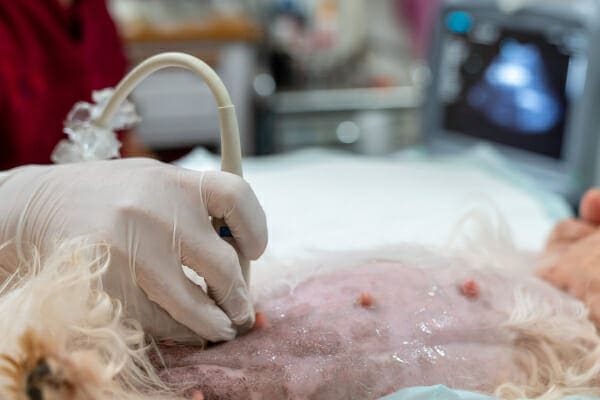
Often, the next step after deworming, blood tests, and diet change is an abdominal ultrasound. This is a good way to evaluate the thickness of the intestinal loops and look for tumors or other problems with the abdominal organs.
Noting thickened intestinal loops on ultrasound may be enough to presume IBD. However, that finding alone is not sufficient if the vet is using the stricter internal medicine diagnostic criteria listed above.
Fecal calprotectin or fecal alpha1-proteinase inhibitor test
Sometimes the vet will recommend a fecal calprotectin or fecal alpha1-proteinase inhibitor test. Since calprotectin is a marker of GI inflammation, it may be elevated in dogs with IBD. However, it doesn’t specifically diagnose IBD. Fecal alpha1-proteinase inhibitor levels may be increased in dogs with GI protein loss (protein-losing enteropathy).
Endoscopy
Your vet or veterinary specialist may recommend endoscopy. This involves using a small camera to view the inside of the stomach and intestines and assess the lining. He or she may also perform endoscopically guided intestinal biopsies at that time.
Intestinal biopsy
The vet can either use an endoscope or an abdominal exploratory surgery to obtain intestinal biopsies. There are pros and cons to both approaches, so the vet will help determine what is right for your dog. If there are inflammatory cells in the lining of the intestine, this confirms the diagnosis of IBD. Plus, biopsies allow the veterinary pathologist to further classify the IBD.
Subtypes include lymphocytic-plasmacytic, eosinophilic, suppurative, or granulomatous IBD. These classifications are based on the type of inflammatory cells present in the intestines. With this information, the vet can better tailor the treatment plan to your dog’s particular case.
For example, eosinophils, the predominant cells in eosinophilic IBD, are often seen in response to either allergies or parasitic infections. This helps explain why approximately 50% of dogs with eosinophilic IBD respond very well to hypoallergenic hydrolyzed diets alone.
What is the treatment for IBD in dogs?
Once the vet diagnoses your dog with IBD (or one of the other forms of chronic inflammatory enteropathy), he or she will help you understand what your dog’s treatment plan will look like. Unfortunately, there is no cure for IBD, but it is often possible to manage the condition long-term.
Steroids (or other immunosuppressants)
For true IBD (steroid-responsive enteropathy), steroids tend to be the mainstay of treatment. However, even dogs with food or antibiotic-responsive enteropathy are still dealing with GI inflammation. Thus, they may also benefit from steroids. Additionally, steroids are part of the treatment for dogs with protein-losing enteropathy, especially if the dog is showing severe signs.
Initially, your vet will likely start with a fairly high dose of steroids to suppress the immune system. The goal is to stop the immune system’s attack on the GI tract and the resulting inflammation. Typically, prednisone for dogs is the drug of choice. However, the vet may end up recommending the steroid budesonide for some dogs as it may have fewer side effects.
If your dog does not tolerate corticosteroids or the IBD doesn’t respond to them, your vet may need to use other immunosuppressive medications. He or she will work with you to determine the best drug therapy, dosage, and schedule for your dog.
Once the inflammation is under control, your vet will create a plan to wean your dog off the medications (if possible) or get to the lowest effective dose. Some dogs will require lifelong medications to keep IBD under control. Other dogs may just need short-term medications when they have IBD flare-ups or diet changes.
Dietary therapy
Dogs who have food-responsive enteropathy (which isn’t true IBD in a strict sense) generally need to stay on the hydrolyzed protein, novel protein, low-fat, or easily digestible diet for at least 12 weeks. Some dogs may be able to transition away from it once the inflammation dies down. But others, especially dogs with protein-losing enteropathy, may need to stay on the special diet long-term.
It is imperative that dogs whose chronic enteropathy is diet-responsive have a VERY strict adherence to their diets. Swiping a dropped morsel of food, getting into something outside, or even a small treat may be enough to cause an IBD flare-up.
Prebiotics and probiotics
Since gut flora imbalances may contribute to IBD, it could be beneficial to give your dog a prebiotic fiber supplement and/or probiotics for dogs. Prebiotics provide food for the gut bacteria. And probiotic supplements may help repopulate the gut with “good” bacteria.
Other therapies
Stem cell therapy and fecal transplantations have also been investigated as potential adjunctive treatments for IBD. However, there is not yet a lot of data on how well they work.
Work with your vet
Some dogs may need a combination of treatments. And it might take some trial and error to figure out what works for your dog. Your vet is the best person to help come up with an individualized treatment plan for your dog and make modifications as needed.
What should you watch for during IBD treatment?
During the therapeutic trials and initial treatment period, carefully monitor your dog’s appetite, stool quality (potentially by using a fecal scoring chart for dogs), vomiting frequency, overall well-being, etc. Keeping your vet informed of any changes can help him or her gauge how treatment is going. And it allows your vet to move up a scheduled recheck exam or change the treatment plan if needed.
Also, it is important for you to keep a close eye on your dog during the time when he or she is weaning off steroids (and when completely off them, if your dog gets to that point). Sometimes a dog can experience an IBD flare-up during the steroid taper. This may indicate that the steroid dose has dropped below what is needed to control the signs. Other dogs may successfully come off the steroids for a bit, but then experience a flare-up.
In both situations, it is important to contact your vet promptly. That way, he or she can reevaluate your dog and modify the plan accordingly.
How will your vet monitor your dog’s progress?
While you are monitoring your dog at home, your vet will also want to recheck your dog periodically. He or she will likely ask you about your dog’s symptoms and how they have changed. And he or she may complete another Canine Inflammatory Bowel Disease Activity Index (CIBDAI) or Canine Chronic Enteropathy Clinical Activity Index (CCECAI) to compare to the pre-treatment score.
Sometimes the dog may also need blood work, a repeat biopsy or endoscopy, or other follow up tests.
What is the prognosis for IBD in dogs?
Generally, the long-term prognosis for IBD in dogs is good. It can take some time to get to a diagnosis and figure out what course of treatment works best for each individual dog. But with consistent management, many dogs with IBD can have a normal life.
Canine IBD does not shorten life expectancy in most cases. These dogs may have occasional flare-ups, but the condition is usually not life-threatening.
Like with most diseases, however, IBD has a range of severity. A small number of dogs do not respond well to treatment. Or they may stop responding to the treatment that had previously been controlling their disease. Additionally, for some dogs, the side effects of the medications necessitate changing or discontinuing treatment.
IBD and the increased risk of intestinal lymphoma
It is also worth noting that dogs with IBD seem to be at a higher risk of GI lymphoma. This may be because IBD predisposes the dog to lymphoma, or because GI lymphoma is actually the most severe form of the type of inflammation that causes IBD.
The symptoms of both conditions can be similar. But often the veterinary pathologist can use special stains to distinguish IBD from lymphoma on a biopsy.
If your dog does have GI lymphoma, your vet or a veterinary oncologist can work with you to develop a treatment plan and help you understand what to expect.
End stages of IBD in dogs
The end stages of IBD in dogs can cause severe dehydration and weight loss. It is in these dogs that we may see fluid build-up and potentially difficulty breathing. They often stop eating, or can’t keep anything down when they do eat. In these rare instances, if treatment is unsuccessful, considering quality of life and making some tough decisions may be the next step.
If your dog seems to be entering the end stages of IBD, it can be helpful to schedule a dog hospice care consultation with your vet or a vet who specializes in end-of-life care. He or she can work with you to determine if there are some measures that may help make your dog’s last days more comfortable. And when it is time to set your dog free from his or her struggles with IBD, the vet will walk beside you through that difficult journey, too.
Help and hope for dogs with IBD
If you suspect your dog could have IBD, the road ahead may seem daunting. I understand how hard it is to watch your dog continue to have diarrhea or vomit and feel like you’re not getting any answers or resolution.
However, a step-by-step approach is so important to ensure that your vet reaches the correct diagnosis. Hang in there, and remember that every step you take is, hopefully, one step closer to having an answer that will help your dear dog.
And if you receive that diagnosis of IBD, don’t despair! Keep working with your vet to develop the best management strategy for your dog. There is hope for him or her to live a long, happy life!
FAQ: How is IBS in dogs different from IBD?
It’s important to distinguish IBD (inflammatory bowel disease) from IBS (irritable bowel syndrome). IBS in dogs is a functional disorder of the GI tract that seems to be triggered by stress. For example, a dog might experience an IBS flare-up after boarding, grooming, company visiting, or loud noises (fireworks, storms, etc.). For this reason, some vets also call IBS “stress colitis in dogs.”
Symptoms such as recurrent diarrhea, which may contain mucous or blood, abdominal discomfort, and increased intestinal gas occur in both IBD and IBS. But in contrast to IBD, dogs with IBS have no detectable changes to the appearance of the intestinal tract.
The initial diagnostic approach is similar for both conditions because it’s important to rule out parasites, metabolic diseases, dietary indiscretion, and other physical causes of the signs. However, dogs with suspected IBD may need a more in-depth diagnostic workup.
Since the root cause is different between IBS and IBD, so is the treatment plan. Mainstays of management for IBS are stress reduction and symptom management. Avoiding stressful situations (when possible) and medications or supplements that reduce anxiety can be helpful. Also, to help support GI health, dogs with IBS may benefit from interventions such as fiber supplements for dogs, a bland diet for dogs, or probiotics.
IBD vs IBS in dogs
To better understand the distinction between IBS and IBD, check out the table below.
| IBD (Inflammatory Bowel Disease) in Dogs | IBS (Irritable Bowel Syndrome) in Dogs |
|---|---|
| Cause is unknown, but immune system dysfunction and changes to the intestinal bacteria population and intestinal wall may play a role | Caused by the negative impacts of stress on the GI tract |
| Intestinal walls become thickened due to infiltration of inflammatory cells | No change to intestinal tract appearance |
| Requires ongoing management in the form of immunosuppressants and special diets | Addressed through stress reduction and supporting the GI tract |
Do you have a dog with IBD?
Please share his or her story below.

This post was originally published on August 25, 2021 and updated on June 18, 2026.


Hi Dr Buzby
My 12 year old terrier has had yellowy-orangey-brown diarrhoea (no blood visible, some bubbles, some mucous) since June when he should have had his annual vaccination (1/5 of the L5 I think she said) but the vet said to postpone until he is better. His stool firms up a bit then goes to diarrhoea again so had to cancel the next appointment. We sent photos to the vet but she said to wait until he was better. He had blood tests that showed the expected trajectory of managed stage 2 kidney disease but has always had gi issues managed by occasional normal dog probiotics, hypoallergenic wet food and hypoallergenic kibble, was doing fine on them with occasional simple treats like a basic piece of dog-friendly fruit and veg.I am getting worried because the diarrhoea is not following the normal pattern of improvement after 4 weeks. Kaolin probiotic prescribed by the vet did not work, seemed to make it worse….He’s lost 1kg (weighed 8.5 kg before). Is it only puppies and immuno-compromised dogs that can get seriously sick from parasites?Getting very worried as he’s never had stool tests and I don’t know if he can recover if it’s a severe infection.
Hi Jacob,
I understand your concern for your pup and think this may need additional investigation. While we are used to seeing young puppies with intestinal parasites, any dog of any age can be infected with a large burden of intestinal parasites if not taking monthly prevention to ensure this isn’t a possibility. Is your dog currently taking a monthly heartworm prevention? I ask because most of these also contain an intestinal parasite dewormer. While I can’t make specific conclusions without examining your boy myself, from what you describe, it may be good to rule out other intestinal diseases such as EPI. Here is an article with more information: EPI in Dogs: Exocrine Pancreatic Insufficiency
You can also ask your vet about a consultation with an internal medicine specialist if needed. Praying for clear answers and a positive outcome for your sweet boy.
Thank you so much for your reply and link, it certainly seems like EPI (except his poop is not smellier than it ever was) Everything else tallies. I’ll investigate an internal meds specialist but he’s become very weak.
He has Advocate spot-on monthly, perhaps this is why although she did blood tests the vet didn’t ask for fecal tests? She said she’s sure that it is not a parasite but there are a lot of foxes in the area and he’s 13 with kidney issues and lifelong gi issues so I’m worried about Giardia it’s not mentioned on the Advocate website. Is there something I can buy and administer myself just to get rid of it? He’s fading fast. I don’t know why they don’t do fecal tests here for any dog over 10 years old.
Hi Jacob,
The Advocate spot-on will take care of the most common GI parasites, but you are correct that it doesn’t cover for Giardia. Also, since there is no tick prevention, tick borne diseases are still a concern. I am not aware of anything available OTC that can treat these types of infections. Hoping your vet can do some more in-depth investigation or get you in touch with a specialist quickly. Feel free to keep us updated. Bless you and your sweet boy.
Unfortunately had to send our 9-year-old cockapoo over the Rainbow Bridge today. Ever since we got her ras a pup she had loose stools – and I mean loose!. We spent several thousand pounds having every test possible only to have the answer that she had idiopathic diarrhea Tried every tablet, food meds etc but she has got recenty a lot worse with blood in the poo. Hospital tests for 3 days 2 years ago but to no avail.. We have had to give up now as we cant take her out cos of the mess. Was this IBD as Idiopathic did not give us (of her) any comfort
Dear Richard,
I am so sorry for the loss of your senior pup. I can only imagine how frustrating it must have been to still be left with more questions than answers despite all the testing and treatment that was done. If the vet gave your girl a diagnosis of idiopathic diarrhea, that means the cause is unknown. As much as I would love to offer better answers, I can’t make assumptions as to the cause of this chronic diarrhea any more than your own vet was able. I hope you can take comfort in knowing you gave your girl a peaceful passing and saved her from further unnecessary suffering. Praying for healing for your heart and wishing you brighter days ahead. ♥
Hi Doc. I am at such a loss. 6 months in and Mini had a biopsy and it said she IBD that was 3 months ago. She has never shown any signs of IBD. Nothing wrong her Poop and always wants to eat. In fact she is a scavenger so bad I am pretty sure she is trying to soothe something. In any event all she does is lay and is so depressed. No weight loss. I have never had issue switching her foods. She always did fine. We tried Two prescription foods nothing. She did prednisone and it actually made her worse. She was swallowing hard already and clenches with the left side. Now I hear weird squeaks and clicking in the throat. Th prednisone made her have alot of reflux and liquidy sounds. It has been 3 months since and she still is this way. I go to another IM at University of PENn on the 25th and keep thinking if they can’t figure it out then who can? I suspect she has esophageal motility disorder. But not sure what the treatment would be and I am so scared they are going to say a tube to eat. Any advice? Another strange thing is when she ate kibble her gut would be extremely loud and move around and rumble. Now I have her on only wet food and that’s the only thing that improved. This all started after eating poison berries. Dr never put her on anti biotic and k am wondering if she possibly has a bacterial issue. It’s weird because I can physically hear and see everything with the throat area but I can tell her belly hurts. I have been feeding her two TBS every two hours and that’s the only thing that keeps her somewhat comfortable but barely. I am at such a loss. The Dr thought it would be food related but like k said nothing has worked and mini ate anything and has never had an issues.
Dear Tara,
My heart goes out to you with this continued struggle to find answers for Mini. I know you have been fighting this for months and I wish there were some different answers or advice I could give. Unfortunately, I am at a loss just as you are. I agree there are some things that make me suspicious of megaesophagus, but I also wonder if there isn’t some kind of underlying cancer that just hasn’t been found yet. Cancer can do strange things and can be very tricky to diagnose. I am still hopeful you can find the right vet that can do the necessary testing to get a definitive diagnosis. Praying for answers and a clear path forward. Wishing you strength and peace as you continue to navigate this difficult path with your sweet girl. ♥
My 12 year old Klee Kai has had IBD for years. We’ve managed it with daily Dosages of Tylan and a Hydrolized diet. She recently started having frequent flare ups that we couldn’t get under control. After having an ultrasound that ruled out anything else we started on Prednisone—5 mgs 2/day for a week, then down to 5 mg per day for 14. She has responded well to this. My vet anticipates her continuing on Prednisone for life. I struggle with this. Any comments about other options or do you believe this is the best.?
Hi ME,
I am sorry your senior girl is still having issues with her IBD despite all the testing and treatment you have done. While using steroids long term is not ideal, for some dogs it, unfortunately, is necessary. You have to determine if the benefits are worth the risks and side effects. It is also possible in certain cases to wean off the prednisone and start a secondary medication that suppresses the immune system (cyclosporine is an example) but does not have as many side effects. You can talk to your vet about this option, and you can always ask for a consultation with an internal medicine specialist if needed. Hoping Klee Kai can stabilize and maintain a good quality of life. Bless you both.
My dog is 3 and she’s had on and off issues with poop ranging from soft serve to drippy to even yellow clear goo. And it always seems like a rollercoaster. She will go from goopy to soft to sorta formed to even formed pick-up-able with a smidge of residue on the potty tray, to back to diahrrea. And it’s been a puzzle why. She’s fed the same diet since she got here at 8 weeks old. A blended of all the varieties of vitals essentials FDR and instinct FDR gut booster. And yes. The usual. Chicken jerky, plain cheddar dog cookies and bully sticks etc. and it’s just up and down and at some point I had assumed she felt well you gave her a cookie so maybe that’s why. And since her gut is a moving clock maybe I just not catching the issue. So we went a full week just food bowl. The issue remained. And then I gave her the treats. Issue remained. It wasn’t the treats. And the food isn’t the issue. Because she didn’t have this issue as a baby. She started having wonky poops around 1.5 years old.
I think after reading this article I will take her in for some tests. I’ve tried her on human probiotics and Metamucil powder. It did help. Somewhat. Rice supposedly does firm up. But it’s not doing that. So I really think. She needs a vet to see and maybe meds to help her. She’s not skinny. Docs always say at check up. Errr um… she’s “well fed” she could lose a bit. But she’s not obese 😆
Hi P8888,
I am sorry your young dog has been dealing with these ongoing GI issues for most of her life. I agree, it’s time to talk to your vet and do some in-depth investigation. You may even want to consider a consultation with a veterinary internal medicine specialist. They can offer testing that is not readily available in general practice such as endoscopy. Praying for clear answers and an easy solution. Feel free to leave an update and let us know how things are going.
Has anyone experienced something similar with their dog after a procedure involving general anaesthesia? Any advice or insights would be greatly appreciated — we’re really worried and exhausted.
My dog is a 4-year-old Cockapoo — active, healthy, happy, and full of energy. He does have a sensitive stomach, so we’ve been careful with his diet. He’s mainly fed freeze-dried venison, with occasional treats like pilchard and sweet potato. Even with this strict diet, he sometimes has soft stools and needs his anal glands expressed every now and then. When he gets stressed — like during boarding or overexcitement — it usually affects his digestion.
Recently, he underwent a dental cleaning that required general anaesthesia. During the first attempt, he had difficulty breathing, so they stopped the procedure. They tried again later and everything went smoothly. The cleaning was successful, and he seemed back to his normal self the next day, although his stool was soft.
However, by the third day post-procedure, he started having multiple episodes of diarrhea and constantly asked to go outside to relieve himself. We’ve tried probiotics and anti-diarrhea medication, but the issue persists.
The vet examined him and noticed abdominal discomfort. Blood work (including pancreatic testing) and x-rays all came back normal, but she recommended an ultrasound to investigate further.
We’re really hoping it’s nothing serious. This has been stressful and exhausting — we’ve had several sleepless nights watching over him.
Hi Ayumi,
I am sorry your pup is experiencing these worsening GI symptoms since his dental cleaning. Because anesthesia can affect blood pressure and blood flow, it is possible to see changes to internal organ function afterwards, but this is usually temporary and self-correcting in normal healthy patients. Because your boy has had chronic GI issues, I think the ultrasound is a good idea. It makes me suspicious that there could be more going on than what you or your vet is aware of at this point. Hoping for definitive answers and a clear path forward with treatment.
I am really struggling with my 6 year old hound/shepherd mix, who mysteriously put on a lot of weight over the last 6 months or so.
She’s always had a sensitive stomach but it has gotten much worse the last two months. She stopped eating and had mushy poop, somewhere between diahrea and formed. Took her to vet and they discovered fluid build up in her abdomen and chest cavities. We drained the fluid and put her through days of tests. Nothing determined. She had to be drained again several weeks later when she stopped eating. The vets put her on prednisone and it has at least increased her appetite, but she has a bout with diarrhea every 3-4 days. I move her from Purina HA (we’ve tried it all) to rice and chicken and/or pumpkin, which seems to settle her until the next episode.
Last week I took her to a vet school at a university to get a second opinion since it’s all inconclusive to date. They discovered her protein levels have dropped. They seems to be somewhere between IBD and lymphoma. I’d think she’d be much sicker if she had cancer given that this has gone on so long. We’re going to do a biopsy as soon as it can be scheduled.
My concern is the fluid. It keeps coming back. The prednisone helps with appetite and having less diarrhea but isn’t drying up the fluid she’s carrying around. She’s become quite lethargic and is unable to jump into the car or onto the bed anymore. I know nothing will be determined until we have a biopsy but it’s becoming exhausting for both her and me to fight this daily. I live alone and it’s hard to handle with work etc. When I hear her stomach rumbling and experience her horrible gas I know we’re about to begin an episode. I feel so bad for her. What else can I do ahead of waiting for the biopsy to happen? And even after that, whether or not it’s cancer, how do I deal with the fluid? Is there a way to manage it so it won’t build anymore? Nothing seems to work for eliminating it.
Dear David,
I am sorry you are in this difficult situation with your pup. Unfortunately, without knowing what is causing the fluid to build up it is hard to know how to prevent it. You can talk to your vet about Lasix, but it can sometimes cause more issues than benefits. I am hoping the biopsy will offer definitive answers. Have you been able to get that scheduled? Feel free to leave an update and let us know what you find out. Also, please remember to take some time for yourself. Your quality of life matters too. Praying for healing and a positive outcome for your sweet girl. ♥
When Caring For A Sick Pet Becomes Too Much: Pet Caregiver Fatigue
I wish I’d been able to read this article when my dog developed IBD. He passed away from it after being “treated” by his vet with several rounds of various antibiotics, all with no success. By the time the vet referred us to a specialist in internal medicine, it was too late. After the specialist did some tests, gave him 2 blood transfusions that did not help, since by that time, he was very anemic, the next step was an endoscopy. By the time that was attempted, the lining of his intestines had literally started peeling off. So no biopsy was done. The specialist had one more “medication” she wanted to try for a week before giving up. but after 2 days on that medication, I knew he was in a lot of pain, and I felt he had suffered enough. I made the decision to end his suffering. My advice to anyone with a dog exhibiting IBD symptoms is get to a specialist in internal medicine immediately. IMO a lot of regular vets do not know enough about IBD to properly diagnose or treat it and wait too long to refer to a specialist
. To this day, I carry the guilt of waiting too long. My dog died years too soon after suffering for way too long.
Dear Gretchen,
I am sorry for the tragic loss of your beloved boy. I understand your grief but please don’t let guilt weigh heavily on you. You did everything you could to help him. Please try to allow yourself some grace. Thank you for being willing to share your story with us as this may be exactly what another reader needs to hear. With time I hope your heart can begin to heal and you can find peace. May his memory stay with you always. ♥
My dog is only 4 and was diagnosed with IBD after I all but stood up and screamed that there was an issue with my boy- now he is on hydrolyzed protein and some lamb with sulcrafate and omeprazole twice daily- at least once daily twice whr he needs it and cerenia as needed. He is also getting probiotics- he just seems to still have days he is “urping” gulping and burping like I do with GERD- any other advice?
Hi Teresa,
I am sorry your young dog is living with IBD. He is very lucky to have you advocating for his health and well-being. From what you mentioned, you are already doing everything I would normally recommend and then some. If you would like an expert opinion, you can always ask your vet about a consultation with a veterinary internal medicine specialist. Wishing you and your sweet boy continued success. You are doing a great job. Keep up the good work!
i have a dog that has ibd, lymes disease. & anaplasmosis. He can’t hold his bladder while standing and he fills an x large depends at night. & he has been worse since his scope. Can anyone point me in the right direction in regards to a vet that can help us? i take him to an intergrative doctor too and this vet has helped a little but I feel we need more help.
Dear Brigitte,
I am sorry your boy is dealing with so many issues at once. Are you currently working with an internal medicine specialist? If not, that would be my first recommendation. Any idea what is causing the increased urination? Is he on steroids? Has he been tested for kidney disease or Cushing’s? I agree this needs more in-depth investigation. Hoping you can get some answers and find a clear path forward with treatment. Wishing you all the best and feel free to keep us updated as you continue this journey.
I hope you can give me some advice. I am in South Africa and I have a 12- and 1/2-year-old Rhodesian Ridgeback female. I changed to a Vet closer to me because I thought that her time was coming. Not doing well, after she was diagnosed with a heart murmur on August 23. I went to see Vet because she was scrapping her throat and coughing. On heart medication Fortekor.
As she did not do well, I went to visit another Vet closer to me because I found that she was no doing well and perhaps time would come soon for her. June 24.This Vet checked her heart and said that there was no problem there…….we, more me then him, came to the conclusion that she might have GOLPP. She also had rear end weakness. This Vet, I think, had no experiences with this disease, his diagnose was more towards osteoarthritis. He advice the Prescription Hill’s Mobily food. I did not agree and after reading your article about Golpp I was convinced that she had this disease. All symptoms were there. I asked for Doxepin but this is not available in SA.
The food did not improve anything and the panting and scraping throat got worse. He put her on Inflacam.
I time in those months she had AP and I asked for antibiotics. Amoclan. ( Sept.)
6 Oct, she got bad diarrhea, Vet gave her antibiotics Amoclan again.
16 Oct I took her to Vet because she was not getting better and her defecating was painful and looked like yellow soup! I thought she might had swallowed a bone, what was not supposed to happen but the marrow broke……
I had X rays made but there was nothing to see to indicate that there was an obstruction Also a blood test done and only the Liver enzymes were a bit high.
Antibiotics again Metronidazole for 10 days.
Until today her diarrhea has not cleared…..
I started again with a diet of only chicken and rice. Perhaps she should get an antibiotic again but perhaps you can advice!
I am so sorry for his whole long story; I am at my wit’s end.
I was planning to go to a known clinic, but it is a 1 and half hour drive and she cannot be in the car that long. She panics and pants terrible. She will not make a long drive in the car.
Hope you can find time to read my story and can offer some advice.
Thank you so much!
Regards
Dinja
Hi Dinja,
My heart goes out to you as you face this difficult situation with your senior girl. I can only imagine how frustrating it must be to still have more questions than answers despite all the testing and treatment you have done. I wish I had some great advice, but unfortunately without playing a personal role in your dog’s medical care, it is hard to offer specific conclusions and recommendations. I am not sure how the coughing relates to the GI issues, but laryngeal paralysis is definitely a possibility. I am a bit suspicious that maybe the antibiotics have caused a bacterial imbalance in your dog’s gut (just like how people can get diarrhea from taking antibiotics). It may be a good idea to try a probiotic and see if improving gut health decreases the severity of her symptoms. Coughing and gagging can also be a sign of worsening heart disease (congestive heart failure). I know you mentioned a vet said there was no problem with the heart, but it might be worth getting a second opinion just to err on the side of caution. It is clear your girl is dearly loved, and you will do anything to try and get her the help she needs. Don’t give up hope! Praying for answers and a clear path forward. Wishing you and your pup many happy days ahead. ♥
Our 13 year old Chihuahua mix was diagnosed with IBD in June. She was doing well on hypoallergenic food and medication that managed her condition until a month ago when she had a flare up and had almost constant diarrhea. Last weekend, she began vomiting as well. She was unable to keep anything down and had become lethargic, so we rushed her to the vet and she has been warded ever since. She was put on a continual, but gradual, NaCl drip, calcium supplements, Budesonide and Neoral, as well as her other medications. (She had very low protein /albumin levels, as well as low calcium when she was first brought in. The calcium has helped and she has stopped vomiting.)
Our poor girl, who’s usually very food motivated, has no appetite 🙁 Her limbs are swollen from the drip and still has diarrhea 🙁
If the Neoral doesn’t work, we’re not sure what her or our other options are 🙁
Dear Mariel,
Goodness, I am so sorry your senior girl is dealing with such severe issues. It sounds like the veterinary team is doing all they can to give her the best chance at recovery. Praying for a miracle and that your pup will keep fighting. Wishing you strength and comfort as you navigate this unknown path.
I have found that daily prednisolone is very helpful in such instances, along with a short course of metronidazole for her diarrhea. I have also used Proviable paste and/or psyllium husks (with no other additives in it) to control diarrhea. It is important to get her a food that does not contain animal protein as most IBD is caused by Animal Protein ingestion. If she is not drinking well or diarrhea is constant, I have also given subcutaneous Ringers Lactate daily to keep her hydrated.
Hi Margaret,
Thanks for offering these great suggestions and sharing your experience with us. Best wishes to you and yours!
This is so similar to our sweet girl who just got out of hospital! Her GI issues were triggered by anesthesia from a biopsy, which turned out to be chodrosarcoma in her outer rib cage. Ironically, the cancer is very treatable but the nearly two weeks of hypo/anorexia was brutal! Happy to report that they were able to keep her stable on plasma to get her serum proteins up. She eventually regained appetite on anti-nausea and anti-pain meds, which were our only options before knowing what oncology care was indicated (you can’t do steroids before certain treatments).
She’s always had a sensitive tummy, but we think the special care we took on her diet kept her GI very robust. Our girl LOVES veggies and fruit. In excess and raw, this fiber can be upsetting for a dog’s gut because it’s a bit shorter than ours, hence less digestion and breakdown time, plus they have fewer of the enzymes required to break down dietary starches. Over the years, though, we’ve found quite generous portions of things like raw carrots, green beans and watermelon were EXTREMELY well tolerated by her gut and even seemed to help her. I’ve read that sometimes with IBD, extra bulk from fiber can actually help support healthy BMs depending on the state of the individual dog’s GI and microbiome.
That said: right now we are sticking to mixing in high gelatin bone broth and boiled chicken into a gut biome supporting wet food. Any veggies she’s getting right now are cooked. I’m also pureeing some of her food in a blender to ease digestion! I hope you can get your pup on a good footing, but we’ve had great success with chicken foot broth, pumpkin and yam purées, and blended oat meal as mix ins to heal her intestinal lining and get her back on track. She’s still on two different anti nausea meds and is getting Prilosec at night to stave off nighttime regurgitation. Doctors told us she likely wasn’t vomiting but was experiencing very bad GERD and regurgitation after going to sleep.
Happy to report she is back to formed poops right after discharge!
In terms of food allergies, I’m no expert, but I tend to look at the quality of ingredients. I actually farm a bit, and some of the more industrialized meat products can have a lot more going on than just meat… worth considering!
Hi Alyssa,
I am glad your girl has improved, and you found what works best for her. Thank you for sharing your experience and offering these great suggestions. Wishing your sweet girl continued success and many happy years ahead!
This is one of the best pages I’ve found on IBD. Thank you. My dog has been on prednisolone for about a year. She’s doing fairly well except she drives me crazy with excessive drinking, searching for crumbs, agitation, and peeing in the house. Are there alternative care options like cooking for her or a different medication that I should explore? I have a pretty traditional vet. I’d love to see an alternative vet but I don’t know if it’s a good option to explore. What are your thoughts?
Hi Colette,
I understand your concern for your pup and the side effects she is experiencing while taking prednisolone. I think it is great you are reaching out for advice and working so hard to advocate for her health and well-being. Rarely is there only one way to treat a disease. While I am not sure what options are available that would fit your girl’s specific medical needs, I do think it could be good to reach out to a specialist. There are veterinarians that specialize in internal medicine, and they would know if there were other medications that could be of benefit to your girl. Here is a link to an article that can help you find specialty vets in your area (alternative and holistic vets too!): How Do I Find Veterinary Specialists Near Me and What Do They Do?
Hoping you can find the answers you need to ensure your girl remains happy and healthy for many years to come.
Hi there,
Our 14 year old otherwise-healthy greyhound has very recently been diagnosed with IBD and our vet has recommended the “COMPLETE & BALANCED dog cookbook by Hilary Watson”. I had a look at a copy in my vet’s waiting room and it looked pretty sensible. There are lots of books out there of course.
Fingers crossed.
It has taken 3 years to get Henry my chihuahua aprox 11 yrs old diagnosed. I was told he had a back problem twice and I just knew that was wrong. After repeated flair ups pancreatitis was suspected. .But, while it seemed plausible it still didn’t feel right. although we saw a change with food management we never knew how or when it would happen. This current bout has been going on for over a month. It now seems to be on its way out. I refused to give up, I knew something was wrong, Henry was alive but far from thriving. I finally found a great vet who did a lot of testing and an ultra sound. No pancreatitis but, IBD was suggested. It covers all his symptoms and He is now on RX food . He is recovering 🙂 I wonder if because he had a bladder infection that caused his immune system to be inflamed which maybe started this flair up? I am very happy with how far Henry has come. He has lost 2 lbs and is not depressed & not sleeping all day anymore. I think he misses cheese though 😉
Hi Scheryl,
Great job continuing to advocate for Henry! I’m so thankful that you have gotten to the root of his issues and that he is finally starting to feel better. I hope that he continues to improve and doesn’t have a flare-up for a long time.
I gave a question about my dog that I had put to sleep back in 2016. At the time I was so devaststated and couldn’t remember what happened at that time. I called the ER vet and the e mailed me the paper work. Would it be possible to send it to you to see what you thought could have happened? Thank you, Melinda Selander
Dear Melinda,
I am so sorry for the loss of your dog. I can only imagine how difficult it must be to have more questions than answers. Unfortunately, without having personally examined your dog or being directly involved with the case, I am not sure I would be able to make a diagnosis just from notes and data. The best way to find out what happened would be to talk to the vet that handled the ER duties that day. I wish I had more helpful advice. Praying for comfort and peace for your heart.