Calcinosis cutis in dogs occurs when calcium deposits form in the skin, creating bumps or plaques that are firm and irritated. Integrative veterinarian Dr. Julie Buzby explains the causes, symptoms, diagnosis, treatment, and prognosis for calcinosis cutis so that dog parents can understand this uncommon condition.

As a dog parent, you might be familiar with skin ailments such as minor scrapes or cuts, superficial infections, or hot spots. But some of the more unusual skin lesions, like calcinosis cutis, are probably not on your radar.
What is calcinosis cutis?
Calcinosis cutis is an uncommon calcification disorder in which calcium salts are deposited in or underneath a dog’s skin, forming hard, raised, and sometimes white bumps or plaques. It is the most common of the three types of skin calcification in dogs. And it involves widespread or multifocal (in multiple places) calcification of the skin.
Other calcification disorders
The other two skin calcification disorders in dogs are calcinosis circumscripta and osteoma cutis.
Calcinosis circumscripta involves localized tumor-like calcium deposits, usually on pressure points and the tongue. It most commonly affects young, rapidly growing pups.
Osteoma cutis (osseous metaplasia) is a condition where calcium and phosphorus deposits lead to bone formation that can push out through the skin.
Additionally, in rare cases, mineral deposits can occur in internal organs such as the lungs, kidneys, heart, and stomach.
What are the types of calcinosis cutis in dogs?
There are four types of abnormal skin calcification, and each has a different set of causes. However, it is possible for a dog to have more than one type of calcinosis cutis.
Dystrophic calcinosis cutis
The most common cause of dystrophic calcinosis cutis is high levels of cortisol in the blood, either due to long-term steroid usage (usually prednisone for dogs) or overproduction of cortisol due to Cushing’s disease in dogs. It is thought that elastin and collagen fibers in the skin weaken due to higher cortisol, making it easier for calcium salts to accumulate.
Additionally, dystrophic calcification can occur due to external trauma, inflammation, and sometimes cancer. It results from an influx of calcium into skin cells, even though phosphorus and calcium levels in the blood are normal.
Some infectious diseases, like leptospirosis, may lead to dystrophic calcinosis cutis, too, possibly due to the release of cortisol. However, dogs with leptospirosis may also have metastatic calcification due to elevated calcium and phosphorus levels secondary to acute kidney failure.
Metastatic calcinosis cutis
Metastatic skin calcification occurs due to high levels of calcium and phosphorus in the blood. (Confusingly, this is a time when the word “metastatic” doesn’t refer to cancer spread.)
The most common cause of metastatic calcinosis cutis is kidney failure in dogs. Other causes include:
- Hyperparathyroidism: High levels of parathyroid hormone (a hormone that increases calcium levels) can lead to elevated serum calcium.
- Vitamin D toxicity: Vitamin D increases the absorption of calcium and phosphorus, so too much of it causes abnormally high blood calcium and phosphorus.
- Granulomatous disease: Occasionally, certain inflammatory cells may convert inactive vitamin D to the active form, thus increasing levels of calcium and phosphorus.
- Cancer: Some cancers may cause hypercalcemia in dogs by mimicking parathyroid hormone or leading to bone destruction (which releases calcium).
Iatrogenic calcinosis cutis
Iatrogenic calcinosis cutis occurs when too much calcium is absorbed into the body from an external source (medication, topical product, etc.). Sometimes, the vet may administer a medication containing calcium chloride. Or, while uncommon, dogs who walk on calcium chloride salts used to melt ice and snow during the colder months of the year could develop iatrogenic calcinosis cutis.
Idiopathic calcinosis cutis
If the vet has ruled out dystrophic, metastatic, and iatrogenic calcification, then the diagnosis is idiopathic calcinosis cutis. In other words, the cause of the skin calcification is unknown.
What are the causes of calcinosis cutis in dogs?
To recap what was discussed above, the main causes of calcinosis cutis in dogs include:
- Steroid administration
- Cushing’s disease
- Trauma or inflammation
- Kidney failure and other conditions that lead to increased calcium and/or phosphorus levels
- Cancer
- Infections
- Exposure to calcium-containing medications or products
- Unknown (idiopathic)
Which dogs are more prone to calcinosis cutis?
There are no age or gender predispositions for calcinosis cutis. However, some dog breeds seem to have an increased risk of developing it. They include Boston Terriers, Boxers, English Bulldogs, German Shepherd Dogs, Labrador Retrievers, Rottweilers, and Staffordshire Terriers.
What are the symptoms of calcinosis cutis in dogs?
The symptoms of calcinosis cutis may vary depending on how long it has been going on and the underlying cause.
Raised bumps on the skin: an early symptom
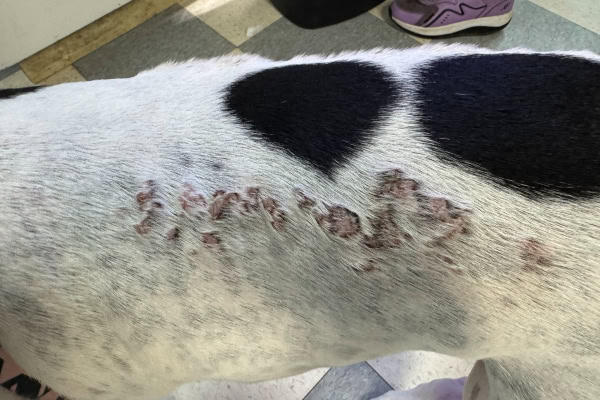
At first, clinical signs for calcinosis cutis may be as simple as having tiny, firm, raised bumps (papules) along the groin area or on top of the neck and trunk. The papules can be very itchy, and you might notice your dog losing hair in varying amounts. Additionally, the skin may look red and inflamed around the bumps.
Formation of larger itchy and inflamed plaques: a later symptom
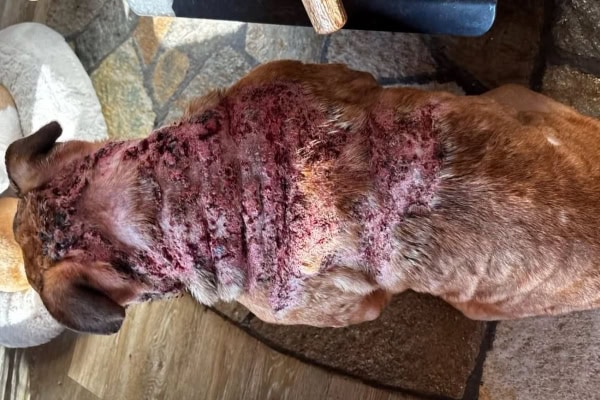
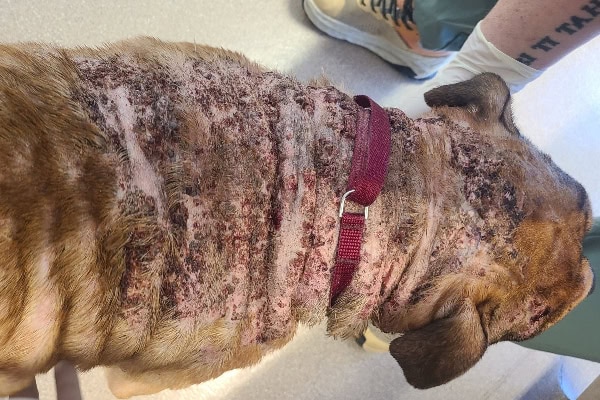
Over time, the papules can come together and form larger, raised lesions called plaques. These areas can be quite red but may also have a gritty, chalky white or light pink material on their surfaces. The plaques may be itchier than the initial bumps. And the skin around and under the plaque may feel very hard.
Ulcers on the skin
Larger plaques may give way to ulcers, which are the most common secondary finding. They may form as a result of the calcium salts trying to push through the skin.
Increased redness, swelling, and itching of the skin due to secondary infection
In some cases, a secondary fungal infection and/or pyoderma in dogs (bacterial skin infection) may develop. As a result, you may notice the skin around the bumps or plaques looks redder and more swollen. Plus, the dog may develop scabs or crusts, drainage from the skin, or increased itching.
Symptoms of the underlying condition
The dog may also show signs of kidney failure, Cushing’s disease, or whatever the underlying cause of the calcification was. For example, dogs with Cushing’s disease may have increased thirst and urination, ravenous appetites, and a pot-bellied dog appearance. Increases in thirst and urination are also common in patients with kidney failure, and affected dogs may also be vomiting or not eating well.
How will the vet diagnose a dog with calcinosis cutis?
Your veterinarian may make a presumptive diagnosis of calcinosis cutis based on the appearance of the bumps or plaques on your dog’s skin. However, he or she may recommend diagnostic testing to confirm the diagnosis and look for the underlying cause.
Skin biopsies
To reach a definitive diagnosis, your vet will need to submit a skin biopsy to a dermatopathologist—a vet who specializes in evaluating the skin under the microscope. If the dermatopathologist sees mineralization of the collagen and other changes compatible with calcinosis cutis, this solidifies the diagnosis.
In most cases, your vet will obtain 3-5 punch biopsies (small circular pieces of skin about the size of a pencil eraser) under local anesthetic or sedation. Your dog will generally have a stitch or two closing the biopsy sites.
Skin cytology
Your vet may also perform a skin cytology to rule in/out secondary infections. This involves evaluating a sample from the surface of the skin under the microscope. The vet will be looking for bacteria, fungi, or inflammatory cells, which can all point to an infection.
Testing for diseases that cause calcinosis cutis
Blood tests for dogs and urine tests can be helpful for finding the underlying cause of the calcinosis cutis. Sometimes the results of the urinalysis and chemistry panel are enough to diagnose the dog with kidney disease and detect elevations in calcium and phosphorus from other conditions.
Other times, the vet will recommend following up with a more specialized test, such as the low-dose dexamethasone suppression test (LDDST), which is useful for diagnosing Cushing’s disease.
Finally, there are situations where imaging (X-rays, ultrasound, or CT scans) may be necessary. Your vet will help guide the diagnostic process based on what he or she believes is going on with your dog.
What is the treatment for calcinosis cutis?
Treatment for calcinosis cutis involves addressing the underlying cause for the onset of symptoms, trying to break down the areas of calcification, and treating secondary infections (if present).
Managing the underlying condition
Managing the underlying condition is an integral part of treating calcinosis cutis. Otherwise, without addressing the reason the dog is developing calcinosis cutis, the body will typically continue to lay down calcium. Some potential treatment approaches include:
Discontinuing steroid medications
If your dog is taking long-term steroids, the vet will switch to a different medication to treat the condition for which he or she had originally prescribed the steroids. Plus, the vet will give you instructions about weaning your dog off the steroids.
Caution: Unless instructed to do so by your vet, do not stop the steroids cold turkey. This could lead to dangerously low cortisol levels.
Treating Cushing’s disease
The vet may start dogs with Cushing’s disease on an oral medication such as trilostane for dogs. It lowers cortisol levels and can improve symptoms.
Addressing high calcium and/or phosphorus levels
Medications and special diets to try to decrease calcium and/or phosphorus levels can be helpful for dogs with kidney disease, hyperparathyroidism, and other conditions that cause elevations in those minerals.
Breaking down calcium deposits
There are also a few ways to help the body get rid of the areas of calcification. Dogs with smaller, solitary lesions may not need these treatments.
Applying DMSO topically
A topical gel or liquid medication called dimethyl sulfoxide (DMSO) can be prescribed for once-daily use. It breaks down calcium deposits in the skin and can prevent more from forming.
DMSO can be very effective for smaller, focal lesions. However, dogs with more extensive lesions must be gradually worked up to widespread topical application.
Owners must wear non-nitrile gloves when applying DMSO gel. Plus, the vet may recommend monitoring the dog’s blood calcium levels periodically. This is important because the calcium from the skin gets absorbed into the bloodstream.
Administering oral minocycline
The antibiotic minocycline may be useful for treating calcinosis cutis because it can bind calcium directly. Plus, minocycline inhibits enzymes associated with skin inflammation.
A small study was published in the Journal of Veterinary Clinics looking at the treatment of dystrophic calcinosis cutis with minocycline in five dogs. In it, four of the five dogs achieved complete remission, and one dog responded partially.
Treating secondary infections
If the dog has a secondary infection, the vet may prescribe antibiotics or antifungals. Addressing the infection will, in turn, reduce itching and relieve discomfort.
Surgically removing a localized plaque or mass
Surgical intervention is usually reserved for dogs with calcinosis circumscripta and osteoma cutis, due to there being no effective medical treatments for these types of calcification. However, if a localized cancer is responsible for calcinosis cutis, surgical removal may be required.
Is there a home remedy for calcinosis cutis?
There are no specific home remedies for dogs with calcinosis cutis. However, there are a few things you can do to help your dog:
- Follow your vet’s instructions for treating the underlying disease and the calcinosis cutis. It is important to give medications as prescribed and go to the scheduled recheck appointments.
- Stay in contact with your vet. If your dog’s condition worsens or isn’t improving, or he or she develops problematic side effects, give your vet a call.
- Give your dog regular baths. You can help prevent secondary infections and discomfort by routinely bathing your dog. The most effective type of shampoo will depend on what type of infection is present, if any. Otherwise, moisturizing dog shampoos are the safest for keeping a pup clean.
- Ask your vet about starting your dog on an omega-3 fatty acid supplement. Omega-3 fatty acids for dogs may be useful for decreasing inflammation at the level of the skin.
- Support your dog’s skin barrier. Your veterinarian can guide you toward products that help replenish your dog’s skin barrier.
- Prevent further skin trauma. Ensure your dog has a comfortable, soft bed to lie on (or an elevated bed) and try to keep him or her from lying on hard or rough surfaces.
What is the prognosis for calcinosis cutis in dogs?
The prognosis for dogs with calcinosis cutis is typically good with management of the underlying problem. However, dogs with cancer or severe kidney failure understandably have a worse overall prognosis than those with calcinosis cutis triggered by a more treatable condition like Cushing’s disease or long-term steroid administration.
Calcinosis cutis bumps or plaques may take weeks or months to resolve, so it is important to be patient. In some cases, the dog could be left with scarring, hair loss, or remaining areas of calcification, especially in more severe or long-standing cases.
Prompt recognition and treatment are key
As you can imagine, the sooner you notice the signs of calcinosis cutis and/or the underlying condition, the better. Early detection and treatment mean fewer areas of calcium deposits to break down and less irritation of the skin. This translates to less discomfort and a faster recovery for your dog.
If you notice that your dog’s skin looks or feels abnormal, or he or she starts showing any other unusual signs such as increased thirst and urination, reach out to your vet. Whether the diagnosis is calcinosis cutis or some other condition, promptly partnering with your vet to get to the bottom of the problem is the best way to help your dog start feeling and looking better.
Was your dog diagnosed with calcinosis cutis?
Please comment below.