A dog’s goopy eye can be something normal, like morning eye boogers, but it could also be a sign of a more serious problem, such as dry eye or an eye infection. Integrative veterinarian Dr. Julie Buzby discusses the different kinds of “eye goop” your dog might have and explains which ones indicate the need for a vet visit.
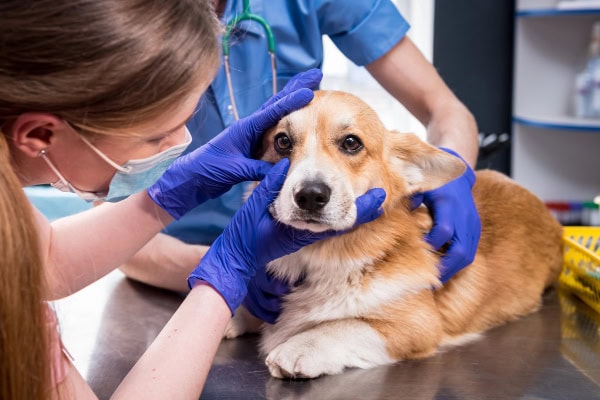
For many dogs, it is normal to have clear fluid or a small amount of discharge in the corners of the eyes. But how much “goop” is too much? And when might dog eye discharge indicate a problem that needs prompt attention?
Can a dog’s goopy eye be normal?
Some dogs normally have a small amount of goopy discharge (“eye boogers”) near the inner corners of the eyes after waking up in the morning or after a long nap. This harmless discharge is usually composed of a combination of oil, mucus, dead cells, and dust. If your dog has the same amount of discharge as usual and the eyes appear bright, shiny, and comfortable, there probably isn’t cause for concern.
However, the following changes indicate a potential problem with the eye:
- An increase in the amount of eye goop in one or both eyes
- Changes in the color or consistency of the eye goop
- Abnormalities in the appearance of the eye (red, swollen, cloudy, or painful eyes, etc.)
Because eyes can go from bad to worse rapidly, it is advisable to make a vet appointment if you see these changes or are concerned about your dog’s eyes. Ensure you tell the veterinary team what you are noticing with your dog’s eye and overall demeanor. This helps them know if your dog needs an urgent/emergency appointment or a regular appointment.
5 reasons for a dog’s goopy eyes
While not an exhaustive list, the following conditions can lead to goopy eyes in dogs.
Each condition includes some criteria that typically mean your dog needs immediate care. However, even if your dog’s eye discharge and symptoms don’t fall into the “emergency” category, it is still important to have him or her evaluated by a vet sooner rather than later.
1. Dry eye (Keratoconjunctivitis sicca or KCS)
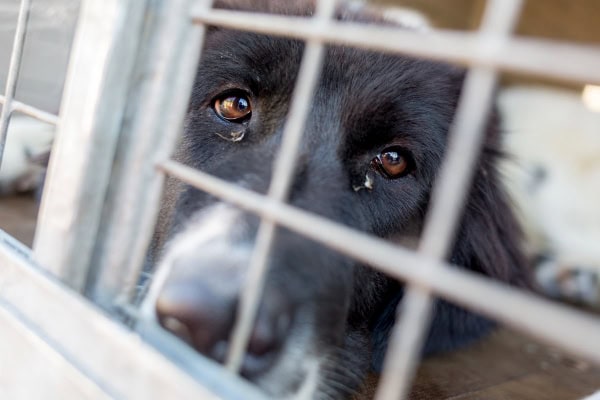
- Type of discharge: Sticky or ropy white to grey mucoid eye discharge
- Other symptoms:
- Surface of the eye appears dull or dry
- Conjunctiva (pink lining of the eyelids) is redder than normal and/or thickened
- Dog may squint or hold eye closed with rapid-onset KCS or if a secondary corneal ulcer is present
- Scaring, pigmentation, or new vessel growth on the surface of the eye may occur in chronic cases
- Dry eye tends to be chronic and slowly progressive, but if your dog appears painful (squinting, rubbing the eye, or holding it closed) or the eye rapidly becomes red and inflamed, seek veterinary attention immediately.
In dry eye in dogs (keratoconjunctivitis sicca or KCS), the lacrimal glands don’t produce enough of the aqueous (water) portion of the tears. The resulting grey to white sticky “dry eye discharge” is common in dogs with KCS. The most frequent cause of dry eye in dogs is the immune system attacking the tear glands. However, head trauma, certain medications, infections, or other situations can also lead to KCS.
To diagnose KCS, your vet will measure your dog’s tear production using a Schirmer tear test (STT). This is a special strip of paper the vet places in the eye to measure how many millimeters of tears your dog makes in one minute. If tear production is low, the dog has dry eye.
KCS is a lifelong illness that is most commonly treated with immunosuppressive topical medications and eye lubricants (artificial tears). Properly managing dry eye is important because, left untreated, it can lead to painful corneal ulcers and sometimes even blindness.
2. Corneal ulcers
- Type of discharge: Can range from clear discharge (excessive tearing) to cloudy white or yellow eye goop
- Other symptoms:
- Squinting or holding the eye closed
- Reluctance to let you touch the eye or head (ulcers are very painful)
- Cloudy eyes in dogs—usually a distinct area of cloudiness on the surface of the eye around the ulcer
- Redness of the eye and conjunctiva
- Corneal ulcers are one of the more common eye emergencies in dogs. Left untreated, they could get deep enough that the eye ruptures, and they are very painful. Thus, they need prompt veterinary care.

Corneal ulcers in dogs occur due to an injury to the cornea, which is the clear “window” at the front of the eye. To diagnose an ulcer, the vet will apply fluorescein stain to the eye. This is a special dye that sticks to breaks in the surface of the cornea and fluoresces under a black light to highlight the ulcer.
Treatment for corneal ulcers varies from topical medications to surgery, depending on the type and severity of the ulcer. It is also important to use pain medications to control the pain. Most dogs with a corneal ulcer will need an E-collar to keep them from further traumatizing the eye.
3. Eye infection (conjunctivitis)
- Type of discharge: Yellow or green mucoid to purulent (looks like pus) discharge, sometimes the eye appears weepy or tears excessively
- Other symptoms:
- Red inflamed conjunctiva
- Irritation or redness to the surface of the eye
- Squinting or holding the eye closed
- If your dog is acting painful or holding the eye closed, make a vet visit right away.
Bacterial, viral, and fungal infections can develop in and around a dog’s eyes and lead to conjunctivitis (inflammation of the pink tissue around the eyeball). Plus, allergies or trauma to the eye can lead to secondary infections and conjunctivitis. The symptoms of an eye infection in dogs can sometimes be similar to those of other eye conditions. Thus, the vet may stain the eye to look for ulcers or perform other diagnostic tests before concluding your dog has an eye infection.
There are multiple topical antibiotic medications available to address eye infections. These can come in liquid or ointment formulations and are sometimes combined with anti-inflammatories for the best results. Topical therapy is generally the best option because oral antibiotics may not be as effective.
4. Allergies
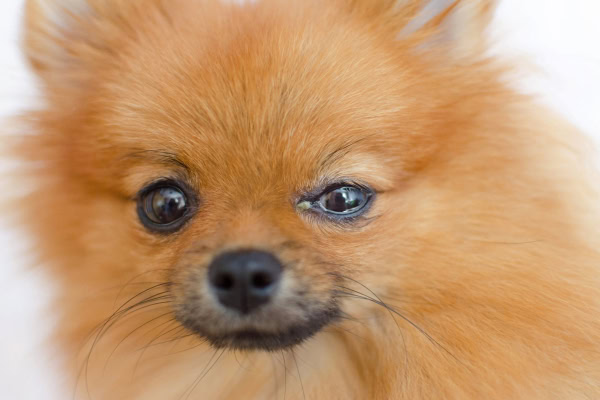
- Type of discharge: Goopy white to yellow discharge and/or watery eyes
- Other symptoms:
- Redness of the surface of the eye and conjunctiva
- Itchy eyes—The dog might rub or paw at the eyes
- Crusts around the eyelids
- Swollen eyes in dogs
- Red, irritated, itchy skin and secondary bacterial skin infections (pyoderma in dogs) or ear infections in dogs
- Typically, allergic eye disease does not require emergency treatment. But if your dog is holding an eye closed, the eye is swollen, or you have other concerns, it is important to seek care right away.
Skin problems are more common with seasonal allergies in dogs, but some dogs do have eye symptoms as well. Pollen, dust, and other allergens can lead to local inflammation of a dog’s conjunctiva and/or eyelids (allergic conjunctivitis). Thus, dogs can get goopy eyes from allergies.
The vet may perform a Schirmer tear test to rule out dry eye and use a fluorescein stain to look for corneal ulcers before tentatively diagnosing the dog with allergic eye disease.
Allergies are not curable, so they require lifelong management. Oral antihistamines like diphenhydramine (Benadryl for dogs) or antihistamine eye drops may help with mild allergies. But many dogs also need stronger allergy medication for dogs.
Some eye drops contain steroids like dexamethasone or prednisone for dogs, which also help soothe itchy eyes. Since steroids can negatively impact the healing of corneal ulcers, the vet will ensure the dog does not have an ulcer before prescribing them. (The potential for a steroid-containing eye medication to worsen an ulcer is also why you shouldn’t use leftover eye medications on your dog without talking to your vet.)
5. Foreign object in the eye
- Type of discharge: Can be watery or mucoid and white or yellow
- Other symptoms:
- Holding the eye closed, squinting, or rapid blinking
- Rubbing at the eye with a paw
- Redness to the eye and conjunctival tissues
- Visible debris in the eye
- Foreign material trapped in the eye can quickly lead to an ulcer and is very uncomfortable. Please seek veterinary care immediately if you suspect or know your dog has something in his or her eye.
Dogs can get sand, sticks, grass clippings, thorns, foxtails in dogs, or any number of other foreign objects in their eye. At first, the dog may have excessive tearing as the body tries to flush the eye out. Then the discharge may change to being more mucoid, especially if an infection sets in.
First, the veterinarian will carefully evaluate your dog’s eye for foreign material and flush the eye thoroughly. Sometimes he or she will need to manually remove the foreign material if the eye irrigation doesn’t get it out. From there, the vet will treat any ulcers or infections that might have occurred secondary to the foreign object.
Dog goopy eyes FAQs
Now that you understand more about some of the common reasons for goopy eyes in dogs, let’s take a look at a few dog goopy eye FAQs…
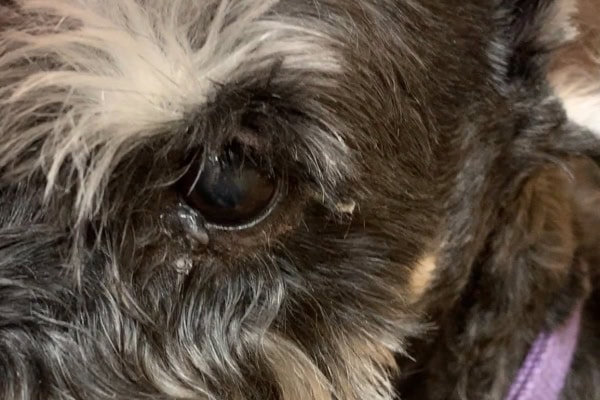
FAQ: What should I do if my dog has a goopy eye and I don’t think it is normal “morning goop”?
If your dog’s eye is more goopy than is normal for him or her, or if the eyes seem painful, inflamed, or swollen, the best thing you can do is give your vet a call. He or she will ask you some questions about the type of eye discharge and other symptoms you are noticing to determine how quickly your dog needs to be seen.
Sometimes the vet may recommend coming in for a same-day urgent visit or heading to the ER or a veterinary specialist (ophthalmologist) for an emergency vet visit. Other times, the vet may schedule your dog for a visit in a day or two.
The key takeaway is to consult your vet right away if your dog has an eye problem. Don’t wait a bit to see what happens. For some conditions, the eyes can go from looking slightly abnormal to extremely bad in a short period of time.
FAQ: Are there home remedies for goopy eyes in dogs?
The best thing you can do for your dog with a goopy eye is to make an appointment with your vet rather than trying to treat him or her at home first. Depending on the situation, the vet may suggest flushing the eye with saline eye wash (with no other additives or medications). Or he or she may have you gently use a washcloth wet with warm water to remove debris from the eye while waiting for the appointment.
Those measures are not meant to take the place of a vet visit, though.
FAQ: Is it normal for my dog’s eye to be tearing?
Depending on your dog’s breed, face shape, amount of hair around the eyes, and other factors, some amount of clear discharge (tears) at the corners of the eyes can be normal. However, if the whole side of your dog’s face is wet, your dog is holding the eye shut and it is tearing, the amount of tearing is higher than normal, or the eye itself looks abnormal (red, swollen, cloudy, etc.), your dog may have an eye issue that requires veterinary attention.
Some causes of excessive tearing (epiphora) in dogs include:
- Allergies
- Dust and irritants in the eye
- Blocked tear duct—Normally, tears drain away from the eye through the tear ducts located at the inner corner of the eye. If the duct is plugged, tears spill over onto the face
- Foreign material in the eye
- Anatomical abnormalities such as entropion in dogs, a condition where the eyelid turns inward, and the eyelashes rub the surface of the eye
- Glaucoma in dogs (increased pressure in the eye) or other painful eye conditions
FAQ: Why does my dog have brownish streaks of eye discharge below both eyes?
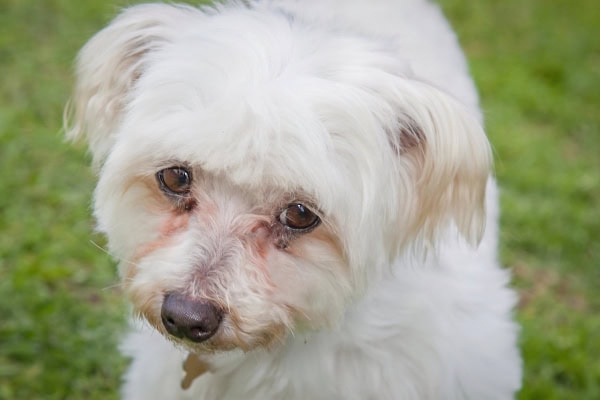
Light colored dogs may develop reddish stains on the fur in the corners of their eyes. This isn’t truly a goopy eye but rather tear staining due to porphyrin pigment in the tears. Porphyrin is a normal pigment that turns a rusty red color when exposed to air for a long time.
To reduce the amount of tear staining, try to keep the fur clipped near the eyes and regularly clean the area with an eye wipe or wet washcloth. Some dog parents also have had success with giving their dog a supplement that helps decrease the chances of having tear-stained fur.
As long as the amount of tears and tear staining is consistent and your dog’s eye looks normal, tear staining is primarily a cosmetic problem and does not require an urgent trip to the vet. However, if you notice an increase in tearing or changes to the appearance or comfort of your dog’s eyes, it is best to promptly seek veterinary attention.
Consult your vet for your dog’s goopy eye
As you may have noticed, there are a variety of conditions that can cause a dog to have goopy eyes. And the symptoms can have a lot of overlap from one condition to the next. This, and the fact that eye problems can get serious quickly, are why it is so important to contact your vet if your dog has abnormally goopy eyes.
The sooner you talk to the vet, the sooner he or she can start diagnosing and treating your dog’s eyes. And the better the outcome may be for your dog. So, if your dog’s eyes are goopy, don’t wait around to see what happens. Call your vet to get help for your pup!
What was the cause of your dog’s goopy eye?
Please comment below.