Follicular cysts in dogs are benign fluid-filled skin masses that can sometimes rupture or become irritated. Integrative veterinarian Dr. Julie Buzby discusses the types, appearance, diagnosis, and treatment for follicular cysts in dogs so you will have a better idea of what to expect if one pops up on your pup.
Finding a new lump or bump on your dog’s skin can be a bit worrisome. It’s difficult to tell how big a deal it might be just by looking at it. Could it be skin cancer? Or just a harmless mass?
Thankfully, not all lumps on your dog’s skin are cancerous. For example, follicular cysts in dogs are a “good” type of mass because they are benign.
What are follicular cysts in dogs?
Follicular cysts in dogs are masses that form within the hair follicles of your dog’s skin. They have a wall lined with epithelial cells (skin cells) and may contain a thin to thick white, yellow, grey, or brown material. These benign lumps are non-cancerous, but they do sometimes pop open or become inflamed or infected.
What causes follicular cysts?
There is no specific cause for follicular cysts in dogs, although they may develop when hair follicles become blocked due to inflammation, infection, scar tissue, or debris. Frictional trauma and chronic trauma at pressure points can also increase the risk of cyst formation. Additionally, the following dog breeds have a genetic predisposition for follicular cyst development:
- Basset Hounds
- Boxers
- Doberman Pinschers
- Hairless breeds (e.g., Xoloitzcuintli)
- Kerry Blue Terriers
- Miniature Schnauzers
- Old English Sheepdogs
- Shih Tzus
- Yorkshire Terriers
Follicular cysts are usually solitary masses. However, multiple follicular cysts can develop in some dogs, especially hairless breeds like the Xoloitzcuintli. Male and female dogs are equally likely to develop a follicular cyst, and middle-aged dogs are at a slightly higher risk than dogs of other ages.
What are the types of follicular cysts?
Follicular cysts are further classified by the lining of the cyst wall and their point of origin within the hair follicle. Some types of follicular cysts include:
Infundibular cysts
Infundibular cysts are common in dogs and develop closer to the opening of the hair follicle. Keratinaceous cysts are one such type of infundibular cyst. These cysts are filled with keratin, a fibrous protein that is the main structural component of skin, hair, and nails. Blocked or damaged follicles lead to the accumulation of keratin and the formation of keratinaceous cysts.
A sebaceous cyst in dogs is another type of infundibular cyst. They form when oil-secreting glands of the skin (sebaceous glands) release sebum into the follicle, and the sebum becomes trapped. True sebaceous cysts (cysts with just sebum inside) are very rare in veterinary medicine because there is usually also something else present, like bacteria. This is why many experts prefer the term “inclusion cyst” instead of “sebaceous cyst.”
Isthmus catagen cysts
When follicular cysts originate from the lower portion of the outer root sheath, they are called isthmus catagen cysts. The isthmus is the deeper part of the follicle, and catagen refers to a phase of the hair growth cycle. Examples of these cysts include trichilemmal cysts, pilar cysts, and cornifying epitheliomas. Isthmus catagen cysts are also common in dogs.
Matrix cysts and hybrid (panfollicular) cysts
Matrix cysts and hybrid cysts are uncommon in small animals but do occasionally occur in dogs and cats.
- Matrix cysts are follicular cysts whose linings resemble cells from the hair bulb and the inner root sheath. These are noted for sometimes becoming larger skin growths called pilomatricomas.
- As the name implies, hybrid cysts are a combination of the three follicular cyst types above and can progress to larger skin masses known as trichoepitheliomas.
Dermoid cysts
Boxers, Kerry Blue Terriers, and Rhodesian Ridgebacks are prone to the congenital development of dermoid cysts. These cysts are the result of a birth defect and appear before an affected puppy is born. Dermoid cysts tend to develop on the midline of the head, face, and back, and are rare compared to other cyst types.
What do follicular cysts look like?
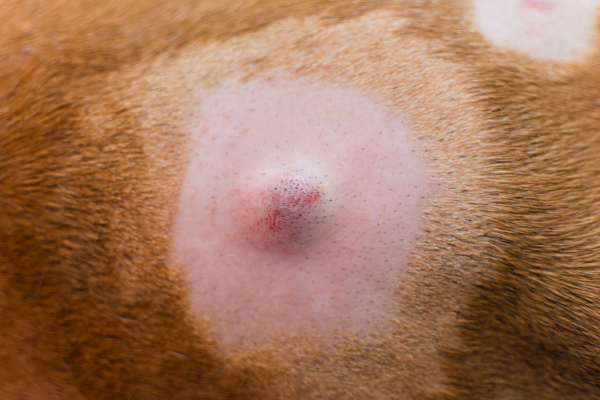
All of these types of follicular cysts are usually firm, raised, smooth, and distinct masses on top of the skin or just underneath it. Some cysts may appear porous or ulcerated. If the cyst ruptures, the inner material is often thick and yellow-brown or grayish-white in color. Skin surrounding the cyst may be inflamed, itchy, and painful, especially if the cyst ruptures.
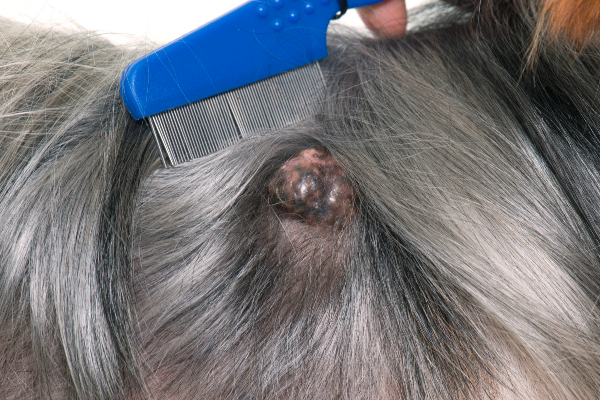
Follicular cysts can vary in size from 0.5 centimeters to as large as 5 centimeters wide! On average, follicular cysts are typically less than 2 centimeters in diameter. Follicular cysts can occur anywhere on the body, though they may appear more often in the following locations:
- Head and ears
- Chest
- Neck
- Proximal limbs (shoulders and thighs)
- Perianal region (around the anus)
How will the vet diagnose a follicular cyst?
Since it is impossible to determine the identity of a skin mass just by looking at it, the vet will need to obtain a sample of it to reach a diagnosis.
Fine needle aspiration
Fine needle aspiration (FNA) is a common method for testing skin cysts and other masses. It involves using a small needle to draw a sample from the fluid-filled cyst and examining the material under the microscope. The FNA allows your vet to look for signs of infection and to try to rule out other types of skin growths.
The microscopic examination is important because, in rare cases, some follicular cysts evolve into malignant skin cancers such as squamous cell carcinoma. Those types of tumors carry a worse prognosis than dog follicular cysts and require a different treatment approach.
Tissue biopsy
If fine needle aspirate testing is inconclusive, your veterinarian may need to perform a tissue biopsy by surgically collecting a larger piece of the cyst. Then a veterinary pathologist can examine the tissue under the microscope to reach a diagnosis.
Additional testing
The vet may recommend blood tests for dogs and/or urine testing for patients with recurring cysts or multiple follicular cysts. This is because some endocrine disorders, like Cushing’s disease in dogs and hypothyroidism in dogs, may negatively impact overall skin health. As a result, affected dogs have an increased risk of hair follicle damage and cyst formation
What is the treatment for follicular cysts?
Once the vet diagnoses your dog with a follicular cyst, he or she will formulate a treatment plan.
It is usually ok to simply monitor small, solitary, and non-inflamed follicular cysts rather than pursue any treatment. The overall prognosis for them with or without treatment is good.
However, the vet may suggest medical management for inflamed or ruptured cysts. This typically involves steroids to reduce inflammation and antibiotics to address the infection.
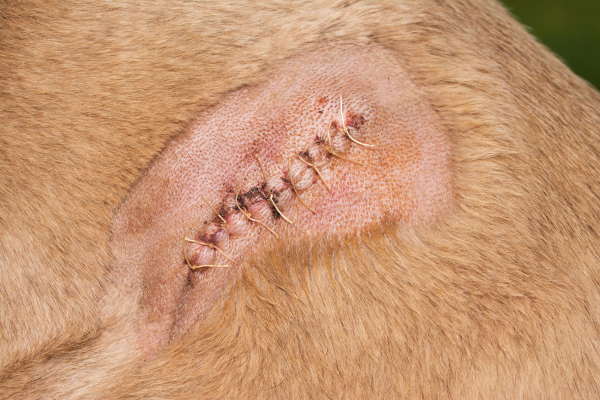
Alternatively, if the goal is to get rid of the cyst entirely, there are a few options. Your family veterinarian can perform surgical removal of the follicular cyst if it is causing issues for your dog. Alternatively, veterinary dermatologists and surgeons may have access to other curative therapies like cryotherapy and carbon dioxide laser ablation.
However, surgical excision may not help dogs with multiple cysts because more cysts are likely to pop up in the future. Some veterinarians have been successful at treating multiple follicular cysts in dogs with isotretinoin, a derivative of vitamin A used to treat acne in humans. (Note: Isotretinoin should not be used in breeding animals or handled by pregnant humans because it can cause significant birth defects.)
Can you treat a follicular cyst at home?
There are no tried-and-true home remedies that are going to make a follicular cyst go away. However, you can monitor the cyst at home once you have a diagnosis. Plus, you can keep the area around it clean and try to keep your dog from irritating it.
Even if you’re a fan of “pimple-popping” videos online, experts warn that you should never squeeze follicular cysts or try to purposefully rupture them. This is because your dog’s immune system may see the ruptured debris as an outside invader, resulting in local inflammation and discomfort.
Are there ways to prevent follicular cysts from forming?
To address skin issues that may lead to follicular cysts, you could try topical therapies like anti-seborrheic shampoos, sprays, and mousse products to help reduce follicular plugging. Anti-seborrheic products may contain ingredients such as sulfur and salicylic acid. Benzoyl peroxide is also a good ingredient for follicular flushing, but it can be irritating for some dogs.
Additionally, omega-3 fatty acids for dogs have great anti-inflammatory and skin health properties. Plus, most veterinary dermatologists recommend products that can improve the skin’s barrier (e.g., phytosphingosine, ophytrium).
Some essential oil products may be helpful, but always make sure the product is labeled for dogs and comes from a vet-recommended company. To avoid accidental poisoning, never use any over-the-counter essential oil products on your pet, especially if they are at 100% concentration.
Check your dog for lumps regularly
It is important to regularly check your dog over for any new masses or other changes to the skin as part of a tip-to-tail dog wellness scan. Then (and this is just as important), make an appointment with your vet so that he or she can perform an FNA to determine what sort of mass it is.
If your dog’s new lump or bump ends up being a follicular cyst, you can breathe a sigh of relief. However, not all skin bumps are so innocent, so it’s better to play it safe and get your dog checked out. That way, you know exactly what you are dealing with and can take the necessary steps to address the mass and keep your dog happy and healthy for as long as possible.
Has your dog had a follicular cyst?
Please comment below.


Yes. 7 year old Newfoundland. Thought at first was a hot spot but unresponsive to treatment on right perianal area. Needle aspiration was inconclusive. Removal if lump turned out to be “follicular cyst, infundibular type, filled with lamellar often concentric flakes of keratin material”
The initial hot spot appearing area was about 3cm in diameter.
Hi Cheryll,
I am sorry your pup is dealing with this worrisome cyst. Glad that your vet feels they can surgically remove it and resolve the issue. Praying for a successful procedure and an easy recovery.
My boxer he will be turning ten in June , we expect older dogs to get lumps and bumps but never one to this side he’s always been a weird dog in the regard that he had really bad malnourishment and has always had little lumps within the past year year and a half it has went from a pea sized lump on his right back leg on his hip to a very large growth he’s been to the vet and gotten a biopsy that came back none cancerous and the only solution they said would be removal and I didn’t find in needed but now it’s worrying me. It does not seem to bother him though so I hope it’ll be ok. Because it’s gone away and came back again multiple times, he never seems bothered by it.
Hi Bailey,
I understand your concern for your pup and think he is lucky to have you taking such good care of him. I am glad the lump doesn’t seem to be cancerous, and your boy is not bothered by it. Praying you can find the advice you need to make the tough decision of whether to pursue surgery or not. Wishing you and your sweet boy all the best.
My boxer has had many many cysts one just ruptured last night and tiny new nodules form. May look into the retinoid treatment
Hi Beth,
Wishing you all the best of luck as you work toward finding a solution for your pup. Feel free to leave an update and let us know what you think about the retinoid treatment if you decide to try it!
6 yo (6Kg) cavoodle developed 5 follicular cysts over 12-18 months mainly on her back and one on her tail, plus a sebaceous adenoma on her neck. Had all 6 removed and tested to confirm benign. Looking for ways to reduce the occurrence in future given she is obviously prone to them. Could it be diet? Does she need a medicated shampoo to reduce follicular plugging? If yes – any recommendations? Noted Omega 3 supplement could help.
Hi Gail,
I am sorry your girl is dealing with these bothersome cysts. I am glad they were not cancerous and your vet was able to successfully remove them with surgery. While a definitive cause of follicular cysts is not known, these types of cysts are thought to be caused by skin inflammation or other things that may lead to blocked hair follicles (debris, excessive oil, infection, etc.). If inflammation is suspected I like to use the Calm shampoo by Douxo: https://us.douxo.com/products/douxo-s3-calm-shampoo?variant=46730740859100
If I am concerned about debris, infection, or excessive oil production I reach for the DermaBenSs shampoo by Dechra: https://www.dechra-us.com/our-products/us/companion-animal/cat/non-prescription/dermabenss
Of course, there are numerous products available, and each vet will have their individual favorites. The main thing to look for is the active ingredient. As the article states, for a medicated shampoo you would want something that contains salicylic acid and/or benzoyl peroxide. And for calming shampoos, I like products that contain a skin barrier protectant. Hoping this will help you make an informed decision about at home preventative care. Best wishes to you both and keep up the great work!
Our 11 month old pure bred Australian Shepherd had 5 Infundibular follicular cysts removed and biopsied last week. They were all clustered on the top of his head. I am concerned this will be a life long problem. I am also disappointed he developed them so young seeing as he is pure bred. We noticed the first one start around 4 months. Should I notify the breeder? Is it hereditary ? We are not breeding him.
Hi Cecilia,
I am sorry your young puppy is dealing with these worrisome cysts on his head. These types of skin problems can be inherited but not necessarily. Your boy is definitely not a breed in which we usually see follicular cysts so that makes his case a bit puzzling. I would definitely notify the breeder so they can monitor for this problem in any of the other puppies that share the same parents. Hoping that now the cysts have been removed you won’t have any further issues. Wishing your sweet pup all the best for many happy and healthy years ahead.
My 4 1/2 year-old standard poodle had one about a year ago and then about six months later he had another one in the same spot both times it was very small but both times I had a drained and I sent it out for a biopsy I just wanted to be sure but my vet said if it comes back again, it might just pay to remove it. And I think that’s what I’m going to do.
Hi Francine,
I think it is great you are staying on top of this and ensuring these lumps are adequately evaluated by your vet. Hoping there won’t be a need for surgery, but I feel confident in your vet’s assessment. Thank you for sharing your experience with us. Wishing you both all the best!
yes my catahoula leopard has a bump at the top of his head .it look like it busted so I put triple antibiotic on it to see if it heals.
Hi Germaine,
Hoping everything is going well and wishing your pup all the best.