Have you ever wondered, “Why DO dogs’ feet smell like Fritos?” Whether you are a fan of the smell of Frito feet or not, it is important to understand what makes your dog smell like corn chips and when it could indicate a problem. Get the scoop on Frito feet from integrative veterinarian Dr. Julie Buzby.
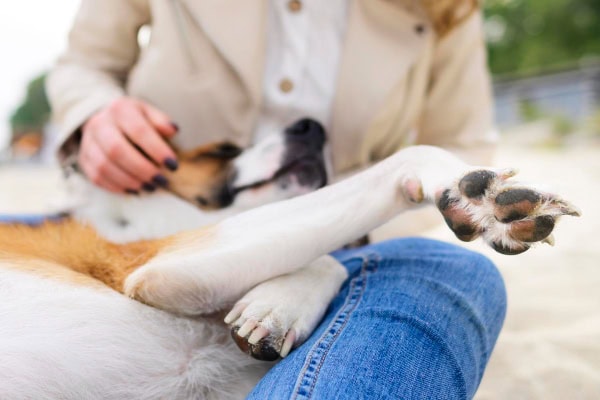
Does your dog give off the faint smell of Fritos? If so, you’re not alone! This is one of the more polarizing topics among pet parents. You either love it or hate it. There is no in-between.
But why do some dogs smell like corn chips? The reason may surprise you!
Why do dogs’ feet smell like Fritos?
It may sound gross, but the corn chip odor actually comes from a mix of bacteria, yeast, sweat, and saliva on your dog’s paws. This doesn’t mean you need to stop reading to immediately wash your dog, though!
Although we usually associate bacteria and yeast with illness or disease, this is not always the case. Like humans, dogs have millions of microscopic bacteria that live on their skin. These bacteria are not harmful (in fact, they are very much the opposite) and can vary between species and individuals.
The Frito-like smell can usually be attributed to two different types of bacteria: Pseudomonas and Proteus. These occur naturally in the environment and are generally harmless.
When combined with sweat and saliva, these bacteria give off that unmistakable corn chip smell.
Plus, some dogs also have the yeast Malassezia living on their paws and skin. It can create a musty or sweet smell, which contributes to the “Frito feet bouquet.”
Wait. Dogs sweat?
If you’re thinking, “I’ve never seen a dog sweat!” you’re mostly right. Dogs do not produce sweat over their whole bodies the way we do, but they do sweat. In fact, they have two different types of sweat glands.
- Apocrine sweat glands can be found all over dogs’ bodies. These glands produce scents but do not help with cooling.
- Merocrine sweat glands produce liquid sweat, but very little of it. These glands, also called eccrine sweat glands, are located only on dogs’ paw pads and noses.
Moisture from sweat and all the warm, dark recesses between the toes and paw pads create the perfect environment for bacterial and yeast growth. It’s no wonder, then, that the dog’s paws smell the strongest, hence the moniker “Frito feet.”
Do all dogs’ feet smell like corn chips?
Due to the wide variation in the numbers and species of bacteria and yeast that take up residence on a dog’s skin, not all dogs smell like corn chips. Some do, and some don’t. The naturally occurring bacteria responsible for the odor are harmless in normal numbers, so it isn’t necessarily bad if your dog’s feet smell slightly like Fritos. But it isn’t a problem if they don’t, either.
Keep in mind that the operative phrase here is “normal numbers.” Excessive numbers of yeast and bacteria, on the other hand, can negatively affect your dog’s health.
When might Frito feet point to a problem?
A mild corn chip odor is a non-issue for most dogs. But if your dog’s paws smell like you’re sticking your head directly into a bag of Fritos, this could point to problematic bacterial or fungal overgrowth. Bacterial infections or dog paw yeast infections can make paw odor particularly pungent.
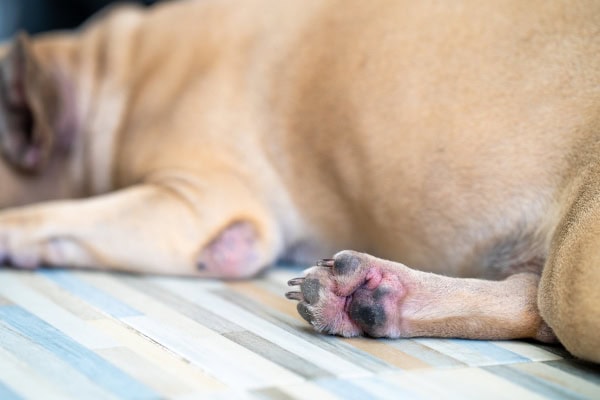
If you’re not sure whether your dog’s Frito feet are normal or problematic, it can help to check for other signs of infection (pyoderma in dogs) or inflammation, including:
- Excessive licking or scratching: Licking, chewing, rubbing, or scratching the paws or body can point to itchiness from allergies, infections, etc.
- Hair loss: Your dog might be losing hair on the paws or elsewhere on the body.
- Red skin that may be hot to the touch: Red (or pink) inflamed skin is common with infections or allergies.
- Persistent strong odor: If you notice a corn chip odor when you are even slightly close to your dog, this might be a problem. Also, if your dog never smelled like Fritos before but does now, it is worth noting.
- Reddish-brown stained fur: As dogs lick the feet or body, their saliva may stain the fur a rust color.
- Flaky or crusty skin: Allergies or infections may cause crusts, flakes, or dry skin (dandruff in dogs).
- Staining at the base of the nails: Rust-colored staining on the nail around where it meets the skin is a strong indicator of infection (especially yeast infections).
- Thickened skin: If the infection and inflammation have been going on for a while, the skin might become thicker. It sometimes also becomes more darkly pigmented.
Head to the vet
If your dog has Frito feet plus some of the symptoms above, it’s a good idea to make an appointment with your veterinarian. Skin issues are extremely common in dogs and stem from a number of causes. Thus, it’s best to get your dog checked out if there may be a problem.
What is the treatment for Frito feet?
Without other symptoms, a mild corn chip odor is normal and doesn’t require any treatment. However, if it is bothering you, there are a few potential home remedies.
Bacteria and yeast grow best in moist environments, and the crevices between dogs’ paw pads are notorious for trapping moisture. Thus, you may be able to minimize odors by keeping your dog’s paws dry and by making sure to wash (and dry!) between the paw pads during bath time.
Additionally, some dog parents have wiped their dogs’ feet with unscented baby wipes after coming in from outside or used medicated wipes or mousses on the feet.
It is important, though, to remember that it is normal (and healthy) for dogs to have some amount of bacteria and yeast on their feet. So, you don’t want to disrupt those populations too much.
Addressing the corn chip smell plus other skin problems
However, if your dog spends a lot of time licking his or her feet or is showing other symptoms related to the skin, home remedies are generally not sufficient. Excessive licking, itching, and skin problems could be signs of infection, possibly due to underlying allergies.
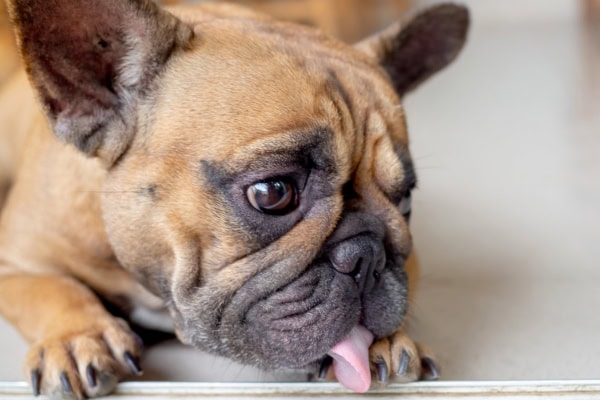
Common culprits include food allergy in dogs, seasonal allergies in dogs, and flea allergy dermatitis in dogs. These sorts of problems generally require veterinary care to resolve.
Your veterinarian can guide you through treating the infection and diagnosing and managing allergies in your dog. Depending on the type of allergy and severity, treatment may involve good flea prevention programs, hydrolyzed or novel protein/novel carbohydrate food trials, and/or allergy medicine for dogs.
The last scoop on Frito feet
If your dog smells a bit like corn chips but is otherwise acting and looking totally fine, fear not. Normal, harmless bacteria are just making their presence known. Even if it may sound gross, remember that we all have millions of microscopic bacteria in and on us. In fact, the bacteria on our skin may even prove we are dog lovers!
On the other hand, strongly scented Frito feet plus itching, licking, and red, irritated, or crusty skin usually point to a problem such as infections and/or allergies. If your dog falls into this category, contact your vet to get to the bottom of the issue. With the right treatment, your dog can go back to “normal” levels of Frito feet.
And now for the big question…
Are you a Frito feet fan?
Please let us know in the comments!