Hearing the phrase “gallbladder mucocele in dogs” as your sweet pup’s diagnosis may leave you feeling a bit unsure of what this means for him or her. Integrative veterinarian Dr. Julie Buzby explains the causes, symptoms, diagnosis, treatment, and outlook for a gallbladder mucocele in dogs. Armed with this information you will better be able to help and support your dog.
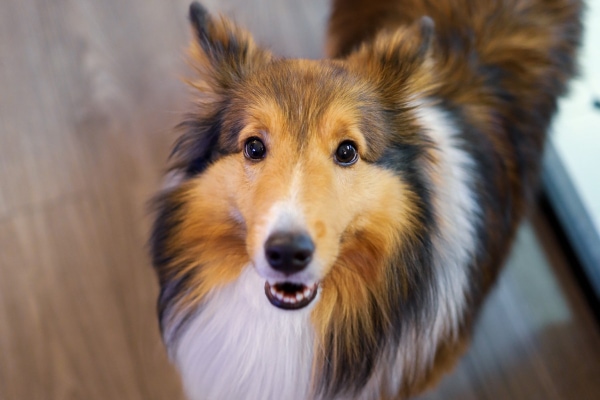
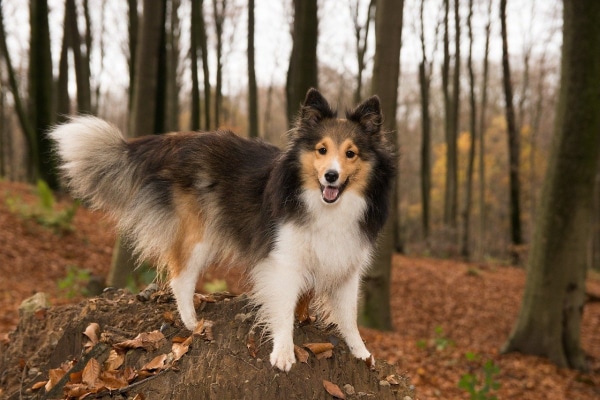
Bijou the Sheltie is notoriously a bit of a picky eater. He was one of the few puppies I’ve met that turned up his nose at the squeeze cheese I often offer to distract from vaccines. I mean, what dog doesn’t like bright orange processed goo? Bijou. That’s who. Over the last six years he’s occasionally skipped a meal here and there. His owner and I kept track of his dental health to make sure that wasn’t an issue, and we ran yearly bloodwork. He had always been the picture of health.
But then something changed. Bijou went from picky to downright not eating. He became lethargic. He started vomiting. His dad knew something was wrong, and brought him to me right away.
Bijou has always been a little standoffish with me—maybe he never forgave me for assuming he’d like squeeze cheese. But this time he barely acknowledged my existence. He let me do a full exam without much resistance, save for a little wince when I palpated his belly. Something was very not right.
Getting to the root of Bijou’s problem
Unfortunately in dogs, lethargy, vomiting, and inappetence are somewhat nonspecific. I couldn’t tell just by looking at him what was troubling Bijou, though I thought I could see a little yellow tinge in the white of his eyes. But maybe it was the lighting in the exam room. I knew we needed to do some diagnostics.
I started by taking X-rays. Maybe he’d eaten something he shouldn’t have? He wasn’t the most trustworthy dog when his dad was at work. X-rays looked clear—nothing was obviously wrong in his abdomen. We ran some bloodwork and that’s when my level of concern raised significantly. Bijou’s liver values were through the roof. Apparently, I wasn’t imagining the yellowing of his eyes—he really was jaundiced.
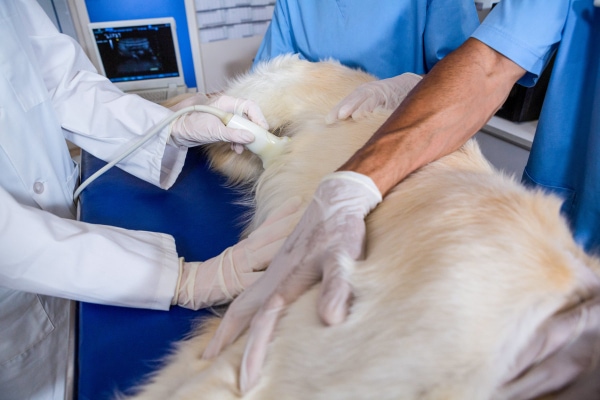
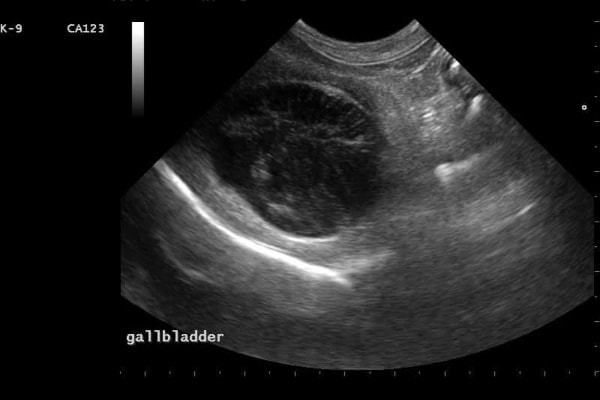
The next step was an ultrasound because I knew something was going on with his liver, and I hadn’t seen an obvious problem like a tumor on X-rays. As it turned out, his liver looked ok on ultrasound. However, his gallbladder looked like a sliced kiwi when it should be a clear black circle. This odd appearance to the gallbladder meant Bijou had a gallbladder mucocele.
What is a gallbladder mucocele?
You may have heard about people having gallbladder issues (or suffered some yourself). But did you know dogs also have gallbladders? The gallbladder is like a little balloon tucked up in between liver lobes.
The liver produces bile from bile acids, bile salts, water, cholesterol, and other components. Bile flows from the liver through bile ducts into the gallbladder where it is stored. Then the larger common bile duct takes bile from the gallbladder into the intestines to aid in the digestion and excretion of toxins.
Normally bile is a thin liquid. However, in some dogs, the consistency of bile inside the gallbladder becomes thicker due to an accumulation of mucous. As a result, a canine gallbladder mucocele forms. The mucous-laden biliary sludge can become too thick to travel through the common bile duct. This causes the gallbladder to become distended and potentially obstructed, unable to empty. Gallbladder obstruction can make a patient very sick, just like Bijou.
What causes a gallbladder mucocele in dogs?
Let’s back up for a minute to see how a gallbladder mucocele happens. There is still so much that veterinarians and researchers don’t fully understand about gallbladder mucoceles, but here is what they have learned so far.
If the gallbladder isn’t appropriately contracting to send bile to the intestines, bile acids build up inside it. This can cause inflammation of the gallbladder wall, which in turn increases mucous production, compounding the problem. The more mucous that builds up, the thicker the bile becomes, and the greater the chance of obstruction.
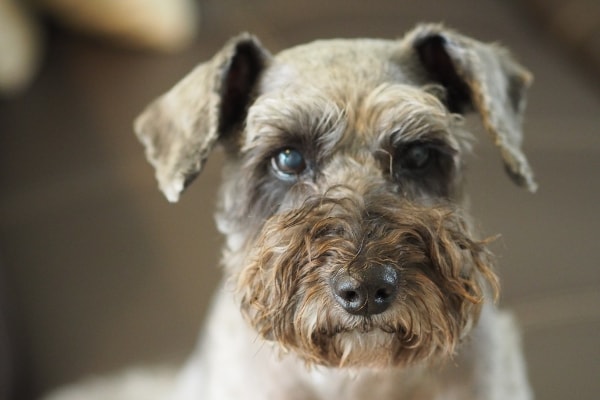
There is a presumed genetic component that predisposes some dogs to develop gallbladder mucoceles. They are more commonly diagnosed in Shetland Sheepdogs, Miniature Schnauzers, Cocker Spaniels, and Dachshunds.
Additionally, certain metabolic disorders can increase the chance of a dog developing a gallbladder mucocele. Pups with Cushing’s disease in dogs are 29 times more likely to develop a mucocele. Diabetes and hypothyroidism in dogs also increase the likelihood of a gallbladder mucocele. These conditions may alter the way fat is metabolized, and make it more difficult for the gallbladder to contract to release bile.
What are the symptoms?
Just like we saw with Bijou, usually dogs with gallbladder mucoceles are pretty sick. Clinical signs can include:
- Vomiting
- A lethargic dog
- Decreased appetite
- Jaundice (yellowing of the eyes, gums, or skin)
- Painful abdomen
- Fever
Not all dogs with mucoceles have all of these symptoms, and all of these symptoms can be associated with other diseases. For this reason, It is very important to seek veterinary care immediately if your dog is showing any of these signs.
How is a gallbladder mucocele diagnosed?
Your vet will start with a physical exam to assess for jaundice, abdominal pain, fever, or other abnormalities. Next, he or she will probably consider further diagnostics like bloodwork.
Usually the bloodwork involves a complete blood count, which assesses white and red blood cell numbers and platelet numbers. The vet will also run a chemistry panel, which looks for signs of kidney disease, liver disease in dogs, diabetes mellitus, electrolyte imbalances, and other conditions. Dogs with a gallbladder mucocele tend to have elevations in their liver values, much like my canine patient did.
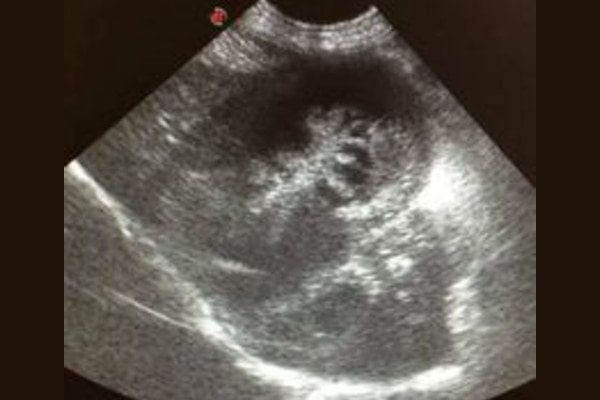
If your vet suspects a gallbladder mucocele or other problem with the internal organs, he or she will probably recommend an abdominal ultrasound. This test allows the vet to assess the liver, contents of the gallbladder, and other abdominal organs. Typically, a normal gallbladder should be a black circle on ultrasound. However, if it looks like a sliced kiwi due to mucous accumulation, the dog probably has a gallbladder mucocele.
What is the treatment for a gallbladder mucocele?
In some milder cases, medical management can be successful. Your vet may recommend starting your dog on ursodiol, a medication that can sometimes improve the flow of bile out of the gallbladder. However, vets typically only try it for dogs who have not yet become extremely ill from the mucocele. A low-fat diet may also be beneficial. Generally speaking, medical management is usually reserved for dogs who are incidentally diagnosed with a gallbladder mucocele and are not clinically ill from it yet.
However, the best course of action for dogs who are showing symptoms at the time of diagnosis is emergency surgery to remove the gallbladder (i.e. cholecystectomy). If a mucocele is causing biliary obstruction, the risk is that if not removed, it may lead to gallbladder rupture. Gallbladder rupture can make the dog even sicker and is potentially fatal.
Gallbladder removal surgery
Gallbladder removal surgery is often rather involved. Your veterinarian may refer you to a specialty hospital for intensive care and the surgery. In addition to removing the gallbladder, the surgeon may take a sample of the liver or bile to send off for bacterial culture. The information gleaned from this may guide treatment and which antibiotics are more likely to be successful in battling infection.
Sometimes during surgery bile can leak into the abdomen. Alternatively, it may already have been present if there was a gallbladder rupture prior to surgery. Bile is very irritating and this can lead to an inflammatory condition called peritonitis. If this happens, the dog may need abdominal drains placed to manage peritonitis after surgery.
What is the prognosis for dogs with a gallbladder mucocele?
Unfortunately, gallbladder mucoceles do not always lead to a happy outcome. The mortality rate (i.e. death rate) for dogs undergoing gallbladder removal surgery for this condition can be as high as 20-25%. However, if surgery is successful, dogs can have a normal life expectancy. The earlier in the condition the dog has surgery, the higher the likelihood of a successful outcome.
The good news is that the gallbladder is not an essential organ so dogs can do fine without it. As mentioned earlier, the function of the gallbladder is to store bile. So after gallbladder removal, the bile just travels directly from the liver to the intestines as the liver produces it. Some dogs may require a special diet or lifelong medication, but their prognosis after surgery is good overall.
The veterinarian will closely monitor dogs undergoing medical treatment for a gallbladder mucocele. This will likely involve routine bloodwork and ultrasounds to ensure that the gallbladder does not become obstructed. If the dog does end up having a gallbladder blockage, there is a risk the gallbladder could rupture and/or the dog could need a cholecystectomy.
If you are interested in learning more about the outlook for the two options, a 2019 article in the Journal of Veterinary Internal Medicine compared the long-term survival of dogs treated for gallbladder mucocele by cholecystectomy, medical management, or both. The researchers determined that while surgery is the treatment of choice, medical management can be a good option for some dogs.
Back to Bijou
Despite being very sick when he was first diagnosed, Bijou is alive and well today. His dad took him to our local specialty hospital where a board-certified veterinary surgeon removed his gallbladder. Thankfully, it had not yet ruptured and his surgery was otherwise routine.
I recheck Bijou’s bloodwork every few months, keep him on a low fat diet, and he’s back to his old self.
If your dog isn’t feeling good, the best thing you can do for him or her is to head to the veterinarian. The sooner you get a diagnosis—be it a gallbladder mucocele or something else—the sooner you can start treatment and hopefully get your pup feeling better again.
I understand it can be scary and confusing sometimes to navigate health issues with a beloved furry family member, but just take it one step at a time. You and your veterinarian both have your dog’s best interests in mind. Work closely with your vet, and follow his or her recommendations.
Have you had a dog with a gallbladder mucocele?
Please share his or her story and any words of advice for other dog parents.


This past August we adopted a senior (11+) Lab/Hound mix named Raspberry. While Raspberry was at the shelter they did a medical exam which involved blood work that showed her Liver enzymes were high. Shortly after we adopted her, we took her in for an exam and had more blood work done and her enzymes were still high (I don’t know the exact numbers) but the vet said it might be a good idea at some point to do an ultrasound. The doctor also suggested starting her on Denamarin which we did. At the time we were also dealing with some of her other issues which mostly involved anxiety issues she was having which we felt might have come from the fact she was a stray for awhile before being taken to the shelter. She would pace nervously and try to hide in small places. When she was having one of these episodes, she seemed like a Zombie and was not very responsive to our efforts to comfort her. I started her on some CBD calming chews which I think helped a bit. Then, shortly before Thanksgiving, she started licking her anus obsessively. Even when we took her on walks she would often lie down on the sidewalk to start licking. I figured it might be her anal glands so we took her in to the vet to have them expressed. A week after they expressed her glands, she was still licking obsessively so we took her back. This time they said her glands appeared to be infected and started her on antibiotics. It took 4 rounds of different antibiotics and almost 2 months before this cleared up. The doctor in the meantime had said it was anal sacculitis. At some point during this period, I requested they do more blood work and the results showed she still had abnormally high liver enzymes so we finally got around to having them do the ultrasound. This was done last Friday. The doctor said her liver looked somewhat “mottled,” and that she had a mucocele in her gallbladder. I had never heard of such a thing and he didn’t make it sound that serious. He said he was going to prescribe Ursodiol and wanted us to continue the Denamarin and that we should recheck her blood and do another ultrasound in 3 months. He said sometimes Ursodiol will dissolve the mucocele. It wasn’t until I started doing some research on my own that I discovered how serious a mucocele can be. Throughout all of this, she has had a voracious appetite, always seems to have a lot of energy and her bowel movements have been normal, so she is not exhibiting any symptoms. She does not have any jaundice either. But from what I’ve read on the AVMA website, dogs who have elective surgery to remove their gallbladder upon diagnosis of a mucocele, have a better survival rate than those who are either managed medically or wait to have the surgery once symptoms appear. I don’t recall our vet even mentioning the possibility of surgery so I’m a little alarmed by what I’ve been reading online. The AVMA website states, “There is minimal evidence for effectiveness of medical management alone in reversing mucocele formation.” I am definitely going to ask him about the possibility of surgery for her, but I’m wondering if you know of success stories of dogs being treated successfully with medication alone and avoiding surgery. Surgery would definitely be a financial hardship for us, but if that is the best option, I will try and find a way.
Dear Vincent,
I am sorry Raspberry is facing this difficult (and scary) diagnosis. I understand your concern and think it is good you are researching and asking questions. While medical management of a mucocele can be successful, I am not sure the mucocele is actually ever “resolved” or if it just remains without any significant progression and the symptoms are well controlled. Surgical removal is definitely the preferred method despite being a risky procedure. I encourage you to discuss this option with your vet. You may even want to ask about a referral to a specialist. Hoping you can gather the information needed to make an informed decision. Praying for clarity and a positive outcome for your sweet girl.
Our 7 y/o female Sheltie presented at home with lethargy, poor appetite and some vomiting. We just thought she had a GI bug and watched her closely for 2 days. When she absolutely refused food, going outside or coming to the door we knew something was wrong. By the time we reached the emergency clinic in our city her temp was 105 and she was very sick. They did an ultrasound and found a mucocele. However, for some reason they wanted to wait 2 days to perform the removal. After quickly researching and calling around I knew this wasn’t right. I pulled her from there and rushed her two hours away to our state university vet hospital. Thank goodness I did! They said on the earlier ultrasound that it was already showing signs of rupture and they should’ve immediately taken her back for surgery at the other hospital. By the time I reached the new clinic it had ruptured and she was rushed to emergency surgery. Thankfully she didn’t need them to put a stent in the bile duct through the duodenum which causes the most risks after rupture. She is two days post op and is stable in the ICU. They pulled her arterial line and NG tube today. Labs are trending positive and fluid from drains is decreasing. When we finally got to visit her I noticed bright green diarrhea. Is this a sign of further issues or is this just the bile being excreted differently. They assured me it was something to be expected. Overall so far she is very lucky. What an insane and scary time for all of us. I think in total it will be about $20,000. Luckily we have pet insurance that is paying 90%. Best thing we’ve ever done!
Hi Emily,
I am sorry your Sheltie has been through so much over the past few weeks. She is very lucky you acted so quickly and advocated on her behalf. What a blessing she made it through surgery and is improving every day. The bright green diarrhea you noticed is a normal finding after this kind of surgery. Bile is made by the liver and stored by the gallbladder. So once the gallbladder is removed, bile is now being secreted directly into the intestines. Hoping your girl will continue to heal and make a full recovery. Wishing you both all the best for many happy days ahead.
Hello, I just want to say thank you for such a great post & to all the other posters for their stories. I’ve a one year old sheltie due to have his gallbladder removed in 2 days time & im so nervous for him. He sporadically regurgitates his food or sometimes early in the morning we notice some yellow bile vomit from him. Not all the time but enough that I had him checked. The vet was hoping his gallbladder wouldn’t cause issues for 6-7 years but in a few months it really deteriorated. If you have any advice on recovery & recovery advice – I would love to hear. Wish us luck – we are based in Ireland!
Hi Niamh & Ziggy,
I understand your concern for your pup as his surgery date approaches. I am glad your vet is being proactive with their recommendations for treatment. I can’t say that there is really specific recovery advice for this particular surgery other than the standard exercise restriction and monitoring the incision site for swelling, redness, or discharge. Your vet may have you change your boy’s diet a bit, but it may not be necessary. Hoping all goes well and praying for a full recovery for your sweet boy.
What pet insurance do you have? I have a senior dog and so far pet insurance won’t cover her due to age discrimination.
My 12 yo Pomeranian (Bear) was found to have elevated liver values. The vet also suspected Cushing’s so they did an ultrasound to look at his adrenals and said it might help determine the cause of the abnormal liver values. He is scheduled for dental cleaning/surgery next month and they don’t want to proceed without understanding the situation. The ultrasound showed a gallbladder mucocele but Bear is currently asymptomatic. The suggested “treatment” is prescription weight management food that is low fat. I have been reading and it seems that these often progress to where they cause blockage and that the options at that point are surgery or euthanasia. I’ve also read that survival is more likely if the gallbladder is removed before the mucocele causes blockage.
I just spent $3.5k treating his brother for polycythemia that was found after he had seizures. He was ok for 2 weeks and then wouldn’t eat and he went back to the hospital and another $3.5k later, died in my arms. That was only 3 weeks ago. Now I have this dilemma of whether I should spend the $1500-2400 for Bear’s dental surgery knowing that he has this mucocele. I feel cold because I love him but after what I went through with his brother, I am terrified that I’ll pay for the surgery (credit cards) and then the mucocele will cause blockage and I’ll be asked to spend another $3000-5000 or let him die. Spending the money (or rather going in debt for 2 yrs like with the brother) is bad enough, but to spend it and then have them die anyway is even worse.
Bear doesn’t exhibit any symptoms from his teeth, though there is heavy tartar on his upper back teeth and he has sinus issues that could be related. The vet says that his teeth could be infected and that this surgery will help if he’s in pain and could improve his long term health but there may not be long term with that mucocele.
I’m really stumped because now I wonder if the surgery for the gallbladder removal (if I could afford it somehow) would be the better option as far as his life expectancy goes and then worry about teeth later on.
Dear Angela,
Goodness, this is such a difficult situation. I am so sorry you are facing this impossibly hard choice for your pup. I think I am leaning toward what you mentioned at the bottom of your comment. If this was my patient, I would probably recommend focusing on the mucocele first and delaying the dental procedure until things have improved. I would be very hesitant to put a dog under anesthesia for an elective procedure with a known gallbladder mucocele present. This may be something best discussed with a specialist, but I know your finances have taken a big hit over the past few years. Praying for answers and a clear path forward. Feel free to keep us updated on how things are going. Bless you and your sweet boy.
Hi Angela. I’m so sorry to hear that you’re going through all of that. I had a cat that passed in October (had significant health issues for awhile and spent significant money on her) and my dog got sick with a mucocele and high liver values soon thereafter. She was barely eating and was slow overall. I’m also struggling with the decision considering money is tight and has been devoted to one or both pets for a while.
When I took her to the emergency (over $3k), I was told we have two primary options: cholecystectomy or medication management. I’ve gone with the medication management for now as one vet said the surgery plus recovery days in hospital would likely be $13k (another hospital quoted between $6-10K). For various reasons, the $13k estimate seemed more likely. I went with medication management while I mulling it over. Medication included Clavamox twice a day, Ursodiol twice a day, Denamarin, PPC, and Cerenia. These have helped her tremendously. She has gained back lost weight and is attentive and somewhat active (for a senior dog). I’m not necessarily recommending these for your dog, just sharing that they’ve helped mine.
When we initially took her to the emergency, one of her liver values was in the 3000s and the other near the 2000s (ALP & ALT – not in order – I don’t have the documentation in front of me). After 2 months on medication listed above the 3000 value dropped to 300/400 and the other dropped as well.
Neither vet (facility) would provide any indication of survival rates for the surgery. The only thing the second vet (13k vet) mentioned was that the liver was enlarged and so the surgery would likely be harder on her, on top of her just being older. I did find in frustrating that none of them could provide historical survival rates of dogs her age going through surgery, or even of the surgery overall. I’ve done a bit of my own research, however, my background isn’t in science so its hard to sift through. Again, I’m sorry you’re going through this and send my support.
Hi Halle,
I just wanted to say thank you for offering support and advice to others as they navigate these difficult situations. The blog was created with this in mind. I love it when I see our readers forming a community to help keep our senior dogs healthy and happy. Praying your sweet girl will continue to respond favorably to the medications and wishing you many happy days ahead. Bless you and keep up the good work!
Hi Halle, does your dog have a full mucocel or sludge , My vet said she wouldn’t put my Peanut on urisodol as he has a full mucocel, but I’ve read articles where it’s possible . It’s very confusing .
In March 2024 , my 12 year old , 13 pound, Yorkie Mix was diagnosed with a mucocele. The speciality emergency hospital did a full work up and estimated the cost of gallbladder removal surgery+ all the medications, labs, 48-72 hour hospitalization and everything else- was estimated to be $15,000 $22,000.
This is in the Seattle area.
I was shocked at how expensive this was and just wonder if this is the average price or did this hospital just have extremely inflated pricing?
Hi Molly,
I am sorry you were dealt with this terrible situation with your senior pup. Unfortunately, I am not familiar with the average pricing for this procedure in different areas. I can say that for a major surgery and 3 days of ICU follow up care, this seems reasonable. I know it is expensive and that is why pet insurance is becoming more popular and necessary. I am thankful that veterinary medicine is able to offer services and products comparable to human medicine but at a tenth of the cost. I hope you were able to get your dog the care they needed. Thank you for bringing up this important topic!
Hi Molly – I was quoted 6 -10k from one facility and 13k from another around the DC area. What did you end up deciding to do?
I had an 11-year old beagle who had to have emergency surgery for a mucocele. The surgeon quoted $12,000 for the procedure, which was really difficult, but he had a record of almost perfect survival rates, so I decided to do it. Diesel lived a perfectly healthy life for another four years afterwards, and it was the best money I ever spent ❤️
Hi Lisa,
That is amazing! What a blessing you gained 4 extra years with your beloved Diesel. Thank you for sharing your experience with us. I am certain this will offer hope to others. Bless you!