Hearing the phrase “gallbladder mucocele in dogs” as your sweet pup’s diagnosis may leave you feeling a bit unsure of what this means for him or her. Integrative veterinarian Dr. Julie Buzby explains the causes, symptoms, diagnosis, treatment, and outlook for a gallbladder mucocele in dogs. Armed with this information you will better be able to help and support your dog.
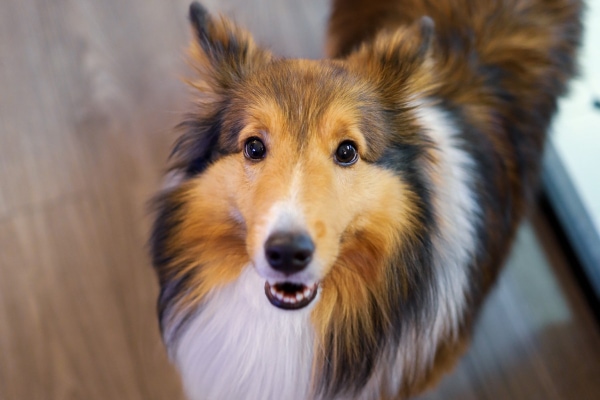
Bijou the Sheltie is notoriously a bit of a picky eater. He was one of the few puppies I’ve met that turned up his nose at the squeeze cheese I often offer to distract from vaccines. I mean, what dog doesn’t like bright orange processed goo? Bijou. That’s who. Over the last six years he’s occasionally skipped a meal here and there. His owner and I kept track of his dental health to make sure that wasn’t an issue, and we ran yearly bloodwork. He had always been the picture of health.
But then something changed. Bijou went from picky to downright not eating. He became lethargic. He started vomiting. His dad knew something was wrong, and brought him to me right away.
Bijou has always been a little standoffish with me—maybe he never forgave me for assuming he’d like squeeze cheese. But this time he barely acknowledged my existence. He let me do a full exam without much resistance, save for a little wince when I palpated his belly. Something was very not right.
Getting to the root of Bijou’s problem
Unfortunately in dogs, lethargy, vomiting, and inappetence are somewhat nonspecific. I couldn’t tell just by looking at him what was troubling Bijou, though I thought I could see a little yellow tinge in the white of his eyes. But maybe it was the lighting in the exam room. I knew we needed to do some diagnostics.
I started by taking X-rays. Maybe he’d eaten something he shouldn’t have? He wasn’t the most trustworthy dog when his dad was at work. X-rays looked clear—nothing was obviously wrong in his abdomen. We ran some bloodwork and that’s when my level of concern raised significantly. Bijou’s liver values were through the roof. Apparently, I wasn’t imagining the yellowing of his eyes—he really was jaundiced.
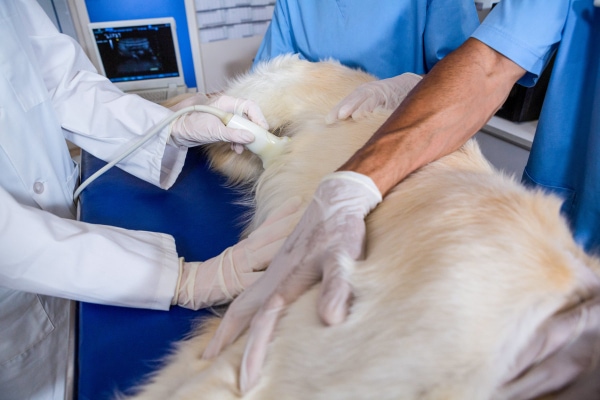
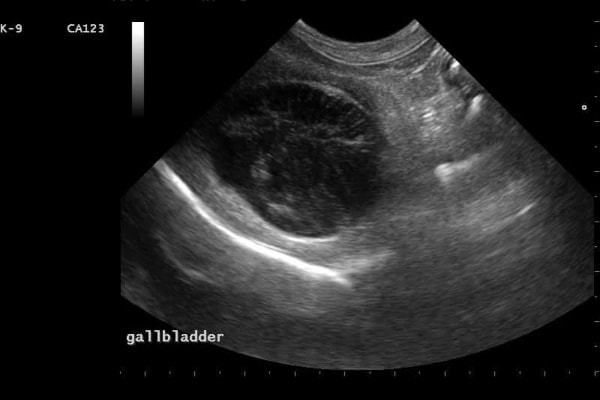
The next step was an ultrasound because I knew something was going on with his liver, and I hadn’t seen an obvious problem like a tumor on X-rays. As it turned out, his liver looked ok on ultrasound. However, his gallbladder looked like a sliced kiwi when it should be a clear black circle. This odd appearance to the gallbladder meant Bijou had a gallbladder mucocele.
What is a gallbladder mucocele?
You may have heard about people having gallbladder issues (or suffered some yourself). But did you know dogs also have gallbladders? The gallbladder is like a little balloon tucked up in between liver lobes.
The liver produces bile from bile acids, bile salts, water, cholesterol, and other components. Bile flows from the liver through bile ducts into the gallbladder where it is stored. Then the larger common bile duct takes bile from the gallbladder into the intestines to aid in the digestion and excretion of toxins.
Normally bile is a thin liquid. However, in some dogs, the consistency of bile inside the gallbladder becomes thicker due to an accumulation of mucous. As a result, a canine gallbladder mucocele forms. The mucous-laden biliary sludge can become too thick to travel through the common bile duct. This causes the gallbladder to become distended and potentially obstructed, unable to empty. Gallbladder obstruction can make a patient very sick, just like Bijou.
What causes a gallbladder mucocele in dogs?
Let’s back up for a minute to see how a gallbladder mucocele happens. There is still so much that veterinarians and researchers don’t fully understand about gallbladder mucoceles, but here is what they have learned so far.
If the gallbladder isn’t appropriately contracting to send bile to the intestines, bile acids build up inside it. This can cause inflammation of the gallbladder wall, which in turn increases mucous production, compounding the problem. The more mucous that builds up, the thicker the bile becomes, and the greater the chance of obstruction.
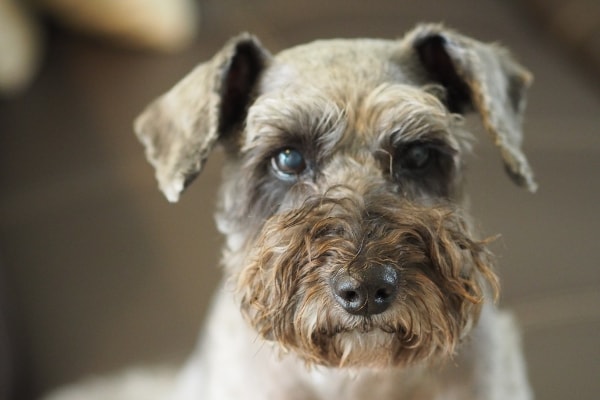
There is a presumed genetic component that predisposes some dogs to develop gallbladder mucoceles. They are more commonly diagnosed in Shetland Sheepdogs, Miniature Schnauzers, Cocker Spaniels, and Dachshunds.
Additionally, certain metabolic disorders can increase the chance of a dog developing a gallbladder mucocele. Pups with Cushing’s disease in dogs are 29 times more likely to develop a mucocele. Diabetes and hypothyroidism in dogs also increase the likelihood of a gallbladder mucocele. These conditions may alter the way fat is metabolized, and make it more difficult for the gallbladder to contract to release bile.
What are the symptoms?
Just like we saw with Bijou, usually dogs with gallbladder mucoceles are pretty sick. Clinical signs can include:
- Vomiting
- A lethargic dog
- Decreased appetite
- Jaundice (yellowing of the eyes, gums, or skin)
- Painful abdomen
- Fever
Not all dogs with mucoceles have all of these symptoms, and all of these symptoms can be associated with other diseases. For this reason, It is very important to seek veterinary care immediately if your dog is showing any of these signs.
How is a gallbladder mucocele diagnosed?
Your vet will start with a physical exam to assess for jaundice, abdominal pain, fever, or other abnormalities. Next, he or she will probably consider further diagnostics like bloodwork.
Usually the bloodwork involves a complete blood count, which assesses white and red blood cell numbers and platelet numbers. The vet will also run a chemistry panel, which looks for signs of kidney disease, liver disease in dogs, diabetes mellitus, electrolyte imbalances, and other conditions. Dogs with a gallbladder mucocele tend to have elevations in their liver values, much like my canine patient did.
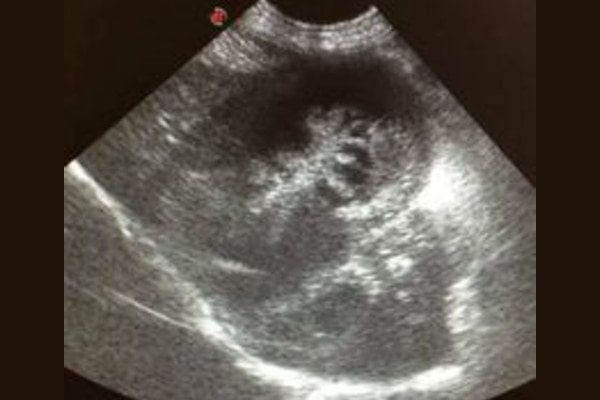
If your vet suspects a gallbladder mucocele or other problem with the internal organs, he or she will probably recommend an abdominal ultrasound. This test allows the vet to assess the liver, contents of the gallbladder, and other abdominal organs. Typically, a normal gallbladder should be a black circle on ultrasound. However, if it looks like a sliced kiwi due to mucous accumulation, the dog probably has a gallbladder mucocele.
What is the treatment for a gallbladder mucocele?
In some milder cases, medical management can be successful. Your vet may recommend starting your dog on ursodiol, a medication that can sometimes improve the flow of bile out of the gallbladder. However, vets typically only try it for dogs who have not yet become extremely ill from the mucocele. A low-fat diet may also be beneficial. Generally speaking, medical management is usually reserved for dogs who are incidentally diagnosed with a gallbladder mucocele and are not clinically ill from it yet.
However, the best course of action for dogs who are showing symptoms at the time of diagnosis is emergency surgery to remove the gallbladder (i.e. cholecystectomy). If a mucocele is causing biliary obstruction, the risk is that if not removed, it may lead to gallbladder rupture. Gallbladder rupture can make the dog even sicker and is potentially fatal.
Gallbladder removal surgery
Gallbladder removal surgery is often rather involved. Your veterinarian may refer you to a specialty hospital for intensive care and the surgery. In addition to removing the gallbladder, the surgeon may take a sample of the liver or bile to send off for bacterial culture. The information gleaned from this may guide treatment and which antibiotics are more likely to be successful in battling infection.
Sometimes during surgery bile can leak into the abdomen. Alternatively, it may already have been present if there was a gallbladder rupture prior to surgery. Bile is very irritating and this can lead to an inflammatory condition called peritonitis. If this happens, the dog may need abdominal drains placed to manage peritonitis after surgery.
What is the prognosis for dogs with a gallbladder mucocele?
Unfortunately, gallbladder mucoceles do not always lead to a happy outcome. The mortality rate (i.e. death rate) for dogs undergoing gallbladder removal surgery for this condition can be as high as 20-25%. However, if surgery is successful, dogs can have a normal life expectancy. The earlier in the condition the dog has surgery, the higher the likelihood of a successful outcome.
The good news is that the gallbladder is not an essential organ so dogs can do fine without it. As mentioned earlier, the function of the gallbladder is to store bile. So after gallbladder removal, the bile just travels directly from the liver to the intestines as the liver produces it. Some dogs may require a special diet or lifelong medication, but their prognosis after surgery is good overall.
The veterinarian will closely monitor dogs undergoing medical treatment for a gallbladder mucocele. This will likely involve routine bloodwork and ultrasounds to ensure that the gallbladder does not become obstructed. If the dog does end up having a gallbladder blockage, there is a risk the gallbladder could rupture and/or the dog could need a cholecystectomy.
If you are interested in learning more about the outlook for the two options, a 2019 article in the Journal of Veterinary Internal Medicine compared the long-term survival of dogs treated for gallbladder mucocele by cholecystectomy, medical management, or both. The researchers determined that while surgery is the treatment of choice, medical management can be a good option for some dogs.
Back to Bijou
Despite being very sick when he was first diagnosed, Bijou is alive and well today. His dad took him to our local specialty hospital where a board-certified veterinary surgeon removed his gallbladder. Thankfully, it had not yet ruptured and his surgery was otherwise routine.
I recheck Bijou’s bloodwork every few months, keep him on a low fat diet, and he’s back to his old self.
If your dog isn’t feeling good, the best thing you can do for him or her is to head to the veterinarian. The sooner you get a diagnosis—be it a gallbladder mucocele or something else—the sooner you can start treatment and hopefully get your pup feeling better again.
I understand it can be scary and confusing sometimes to navigate health issues with a beloved furry family member, but just take it one step at a time. You and your veterinarian both have your dog’s best interests in mind. Work closely with your vet, and follow his or her recommendations.
Have you had a dog with a gallbladder mucocele?
Please share his or her story and any words of advice for other dog parents.


Dr Buzby,
On an out of state Thanksgiving visit, Nov, 2023, my sweet baby, Howie, started vomiting and then hemorrhaging blood from his anus, We rushed him to the only open animal ER we could find.on a holiday. They did an ultrasound, and said he had an 11cm spleen.
However, when we returned home and took him to our vet, he did a couple of ultrasounds, and the enlarged organ was actually the gallbladder. He said the gallbladder is not sending the bile from his liver to his intestines.
The vet said due to his age, now pushing 14, his chance of survival from gallbladder surgery is very low.
He has been on Demnamarin and Ursodiol for several months now, and basically seemed like his normal, elderly self— until the past week or so.
Now he has started just laying around, acts like he can’t really take even short walks, and additionally, for many months, has been drinking tons of water and urinates more. He also pants a lot, and past two days his appetite is low. My feeling is his condition is getting worse.
My questions to you:
—is the panting most likely a reaction to pain?
—I’m assuming as large as the gallbladder is, based on ultrasounds, it is continuing to expand, correct?
—How large can it get before bursting?
— How fast might that happen ( small tears become slowly larger, or one big burst?)
— Obviously the only option is to put him to “sleep”, but how do I know when? This decision is killing me. I love him like a child.
Thank you!!!Thank you so much for your advice. ❤️
Cindy from Denver, Colorado
Dear Cindy,
My heart aches for you as you face this difficult situation with Howie. Unfortunately, there is just no way to know when the gallbladder will rupture or how large it will get before this happens. I do suspect the panting is due to pain or discomfort and yes, his condition will continue to deteriorate. Saying goodbye is hard and I often tell readers there may be no specific “time” that is right. I would rather let go one day too early than one day too late and allow unnecessary suffering. It is ok to say goodbye before all joy is lost and then only thing that remains is pain. I will attach links to other articles with more information and great advice from other readers. Praying for strength and clarity as you navigate this emotional path. Bless you and your sweet boy.
1. When to Euthanize A Dog With Liver Failure: A Vet’s Advice
2. How Will You Know When It’s Time to Euthanize Your Dog? 5 Caring, Heartfelt Messages
3. Using a Quality of Life Scale for Dogs
4. Preparing for Your Dog’s Euthanasia: 10 Thoughts for Peace
Hello!
My 16 year old jack Russell started vomiting last week so was taken to the vet who examined her and couldn’t find any particular cause so gave her some anti nausea pills as we just thought she had over eaten or eaten something off. 3 days after that she had stopped eating & drinking and had no energy. She was taken to emergency care where they showed her yellow eyes, blood work showed extremely high liver count levels and they also did an ultrasound to show what they think is a gallbladder mucocele, they kept her in overnight on a drip and said they can’t see her living over a week, even on a drip, as there is a chance of the gallbladder rupturing. She came home to be more comfortable with antibiotics, appetite stimulants, anti-nausea tablets, a liver protectant and a fentanyl patch for pain. She slowly began to improve once home and has been eating and drinking by herself, she has had her fentanyl patch replaced once and is running around, barking and being her cheeky self. Another vet we saw said we should put her down as it isn’t fair for her to be in pain. I obviously don’t want her to be in pain but it’s so hard to put a dog down who still has so much life despite what’s going on internally. Is it possible that these medications have helped her improve and she can go back to living a normal life? We will be going back to the vet in 2 days to get more medications however I feel the vet is just going to suggest putting her down again. Surgery was not recommended due to her age.
Thank you
Dear Beth,
I am sorry your senior girl is dealing with this complicated situation. I would suspect the medications have improved her body function a bit allowing her symptoms to improve, but this definitely will not be a cure. I agree that while her days may be numbered, it could be ok to give her more time if she is feeling well and in good spirits. Trust your intuition as you know your girl better than anyone. Make the most of the time you are gifted and find joy in each day. Wishing you and your sweet girl all the best and praying for comfort and peace.
Hi Beth, I am going through a similar situation. The antibiotics and ursodiol (among anti nauseas, denamarin and PPC) have significantly reduced her liver values which previously were through the roof. What did you end up deciding for your jack?
My 12 and half year SAheltie who has had bladder, kidney and heart issues now has a gallstone and an inflamed gallbladder. I am not sure what I can do to help her. Does anyone have any advice for what diet I can give her? She is very wee, though she weighs a wee bit more than she should at roughly 8 kgs, but I have no idea what I should feed her, how much or how often. given her various health issues. I’m waiting on blood results for her liver and I will be asking our vet if there is any medication that can help. She isn’t showing any symptoms though she did have a partly runny stool today. She is eating and drinking fine. I would appreciate any advice, thank you.
Hi Kim,
I am sorry your Sheltie is dealing with so many issues at once. I think it is great you are trying to ensure she is eating a healthy diet. Nutrition is a vital part of health and the healing process for our bodies. Unfortunately, without playing a personal role in her medical care it is hard to make specific recommendations. I encourage you to ask your vet about what food is best when you have your discussion about blood work results and medications. They should be able to point you in the right direction. Hoping your girl can maintain her quality of life and wishing you both many happy days ahead.
My dog Willie had his partially ruptured gallbladder removed on Monday Aug. 12, 2024. He did relatively well until today Fri Aug 16, when we were told he has a bile leak. I think the only way to fix it is surgically. We’re waiting to hear from the vet again. We don’t want him to have to go through another surgery and his platelets are low. I’m wondering if the leaks can be fixed laparoscopically.
Hi Wendy,
I am sorry Willie has been through so much in the last few weeks. I understand your concern and wish I had better answers. While laparoscopic surgery may be an option, not all facilities are equipped to perform that type of procedure. What did you decide to do? How are things today? Hoping all is well and praying your vet was able to restore Willie’s health and well-being. Feel free to leave an update and let us know how he is doing. Bless you and your sweet boy. ♥
Our dog Winston had his gallbladder removed 15 days ago. I am still so nervous for his recovery. I can’t always tel how he’s doing. How do we know when we’re in the clear? His follow up appointment is still being scheduled? We took him to a wonderful but busy specialty hospital with some of the best in the country. The problem is getting back in to make sure everything is okay. Any advice? I’m terrified that I’ll miss something and lose him.
Hi Kim,
I understand your concern for Winston as he recovers from this major surgery. He is a lucky boy to have you taking such good care of him and watching him so closely. As long as Winston is eating, drinking, using the bathroom normally, and has the energy and desire to do his normal daily activities then I would assume he is ok. It sounds like everything is going well and you are doing a great job. Even if you have to wait for his follow up appointment, you can always call the vet with any questions or concerns. Hoping for continued success and wishing your sweet boy all the best at making a full recovery.
My girl, Juliana, 10 years old, skipped dinner one night, which is unusual for her. She was restless all night, drinking a lot of water, and continuously trying unsuccessfully to relieve herself. She threw up a small amount of bile, which I attributed to her not eating. I took her to the vet, and the vet expressed Juliana’s anal glands. I knew pretty quickly this was not the solution. Juliana was reluctant to walk, couldn’t get on the couch, wouldn’t eat, was most comfortable hiding under the bed, and wouldn’t really make eye contact with me. I told friends that I felt like I had a “zombie dog.” I was hoping the vet had been correct and maybe she was traumatized by the procedure, but two days later, I could tell she was still suffering so much, so I took her back to the vet. I got a different vet at the same office. First, she thought it was a back issue. When she could tell that wasn’t it, she ran a blood panel, and we found that her liver numbers were out of control. We did an ultrasound, and the vet determined it was a mucocele, along with fluid in her abdomen, and that an urgent decision needed to be made to do surgery, try antibiotics (and pray her gallbladder didn’t burst in the meantime), or put my baby girl to rest. It felt like she had been so miserable for so long, I decided to end her pain. This was on July 15th, and I think daily about how far along in her recovery we would be if I had done the surgery. I have struggled with doubt and guilt about this, but I knew my girl, and I believe it is the decision she would’ve made for herself if she could.
Dear Andrea,
My heart goes out to you as you grieve the loss of your beloved pup. You made a loving choice to spare her from unnecessary suffering and pain. That is not something you should feel any guilt about (I know that is easier said than done ♥). I am glad you trusted your intuition and agree you knew Juliana better than anyone. Thank you for being willing to share your story with us. It may be exactly what someone else needs to hear to have the courage to face a similar situation. May her memory live on and continue to be a blessing in your life. Wishing you comfort and peace for your heart.
Andrea
I went through almost this same scenario this past weekend. my 15 year-old Gussie (Shi Zu mix) started throwing up Thurs late morning; Friday Emergency Vet for testing and diagnosis with answers about midnight; Saturday said goodbye. It was so out of the blue and hard to process.
Dear Lisa,
I am so sorry for the loss of your senior girl, Gussie. May her memory be a blessing in your life. ♥
Hello, My 8 yr old choc lab cocker spaniel mix, Charlie, was just diagnosed with the mucus in his gallbladder. It started with elevated liver test, then came the xray that showed an enlarged liver, that lead to the ultrasound. He had it yesterday and the doctor was on the phone before I even got home. Vet said luckily we caught it early and she prescribes a medication and Denamarin. She said we will need to do another ultrasound in a month. Is this curable? Is it going to go away or will it get worse? I have to be honest, I live on a very fixed income so the cost of surgery scares the crap out of me. I don’t want my baby in pain or anything and if need be I will find away. I just want to know if with these meds it will go away so I have an idea. Thank you
Hi Dorrie,
I am sorry Charlie has received this difficult diagnosis. I am glad he seems to be feeling ok for now and you were able to get treatment started. The medication should be able to keep things under control, but I would not expect it to offer a “cure”. Some dogs do well with medical management and do not need to move forward with surgery. My best advice would be to start now and set aside what money you can each month to try and start a fund for surgery should it ever be needed in the future. Wishing your sweet boy all the best and praying for many happy years ahead.
I am so glad I found your article. This is the first time I fully understand what’s happening to my 10 year old male Sheltie. My heart. Today is Saturday July 6th. Last Saturday at 4 a.m. he threw up. (He was his normal happy seems like a puppy still on Friday) I cleaned up his vomit and went back to bed. At 10 a.m. he threw up white foamy smal quantity. My first thought, dogs get tummy bugs. But also, my guy doesn’t get into things that he’s not supposed to. You could leave a sandwich his height on the coffee table leave the room and it would still be there even though he’s licking his lips staring at it. My last Sheltie would have swiped it the second I turned my back. So something about him being unwell made me think, I just need to know. The vet palpated and there was pain in the tummy and xrays were performed as well as blood work. Of course the next day was a Sunday so we had to wait. His liver enzymes were elevated quite high. We had an ultra sound performed on Thursday (waiting for a Tech) it was Canada Day (July 1st) and Independence Day July 4th. All vets very busy or not even open. After the Ultra sound it was obvious it was GBM. We were given Gabapentin for pain, Liver Supplements and broad spectrum antibiotics. My boy, Pride and Prejudice Mr. “Darcy” was given sub q fluids and a shot of narcotics for pain. We also were given sensitive gut wet food and a recipe to add one can of wet with one can of water in a blender so we could force feed him with a large syringe. He won’t eat. Spent all Friday July 5th looking for a surgeon who could perform the surgery of removing his gallbladder. No one until Tues July 8, we pleaded and got Monday July 7 at 8 a.m. it started on June 29! I hope he doesn’t perforate over the weekend. I don’t even know what to look for. And now to read the surgery is rough. I know he can’t continue on as he is but there’s a chance he’ll die bc of surgical complications. Pls hope for a good outcome for us. Since starting his supplements and antibiotics his yellow skin on his belly is almost all gone. Hope this is a positive sign.
Dear Shannon,
My heart goes out to you as you face this worrisome situation with Darcy. I can only imagine how scared and emotional you must be. How did the surgery go yesterday? Praying he was able to make it through with no complications and is on the road to recovery. Wishing you both nothing but the best. Feel free to keep us updated on how things are going. Bless you and your sweet boy. ♥
My 12 year old BichPoo , Cinnamon, has had elevated ALP levels since 4/19/20. They did an ultrasound on 4/16/21 but said that didn’t show anything. They started her on Denamarin that day. Her ALP levels kept rising so 5/17/22 they added Ursodiol.. In 2023 her ALP was 2700 they said I could probably get another ultrasound but I was just starting Chemo myself and could not get her one. Cinnamon was having trouble lifting her front legs the other day so I paid for a same day appointment. They did an in-house blood test and it showed ALP >2000. They had me take her to a specialty hospital for an ultrasound on 6/25/24. The ultrasound report showed a moderate accumulation of hyperechoic sediment within the center of the gallbladder lumen with a stellate pattern. There is moderate mucus accumulation around the peripheral lumen. The discharge papers said to discuss follow up with pDVM or internal medicine to discuss testing for Cushing’s and management of mucocele and/or surgery to discuss cholecystectomy. They said they were sending the report to my pDVM. I waited 2 1/2 days to hear from my vet but didn’t hear from her so I sent a message asking what order should we be working on the Cushing’s or gall bladder. She knew I was scheduled for more cancer surgery soon and that I wanted to make sure my dog would get her treatment first. Another 2 1/2 days pass and still no contact so I sent another message that I didn’t find this acceptable. She had another Vet in the office call to me that what I said was inappropriate because she had called the specialty hospital because she thought something wasn’t in the report. I told her she should have at least talked to me but she didn’t think she had to get back to me. Needless to say I now have to find my girl a new vet and make appointments in between my upcoming surgery and upcoming lung biopsy.
Dear Mary,
I am sorry Cinnamon is facing this worrisome problem with her gallbladder while you are dealing with your own medical issues. I understand your concern and think it is good you are staying on top of this situation. It is a shame that you have had so much miscommunication with your vet. I agree it may be best to have your girl established as a patient at a different location. You need to feel confident with the medical care you are receiving. Not every hospital is the perfect fit for every client. I do think your vet had the best intentions and if there was an error in the paperwork sent from the specialist, it could definitely lead to problems. Hoping you can find a new vet quickly and ensure Cinnamon gets the attention she needs. Wishing you all the best on your upcoming procedures and praying for a positive outcome for you and your sweet girl. ♥
Hi, my 13 yr old chihuahua had his gallbladder taken out last February. He has been fine since really but suddenly yesterday was sick 5 times yellow bile. We’ve had bloods done and they’ve come back saying the liver levels are slightly raised which is to be normal as he has no gallbladder. Bilirubin levels are normal so it all seems very odd? He was given anti sickness injection and so far has kept the food down but I am definitely concerned as to why he was sick so much bile in such a short amount of time.
Hi Beth,
I understand your concern for your little guy with these recent episodes of GI upset. It is possible for the liver to become inflamed or have an acute injury even if there is no gallbladder. I am glad you acted quickly to have him evaluated by your vet. They may decide to do some in-depth testing such as abdominal ultrasound to get more answers. Hoping with treatment the liver will heal and return to normal function. Wishing you all the best of luck and praying for complete recovery for your sweet boy.
Hey thank you for your reply, he hasn’t been sick since that epsisode and we had the blood results back. The vet said his liver levels are slightly raised but they have come down dramatically since the last bloods 8 months ago. She said they weren’t raised to a concerning level and it is quite normal for them to be raised as he has no gallbladder. His Biliruben levels were ok too. All seems so strange as he was very sick so quickly. We are going away next week so praying he stays ok!
Hi Beth,
I am glad your boy hasn’t continued to have any issues since that last episode. Maybe he just had a stomach virus or some GI inflammation. Hoping everything will remain stable while you are out of town. Best wishes and good luck!
my dog is over 15 years old. she got very sick with gallbladder sludge last year, stopped eating. I thought she was too weak to have surgery and was afraid she would die in surgery so I opted not to have the gold ballader removed. I did home IV treatments cooked her food blended it and syringed it to her since ishe was no longer eating.. she also didn’t drink water for almost a year and I would blend okay now and sweet potato chicken water carrots and apples. I made it very watery so she would have liquid. today she drinks lots of water she’s on half Kibbles and half chicken. she is almost 15 and a half now. I’m petrified to have her go under anesthesia as I’m afraid she would die in surgery. she has slowed down a bit but her health is well at this moment.
Hi Maria,
I am sorry your senior girl has been dealing with gallbladder disease for so many months. It sounds like you are doing everything you can to help maintain her health. Thank you for sharing your experience with our readers. Wishing you continued success and praying for many happy days ahead.
I have a 16 year old chihuahua, Ellie, who was diagnosed with gallbladder mucocele last year after blood work came back with high levels of aldaline phosphatase and others. Ursodiol has not worked for the past year apparently because her levels are now much higher. The only symptoms she displays and slowing down eating. Otherwise she is still a healthy playful pup!…always twilling her squirrel in the air and fetching her toys for treats! The vet wants to do another ultrasound. ($500) to confirm the mucocele and make sure there is nothing else contributing to her levels. Cholesystectomy would be around $4000.00. I don’t want see a slow decline with her let alone wait for it to burst and her final moments be excrutiating pain. If I knew she could survive a surgery, heal without complication and maybe she could live another few years, I would do it! I would love to hear comments and suggestions. Thank you!
Hi Jon,
I am sorry Ellie is having these worrisome issues with her gallbladder. While removing the gallbladder is risky, it is definitely possible for the surgery to be successful and offer her an improved quality of life. I understand your concern and see why you are conflicted about how to proceed. Hoping you can find the advice you need to navigate this difficult path. Wishing you all the best and praying for a positive outcome for your sweet girl.