The DHPP vaccine, also called the DAPP, “5-in-1,” or distemper vaccine, is a vital part of your dog’s preventive healthcare. It protects against a number of infectious diseases that cause severe illness, and sometimes even death. Integrative veterinarian Dr. Julie Buzby explains which diseases the DHPP vaccine covers, the risks and benefits, and the vaccine schedule.
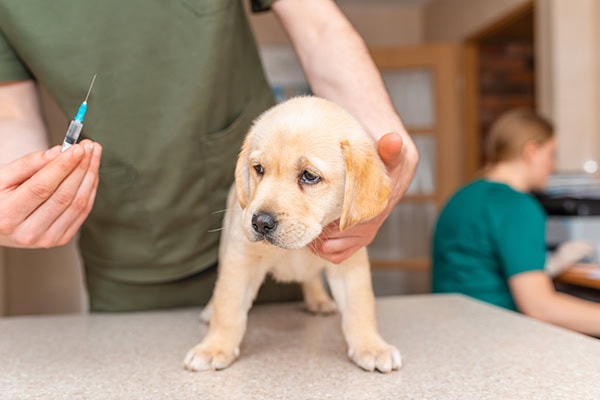
Being a veterinarian isn’t all about playing with puppies, but it is one of the perks of a new puppy visit! One of the most important recommendations I make at that visit is to ensure the puppy completes the DHPP vaccination series and then continues to stay up-to-date on the DHPP vaccination.
I have, unfortunately, seen way too many pups suffer from an illness that could have been prevented with vaccines. The DHPP vaccine is essential to protect your puppy, adult dog, or senior dog from a similar fate.
What is the DHPP vaccine for dogs?
The letters “DHPP” in a DHPP vaccination stand for Distemper, Hepatitis, Parainfluenza, and Parvovirus. Understanding what exactly the DHPP vaccine for dogs protects against illustrates why it’s so important.
D is for distemper
The “D” in DHPP, canine distemper virus, is a highly contagious disease that can be fatal or cause serious permanent issues. Distemper affects the respiratory, gastrointestinal, and nervous systems.
Symptoms of canine distemper can include:
- Fever
- Being a lethargic dog
- Coughing
- Eye and/or nose discharge
- Vomiting
- Diarrhea
- Reduced appetite
- Head tremors
- Dog walking in circles
- Loss of coordination (ataxia)
- Rhythmic muscle twitches (myoclonus)
- Seizures
- Weakness or paralysis
Even with treatment, distemper is often fatal, with overall mortality (death) rates around 50%. And dogs who do recover may have long term issues, including permanent neurological damage. In some cases, neurological signs also don’t show up for weeks or months after the dog initially got sick.
The distemper virus is shed in respiratory droplets, saliva, and urine. It can be transmitted from coughing, sneezing, barking, or even sharing food and water bowls with an infected animal. Distemper outbreaks can happen anywhere dogs are grouped together—animal shelters, boarding kennels, dog daycares, dog shows, dog parks, etc.

Another factor that makes distemper concerning is that it does not just affect pet dogs. Certain wildlife species, including raccoons, foxes, coyotes, and other animals commonly found near human-inhabited areas can be infected by and spread canine distemper virus. We don’t have an effective way to prevent wildlife species from spreading distemper, so it’s extra important to make sure to get your dog vaccinated.
H is for hepatitis
Hepatitis in dogs (inflammation of the liver) has many different causes, but infectious canine hepatitis is the specific condition the “H” portion of the DHPP vaccine aims to prevent. The other name for this disease is canine adenovirus type 1 (CAV-1), so you may sometimes hear the DHPP vaccine referred to as DAPP or DA2PP. This abbreviation uses “A” for adenovirus rather than “H” for hepatitis.
The DHPP or DAPP vaccine actually targets adenovirus type 2, which a respiratory virus. However, it also offers cross-protection for type 1, the cause of hepatitis. (Vaccines aimed at CAV-1 tended to have higher rates of vaccine-associated complications.)
Infectious canine hepatitis causes general signs of illness like fever, lethargy, inappetence, vomiting, diarrhea, abdominal pain, weakness, etc. However, one of the most distinguishing signs of infectious canine hepatitis is corneal edema. This fluid build up within the cornea (clear front of the eye) creates a blue cloudy eye in dogs, which is why CAV-1 was once known as “blue eye.”
While dogs can recover, the mortality rate of distemper ranges from 10-30%. And there have been reports of outbreaks where most of the infected dogs did not survive.
Dogs can contract infectious hepatitis after coming into contact with an infected dog’s saliva, urine, or feces, or objects contaminated with the virus. Even after they get better, dogs can shed the virus in their urine for 6-9 months!
P is for parainfluenza
The first “P” in DHPP stands for canine parainfluenza virus. This highly contagious respiratory disease generally causes mild illness in adult dogs, but may be more serious for some puppies. Parainfluenza is one of the viruses that plays a role in canine infectious respiratory disease complex (CIRDC), commonly referred to as kennel cough.
Generally, parainfluenza causes flu-like symptoms, or it may seem like your dog caught a cold. The signs include:
- Dog coughing and gagging
- Decreased appetite
- Fever
- Lethargy
- Nasal discharge
Dogs may contract parainfluenza from infected dogs’ respiratory secretions. This can be from direct coughing or from contaminated surfaces.
P is for parvovirus
If you’ve ever cared for a dog, you’ve probably heard of the other “P” in DHPP—parvo. Canine parvovirus is a highly contagious virus that primarily affects the gastrointestinal tract. It can cause fatal illness in both puppies and adult dogs.
Symptoms of parvo generally include:
- Vomiting
- Profuse diarrhea (often dog diarrhea with blood)
- Inappetence
- Lethargy
- Weakness
- Pale gums in dogs
- Severe, life-threatening dehydration in dogs
- Sepsis in dogs
- Blood clotting issues (coagulopathies)

Prognosis can be quite variable. Left untreated, parvo can be fatal in over 90% of infected dogs. However, with hospitalization and aggressive treatment, survival rate can approach 90%. It is important to note, though, that dogs with parvo require intensive management and monitoring, which can cost thousands of dollars in some cases.
Dogs can catch parvo from direct contact with an infected dog, exposure to feces from an infected dog, or contact with contaminated surfaces. Parvo is a very hardy virus and is difficult to kill. It can live in the soil for years! So even if there are no dogs in the area and no visible feces, an unvaccinated or incompletely vaccinated dog could still be at risk for contracting parvo.
Is the DHPP vaccine necessary for dogs?
The American Animal Hospital Association (AAHA) vaccination guidelines for dogs list DHPP as one of the core vaccines. This means it is recommended for all dogs regardless of their lifestyle as long as the dog has not experienced a significant reaction to it in the past.
The DHPP vaccination makes the list of core vaccines because the diseases it protects against are widespread in the population and have a significant chance of causing high levels of sickness (morbidity) and/or death (mortality). Plus, the vaccine is effective and considered generally safe.
The other two core vaccines are rabies and leptospirosis. Additionally, based on your dog’s lifestyle and risk factors, your vet can help you determine if you should have your dog vaccinated against canine influenza, Lyme disease, Bordetella, or other diseases on the non-core vaccine list.
Which dogs should not receive the DHPP vaccination?
For certain dogs, including those that have had previous reactions to vaccination, and those with some autoimmune diseases in dogs, the benefits of DHPP vaccination may or may not outweigh the risks. If your dog falls into one of those categories, your vet can guide you toward the approach that is safest for your dog.
What is the DHPP vaccine schedule for puppies and dogs?
DHPP is an essential component of the first “puppy shots” your dog should receive early in life. Most dog vaccine schedules start at 6-8 weeks of age, with booster shots every 2-4 weeks until the puppy is at least 16 weeks old. Puppies should receive the complete series to ensure they are fully protected. Not finishing the vaccination series leaves your dog at risk for these diseases.
After the first DHPP series, dogs usually receive DHPP vaccines every 1-3 years. The interval depends on the label for the specific vaccine your vet administers.
Is the DHPP vaccine safe for dogs?
Generally speaking, the DHPP vaccination is safe. It has been around for a long time, and there have been a myriad of studies documenting its safety and efficacy. The vast majority of dogs tolerate the vaccine well with very few side effects. Usually any vaccine reactions are mild, including injection site soreness, swelling, and maybe feeling a bit tired for a day or two.
More severe DHPP vaccine reactions
However, while rare, a dog can have a more serious reaction. Signs of an allergic reaction to the DHPP vaccine may include:
- Vomiting or diarrhea
- Hives
- Facial swelling
- Respiratory difficulty
- Collapse
Signs of a moderate or severe vaccine reaction typically appear fairly soon after the vaccine is administered. This may mean your vet can address them before the dog ever leaves the clinic.
If your dog experiences any of these signs of an allergic reaction following vaccination, seek emergency veterinary care right away. This might mean alerting the veterinary team if you are still at the office or turning around to head back to the clinic or a veterinary ER.
It is critical to take precautions for future vaccination if your dog experiences an anaphylactic vaccine reaction. Your veterinarian will advise you about the best plan for your dog. Some dogs with more mild reactions can be pretreated with medications such as Benadryl for dogs and continue to safely receive the vaccine. However, if your dog has a severe vaccine reaction, the vet may recommend avoiding that vaccination going forward.
How likely is my dog to have a reaction to vaccinations?
While scary, vaccination reactions are, thankfully, uncommon. A 2023 article in the Journal of the American Veterinary Medical Association (JAVMA) evaluated 16,087,455 visits for vaccinations between 2016 and 2020 (4,654,187 dogs with an average of 3.5 visits/dog in that time period). Overall, there were 19.4 adverse reactions to vaccinations per 10,000 dogs vaccinated. Of those, the medical record classification was:
- Mild vaccine reaction—45.2% of cases
- Moderate vaccine reaction—19% of cases
- Severe vaccine reaction—15.4% of cases
- Allergic reaction—18.6 % of cases
Risk of vaccination reactions increased along with the number of vaccines administered in a visit and was higher in dogs who were under 5 kilograms (11 pounds). Plus, Dachshunds and French Bulldogs were found to be four times more likely to have a vaccine reaction than mixed breed dogs.
(This data is for dogs who received one or more of the following vaccinations at the visit: Bordetella, canine influenza, DHPP, leptospirosis, Lyme disease, and rabies.)
In short, what this huge study can help you understand is that the chances of your dog having a reaction to vaccination are pretty low (approximately 19 in 10,000 vaccine visits) and almost half of the time the reaction was mild. Hopefully, this can help alleviate some of your worries about vaccine reactions. Please don’t hesitate to talk to your vet if you are still concerned, though.
DHPP vaccinations keep dogs safe and healthy
I feel very fortunate to practice medicine during a time when we have safe and effective vaccines against diseases that used to be a death sentence for dogs. DHPP vaccines have proven to be 90-100% effective in preventing illness from the viruses discussed above. That is huge! Plus, most dogs tolerate vaccination well, making DHPP vaccination a win-win situation.

Beginning from a young age, you can and should protect your dog from serious diseases by keeping him or her up-to-date on the DHPP vaccination and other recommended vaccinations. If you haven’t already, please have a conversation with your vet to determine which vaccinations might be right for your dog.

