Pale gums in dogs can be a sign of serious, or even potentially life-threatening, conditions. That’s why it is important for dog parents to be prepared. Integrative veterinarian Dr. Julie Buzby explains how to assess the color of your dog’s gums, what you should do if your dog’s gums are pale, and what pale gums might mean for your dog.
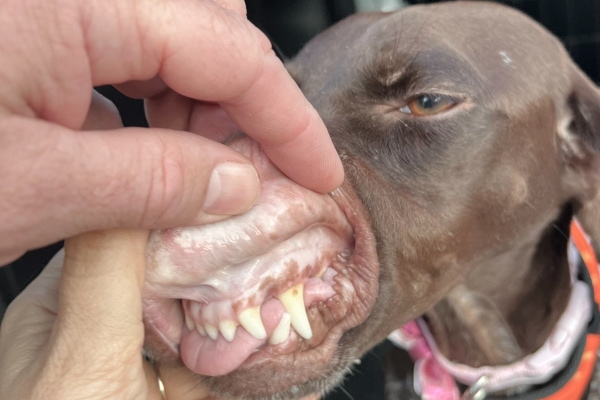
As a dog parent, it can be difficult to know when health issues are an emergency and when they can wait until the following day. For example, what do you do if your dog’s gums are pale? How pale is too pale? Should you be rushing to the nearest emergency room or booking a regular appointment with your vet? Let’s figure this out together.
What do pale gums look like in dogs?
Normally, a dog’s gums, the tissue surrounding the teeth, should be a nice bubblegum pink color.
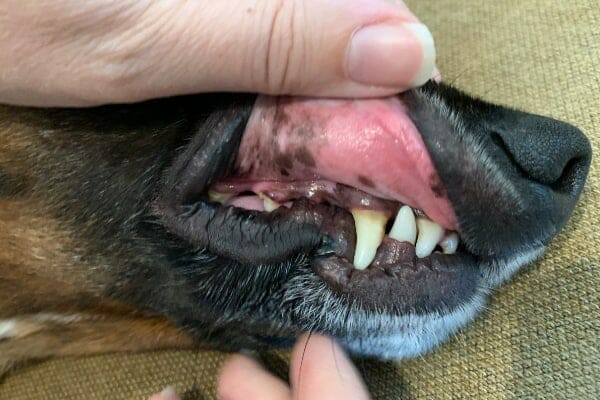
However, if they are a light pink, or almost white, the dog has gums that are too pale.
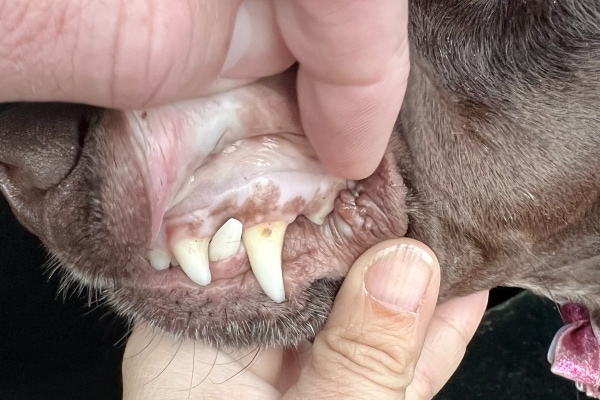
Gums get their pink color from the plethora of blood vessels that run through them. Thus, if not enough blood is getting to the gums, or not enough red blood cells are in the blood, the dog’s gums can look more pale than normal.
How do I know if my dog’s gums are pale?
First, an important safety note: If you’re manipulating your dog’s mouth to look at the gums, make sure to do so safely! Some dogs are not tolerant of their mouths being touched. If you suspect that might be the case with your dog, it’s always best to err on the side of caution. We don’t want anyone getting bitten!
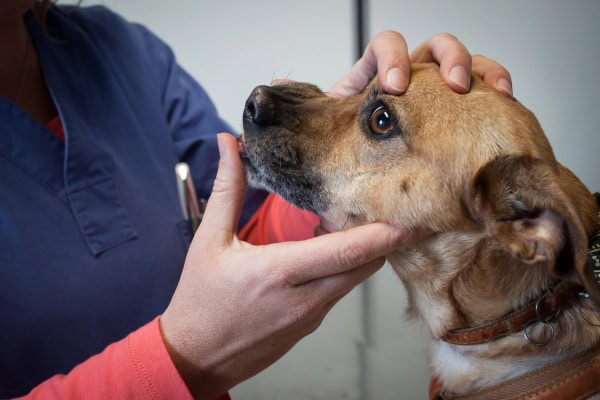
To assess your dog’s gum color, gently lift his or her lip and look at the gum tissue around the upper canine tooth and first few upper premolars. It should be salmon pink and moist.
If the gums are pale or white, this could indicate a serious problem with your dog’s blood circulation or red blood cell count. Sticky or tacky gums are also worth noting as they can point to dehydration.
If you think your dog’s gums are pale, it can be helpful to assess your dog’s capillary refill time (CRT) next. To do this, firmly press your finger against your dog’s gums until they blanch (turn white). Then remove your finger and count how many seconds it takes for the color to return. Normal dogs have a CRT of less than two seconds. If it is longer, your dog could have a circulatory issue.
As a side note, it is a great idea to regularly assess your dog’s gum color and CRT as part of a five-minute dog wellness scan. Being familiar with what’s normal for your dog makes it easier for you to recognize when something is abnormal.
When are pale gums an emergency?
If your dog’s gums are pale or white and your dog is showing any of these other signs, make an emergency vet visit immediately:
- Difficulty breathing or rapid breathing
- Collapse
- Weakness or stumbling
- Loss of consciousness
- Bleeding (dog nose bleeds, profuse bloody vomit or diarrhea, etc.)
- Bruising on the skin or mucous membranes
- Tremors or seizures
- Retching or non-productive vomiting
- Pot-bellied dog appearance (distended abdomen)
These symptoms, especially when combined with pale or white gums, can indicate your dog is suffering from a serious or life-threatening condition.
What can I expect during the vet visit?
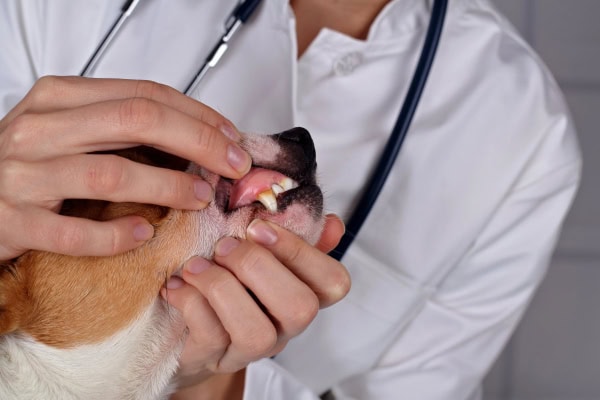
When you arrive at the emergency clinic or your veterinarian’s office, the vet will rapidly assess your dog and start to stabilize him or her. (Calling the clinic on your way can be helpful to let the veterinary team know what is going on so they can be prepared.) Stabilizing your dog might involve starting your dog on IV fluids to support circulation, administering supplemental oxygen, or other interventions specific to your dog’s needs.
Performing diagnostics to find the cause
Additionally, the veterinary team will want to perform some diagnostics to get a better idea of what is going on with your dog. They may run blood tests for dogs, such as a complete blood count (CBC), to check your dog’s red and white blood cell count and platelet count. And the veterinary team may assess your dog’s kidney and liver parameters, blood glucose, protein levels, etc., on a chemistry panel.
Especially if your dog might be bleeding internally, vets can use an ultrasound to perform an AFAST and TFAST scan (abdominal and thoracic focused assessment with sonography for trauma, triage, and tracking). This allows the vet to efficiently look for free fluid (such as blood) in the chest or abdomen.
After your dog is stable, the veterinary team may perform a more detailed diagnostic ultrasound of the abdomen and/or chest, abdominal and/or chest X-rays, or other tests to get to the bottom of why your dog has pale gums.
Treating the cause of the pale gums
From there, the vet will develop a treatment plan for your dog. Since there is a wide range of causes of pale gums in dogs, it isn’t possible to discuss the treatment plan for each of them here. Your veterinarian can talk with you about the various options and support you as you decide how to proceed.
What do pale gums mean in dogs?
NOTE: There are a multitude of conditions that can cause pale or white gums in dogs, and for many of them, time is of the essence. If your dog’s gums look pale or white, and especially if you are noticing other symptoms like weakness, confusion, collapse, or difficulty breathing, stop reading this article and immediately head to your vet or an emergency clinic.
If your dog’s gums seem slightly pale, read on.
Broadly speaking, there are several processes in the body that can lead to pale gums. Some of them fall under the heading of shock, a condition that occurs when the dog’s circulating blood volume is not sufficient to meet the energy demands of the body. There are three main types of shock: hypovolemic shock, distributive shock, and cardiogenic shock.
The other big category of conditions that cause pale gums is anemia in dogs. In this case, the problem lies with a lack of red blood cells, rather than a lack of proper circulation.
Next, let’s take a deeper dive into each of these categories.
Pale gums in dogs due to not having enough blood volume (hypovolemic shock)
Hypovolemic shock is the most common type of shock in small animals. It occurs when the dog does not have sufficient circulating blood volume, either due to loss of whole blood or due to loss of fluids (dehydration).
When blood volume decreases, the heart has trouble sending enough blood through the body to meet the demands of the tissues. The dog may experience pale gums, weakness, or collapse, especially if the blood loss is rapid.
1. Blood loss
Dogs may lose blood due to:
Trauma
If the dog is hit by a car, gets shot, falls from a height, gets in a dog fight, or experiences some other form of trauma, he or she could start bleeding internally or externally. The body can compensate for blood loss to a point. But eventually, the dog may lose enough blood that he or she goes into shock.
Ruptured mass
If the dog has a ruptured liver tumor, cardiac mass, or splenic mass in dogs, he or she can suffer massive internal bleeding. Sometimes the tumor is benign, but it can also be cancerous, such as hemangiosarcoma in dogs. Either way, the blood loss in these situations can be life-threatening.
2. Dehydration (fluid loss)
Alternatively, since 50-60% of a dog’s blood is made up of fluid, dehydration in dogs can also lead to low blood volume and hypovolemic shock. Dogs may become dehydrated due to vomiting, diarrhea, excessive urination, burns, or reduced water intake. Initially, a dehydrated dog may just have sticky or dry-looking gums. But if the dehydration is severe enough, the dog can develop pale gums due to shock.
Abnormal distribution of blood in the vessels (distributive shock)
Distributive shock occurs when the dog has a normal volume of blood, but it isn’t distributed through the body correctly. This can happen in two main ways. One is an obstruction of blood flow, either from a clot within a vessel or external compression of the vessel. This blocks the blood from getting to the heart efficiently.
The other type of distributive shock occurs when blood vessels become dilated (wider). In this case, there is the same amount of blood in a bigger space. This leads to blood pooling in the vessels in the periphery of the body. As a result, there is less blood moving through the heart to be circulated.
1. Blood vessel obstruction
Causes of pale gums due to vessel obstruction (sometimes also called obstructive shock) include:
Gastric dilation and volvulus (GDV)
In bloat in dogs (gastric dilation and volvulus), the stomach fills with gas and twists on itself. If it gets big enough, the gas-filled stomach can compress the caudal vena cava. This is the primary vessel that returns deoxygenated blood from the abdomen and back legs to the heart. Since less blood is getting back to the heart, there is less blood to oxygenate and send to the body again.
Heartworm disease
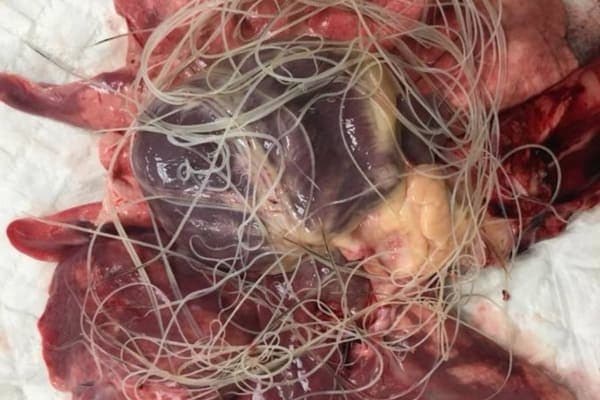
In caval syndrome in dogs, a life-threatening complication of heartworm disease in dogs, a mass of heartworms impedes the flow of blood through the right side of the heart. This leads to shock and pale gums because not enough blood is being pumped out of the heart.
2. Abnormal dilation of vessels
Some common causes of pale gums due to distributive shock from vessel dilation include:
Anaphylaxis
Dogs can experience anaphylaxis (a severe allergic reaction) in response to an insect sting, vaccination, medication, or other allergen. In addition to having pale gums, the dog may collapse, have trouble breathing, vomit, have diarrhea, or have hives or facial swelling.
Sepsis or systemic inflammatory response syndrome (SIRS)
Sepsis or SIRS (systemic inflammatory response syndrome) is a condition of widespread inflammation that occurs in response to an infection. Many problems can lead to sepsis/SIRS, including:
- GI perforation due to foreign bodies or stomach ulcers in dogs
- Pancreatic abscesses
- Pneumonia in dogs
- Pyelonephritis in dogs
- Pyometra in dogs
- Bite wounds
- Surgical site opening up
Heat stroke
Dogs who exercise in hot weather or are trapped in a hot environment are at risk for heat stroke in dogs. They may have pale gums if they are in distributive shock, or red gums in dogs during the earlier stages of heat stroke. Additionally, overheated dogs pant heavily and drool excessively, may vomit or have diarrhea (sometimes containing blood), collapse, or have tremors or seizures.

Dogs with heart problems may have pale gums due to cardiogenic shock
Cardiogenic shock occurs when the dog has a normal blood volume, but the heart isn’t working well enough to pump blood through the body. As a result of poor circulation, the dog’s gums may appear pale, and he or she may be a weak or lethargic dog.
Additionally, blood will back up in the vessels as it is waiting to get through the heart. This pushes fluid from the vessels and into the surrounding tissues. When this happens, it is called congestive heart failure in dogs. Typically, affected dogs cough and have trouble breathing due to fluid accumulation in the lungs (pulmonary edema).
Heart disease
The following heart conditions can all potentially lead to cardiogenic shock and congestive heart failure:
- Dilated cardiomyopathy (DCM) in dogs: an enlarged and poorly functioning heart due to weak heart muscles
- Mitral valve disease in dogs: leaky heart valves
- Arrythmias
- Congenital heart defects
- Damage to the heart from a toxin
- Cardiac tamponade due to pericardial effusion: fluid or blood fills the sack around the heart, compressing the heart and preventing it from filling properly
Anemia can cause pale gums in dogs
Pale gums in dogs are one of the most common signs of anemia (low red blood cell count). There are a large number of causes of anemia in dogs, but generally they can be broken down into three categories: blood loss, increased destruction of red blood cells, and decreased production of red blood cells.
1. Blood loss
As mentioned previously, trauma and rupture of a mass can both cause acute blood loss. However, there are also a few other conditions that lead to anemia due to blood loss. The conditions on this list can also cause hypovolemic shock if the blood loss is rapid and large in quantity.
Parasites
Since fleas feed on your dog’s blood, a flea infestation can cause anemia, especially in a puppy or elderly dog. Additionally, blood-sucking intestinal parasites like hookworms can cause a dog to become anemic. This is one of the many reasons it is important to ensure your dog receives effective parasite prevention.
Poor blood clotting ability
If the blood doesn’t clot properly, a dog will be prone to excessive bleeding. Some potential coagulopathies (causes of abnormal clotting) that may lead to pale gums in dogs include:
- Genetic disorders affecting clotting factors such as von Willebrand Disease (vWD)
- Low platelets in dogs due to tick-borne disease in dogs or immune-mediated thrombocytopenia (ITP in dogs)
- Toxins such as anti-coagulant rodenticide
2. Increased destruction of red blood cells
Sometimes red blood cells get destroyed faster than normal, leading to pale gums and anemia.
Immune-mediated hemolytic anemia (IMHA)
Immune-mediated hemolytic anemia (IMHA in dogs), a condition where the immune system attacks the red blood cells, is the most common cause of this type of anemia. Affected dogs will have pale gums and may be weak or collapse.

Other causes
However, toxins like zinc or onions, certain infections, low blood phosphorus, or damage to red blood cells from abnormal vessels can also cause red blood cell destruction.
3. Decreased production of red blood cells
Red blood cells normally live about 120 days, so the body constantly has to replace them. If the body isn’t making enough new red blood cells, a dog may become anemic.
Thankfully, because this type of anemia happens slowly, the dog’s body has time to compensate. This generally means it isn’t an emergency like many of the other causes of pale gums. However, dogs with anemia due to decreased red blood cell production still need veterinary attention.
Chronic disease
Anemia of chronic disease is the most common cause of this type of anemia. It occurs when the body diverts energy from making red blood cells to managing some other ongoing condition.
Kidney disease
The kidneys normally make erythropoietin (EPO), a substance that stimulates the production of new red blood cells. However, with kidney failure in dogs, the kidneys may no longer make enough EPO. This, in turn, decreases the number of new red blood cells the body produces, leading to anemia.
Conditions affecting the bone marrow
Since the bone marrow makes red blood cells, any condition that affects the bone marrow could cause a decrease in red blood cell production. This includes cancers like leukemia or lymphoma, poor nutrition, toxins or medications, etc.
If your dog has pale or white gums, head to the vet
If you take one thing away from this article, let it be this…
Pale gums, especially white gums, in dogs are an emergency. If you think your dog’s gums are paler than normal and he or she is also showing other concerning signs (weakness, collapse, breathing hard, etc.), get your dog to the vet ASAP. If you aren’t sure whether your dog’s gums are pale or not, consult your vet. It is better to overreact than underreact when it comes to pale gums.
Sadly, some conditions like internal bleeding or heat stroke can be deadly no matter what you do. But in general, the sooner you get your dog to the vet, the better chance he or she has of a favorable outcome.
What was the cause of your dog’s pale gums?
Please comment below.