Wondering what to feed a dog with pancreatitis? You aren’t alone. It can be daunting to figure out how to pick the best food for dogs with pancreatitis, which is why integrative veterinarian Dr. Julie Buzby wanted to provide these clear and useful guidelines.
As a dog parent, there are few things more stressful than having a sick dog. Especially when your dog goes from being completely fine to having horrific vomiting, diarrhea, and abdominal pain due to pancreatitis. It can be difficult to process and remember all the information your vet is giving you about caring for your dog who is…well…sick as a dog.
Some parts of the care instructions for pancreatitis are pretty straightforward. If you forget how often to give your dog his or her medications, all you have to do is look at the label on the pill bottle. However, other aspects of your dog’s care, such as what to feed a dog with pancreatitis, are less cut and dry. This means you may end up deciding to do some research on your own.
Since the options can feel a bit overwhelming, I want to give you some clear-cut ways to evaluate dog food. That way, you (with the help of your vet) can pick the best dog food for your dog with pancreatitis. But in order to do this, you first need to have a good understanding of what the pancreas does. And you will want to be familiar with the disease condition you are dealing with too.
What does the pancreas do?
Nestled just below the stomach and near the start of the small intestine, the pancreas plays an important role in the digestive system. One of its jobs is to release digestive enzymes into the upper portion of the small intestine (i.e. the duodenum). Normally, the pancreas stores those enzymes in their inactive form (i.e. zymogens). Enzyme inhibitors within the pancreas help ensure that the zymogens remain inactive as long as they are within the pancreas.
Once the pancreas releases the enzymes and they contact the mucosal cells lining the duodenum, they become activated. This allows the enzymes to begin breaking down the carbohydrates, fats, and proteins within food.
What is pancreatitis?
However, in cases of pancreatitis (i.e. inflammation of the pancreas), the enzyme inhibitors become blocked. As a result, zymogens are activated while they are still inside the pancreas. This cascade of events compromises the pancreatic membranes and blood vessels, leading to bleeding and leakage of activated enzymes into the abdomen.
In short, pancreatitis causes the pancreas to start digesting itself—and sometimes other neighboring internal organs. This sort of sounds like a gruesome Halloween movie, but it really does happen like that.
What causes pancreatitis?
Pancreatitis doesn’t seem to be linked to one single cause. Rather, there are a number of factors that can increase the risk of a dog developing pancreatitis. They include:
- Having endocrine disorders such as diabetes mellitus, Cushing’s disease in dogs, and hypothyroidism in dogs
- Being overweight or obese—If you are asking yourself, “Is my dog overweight?”, why not find your dog’s body condition score(BCS)?
- Having high triglycerides in the blood
- Having a history of gastrointestinal disease
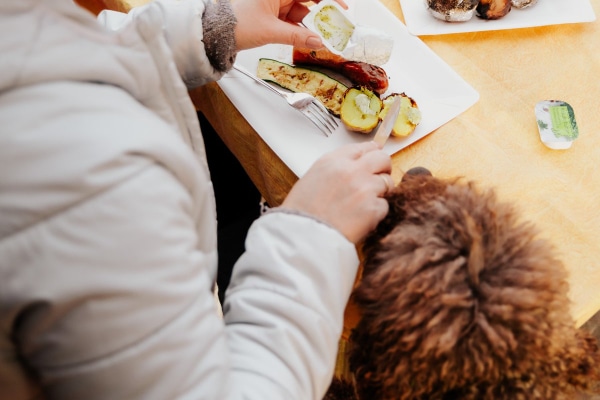
- Eating new foods, table scraps, fatty foods, or high fat diets
- Being exposed to certain toxins and parasites
- Taking certain medications (e.g., azathioprine, bromide, diuretics, and phenobarbital)
What are the types of pancreatitis?
The resulting pancreatic inflammation may be subdivided into two types—acute and chronic. Acute pancreatitis occurs when there is a rapid onset of clinical signs. On the other hand, pancreatitis is considered chronic when acute pancreatitis doesn’t fully go away and/or reoccurs sometime down the road.
Clinical signs tend to be more severe in acute cases and milder in chronic cases. But it is often not possible to distinguish acute from chronic when a dog first presents with symptoms.
What are the symptoms of pancreatitis?
The most common symptoms of pancreatitis in dogs are vomiting and abdominal pain. Vomiting occurs in 90% of cases while abdominal pain is present in 58% of cases. Other gastrointestinal signs like diarrhea are also possible. Dogs with pancreatitis may be dehydrated, act like a lethargic dog, and won’t want to eat their food. Pancreatitis can be life-threatening, so if your dog is showing these symptoms, schedule an emergency vet visit ASAP.
How is pancreatitis diagnosed?
The veterinarian will examine your dog and start with some bloodwork. Dogs with pancreatitis may have elevated white blood cells and/or elevated liver and kidney values. To confirm a diagnosis of pancreatitis, the vet may recommend running a canine pancreatic lipase immunoreactivity test or cPLI. Sometimes the vet may also suggest an abdominal ultrasound or other diagnostic tests.
What is the treatment for pancreatitis?
Unfortunately, there is no specific cure for dogs with pancreatitis. Instead, the vet will use supportive care to relieve symptoms and help the dog feel better. This may include:
- Pain medications to decrease abdominal pain
- Anti-nausea medications to decrease vomiting and nausea
- Blood transfusions for dogs with internal bleeding due to organ damage
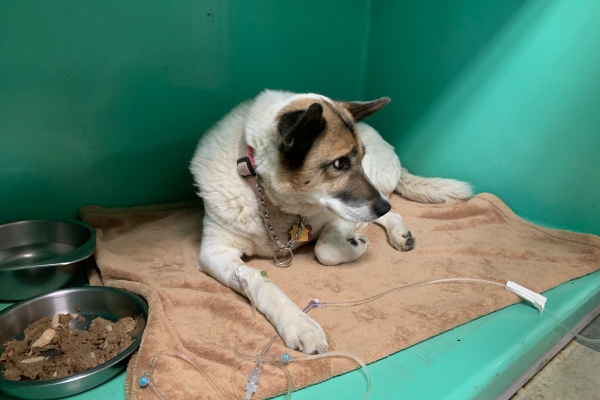
- Fluid therapy (e.g., subcutaneous or intravenous fluids) to help prevent hypovolemic shock, a life-threatening type of intense fluid loss
- Any necessary treatment for concurrent illnesses such as diabetes mellitus
- Diet change to support the digestive system and prevent further episodes of pancreatitis
What can I feed my dog with pancreatitis?
This last bullet point above, diet change, has been the subject of debate for years among veterinarians. And understandably it can cause stress and frustration for dog parents who want to do the right thing for their dog. Therefore, I would like to focus on how best to feed dogs recovering from pancreatitis for the rest of the article.
How often should you feed a dog with pancreatitis?
Originally, most veterinarians recommend fasting pancreatitis dogs for a day or two. The idea behind this was to “rest the pancreas” since eating stimulates the pancreas to release digestive enzymes. But recent research shows that withholding food can actually lead to an increased risk of new problems. For example, researchers have documented loss of digestive tract motility, decreased blood flow to the intestinal tract, and dangerously low protein in the blood in fasted pancreatitis dogs.
It makes sense then that many vets will take the middle ground and elect to feed small meals at first. Giving a dog small amounts of food can help keep the intestinal tract happy. And it can be less problematic if the dog does vomit.
Sometimes a dog will be interested in eating on his or her own. But there may be other times where the vet will elect to syringe feed your dog with pancreatitis. Or he or she may feel it is best to place a feeding tube. If your dog with pancreatitis won’t eat, the vet may also consider trying appetite stimulants for dogs or switching foods.
What is the best food to feed a dog with pancreatitis?
Now that we have established that you should feed a dog with pancreatitis, and that small meals seem to be the way to go, the next question is what exactly those meals should consist of. A simple internet search will yield hundreds of different websites and articles. Each one will tell you what they think you should be feeding your dog with pancreatitis.
Based on that, it probably isn’t a surprise that there is no perfect “one size fits all” diet for pancreatitis patients. However, veterinary experts do agree that it is best to use diets that are low in fat and high in digestibility.
Dog food label reading 101
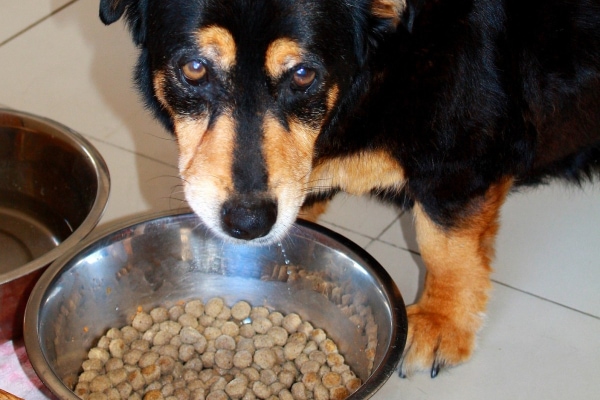
In order to recognize a low fat, high digestibility diet, you have to become good at reading dog food labels. All commercial dog foods (i.e. the ones you purchase from the pet store or through online sources) should have a guaranteed analysis on the back of the bag or can. It’s sort of like the nutritional contents label on food for humans, but the criteria are a bit different.
When looking at the guaranteed analysis, you will find words like “crude fat” with a percentage listed next to it. This percentage represents the amount of the particular element in that diet. It will either be listed on an “as fed” basis (i.e. based on the weight of the actual wet or dry food) or a “dry matter basis” (i.e. based on the weight if all moisture was removed from the food).
If you are comparing the fat content of foods, you want to look at them on a dry matter basis. This is because, on an “as fed” basis, canned food is often 75-78% moisture. But a dry food often only contains 10-12% moisture. This makes it impossible to look at the “as fed” percentage of fat in a canned food and compare it to the “as fed” percentage of fat in a dry food. The dry food, being much more concentrated, will have a higher fat percentage on an “as fed” basis even if both foods are actually the same on a dry matter basis.
For simplicity, I have converted the fat content to a dry matter basis for the foods we will discuss here. But if you want to learn how to make that conversion yourself, check out the FDA pet food label page. It is also full of great information about reading pet food labels in general.
Recommended fat content for pancreatitis dogs
Now that we have waded through the technicalities of reading labels, let’s talk about the ideal fat content for dogs with pancreatitis. Most veterinarians will recommend diets that have low to moderate fat contents. “Low” fat content typically means having a crude fat content of 8% or less. And a “moderate” fat content means the diet may have up to 15% fat on a dry matter basis.
Low fat veterinary prescription diets
Veterinarians often recommend feeding a diet made by a company that uses the latest research in pet nutrition and employs a number of board certified veterinary nutritionists. These veterinary specialists received extra years of training outside of veterinary school, which makes them uniquely qualified to create good quality diets.
Companies like Royal Canin, Hill’s Science Diet, Purina, Iams, and Eukanuba all fit that bill. They have boarded veterinary nutritionists on their staff, make sound recommendations for their formulas, and implement excellent quality control measures. The first three companies carry a line of prescription diets that are excellent for dogs with pancreatitis. They include:
- Purina Pro Plan Veterinary Diets EN Gastroenteric Low Fat Canine Formula (6.8% crude fat on a dry matter basis)
- Hill’s Prescription Diet Digestive Care i/d Low Fat Dry Dog Food (7.5% crude fat on a dry matter basis)
- Royal Canin Veterinary Diet Gastrointestinal Low Fat Dry Dog Food (7.1% crude fat on a dry matter basis)
These three diets have the lowest amounts of fat across all prescription diets available.
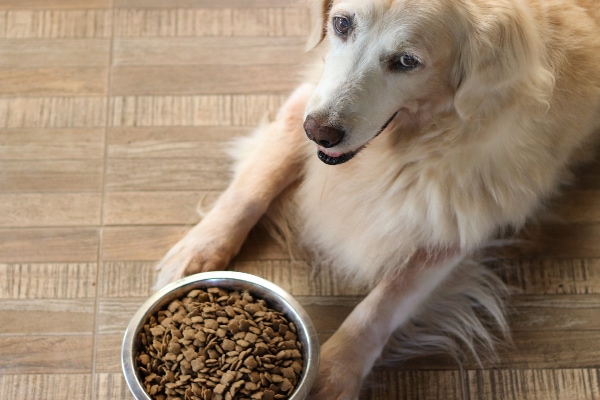
However, in some cases, your vet may recommend a diet with a more moderate fat content instead. Purina Pro Plan’s HA diet and Royal Canin’s Selected Protein diets can fit this description and may be a good choice for dogs with food allergies. There may also be situations, such as when a dog has kidney disease in dogs and pancreatitis, where the vet might recommend feeding your dog a different diet than what I have listed.
Moderate fat over-the-counter diets for dogs
I know that sometimes prescription diets can be cost-prohibitive for dog parents. Or you may find yourself in a situation where a diet has gone on backorder. The good news is that some over-the-counter diets may be ok for dogs with mild pancreatitis. Examples of such diets are:
- Purina Pro Plan Adult Weight Management Large Breed Chicken and Rice
- Hill’s Science Diet Adult Perfect Weight small & mini dog food
- Royal Canin Small Indoor Adult dry dog food
However, it is best to consult with your vet before using these diets in place of a veterinary prescription diet. While they work in some situations, they are not the right choice for all dogs. Sometimes your vet may recommend either sticking with one of the low fat prescription diets or cooking a low fat diet for your dog instead.
Homecooked low fat diets
Some dog parents may also elect to use a low fat homecooked diet rather than commercial dog food. This may be because their dog has allergies to ingredients in the commercial diets, because a commercial diet isn’t available to fit their dog’s needs, or simply because they feel it is the best choice for their dog.
Most people know that I am a big proponent of homecooked diets. But I do always want to warn dog parents that it isn’t as simple as feeding some skinless chicken with sweet potatoes. Feeding nothing but two or three ingredients can seriously deprive dogs of important nutrients.
That’s why homecooked meals should come from recipes that are created by boarded veterinary nutritionists. These nutrition specialist can tell you the exact blend and amount of ingredients needed to create a complete and balanced diet that is suited to your dog’s condition. Thankfully, there are several ways you can get good quality veterinary nutrition advice.
By going to ACVN.org, you can find a list of veterinary nutritionists in your area. Also, websites like BalanceIT.com can provide you with balanced recipes using specific ingredients. And there is lots of information available at the OSU Nutrition Support Service website.
Pre-made homecooked low fat diets
As you have probably gathered, it can take a lot of time and experience to do homecooked meals properly. So you might be relieved to learn that you don’t always have to cook the meal yourself in order to feed your dog a homecooked meal.
It is also possible to purchase pre-made low fat homecooked diets from companies like Nom Nom and Just Food for Dogs. These companies employ boarded veterinary nutritionists so you can feel confident in their diet formulations. However, before you make a purchase, it is still best to talk to your vet or one of the company’s veterinary consultants. That way you can ensure they are able to deliver a meal with the appropriate fat content.
How long should my dog stay on this diet?
Now that you know how to pick a good low fat dog food, the last piece of the puzzle is to figure out how long you should plan to feed your dog that food. The answer to this varies from case to case. A dog who has recovered from acute pancreatitis may be able to safely transition back to his or her original food after a week or two. However, you should ensure that the original diet has a moderate fat content or switch to one that does.
Alternatively, sometimes the vet may recommend keeping your dog on the low fat, highly digestible diet long term. This may especially be the case if your dog has one or more of the pancreatitis risk factors. Also, dogs with chronic pancreatitis should stick with their new food and avoid eating other diets. This strategy can help decrease the risk of a relapse.
What should I not feed a dog with pancreatitis?
We have spent all this time talking about what to feed your dog with pancreatitis. So it only seems right that I would also remind you of what not to feed a dog with pancreatitis.
Since table scraps and fatty foods are known to trigger pancreatitis, you should avoid giving these to your dog, especially if he or she already has pancreatitis. Foods like bacon and ham can be particularly problematic, as can grease and oils. Also, while you may have heard that coconut oil can help a dog’s skin, keep in mind that this is still an oil. This means you should usually avoid giving it to dogs with a history of pancreatitis.
Feel confident that you can feed your dog with pancreatitis
I know that it can feel overwhelming when faced with a sick dog and lots of choices for how best to feed him or her. However, remember that you have the tools and resources to figure it out. You can always ask your veterinarian for help and advice. Or you can call up the manufacturer of a dog food you may be considering and ask them to give you the average fat content of that particular food on a dry matter basis.
Also, remember that you just have to start somewhere. If your dog doesn’t like the food you pick or isn’t doing well on it, you can always switch to another. Keep in contact with your vet, keep the guidelines I shared with you in mind, and you should be good to go! Every meal and every day will bring your dog one paw closer to recovery.
What food did you feed your dog with pancreatitis?
Please comment below.


Thank you for this helpful info on pancreatitis in dogs. My 3 yr old terrier mix got into some trash and injested 16 half eaten take-out chicken wings . We took her to the vet where an xray revealed she had digested all the bones however her pancreatic panel was way above normal. She was on a bland diet for a few days before transitioning to a low fat grain free diet temporarily. Two months later she had repeat bloodwork done which revealed a panel still above normal . She was then diagnosed with pancreatitis by our vet . The vet ordered our dog to remain on Royal Canin Low Fat prescription formula. I top her food with green beans, carrots, occasionaly add a hard boiled egg, boiled chicken or salmon, ground beef. This way I know she’s always getting some natural meat source low in fat with some veggies too. I never serve her kibble dry, I always add a bone broth made for dogs to moisten her kibble. She’s doing well, due for a check up in April . We will see where her numbers are then and move forward with whatever the vet recommends.
Hi Christine,
Thank you for sharing your experience with our readers. I am certain this will be helpful to others and offer some hope to those in a difficult situation. I am sorry your pup is dealing with chronic elevations in her pancreatic enzymes, but glad to hear she is doing well with her new diet. I pray you will see the results you are hoping for at her next checkup. Wishing her the best of luck at a full recovery and many happy years ahead. Feel free to leave an update if you have a chance.
Hi my 14 yr boy has pancreatitis vet said 200 was normal , my boy was 600 in blood test, ha no vomiting, but suffers severe osteoarthritis in shoulders and hips, vet has him on B12 , 4 Cyte, metacam for pain. I have now started him CBD oil but has cocoanut oil as carrier, I am really desperate for answers 🙏
Hi Joy,
I am so sorry your senior boy is struggling with pancreatitis. I hope you can continue to partner with your vet to find the best way to help your pup make a full recovery. Praying you find the answers you need, and things turn around quickly. Bless you and your sweet boy.
My poor little wire-haired dachshund, Peanut, was diagnosed about a year ago with pancreatitis. She just turned 5, and is otherwise so healthy. It’s a very frustrating illness. Her diet now consists of Purina Pro Plan Gastro EN dry food mostly, but I have to jump through so many hoops to get her to eat it. She’s not a big fan and she also did not like the Hills gastrointestinal dry food either. It has been a terrible struggle to get her to eat. She likes her boiled chicken, turkey, green beans and carrots, but I fear that isn’t a complete diet for her to live on. If you have any suggestions, I’m all ears. I am going to be talking to her vet as well because I need to find something that she’s excited about eating.
Hi Loretta,
I am sorry Peanut struggles with pancreatitis and does not seem to really like her prescription food. I think your decision to talk to your vet is a good one. They may have another diet option you have not tried yet. Also, your vet may be able to schedule a consultation with a veterinary nutritionist. A nutrition specialist should be able to formulate a home cooked diet that meets Peanut’s specific needs. This way she can have her fresh food she likes, and you can ensure it is nutritionally complete. Your pup is lucky to have you advocating for her health and well-being. Best wishes to you both and keep up the good work!
My dog is getting over her first bout of pancreatitis. She is 5 years old. Of all my schnauzers, she is the only schnauzer that had this condition. I didn’t know this breed are more prone to it. The only symptom she had was her throwing up. Otherwise, she wanted to play and wanted to eat. The vet put her on a rice and low fat cottage cheese diet for 2 days. She will be going back on her regular dog food but I see it’s 16% crude fat. Would it be better if I put her on a low fat or moderate fat diet of the dog food you mentioned. Or maybe mix the two together?
Thank you
Candy
Hi Candy,
I am sorry your Schnauzer is dealing with pancreatitis and its side effects. I am glad the diet change has helped, and she is well enough to switch back to her normal food. Since I have not examined your girl myself, I can’t make specific recommendations. It would be a good idea to talk to your vet about what food is best moving forward. They should be able to partner with you to ensure your sweet girl is well taken care of. I am hopeful you will find the right combination of things to keep her feeling great. Best wishes and good luck!
To get my 14yr old Min Pin through this for the second time I started her out on no preservatives beef baby food and sweet potato baby food that I gave her 50 calories at a time through a turkey injector syringe. I feed her twice the second day and four times the third. she did take a bite of boiled chicken tenderloins but still didn’t eat it yet. for the fourth day I kicked it up to eight times which equals her normal 400 calories a day. The next day she should eat. Best thing is she never threw it up. just go slow about 35ml in five to ten minutes with a couple tablespoons water afterward to wash it down. I did thin the baby food with no fat beef broth without garlic or onion so it would flow easy. The vet did give me IV fluid to use subcutaneous at 100-150ml daily to combat dehydration. She also had pain meds, nausea meds and appetite enhancing meds from the vet. She recovered slower probably due to her age.
Hi Kerry,
I am so glad you were able to help your senior girl through this tough recovery. She is lucky to have you as her caretaker and advocating for her health and wellbeing. Thank you for sharing your experience with our readers. Keep up the good work!
The vet had my dog only on boiled chicken, boiled hamburger and rice while on medication. There was no post information about when she finished the medication. I have switched out half of her food to Fresh Pet and the Purins Pro Plan Adult Weight which I had her on before. I quit the canned food entirely and have cut her treats back to two a day and two biscuits ( Alpo) and two Marrow Rounds. Having read this I’m going on a better label reading to see what total she should be on. She still acts hungry and wants more, and she is drinking a lot of water and making a lot of trips outside. There has been no more diarrhea or vomiting but I know I need to do more diet change.
Hi Margie,
You are correct, it is probably time to wean your pup off the boiled chicken, hamburger, and rice. Just to be sure you are including the right ratio of ingredients; I highly recommend you consult with your vet. They can let you know if any of her treats pose a threat to causing a pancreatitis flare up. Also, they can guide you through the process of determining how many calories your dog needs each day. I am glad the vomiting and diarrhea have resolved. Hoping your girl is in the clear and can stay on the path of health and happiness.
My vet told me to give my dog chicken and rice after a bout with pancreatitis. I am now making his dog food with rice, chicken or turkey, sweet potatoes, peas, spinach, carrots, eggs, ground flax seed. Hoping he will be healthier rather than giving him kibble. Lord knows what’s in it these days. Too many recalls even on expensive food.
Hi Sarwar,
Your dog is such a lucky pup to have access to these amazing foods. Thank you for sharing your experience with us. Best wishes!
Dr. Buzby, thank you for the extensive info on this terrible disease my almost 15 yr. old poodle was diagnosed a little over 2 years ago. ‘Spike’ is an active, healthy boy with me his entire life. He got so sick with all the symptoms you mentioned, our vet gave me the test results and put him on anti nausea meds and special diets and restrictions. The diets didn’t go over at all, so baked chicken over Purina Beyond wth any liquids/fats? mopped up and scooped out, had him eating g well again! The flare-ups have been few and resolve with stomach meds for a day or two. Believe me, I tried everything, and am very strict with his 2 meals and treats daily. I can tell when he’s getting sick: stretching, pacing, not eating and the way he looks in general.Thanks, for listening, Karen & Spike.
Hi Karen,
Thank you for taking the time to share your experience with our readers. I am sorry Spike has ongoing struggles with pancreatitis but glad to hear he is doing well and is able to maintain a good quality of life. Hoping he has many happy days ahead. Bless you both!
all great info, thanks. My 12 yr old retired racing greyhound has sensitivities so some years back she went on raw duck with on phytoplankton. she’s been good but for a few periodic bouts of diarrhea. most recently for 1+ weeks. she never lost her appetite. Ultrasound showed not much but possibly pancreatitis. MalAbsorbtion panel low folic and b12 so she is still on b12. Last panel showed good but her TLI Fasting >50 and COLI 207. She ears 3x per day and 21 oz rabbit to 6 oz duck right now. Will get her to all rabbit. Still phytoplankton and have Visbiome to add. What are your thoughts please. She remains, active, happy and very hungry. Thanks,
Robin Lane
Hi Robin,
I think it is great you are taking such an active role in advocating for your dog’s health and wellbeing. Unfortunately, without examining your dog myself and knowing all the details of her case I can’t really make specific recommendations on her diet. My best recommendation would be to schedule a consult with a veterinary nutritionist and get their expert opinion. Wishing you and your senior girl the best of luck!
I take it that you disagree with CJ Puotinen’s article in Whole Dog Journal’s November ’22 issue that “One group of dogs likely to benefit from coconut oil or MCT oil are those who have …. chronic pancreatitis … MCTs do not require pancreatic enzymes to be digested, so they are tolerated by dogs with those issues.”
I believe that Dr. Judy Morgan said something similar.
I am not arguing with you, I’m merely asking why you disagree.
Thank you for your column. It’s extremely informative & helpful to many. Great job!
Hi Robin,
Thank you for asking this question! I love when readers feel comfortable enough to approach a difficult topic and open the floor for honest discussion. Here are my 2 cents 🙂
Most of the research articles available on coconut oil and MCTs and the effects on the pancreas are done in human medicine. There just isn’t much info about this in dogs. Interestingly, there is a MCT product derived from coconut oil that gets used in a lot of these studies on MCTs, but it is not interchangeable with the regular coconut oil that people buy at the store. The predominant MCT in coconut oil is lauric acid. There is some debate about how to classify lauric acid and which metabolism pathway it follows (i.e., independent of pancreatic lipase or not). It is true that MCT can be absorbed by the body without needing pancreatic enzymes like lipase (as stated in the Whole Dog Journal article). However, some scientists consider lauric acid to be a LCT (long chain fatty acid). At least in people (I couldn’t find the info for dogs), lauric acid seems to act more like a long chain fatty acid (those that do require lipase for digestion). Also, MCTs only make up about 50% of the fats in coconut oil. Based on this, it seems that there is still the risk that it could trigger pancreatitis or put stress on the pancreas. Since there is still some debate about lauric acid and its metabolism, I think it is safest in general to avoid coconut oil in dogs with pancreatitis. However, if there is a situation where coconut oil may be indicated for a dog who also has a history of chronic pancreatitis, I would recommend consulting with a veterinary nutritionist so he or she can make recommendations based on your dog’s particular situation.
I hope that helps and you can understand why I am overly cautious. Here is one of the resources I used for my information in case you would like to take a look. I also referenced articles found on PubMed but it would not allow me to post a link since it requires a paid membership to read certain articles. Again, thank you for the opportunity to share! Best wishes!
https://www.hsph.harvard.edu/nutritionsource/food-features/coconut-oil/