Aspiration pneumonia in dogs occurs when a dog accidentally inhales food, water, or stomach contents, leading to inflammation and sometimes infection within the lung tissue. Integrative veterinarian Dr. Julie Buzby explains what puts dogs at risk for aspiration pneumonia, the symptoms to watch for, and how your veterinarian will diagnose and treat your dog. Plus, she discusses the outlook for dogs with aspiration pneumonia and provides some prevention tips.
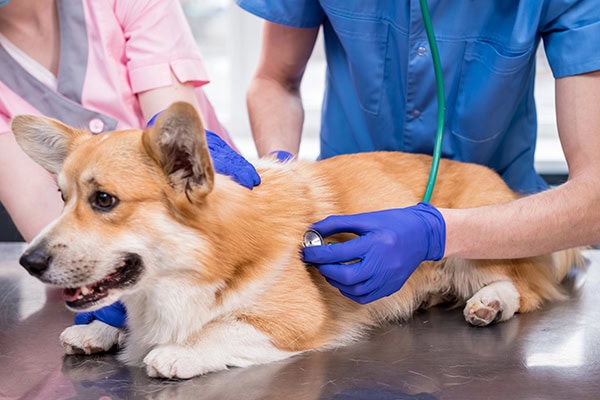
Imagine your little Bulldog puppy just had surgery and now is coughing and lethargic. Or maybe your sweet older Lab with geriatric onset laryngeal paralysis polyneuropathy (GOLPP) just started breathing even more harshly than usual and doesn’t want to get off the bed.
What do these two dogs have in common? They both might have aspiration pneumonia.
What is aspiration pneumonia in dogs?
Aspiration pneumonia (inhalation pneumonia) is inflammation, fluid accumulation, and sometimes infection of the lung tissue that results from food, fluid, stomach contents, or other substances entering the lungs via inhalation. This leads to respiratory symptoms such as coughing, wheezing, and in more severe cases, difficulty breathing.
How does aspiration pneumonia happen?
Normally, the body has several defense mechanisms that keep food, water, vomit, and other substances from “going down the wrong pipe” and ending up in the lungs. However, sometimes something slips past those defenses for the reasons we will discuss soon. Especially if the substance has a low pH like vomit or gastric contents, it can be very irritating to the lungs.
Over the first few hours after the aspiration event, the body starts to mount a localized inflammatory reaction which causes fluid to accumulate in the air sacs (alveoli) and makes the airways narrower (bronchoconstriction). As the inflammatory response ramps up, the body continues to release inflammatory signaling chemicals (cytokines) and further fluid and protein accumulate in the alveoli.
To make matters worse, all the inflammation and lung damage may weaken the lung’s defense mechanisms. This makes it easier for bacteria to set up shop in the lungs.
Not every dog with aspiration pneumonia ends up also developing a bacterial lung infection. But when it does happen, the dog may end up being sicker for longer.
Consequences of aspiration pneumonia
All of these changes are problematic because the already narrower airways may also be plugged with mucus or aspirated material. This makes it harder to get air down to the alveoli. And the fluid and protein in the alveoli prevent the lungs from efficiently exchanging oxygen in the air with carbon dioxide in the blood. When enough of the lung tissue is affected, this can lead to lower oxygen levels in the blood and an overall state of low tissue oxygenation.
Occasionally, the inflammation will be so severe that it leads to acute respiratory distress syndrome (ARDS). This is a life-threatening condition that accompanies lung injury and causes rapid onset of severe difficulty breathing.
Some dogs with aspiration pneumonia may also develop systemic inflammatory response syndrome (SIRS), a potentially dangerous condition where the immune system goes overboard, causing body-wide inflammation.
What causes aspiration pneumonia in dogs?
Aspiration pneumonia is caused by a dog inhaling food particles, stomach contents (such as after vomiting or regurgitating), water, or other liquids. There are several different scenarios that can increase a dog’s risk for developing inhalation pneumonia.
Esophageal disease
Megaesophagus in dogs (a dilated, flaccid esophagus), esophagitis in dogs (inflamed esophagus), esophageal obstructions, or other esophageal problems may cause a dog to regurgitate frequently. This increases the risk of aspiration pneumonia.
Anesthesia or sedation
Under anesthesia, dogs have decreased gag and swallow reflexes. And the esophageal sphincters that keep gastric juices in the stomach may relax. This can lead to reflux of gastric contents into the esophagus and sometimes aspiration of those contents.
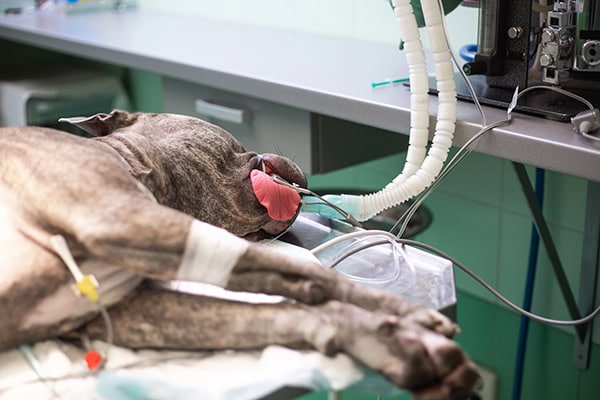
Thankfully though, in a 10 year study of over 140,000 anesthetized dogs published in Veterinary Anaesthesia and Analgesia, only 0.17% developed aspiration pneumonia after anesthesia. Plus, rest assured that veterinarians take steps to minimize the chances of your dog refluxing, regurgitating, or vomiting before, during, and after surgery.
Laryngeal paralysis
With laryngeal paralysis in dogs, the cartilage flaps at the top of the larynx (opening of the trachea) don’t open and close properly. This decreases the protection of the airway and increases the risk of aspiration pneumonia.
Dogs who had a tieback surgery to treat laryngeal paralysis are also at increased risk of aspiration pneumonia. This is the case because the procedure involves permanently fixing one of the laryngeal flaps in the “open” position.
Congenital issues like a cleft palate
Having a cleft palate (a defect in the roof of the mouth that communicates with the nasal cavity) makes a puppy more likely to aspirate food and water.
Being a certain breed
Brachycephalic breeds have a higher risk of aspiration pneumonia due to having shorter faces and irregular airways. Some large breeds such as Great Danes, Golden Retrievers, Labrador Retrievers, and Irish Wolfhounds are also more likely to develop aspiration pneumonia.
Force feeding
Forcing food or water into a dog’s mouth, trying to get a puppy to drink out of a bottle too aggressively, or giving oral medications improperly can lead to aspiration.
Neurological conditions
Some neurological issues in dogs such as seizures in dogs, myasthenia gravis in dogs, or geriatric laryngeal paralysis polyneuropathy (GOLPP) may increase the risk of aspiration pneumonia.
Vomiting
When a dog vomits, there is the risk that he or she could accidentally inhale stomach contents. Thus, any condition that causes vomiting, as well as inducing vomiting after toxin ingestion, could technically be a risk factor for aspiration pneumonia.
What are the symptoms of aspiration pneumonia in dogs?
A dog with aspiration pneumonia may show a range of symptoms depending on how severe it is.
Mild aspiration pneumonia signs
Dogs with mild aspiration pneumonia may just have a cough but otherwise seem fine. Unlike an “upper respiratory cough,” which is usually dry sounding, dogs with aspiration pneumonia will have a moist cough.
Moderate aspiration pneumonia signs in dogs
More moderately affected dogs may show the following signs:
- Cough: Dogs may have a moist, productive cough.
- Wheezing or louder breathing: Your dog might make a high-pitched wheezing noise or just generally sound louder when breathing.
- Faster or more exaggerated breathing: As pneumonia worsens, the dog may be working harder to get air in and out. Or you might see your dog breathing faster than usual (tachypnea).
- Lethargy and exercise intolerance: Since your dog may be having more trouble getting oxygen to the tissues, he or she may tire quickly or just generally be a lethargic dog.
- Poor appetite: Your dog may not want to eat as much, or stop eating completely.
- Nasal discharge: Usually if the dog has nasal discharge, it will be thick and cloudy (mucopurulent).
- Fever: Sometimes, but not always, you will detect a fever (temperature greater than 103° F) when you take your dog’s temperature.
- Dry gums: Due to dehydration in dogs, when you touch the gums they might feel sticky or dry.
- Weight loss: If the pneumonia has been going on longer or there is a chronic underlying condition, the dog might have a poor body condition score.
Signs of the end stages of aspiration pneumonia
Severely affected dogs may progress from breathing harder to being in a respiratory crisis. Their gums may be bluish (cyanotic) due to a lack of oxygen and they might be gasping for breath. Some might stand with their neck outstretched and their elbows winged out in an attempt to get more air (orthopnea). These are signs your dog needs immediate emergency care.
When does your dog need to go to the vet?
Because aspiration pneumonia can be serious, it is important to seek care promptly for your dog. If your dog is coughing and lethargic but breathing okay, it may be fine to make a same-day appointment with your vet. But difficulty breathing, blue gums, gasping, severe lethargy, or other serious signs require an immediate emergency vet visit.
When in doubt, call your vet for advice or play it safe and head to the veterinary ER.
How will the vet diagnose your dog with aspiration pneumonia?
Diagnosing a dog with aspiration pneumonia involves taking the history, physical exam findings, and results of diagnostic testing such as chest X-rays into consideration.
History
Often, there are clues in the history that raise the vet’s suspicion level for aspiration pneumonia. For example, it might be something like recent anesthesia, a previous diagnosis of laryngeal paralysis or megaesophagus, or even simply being a brachycephalic breed. However, dogs can also develop aspiration pneumonia without an obvious predisposing factor.
Physical exam
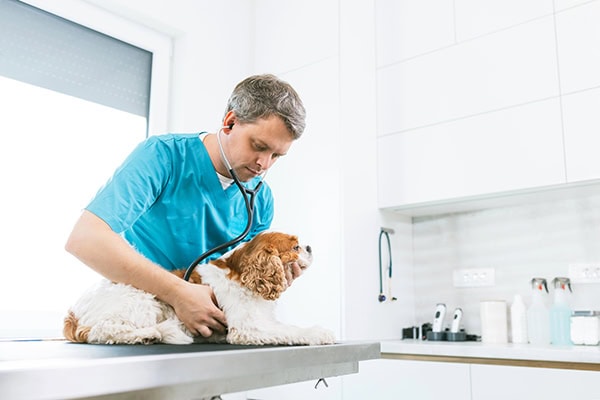
During the examination, the vet may hear crackles and wheezes when listening to your dog’s lungs. Or the lung sounds may be overall less prominent than normal. The dog may also have an elevated respiratory rate, fever, and increased respiratory effort. All of these signs point to a respiratory problem, but not aspiration pneumonia specifically.
Diagnostic testing
A variety of tests can be helpful for diagnosing aspiration pneumonia and ruling out other similar conditions.
Imaging (X-rays and ultrasound)
Chest X-rays are a great way to get a look at the lung fields as well as the heart, ribs, trachea, and other structures. Dogs with aspiration pneumonia typically have the most significant abnormalities in the right middle lung lobe. But the left and right portions of the lungs closest to the head might be affected, too.
Some vets may also do a chest ultrasound. This helps the vet detect signs of fluid or cells accumulating in the lungs and areas where the lung tissue is consolidated (denser and less air-filled than normal).
Blood tests
Blood tests for dogs, such as a chemistry panel and complete blood count (CBC), allow the vet to look for signs of inflammation or infection. And they are also a good way to get an overview of the dog’s overall health status.
Transtracheal wash (TTW) or bronchoalveolar lavage (BAL)
To help differentiate inflammation from infection within the lungs, the vet may also recommend a transtracheal wash (TTW) or bronchoalveolar lavage (BAL). These procedures allow the vet to collect a sample from the airways.
Performing cytology on the sample provides information about the type of cells present. And a culture and sensitivity may help the vet find out which bacteria, if any, are present, and the antibiotics most likely to be effective.
What is the treatment for aspiration pneumonia in dogs?
The treatment for aspiration pneumonia depends on how severe it is and whether the dog has a bacterial infection, too.
Treatment for mild cases of aspiration pneumonia
Dogs diagnosed with mild aspiration pneumonia may be able to recuperate at home provided they are eating, drinking, and behaving normally. However, it will be important to follow the vet’s instructions, monitor your dog carefully, and return for recheck visits.
If the vet suspects a secondary infection is present, he or she will prescribe an oral antibiotic. Typically, the vet will select an antibiotic that is likely to work and start the dog on it while waiting for the results of the culture and sensitivity.
If the culture comes back negative (no bacteria present), the vet can stop the antibiotics. And if the bacteria that are present aren’t likely to respond to the current antibiotic, the vet can change to a different one at that point. Otherwise, the dog will continue to take the antibiotics as directed by the vet.
Treatment for more moderate to severe cases of inhalation pneumonia
More moderate to severe cases of aspiration pneumonia require hospitalization and aggressive supportive care. The plan might include:
- One or more antibiotics (usually injectable) to help combat infection
- Intravenous fluids to improve hydration, thus helping move mucus and other materials up and out of the airways
- Nebulizers to deliver inhaled mist into the lower airways, further helping to moisturize and move mucus
- Supplemental oxygen for dogs who have dangerously low oxygen levels due to compromised respiratory function
- Frequent monitoring of oxygen levels via blood gas analysis or pulse oximetry
- Repeated physical exams +/- chest X-rays to check on the dog’s progress
Once the dog is discharged from the hospital, he or she will generally be taking an oral antibiotic. Depending on the situation, the dog may be on antibiotics for as little as 7-10 days or as long as 4-6 weeks.
Is there home treatment for aspiration pneumonia?
There aren’t home treatments for aspiration pneumonia that can take the place of veterinary care. However, many dogs with mild pneumonia can be treated at home after the initial vet visit.
Provide supportive care and follow your vet’s instructions
To support your dog at home, ensure he or she always has access to fresh, clean water to promote hydration. Plus, your dog will need lots of rest and TLC and a healthy diet.
During the recovery process, it will also be important to follow your vet’s instructions about how long to give the antibiotics. Even if your dog seems better, don’t stop antibiotics without being told to do so by your vet.
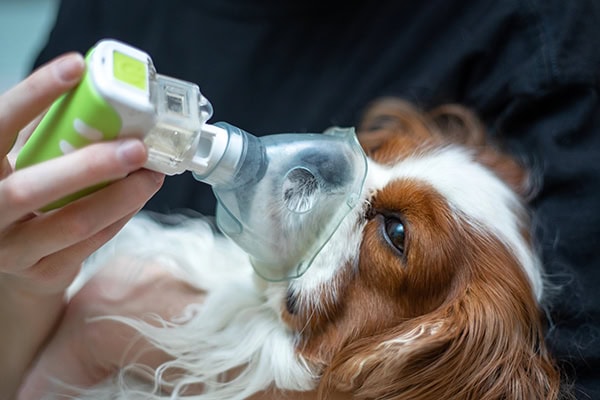
Ask your vet about a nebulizer
If your dog is particularly congested, the vet might also suggest purchasing a saline nebulizer for at-home use. But you should only do so under the direction of your veterinarian. And if it causes your dog to struggle or get stressed, stop using it and talk to your vet.
Bring your dog back for follow up visits
The vet may want to check on your dog periodically during and after treatment. This may involve him or her listening to the lungs and, in some cases, repeating chest X-rays.
These visits allow the vet to adjust therapy as needed. And they help ensure your dog’s aspiration pneumonia has resolved fully.
Avoid coupage in dogs with aspiration pneumonia
As an interesting note, coupage is often recommended for doggie patients with primarily bacterial pneumonia. This is a procedure where you cup your hand and then gently pat the back to help loosen mucus.
However, coupage is actually not recommended in cases of aspiration pneumonia. The reason is that it increases pressure within the chest cavity, which may result in additional regurgitation and aspiration.
Do not give your dog over-the-counter cough remedies
Your dog’s coughing might bother him or her (and you, too). But it serves the important purpose of loosening and bringing up mucus from the airway. Thus, it is important you don’t try to suppress your dog’s cough with natural remedies. For the same reason, the vet generally won’t prescribe cough suppressants for dogs with inhalation pneumonia.
What is the prognosis for dogs with aspiration pneumonia?
The prognosis for dogs with aspiration pneumonia varies depending on how severely your dog is affected. Overall, early aggressive treatment may give dogs the best chances of a positive outcome. Depending on the study, the survival rate for dogs with aspiration pneumonia varies from 72 to 96%.
That said, the best way to get an idea of what to expect for your dog is to consult with your veterinarian.
Are there ways to prevent aspiration pneumonia?
While some factors are out of your control, there are things you can do to reduce the risk of aspiration pneumonia
- Never try to make your dog vomit at home unless directed to do so by a veterinarian or veterinary toxicologist. Some ingested toxins can be even more problematic if they are aspirated. Or they might damage the esophagus on the way up.
- Follow your veterinarian’s instructions carefully regarding how long to fast your dog before anesthesia or sedation. This helps decrease the risk of reflux, vomiting, and aspiration.
- Be careful when giving your dog oral liquids. Aim the syringe toward the cheek pouch, not the back of the throat, and give your dog enough time to swallow. Do not continue to force the issue if your dog is coughing or struggling.
- Do not force feed your dog food or water unless instructed to do so by your veterinarian.
- Work with your vet to manage any underlying conditions your dog might have (megaesophagus, laryngeal paralysis, etc.)
Partner with your vet
If your dog has been diagnosed with aspiration pneumonia, it is natural to feel a bit worried. Thankfully though, with prompt and aggressive treatment, many dogs do well, especially with more mild cases. Don’t be afraid to reach out to your vet if you have any questions or concerns.
Hopefully, between your vet’s care plan and the TLC you provide your dog, he or she will be back to feeling great again before you know it.
Has your dog ever been diagnosed with aspiration pneumonia?
Please share below.

