Cataract surgery for dogs can be an excellent option for restoring vision in some dogs with cataracts. But it isn’t for all dogs, and it requires a significant input of time and money. Integrative veterinarian Dr. Julie Buzby explains the cataract surgery process, including the initial diagnosis, consultation with the veterinary ophthalmologist, cataract surgery itself, and recovery period. Plus, she discusses the potential complications of cataract surgery along with the pros and cons.
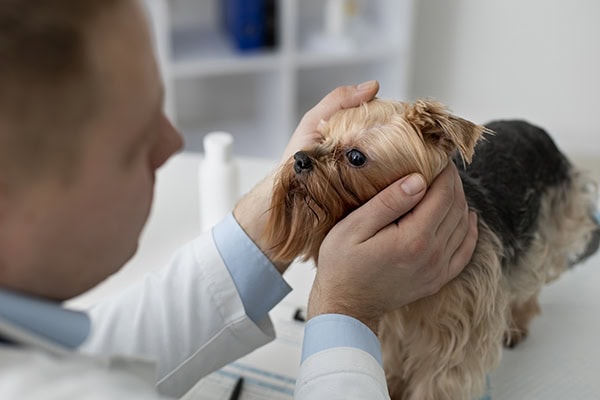
Do you have a friend or family member who has had cataract surgery? Or maybe you have had it yourself. Either way, you may or may not be surprised to learn that dogs can have cataract surgery, too.
For many dogs with cataracts, cataract surgery provides an amazing opportunity to give them back their sight. But it can also require multiple trips to the veterinary ophthalmologist, an E-collar, and a whole lot of eye drops. And there is the financial side of things to consider.
I don’t say this to try to talk you out of cataract surgery. Rather, my goal is to urge you to do your homework so you know what to expect.
What is cataract surgery for dogs?
Cataract surgery for dogs involves placing the dog under general anesthesia and replacing the cloudy lens with a clear artificial one to restore the dog’s vision and decrease the risk of cataract-related complications. It is a highly specialized procedure that is only performed by veterinary ophthalmologists.
Before we get to the details of the surgery itself, it helps to have a basic understanding of cataracts.
Dog cataracts 101
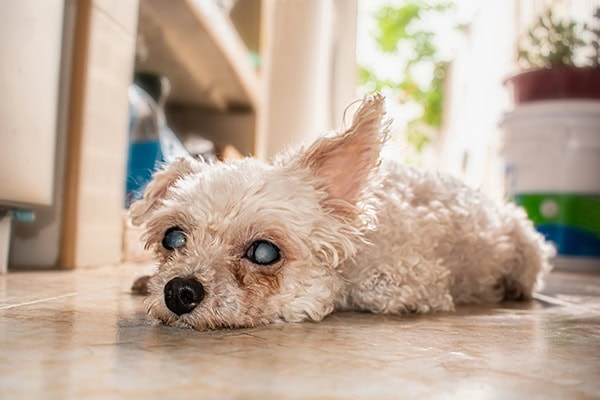
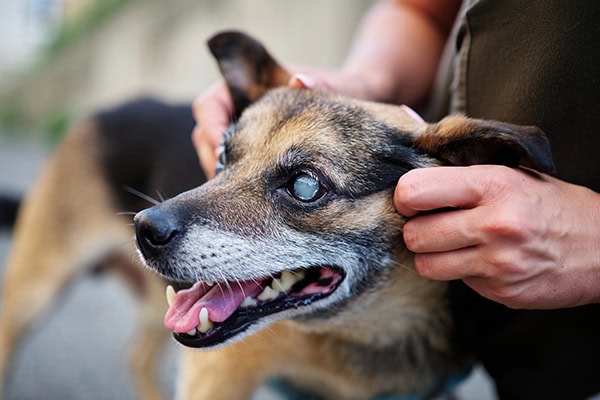
A cataract is an opacity of the lens that partially or completely obscures a dog’s field of vision. Normally the lens, which sits within the eyeball, is transparent, allowing light to reach the retina. You can think of it kind of like a seedless grape (if grapes were clear). The “skin” of our grape is the lens capsule. And the soft inner lens material is the flesh of the grape.
However, with cataracts in dogs, the lens material starts to become opaque. This is sort of like a large seed forming within that grape. The cataract (seed) blocks light, and the bigger and more dense it is, the more light it blocks.
With less than 30% of the lens affected by a cataract, the dog likely won’t have significant vision loss. But at greater than 60% blockage, the dog generally has some visual impairment. And when the cataract obscures 100% of the lens, the dog is blind.
Vets classify cataracts by stages based in part on how much of the lens is affected:
- Incipient cataract: Involves less than 15% of the lens
- Immature cataract: Covers 16-98% of the lens
- Mature cataract: Greater than 99% of the lens is obscured
- Hypermature cataract; A mature cataract that has begun to deteriorate, leading to inflammation within the eye (lens-induced uveitis in dogs) and/or high intraocular pressure (glaucoma in dogs)
There is no medical treatment that will reverse the cataract formation, only reduce inflammation and help keep the dog comfortable. Thus, cataract surgery is the gold standard for treatment.
When is the ideal time for a dog to have cataract surgery?
Generally speaking, dogs would ideally have cataract surgery when they have visual impairment from the cataract, but it hasn’t yet progressed to the point of causing inflammation or changes to the eye pressures. Often, this translates to being in the immature cataract stage.
Performing cataract surgery on mature and hypermature cataracts may be possible. However, these types of cataracts are more likely to trigger intraocular inflammation and weakening of the lens capsule.
This may keep the vet from being able to place the new artificial lens and/or could lead to an increased risk of post-surgical complications. As a result, dogs with advanced cataracts may have a poorer overall prognosis for post-op vision and comfort.
What are the steps in planning cataract surgery for dogs?
Cataract surgery has four main phases—diagnosis of the cataract by your family vet, assessment by a veterinary ophthalmologist, the surgery itself, and the post-operative period.
Initial diagnosis of the cataract
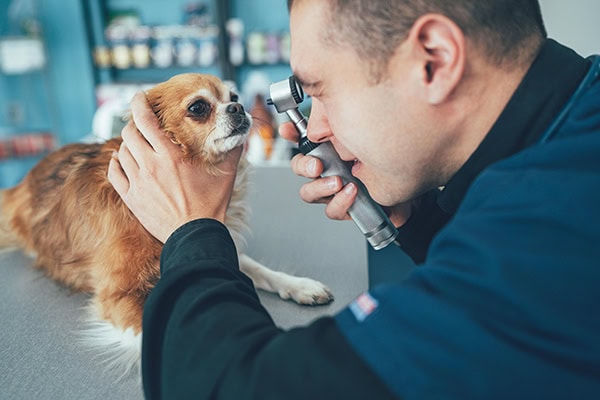
Typically, your dog’s cataract surgery journey starts with your family veterinarian. He or she may diagnose an incipient cataract during a wellness exam without you ever knowing your dog has a cataract. Or you may bring your dog in specifically because you’ve noticed your dog’s eyes are cloudy. And then you end up leaving with the diagnosis of a cataract.
As part of the appointment, the vet will likely use an ophthalmoscope head attachment (direct ophthalmoscopy) or a magnifying lens with a bright, handheld light (indirect ophthalmoscopy) to visualize the lens, retina, and other internal structures of the eye. Additionally, he or she may check tear production, measure your dog’s intraocular pressure, and/or check for corneal ulcers.
If the vet suspects the cataracts may have formed secondary to a condition such as diabetes in dogs, he or she may run some blood tests for dogs. These tests help screen for some underlying causes of cataracts. And they also provide an overview of the dog’s health.
If your vet feels cataract surgery could be a good option for your dog and it is something you want to look into, he or she will refer your dog to a veterinary ophthalmologist.
Visiting the veterinary ophthalmologist
At the consultation, the ophthalmology team will consider the health of each eye as well as your dog’s overall health to determine if your dog could be a candidate for cataract surgery. They may also ask questions about how well your dog tolerates eye medications and handling.
Generally speaking, a good candidate for cataract surgery is a dog who has been diagnosed with immature or early-stage cataracts. Plus, he or she is in good general health and has an appropriate temperament to tolerate post-operative care (E-collar, frequent eye medications, etc.).
Pre-surgical testing
The veterinary ophthalmologist will perform a variety of tests to gather the necessary information:
- Ocular ultrasound: Sometimes, the lens is opaque enough that the vet can’t see through it with the ophthalmoscope. In that case, he or she may use an ultrasound to evaluate the area of the eye behind the lens. This helps ensure there is not a retinal detachment, mass, or other problem within the eye.
- Electroretinogram (ERG): This is a specialized test used to confirm retinal function. ERG requires general anesthesia, but it is a vital step in determining whether the eye can still see once the ophthalmologist removes the cataract. If the ERG shows no electrical activity in the retina, cataract surgery will NOT restore the dog’s vision.
- Slit-beam ophthalmoscopy: The hand-held slit lamp allows the ophthalmologist to assess the structures in the front of the eye prior to surgery. This helps screen for any abnormalities in that area.
- Additional eye tests: The veterinary ophthalmologist will likely also measure the intraocular pressure, check for corneal ulcers in dogs, and measure tear production just like your family vet did. This ensures nothing has changed between visits.
- Blood work: The ophthalmologist will typically recommend a CBC, chemistry panel, or more specialized blood tests (like fructosamine for diabetic dogs). These tests help ensure your dog is healthy enough for surgery and that any underlying conditions are well managed.
Treatment planning
Based on the information the ophthalmologist has collected, he or she will make a recommendation on whether cataract surgery is right for your dog. Plus, he or she will discuss if one or both eyes could benefit from cataract surgery. If the answer is both, they can usually be done at the same time.
In the event you are proceeding with surgery, the ophthalmology team will give you any necessary pre-op instructions. Among other things, they may want you to to apply eye drops ahead of time or stop certain medications.
If your dog is not a candidate or you chose not to move forward with the surgery, the ophthalmologist can also work with you to create a medical management plan for your dog.
Cataract surgery
Currently, the gold standard is a type of cataract surgery called phacoemulsification. This procedure is complex, requiring the use of an operating microscope and considerable skill. Thus, cataract surgery can be performed only by veterinary ophthalmologists who are board-certified and have specialized training.
During the phacoemulsification procedure, the dog is placed under general anesthesia. Then the ophthalmologist makes tiny surgical incisions in both the cornea and lens capsule in order to gain access to the lens.
Next, he or she applies a high-frequency vibration to the lens using a tiny probe. These vibrations break the diseased lens apart, allowing the vet to use a tiny vacuum to remove the lens fragments.
After extracting the lens fragments, the veterinary surgeon usually places an artificial lens (also called an intraocular lens, or IOL) inside the lens capsule. Then he or she closes the incisions with very fine sutures which dissolve over time.
(Note: Sometimes it isn’t possible or advisable to place the IOL. In that case, the dog will still be able to see, but will be farsighted.)
Post-op care after cataract surgery
The veterinary ophthalmologist will monitor your dog’s eye(s) carefully until he or she feels your dog is ready to go home. Often this means your dog will spend at least one night in the hospital after surgery. But it could be longer depending on how things are going.
Your vet will also give you a very specific list of post-op instructions. Below are some general guidelines to help give you an idea of what to expect.
Note: What your veterinary ophthalmologist recommends trumps what you read here. He or she knows your dog and performed the surgery. Thus, it is important to abide by his or her post-op instructions.
Applying eye medications
At first, you may need to give your dog eye drops or other eye medications 3-4 times a day (or maybe even more often). And there might be multiple medications that you need to administer at least 5 minutes apart from each other. This can be a significant time commitment, especially for about the first month. After that, eye drop frequency may decrease, but some dogs continue to need eye medications long term.
Giving your dog oral medications
The vet will likely also prescribe some oral medications. This might be non-steroidal anti-inflammatory drugs (NSAIDs) such as carprofen for dogs, other pain medications, antibiotics, etc.
Keeping a plastic E-collar on your dog
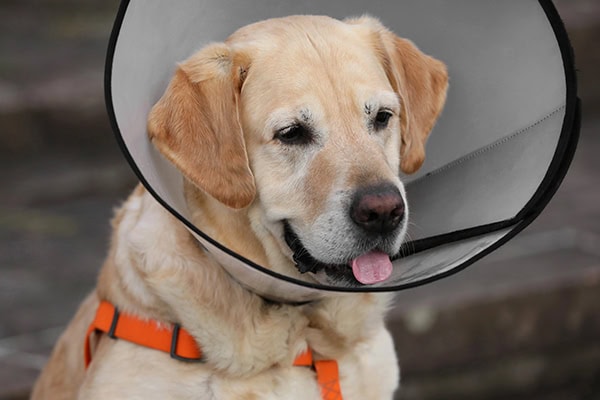
It is critical that your dog wears a hard plastic E-collar 24/7 after surgery. This prevents him or her from scratching or rubbing at the eyes. Typically, you will need to keep the E-collar on your dog at least 2-4 weeks after the surgery. Do not remove it until your vet gives the okay.
Note: Unless the ophthalmologist says otherwise, this needs to be a hard plastic E-collar, not a soft fabric one or an inflatable donut.
Restricting your dog’s exercise
Additionally, it is important to keep your dog calm for at least 2-4 weeks after surgery. Leash walk your dog on a harness only, rather than letting him or her run free. And don’t let your dog rough house with other dogs.
You dog should also not jump, play rough with tug toys, or aggressively shake his or her head. These sorts of movements can cause increased pressure on the eyes and the surgical incision, potentially raising the risk of complications.
Using a harness for walks instead of a dog collar
The ophthalmologist will probably recommend walking your dog with a harness rather than a collar. This is important because pressure on the neck from a collar can increase the pressure in the eyes, making complications potentially more likely.
If you don’t already use a harness on your dog, it is a great idea to buy one ahead of time, fit it to your dog, and practice using it. Then bring it along with you when you pick up your dog from surgery.
Monitoring your dog
Once your dog gets home, it becomes your job to watch for signs of complications. Each time you apply the eye drops, take a moment to really look at your dog’s eyes and compare them to what they looked like at the last dose. If you notice worsening red eyes in dogs, cloudy eyes, squinting, increased discomfort, loss of vision, or anything else that seems abnormal, contact your veterinary ophthalmologist immediately.
Being prepared to visit the ophthalmologist for rechecks
Especially at first, the veterinary ophthalmologist will want to see your dog fairly frequently. This helps him or her catch and address any complications earlier. Then, over time, the rechecks may spread out to every 6-12 months. But they usually continue for the life of your dog.
What are the possible complications after cataract surgery in dogs?
As with any surgical procedure, complications are a very real concern with cataract surgery. They can arise hours, days, months, or even years after surgery, and may include:
- Inflammation (uveitis): This is not uncommon due to the manipulation of the delicate tissue layers of the eye.
- Infection: Infection can develop from contamination of the surgical site if the dog paws at the eye or if post-op medications are not dosed as directed.
- Corneal ulceration: Ulcers may develop due to irritation from the suture in the corneal incision or the dog managing to paw or rub at the eye.
- Post-surgical hemorrhage: If blood gets trapped inside the eye, it can raise the intraocular pressure.
- Post-operative ocular hypertension: Usually just a transient increase in intraocular pressure, which should resolve before the vet discharges your dog.
- Glaucoma: Some dogs develop a long-term increase in the intraocular pressure of the eye that must be managed with medications.
- Retinal detachment: If the retina pulls away from the back of the eye, this can lead to blindness.
- Lens fiber regrowth: Cataracts can’t truly come back after surgery. But rarely, dogs, especially young or diabetic dogs, may experience a small amount of lens fiber regrowth or scar tissue formation.
- Cloudiness of the lens capsule: In a Journal of the American Veterinary Medical Association (JAVMA) article on long-term complications of cataract surgery in dogs, researchers reported that by 1-2 years post-op, 69% of dog eyes had either mild or moderate posterior lens capsule opacification. This may interfere with vision when more significant.
Monitor your dog’s eyes in the days, weeks, months, and years after surgery
Thus, it is important to monitor your dog’s eyes carefully shortly after surgery. And it is also a good idea to continue to regularly evaluate your dog’s eyes months and years after surgery. If anything looks off, don’t hesitate to contact your veterinary ophthalmologist. The sooner he or she can address the problem, the better the outlook may be.
What is the prognosis for dogs who have cataract surgery?
For dogs who have immature cataracts at the time of surgery and appropriate post-op care, the success rates for cataract surgery are generally quite high. According to most sources, they range from 80 to 95% . In this context, success means the dog has functional vision and a normal intraocular pressure for at least a year post-op.
However, success rates may be lower and the risk of complications higher for mature or hypermature cataracts. The same goes for dogs who have a preexisting condition like diabetes, other eye problems, or additional complicating factors.
What are the pros and cons of cataract surgery?
As you have gathered, there are both risks and benefits to cataract surgery, much like many other procedures. It is important to keep both the pros and cons of cataract surgery in dogs in mind when making a decision.
Pros of cataract surgery in dogs
- Surgical intervention may restore vision for dogs whose eyesight is compromised due to cataracts. (This is a huge pro.)
- The success rate for cataract surgery is excellent for a good candidate with proper post-operative care and follow up.
- Dogs who undergo cataract surgery often have a lower rate of cataract-related complications than those treated medically or not treated at all.
Cons of cataract surgery in dogs
- Concurrent health problems like heart disease in dogs, kidney disease in dogs, or diabetes mellitus can make general anesthesia more risky.
- If a dog’s eye health is already compromised by poor corneal or retinal health or another issue, the progression to blindness is more likely, even with surgical intervention.
- Cataract surgery requires dog parents to be able to medicate their dog successfully 3-4 times a day, potentially for a month or more. And they must be able to travel back to the veterinary ophthalmologist for rechecks.
- The cost of phacoemulsification surgery is high.
- Roughly 5-10% of dogs who undergo cataract surgery will still develop glaucoma, regardless of whether intraocular lens replacement is part of the surgical procedure.
How much does cataract surgery for dogs cost?
Since it does come up as one of the big cons for cataract surgery, it is important to take a moment to talk about the cost. A 2026 article from CareCredit reported that in the US, cataract surgery can range from $2,995 to $6,845 per eye, with a national average of $3,782 per eye.
That is a lot of money, and may be financially out of reach for some dog parents. There are, however, a few options that may help make it more possible.
Call several practices for a ballpark quote
Prior to selecting a veterinary ophthalmologist, you can try calling several practices to ask for a ballpark quote for cataract surgery. And if there is a veterinary school in your area, it may also be worth finding out their price or asking about any clinical trials your dog might be able to be enrolled in.
Look into CareCredit or ScratchPay
Some dog parents may also consider using CareCredit or ScratchPay. These payment programs are structured similarly to commercial credit cards. For dog owners who have good credit, this is a great option to cover the cost of the surgical bill and help spread payments out over several months.
Purchase pet insurance before your dog has cataracts
Finally, pet insurance plans may pay for cataract surgery provided it isn’t a pre-existing condition and they don’t have restrictions on hereditary conditions. If you are considering buying a breed of puppy genetically predisposed to cataracts, you may want to purchase pet insurance after confirming that it will indeed cover cataract surgery should your dog develop cataracts.
This doesn’t necessarily help if you don’t already have pet insurance at the time of diagnosis, though.
What if cataract surgery isn’t an option for my dog?
Cataract surgery isn’t going to be right for every dog. Maybe your dog isn’t a good candidate due to health issues, other eye problems, or advanced cataracts. In those situations, the risks may not outweigh the benefits. Or perhaps it wouldn’t be a wise financial decision. There is no shame in that.
It is understandable to feel some guilt or sadness because your dog doesn’t have a chance for restored sight. But there are lots of ways to help a blind dog feel more comfortable. And often, a visually impaired dog can still enjoy a great quality of life.
If surgery isn’t an option, the best course of action is to work closely with your vet to manage your dog’s cataracts medically. This may involve daily anti-inflammatory eye drops or other medications
It will be important for you to keep an eye on your dog at home. And your vet will likely want to recheck your dog periodically to screen for complications of cataracts like glaucoma or uveitis. If they develop, your dog may need additional medications or surgery to remove a diseased, painful eye.
If your dog might need cataract surgery, don’t wait
The idea of cataract surgery for your beloved dog can be a bit daunting, especially after you learn more about the price and the extensive aftercare. However, it does also have the potential to restore your dog’s vision and decrease the chances of cataract-related complications.
If you just found out your dog has cataracts and are considering cataract surgery, making an appointment with the veterinary ophthalmologist is a great next step. Because the outcomes are better with immature cataracts than more advanced cataracts, getting the ball rolling sooner rather than later is ideal.
Remember, having the consultation with the ophthalmologist doesn’t mean you have to move forward with surgery. It just means you are armed with information and have one more person in your dog’s corner. So if you are on the fence, why not give the ophthalmologist a call.
Did your dog have cataract surgery?
Please comment below.

