Hearing a diagnosis of bladder cancer in dogs can be distressing as a dog parent, but integrative veterinarian Dr. Julie Buzby is here to help. Learn the signs, diagnosis, treatment, and prognosis for the most common type of bladder cancer, transitional cell carcinoma in dogs. Armed with that information, you will be ready to help and support your canine companion in his or her battle with bladder cancer.

Sally was a twelve-year-old female spayed Scottish Terrier who had been the picture of health. But now she was asking to go outside more often, straining to urinate, and had left a large puddle of bloody urine on the kitchen floor. Her family was worried, so they brought her to see me.
I diagnosed my Scottie patient with what I thought was going to be a run-of-the-mill urinary tract infection. However, unlike most UTIs that significantly improve within a few days of starting antibiotics, Sally’s problems persisted. After a urine culture, which ruled out ongoing bacterial infection, I moved on to a bladder ultrasound to try to get to the root of my canine patient’s problem.
Unfortunately, the ultrasound revealed a large mass in the dog’s bladder that extended down into the urethra. So I had to break the devastating news to her family—their dog had bladder cancer.
What are the types of bladder cancer in dogs?
The term “bladder cancer” refers to any sort of cancer that grows in the urinary bladder.
Of the different types of lower urinary system cancers in dogs, transitional cell carcinoma (TCC) is by far the most common. It accounts for up to 90% of all bladder tumors.
The other 10% consist of many other types of tumors, including:
- Leiomyosarcoma
- Adenocarcinoma
- Lymphoma in dogs
- Fibrosarcoma
- Squamous cell carcinoma
- Hemangiosarcoma in dogs
- Infiltrative prostatic carcinoma
What is a transitional cell carcinoma in dogs?
Since the vast majority of bladder tumors are transitional cell carcinomas, let’s take a closer look at this tumor type.

In this case, the tumor arises from transitional cells, which are the specialized cells that normally line the inside of the bladder. When some of these cells become neoplastic (i.e. cancerous), the result is a transitional cell carcinoma. Sometimes a TCC is also called a urothelial carcinoma (UC).
The most common place for a transitional cell carcinoma to occur is in the trigone region of the bladder. This is the area at the neck of the bladder where the ureters—which connect the kidneys to the bladder—enter the bladder and the bladder narrows into the urethra. Unfortunately, a tumor in this area cannot be removed surgically.
Which dogs tend to get bladder cancer?
There are several factors that may make a dog more likely to develop bladder cancer. In general, TCC is most common among middle-aged or older female dogs. However, it can occur in dogs of any age and gender.
While transitional cell carcinoma can occur in any breed, certain dog breeds are at a higher risk. There is likely a genetic predisposition for developing TCC, as evidenced by Scottish Terrier dogs. Scotties are twenty times more likely to develop TCC than other breeds with the same environmental risk factors.
Breeds of dogs at risk for TCC include:
- Scottish Terriers (the most common breed to be diagnosed with TCC)
- Shetland Sheepdogs
- West Highland White Terriers
- Fox Terriers
- Airedales
- Beagles
- Collies
Dogs that have been exposed to herbicides and insecticides also have a higher risk of developing TCC. Obesity is also a risk factor. It is thought that components of these herbicides and insecticides accumulate in fat tissue.
Chronic and recurrent urinary tract infections (UTIs in dogs) also increase the risk of developing transitional cell carcinoma. Urinary tract infections are much more common in female dogs than male dogs. This may explain why females also seem to develop TCCs more frequently than males.
Administration of the chemotherapy agent Cyclophosphamide also has been associated with a higher risk of developing TCC.
What are the symptoms of bladder cancer in dogs?
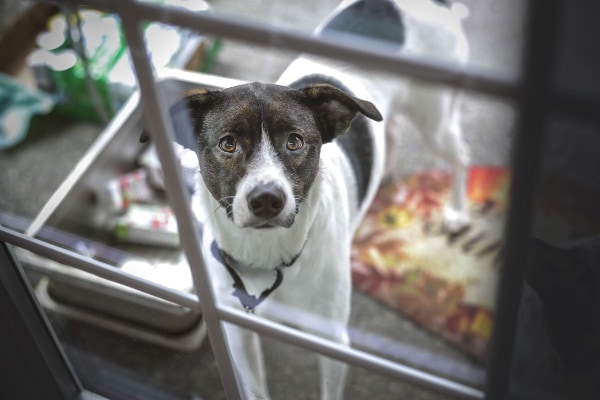
As demonstrated by Sally’s story, the signs of bladder cancer and a UTI are often very similar. The symptoms might include:
- Straining to urinate
- Urinating more frequently
- Urinary accidents
- Blood in the urine
In more advanced cases, a bladder tumor may cause a complete obstruction of the urethra so the dog is unable to urinate. The bladder may even rupture.
If the tumor has metastasized (i.e. spread) to the local lymph nodes, the vet might notice enlargement of the inguinal or sublumbar lymph nodes.
Although it is a rare occurrence, TCC can trigger hypertrophic osteopathy. This is a reaction of the periosteum (outer portion of the bone) leading to bone thickening and pain. It most commonly occurs in the lower portion of the legs.
How is bladder cancer diagnosed?
As we established, urinary tract infections are much more common than bladder tumors, and the signs are almost identical. So unsurprisingly, a dog who actually has a bladder tumor often initially gets a presumptive diagnosis of a UTI.
To further complicate matters, many dogs with a bladder tumor will have a concurrent urinary tract infection. So when the vet sees blood, bacteria, and white blood cells in the urine, he or she would understandably initially diagnose this as a UTI rather than having a high suspicion of bladder cancer.
Many dogs with bladder tumors will initially improve on antibiotics, especially if the tumor is small and in the early stages. The clinical improvement may be due to the anti-inflammatory effect of some antibiotics on the bladder. It can also be due to the fact that some dogs do have a concurrent UTI that is contributing to the signs.
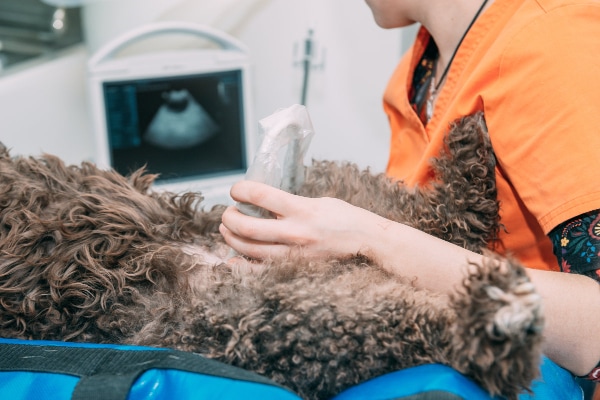
As in my Scottie patient’s case, the vet may first suspect bladder cancer when an older female dog has recurrent urinary issues that are not improving or quickly return despite appropriate antibiotic therapy. In many cases, the vet will be able to visualize a mass on ultrasound. However, the vet will need to be careful when interpreting the ultrasound. It is easy to mistake inflammation of the bladder wall for a tumor, especially if the bladder is small and fairly empty.
Avoid aspirates
Most of the time when the vet finds a tumor somewhere in the body, he or she will recommend an aspirate. This involves having the vet place a needle into the tumor, apply suction to remove some of the cells, and examine the cells under the microscope.
However, vets don’t recommend that sort of aspirate for suspected bladder cancer. There have been reports of “tumor seeding” with TCC after an aspirate. In other words, tumor cells followed the tract of the needle and started to grow throughout the abdomen. Therefore, other methods are recommended for collecting samples for diagnostics.
Cystoscopic biopsy
Instead of doing an aspirate, the vet can obtain a biopsy from the tumor through a cystoscope. This is a special scope with a camera that the vet slides up the urethra and into the bladder. As with aspiration, a surgical biopsy runs the risk of seeding tumor cells through the abdomen, so it is typically not a good idea.
Traumatic catheterization
Identifying neoplastic transitional cells in a urine sample is another useful diagnostic option, especially if the vet collects the sample through “traumatic catheterization.” Traumatic catheterization involves passing a urinary catheter and intentionally irritating the bladder tissue and tumor. This causes the tumor to release cells into the urine.
It is important to note that interpreting the traumatic catheterization sample is best left to a veterinary pathologist. This is because chronic inflammation of the bladder wall can damage the cells and make them appear neoplastic. A board-certified veterinary clinical pathologist should be able to distinguish between cancer and inflammation. But most general practice vets don’t have that level of expertise with cytology.
CADET® BRAF test
Recently, a new test has become available that makes the diagnosis of TCC much easier for the veterinarian and the patient. The test is called a CADET® BRAF test. Eighty-five percent of TCC tumors have a genetic mutation called the BRAF mutation. Finding cells with the BRAF mutation on a free catch urine sample can confirm a diagnosis of TCC. However, since only 85% of TCC tumors carry the BRAF mutation, it won’t find every case of TCC.

The good news is that now there is a CADET BRAF-PLUS test. It is able to detect approximately two-thirds of the TCCs the regular CADET BRAF test misses. Together, the BRAF and BRAF-PLUS can find 95% of TCCs. The BRAF test is easy to perform, non-invasive, and has a high chance of correctly identifying TCC so it is quickly becoming popular with veterinarians and dog parents.
What is the treatment for bladder cancer?
Once the vet has diagnosed your dog with bladder cancer, he or she will discuss the treatment options.
Surgery
If the tumor is located in the apex (i.e. top) of the bladder, a skilled surgeon may be able to remove a portion of the bladder wall along with the tumor. However, since most TCCs occur in the neck of the bladder where the ureters and urethra are located, surgical removal is usually not an option.
If surgery is not an option, or the vet performs surgery and there is evidence of spread to other parts of the body, medical therapy can extend a dog’s life significantly.
Piroxicam
Nonsteroidal anti-inflammatory medications, especially Piroxicam, are the mainstay of treatment for TCC. Piroxicam reduces the tumor volume overall and reduces the clinical signs associated with bladder tumors.
Chemotherapy
Dogs may sometimes need chemotherapy in combination with Piroxicam or instead of Piroxicam. It is best to consult with a board-certified veterinary oncologist to determine which chemotherapy agents would be best based on your dog’s history, overall health, the location of the tumor, and other factors. In general, the more common chemotherapeutic agents for TCC are Mitoxantrone or doxorubicin. Palladia is also another option.
Researchers at Iowa State University College of Veterinary Medicine also are studying a novel delivery system for chemotherapy that uses nanoparticles. It would allow veterinarians to effectively deliver chemotherapy directly into the bladder to target the transitional cell carcinoma. This approach also has applications for treating human bladder cancer.
Comfort measures
Making a dog with bladder cancer comfortable is important too. Since these dogs are prone to UTIs, the dog parent should monitor for worsening of urinary signs or other indications of infection. Treating infection with antibiotics can help the dog feel better.
If the bladder cancer has progressed to the point it is obstructing the urethra, some dogs may be a candidate for laser ablation of the mass or balloon dilation to temporarily improve the obstruction. Placing a urethral stent can also help if the tumor is obstructing a ureter and keeping urine from reaching the bladder.

What is the prognosis for bladder cancer?
As you can imagine, the outlook for dogs with bladder cancer varies depending on the type of tumor present, the location, and if the tumor has spread. Unfortunately, without treatment, most dogs with bladder cancer are euthanized within two to four months of diagnosis due to the progression of lower urinary tract signs.
In cases of transitional cell carcinoma, the median survival time (i.e. the length of time after which 50% of affected dogs are still alive) with Piroxicam, or other NSAIDs, is four to six months. With the combination of NSAIDs and chemotherapy, the median survival time is nine to twelve months.
How does bladder cancer progress?
Because transitional cell carcinomas are usually located at the neck of the bladder, urinary obstructions are common as the tumor progresses to the final stages. The tumor may block a ureter so urine from the kidney cannot enter the bladder. Or the tumor may block the urethra so that the patient cannot urinate.
A urinary obstruction can quickly become a life-threatening emergency. If at any point, you think your dog cannot urinate, please make an emergency vet visit immediately.
In other cases, the tumor causes so much inflammation and irritation that it affects the patient’s quality of life. Sadly, I euthanized one of my canine patients a few months after diagnosis because she felt like she had to urinate every twenty minutes. She was so uncomfortable that she wasn’t able to sleep.
Some patients may also become sick because of metastatic spread of disease to other parts of the body. TCC can metastasize to lymph nodes, the lungs, bone, and prostate. In the final stages of metastatic bladder cancer, you may see pain, breathing problems, or swelling of limbs due to blockage of the lymphatic vessels.
Back to my Scottish Terrier patient
Due to the tumor’s location near the ureters and urethra, surgery was not an option for Sally. Her family did not want to pursue chemotherapy but were hoping to keep her comfortable as long as possible. We started her on a daily dose of Piroxicam. While on Piroxicam, we checked her blood work every two months to make sure the medication was not damaging her kidneys. We also checked her urine for secondary infections and treated with antibiotics when needed.

Sally lived another nineteen months after I diagnosed her with a bladder tumor. Unfortunately, her tumor eventually grew into a blood vessel, causing blood loss. Her family knew it was time to consider preparing for dog euthanasia when the bleeding became severe enough that she was anemic and weak. While they were sad to lose their beloved dog, they were also so thankful for the time they had with her after her diagnosis.
Pearls of wisdom about bladder tumors in dogs
I know it can get overwhelming when you and your sweet dog are facing a scary diagnosis like bladder cancer. So let me leave you with a few parting pieces of advice from my years as a veterinarian:
- You know your dog. If your vet is treating your dog for a UTI and it doesn’t seem like your dog is getting better as fast as expected, reach out to your veterinarian. Let him or her know what you are seeing. Be willing to do more diagnostics to get to the bottom of the issue.
- If your veterinarian suspects a bladder tumor, ask about a CADET BRAF test. It is probably the least stressful way to diagnose a TCC and will find 85% of tumors (or 95% if you do the CADET BRAF-PLUS too).
- Although treatment for transitional cell carcinoma is rarely curative, medications such as Piroxicam and/or chemotherapy can help your dog have a good quality of life for many more months.
- Stay in close contact with your vet during the treatment period. Ensure you keep him or her informed of any changes with your dog.
- If you have a high-risk breed of dog such as a Scottie, ask your vet if it would be wise to run the CADET BRAF test as a screening tool every four to six months. Early detection of a TCC allows you to start treatment sooner.
Finally, don’t lose hope. I know that no one wants to hear the word “cancer” in reference to their sweet dog. You can’t change the fact that your dog has bladder cancer. But you can try to enjoy every remaining day together to the fullest.
Has your dog been diagnosed with bladder cancer?
Please share his or her story below.


Thank you for this article, I’ve been looking for all the information I can get. My 11 year old scotty has been having trouble peeing and has started having more and more accidents. Vet ultra-sounded and, based on the lump around the urethra, is 90% sure it’s bladder cancer. He’s been on Carprofen for a few weeks now and has started taking Gabapentin after the last ultra-sound. I’ve heard Carprofen isn’t that great of an NSAID so will have to see if I can get a Piroxicam prescription instead.
Right now I’m mainly wondering what I can do to make the rest of my dog’s life as enjoyable and pain=free as possible. Obviously lots of walks, treats and love but I’d be curious if you have any suggestions for making life easier for a dog with this specific ailment? Really appreciate any advice you can give on the matter.
Thanks!
Dear Jim,
I am so sorry your senior guy has received this devastating diagnosis. If you are focusing on palliative or hospice care, then it may be good to see if there is a vet in your area that specializes in this type of care. I am also wondering if it would be worth getting an internal medicine specialist to go over your boy’s case details. Since the lump is around the urethra, it would be good to rule out the possibility of a prostate issue. Other than that, it sounds like you are doing everything you can at this point, and I think discussing the change to piroxicam is a good idea. Hoping you can find the best ways to keep your sweet boy comfortable and happy for as long as possible. Praying for comfort and peace.
Great article on a tough subject. My 10y.o. sheltie Louie was diagnosed with inoperable tcc in January 2020. I made the excruciating decision to put him down six months later. I struggled with that decision, but reading the veterinarian’s oath ultimately helped reframe my thinking around euthanasia. He was in too much pain. I love what you said about enjoying the days we have left with these sweet creatures after the diagnosis. I let him do all the fun (and sometimes naughty) stuff like eat human foods and ride in the front seat and come to gatherings in his little diaper! I think those six months helped me grieve. My heart goes out to all the veterinarians and dog parents who are dealing with this ♥️
Hi Jenny,
Thank you for sharing Louie’s story with us. I love that you made his last days so special. I am sure he felt like the luckiest pup in the world. Wishing you all the best as you continue life’s journey!
We took our 9 year Staffy to the vet 10 days ago when we noticed her urine was red. Thinking it was a UTI, they ran the usual tests. However, the ultrasound uncovered a “large” mass in her bladder, They recommended getting a sample to send to the lab. Blood work came in all good and no UTI but the lab came back with the dreaded news, TCC. We just started her with Piroxicam and noticed her poop to be very soft. Other than that, she is still very playful and happy. I so regret not noticing the symptoms sooner. 2 yrs ago she got into fertilizer my husband spread under the citrus trees before the rain. She had diarrhea for 3 weeks and I only fed her rice and chicken to get her better. I’m just guessing but fear that is what triggered it. Since then, when eating grass she occasionally chews all the way down into the dirt and takes big chunks of grass out. FYI – she has never been a dog to throw up after eating grass. She seems to just like it. I feed her Blue dry dog food, but my daughter says I should feed her the refrigerated ‘real’ food for dogs. Will that really help her live a little longer and be more comfortable? Thank you for listening. I did not realize until now, how this is helping me confront this, as we love her so very much.
Dear Katie,
My heart goes out to you as you face this devastating diagnosis in your senior girl. I understand your concern and think it is good you are searching for ways to extend her life. I do think nutrition plays a vital role in health and can help with healing. I am not sure that switching to a refrigerated food is the answer. Most of the companies that produce the refrigerated foods do not have good quality control standards set in place and only a couple employ a board-certified veterinary nutritionist to formulate the diets. If you are wanting to feed natural whole foods, then I recommend you look into balanced home cooked diets. The website Balance.it does a great job of helping create a balanced diet that is nutritionally complete and not lacking any vital nutrients. You can also reach out to a holistic vet or one that practices Traditional Chinese Medicine for advice on supplements that could be helpful for your dog’s specific medical needs. Hoping your sweet girl can continue to fight and praying for many happy days ahead. Wishing you all the best. Bless you both. ♥
Hi Dr Buzby,
This forum is a reassuring resource as you feel less alone when learning about bladder ca.
My 9 yo kelpiexborder collie was diagnosed with a uti 2 weeks ago: urinary frequency didn’t respond to antibiotics and an ultrasound revealed a 5 x 3.5 cm mass above the trigome area sound more like back wall as mass is well away from uterers. In a medium sized bladder. A CT is booked for 3 days time as I want to know are there Mets And a BRAF TEST ordered today. The dog has been prescribed feldene tablets as a NSAID. I am reluctant to do surgery due to the size of the mass on ultrasound and I am reluctant to do chemotherapy without taking the surgery option as well. My dog is fit and happy but has lots of attempts to urinate I.e every 2 metres when we are out walking. Am I being too pessimistic? My pref is to keep the dog as comfortable as possible!
Hi Maria,
I am so sorry your girl is facing this difficult diagnosis. I am glad you decided to pursue more advanced testing to try and get all the details and understand the whole picture. I don’t think you are being too pessimistic at all! Palliative care is a great option. I tend to focus more on quality of life than quantity with my own senior dogs. Hoping the CT went smoothly and that you will get the BRAF results soon. Feel free to leave an update with any new information. Thank you for sharing your story with us!
Hi,
My 11 year old Pitty went into the vet 4 days ago with what I suspected to be a uti. She was struggling to pee and started to pant, so I brought her in. While we were sitting in the vet she emptied her bladder and stopped panting. I assumed she maybe passed a small stone. The blood work showed no sign of uti according to the white blood cells. The xray was normal with no sign of stones. The vets concerns were possible tumor because her symptoms but not having a uti. I brought her back in for an ultrasound. No masses were found, just an irregular bladder wall. The vet did confirm this could be inflammation. I am waiting for her urine to be tested for cancel cells and have another appointment with a specialty to ultrasound her entire abdomen with a more sophisticated ultrasound machine. I am going crazy fearing it’s cancer. This sounds more like a stone that she passed and caused inflammation to her bladder. If there was a tumor that was preventing her from urinating wouldn’t it show on the ultrasound? Would love your thoughts.
Hi Elizabeth,
I am sorry you are facing this worrisome situation with your senior girl. I would think you could see a mass in the bladder on ultrasound, but depending on its size and location, it is possible it could stay pretty well hidden from view. If a stone had caused a blockage in the urethra, I would be surprised if there weren’t other stones still present in the bladder. The fact that bladder stones were not seen on ultrasound would have that much lower on my list of possible causes. Honestly, I am just as puzzled by all of this as you are. I think your vet has made a good choice in recommending a referral to a specialist for further testing. I hope you were able to get the answers you needed to ensure your girl remains happy and healthy. Feel free to leave an update and let us know how she is doing. Best wishes and bless you both!
My almost 15 year old girl was just diagnosed with a bladder mass. We will be starting with Piroxicam. Hoping it will work to help her out.
Hi Adriana,
Hoping the Piroxicam will offer your girl some relief and improve her quality of life. Make the most of each day you are gifted. Bless you and your sweet girl.
Hello Dr.Buzby,
Thank you so much for creating this space where we can come to share our furry loved one’s stories and learn from each other’s experiences.
My little Zippy who is almost 18 years old was diagnosed with HCC in his liver 12/22. He’s been taking sorafenib and it has kept his liver tumor stable. Unfortunately, in mid Feb 2024, we found out he has TCC. It appears to be near his prostate and in an inoperable area per my internist. We currently have him on Piroxicam for the TCC.
Recently, we noticed that after his initial full pee, he strains 6-10 times. He will want to go out and pee multiple times within 45 minutes. I am wondering when it’s possibly time to send him to doggy heaven so he’s not suffering. I am thinking that as the frequency of straining and duration increases, that will be a sign. He has a healthy appetite and so far we haven’t seen any blood in his urine. If you have any advice as far as what signs to look for, that would be greatly appreciated. I am not sure how many times is too much within a day or if he’s suffering. I have a call with his oncologist in a week. She’s out of town for a week so I am hoping to find out more information about TCC in the meantime. Thank you
Dear Joy,
I am so sorry you are facing yet another type of cancer in your senior boy. The signs to watch for would be general signs of declining health such as lack of appetite, lethargy, pain, and discomfort. Additionally, as you mentioned, you should monitor for blood in the urine and also any sign of a blocked and distended bladder. Your vet may be able to teach you how to feel for Zippy’s bladder so you can monitor its size. I hope you were able to talk to Zippy’s oncologist as they would have the best information and can help guide you in this process. Wishing you both nothing but the best and praying for comfort and peace.
My 12 year old Australian Shepherd, Ava, was diagnosed with TCC in March of 2023 but she exhibited signs in December of 2022. I took her to the vet Jan of 2023, treated like a UTI but didn’t go away so we did an ultrasound and tested for TCC. It came back positive and saw a mass in her bladder. We started Piroxicam. Fast forward to this year, January 2024. She seemed happy and great, no other symptoms except blood in her urine. Then she started to have to squat for longer times and get really low. The urine was still coming out but not full force. I also called my vet because she had her first not so great episode 2 weeks ago. She loves going on walks and I noticed as we started our walk that her rear legs looked wobbly and we didn’t end up walking. Then she also started not wanting to eat for about three days. I could get her to eat steamed rice and chicken though. Then she seemed better but now currently we are in another not so great episode. She still seems happy, legs are back to normal but her tummy is upset (making noises and diarrhea) and she will only eat rice and lean ground beef. She is licking herself in her private area too. I’m sure the time is coming shortly. As my vet explained, when the bad days out way the good it’s time. I’m thankful the Piroxicam gave us this extended time because I was devastated when we got the diagnosis and expected only 4 months and we are now at 13 months. I’m glad I stumbled upon this page too! It’s a great forum of information!
Dear Angie,
My heart goes out to you as you face these final days with your beloved pup. What a blessing you were gifted with an extra year of quality time together. Hoping you will be able to keep Ava comfortable and wishing her joy in each day. Bless you and your sweet girl. ♥
Thank you! Yes it really is a blessing of time🙏🏼🩷
This sounds really similar what our Baker (11 1/2 year chocolate lab) is going through. We removed a small mass is right leg about 4 years ago, tested it and it was positive for cancer cells. We did not drain his lymph nodes, which was an option, and wondering if that was a mistake and hard on myself about that lately.. noticed blood
In urine in April 2024, then blood out of his mouth a month later.. saw growth in mouth and tried to have it removed, but once he was under and they did the cray they said they were not prepared to remove it because it appeared much larger.. then in late May 2024 he was having more issues with urinating and blood in urine, so got an ultrasound that showed a fairly larger tumor in his bladder and did a catch test of urine which showed transitional cells and likely cancer as prognosis. Started on piroxicam and he was doing pretty good until about 3-4 weeks ago, when he wanted to stay outside in the dark and rain and didn’t want to eat his dog food, and was really having to squat all the time, and was vomiting in the mornings every other day… I knew I must be painful but he is such a tough dog and loyal his family, he is a trooper.. then things got a little better, then a little worse.. I really don’t want it to get really bad at the end, his tumor is large but not at front of bladder so not blocking urine, so not as much risk of going septic, but his mouth is also really concerning and he has lost about a 1/3 of his weight now and looking really skinny… but he still wants to go on walks and will beg for food at the dinner table like a true lab.. I scheduled a peaceful passing last week for this Friday but I am really struggling with this decision, seems like he could go on like this for a few more months, but it will get worse and not get better.. I want his last days to not be the rally bad ones, I want him to know it’s ok to let go, but he won’t do that… I’m so conflicted and stressed out, I hope
I am Making the right decision
Hi Brian,
So sorry to hear that Baker is declining and that you are approaching time time to say goodbye. Based on what you said in the post, I agree with you that euthanasia is the kindest choice because it allows him to skip over some of the hardest days that are yet to come. Thinking of you in this difficult time. ❤️
Hello – our 12 year dog was just diagnosed with bladder cancer today via CT scan. Involvement of the bladder, urethra, and iliac lymph nodes. I am still trying to decide if it’s worth getting the BRAF test. We do not want to pursue chemo or other invasive treatments. We just want her to be comfortable. They also found a tumor in her mouth which they were unable to aspirate because it was so hard they could not get the needle into it. The surgeon suspects it’s an aggressive form of primary mouth cancer that will require surgery, possibly removal of her lower jaw. Without a biopsy, we will not know. On top of that, she has Cushings, hypothyroidism, IBD, and chronic pancreatitis. We have been battling chronic diarrhea for almost 5 months trying all sorts of prescription foods that have not helped thus far. Our goal is to keep her comfortable. I’m on the fence whether we should do the BRAF test to diagnose TCC. Could the antiinflammatory be used for comfort measures and not necessarily treatment? I’m nervous with her chronic diarrhea and IBD, it will only exacerbate those symptoms.
Dear Rachael,
I am so sorry your girl is dealing with so many issues at once. Honestly, her case is very complicated, and I would be reaching out for advice from a specialist on what to do for treatment. You may be at a point where the focus needs to shift to palliative care or hospice. I wish I had some great advice, but all I can offer you is my heartfelt sympathy and prayers for strength and comfort. Hoping you can find the best way to give your sweet girl some relief. Bless you both as you walk this difficult path. ♥
Hi Dr Busby,
My sweet Lily, 12 yr old Havanese had been diagnosed with TCC. This had absolutely shattered me. She had suffered from UTIs but our OLD vet never suggested possible cancer. After returning home from a week away with military service, I noticed she struggled to urinate. Unable to get into our regular vet, we went to another vet that would accept us as I felt it was an emergency. He exrayed her and flume her bladder full. After catherising her, he told me the devastating news. Saying that she possibly had only days to live. He said he’d help make her comfortable and sent us home with the following medication.
Prazosin 1 x morning and night.
Clavilox 3/4 tab morning and evening.
Microlone 2x tabs morning and night.
Urocarb 1/2 tab every 12 hours.
After 3 days Lily appeared comfortable. albeit heavy panting.
After a blessed 10 days with Lily urinating slowly but effectively getting it out, the Vet changed her meds to. 1 x Prazosin morning and night.
weening off Microlone, and continuing with
1/2 Urocarb every 12 hours.
and 10 must Metacam at night.
I’m ready you suggest a different medication..
Lily is still giving so much love, wagging her tail, she appears comfortable enough… though drinking a fair bit, but has a great appetite and I’m now feeding her only cooked chicken breast and rice.
Our new Vet, says its a rare cancer not seen often.
After and internal he says it feels like a meaty mass around her utherea. That the inflammation has settled and as long as she can urinate and is comfortable we can have time with her.
can you give me some advice, and do you think the meds will continue to work..
How long, do you think we have a we don’t know how long our old vet missed diagnosis.
I’d value your advice.
thank you from Brisbane Australia
Hi Cindy,
I am so sorry Lily has received this tragic diagnosis. What a blessing she is still feeling ok and is fairly comfortable. It sounds like you are doing everything you can to maintain her quality of life. I am not sure I have and additional advice or guidance other than to encourage you to make the most of the time you are gifted. Enjoy each day you spend together and spoil your girl with love and affection. Wishing you strength to face the difficult days ahead and wishing you both comfort and peace. ♥
Hi Dr. Buzby,
My sweet Ripley was diagnosed with TCC last week, she is an 11 year old mini Aussie, The sweetest little girl. She is still happy and very active and able to go potty but with blood in her urine :(. We aren’t planning to pursue chemo and we are giving her a daily does of Meloxicam recommended by our dear vet. We have also changed her to a homemade diet of chicken breast and added supplements, low carb fruit such as blueberries and sweet potatoes to her chicken/and or beef. In your opinion is piroxicam a better choice in drug to help with the inflammation? I’m really glad I came across your page when I was researching this.
Dear Carol,
I am sorry Ripley has received this difficult diagnosis. I do think Piroxicam is a better choice as it has been shown to have the most beneficial effects on this specific type of cancer. You are doing a great job with the nutritious foods you are offering your pup. She is a very lucky girl to have you taking such good care of her. Hoping her body will respond favorably to the treatment and she will be blessed with many happy days ahead. Wishing you both the best and give Ripley a hug for me! ♥
Our sweet girl Nuala has been diagnosed with bladder cancer. She is a beagle and American bulldog mix. The bully mix has made it tricky giving the inflammatory medications as she has a very sensitive belly. We’ve been giving her Piroxicam every third day to start and she’s been doing well with that. She’s still urinating, eating and drinking as normal. She still loves her walks and going to work with me. We’ve switched her food to a grain free diet to help keep inflammation down as well as adding a wet food along with her kibble to give her that bit more liquid to help keep her system flushed – to keep UTI’s at bay.
Nuala is very good at letting me know when things aren’t good. When she gets a bit uncomfortable she gets som paracetamol and so far that’s worked a treat. The only thing – I mean other than the fact I’m losing her to cancer at some point – is how much she’s licking herself after peeing. I’m wondering if anyone has tried coconut oil or something like that to ease any external comfort issues. I should mention my girl has a hooded vulva. We have another appointment next week and will be upping how often she gets her Piroxicam and will be talking about another drug to help keep the tumours at bay for as long as possible. I won’t let her suffer so I know we are on borrowed time. I’m just hoping I can borrow a bunch.
Dear Hephzibah,
I am sorry Nuala has received this tragic diagnosis. I am glad the piroxicam seems to be helping and she has remained fairly stable. I would not recommend applying anything topically to her vulva as she will probably just try to lick it off. You can try cleaning the area daily with warm water on a cloth or a baby wipe (unscented), especially after she urinates, to see if that decreases the licking. I hope her recheck goes well and you can find out what the next step in treatment will be. Make the most of every day you are gifted. Wishing your sweet girl all the best.