Hearing a diagnosis of bladder cancer in dogs can be distressing as a dog parent, but integrative veterinarian Dr. Julie Buzby is here to help. Learn the signs, diagnosis, treatment, and prognosis for the most common type of bladder cancer, transitional cell carcinoma in dogs. Armed with that information, you will be ready to help and support your canine companion in his or her battle with bladder cancer.

Sally was a twelve-year-old female spayed Scottish Terrier who had been the picture of health. But now she was asking to go outside more often, straining to urinate, and had left a large puddle of bloody urine on the kitchen floor. Her family was worried, so they brought her to see me.
I diagnosed my Scottie patient with what I thought was going to be a run-of-the-mill urinary tract infection. However, unlike most UTIs that significantly improve within a few days of starting antibiotics, Sally’s problems persisted. After a urine culture, which ruled out ongoing bacterial infection, I moved on to a bladder ultrasound to try to get to the root of my canine patient’s problem.
Unfortunately, the ultrasound revealed a large mass in the dog’s bladder that extended down into the urethra. So I had to break the devastating news to her family—their dog had bladder cancer.
What are the types of bladder cancer in dogs?
The term “bladder cancer” refers to any sort of cancer that grows in the urinary bladder.
Of the different types of lower urinary system cancers in dogs, transitional cell carcinoma (TCC) is by far the most common. It accounts for up to 90% of all bladder tumors.
The other 10% consist of many other types of tumors, including:
- Leiomyosarcoma
- Adenocarcinoma
- Lymphoma in dogs
- Fibrosarcoma
- Squamous cell carcinoma
- Hemangiosarcoma in dogs
- Infiltrative prostatic carcinoma
What is a transitional cell carcinoma in dogs?
Since the vast majority of bladder tumors are transitional cell carcinomas, let’s take a closer look at this tumor type.

In this case, the tumor arises from transitional cells, which are the specialized cells that normally line the inside of the bladder. When some of these cells become neoplastic (i.e. cancerous), the result is a transitional cell carcinoma. Sometimes a TCC is also called a urothelial carcinoma (UC).
The most common place for a transitional cell carcinoma to occur is in the trigone region of the bladder. This is the area at the neck of the bladder where the ureters—which connect the kidneys to the bladder—enter the bladder and the bladder narrows into the urethra. Unfortunately, a tumor in this area cannot be removed surgically.
Which dogs tend to get bladder cancer?
There are several factors that may make a dog more likely to develop bladder cancer. In general, TCC is most common among middle-aged or older female dogs. However, it can occur in dogs of any age and gender.
While transitional cell carcinoma can occur in any breed, certain dog breeds are at a higher risk. There is likely a genetic predisposition for developing TCC, as evidenced by Scottish Terrier dogs. Scotties are twenty times more likely to develop TCC than other breeds with the same environmental risk factors.
Breeds of dogs at risk for TCC include:
- Scottish Terriers (the most common breed to be diagnosed with TCC)
- Shetland Sheepdogs
- West Highland White Terriers
- Fox Terriers
- Airedales
- Beagles
- Collies
Dogs that have been exposed to herbicides and insecticides also have a higher risk of developing TCC. Obesity is also a risk factor. It is thought that components of these herbicides and insecticides accumulate in fat tissue.
Chronic and recurrent urinary tract infections (UTIs in dogs) also increase the risk of developing transitional cell carcinoma. Urinary tract infections are much more common in female dogs than male dogs. This may explain why females also seem to develop TCCs more frequently than males.
Administration of the chemotherapy agent Cyclophosphamide also has been associated with a higher risk of developing TCC.
What are the symptoms of bladder cancer in dogs?
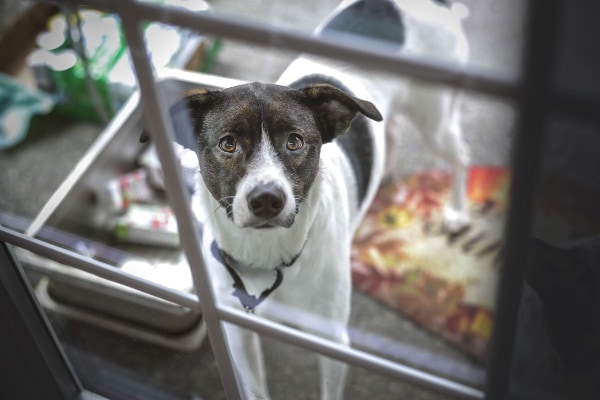
As demonstrated by Sally’s story, the signs of bladder cancer and a UTI are often very similar. The symptoms might include:
- Straining to urinate
- Urinating more frequently
- Urinary accidents
- Blood in the urine
In more advanced cases, a bladder tumor may cause a complete obstruction of the urethra so the dog is unable to urinate. The bladder may even rupture.
If the tumor has metastasized (i.e. spread) to the local lymph nodes, the vet might notice enlargement of the inguinal or sublumbar lymph nodes.
Although it is a rare occurrence, TCC can trigger hypertrophic osteopathy. This is a reaction of the periosteum (outer portion of the bone) leading to bone thickening and pain. It most commonly occurs in the lower portion of the legs.
How is bladder cancer diagnosed?
As we established, urinary tract infections are much more common than bladder tumors, and the signs are almost identical. So unsurprisingly, a dog who actually has a bladder tumor often initially gets a presumptive diagnosis of a UTI.
To further complicate matters, many dogs with a bladder tumor will have a concurrent urinary tract infection. So when the vet sees blood, bacteria, and white blood cells in the urine, he or she would understandably initially diagnose this as a UTI rather than having a high suspicion of bladder cancer.
Many dogs with bladder tumors will initially improve on antibiotics, especially if the tumor is small and in the early stages. The clinical improvement may be due to the anti-inflammatory effect of some antibiotics on the bladder. It can also be due to the fact that some dogs do have a concurrent UTI that is contributing to the signs.
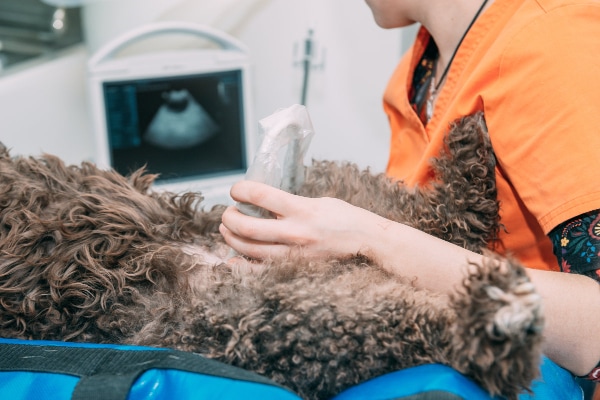
As in my Scottie patient’s case, the vet may first suspect bladder cancer when an older female dog has recurrent urinary issues that are not improving or quickly return despite appropriate antibiotic therapy. In many cases, the vet will be able to visualize a mass on ultrasound. However, the vet will need to be careful when interpreting the ultrasound. It is easy to mistake inflammation of the bladder wall for a tumor, especially if the bladder is small and fairly empty.
Avoid aspirates
Most of the time when the vet finds a tumor somewhere in the body, he or she will recommend an aspirate. This involves having the vet place a needle into the tumor, apply suction to remove some of the cells, and examine the cells under the microscope.
However, vets don’t recommend that sort of aspirate for suspected bladder cancer. There have been reports of “tumor seeding” with TCC after an aspirate. In other words, tumor cells followed the tract of the needle and started to grow throughout the abdomen. Therefore, other methods are recommended for collecting samples for diagnostics.
Cystoscopic biopsy
Instead of doing an aspirate, the vet can obtain a biopsy from the tumor through a cystoscope. This is a special scope with a camera that the vet slides up the urethra and into the bladder. As with aspiration, a surgical biopsy runs the risk of seeding tumor cells through the abdomen, so it is typically not a good idea.
Traumatic catheterization
Identifying neoplastic transitional cells in a urine sample is another useful diagnostic option, especially if the vet collects the sample through “traumatic catheterization.” Traumatic catheterization involves passing a urinary catheter and intentionally irritating the bladder tissue and tumor. This causes the tumor to release cells into the urine.
It is important to note that interpreting the traumatic catheterization sample is best left to a veterinary pathologist. This is because chronic inflammation of the bladder wall can damage the cells and make them appear neoplastic. A board-certified veterinary clinical pathologist should be able to distinguish between cancer and inflammation. But most general practice vets don’t have that level of expertise with cytology.
CADET® BRAF test
Recently, a new test has become available that makes the diagnosis of TCC much easier for the veterinarian and the patient. The test is called a CADET® BRAF test. Eighty-five percent of TCC tumors have a genetic mutation called the BRAF mutation. Finding cells with the BRAF mutation on a free catch urine sample can confirm a diagnosis of TCC. However, since only 85% of TCC tumors carry the BRAF mutation, it won’t find every case of TCC.

The good news is that now there is a CADET BRAF-PLUS test. It is able to detect approximately two-thirds of the TCCs the regular CADET BRAF test misses. Together, the BRAF and BRAF-PLUS can find 95% of TCCs. The BRAF test is easy to perform, non-invasive, and has a high chance of correctly identifying TCC so it is quickly becoming popular with veterinarians and dog parents.
What is the treatment for bladder cancer?
Once the vet has diagnosed your dog with bladder cancer, he or she will discuss the treatment options.
Surgery
If the tumor is located in the apex (i.e. top) of the bladder, a skilled surgeon may be able to remove a portion of the bladder wall along with the tumor. However, since most TCCs occur in the neck of the bladder where the ureters and urethra are located, surgical removal is usually not an option.
If surgery is not an option, or the vet performs surgery and there is evidence of spread to other parts of the body, medical therapy can extend a dog’s life significantly.
Piroxicam
Nonsteroidal anti-inflammatory medications, especially Piroxicam, are the mainstay of treatment for TCC. Piroxicam reduces the tumor volume overall and reduces the clinical signs associated with bladder tumors.
Chemotherapy
Dogs may sometimes need chemotherapy in combination with Piroxicam or instead of Piroxicam. It is best to consult with a board-certified veterinary oncologist to determine which chemotherapy agents would be best based on your dog’s history, overall health, the location of the tumor, and other factors. In general, the more common chemotherapeutic agents for TCC are Mitoxantrone or doxorubicin. Palladia is also another option.
Researchers at Iowa State University College of Veterinary Medicine also are studying a novel delivery system for chemotherapy that uses nanoparticles. It would allow veterinarians to effectively deliver chemotherapy directly into the bladder to target the transitional cell carcinoma. This approach also has applications for treating human bladder cancer.
Comfort measures
Making a dog with bladder cancer comfortable is important too. Since these dogs are prone to UTIs, the dog parent should monitor for worsening of urinary signs or other indications of infection. Treating infection with antibiotics can help the dog feel better.
If the bladder cancer has progressed to the point it is obstructing the urethra, some dogs may be a candidate for laser ablation of the mass or balloon dilation to temporarily improve the obstruction. Placing a urethral stent can also help if the tumor is obstructing a ureter and keeping urine from reaching the bladder.

What is the prognosis for bladder cancer?
As you can imagine, the outlook for dogs with bladder cancer varies depending on the type of tumor present, the location, and if the tumor has spread. Unfortunately, without treatment, most dogs with bladder cancer are euthanized within two to four months of diagnosis due to the progression of lower urinary tract signs.
In cases of transitional cell carcinoma, the median survival time (i.e. the length of time after which 50% of affected dogs are still alive) with Piroxicam, or other NSAIDs, is four to six months. With the combination of NSAIDs and chemotherapy, the median survival time is nine to twelve months.
How does bladder cancer progress?
Because transitional cell carcinomas are usually located at the neck of the bladder, urinary obstructions are common as the tumor progresses to the final stages. The tumor may block a ureter so urine from the kidney cannot enter the bladder. Or the tumor may block the urethra so that the patient cannot urinate.
A urinary obstruction can quickly become a life-threatening emergency. If at any point, you think your dog cannot urinate, please make an emergency vet visit immediately.
In other cases, the tumor causes so much inflammation and irritation that it affects the patient’s quality of life. Sadly, I euthanized one of my canine patients a few months after diagnosis because she felt like she had to urinate every twenty minutes. She was so uncomfortable that she wasn’t able to sleep.
Some patients may also become sick because of metastatic spread of disease to other parts of the body. TCC can metastasize to lymph nodes, the lungs, bone, and prostate. In the final stages of metastatic bladder cancer, you may see pain, breathing problems, or swelling of limbs due to blockage of the lymphatic vessels.
Back to my Scottish Terrier patient
Due to the tumor’s location near the ureters and urethra, surgery was not an option for Sally. Her family did not want to pursue chemotherapy but were hoping to keep her comfortable as long as possible. We started her on a daily dose of Piroxicam. While on Piroxicam, we checked her blood work every two months to make sure the medication was not damaging her kidneys. We also checked her urine for secondary infections and treated with antibiotics when needed.

Sally lived another nineteen months after I diagnosed her with a bladder tumor. Unfortunately, her tumor eventually grew into a blood vessel, causing blood loss. Her family knew it was time to consider preparing for dog euthanasia when the bleeding became severe enough that she was anemic and weak. While they were sad to lose their beloved dog, they were also so thankful for the time they had with her after her diagnosis.
Pearls of wisdom about bladder tumors in dogs
I know it can get overwhelming when you and your sweet dog are facing a scary diagnosis like bladder cancer. So let me leave you with a few parting pieces of advice from my years as a veterinarian:
- You know your dog. If your vet is treating your dog for a UTI and it doesn’t seem like your dog is getting better as fast as expected, reach out to your veterinarian. Let him or her know what you are seeing. Be willing to do more diagnostics to get to the bottom of the issue.
- If your veterinarian suspects a bladder tumor, ask about a CADET BRAF test. It is probably the least stressful way to diagnose a TCC and will find 85% of tumors (or 95% if you do the CADET BRAF-PLUS too).
- Although treatment for transitional cell carcinoma is rarely curative, medications such as Piroxicam and/or chemotherapy can help your dog have a good quality of life for many more months.
- Stay in close contact with your vet during the treatment period. Ensure you keep him or her informed of any changes with your dog.
- If you have a high-risk breed of dog such as a Scottie, ask your vet if it would be wise to run the CADET BRAF test as a screening tool every four to six months. Early detection of a TCC allows you to start treatment sooner.
Finally, don’t lose hope. I know that no one wants to hear the word “cancer” in reference to their sweet dog. You can’t change the fact that your dog has bladder cancer. But you can try to enjoy every remaining day together to the fullest.
Has your dog been diagnosed with bladder cancer?
Please share his or her story below.


Hello! My sweet Winston who is 13 YO is waiting for his 2nd BRAF test to come back. LAst September, he had an acute liver issue and during US they saw a very small 8mmx8mm mass in his bladder. We did a BRAF test then and it was negative. The vet was still concerned and wanted to possibly biopsy it IF we decided to do liver biopsies for his liver issues. At the time, I was most concerned with resolving his liver issue but decided not to put him through an extensive liver biopsy because even if they had known what it was the treatment options did not sound good for him. Luckily for us the liver issue was acute and his liver is in tip top shape now! However, I sadly put the small mass on the back burner at the time and because the BRAF test was negative, I felt comfortable that maybe it was just a benign polyp. Well about 2 months ago, Winston started having accidents inside and could not hold his pee. He was also peeing blood. We took him in and treated him for UTI. when that still didn’t resolve, they did an US and we saw that the tumor had grown to 4cmx4cm, so significant growth from last September. What is perplexing is, if it is TCC, how it did not take him out sooner as it’s been over a year since the mass was first identified. The location of the tumor is not at the neck, it’s in the apex. We put him on Piroxicam but he could not tolerate it and we had to treat him for an ulcer. when I brought him in, the tumor has grown slightly despite being on piroxicam. We took him off Piroxicam and he just went back in today after being off Piroxicam for a few weeks and the tumor has actually shrunk a little (so odd). We have decided to try MIroxicam to see how he tolerates that. We are waiting for the 2nd BRAF test to come back but still treating for TCC. It’s so odd, he has a TON of energy, eating great, playful, hiking many miles still with us. He does still have blood droplets at end of emptying his bladder but he doesn’t seem to be in pain. I cannot understand how this tumor if it is TCC grew so slowly. Stay tuned for BRAF test and we shall see! I want to continue to give him good QOL. I have hope after reading your 19 month survival of Sally!
Hi Erika,
I am so sorry Winston is facing this potential diagnosis. I am glad he is still feeling well and able to continue enjoying his life. Did you get the BRAF test results? Hoping you have the answers you need to give your boy the best care possible. Praying for many happy days ahead. Bless you both.
Thank you for your website and for sharing these heartfelt stories. Like others here, my beloved Gwinn (11 y/o dachshund mix) was just diagnosed with TCC based on a BRAF test and ultrasound, and was previously diagnosed with insulin dependent diabetes in Feb ’23.
Due to her diabetes I was regularly sampling her urine with “CheckUp Testing Strips” (from Amazon) and noticed an increasing reaction for blood in her urine although no blood was visible, which led to a visit with her vet, treatment for a UTI, and diagnosis of TCC.
Your comments on Piroxicam are very positive, how do you feel about combination of Mitoxantrone and Piroxicam?
Also, there are several scientific papers on the use of Ivermectin in the treatment of cancer; including but not limited to a 2024 study “Ivermectin Inhibits Bladder Cancer Cell Growth and Induces Oxidative Stress and DNA Damage” (PubMed PMID: 38375808), Do you see any role in the use of Ivermectin in the treatment TCC (or other cancers) as either a first line treatment, or used in combination with other approaches?
Thank you so much any insights, and for your help to all of us who treasure our fur babies.
Hi Freedman Family,
So sorry to hear your sweet Gwinn was recently diagnosed with TCC. In some ways, the diabetes may have been a blessing in disguise because the frequent urine monitoring may have allowed you to catch the TCC a lot earlier than you otherwise would have. But it is still hard to receive that sort of news. I haven’t personally treated a TCC case with Mitoxantrone and Piroxicam but have heard from colleagues that they have had some good success with this protocol at least stopping further tumor growth, and sometimes even shrinking the tumor a bit. Mitoxantrone can cause some bone marrow suppression so you do have to watch out for that. If this is something you are interested in, I’d recommend consulting with a veterinary oncologist so that they can give you the pros and cons to this combination for Gwinn specifically.
Regarding the use of ivermectin for treating TCC, the paper does look like it could be a promising option, but it is always hard to know for sure how it will work in real life. If she can tolerate it, I would probably lean towards a more proven treatment such as piroxicam and mitoxantrone. But if you do consult with an oncologist, it is certainly worth getting their take on ivermectin as well. It does seem like ivermectin is being investigated as a treatment for more and more types of cancer, so it will be interesting to see what happens with that in the future.
I hope you are able to find a treatment approach that helps Gwinn feel like her wonderful self for as long as possible!
Thank you so much for your reply, as an update Gwinn’s oncologist preferred to stay within the parameters of standard treatments and believes, subject to more imaging, she is still at T0.
For those reading these posts looking for treatment options to discuss with their vet, it may be of interest to consider the detailed treatment plans based on ivermectin and/or panacur that Dr Jones (vet on YouTube) outlines in his videos on cancer treatments, including his recent one:: “A Newly Published Cancer Treatment is Turning Heads: Animal Dewormers?”, here is the link https://www.youtube.com/watch?v=oWUCZoVwyvw
Hi Freeman Family,
Thank you for the kind words and for the update. Hoping all goes well with Gwinn’s treatment and I pray she has many happy days ahead. ♥
My 12 year old Poodle was diagnosed with TCC about 6 months ago. Since then, he has been on proxicam and luckily, he is still active, has good appetite and seems to have no or little trouble urinating. There is no sign of blood. The problem is because his tumor size has increased slightly, my vet recommends stopping pifoxicam. In her opinion, the increae in tumor size is a sign that shows proxicam does not work or ineffective in treating his cancer. He has not suggested any other specfic medication so far. Should I stop feeding him proxicam ?
Dear Cathy,
I am so sorry your Poodle’s tumor is growing, and you are facing some difficult days ahead. Without playing a personal role in your pup’s medical care it is hard to make specific recommendations. I would have to lean on your vet’s expert opinion and say to discontinue the piroxicam if they think that is the best course of action. If you wanted to continue giving the medication, talk to your vet about the benefits and risks and make sure they are aware you want to continue to pursue palliative care. Hoping you can find a clear path forward and praying for many happy days ahead for your sweet boy.
My 8 year old Aussie was going through multiple vet visits (about 6 different appointments) from October 2023 – March 2024 with a suspected UTI. She was put on prescribed food and antibiotics multiple times, until one doctor stepped in and said “we’re going to figure this out.” That’s when he ran an ultrasound, gave her fluids, and ran the TCC test. Unfortunately, she was diagnosed with cancer and prescribed peroxicam. It is now almost November 2024 and she is in obvious pain with panting, sudden urge to urinate whilst resting, and frequent attempts at passing stool/urine. I got all the fluffs a new toy this weekend and she’s been excited about it. She’ll bring the ball to me to throw, catch it a few times, then lie down. My heart is aching because I don’t know when is a good time to euthanize. Selfishly, I’d say never and I want her to pass on her own, but seeing her go from happy to hurting is breaking my heart. Has anyone else experienced this? If so, when did you know it was time? This is my best friend and she’s only 8. I’m so sad that she won’t be spending the holidays with me one last time.
Dear Stephanie,
My heart aches for you as you face these last days with your beloved girl. It can be hard to know when to say goodbye, but in general I would rather let go one day too early than one day too late and allow unnecessary suffering. It is ok to say goodbye before all joy is lost and the only thing that remains is pain. I will attach links to other articles with more information and great advice from other readers as well. Continue to make the most of the time you are gifted and lavish your girl with love. Wishing you both comfort and peace. Bless you.
1. Using a Quality of Life Scale for Dogs
2. Signs A Dog is Dying of Cancer (Plus Advice for 8 Common Cancers)
3. How Will You Know When It’s Time to Euthanize Your Dog? 5 Caring, Heartfelt Messages
4. Preparing for Your Dog’s Euthanasia: 10 Thoughts for Peace
Is it true that Any NSAID can help similar to piroxicam?
My dog can’t tolerate piroxicam.
She has HMD ( liver disease )
I just want to make her comfortable the best I can until she says it’s time.
I don’t see it’s time yet.
But wondered about other options for liver disease dogs with TCC
Hi Vanessa,
I am sorry you are facing this difficult situation with your pup. While all NSAIDs offer anti-inflammatory benefits, piroxicam has been studied and shown to be the most effective for TCC. If you can’t use piroxicam, I would definitely give another NSAID a try. Please be aware that all NSAIDs can cause liver issues. So, if the issue is not piroxicam specific but rather due to its effects on the liver, then I am not sure another NSAID would be recommended either. Hoping you can find a way to extend your girl’s life and maintain her comfort. Praying for strength and peace as you navigate this tricky path.
Thanks for the article. It’s so heartbreaking to read all these stories and learn there are so many people going through this situation with our beloved dogs.
My 9 years old Westie Coco was diagnosed with this type of cancer a couple of weeks ago. Last week she had a surgery where h they removed one of her kidneys and they placed a stent for her to pee easily, as she had about 3 days where she couldn’t pee at all. She has been eating well. I have been emptying her stent every 7 hours for the first days, but this last two days she has been trying to urinate almost every hour. It breaks my heart to see my dog partner suffering and not being herself, the funny stubborn Westie we love. We have an appointment with an oncologist this week, so hopefully we can have options for a treatment, as long as it provides quality of life to my little Coco.
Sending all my best wishes to all the dogs and their humans going through this hard situation.
Ps: happy to have found this as there is not a lot of information in Spanish. We are in Mexico City.
Dear Patty,
I am sorry Coco is battling this difficult disease. I am hoping the oncologist will have some good recommendations and you can find a way to restore Coco’s quality of life. Thank you for sharing your experience with our readers. Wishing you all the best and praying for a positive outcome for your sweet pup.
I was so happy to find this website and comments during our Yorkie Tucker’s 9 month illness with TCC. At a senior dog wellness check after reporting that he had been drinking lots of water and constantly licking the couch, our vet found UTI and suspected TCC. it took a few months of antibiotics and tests, including BRAF to finally get the diagnosis. He was often not feeling well, and having more frequent accidents., but the Piroxicam really helped, and later gabapentin really helped with discomfort. We decided not to do chemotherapy for our by then 14 year old dog. Several times he would pant in the middle of the night and cry, as he did his last day, but other than that and slowing down, he was a tough guy right up to the end.
Dear Jenny,
I am sorry for your loss of Tucker. What a blessing your vet was able to make a definitive diagnosis and start treatment so quickly. I am glad he remained comfortable until his very last day. Thank you for sharing his story with us. Wishing you comfort and peace. Bless you. ♥
This website is an answered prayer for me and my Meesha. She’s a 15 year old smooth blonde dachshund. We got the diagnosis of 2 tumors on the bladder right at the bottom of the urethra. My vet suggested we don’t do surgery. I wasn’t going to anyway..
I feel horrible because she had been trying to pee a million times for a month before I realized something was wrong. The vet gave us a round of antibiotics. She said that it would clear up, well it didn’t.. So we did another round of antibiotics. That helped for awhile. Went back to the vet, she was going to draw a urine sample straight from the bladder. She used her sonogram first. She came in showed me where both of the tumors were. She went through the options of what we could do. Surgery, Chemotherapy, or just take care of her at home. That’s what I’m doing.
She’s show signs of the cancer attacking her body already. This is Friday November 6,2024. On Sunday she started vomiting bile, then it was just foam, then it was pink foam. I was reading that indicates internal bleeding. I finally got a Zofran in her.
Her pee had been clear until Wednesday November 4, Now it’s bloody and she’s peeing every 2 minutes. She is drinking water fairly good, but she won’t eat her dog food. I fixed chicken and rice for her and she ate that for about four day Then she didn’t want it anymore. She won’t eat hardly anything. She did partake in some of the ham and Turkey from Thanksgiving for a few days. Last night I fixed her a scrambled egg. I had to hand feed her to get her to eat it.
Do you have any suggestions about what I might try feeding her?
I would greatly appreciate it!
Thank you Kim
Hi Kim,
I’m so sorry to hear that your beloved Meesha was recently diagnosed with a bladder tumor and is not feeling well. You are doing a good job of thinking of foods to try to feed her. If you haven’t already, maybe try some meat baby food or a small amount of cottage cheese (if she tolerates dairy well). Or you could try warming up whatever you are feeding her so that it has a stronger smell. Sometimes that can be enticing to a dog who doesn’t want to eat. I do wonder though if nausea is a big part of her not wanting to eat. Have you been giving her Zofran every day? Or just the day that she was vomiting? It is possible that switching to a different medication such as Cerenia, which has anti-nausea effects and may also relieve organ pain, could help her feel even better. I would recommend checking in with your vet to see if he or she thinks another antinausea medication or other type of medication would be worth a try. You may also find the article linked below to be helpful. I hope that you are able to find some solutions to help her feel better for a bit longer! Please feel free to give us an update.
Here is that article: How an Appetite Stimulant for Dogs Can Help Your Pup
My 11 1/2 year old Siberian Husky was diagnosed about 6 weeks ago with TCC after noticing on a hike he could not pee. We have started him on Chemo and Rimadyl together and he is doing pretty good so far. He has only had 2 treatments, but how this cancer works is absolutely crazy to me. He couldn’t pee so we rushed him to the vet and now he pees uncontrollably while still straining all the time. He still wants to go on hikes and loves to run around and play with the cat. He now has to wear a diaper inside because he leaks, but then can’t pee outside. I don’t fully understand how that is possible. Round 3 of chemo is in 2 more weeks and we may do another ultrasound at that point to make sure the tumor has not grown, but all in all he has not had any side effects to the chemo and he still has a pretty healthy appetite and energy level. Praying for a miracle in doggy form.
Dear Crystal,
My heart goes out to you as you try to navigate this difficult path with your senior guy. I am glad you were able to get a definitive diagnosis and start treatment quickly. Hoping for favorable results at the next recheck in 2 weeks. Feel free to keep us updated on how things go. Praying you can make the most of the time you are gifted and wishing you and your sweet boy all the best. ♥
Hello, Dr. Buzby,
Holly my little Westie has had two UTIs since May. Her current one is very resistant to most antibiotics. She is not urinating or drinking more then normal. Her urine is cloudy and smells very bad. We tried amikacin for 6 days but it’s still very bad. She has been put on Doxycycline for four weeks. A culture was taken and amicasin and doxycycline were surseptible. Personally I don’t think 6 days was enough. My vet also dropped a hammer down and said she could have bladder cancer. her bladder wall is very thick. There are no signs of stones, tumors, masses when doing a ultrasound. Me personally thinks it’s from this nasty UTI she has. I would think her bladder would be angry. She says it’s 50/50 on if she has cancer. The thickness has stayed the same size from her last check 2 weeks ago. They don’t see anything abnormal besides the wall being thickened. Can you give me any insight on cases you have seen? I’m just beside myself right now. I don’t know what I did wrong for her to have all these issues. I feel so guilty.
Thank You,
Randy & Holly Bruski
Hi Randy,
This just breaks my heart. Poor Holly has been through so much (so have you and your other pup too). You haven’t done anything wrong and have gone above and beyond to ensure Holly lives the best life possible. If your vet is suspecting bladder cancer but a tumor isn’t visible on ultrasound at this point, I highly recommend asking about sending off the BRAF test. It may be able to make a diagnosis very early in the disease process and allow you to intervene quickly. Praying for you as always and please let me know what you find out!
Hollys UTI came back clean. The vet now isn’t thinking it’s cancer. She says her bladder wall might just be thicker from all the issues shes had. They didn’t find any blood in her urine or white blood cells. She’s now saying she wouldn’t do the Braf test unless I notice something. ex. drinking more water, peeing more, straining. I thought it would be a good idea to do it to catch it early. She really doesn’t think she has cancer now for some reason. little perplexed. Her kidney’s did show some slight damage. However the vet thinks those will return to normal.
Hi Randy,
Well, I’m glad Holly’s urine is normal, and things are looking better. Just remember, even if your vet doesn’t think the extra testing is needed, you can still ask for it to be done. I’m not sure if it would be helpful but I know enough about your story to know you don’t need any “what ifs” lingering in your mind. Hoping things will start to calm down and this will just be another issue of the past for your girl. Praying for clarity and peace of mind. Keep up the good work!
I’ll ask about the Braf test when she goes for her second shot of that new joint medicine. It’s really helping. She’s going on full walks now without me having to carry her. She wants to keep going.
First of all thank you all for such a honest and detailed set of comments and thank you Doctor for this blog. For me it’s a bit of a comfort, if not a slap of direct truth! My beautiful best friend Coco (mixed terrier) has recently been diagnosed with a tumour on the bladder. I howled. I cried until the neighbours got worried. Everyday I read the diagnosis hoping that the words will change to something more Postive.. It doesn’t. But yet several times a day I read and hope I’ve read it wrong! She’s 10 years old now and for the last 3 months she has become slower and has had blood in her urine. About a week ago I took her to the vets after seeing pure blood!!.. Once again they wanted to give her more antibiotics, I stood my ground and said I want a proper check on her. He was actually upset with having to touch her. How can any vet sit at a computer and diagnose any pet???!!!. This left me furious. I got to understand they were short of staff. Nevertheless with great reluctance he finally felt her belly. His face looked shocked and immediately booked her in for an emergency ultrasound. So on Friday they took her in and hours later it was diagnosed she had a Tumour on her bladder. I’m still in shock. I’m reading every article I can find because I still don’t know 100% what they found and if they are sure. They sent me home with a letter explaining the outcome of the ultrasound and some doggie paracetamols. The nurse said to me ‘Just love her everyday’. I’ve always loved her, but now I spoil her, every minute.
I’ve just spent the last 10 minutes playing balls with her, she still runs after rats, cats and squirrels.. She is still eating, still wagging her tail and still pushing over the bin to eat it’s contents.. I’m actually glad to see that!!.. I’m glad to see her roll in foxes poo and wee. Bless her. I’m glad she’s alive and amazing. I know this is terminal but I’m still optimistic of her having a fairly good life till the time comes.
Dear Melissa,
I am so sorry Coco has received this devastating diagnosis. I understand your emotions and the heartbreak that comes with somethings like this. I agree, make the most of the time you are gifted. Do all the things that bring her joy. Praying for your comfort and strength as you navigate this difficult path ahead. Bless you and your sweet girl. ♥
Hello Dr.
I just took my dog to the vet as i noticed she was squatting a few times to pee and the last time she had a blood clot. when i got to the clinic i got a free catch sample which the blood was obvious but there was also a white tissue like piece in the pee. Is that seen in TCC or could it be from a bad infection. her bladder was small when they did the US and they thought they saw a mass. the urine test showed lots of crystals and infection. she was started on and SO food for the crystals and metacam and antibiotics for the infection. they are sending the urine sample away to get the correct antibiotics to fight the bacteria. please tell me the tissue and what they think they saw could just be from a very inflammed bladder . I have hardly slept this is my baby.
Hi Jenny,
I understand your concern for your pup with these worrisome results from her bladder ultrasound and urine testing. It is possible everything is related to a bad infection and could resolve with the right medications. I do think it would be best to pursue more in-depth testing to rule out a mass or bladder cancer. How are things going today? Have you received any new information? Hoping all is well and praying for favorable results for your sweet girl. Feel free to leave an update if you have a chance.
My beautiful baby Peach has struggled with recurring UTIs and associated issues for the past 6 years. She had a recessed vulva that was catching and holding urine, leading to yeast and bacterial problems. In fall 2023 she was being treated for her recurring UTIs and the vet began to suspect TCC. There was a visible mass on an abdominal ultrasound in the trigone area. BRAF testing confirmed in Jan 2024.
She was prescribed Piroxicam to inhibit tumor growth and help with pain. Peach was responding to treatment and it seemed the tumor was shrinking in March! We were hopeful that we would get another 6 months with her. In April she was straining and struggling to urinate, vet found bacteria and blood in her urine. We went through 4 rounds of antibiotics but nothing seemed to be working. Pain seemed. to be increasing so we added Gabapentin to regimen.
Juneteenth we started noticing increased discomfort at night time- panting, pacing, excessive licking, and night time accidents. She was very uncomfortable and needed to be close to her loved ones to an extreme degree. June 22 we noticed she was no longer able to produce urine beyond a few drops and was barking, panting, and pacing. along with a potbelly appearance. We took her to the vet but they said the tumor was completely blocking her from emptying her bladder. It would be possible to add a stent but that would only be a temporary solution. We chose to end her suffering and euthanized her. She only lived 6 months after the initial suspicion and diagnosis.
Dear J,
My heart aches for you with your recent loss of Peach. I can only imagine how much you miss her but feel certain she knew how much she was loved. What a blessing you were able to offer her a peaceful passing and spare her from unnecessary suffering. I hope with time your heart will begin to heal. Wishing you comfort as you continue life’s journey. Bless you and yours.
Oh gosh, finding this place has been so comforting to me. My heart breaks for everyone who is experiencing this but hearing so many stories that are similar to our is so comforting.
My little 15 yr old Chihuahua developed what I thought was a UTI almost 12 months ago which turned out to be a mass in her bladder. She also has a very unhealthy liver, so whilst I tried perioxcam, it was just making her really unwell. Even at as low of a dose as 0.25mg per day.
Over the last year, he decide has been slow and I am grateful for the time, but over the last month she has decline quicker.
Some nights she doesn’t sleep at all, just pacing around needing to urinate little amounts every 5-10 minutes.
But then some days she is much better and while she goes to the toilet more frequently, she is still able to go normally. And it’s this up and down that is making it so difficult for me to know when it’s time.
She’s currently on gabapentin and antibiotics but this is causing her stomach to be upset more frequently.
I think reading everyone’s stories has shown me that things can turn really quickly, and because I have a desire to say goodbye at home, and not in an emergency situation, I think it’s probably best it happens sooner rather than later 💔
Thank you all for sharing. It can be very distressing caring for an unwell dog and I don’t think it’s spoken about enough.
Dear Amy,
My heart aches for you as you face this difficult decision for your beloved pup. I am glad you were able to find some guidance and comfort from the article and in the words of other readers. I hope your girl will be able to maintain a good quality of life for a while longer. Praying for clarity to know when the time comes to say goodbye and for a peaceful passing. Bless you and your sweet girl. ♥
Our 11 yr 8 month old spayed Rottweiler/ Retriever mix. gal Sade-Mae was diagnosed with TCC 5 days ago, thought it was a bad UTI then a day after starting antibiotic she had no bladder control but still straining to pee, then suddenly we were just seeing blood on pee pads, rushed her to emergency vet, they did ultrasound and found a 3-4 cm mass in the trigone and “fingers” going to lumen (I have no idea what that last part means) but the emergency vet said she had a intraluminal bladder mass causing partial urethral obstruction – that she said was TCC, we asked for her bladder to be emptied, to give her comfort b4 the vet woke her up, she was started on Meloxicam and continued on her antibiotic although NO BACTERIA was found in two U/A’s and on urine from catheter, she is doing better 5 days later but she has finished antibiotic should ww refill it or is the other medication the one helping?
Hi Jude,
My heart aches for you as you face this devastating diagnosis in Sade-Mae. The “fingers” going into the lumen means they can see where the tumor is growing and has areas where it is branching out and extending into the middle of the open area of the bladder. It is likely the anti-inflammatory medication that is helping the most, but I would recommend you discuss with your vet the possibility of switching to piroxicam. It has been shown to be most effective at reducing mass size with this specific type of cancer. Hoping your sweet girl is still fighting and has been able to maintain her quality of life. Praying for comfort and wishing you the best as you make the most of the time you are gifted.
Dr. Buzby,
Thank you for your reply, I had not searched about our gals condition again because it was just too sad for me, her Vet has said it is very difficult to get the medication you mentioned, she was seen on May 23 2024 and ALL her blood work was PERFECT! We were concerned the medication was damaging her kidneys but all levels & CBC etc were great!! She has been really good with the exception of the difficulty with urination, her urine is still rust/brown colored many times but she is passing urine, drinking, eating, wanting to go for walks, playing some days, she has begun vomiting around 3 am every morning a small amount, not bile, I have begun giving her Prilosec so we’ll see how that helps besides that she is doing as well as she can given her diagnosis. If you have any advice at all that would be great as her Vet here is of little help, she no longer needs pee pads at all but does pass these blood clots with squishy white small “chunks” could that be some of the tumor?
Thank you again!
Jude
Hi Jude,
I am so relieved to hear that Sade-Mae is still with you and seems to be feeling well. What a blessing her lab work results were all normal! It sounds like you are doing just about everything you can to maintain her quality of life. She is a very lucky girl to have you advocating for her health and well-being. The only advice I have is to talk to your vet about using Cerenia to help with the vomiting. Cerenia is a potent anti-nausea medication but also has strong anti-inflammatory properties and might offer benefits for the bladder inflammation as well. Here is a link to another article with more information: Can Cerenia for Dogs Help Your Vomiting Dog?
I do think the “chunks” you are seeing could be bits of the tumor or even parts of the bladder lining. I encourage you to keep focusing on Sade-Mae’s comfort and quality of life and as long as she can still pass urine without much discomfort, you are offering great palliative care. Wishing you continued success and praying for many happy days ahead. Keep up the good work!
Thank you! I will ask about this medication!