Diagnosing hypothyroidism in dogs requires seeing the full picture — the dog’s age, symptoms, and results of comprehensive thyroid testing. Integrative veterinarian Dr. Julie Buzby teams up with her colleague and friend, Jennifer Shepherd, DVM, to discuss the diagnostic process, provide an overview of the condition, and share some before and after stories.
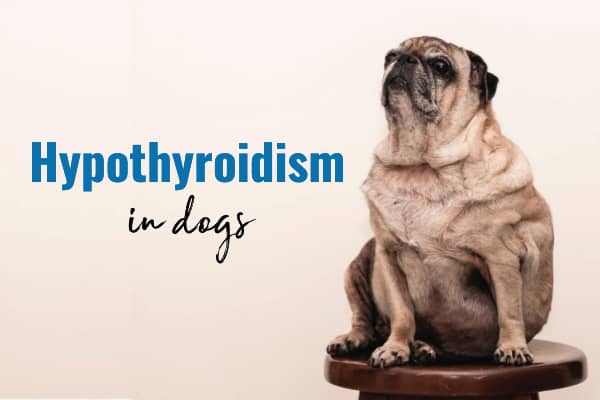
I’m willing to bet that in your circle of family and friends, you know someone who takes medication to manage low levels of thyroid hormone, or hypothyroidism. Maybe it’s even you personally. If so, you’re not alone—an estimated 20 million Americans have some type of thyroid dysfunction.
Hypothyroidism is a common condition diagnosed in dogs. In my opinion, it’s important to take multiple factors, not just T4 levels, into consideration to ensure the diagnosis is accurate. By the end of this article, you’ll see why.
Before jumping ahead, let’s review the role of the thyroid gland and then move on to the markers that yield an accurate diagnosis of canine hypothyroidism.
What is the thyroid gland?
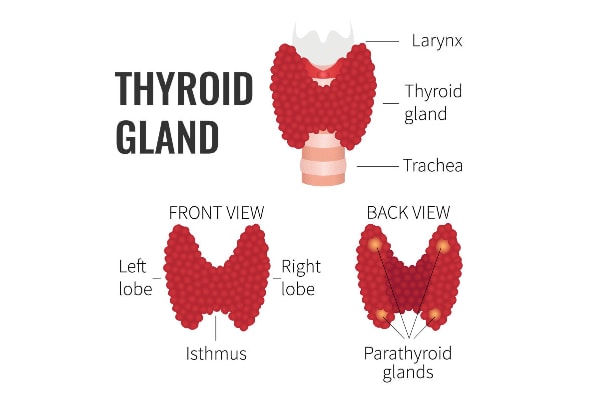
If you remember from high school biology, the thyroid gland is part of the endocrine system. Although you can’t see or feel it, your dog’s thyroid gland sits in his neck on either side of his trachea (windpipe). It produces hormones that regulate your dog’s various body systems. When certain hormone levels dip below a normal range it results in hypothyroidism.
One hormone produced by the thyroid gland is called thyroxine (T4). It is crucial to controlling your dog’s metabolism. When there is not enough of it circulating in your dog’s body, his metabolism slows down and his cells don’t have the energy to do what they need to do.
Diagnosing hypothyroidism in dogs: T4 and the big picture
Before diagnosing hypothyroidism in dogs, it’s critical to understand the big picture when it comes to T4.
Routine blood panels often include a total T4 (TT4) level for good measure. Quite often, however, the T4 value comes back low, causing concern that the patient has hypothyroidism. This is where it gets tricky—hypothyroidism is just one of several reasons for low T4. Dogs can have low T4 values from:
- Age-related changes: It’s normal for circulating blood thyroid hormone levels to decline with age.
- Daily fluctuations: It’s completely normal for T4 levels to rise and fall throughout any given day.
- Euthyroid sickness: Euthyroid means “having a normally functioning thyroid gland.” In this case, there’s nothing wrong with the dog’s thyroid, but the T4 values are low because the thyroid gland is reducing hormone production in response to illness somewhere else in the body.
- Certain medications: Prescription medications, like prednisone, can lower T4 levels. With prednisone, in particular, levels often remain low long after stopping the medication.
How to test for hypothyroidism in dogs
Recently I told a client that I suspected her 7-year-old Golden Retriever was hypothyroid. She replied, “Oh, so I need to get her T4 tested?” It made me pause and say, “Well, yes. That’s a good place to start.”
The TT4 screening test: A good place to start
The TT4 (total T4) is a screening test and no more. If the TT4 comes back in the upper 50% of the reference range, your dog does not have hypothyroidism. A low normal TT4 level could be normal for your dog, or it could be the early stages of hypothyroidism. Regardless, if a TT4 comes back suspect, additional tests must be run to confirm a diagnosis of canine hypothyroidism.
So what’s after an initial TT4 screening?
After an initial TT4 screening that shows low T4 concentration, the gold standard is further blood tests which are usually more expensive. To be practical, compassionate, and work within my client’s comfort level, I generally propose three options:
- Monitor the dog, and repeat the basic blood panel down the road. This option depends on the dog’s clinical status and overall health.
- Run the additional diagnostic testing—pricey but the current gold standard.
- Begin a month-long trial on thyroid medication then repeat the T4 value.
Because option three is often the only viable choice for owners with financial limitations, over-diagnosis can occur. Confusing the matter even further, sometimes dogs feel and do better on the medication, even if they did not have a primary thyroid problem.
The Merck Veterinary Manual confirms this when they explain: “Many diseases and conditions can mimic hypothyroidism, and some of the clinical signs, even in dogs with normal thyroid function, can improve after administration of exogenous supplemented thyroid hormone.”
Here’s what usually happens. A dog owner decides to try thyroid medication for a month after receiving a low T4 on a blood panel. The month goes by, and the dog returns for a follow-up. The owner believes the dog has improved during that month, and the repeat T4 level comes back much higher but not “crazy high.” When this happens, the dog will usually stay on thyroid medication for life.
As long as your veterinarian monitors your dog’s T4 levels every six to twelve months, this usually works out okay. Rarely, I do see toxicosis in dogs from overdosing on thyroid medication. Symptoms of overdose include hyperactive behavior, increased thirst and urination, and heart issues.
A comprehensive thyroid panel to test for hypothyroidism
If a dog owner chooses to run additional blood tests, some veterinarians recommend skipping the screening TT4 test to check a more robust thyroid panel initially. In the long run, this can save time and money. The more comprehensive thyroid panel must be sent off to a reference lab.
One of the most common thyroid panels consists of a TT4, a fT4 (free T4), and a TSH (thyroid stimulating hormone) level. Incidentally, these are all tests routinely run in people, too. TT4 and fT4 are both forms of the thyroxine hormone. Free T4 is less affected by non-thyroid illness or medications (i.e. less false positives) but is also harder to accurately measure, and thus, a more expensive test.
Thyroid-stimulating hormone (TSH) is produced by the pituitary gland in the brain, and it tells the thyroid gland when to produce thyroid hormone. When the body doesn’t want the thyroid gland to produce thyroid hormone, as in cases of euthyroid sickness, the TSH levels are low, leading to low T4 levels.
However, in cases of true hypothyroidism, there is not enough thyroid tissue to produce T4. The pituitary gland senses the low levels of T4 and ramps up production of TSH to stimulate the thyroid gland to increase its production. If the TSH level is high and free T4 or TT4 are low, your dog most likely has canine hypothyroidism.
But in order to know for sure, you also need to look for two other critical markers.
Diagnosing true canine hypothyroidism: Clinical signs
I’ve covered the first marker of canine hypothyroidism—low TT4. But that alone isn’t enough for an accurate diagnosis of hypothyroidism. You, in partnership with your veterinarian, need to note your dog’s clinical presentation and signalment (age and breed).
1. Clinical presentation: signs of hypothyroidism
When considering a diagnosis of canine hypothyroidism, I begin with a thorough physical exam. Several questions run through my mind:
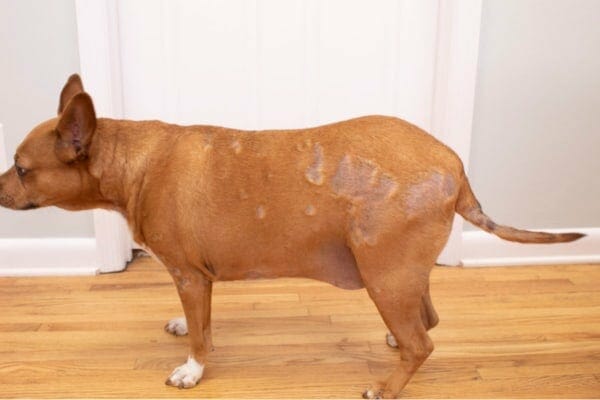
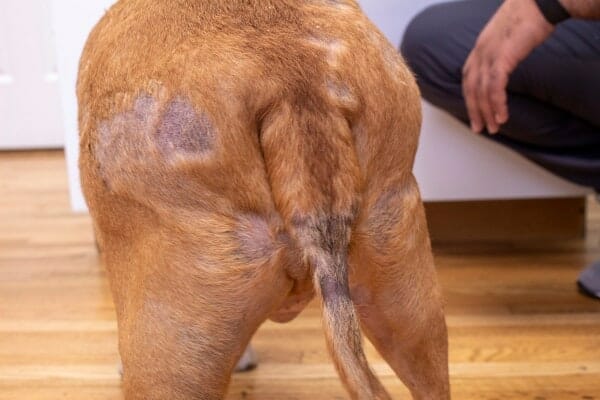
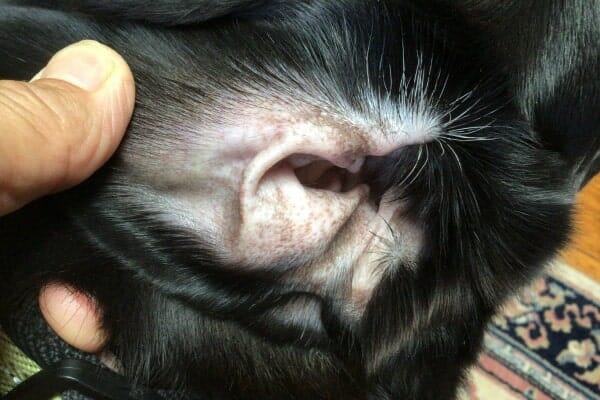
- Does the patient exhibit clinical signs? Symptoms of hypothyroidism include hair loss (alopecia), scaly skin, skin infections, and lethargy.
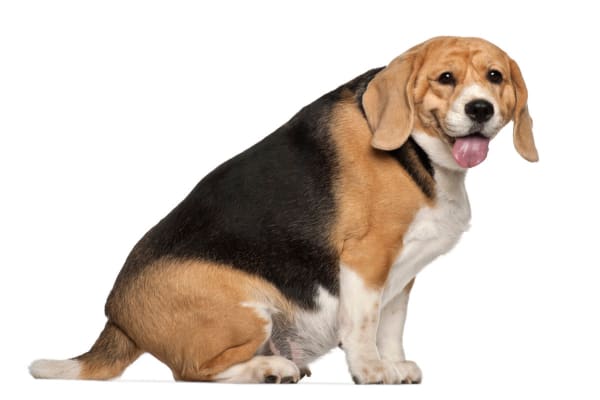
- Does you dog’s body condition score indicate that he or she is overweight or obese? Keep in mind that the most common reason for obesity in dogs is not hypothyroidism—it’s overfeeding and lack of exercise.
It’s interesting that metabolic diseases like canine hypothyroidism can share symptoms with one another. For example, the list above could also fit another metabolic condition called Cushing’s disease in dogs.
As a general rule, I suspect hypothyroidism when my patient has a weight problem plus something else. For example:
- Weight problem plus chronic ear infections in dogs, hyperpigmented (dark) skin with unexplained hair loss in dogs, or a drop in energy level.
- Weight problem plus high cholesterol (even after fasting for the blood test). Over half of truly hypothyroid dogs will display high cholesterol on fasted bloodwork. So this is a great tip-off!
PRO TIP: Since a minimum of a 12-hour fast is ideal, I recommend you schedule your dog’s blood tests for the morning and fast from dinner the night before. During the fast, water is completely fine.
2. Signalment: Age and breed
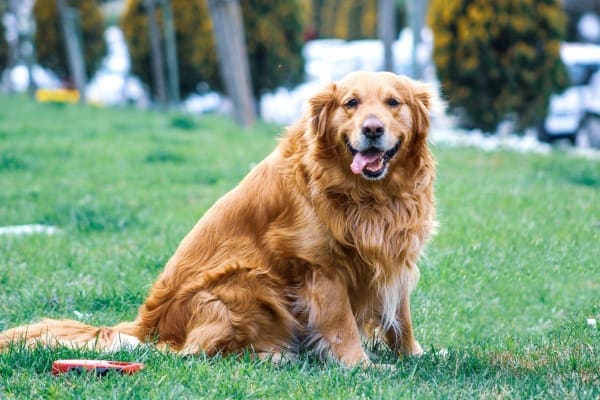
Although hypothyroidism can occur in dogs of all ages and breeds, it’s most common in middle aged dogs around four to ten years old. The average age of diagnosis is seven. Males and females are affected equally, but hypothyroidism is most prevalent in the following breeds:
- Golden Retrievers
- Doberman Pinschers
- Irish Setters
- Miniature Schnauzers
- Dachshunds
- Cocker Spaniels
- Great Danes
As you can tell, this condition usually shows up in medium- to large-size dog breeds. I don’t see it very often in toy or mini breeds.
Now that you know the three markers of true canine hypothyroidism—low TT4, clinical presentation, and signalment—let’s take a closer look at its causes, how it’s treated, and a few atypical symptoms.
What causes hypothyroidism in dogs?
There are two common causes of hypothyroidism in dogs: lymphocytic thyroiditis and idiopathic atrophy.
- Lymphocytic thyroiditis causes the slow destruction of the thyroid gland by the immune system. Genetics do play a role in its development as the autoimmune disease, equivalent to Hashimoto’s disease in humans, may be inherited.
- Idiopathic atrophy is the shrinking of the thyroid gland with no known cause. It occurs when the functioning cells of the thyroid gland are replaced with adipose tissue (fat).
Both lymphocytic thyroiditis and idiopathic atrophy occur slowly over time.
In either condition, you may notice your dog gradually gaining weight, developing ear infections, losing his hair coat, or facing decreased levels of energy. Because the signs come on slowly, you may just think this is the normal aging process for your dog. More than likely, however, after discussing these concerns with your veterinarian, he or she will recommend thyroid testing.
It’s worth mentioning that cancer can also lead to hypothyroidism (and hyperthyroidism, for that matter). However, both are rare. Cancer accounts for less than 5% of cases of hypothyroidism in dogs.
How do vets treat canine hypothyroidism?
Medication for hypothyroid dogs
Treatment for hypothyroidism involves boosting the low hormone with a synthetic (manufactured) hormone called levothyroxine. Most dogs receive levothyroxine twice daily, but some dogs do well on once-daily treatment.
Dosing is not something that you should adjust yourself, so speak to your veterinarian about ideal recommendations for your dog. Finding the appropriate dose for each individual patient also sometimes takes some tweaking, so follow up bloodwork and dose changes are usually part of initial treatment. I also recheck thyroid levels one to two times per year in my well managed patients, just to be sure their dose is still appropriate.
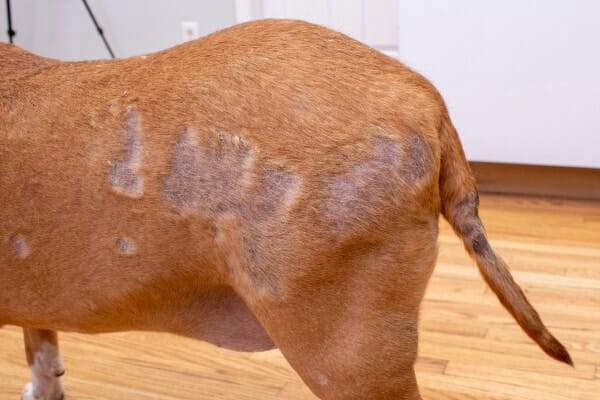
Once your dog starts on levothyroxine, you should expect to see an increase in his energy level within a few days. Skin problems, ear infections, and changes in hair coat may take four to eight weeks before noticing improvement. With treatment, most pet parents notice their dogs develop an increase in appetite and weight loss. I will say, it’s a beautiful thing to see the before and after changes in a hypothyroid dog who has been diagnosed and appropriately treated.
What are the atypical symptoms of canine hypothyroidism?
Although skin changes, weight gain, and lethargy are the most common clinical signs, hypothyroidism can also present with other less-common clinical syndromes like:
- Lipid (fatty) deposits on the corneas of the eyes
- Cardiac arrhythmias
- Megaesophagus in dogs (dilation of the esophagus)
Tragic face in hypothyroid dogs
In moderate to severe cases of canine hypothyroidism, an odd thickening can occur in the dog’s skin called “myxedema.” This is caused by deposits of polysaccharides in the deeper layers of the skin. This thickened skin on the face results in drooping of the eyelids and what we call a “tragic” expression or tragic face. I’ve only seen it a handful of times in practice, but it’s a definite tip-off for hypothyroidism.
Other conditions associated with hypothyroidism
If you’re the owner of a senior dog, something that may be of particular interest to you is that several notorious neurologic disorders have been associated with but are not necessarily caused by hypothyroidism. These include hind-end weakness, laryngeal paralysis in dogs, and vestibular disease in dogs.
Canine hypothyroidism: Two real-life stories
Before wrapping up, let’s look at some real-life before and after stories that put into action all we’ve talked about so far.
Jake’s story: A Golden Retriever’s hypothyroid diagnosis
Jake is a seven-year-old Golden Retriever. When he came in for his first appointment, he was overweight, had a dry coat, and hair loss along his sides and tail. Of course, I raised my eyebrows when his owner reported he was always battling ear infections. I immediately suspected hypothyroidism in dogs based on the total package of his age, breed, and clinical symptoms.
A full thyroid panel confirmed the diagnosis, and Jake started on thyroid supplements twice a day. He started to lose weight within a few weeks, and his family was thrilled to report his renewed energy. It took a few more months, but his hair coat slowly improved, and ear infections became less frequent.
Samuel’s story: A Husky dog’s hypothyroid symptoms
Samuel is not as straightforward as Jake. Samuel is a nine-year-old Siberian Husky. He had been gaining weight over the past three years, but it was written off as decreased activity and too many treats. But then he started to develop frequent dog hot spots along his back that never completely cleared up.
He started acting strange, sometimes seemingly unaware of what was going on and having urinary accidents in the house. Initial blood tests were normal as was his complete blood count. His in-house thyroid level was low normal. We suspected that was due to euthyroid sickness.
Samuel’s symptoms only progressed with more lethargy, skin problems, and continued weight gain despite a strict diet. When blood tests were repeated a few months later, his in-house TT4 level was still in the normal range but had decreased. We decided to send a full thyroid panel to a reference lab.
Results came back—a low normal TT4, low free T4, and high TSH—a classic panel for true hypothyroidism. I made the diagnosis and Samuel started treatment. It took a few months, but I’m happy to share Samuel began to thrive once again.
Talk with your vet and take comfort
If after reading this article you suspect your dog may—or may not—have true canine hypothyroidism, schedule an appointment with your vet as soon as you can.
Armed with knowledge and a deep desire to help your dog feel his very best, I’m confident you’re just a few short weeks away from knowing whether hypothyroidism is his underlying condition or if another common cause of low T4 plagues your beloved companion.
Either way, take comfort in the fact that you’re doing everything you can to help your dog live the healthiest life possible.
Does your dog have a hypothyroidism diagnosis?
What symptoms tipped you off to the problem? Share in the comments below. We’d love to hear your dog’s story.


What a great article with helpful info!
My 5 year old German Shepherd had always had skin issues (dandruff, dull coat), we tried supplementing with salmon and oils at breakfast. He seemed to be gaining weight so we cut the treats in half and managed to lose 10 pounds. Back to the vet since he seemed to tire easily and he had a bald spot on his tail. Turns out he is extremely low and was put on 2 times a day meds. Hoping his coat and energy improve. He seems more hungry since we started but his energy does seem better.
Hi Karen,
Thanks for the positive feedback about the article. I’m so glad you were able to get a diagnosis for your Shepherd and start treatment to help turn things around. Hoping for continued success and wishing your sweet girl all the best!
Hello, my name is jenny and I have a almost six year old golden retriever.Named pearl
A few years ago, she was showing hind end weakness, lethargy, which was chalked up to just being a lazy dog. Many times over and she seemed to be gaining. WeightAlthough I don’t overfeed her not a lot, but she definitely was gaining.Weight, the tip-off was her coat on the sides. Her tail and in particular, her nose hair was looking sparse and missing. The last straw was I noticed for a year or so the skin on her belly. In other areas looked dark instead of pink!! It seemed like nobody paid attention to any of these symptoms other than me! she went in for yearly blood test and usually the T4 came back fine. Although the last one a little lower, nobody again mentioned anything..
Finally, I had to take her in for some x.Rays because i wanted to know what was going on with her backend incidentally, they found nothing, but that’s when the kicker they found out she had a very low thyroid and put her on medication!! you think they would have caught this before?Because I come in for a yearly wellness visit, but they didn’t. With that, they put her on medication and within 8 weeks, she lost 10 pounds. Her energy level ramped up tremendously, you could see her fur growing back, and her skin slowly turned pink again, and she grew hair back on her nose and sides!! the only thing really, she’s having issues with now is she does not come in heat normally, she is UN. Altered, and it’s been 18 months since her last heat, which is nothing unusual for her. However, I thought maybe it’d be thyroid related, and once she was on meds, it would regulate, but it has not I still can’t figure that one out!! no other concerns otherwise everything is great! she does tend to drink a lot but besides that, everything else is top-notch. Wish I could figure out the reason she doesn’t come in. Heat on a regular basis, but since I’m not breeding her and I’m a responsible owner, and it is recommended not to fix golden retriever. Females, through much research, which I’ll be glad to share if you’d like it. She does fine!!
Hi Jenny,
I am so glad Pearl is feeling great and back living her best life! What a blessing you finally obtained a diagnosis, and the treatment helped so quickly. I am not sure why her cycles have been disrupted, other than this could be a normal age-related change that coincidentally happened at the same time as her thyroid treatment. As long as she is feeling well and there are no signs of a uterine infection, I would not worry about the cycle changes. Thank you for sharing your experience with us! Wishing you both many happy years ahead and keep up the great work!
GOOD MORNING Dr. BUSBY!
we have a pair of Bluetick hounds, Elwood and Jake Blues, and they are almost 7 years old.
a month ago, Elwood (who is 115 lbs. without overfeeding) started having siezures. We took him 3 times to the veterinary hospital we’ve been going to for several years now and Dr.K pinned it down to possible Thyroid problems and sent blood samples away for clinical testing as ultrasounds, xrays and a MRI did not show anything abnormal. tests came back and hypothyroidism was the diagnosis. Elwood is now 3 weeks into his Thyroid medicine and is doing well. I cannot stress enough how precise we have to be on his taking his medicine on time. I was 3 hours late one day and he has a seizure that evening. Bad dog mommie! he is also heat/cold sensitive. Has anyone else reported these symptoms?
Hi Carol,
Goodness, you have been through a lot in the past couple months! I am sorry Elwood is living with thyroid disease but glad you have a definitive diagnosis and treatment plan. Yes, other readers (and my clients) have reported similar symptoms. It is crazy to think of all the things in the body that are affected by thyroid function! Hoping Elwood can maintain his quality of life and praying for continued success. Thank you for sharing your experience with us and keep up the good work. ♥
I noticed my 12 year old Catahoula Leopard dog named Zeus was having skin problems. Constant digging and scratching the skin, massive hair loss, including his tail, and darkening of the skin in the groin and leg area. We started with Apoquel and frequent baths thinking it was allergy related, Still no change! Then i noticed he did not want to take his walks and was pretty lethargic. In June 2024 Zeus had bloodwork drawn for a procedure and his T4 was on the low side of normal. But once the symptoms above got worse, i asked the Vet to test him for hypothyroidism. You see I also suffer from hypothyroidism and had to fight to get treatment, and now Zeus was exhibiting the same symptoms, and I was prepared to fight to get him treated! Zeus was tested earlier this week. His T4 level (and Free T4, which i requested they do) has decreased drastically. He started on Levothyroxine today (8/21/2024), and. I am praying I see a positive change. I miss our daily walks exploring..
Hi Cassandra,
I am sorry Zeus is facing this difficult disease. He is a lucky boy to have you advocating so strongly for his health and well-being. I hope you will start to see an improvement now that he is taking the levothyroxine. Wishing you both all the best and praying for many happy days ahead.
We adopted an approx 5 yr old white boxer 1st part of April and being a typical boxer, loves people, especially children, exuberant, a cuddles and always with a wiggle butt.. I feed him and my husband walks him. Nothing has changed in his routine, eats and drinks well, walks 2 miles per day, and does not seem to be in any discomfort except for some bumps on his front paw we are keeping under with Vetricide and a single Benadryl 25 mg every other day. The other day when I stood up he gave a warning nip to my face, after trying to show dominance by an unwavering stare for several minutes. Both behaviors are very out of character. I can’t help but be somewhat aloof from him as I was quite startled by this reaction. Since then he continues to stare at me and is on alert once he hears my voice. No such behavior towards my husband, but is not obsessed at coming between us. Could this be hypothyroid? I have a friend who runs a very well known rescue in Southern California and she suggested I have a vet look at that? I am not seeing unusually odd or aggressive behavior as a symptom, what are your thoughts?
Hi Sandie,
I am sorry you are facing this very difficult situation with your Boxer. While hyperthyroidism could be contributing to this issue, I would want to rule out other more serious conditions as well. Without examining your boy myself, it is hard to make specific conclusions. Also, please make sure you are not putting yourself or others at risk. Even if there is a medical cause for this new aggression, you have to make sure you are safe. Hoping for answers and a clear path forward. Wishing you all the best as you navigate this hard path.
My dog went for her annual check up and mini blood work. Vet said her red blood count was low and she was anemic. . Then he wanted urine check and xrays. Urine test was fine and he decided not to do exrays Said she has a tyroid problem. No t-cell check was done though. He wants my dog to start on thyroid meds.
My dog is a silky yorkie, 14 years old and 10lbs. She has lost weight in the past couple yrs. she had gotten up to 12 lbs a few hrs ago.. Her coat is thick and shiny, she eats very well. Has very regular bathroom habits and never had any health issues before. I don’t know what to do. I’m not trusting my vet at this point.
Wilh no t-cell check why would he put her on thyroid meds?
Hi Gail,
I understand your concern for your little pup. Unfortunately, without playing a personal role in her medical care it is hard for me to make assumptions about the choices that have been made. It is possible a thyroid level was included in the original lab work (and not sent out individually) as it is commonly found on most senior blood work panels. I would encourage you to have an honest conversation with your vet and make sure they are aware of your concerns and questions. It is likely this confusion is due to a lack of communication. Of course, you are always able to seek a second opinion if needed. You deserve to feel comfortable and confident with the care your girl receives. Hoping you can get the answers you need to take away any doubt and hesitation when it comes to starting treatment. Wishing you and your sweet girl all the best.
Thank you for this extremely thorough article! My 4.5 year old basenji has struggled with dietary sensitivities all his life and takes Budesonide daily to reduce his IBD symptoms – with this medication we’ve been able to generally avoid the chronic vomiting, diarrhea and lack of appetite that he demonstrated despite being on a Hydrolized Protein diet. Due to his skin sensitivities, hair loss and lethargy the breeder recommended I order Emilio a full thyroid panel, since Basenjis are prone to develop hypothyroidism. The panel diagnosed a very high TSH (.69) and normal Free T4. Emilio was then put on 2 daily doses of .2mg of Thyroxine. A follow up blood test confirmed normal TSH ranges after treatment. It has been exactly a year since we began treatment – Emilio’s skin condition has not improved, he gorges himself with water and I am noticing some noticeably more rapid breathing than before. It is very hot out right now, and I often have to carry Emilio home after walking him a block to relieve himself. Aside from the thyroid panel results, none of the symptoms I’d hoped to address with the treatment have had any noticeable change. In the meantime I’ve found that applying olive oil topically to his skin has dramatically improved his coat. With this in mind, aside from a check-up thyroid panel (which is overdue regardless, since he started treatment a year ago), what other options may I want to consider? May a reduced dosage of Thyroxine be of use? Should I consider a trial period of no dosage whatsoever? Thank you in advance for any feedback.
Hi Matteo,
I understand your concern for your pup and think he is very lucky to have you advocating for his health and well-being. It can be very difficult to manage symptoms when dealing with more than one condition at a time. You are doing a great job! Without playing a personal role in your boy’s medical care, it is hard to make specific recommendations. I would be hesitant to alter the thyroxine dosage especially since his lab work showed favorable results. With the skin problems, excessive drinking, and panting, I am a bit suspicious these could be side effects from the budesonide. These are all common side effects of steroids. I think it would be good to talk to your vet and see if this needs further investigation. Hoping you can get the answers you need to get your pup back on track. Praying for clarity and wishing you all the best.
My Maltese is seven and over the past eight months we’ve noticed a change in him. He’s become lethargic, thinning coat down his back and thinning tail, weight gain but eats a healthy diet, fearful, nervous and can no longer jump onto the sofa. He hates going for walks and refuses to mix with other dogs. I took him to the vet and a blood test was done, result of low thyroid but a second test had to be done to confirm hypothyroidism which came back negative. Now for reasons beyond my control I had to change vet who’s spoken with another vet and concluded that it could be Cushings ! The problem is this, yes he’s got all the symptoms of Cushings bar the important one which is drinking excess water, my dog drinks very little water The vet monitored this and still a Cushings test was scheduled for today but upon reading more about hypothyroidism in dogs I decided to request a repeat test instead of the Cushings and he agreed.. A total T4 panel was done yesterday. . I should get the result of that in the next few days. Regarding Cushings in dogs is it possibly he could have that even though he drinks very little water. Thanks in advance.
Dear Marilyn,
I am sorry you are left with more questions than answers despite all the testing your pup has been through. Unfortunately, these diseases can be tricky to diagnose and it’s very important to get things right before administering medication. I hope you have received the results from the Cushing’s test and thyroid panel and have found a clear path forward with treatment. Feel free to leave an update and let us know how things are going. Wishing you all the best and praying for a positive outcome.
Here is a link to an article all about Cushing’s disease that may offer additional information: Cushing’s Disease in Dogs: Symptoms, Diagnosis, Medications
I noticed my dog (golden, male, 8 years) has a darker patch above his nose. When comparing with a photo dating November, it’s very clear.
Now I posted this photo in our Golden FB group and two people suggested he might have hypothyroidism.
Now I can assure you he has no other symptoms mentioned in the many articles.
Do I need to have him tested, or wait and see?
What else could it be?
Hi Christina,
I understand your concern for your Golden with this change in pigment on his muzzle. While thyroid issues can cause changes to the skin pigment, so can several other disease processes. I do think it would be wise to have your vet take a look at him. I encourage my clients to have lab work checked yearly even if there are no signs of illness. This is a great way to monitor trends and catch issues very early so we can intervene before there are negative effects for their dog. Most senior wellness panels include a thyroid level. I recommend you talk to your vet and see which tests they think would offer the most benefit for your boy. Hoping all is well and wising you both the best of luck.
My dog (7 yo Great Dane) was recently diagnosed with Hypothyroidism. I originally took him in to look at a lump under his front leg. A couple weeks later I took him back because his eyes were more red than usual and both his lower and upper third eyelids were showing. She did some blood work and prescribed some eye drops. She called with the results and then gave the diagnosis of Hypothyroidism and prescribed medication. I came across this article and now I’m second guessing. My dog did put on quit a bit of weight, seemingly quickly. He has no hair loss, dark patches of skin nor any ear issues. He simply is not the same dog. He’s only been on the 8mg thyro-tabs for just over a week now but no change yet. He sleeps all day…most days about 20hrs, only waking to eat, drink and go the bathroom. He shows no interest in playing or even wagging his tail. It’s so sad. I took him to the river, his favorite place, but not even one tail wag.
Dear Susan,
I understand your concern for your Dane with these worrisome symptoms he is exhibiting. I am a bit surprised you haven’t noticed any improvement since starting the thyroid medication. It does make me suspicious that something else could be contributing to these issues. Without examining your boy myself, it is hard to make specific conclusions. It may be a good idea to do more in-depth testing or even talk to your vet about a referral to a specialist. Hoping you can find the answers you need to restore his health and quality of life. Wishing you both the best and praying for a positive outcome.