A dog paw pad injury can run the gamut from burns to cuts or punctures. To help you know what to do if your dog has a hurt paw pad, integrative veterinarian Dr. Julie Buzby describes the types of paw pad injuries. Plus, she gives step-by-step first aid instructions on what to do for paw pad injuries and explains when to call the vet.
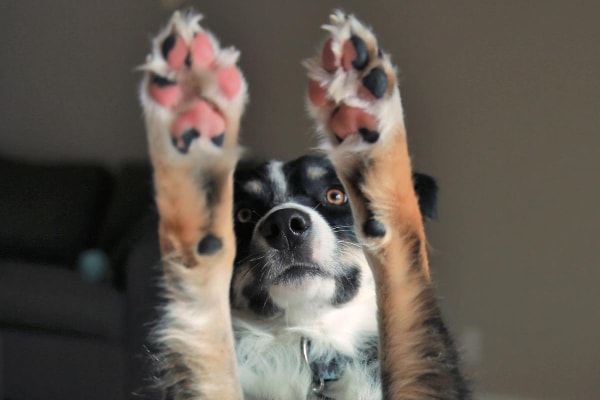
Recently, one of my clients brought her Labrador Retriever, April, to see me for a paw pad injury.
When April started limping during her daily walk, her mom discovered that April had stepped on a sliver of broken glass. Thankfully, my client had previously taken classes about “doggie first aid,” so she was well prepared. She gently removed the sliver of glass from April’s paw. And then she cleaned and bandaged the paw and made an appointment with me.
As I examined April’s injured paw, I commended her mom on a job well done. The paw looked great and the bandaging job was excellent. Her first aid classes had definitely paid off.
Not all dog parents may have had the chance to take a course like that though, so I wanted to write this article to provide guidance about recognizing and treating paw pad injuries. But before we get to that, let’s start with some paw pad basics.
Why are a dog’s paw pads important?
Have you ever heard the saying “put your best foot forward”? Usually, this refers to entering a new challenge or situation with a good attitude. But literally “putting their best foot forward” is also important for our dogs.
What I mean to say is that your dog’s paws play a big role in his or her well-being. The muscles, bones, tendons, and ligaments help your dog walk, run, or play. And doing so comfortably and securely is made possible in part by your dog’s paw pads.
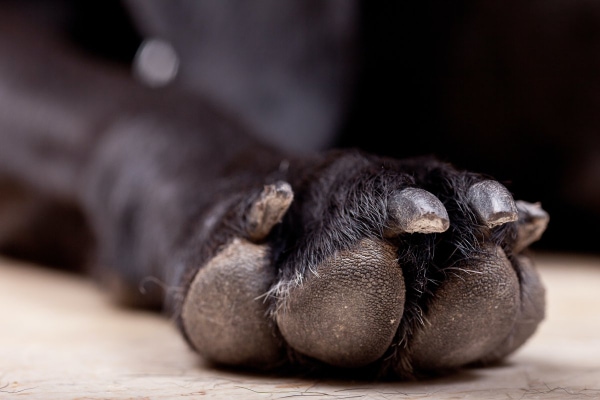
These thick, squishy foot pads provide cushioning and absorb impact every step your dog takes. This reduces the strain on the bones and joints of your dog’s foot.
Plus, in combination with the toenails, the foot pads provide traction as your dog walks. And they help him or her navigate rough terrain. Last, but certainly not least, the paw pads protect your dog from extreme temperatures.
(To learn more about the amazing anatomy of your dog’s paw, check out my article on dog paw anatomy.)
What are some types of paw pad injuries in dogs?
The paw pads are in constant contact with the ground and are exposed to many elements that can cause wear and tear. This opens them up to a variety of injuries including:
Foreign bodies
One of the more common foot injuries I see in my patients is a foreign object puncturing the paw pad. Various sharp objects such as broken glass, foxtails in dogs, nails, sticks, fishing hooks, and more can become embedded in the paw pad.
Cuts
If a sharp object doesn’t get lodged in the pad, it could cause a cut instead. Paw pad cuts are another common injury since one of the pad’s jobs is to protect the rest of the foot from coming into contact with dangerous objects. These cuts often happen when a dog slices a foot on something sharp. However, dogs can also get non-traumatic cuts if they have dry paw pads that crack and split open.
Flaps
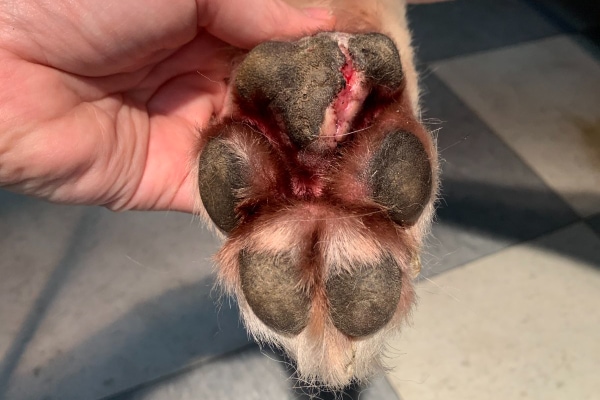
Paw pad flaps are very similar to cuts but tend to cover more surface area on the paw since they run roughly parallel to the surface of the paw pad. Typically, a flap will occur when something slices the dog’s foot horizontally.
For example, if your dog’s foot becomes tangled in sharp wire or metal, it might partially shave off a section of the paw pad. This creates a loose flap of skin. Flaps can also happen if a cut is left untreated. As the cut becomes larger, eventually the tissue may tear, forming a flap.
Sometimes the flap hangs down from the foot, but other times it partially folds back over the exposed tissue. Generally speaking, flaps are more painful than cuts. Each step your dog takes pulls on the loose skin and irritates the flap.
Burns
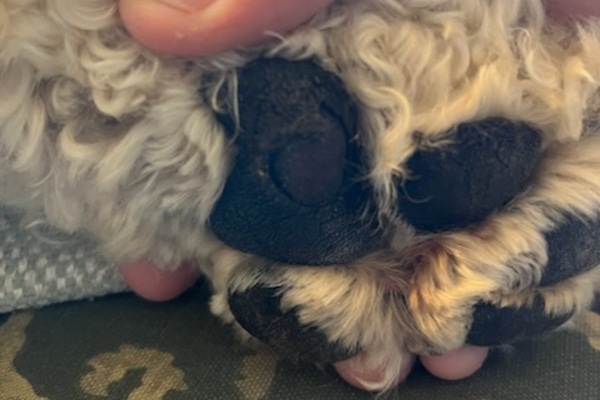
Unfortunately, I see a lot of pad burns in my patients too. These usually occur in the summer months as the sun heats up the asphalt, concrete, artificial turf, or other surfaces. Even on a seemingly pleasant 86°F day, the pavement can be a blistering 135°F. Unsurprisingly then, when your dog walks on hot pavement, it can physically burn his or her paw pads.
On the other hand, extremely cold temperatures, like walking on ice for a prolonged period of time, can also burn your dog’s paws. And walking on ice melt products can cause your dog’s paws to become dry, cracked, or burnt too.
Finally, walking through spilled caustic substances can cause chemical burns on your dog’s feet. And spending a long time running over abrasive surfaces like tennis courts can also burn your dog’s paw pads.
Ingrown toenails
Sometimes overly long nails can begin to curl toward the paw pad. If the nail gets long enough and has no where else to go, it may create a penetrating wound in the pad.
Not only are ingrown toenails extremely painful for your dog, but they can also cause a paw pad infection by trapping dirt and bacteria in the wound.
This is one of the many reasons why I believe trimming your dog’s toenails monthly is so important. If you aren’t comfortable doing them yourself, check out my Nail Trimming Master Course or reach out to your veterinarian for help.
What are the signs of a paw pad injury?
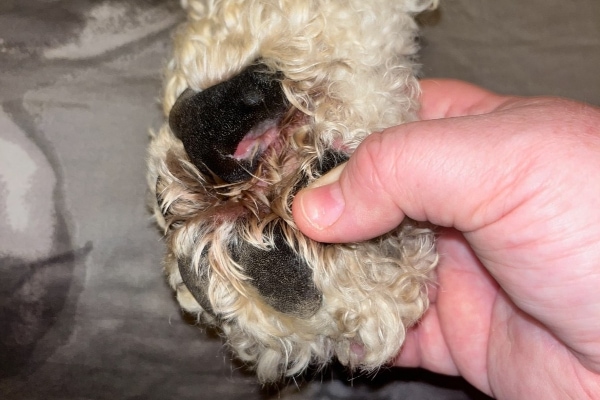
If your dog experiences any of the paw pad injuries listed above, there are several symptoms you might notice:
- Sudden lameness (your dog is limping)
- Crying out when putting weight on the affected paw
- Being unwilling to put pressure on the paw
- Bleeding from the paw pad
- Licking or biting at the paw
- Swelling of the foot
- Discoloration or reddening of the paw pad
- Visible cut, flap, puncture, or object in the paw pad
- Discoloration of the hair on the foot
If you notice any of these symptoms, carefully inspect your dog’s paw. Depending on what you find, there may be some helpful first aid measures you can take until you can get your dog to the veterinarian.
First aid for paw pad injuries
To get a better idea of what is going on with your dog’s paw, and to learn what to do for your dog’s paw pad injury, follow these steps:
1. Evaluate your dog as a whole
Comfort your dog and assess his or her attitude. If your dog is severely painful, you may not be able to safely look at his or her foot by yourself. Even the nicest and most well-behaved dog can react negatively when in pain.
If your dog does not want you messing with the injured paw, please seek veterinary care rather than attempting to follow the rest of the steps.
2. Take a closer look at the paw
If you feel it is safe to look at your dog’s paw, carefully inspect the top and bottom, the paw pads themselves, and the area between the toes and paw pads. It is important to know if your dog has a cut, flap, puncture wound, burn on the paw pad, if your dog ripped a nail off, or if there is no visible injury.
Depending on the problem and injury, you might need to provide different types of first aid care. The following steps are specific to paw pad injuries…
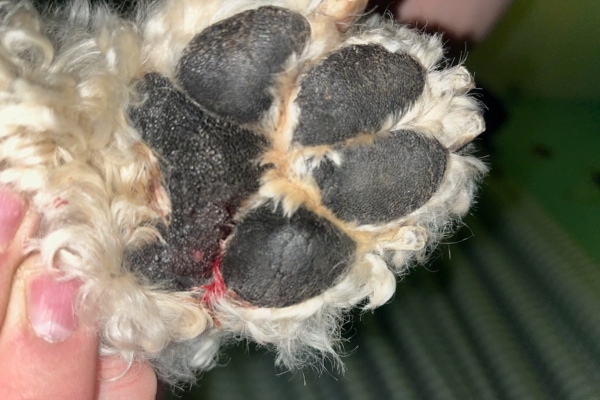
If there is an object in the paw pad, go to step 3a. Otherwise, proceed to step 3b for a bleeding wound or step 4 for a burn or non-bleeding wound.
3. Remove foreign objects (if present and safe to remove) and apply pressure to stop the bleeding
3a. If your dog has a small or superficial object puncturing the paw pad, you may be able to remove it with your fingers or tweezers. But if the object is deeply lodged or possibly puncturing a blood vessel, nerve, or joint, do not remove it yourself. Instead, make an emergency vet visit.
3b. If the wound is actively bleeding, apply pressure evenly with a clean cloth or paper towel. Minor wounds should stop bleeding within a minute or two. But, if the cut keeps steadily bleeding for 10 to 15 minutes, you should contact your vet immediately. This could be an emergency.
4. Clean the wound
Once the bleeding has stopped, it is a good idea to clean the wound. I recommend doing so with cool water because it can help reduce swelling and ease pain, especially if your dog is suffering from a burn. You can also use gentle anti-bacterial soap, or disinfecting agents like chlorohexidine or betadine, to help remove bacteria and prevent an infection.
Remember that as you clean the wound, it might start bleeding a little again. If this happens, gently apply pressure until the bleeding stops.
5. Apply a bandage
In order to keep the wound clean and safe from further injury, you might need to bandage your dog’s foot. (Or if you don’t have bandaging materials, wrapping a clean towel or T-shirt around a bleeding wound while you make your way to the vet will also work in a pinch.) When applying the bandage, it is important to use clean materials like gauze and vet wrap. For detailed instructions, please read my article about how to wrap a dog’s paw.
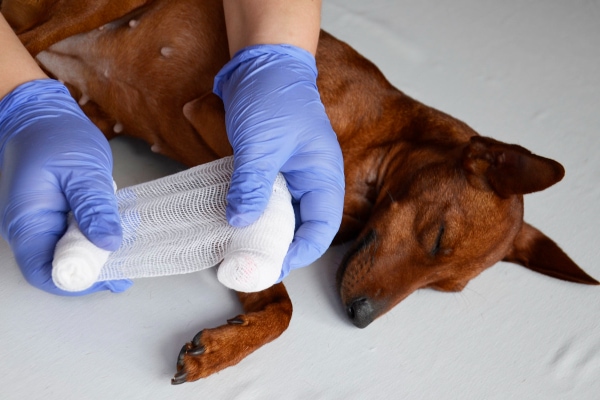
Remember that a bandage that is too tight is far worse than no bandage at all. Please ensure that you can insert one to two fingers into the top of the bandage. If not, it is probably too tight. Also, watch for signs that the bandage is cutting off your dog’s circulation. Signs to look for include swollen toes (if sticking out of the bandage) or a foot that is cool to the touch or discolored.
6. Contact your veterinarian
Even though you provided first aid for your dog’s paw, it is important to follow up with your vet to see if any additional steps are necessary.
While waiting for the veterinary appointment (if one is needed), check and change the bandage daily. This allows you to monitor the wound for changes or signs of infection. And regular bandage changes also decrease the risk that the bandage is restricting your dogs circulation.
How will the veterinarian evaluate a dog’s paw pad injury?
During the appointment, your veterinarian will start by performing a physical exam on your dog. Although the main problem is your dog’s paw pad injury, the vet will probably want to do a full body exam to ensure your dog doesn’t have any other injuries.
Then, while examining the foot, he or she will look for cuts, punctures, burns, or other injuries. Plus, he or she will likely palpate and manipulate the bones and joints of the foot to check for issues with those structures.
If your vet suspects there is an object (like a foxtail or metal nail) deep in the foot, he or she may also recommend an X-ray. This can be a good way to help determine if the wound involves the bones or joints. Plus, especially with a metal object, the X-ray helps the vet assess the position and location of the foreign body.
How does the vet treat a paw pad injury?
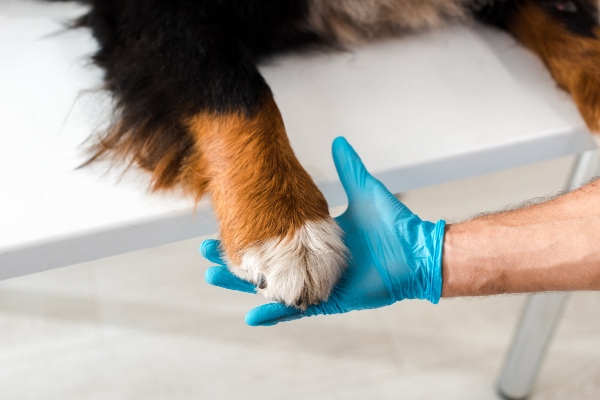
Depending on the location of the dog pad injury, the vet may want to trim the hair on the affected foot. This will allow better visualization of the dog foot pad injury and helps keep the wound clean. Then your vet will clean the wound and remove any debris or foreign objects.
If your dog has a cut or flap, your veterinarian will probably not suture the pad closed. I know this may seem odd because usually getting a deep cut equals needing stitches.
The paw pads are a bit different from other areas on your dog’s body, though. They don’t usually hold stitches very well. Because they encounter so much friction and movement, the sutures can easily be torn out. And in many cases, suturing the pad does not speed up healing time.
However, bandaging the foot can be very helpful. If there is a cut or burn, your veterinarian might apply an antibacterial ointment or soothing cream to promote healing and decrease pain. Next, he or she will apply a bandage. This bandage serves many purposes:
- Controlling bleeding
- Decreasing the chances of re-injury
- Keeping the wound clean
- Containing the medication that is applied
- Preventing your dog from licking or chewing on the wound (but sometimes the dog needs an E-collar too)
As your veterinarian is applying the bandage, be sure to listen carefully to the instructions. He or she will direct you regarding how often to change the bandage, what materials and medications to use, and if you need to bring your dog back in for rechecks.
Be patient and stay in contact with your vet
As your vet will probably explain, paw pad injuries can take time to heal since your dog is constantly using the foot. Remember to be patient with the process. Follow your vet’s instructions and contact your vet if you suspect your dog’s injury isn’t healing well.
(And keep in mind that, as discussed earlier, it is important that you don’t place the bandage too tight. Foot and toe swelling from a too-tight bandage is one of the most common complications I see with paw pad injuries.)
How do I prevent future foot pad injuries?
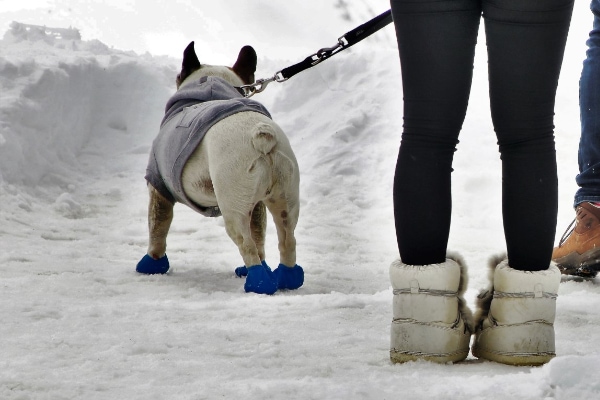
While sometimes an injury is unavoidable, there are a few precautions you can take to prevent paw injuries. They include:
- Avoid exposing your dog’s feet to extreme temperatures. This may mean timing your walk so that it isn’t in the heat of the day (which also helps avoid heat stroke in dogs) or revising your route so your dog isn’t walking on hot sidewalks. Remember that if you can’t comfortably hold the back of your hand against the pavement for 7-10 seconds, it is too hot for your dog to walk on.
- Consider protective dog booties like PawZ dog boots. These rubber boots are thin enough to allow your dog to sense the ground while also providing protection against ice melt products or extreme temperatures. They can also be great for keeping a bandage clean and dry while outside. (As a word of warning, remove the PawZ boots once you come inside. They could compromise your dog’s circulation if left on too long).
- Wash your dog’s feet off after winter walks to remove any ice melt products (and do the same if you suspect your dog walked through any other chemicals).
- Try out thicker dog boots or socks to protect your dog’s feet if walking where there could be sharp rocks, trash, or other dangers. Be warned, though, that these types of dog boots tend to make it harder for dogs to sense where their feet are (i.e. proprioception in dogs), so they aren’t my favorite products.
- Carefully inspect your dog’s feet (and whole body) for foxtails after every trip outside if you live or visit somewhere where foxtails are a problem.
- Regularly trim your dog’s nails to keep them from growing into the pad.
- Keep your eyes open for hazards along the path or trail.
You can provide paw pad injury first aid for your dog
While all of these prevention strategies are helpful, I also want to remind you of the importance of being prepared for possible injuries ahead of time. If you don’t already have a dog first aid kit, now is a great time to make one for your house and one for your car or backpack. You never know when you might need it!
Hopefully, your dog doesn’t ever get a paw pad injury. But if he or she does, remain calm, grab your first aid kit, and follow the steps I outlined for you in this article.
I believe that you can provide first aid to your dog. But when in doubt, remember to contact your veterinarian for advice. He or she can help you manage your dog’s pad injury so that your pup can be back to playing in no time!
Has your dog ever had a paw pad injury?
Please comment below.


Hi, my 2 year old golden retriever is constantly ripping his paw pads playing inside from sliding on the carpet and floor. Never anything terrible but takes a bit to heal so my vet suggested getting him to play outside more. I don’t have a yard so I had him try a doggie play group for the first time today (he had a great time!) They played in a dirt back yard, and now another huge rip on his paw. It’s not always the same spot and is only from when he plays. My vet basically said get him boots or have him play less…I’ve never had success with boots that fit and then have read about dogs getting sprains or other injuries because of the boots or them not fitting. So am really at a loss for what to do for my boy. Any thoughts you have would be amazing.
Hi Kelsey,
I am so sorry your boy is constantly injuring his feet. I have often dealt with paw pad injuries from a dog playing on a rough concrete surface but have not had a patient that suffered an injury while on carpet or dirt. Your boy’s paw pads seem to be extra sensitive and I’m really not certain what the cause would be. You could try slow daily walks on a rough surface to see if you can encourage the pads to toughen up a bit and maybe start to form a callus. You may also want to look into paw pad stickers to protect the pads during play. I am generally not a fan of products that have to be adhered directly to the pads or soft tissue surfaces, but they may be a short-term option for your pup. Is there a specific type of play that seems to cause the most issues (tug of war, making sharp quick turns, etc.)? Maybe there is a way to discourage the problematic behavior without taking away play all together? Hoping you can find a way to keep your boy’s feet protected. Please let us know if you find a solution and keep us updated on how things go.
I am on a holiday and my dog got into a scuffle with another dog. She has a small chunk of her pad missing. We cleaned it and wrapped it with gauze. She is limping around and I am sure it will be very tender for awhile. Is there anything else we can do for her. Any ointment? How long should we keep her paw wrapped in gauze?
Hi Denise,
I am sorry your pup received this painful injury to her paw pad. It sounds like you have done a great job tending to this wound, but I still think it would be a good idea to have a vet take a look at your girl. These types of wounds can take a while to fill in with new tissue and heal, often requiring daily bandage changes. Be careful about applying gauze directly to the wound. We always try to use a non-stick pad under bandage material to make sure the gauze does not become adhered to the wound which would then require the gauze to be pulled off (often re-injuring the tissue underneath). If the injury was due to a bite, it will probably need antibiotics as these are at a high risk for bacterial infection. Also, a vet will be able to prescribe something for pain and inflammation to make sure your girl is comfortable during the healing process. Hoping you can get your girl the care she needs and praying for a quick and easy recovery.
Hi, I recently adopted an almost 2 year old Australian Kelpie, Buddy, who is very active and absolutely loves to run and play fetch. I’ve had him for almost 2 months now. Over the past week we haven’t been quite as active as normal, especially with running on harder surfaces like roads, sidewalks, and large open parking lots where I usually throw his favorite thing in the world, the Chuckit ball. He is insanely fast and runs as far as I can possibly throw it. He honestly runs like a racing horse, I kid you not. We do also run on grassy fields when we can so he gets a mix of surfaces.
After being less active for about a week and mostly just doing mild walks, we played fetch today and afterward I was checking his paws and nails like I normally do. He does have a grooming appointment in 2 days to get his nails trimmed because they definitely need it. While checking his paws, I noticed a small flap on one of his pads that seemed tender when touched. There were no signs of bleeding or anything obvious, but he has black paw pads so it’s hard to tell if there’s redness or swelling.
While I was assessing it, he actually ended up chewing the flap off himself. Honestly, it almost seemed like that may have been the better option instead of me trying to trim it and risk it snagging on something. It looked more like peeling skin from the pad, kind of like when a human gets peeling skin from an old blister or callus.
Should I be concerned enough to take him in or even bother covering it? It doesn’t really look deep and seems pretty surface level. I’m really torn on what I should do (no pun intended) because I feel bad for not keeping up with our normal activity routine lately due to school and work. But at the same time, it really doesn’t seem to be bothering him much right now.
Any thoughts? Thank you in advance.
Hi Katy,
I am sorry Buddy injured his paw but glad to hear it doesn’t seem to be bothering him. Without being able to see his paw myself, it is hard to know if this is cause for concern or not. But generally, if there is no swelling, drainage, or bleeding and Buddy is not painful, walking normally, and not licking the wound, then you may be ok to keep monitoring at home. I do imagine this has to cause some level of discomfort, and your boy may benefit from a pain medication. If at any point you become concerned or can’t tell if the wound is healing normally, then I would definitely recommend a visit to your vet. Hoping all is well and praying for a full recovery for your sweet boy.
Both of my dogs sliced open their feet on a sharp metal edge outside, my golden retriever got the worst of it where it went deep into the ankle and affected the joint… he’s under veterinary care for 6 weeks. My Aussie on the other hand got it much better, sliced open her largest pad down to the fat layer, maybe beyond. After two attempts at sutures and $800 later I decided to ask the vet if I could do my own wound care, they gave me ointment and while we’ve been battling her tearing her bandage… it’s slowly healing. There is a whitish rim around the wound now.
Hi Desiree,
Goodness what a mess! I am so sorry you are dealing with these severe injuries on both of your dogs. I am glad to hear that your Aussie’s wound is starting to heal and pray you will see similar results with your Golden. Wishing you all the best of luck and feel free to keep us updated on how things go.
Please HELP!!
We neglected our pup’s nails and one ended up puncturing his paw pad. We’ve since removed the nail a few days ago. It does not bleed anymore. Seems to have grown a scab where the puncture is.
I’ve given his paw a simple epsom salt soak a couple times. Applied a small ice pack, for a couple minutes in hopes to reduce inflammation/swelling.
I wrap it every day after I treat it as stated above, and let it air dry/breathe for awhile.
Anything I can do to speed up the healing? I cannot afford to take him to the vet, so I am looking for the best remedies/treatments I can do from home.
Thank you in advance for your advice!
Hi Jay,
I am sorry your pup sustained this injury to his paw pad. I understand how financial concerns cam limit the options and it sounds like you have things under control. I would not recommend putting anything else on the wound as it would probably just make your boy want to lick. Just continue keeping it clean and dry and let the body do its healing magic. Do make sure to monitor the wound closely and if there is any sign of continued swelling, redness, drainage, or pain, get your pup seen by a vet as soon as possible. Hoping all is well and praying for a full recovery for your sweet boy.