Hearing a diagnosis of bladder cancer in dogs can be distressing as a dog parent, but integrative veterinarian Dr. Julie Buzby is here to help. Learn the signs, diagnosis, treatment, and prognosis for the most common type of bladder cancer, transitional cell carcinoma in dogs. Armed with that information, you will be ready to help and support your canine companion in his or her battle with bladder cancer.

Sally was a twelve-year-old female spayed Scottish Terrier who had been the picture of health. But now she was asking to go outside more often, straining to urinate, and had left a large puddle of bloody urine on the kitchen floor. Her family was worried, so they brought her to see me.
I diagnosed my Scottie patient with what I thought was going to be a run-of-the-mill urinary tract infection. However, unlike most UTIs that significantly improve within a few days of starting antibiotics, Sally’s problems persisted. After a urine culture, which ruled out ongoing bacterial infection, I moved on to a bladder ultrasound to try to get to the root of my canine patient’s problem.
Unfortunately, the ultrasound revealed a large mass in the dog’s bladder that extended down into the urethra. So I had to break the devastating news to her family—their dog had bladder cancer.
What are the types of bladder cancer in dogs?
The term “bladder cancer” refers to any sort of cancer that grows in the urinary bladder.
Of the different types of lower urinary system cancers in dogs, transitional cell carcinoma (TCC) is by far the most common. It accounts for up to 90% of all bladder tumors.
The other 10% consist of many other types of tumors, including:
- Leiomyosarcoma
- Adenocarcinoma
- Lymphoma in dogs
- Fibrosarcoma
- Squamous cell carcinoma
- Hemangiosarcoma in dogs
- Infiltrative prostatic carcinoma
What is a transitional cell carcinoma in dogs?
Since the vast majority of bladder tumors are transitional cell carcinomas, let’s take a closer look at this tumor type.

In this case, the tumor arises from transitional cells, which are the specialized cells that normally line the inside of the bladder. When some of these cells become neoplastic (i.e. cancerous), the result is a transitional cell carcinoma. Sometimes a TCC is also called a urothelial carcinoma (UC).
The most common place for a transitional cell carcinoma to occur is in the trigone region of the bladder. This is the area at the neck of the bladder where the ureters—which connect the kidneys to the bladder—enter the bladder and the bladder narrows into the urethra. Unfortunately, a tumor in this area cannot be removed surgically.
Which dogs tend to get bladder cancer?
There are several factors that may make a dog more likely to develop bladder cancer. In general, TCC is most common among middle-aged or older female dogs. However, it can occur in dogs of any age and gender.
While transitional cell carcinoma can occur in any breed, certain dog breeds are at a higher risk. There is likely a genetic predisposition for developing TCC, as evidenced by Scottish Terrier dogs. Scotties are twenty times more likely to develop TCC than other breeds with the same environmental risk factors.
Breeds of dogs at risk for TCC include:
- Scottish Terriers (the most common breed to be diagnosed with TCC)
- Shetland Sheepdogs
- West Highland White Terriers
- Fox Terriers
- Airedales
- Beagles
- Collies
Dogs that have been exposed to herbicides and insecticides also have a higher risk of developing TCC. Obesity is also a risk factor. It is thought that components of these herbicides and insecticides accumulate in fat tissue.
Chronic and recurrent urinary tract infections (UTIs in dogs) also increase the risk of developing transitional cell carcinoma. Urinary tract infections are much more common in female dogs than male dogs. This may explain why females also seem to develop TCCs more frequently than males.
Administration of the chemotherapy agent Cyclophosphamide also has been associated with a higher risk of developing TCC.
What are the symptoms of bladder cancer in dogs?
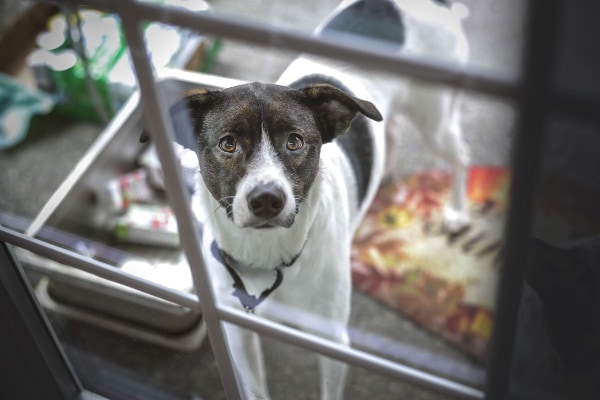
As demonstrated by Sally’s story, the signs of bladder cancer and a UTI are often very similar. The symptoms might include:
- Straining to urinate
- Urinating more frequently
- Urinary accidents
- Blood in the urine
In more advanced cases, a bladder tumor may cause a complete obstruction of the urethra so the dog is unable to urinate. The bladder may even rupture.
If the tumor has metastasized (i.e. spread) to the local lymph nodes, the vet might notice enlargement of the inguinal or sublumbar lymph nodes.
Although it is a rare occurrence, TCC can trigger hypertrophic osteopathy. This is a reaction of the periosteum (outer portion of the bone) leading to bone thickening and pain. It most commonly occurs in the lower portion of the legs.
How is bladder cancer diagnosed?
As we established, urinary tract infections are much more common than bladder tumors, and the signs are almost identical. So unsurprisingly, a dog who actually has a bladder tumor often initially gets a presumptive diagnosis of a UTI.
To further complicate matters, many dogs with a bladder tumor will have a concurrent urinary tract infection. So when the vet sees blood, bacteria, and white blood cells in the urine, he or she would understandably initially diagnose this as a UTI rather than having a high suspicion of bladder cancer.
Many dogs with bladder tumors will initially improve on antibiotics, especially if the tumor is small and in the early stages. The clinical improvement may be due to the anti-inflammatory effect of some antibiotics on the bladder. It can also be due to the fact that some dogs do have a concurrent UTI that is contributing to the signs.
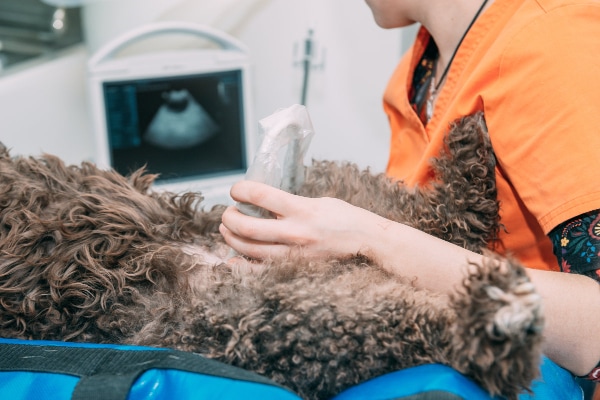
As in my Scottie patient’s case, the vet may first suspect bladder cancer when an older female dog has recurrent urinary issues that are not improving or quickly return despite appropriate antibiotic therapy. In many cases, the vet will be able to visualize a mass on ultrasound. However, the vet will need to be careful when interpreting the ultrasound. It is easy to mistake inflammation of the bladder wall for a tumor, especially if the bladder is small and fairly empty.
Avoid aspirates
Most of the time when the vet finds a tumor somewhere in the body, he or she will recommend an aspirate. This involves having the vet place a needle into the tumor, apply suction to remove some of the cells, and examine the cells under the microscope.
However, vets don’t recommend that sort of aspirate for suspected bladder cancer. There have been reports of “tumor seeding” with TCC after an aspirate. In other words, tumor cells followed the tract of the needle and started to grow throughout the abdomen. Therefore, other methods are recommended for collecting samples for diagnostics.
Cystoscopic biopsy
Instead of doing an aspirate, the vet can obtain a biopsy from the tumor through a cystoscope. This is a special scope with a camera that the vet slides up the urethra and into the bladder. As with aspiration, a surgical biopsy runs the risk of seeding tumor cells through the abdomen, so it is typically not a good idea.
Traumatic catheterization
Identifying neoplastic transitional cells in a urine sample is another useful diagnostic option, especially if the vet collects the sample through “traumatic catheterization.” Traumatic catheterization involves passing a urinary catheter and intentionally irritating the bladder tissue and tumor. This causes the tumor to release cells into the urine.
It is important to note that interpreting the traumatic catheterization sample is best left to a veterinary pathologist. This is because chronic inflammation of the bladder wall can damage the cells and make them appear neoplastic. A board-certified veterinary clinical pathologist should be able to distinguish between cancer and inflammation. But most general practice vets don’t have that level of expertise with cytology.
CADET® BRAF test
Recently, a new test has become available that makes the diagnosis of TCC much easier for the veterinarian and the patient. The test is called a CADET® BRAF test. Eighty-five percent of TCC tumors have a genetic mutation called the BRAF mutation. Finding cells with the BRAF mutation on a free catch urine sample can confirm a diagnosis of TCC. However, since only 85% of TCC tumors carry the BRAF mutation, it won’t find every case of TCC.

The good news is that now there is a CADET BRAF-PLUS test. It is able to detect approximately two-thirds of the TCCs the regular CADET BRAF test misses. Together, the BRAF and BRAF-PLUS can find 95% of TCCs. The BRAF test is easy to perform, non-invasive, and has a high chance of correctly identifying TCC so it is quickly becoming popular with veterinarians and dog parents.
What is the treatment for bladder cancer?
Once the vet has diagnosed your dog with bladder cancer, he or she will discuss the treatment options.
Surgery
If the tumor is located in the apex (i.e. top) of the bladder, a skilled surgeon may be able to remove a portion of the bladder wall along with the tumor. However, since most TCCs occur in the neck of the bladder where the ureters and urethra are located, surgical removal is usually not an option.
If surgery is not an option, or the vet performs surgery and there is evidence of spread to other parts of the body, medical therapy can extend a dog’s life significantly.
Piroxicam
Nonsteroidal anti-inflammatory medications, especially Piroxicam, are the mainstay of treatment for TCC. Piroxicam reduces the tumor volume overall and reduces the clinical signs associated with bladder tumors.
Chemotherapy
Dogs may sometimes need chemotherapy in combination with Piroxicam or instead of Piroxicam. It is best to consult with a board-certified veterinary oncologist to determine which chemotherapy agents would be best based on your dog’s history, overall health, the location of the tumor, and other factors. In general, the more common chemotherapeutic agents for TCC are Mitoxantrone or doxorubicin. Palladia is also another option.
Researchers at Iowa State University College of Veterinary Medicine also are studying a novel delivery system for chemotherapy that uses nanoparticles. It would allow veterinarians to effectively deliver chemotherapy directly into the bladder to target the transitional cell carcinoma. This approach also has applications for treating human bladder cancer.
Comfort measures
Making a dog with bladder cancer comfortable is important too. Since these dogs are prone to UTIs, the dog parent should monitor for worsening of urinary signs or other indications of infection. Treating infection with antibiotics can help the dog feel better.
If the bladder cancer has progressed to the point it is obstructing the urethra, some dogs may be a candidate for laser ablation of the mass or balloon dilation to temporarily improve the obstruction. Placing a urethral stent can also help if the tumor is obstructing a ureter and keeping urine from reaching the bladder.

What is the prognosis for bladder cancer?
As you can imagine, the outlook for dogs with bladder cancer varies depending on the type of tumor present, the location, and if the tumor has spread. Unfortunately, without treatment, most dogs with bladder cancer are euthanized within two to four months of diagnosis due to the progression of lower urinary tract signs.
In cases of transitional cell carcinoma, the median survival time (i.e. the length of time after which 50% of affected dogs are still alive) with Piroxicam, or other NSAIDs, is four to six months. With the combination of NSAIDs and chemotherapy, the median survival time is nine to twelve months.
How does bladder cancer progress?
Because transitional cell carcinomas are usually located at the neck of the bladder, urinary obstructions are common as the tumor progresses to the final stages. The tumor may block a ureter so urine from the kidney cannot enter the bladder. Or the tumor may block the urethra so that the patient cannot urinate.
A urinary obstruction can quickly become a life-threatening emergency. If at any point, you think your dog cannot urinate, please make an emergency vet visit immediately.
In other cases, the tumor causes so much inflammation and irritation that it affects the patient’s quality of life. Sadly, I euthanized one of my canine patients a few months after diagnosis because she felt like she had to urinate every twenty minutes. She was so uncomfortable that she wasn’t able to sleep.
Some patients may also become sick because of metastatic spread of disease to other parts of the body. TCC can metastasize to lymph nodes, the lungs, bone, and prostate. In the final stages of metastatic bladder cancer, you may see pain, breathing problems, or swelling of limbs due to blockage of the lymphatic vessels.
Back to my Scottish Terrier patient
Due to the tumor’s location near the ureters and urethra, surgery was not an option for Sally. Her family did not want to pursue chemotherapy but were hoping to keep her comfortable as long as possible. We started her on a daily dose of Piroxicam. While on Piroxicam, we checked her blood work every two months to make sure the medication was not damaging her kidneys. We also checked her urine for secondary infections and treated with antibiotics when needed.

Sally lived another nineteen months after I diagnosed her with a bladder tumor. Unfortunately, her tumor eventually grew into a blood vessel, causing blood loss. Her family knew it was time to consider preparing for dog euthanasia when the bleeding became severe enough that she was anemic and weak. While they were sad to lose their beloved dog, they were also so thankful for the time they had with her after her diagnosis.
Pearls of wisdom about bladder tumors in dogs
I know it can get overwhelming when you and your sweet dog are facing a scary diagnosis like bladder cancer. So let me leave you with a few parting pieces of advice from my years as a veterinarian:
- You know your dog. If your vet is treating your dog for a UTI and it doesn’t seem like your dog is getting better as fast as expected, reach out to your veterinarian. Let him or her know what you are seeing. Be willing to do more diagnostics to get to the bottom of the issue.
- If your veterinarian suspects a bladder tumor, ask about a CADET BRAF test. It is probably the least stressful way to diagnose a TCC and will find 85% of tumors (or 95% if you do the CADET BRAF-PLUS too).
- Although treatment for transitional cell carcinoma is rarely curative, medications such as Piroxicam and/or chemotherapy can help your dog have a good quality of life for many more months.
- Stay in close contact with your vet during the treatment period. Ensure you keep him or her informed of any changes with your dog.
- If you have a high-risk breed of dog such as a Scottie, ask your vet if it would be wise to run the CADET BRAF test as a screening tool every four to six months. Early detection of a TCC allows you to start treatment sooner.
Finally, don’t lose hope. I know that no one wants to hear the word “cancer” in reference to their sweet dog. You can’t change the fact that your dog has bladder cancer. But you can try to enjoy every remaining day together to the fullest.
Has your dog been diagnosed with bladder cancer?
Please share his or her story below.


Hi! Thanks for sharing all this information and all the stories. My story is no different. In Feb of ’25, Koji (small Maltese mix mutt male) was urinating a lot, and we noticed blood. Went to the vet, and the journey started as a suspected UTI, but she did tell us what the next steps would be if it was not. She wasn’t really sure it was a UTI, I think. Blood work, followed by x-rays, and finally an ultrasound, and we were told TCC. The original outlook was 2-4 months. He has been on meloxicam ever since, and he is still with us a year later! At first, the vet was surprised by the diagnosis because Koji’s behavior was good. Eating, energy, all good. We have 3 dogs, and they still are all playing together. He gets antibiotics about every 4 weeks. This usually conisides with us noticing his urination increases. He is peeing in the house a little more often, but still eating and playful at 11 years old. We are thankful for the support of the vet who consistently checks in and has been very helpful and informative. We know we will know when the time comes, we will all be ok. So my takeaway, enjoy your fur babies andmay then exceed the time they are given! Thanks for sharing all the stories!
Dear Barbara,
What a blessing Koji is still doing well so many months after receiving his diagnosis! Thank you for sharing your story with us. I am certain this will offer hope and comfort to others facing a similar situation. Praying for continued success for your sweet boy and wishing you both all the best as you make the most of the time you are gifted. ♥
Thank you for this article. My 8 year old poodle mix had her first UTI ever on 8/19/2025. During the ER visit, an ultrasound was preformed and she was thought to have TCC due to the thickening and inflammation of the bladder wall. Since urinalysis did come back positive for e. Coli, she took antibiotics as we waited for the Cadat Braf results. The results came back negative and we were told to schedule a follow up ultrasound with internal medicine. We did that ultrasound on 9/8/2025 and that came back clear as inflammation and thickening were no longer noted. For a peace of mind, we also did a cadet Braf plus and that also came back negative. Now fast forward to today, 9/29/2025, I noticed my dog water intake and urine frequency increased. I also noticed that she may have blood in her urine (pinkish hue once, while all the other times it’s yellow). My question is, can this just be a relapsed UTI (she does have a recessed vulva) or can it be really be bladder cancer and her mass is just not seen in the ultrasound? I am so worried.
Hi Maggie,
I understand your concern for your pup with the return of these abnormal urinary issues. This could definitely just be another UTI or even still the previous infection if it was not completely cleared. Urinary crystals can cause similar symptoms as well. While I can’t say for sure that TCC isn’t still a possibility, with the two negative Braf tests and the improvement seen on ultrasound I would be very surprised to find out this was the case. Hoping you can get some answers and find the right treatment for your girl. Wishing you both nothing but the best.
What palliative care do you recommend? my dog lila is 15 and was just diagnosed with TCC. she has kidney disease (creatine was last at 3.9) so I understand our options are limited bi5 we want to keep her as comfortable as possible for as long as possible.
also, how will we know when it’s time to let her go?
Hi Rebecca,
I understand your concern for your girl and think it is wise of you to be searching for guidance. Without playing a personal role in your dog’s medical care, it is hard to give specific recommendations. Any vet should be able to offer these services, but if your vet is not comfortable with palliative care, I encourage you to seek out a vet that has experience in this area. The main goal is reducing inflammation and pain. Sometimes steroids are helpful, but you do have to weigh the benefits verses the risks. I will attach links to other articles with more information on how to know when to say goodbye. Hoping you can find the answers you need to keep your girl comfortable and happy for as long as possible. ♥
1. Dog Hospice Care Can Bring Peace and Dignity to Your Dog’s Final Days
2. Using a Quality of Life Scale for Dogs
3. Signs A Dog is Dying of Cancer (Plus Advice for 8 Common Cancers)
4. How Will You Know When It’s Time to Euthanize Your Dog? 5 Caring, Heartfelt Messages
5. Preparing for Your Dog’s Euthanasia: 10 Thoughts for Peace
Our sweet 8 year old boy Rex was diagnosed with TCC in May 2025. We initially thought he had a UTI when he had accidents and was straining to pee. As soon as we found the mass via ultrasound we made plans for piroxicam, chemo, and radiation- thankfully were within driving distance of Tufts. Braf came back negative and we opted for a biopsy to get the quickest definitive diagnosis to start chemo. Unfortunately, even with him being vaccinated, our sweet boy contracted leptospirosis in June which destroyed his kidneys. After spending a week in the ICU, his levels showed some improvement however, he’s still considered to have a creatinine high enough to be end stage kidney failure. This meant any options for NSAIDs, chemo, or going under for radiation were off the table. He’s now on palliative care. Even with an absurdly high creatinine, he continues to eat, be bright and energetic, and a very happy guy. We’re doing subcutaneous fluids every day and choosing to “treat the patient and not the monitor” when it comes to his care. As long as he’s eating, energetic, bright, and peeing, we’re soaking up every moment we get with him. As soon as he tells us it’s his time to go, we’ll make the decision that’s best for him and say goodbye. At this point, Rex is steering the ship and we’ll continue supporting him for whatever days or weeks we have left. He’s the best soul dog and at least we know we left no stone unturned when it came to treatment and giving him the best shot. TCC has robbed us of our baby boy and he’s had the worst luck contracting leptospirosis, but he’s a fighter and we’re so blessed to still have him here.
Dear Kaitlyn,
I am so sorry for all Rex has endured over the past few months. What a blessing he is still feeling well and able to find joy in each day. Keep making the most of the time you are gifted and spoil him rotten. Praying for comfort and give your sweet boy a hug from me. ♥
what palliative care are you providing? my dog was just diagnosed with TCC and has kidney disorder.
Charlotte, our nine year old Havanese, was diagnosed with Bladder TTC cancer on March 19. The tumor is near and right on her pee pee. Charlotte’s always had trouble holding her pee and has used pee pads in the porch. Her diagnosis is devastating. We’ve chose palative care. Again, which is hard. She whine and groans when she does go. And we just try to make it to her next round of medicine. It’s hard. We’re trying to keep her comfortable, but its hard. I’m at a loss of what to do. And my mom is the one who is with Charlotte most of the day. It’s just hard.
Hi Tina,
I am so sorry Charlotte has received this devastating diagnosis. I understand how difficult it can be as a full-time caretaker to a pup with a chronic or progressive illness. Please know that you are not alone, and your quality of life matters too. Praying for clarity as you navigate this emotional path and wishing you all comfort and peace.
When Caring For A Sick Pet Becomes Too Much: Pet Caregiver Fatigue
My 9 1/2 year old female Great Dane started showing signs of what we thought to be a UTI a few weeks ago (going more than once and blood droplets at end of urination).. A urinalysis was done and we were called next business day which was Monday as she was seen on a Friday. Results were negative for UTI; however, our Veterinarian stated she was concerned she may have stones or TCC in the bladder as there were a few small crystals and epithelial cells were also present in the urine. I took her to vet after I got off of the phone and she had X-Ray and US done. No stones were found; however, she stated she saw what seemed to be a small mushroom size tumor in her bladder on the US. She examined her and felt her bladder and Sadie-Mae showed pain and discomfort when she was feeling the bladder. Our Veterinarian stated her bladder felt tight and hard. She stated that she could not confirm her diagnosis of what she believes to be TCC without doing a biopsy. After discussing this we decided to start her on piroxicam. She has been on 15 mg piroxicam once a day for a little over a week now and for last 3 days she has gone from some blood in the urine to what appears to be nothing but blood. I’m going to call Vet first thing in morning to report the changes in her urine and see what she wants to do. What’s frustrating is Sadie Mae acts normal and doesn’t seem to be in any pain as she acts like a 2 year old galloping around the yard when I let her out to potty but the realistic side of me knows she she has to be in some pain or have discomfort but at what level I don’t know. She has never been a whiny dog and always playful. Truly only time she whines is to let me know it’s breakfast or dinner time. Hopefully find out more tomorrow when I speak with our Veterinarian but I just feel like I’m stuck between a rock and a hard place.
Dear Chad,
My heart goes out to you as you face this unknown situation with Sadie Mae. I understand your concern with the amount of blood that is in her urine. I agree this warrants a phone call to your vet ASAP. I would talk with your vet about the possibility of sending off the BRAF test to try and get a definitive diagnosis. Also, it may be a good idea to consider a consultation with a specialist. Hoping you can find a way to give your sweet girl relief. Praying for healing and a clear path forward. Bless you both. ♥
Our Dog Dash, (pitbull/lab mix) was diagnosed with a bladder tumor in February, 2023 and just succumbed December 13, 2024. Our vet was treating him with Carprofen., while I increased his protein intake with chicken or Turkey and long walks everyday. Even though you could see him slowly declining (sleeping more).
Dash had a great quality of life up until about a week before he was euthanized. The night before he was unable to hold down food or water and was urinating blood clots. He was just 10 1/2, and otherwise so healthy and energetic. A great dog with a great personality! RIP Dash❤️
Dear Donna,
My heart goes out to you with your recent loss of Dash. What a blessing he gained so much extra quality time after his diagnosis in February of 2023. Thank you for sharing his story with our readers. Wishing you comfort and peace as you continue life’s journey.
Thank you for this article. While I’m sorry that your dog also suffered from TCC, it’s been helpful reading your experience as well as others. My 13 year old American Bulldog, Cali, was diagnosed with inoperable TCC in November of 2023. We started her on Piroxicam, which has helped delay the growth of her tumor. She’s a sensitive girl and a great communicator, so I know that she’ll tell us when it’s her time. In the last week, we’ve noticed the tumor causing more bladder pressure causing her to squat more often. She also leaves drops of blood around the house and while this is said to see, she’s still her same silly self. While we really try to stay on top of cleaning the floors, it’s not always possible to clean them right away, especially with two small children. I was wondering if you had any insight about diapers and dogs with TCC. I wasn’t sure if she’d be at risk for infection given that the diaper would be absorbing blood and not urine. Any insight or opinions would be so helpful.
Dear Amy,
I am sorry Cali has received this difficult diagnosis. I am glad that despite her condition she is happy and enjoying life. As far as diapers go, I think they are a great idea! Some dogs don’t tolerate them well and end up chewing them off. But for those that will leave them on, they can be a lifesaver. I don’t think the risk of infection is any higher when dealing with blood verses urine. Do whatever you can to make caregiving easier to manage and less stressful. You want to enjoy the time you have and not be consumed with cleaning and other tedious tasks. Wishing you and Cali all the best and give your sweet girl a hug for me. ♥
Dear Amy, sorry to hear about your beloved pets diagnosis. I have a 10 year old chihuahua that is my child, he was diagnosed by X-ray with TCC in September or October 2024. I use a belly band (male dog diaper) I bought the reusable ones and buy disposable pads for the belly band. You don’t have to buy the disposable pads but it really helps him not go through all his belly bands in like 1 or 2 days. The ones I bought don’t leak and perfect for a dog without control of their bladder. Hope this helps good luck to you and your precious pet!
Thank you for the information in this article. We were just told yesterday that our 6 year old chocolate lab Mollie has a mass in her bladder that is more than likely TCC. She started having issues in Aug 2024 & we took her to the vet & he treated her for a uti. It seemed to clear up for a bit but she started getting up through the night to use the bathroom & I noticed she would try to go two or three times & nothing would come out. I took a urine sample & took it to our vet. The color of her urine was pretty much brown & our vet advised she had a staph infection. 14 more days of medication & she seemed fine for a couple of weeks. It didn’t last long & she was back to getting up through the night & straining to pee. I took another urine sample (which was pretty much all blood) & took it to the vet. They gave her another prescription & an x-ray which showed nothing. This time the medication didn’t work at all & her urine is pretty much pure blood. I called them & they took her in yesterday to do an ultrasound a took cultures & that’s when they told us the news. They are waiting for the test results to come back to get more details on the mass, but they have said surgery can be an option. She is not acting any different than she usually does. She is playing with her brother, eating & drinking & hasn’t lost any weight (she’s 100 pounds).
I’m not sure what surgery will do to help her or prolong her life or what quality of life she will have post surgery. We just don’t want her to suffer at all but we are just devasted because she seems happy & healthy so its a very hard thing to come to terms with.
Dear Melanie,
My heart goes out to you as you try to navigate this difficult path. I am sorry Mollie is facing this tragic diagnosis and understand your concern and worry. If you need more information about the surgery or other treatment options, don’t hesitate to ask for a consultation with a specialist. How are things today? Hoping you were able to find the answers needed to make the best choice for everyone involved. Praying for healing and comfort for your sweet girl. Bless you both.
Hi Dr. Buzby,
Thank you for writing this blog. It’s both comforting and inspiring to read stories similar to ours, and the information you share is invaluable.
I’m so sorry for the loss of Sally. She was a beautiful Scottish Terrier, and it’s incredibly encouraging to know she was with you for nineteen months after her diagnosis.
Our story is heartbreaking. Ten years ago, I brought my Scottie girl to a highly recommended breeder. She had champion Scotties and extensive experience in breeding. We were blessed with seven puppies. We kept a boy and a girl and gave one to my father, while the other four went to loving homes.
In December last year, my father’s Scottie, Monty, began urinating in the house—a behavior he hadn’t exhibited since he was a puppy. The vet conducted blood tests and an ultrasound, diagnosing him with TCC. He started on Metacam (we live in the UK, where Piroxicam isn’t typically prescribed). Sadly, in January, his condition worsened rapidly. He stopped eating and drinking, was panting, and was clearly in pain. We made the heart-wrenching decision to let him go peacefully.
In February, my girl Scottie, Bonnie, was also diagnosed with TCC after similar tests. Her tumor is in her urethra, affecting her ability to pass urine. She started on Metacam, which has helped reduce accidents in the house, but urinating is now a slow process as it trickles out. Despite this, Bonnie remains her playful, joyful self, which is a blessing.
In April, her brother Archie began showing blood in his urine. An ultrasound revealed a 2cm mass in his bladder, confirming another TCC diagnosis. We were devastated—three out of three puppies from the same litter have TCC. I haven’t reached out to the owners of the other four puppies, as I don’t want to alarm them unnecessarily.
Archie and Bonnie are still with us, but it has been a challenging journey. Archie has suffered from haemorrhagic gastroenteritis (HGE) twice, requiring hospitalization and intravenous fluids. Last weekend, he became very ill again—unable to eat or drink, lethargic, and crying out from stomach convulsions. We thought his time had come and considered letting him go. However, the vet gave him an anti-sickness injection and suggested waiting 24 hours. To our immense relief, after 18 hours, he began drinking water, the convulsions eased, and he eventually started eating again. Today, he’s back to his usual self, enjoying food and walks. I’m so thankful we gave him that time.
I cherish every moment I have left with Archie and Bonnie. My goal is to keep them as happy and comfortable as possible for however long they’re with us.
Dear Sandra,
My heart aches for you as you face this devastating disease in both of your pups at the same time. I know you don’t want to cause panic, but I think contacting the owners of the other pups is very necessary. This is not a coincidence but is genetic and it is probably only a matter of time before the other 4 pups develop this tragic condition. You could offer them the ability to catch this early and intervene to give those dogs a longer life. I will keep Bonnie and Archie in my prayers and hope you can make the most of the time you are gifted. Wishing you all comfort and peace as you navigate this emotional path. Bless you.