Focal seizures in dogs only affect one portion of the brain and can have a variety of symptoms, ranging from facial twitching to excessive salivation or staring into space. Integrative veterinarian Dr. Julie Buzby explains the causes, symptoms, diagnosis, treatment, and prognosis for focal seizures so that dog parents know what to expect.

When you hear the term “seizure,” what comes to mind? Most likely, it’s the full-body convulsions that occur when dogs experience grand mal or generalized seizures. Generalized seizures as a result of idiopathic epilepsy are the most commonly recognized and described seizure type. However, other, more subtle seizure events can also affect dogs of any age.
Another seizure type worth being aware of is focal (or partial) seizures in dogs. These events may often go unrecognized as seizure activity unless they become more frequent and severe or progress to generalized grand mal episodes.
What are focal seizures in dogs?
A focal seizure is abnormal brain activity in one area that causes repetitive movement of a dog’s body part and typically does not result in a loss of consciousness. It’s also known as a partial seizure since the affected dog does not experience full-body effects at the onset of the episode. In some cases, however, a focal seizure may progress to a generalized seizure.
As the name implies, a generalized seizure affects the entire brain (both hemispheres or halves) and results in physical symptoms that affect the entire body. These seizure episodes are typically “tonic-clonic.” In other words, dogs initially appear stiff and rigid (tonic) before transitioning to active, repetitive, jerky full-body movements (clonic). Dogs may also urinate, defecate, and lose consciousness during a generalized seizure.
Focal seizures affect one portion of the brain
On the other hand, focal seizures only result from abnormal electrical activity in one specific area of the brain. Symptoms of focal seizures can, therefore, vary widely based on the affected lobe or region of the brain.
Dogs with focal seizures most commonly have a distinct cerebral lesion. This means the abnormal electrical activity is only affecting one part of the cerebrum rather than both sides (hemispheres). The temporal lobe is the part of the brain most commonly affected. This lobe houses the limbic system, which oversees emotion, sensation, and memory.
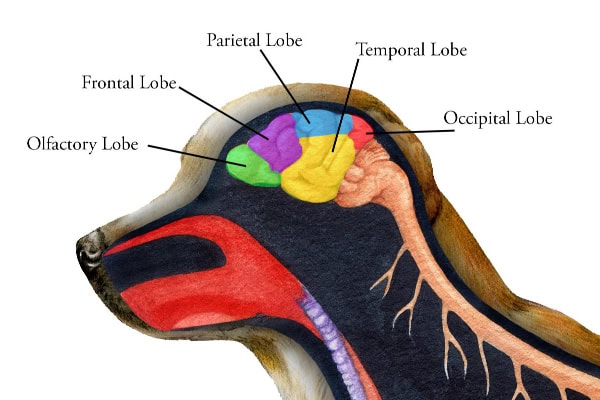
The clinical signs of focal seizures reflect the specific areas of the brain that are affected. For example, a seizure originating in the hypothalamus may be more likely to cause abnormal behaviors like unprovoked aggression if the medial hypothalamus is involved. However, the dog may show repetitive chewing motions if the seizure affects the lateral hypothalamus.
What are the symptoms of focal seizures in dogs?
Focal seizures can take many forms. At first glance, they may simply look like strange behavior to a dog parent. The symptoms seen with focal seizures fall into three main categories:
Motor focal seizures in dogs
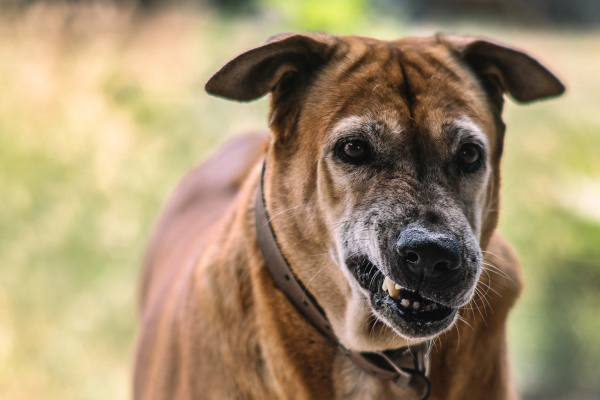
During a motor seizure, the dog may exhibit rhythmic, repeated jerking of the head or another specific body part, repetitive blinking, facial twitching (eyelids, ears, or lips), snapping at the air (fly biting), and chewing motions with nothing in the mouth (chewing gum seizure).
Autonomic focal seizures in dogs
The autonomic nervous system controls automatic functions in the body. Thus, autonomic seizures may occur as a sudden onset of excessive salivation, spontaneous urination, or anal gland expression with no apparent trigger.
Behavioral focal seizures in dogs
Behavioral seizures can be more challenging for dog parents to identify and understand. Affected dogs may appear normal, then begin staring blankly into space (stargazing) or become depressed, unresponsive, or suddenly aggressive with no provocation.
Focal seizures that turn into generalized seizures
In some cases, dogs may only have focal seizure symptoms. However, it is possible for a focal seizure to turn into a generalized seizure. In that case, the dog would move from having focal symptoms to more widespread stiffness, convulsions, loss of consciousness, and a loss of bowel or bladder control.
What should you do if your dog is having a focal seizure?
If you do witness your dog having a focal seizure episode, keep these tips in mind:
- Don’t panic. If needed, take a few deep breaths to help you stay calm.
- Ensure your dog is in a safe space in case the episode progresses to a generalized seizure.
- Make note of your dog’s specific symptoms or behaviors and how long the episode lasts.
- Do NOT try to comfort your dog if he or she seems anxious or begins acting aggressively. This could lead to accidental injury for you and/or your dog.
- If you have a mobile device handy, record a short video clip to share with your veterinarian.
- Keep children and other pets in the home away from your dog until the episode has passed and he or she fully recovers.
- Write down your observations in a seizure journal once the event has ended.
After the first focal seizure event, reach out to your veterinarian. He or she can advise you about the next steps. Sometimes, that is continued observation. Other times, the vet may want to see your dog promptly.

Are focal seizures in dogs dangerous?
Mild or short-lived focal seizures are distressing to watch but fairly harmless. However, focal seizures do have the potential to be dangerous if they progress to generalized seizures.
If the dog has a grand mal seizure that lasts longer than five minutes or multiple grand mal seizures back-to-back without fully regaining consciousness between them, this is status epilepticus, which is an emergency. Left untreated, status epilepticus can lead to brain damage or sometimes even death.
Also, keep in mind that having more than one focal seizure within 24 hours constitutes a cluster seizure event. If your dog experiences cluster seizures, no matter how short the individual episodes are, it is important to alert your veterinarian. He or she may recommend starting your dog on anti-epileptic medication at that point.
What causes focal seizures in dogs?
Focal seizures (whether or not they progress to generalized seizures) are typically due to structural abnormalities within the cerebrum. These structural changes can develop in puppies during development and be present at birth (congenital causes). Or they may occur at various stages of a dog’s life due to infection, inflammation, trauma, or tumor growth in the brain (acquired causes).
Additionally, certain dog breeds have a genetic predisposition to seizures that do not otherwise have an identifiable cause. These seizures fall under the category of idiopathic epilepsy.
Congenital causes of focal seizures in dogs
Congenital conditions that can cause focal seizures include hydrocephalus (water on the brain) and certain storage diseases that are present due to a lack of necessary enzymes.
Acquired causes of focal seizures in dogs
Acquired conditions that cause focal seizures include inflammatory processes such as granulomatous meningoencephalitis (GME in dogs), infections, scar tissue in the brain, hemorrhage, and head trauma.
Additionally, space-occupying lesions like cysts or brain tumors in dogs (which may be primary or metastatic) can also be the culprit. It’s worth noting that focal or generalized seizures may be the ONLY sign of a brain tumor in dogs. This is especially true in dogs with olfactory and frontal lobe tumors.
Stress or excitement can also trigger the onset of focal seizures. An example of this is seizures triggered by eating (STE), which are one of the least understood types of seizures in dogs. STEs start out as focal seizures, but they may evolve into generalized seizure episodes due to excitation at the onset of mealtime.
Idiopathic epilepsy as a cause of focal seizures in dogs
Idiopathic epilepsy, which is a hereditary predisposition to seizure activity, occurs in a variety of dog breeds. Some affected dog breeds tend to have generalized seizures. Others are more likely to have focal seizures or may have a combination of seizure types. Breeds prone to focal seizures from epilepsy include:
- Australian and Belgian Shepherds
- Border Collies
- Cavalier King Charles and English Springer Spaniels
- Dalmatians
- Finnish Spitz
- Lagotto Romagnolos
- Petit Basset Griffon Vendeen (PBGVs)
- Standard Poodles
- Vizslas

For more information about epilepsy in different dog breeds, check out the International Veterinary Epilepsy Task Force’s current understanding of idiopathic epilepsy of genetic or suspected genetic origin in purebred dogs.
How will the vet diagnose the cause of your dog’s focal seizures?
Focal seizures can be challenging to diagnose since they are either idiopathic (of unknown cause) or related to structural defects, injury, or disease in a specific area of the brain. Your veterinarian will likely recommend starting with a basic workup, including:
- Physical examination—The vet will look your dog over from nose to tail and perform a complete neurologic and ophthalmic (eye) examination.
- Lab work—Blood tests for dogs, including a CBC and chemistry panel, electrolytes, thyroid panel, cortisol level, and a urinalysis, can provide a good baseline picture of your dog’s overall metabolic health.
- Blood titers and serologic testing (PCR)—The vet might recommend titers or serologic testing if he or she suspects an underlying inflammatory or infectious disease process.
- Imaging—If metabolic disease or cancer are on the differential diagnosis list, the vet may take X-rays of the chest (three views) and/or perform an ultrasound of the abdomen.
Depending on your dog’s baseline lab results, the next step might be more advanced diagnostic testing with a veterinary neurologist. Possible tests include magnetic resonance imaging (MRI) or cerebrospinal fluid (CSF) collection under sedation.
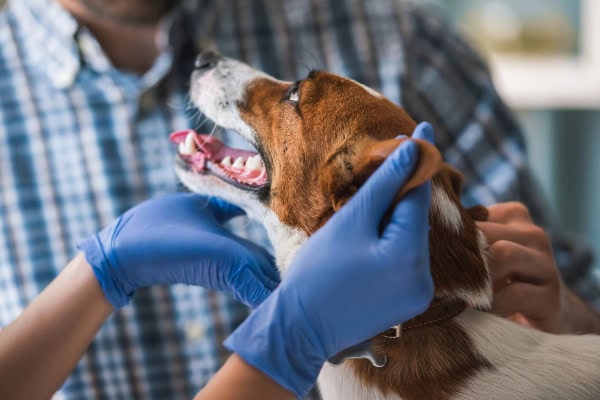
Plus, sometimes the neurologist may recommend an electroencephalogram (EEG). This can be a valuable tool for reaching an accurate diagnosis of focal seizures since it records subtle abnormal electrical activity in the brain. However, the dog would need to be having a focal seizure at the time of the EEG to pick up the seizure activity.
What is the treatment for focal seizures in dogs?
Your veterinarian or veterinary neurologist will use the information he or she collected during the diagnostic process to advise you about the safest course of treatment for your dog.
Sometimes a dog with focal seizures may not initially require anti-seizure medication. Or your dog may never require medication, for that matter. For dogs with mild or infrequent seizure activity, the risks of starting on a daily medication may outweigh the benefits.
However, if your veterinarian does recommend medication to manage your dog’s seizure disorder, there are multiple good options available. The specific therapeutic protocol your veterinarian recommends will likely depend on several factors. One big consideration is any other comorbidities (medical conditions) your dog may have at the time of the seizure diagnosis. For example, some anticonvulsant medications should be used cautiously in cases of liver disease in dogs.
Anti-seizure medications
Phenobarbital is the most common first-line medication for controlling seizures in dogs. It usually has good efficacy overall, but does require regular bloodwork to ensure the phenobarbital levels stay in the therapeutic range. Plus, some dogs may develop a tolerance to phenobarbital with prolonged administration, resulting in breakthrough seizure activity.
If breakthrough seizures do occur, your veterinarian may recommend adjusting the dose of phenobarbital. Or he or she may add on a second anticonvulsant medication, like potassium bromide.
Newer anticonvulsants like levetiracetam (Keppra) and zonisamide for dogs are also effective treatment options for focal seizures and those that progress to generalized events. The vet may use these medications on their own or in combination with other anti-seizure medications.
Note: If you notice any medication side effects or increased seizures, please consult with your veterinarian. It is not a good idea to adjust your dog’s medication dosage or frequency yourself or to suddenly stop giving anticonvulsants.
Foods and supplements to improve brain health and potentially reduce seizures
Another option that can help manage focal seizures is adding an MCT oil supplement, such as Dr. Buzby’s Brain Boost™ Organic MCT Oil for Dogs, to your dog’s regular food. Research demonstrates that MCT oil for dogs can raise the seizure threshold for dogs with epilepsy. This means it takes more stimuli to cause a seizure, which may translate to a decrease in seizure frequency or severity. Additionally, MCT oil helps protect neurons and support overall brain health.
Alternatively, some dog parents may choose to start their dog on a veterinary prescription diet such as Purina Pro Plan® Neurocare™, Purina® Bright Mind, or Hill’s® Prescription Diet® b/d. All three foods contain omega-3 fatty acids for dogs (DHA and EPA), which promote brain health. Plus, both Purina products contain MCT oil.
It is important, however, to realize that supplements and foods are intended to complement, not replace, anti-convulsant therapy.
Can you prevent focal seizures?
It is important to understand that nothing (even medication) is 100% effective in preventing seizures. The key is to be consistent and proactive in your dog’s care to minimize the potential for future episodes.

If your dog is on anti-seizure medication, give the dose(s) consistently each day according to your veterinarian’s instructions. Plus, if you do identify specific situations or triggers that evoke seizures in your dog, try to minimize or eliminate his or her exposure to them whenever possible.
What is the outlook for dogs with focal seizures?
The long-term prognosis for dogs who have focal seizure episodes depends on the underlying cause(s). Dogs with uncomplicated, infrequent focal seizures may achieve their normal life expectancy and maintain a good overall quality of life.
However, seizures due to a space-occupying lesion (cyst or tumor) in the brain carry a more guarded prognosis for long-term survival and overall quality of life. This is the case because there is a potential for the clinical signs to worsen as the mass grows.
Work with your veterinarian
If you’ve noticed strange symptoms or unusual behaviors in your dog and think he or she could be having focal seizures, please schedule an appointment with your veterinarian. If possible, bring a video of the episodes and your seizure journal. That information, plus some diagnostic testing, can help your vet figure out what is going on with your dog.
Understandably, receiving the diagnosis of a seizure disorder can be scary, regardless of your dog’s age. However, by being proactive with your dog’s care and keeping your veterinarian informed of any physical or behavioral health changes, you can help minimize future episodes and maintain the best possible quality of life for your beloved canine companion.
Has your dog experienced focal seizures?
Please comment below.


I’m not yet sure that my 10 year old mixed breed is having seizures, but I’m watching her carefully to see if there is a pattern. She started chattering her teeth for a few seconds then licking her lips and sometimes yawning once or twice. I’ve heard her teeth chattering and the lucking in the middle of the night for about 2 weeks now. At first I thought she had a dental problem so she had her teeth cleaned at the vet, who reported that her teeth and mouth were healthy. But the chattering, licking her lips continue, 3 weeks post cleaning. I think she appears sad or confused afterwards for several minutes. I’ve also noticed this behavior during the day. Otherwise, she is behaving normally, energetic, eating well, etc. The vet suggested waiting and seeing.
Hi Gerda,
Sorry to hear that your dog has been having these abnormal episodes of teeth chattering. I think that starting with a dental evaluation and cleaning was a great first step, and agree with your vet that it would be ideal to keep a close eye on your pup to see if the episodes continue. If you haven’t started keeping a seizure journal and recording videos of the episodes, I would urge you to do that. Seeing what is happening and having a record of the events around the episode can be so helpful for your vet. I hope that the teeth chattering stops soon, or if not, that you are able to get to the bottom of it.
Hi. My 17-year old schnauzer started having Seizures Triggered by Eating about a month ago. She starts chewing when she gets ready to eat, like starting an engine, finishes her meal beautifully and once she’s done eating, she starts chewing and foaming for like a minute and then immediately leads to a 1~2 second seizure. Her front legs stiffen, her back bends upwards, her mouth opens. After this really short seizure, she completely returns to normal state, no post-ictal state. She eats 3 times a day, and this happens after every meal, 3 times a day. I didn’t even know that chewing was a focal seizure so i didn’t think this was a big deal and this chewing started to last for like 20 minutes and then, one day, this 1~2 second seizure started to lead to 1~2 second cluster seizures and she would flip back completely. That’s when i took her to the vet. Currently, she was on keppra but that didn’t suppress the seizure nor the chewing. she was on phenobarbital for 5 days which eventually reduced the 3 seizures a day to 2 seizures a day and 1 seizure a day but she couldn’t stand on her 4 legs at all. she tried so hard to stand but she would fall on the side, fall on her face, her back leg would fold backwards, her paw would fold backwards, she couldn’t stand at all so she would pee lying down and that’s when i decided to stop phenobarbital. So, she is now on keppra and pexion but it is not helping at all. She’s too old for MRI. I’m running out of options. I dont know if i should try other medications like zonisamide..i don’t want to try stronger medications like kbr or potassium bromide that would damage her organs because of her underlying heart conditions (mmvd stage 2) and kidney conditions (sdma stage b).
Hi Jenna,
I am sorry your Schnauzer is dealing with these chronic seizures. You are doing a great job advocating for her health and well-being. It is common for phenobarbital to cause ataxia, neurological like issues with the rear legs, and stumbling but this usually goes away gradually as the body adjusts to the medication. I have had several patients that were so wobbly after the first few doses that we dramatically lowered the dose and then slowly worked up to the target dosage. The negative effects definitely seem to be dose dependent. It may be worth giving the phenobarbital another try but starting at a much lower dosage with the plan to slowly increase it over days to weeks. You might also want to look into an MCT oil supplement as they have some great research showing to be helpful for dogs with seizure disorders. Here is an article with more information: MCT Oil for Dogs Can Help Dogs with Dementia or Epilepsy
Hopefully you can find a way to give your girl some relief. Praying for answers and a clear path forward.
My dog Ted is 4 1/2 years old. He’s some sort of terrier mix and since he turned about two years old has impulsive outburst of aggression without warning or provocation – He just loses it out – and he can be quite grumpy, which I assumed was just a behavioral issue, l
over the last few months I noticed the fly snapping movements and at first thought he was just seeing particles in his hair. And he seemed relatively unscathed by it so I didn’t take him to the vet until the fly snapping got more frequent.
Anyhow we are still early in treatment, He has been on Keppra for two days and he seems way less grumpy and I’ve only seen one or two fly snapping incidents since then. My question is, do you think the impulsive behavior / outbursts attacking, someone could possibly be related to whatever is causing his fly snapping?
Hi Betsy,
I am so glad you are seeing an improvement in Ted since starting the Keppra. It is definitely possible that his aggressive behavior and the seizure activity are related. You may end up wanting to establish care with a veterinary neurologist since Ted is so young and could benefit from long term monitoring from a specialist. Hoping Ted will continue to respond favorably to the medication. Wishing you both nothing but the best!
I have a 7 year old Patterdale,
He’s started with weekly Focal seizures about 8 weeks ago, he then had a grandmal about 4 weeks ago where we spoke to our vet and started Pexion, he’s still having weekly focal seizures.
I’m worried about his prognosis going forward with this still being a weekly thing?
It’s normally on a Friday/ Saturday so I always know it’s coming.
If this continues at a weekly rate, are we likely to see changes within him? I’m obviously concerned that this could be a Brian tumour ?
Thank you for your time.
Dear Kirsty,
I am sorry your boy is enduring these recurring seizures. Neurological issues can be very difficult to predict and I’m not sure what to tell you to expect moving forward. It may be time to ask about a consultation with a veterinary neurology specialist. Hoping they can find a way to offer your pup relief and a better quality of life. Feel free to keep us updated on how things go.
Hi, my 12 year old Border Collie had what we assume to be a focal seizure at approx 17:30 on 29/06, she woke up on the sette and seemed to be trying to get over to me but kept curling round to the right and very distressed. I carried her to the garden in the cool where she continued to do this for may be up to a minute in total. She was then crying climbing into my arms after which she was pretty much back to normal. I spoke to my vets and we had an appointment the following morning, everything appeared normal physically and they took bloods. This has never happened before and she was fine the following day.
When she went out for her evening garden visit on 01/06 she had another episode where she was trying to walk but falling over. This one lasted seconds, had I not been out with her I would never have known. She then had a normal bowel movement although she was a little unsteady and took herself back into the house and into our bedroom and onto our bed, her normal routine.
Our vet called today to say the blood panel was normal including liver levels and they were ruling out toxins but we are waiting for further diagnostics to come in for any other kind of infection. Obviously the brain was mentioned and I am to call in the morning to let her know how she has been overnight, so far all ok, and whether to refer to neurologist for MRI etc.
This has all been a bit of a shock as this it is totally out of the blue, she has been so fit and well. Is it wise to go ahead and see the neurologist and have MRI now or wait for the rest of the bloods and monitor for further seizures. I would rather know what we are dealing with but don’t want to put her through uneccessary treatment as she gets so anxious when she is at the vets.
Worried sick and I would hugely appreciate your thoughts.
Hi Carolyn,
I am sorry your girl has been having these seizure episodes. I understand your concern and am glad you are working with your vet to try and find some answers. It is definitely ok to go ahead and schedule an appointment with the neurologist. Most specialists are booked out for appointments for days/weeks. It is likely you will get the blood results back before you are able to actually see the neurologist. Also, most of my clients cannot afford an MRI and end up choosing to try medical management or the “wait and see” approach. No matter what path you choose, make sure you are well informed and feel comfortable with the plan. Hoping all is well with your sweet girl and praying for a positive outcome.
My 8 year old Golden Retriever has had these weird episodes for the last few years where she just seems spaced out while laying on the floor then she urinates. it’s really scaring us!
Hi Td,
I am sorry your girl is experiencing these worrisome episodes. This definitely sounds like something that needs to be investigated. Your vet will probably want to start with a thorough physical exam and routine lab work. Hoping for an easy solution and a better quality of life for your sweet girl. ♥
My 3 year old English bulldog appeared to possibly have a cluster of focal seizures. She is very healthy and this never happened before. We were grilling outside and suddenly she kept looking up and biting at nothing. We took her to the emergency vet and all of her labs are normal. She just started Keppra 3x per day. I’m so scared it’s going to happen again or lead to grand mal seizures. I scheduled an appt with her regular vet as well. Is there anything else I should do? I think I need some reassurance and emotional support <3 thank you so much
Hi Shannon,
I am sorry your young Bulldog experienced these worrisome seizure episodes. I think you have done everything I would normally recommend at this stage. Make sure you stay in touch with your vet and keep them updated on any changes. If the Keppra does not keep the seizures under control, then your vet may talk to you about trying additional medications or seeing a specialist for further testing. Luckily, for the majority of dogs, a single medication is usually enough. Hoping all is well and praying for smooth sailing from here on out with your sweet girl. ♥