GME in dogs is an inflammatory neurologic condition that can cause a range of problems from seizures to blindness. Integrative veterinarian Dr. Julie Buzby explains the symptoms, diagnosis, treatment, and prognosis for GME in an effort to help support and empower dog parents whose dogs may be facing this difficult diagnosis.

Most dog parents have a general understanding of the common illnesses that can affect their beloved furry friends. If dogs have been part of your family for a while, you’re probably no stranger to gastrointestinal upset, urinary tract infections in dogs, and skin issues like wounds or pyoderma in dogs. Neurologic problems, however, can seem like a whole different—and much scarier— beast.
Watching your dog suddenly start stumbling around or having seizures is hard enough. It is even harder if you discover your dog’s tentative diagnosis is something you have never heard of—granulomatous meningoencephalomyelitis (GME).
After a diagnosis like that, it can be easy to fall down the research rabbit hole and wind up feeling overwhelmed and confused. That isn’t a fun place to be, so I hope that this article can offer you a bit of clarity and hope.
What is GME in dogs?
Granulomatous meningoencephalomyelitis (i.e. granulomatous meningoencephalitis) is an inflammatory disease of the central nervous system (CNS). If we break down the name, it gives us an overview of what is going on.
“Meningoencephalomyelitis” refers to an inflammation (“itis”) that affects the brain (“encephal”), spinal cord (“myel”), and the covering of these structures, which is called the meninges (“meningo”). The term “granulomatous” indicates that the predominate types of inflammatory cells in these patients are white blood cells like monocytes and lymphocytes.
Which dogs tend to get GME?
Granulomatous meningoencephalomyelitis primarily affects middle-aged small breed dogs, and there is no sex predisposition. On average, a dog might develop GME around four to eight years old. GME can technically affect any breed. However, it is possible there is a hereditary component as it is most common in the following breeds:
- Chihuahua
- Dachshund
- Maltese
- Miniature Poodle
- Rat Terrier
- Toy Poodle
- West Highland White Terrier
- Yorkshire Terrier
What causes GME in dogs?
Unfortunately, GME is still a condition that is not entirely understood and the true underlying cause is unknown. Thus, in the early stages of diagnosis, the veterinarian or veterinary neurologist may refer to it as meningoencephalitis of unknown origin (MUO) or meningoencephalitis of unknown etiology (MUE).

Most researchers who study GME have suggested that it is an autoimmune disorder. In other words, the immune system starts attacking nervous system cells which are normally hidden from it. Many agree that GME can be multifactorial. There may be congenital and environmental influences combined with delayed reactions to things like vaccinations or infections. At this point, researchers do not believe GME is contagious.
Whatever the true trigger may be for GME, the result is an activation of T-cells. These are special cells the immune system normally uses to fight off infections and attack cancerous cells. However, in the case of GME, T-cell activation leads to the uncontrolled release of inflammatory mediators. The end result is oxidative damage, neurologic cell toxicity, and disruption of the blood-brain barrier (BBB). The BBB is a kind of filter that prevents infectious and harmful agents from entering the brain through blood vessels.
What are the types of GME?
GME cases are typically classified based on the location of the lesion within the CNS. In most cases, the type of GME will influence the kind of clinical signs the dog shows. The three types of GME are as follows:
- Focal—The inflammatory lesion is located in one place instead of being more diffuse (i.e. widespread). It usually affects the deeper tissues of the brain (i.e. the white matter) and can sometimes look like a tumor on imaging.
- Disseminated—In this type of GME, the inflammatory lesions are more diffuse or multifocal (i.e. occurring in multiple separate locations). For example, dogs may have disease in their brain and spinal cord.
- Ocular—The least common type of GME, the ocular form, tends to affect the back of the eye where the retina meets the optic nerve.
What are the symptoms of GME?
As you can imagine based on the description of GME, it generally causes neurologic signs. These symptoms can start very rapidly or can gradually intensify over time. And they will vary based on the location of the inflammatory lesion.

In the ocular form of GME, blindness is usually the only clinical sign. In some ocular cases, a dog may have asymmetrical pupils (i.e. anisocoria) or the pupils may respond abnormally to bright light. This happens because ocular GME affects the nerves that send the signal for the muscles to dilate and constrict the pupils.
Sometimes the inflammatory lesion appears at the center of the brain or affects the brainstem. This can lead to an altered mental state or a tired or lethargic dog. It can also affect a dog’s ability to walk normally, resulting in a dog who is wobbly and off balance (i.e. ataxic).
When GME impacts the cranial nerves, the dog might have an impaired sense of balance, resulting in a head tilt and difficulty standing. This can look a lot like vestibular disease in dogs (i.e. doggie vertigo). Additionally, sometimes GME may cause seizures in dogs.
Is GME in dogs painful?
Symptoms like ataxia and head tilt might not affect a dog’s overall quality of life, but GME in dogs can be painful in some cases. It is possible for dogs to experience neck pain. Also, if a dog cannot correctly sense the position and movement of his or her lower extremities—a neurologic sign known as a deficit in conscious proprioception in dogs—he or she may experience knuckling in dogs. As a result, the dog may drag his or her feet, causing painful sores to develop.
Seizures may not be painful, but they can be harmful if a dog suddenly falls near steps or off of furniture. Also, dogs with prolonged seizures can experience a dangerous increase in body temperature.
As you can see, GME can cause a variety of concerning symptoms. If you suspect your dog could have a neurological issue, please contact your vet immediately.
How is GME diagnosed?
Unfortunately, GME can be tricky for your veterinarian to diagnose. There are many different disorders that result in neurological symptoms, and no easy test for GME.
Your veterinarian will probably start by gathering a bit of information about your dog and the symptoms you are seeing. Then he or she will perform a complete physical exam, neurological exam, and additional diagnostics.
Baseline lab work such as blood and urine testing can be useful for ruling out infectious causes that can also lead to neurologic symptoms. Some of those conditions include:
- Tick borne disease in dogs
- Fungal infections
- Canine distemper virus (Distemper in dogs)
- Leptospirosis
- Toxoplasmosis
Based on your dog’s medical history, clinical signs, and the absence of an infectious cause, the vet may presumptively diagnose your dog with GME.
Unfortunately, reaching a definitive diagnosis of GME requires a biopsy of the brain tissue. This is very difficult to achieve in a living and breathing small animal. As a result, confirmation of the diagnosis via brain histopathology is typically only performed postmortem.
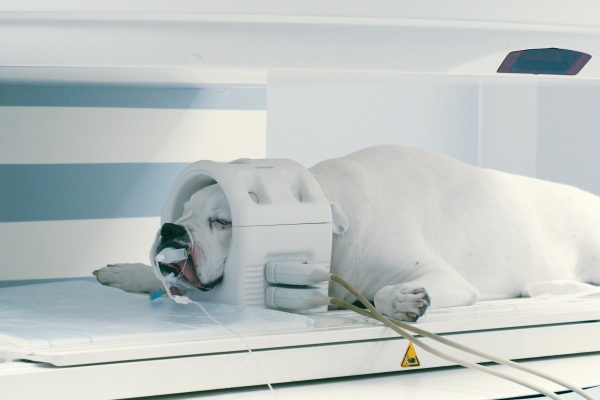
However, there are a few tests that can help solidify the presumptive diagnosis of GME. Your vet may refer your dog to a veterinary neurologist for magnetic resonance imaging (MRI). MRI testing can look for other problems like brain tumors and can help distinguish GME from other meningoencephalopathies like necrotizing meningoencephalitis.
Another helpful test is cerebrospinal fluid (CSF) analysis. CSF is the fluid around your dog’s spinal cord. In dogs with GME, the CSF may have increased mononuclear cell types like monocytes and lymphocytes or increased levels in special types of proteins like beta- and gamma-globulins.
What is the treatment for GME in dogs?
After reaching a presumptive diagnosis of GME, your vet will discuss the treatment options with you. Vets often treat GME with immunosuppressive therapy. This is primarily achieved with steroids in the initial phase, but most studies suggest that multi-agent therapy (usually a steroid plus one or more immunosuppressive drugs) is the best course of action.
Prednisone for dogs with GME
Steroid medications like prednisone for dogs and dexamethasone are useful for GME because they help maintain the blood-brain barrier, suppress T-cell activity, and reduce inflammation. Veterinarians use high doses of steroids to achieve these effects. Unfortunately, the downside is that this also increases the risk of side effects such as gastrointestinal upset, increased thirst in dogs, and increased urination.
Dogs with GME should stay on steroids for at least three months. Stopping steroids abruptly increases the risk of a relapse.
Immunosuppressives for dogs with GME
There are several different immunosuppressive medications your veterinary neurologist may consider when treating your dog’s GME. Cyclosporine is one of the most common immunosuppressives used for GME because it is well absorbed when ingested. It also works fairly quickly. This is advantageous because other immunosuppressive agents like azathioprine can take eight to twelve weeks to take full effect.
It is important to know that the resolution of clinical signs doesn’t mean that your dog’s GME has been cured. Ideally, the vet would repeat the MRI and CSF testing before discontinuing immunosuppressive medications. Otherwise, if the lesion hasn’t completely resolved, stopping the medications often results in a relapse.
Additional therapies for dogs with GME
Dogs with seizures may need to start taking anti-seizure medications like zonisamide and levetiracetam. Veterinary neurologists prefer both of these over other anti-seizure medications because they cause less sedation.
Additionally, dogs with the focal form of GME may benefit from radiation therapy. Radiation works much better for focal GME than disseminated since for focal GME the radiation only needs to be directed at one area.
What is the prognosis for dogs with GME?
Dogs who undergo treatment for GME can have a fair to good prognosis. However, left untreated, GME can be fatal. It is estimated that 44% to 75% of dogs show a positive response to therapy. Many dogs require lifelong therapy, but it is possible for some dogs to go into remission once treatment is complete. However, those dogs may not be truly “cured” of GME as relapses are common.
Overall, studies indicate that the survival times vary from 14 to 1,063 days post diagnosis. The odds of a good prognosis and longer life expectancy are better when patients have a clean MRI within three months of diagnosis. On the other hand, patients with a poorer prognosis tended to have dull mentation, seizures, and multifocal signs. And prognosis was better for all dogs who were taking at least two different immunosuppressive drugs.
Finding hope in the midst of GME
I know it can be scary when your dog suddenly starts showing neurological signs and your vet mentions granulomatous meningoencephalomyelitis as a potential cause. No one wants to hear their dog has a difficult to diagnose condition that often requires multiple potentially lifelong medications. However, the good news is that GME is treatable. And some dogs may even go into remission.
If your dog has GME, work closely with your veterinarian and a veterinary neurologist. This partnership is a great way to give your dog the best possible chances of continuing to live a good life despite GME.
What advice do you have for dog parents who are facing a GME diagnosis with their dog?
Please share your insights below.


Our 14 week old English Setter Jazzy was first diagnosed by 2 Different veterinarians as of having meningitis and was treated with prednisone. Which seemed to help for a couple weeks. We are told to reduce the dosage and she started to go backwards again. By the time we got her into a neurologist She was seeming to lose her vision and very Agitated. They did an MRI and concluded it was a tumor deep inside the brain and that we should euthanize her.. we are very sad We had to do that.. In my research it I found that is very hard to differentiate the meningitis from a tumor which was deep in her brain. Everything I’ve read is that they should have Done spinal tap to help eliminate meningitis before coming to their conclusion. Is this something you would’ve recommend recommended? We are heartbroken!
Hi Tim,
I am sorry for the tragic loss of your young puppy and understand how your mind tends to ponder all the “what ifs” while grieving. It would be great to be able to do a spinal tap and get a definitive diagnosis, but unfortunately this is not always an option. Most general practitioners do not have the ability to do this procedure in the clinic, and it usually requires a referral to a specialist. Your vet made a wise call trying to offer a very financially conscientious treatment, that had this indeed been meningitis would have been a great choice. My line of thinking is always to try the quickest, most common, and historically most successful treatment, then if that doesn’t work, we can move on to plan B. This sounds exactly like what your vet did and when the prednisone did not resolve the issues they offered a referral to a specialist for more in-depth testing. I hope with time your heart can begin to heal and you can find peace. Wishing you brighter days ahead as you continue life’s journey.