Knowing the signs of a brain tumor in dogs can be helpful whether you want to be a well-informed dog parent, are worried your dog could have a brain tumor, or are wondering what other symptoms your dog with a brain tumor might exhibit. To help dog parents like you, integrative veterinarian Dr. Julie Buzby discusses 16 signs of a brain tumor in dogs.

As our beloved companions age, they experience a variety of physical and mental changes. So sometimes it can be hard to know how significant a particular symptom might be. You could easily find yourself wondering (or Googling), “Is this change normal for an older dog? Or could it be a sign of a brain tumor?”
Ultimately, you need a vet visit to get a definitive answer. But it can be helpful to know the potential symptoms for brain tumors in dogs, and what other conditions those signs could be pointing to.
What is a brain tumor in dogs?
In short, a brain tumor is a mass in the brain or tissues surrounding the brain that develops due to disordered cell growth. There are many different types of brain tumors in dogs. Some are primary brain tumors, which arise from the brain or meninges (the covering of the brain and spinal cord). Others are secondary brain tumors. These masses occur when cancer in a different part of the body ends up spreading to the brain.
Overall, brain tumors tend to occur in older dogs. While there are numerous types of brain tumors, meningioma is the most common primary brain tumor in dogs. And glial tumors are the second most common.
The diagnosis of brain tumors in dogs, treatment options (like radiation therapy or surgery), and prognosis for a dog with a brain tumor are beyond the scope of this article. But you can get the details in my article: Brain Tumor In Dogs: A Dog Parent’s Guide.
In this article, I want to focus on the signs of a brain tumor in dogs. That way, you can recognize them at home and/or monitor your dog for changes after the diagnosis of a brain tumor.
4 look-alike conditions
Before discussing dog brain tumor symptoms, it is important to understand that some signs of a brain tumor can also occur fairly commonly in four other neurological conditions—vestibular disease, epilepsy, canine cognitive dysfunction, and stroke.
Vestibular disease
Vestibular disease in dogs, or doggy vertigo, occurs when a dog’s vestibular system (which is responsible for helping your dog maintain balance) is not working properly. It is most common in senior dogs and cats and in dogs who have severe ear infections (otitis in dogs).
Epilepsy
Epilepsy in dogs is very similar to epilepsy in humans. This disease consists of recurring seizures that don’t have any distinct cause (versus other seizures that occur due to a brain tumor, infection, or other known cause). Epilepsy can affect dogs of any age, but most dogs with epilepsy experience their first seizure between 1 and 5 years old.
Canine cognitive dysfunction
Canine cognitive dysfunction (aka CCD or doggy dementia) is a disease that occurs primarily in senior dogs. It is estimated that 68% of dogs will have CCD by the time they are 15-16 years old. Dogs with CCD appear to have decreased cognitive function. And the signs of dementia in dogs may mirror those in human Alzheimer’s patients.
Stroke
Strokes in dogs occur when blood flow to the brain is interrupted. Thankfully, strokes in dogs are less common than strokes in humans, but they can occur, especially in senior dogs.
What are the signs of a brain tumor in dogs?
Now that you know which diseases might be confused with a brain tumor in dogs (especially elderly dogs), let’s take a closer look at the symptoms of brain tumors. We will explore each of the following signs of a brain tumor in dogs in more detail below:
- Seizures
- Panting and restlessness
- Balance problems or difficulty walking
- Behavior changes such as aggression, excessive whining, or mentation changes
- Circling
- Head tilt
- Head pressing
- Decreased cognitive function
- Changes in vision (including blindness)
- Abnormal pupil size and/or nystagmus (repetitive flickering or twitching eye movements)
- Changes to the appearance of the face
- Neck, back, or head pain
- Loss of appetite (anorexia)
- Vomiting and diarrhea
- Licking the air or sneezing
- Weakness and lethargy
It is important to note that the exact signs seen in a dog with a brain tumor will depend on the type of cancer present, how far the cancer has progressed, and the location where it has invaded the brain.
Additionally, while I will try to identify some of the symptoms as an early, late, advanced, or end-stage sign of a brain tumor in dogs, this can get a bit murky due to the variation in tumors. Thus, looking at the progression of signs rather than the particular signs can give you a better picture of your dog’s condition.
1. Seizures
Seizures in dogs are one of the most common signs of brain tumors in dogs. However, not every dog who has a brain tumor will have seizures. If they do have seizures, dogs with a brain tumor may have focal seizures (e.g., the dog is fly biting or licking the air). Or they may experience generalized/grand mal seizures (e.g., the dog falls over, starts paddling, etc.) or tremors. Sometimes the dog could have multiple seizures within a 24-hour period of time, which are known as cluster seizures.
Dogs can develop seizures at any stage of a brain tumor. And they may worsen or become more frequent as a tumor grows and progresses.
Any dog that has a seizure should be evaluated by a veterinarian and have diagnostics like blood tests for dogs and possibly X-rays or advanced imaging. This allows the vet to identify the cause of the seizure (e.g., brain tumor, trauma, inflammation, epilepsy, etc.) and create a treatment plan.
2. Panting and restlessness
Restless behavior, like panting and pacing, is common in dogs with brain tumors. This can happen because the dog is in pain or is aware that something is wrong. Or the dog may be panting and restless due to abnormal brain function or altered brain activity.

It is important to note, though, that restlessness and panting are not specific to brain tumors in dogs. This symptom can also be seen in the other four diseases discussed above. Plus, it may occur in many other conditions that are not specific to senior dogs or the brain.
Thus, if your dog is acting restless, you should consult your vet and monitor your dog for any additional clinical signs in the meantime.
3. Balance problems or difficulty walking
Dogs with brain tumors may also develop an unsteady gait (ataxia) and have difficulty walking. This could look like:
- Stumbling when standing up
- Incoordination when trying to lie down
- Staggering (walking with a drunken gait)
- Tripping when walking
- Leaning to one side when walking or sitting
- Crossing the front or back legs when walking
- General incoordination (aka a dog who is wobbly and off balance)
However, dogs with other conditions can also have balance abnormalities. For example, vestibular disease, stroke, epilepsy, or weakness and pain associated with musculoskeletal diseases (e.g., IVDD in dogs, degenerative myelopathy in dogs, etc.) can also cause a dog to appear ataxic.
If your dog is having difficulty walking, it is important to let your veterinarian know. Balance problems are abnormal for any dog. So, your dog needs a veterinary exam to determine the underlying cause and create a treatment plan.
Additionally, if you know your dog has a brain tumor and his or her balance is getting worse, please let your vet know. This could be a sign that the tumor is growing or is invading a new part of the brain.
4. Behavior changes (aggression, excessive whining, decreased mentation)
One of the more specific signs of a brain tumor in dogs is behavioral changes. Because the brain is so important for regulating the chemicals and hormones that control behavior and thought processing, brain tumors can, unfortunately, affect a dog’s behavior.
Behavior changes can look very different depending on the dog, the tumor location, and the tumor size. Some dogs with a brain tumor may never experience behavioral changes. Others may experience them very early on in the disease (sometimes this is even the first symptom dog parents notice).
Also, behavioral changes can come and go. Because of this variation, when dog parents ask me, “How does a dog act with a brain tumor?” it is very difficult for me to give them a straight answer. The type of behavior changes your dog may experience can differ from dog to dog.

Let’s take a look at three common changes in detail.
Aggression
Unfortunately, one of the most common behavioral changes I see in dogs with brain tumors is aggression. Brain cancer can sometimes cause the sweetest, most friendly dog to become aggressive. And the aggression can come and go and take various forms. Different types of aggression could include:
- Resource guarding—starting to protect his or her food, bed, toys, etc.
- Sudden aggression toward or fear of a family member or friend with whom the dog was previously comfortable
- Newly developed aggression toward another dog or other pet in the household
- Appearing more grumpy or growly in general
If you notice any of these changes in your dog, please consult your veterinarian. Aggression is not something that you should ignore because it can progress and become dangerous. Thus, it’s important to work with your vet to determine the cause of the new behavior. It could be a brain tumor vs. a stroke vs. dementia vs pain vs. another condition. And the sooner you know the underlying cause, the sooner you can address it.
Excessive whining
Another behavior change you might notice in a dog with a brain tumor is increased whining. This symptom can also go hand in hand with the restlessness discussed above. Dogs who are experiencing brain changes from a tumor, sundowners in dogs (a component of CCD), epilepsy, or a stroke are all at risk of developing anxious behavior, including increased whining.
Often, excessive whining is most obvious in the evenings or at night. Instead of sleeping, a dog with senior dog anxiety at night might be up pacing and whining or howling. Or dog parents sometimes notice that their dog is suddenly barking at imaginary things on the walls or imaginary noises.
If you see these behaviors, please bring your dog to the vet for an evaluation.
Decreased mentation
Sometimes a dog with a brain tumor may seem to be less aware of his or her surroundings or less responsive to normal stimuli. These changes fall under the category of decreased mentation (mental status). It may seem like your dog’s attitude and personality have changed, and your dog just isn’t himself or herself anymore.
Interestingly, a study of 177 dogs with secondary intracranial neoplasia revealed that mentation changes were the most common clinical sign in dogs with tumors that had spread to the brain from another location.
5. Circling
Dogs with a brain tumor may circle. This may mean they walk in circles rather than a straight line. Or they may not make complete circles but rather walk in a curved line. Either way, usually, dogs will circle more to one side than the other.
If your dog is circling, please let your veterinarian know. Before the vet visit, it can also be helpful to take a video of your dog’s behavior, especially if your dog does not always circle.
Circling is usually related to a brain tumor, vertigo, or a severe ear infection.
6. Head tilt
Dogs with a brain tumor may also have a head tilt (holding the head cocked to one side). And because the dog has a head tilt, he or she may be more likely to walk toward the side of the head tilt rather than in a straight line. Thus, head tilt and circling may go together. And just like circling, a head tilt could be due to a brain tumor, vertigo, seizures, or a severe ear infection.
7. Head pressing
Head pressing is another pretty obvious brain tumor symptom that dogs can develop. When a dog is head pressing, he or she will stand near an object (usually against a wall, couch, or corner) with his or her head pressed against that object.
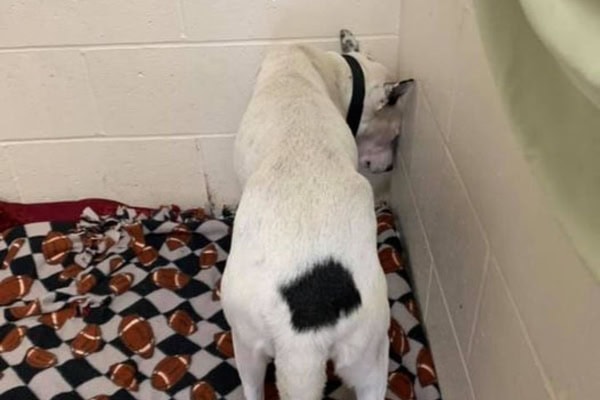
We don’t fully understand why dogs head press. But it is believed that it might give them some pain relief or help them feel secure.
Like many of the other symptoms, head pressing can be associated with epilepsy, stroke, vertigo, canine cognitive dysfunction, head or brain trauma, improper salt levels in the bloodstream, parasites, and more. So, if your dog suddenly develops head pressing or is doing the behavior more often, please let your veterinarian know right away.
8. Decreased cognitive function
In addition to head pressing, another common symptom of brain tumors (or other conditions) is decreased cognitive function. Like many signs, cognitive dysfunction can look different for each dog. And it can change as the disease progresses.
Some potential indicators of decreased cognitive function include:
- Appearing lost in the home where they live
- Forgetting who familiar people or other dogs are
- Not remembering where the food bowl, dog bed, or other familiar items are located
- Forgetting previously known tricks or commands
When dogs start to show these symptoms in their senior years, it is common for dog parents to assume they are a normal part of aging. However, this is not always the case. These changes may point to a brain tumor, epilepsy, stroke, or canine cognitive dysfunction.
9. Changes in vision (including blindness)
Depending on the tumor location, dogs with brain tumors can also develop vision changes or sudden blindness. However, acute blindness could also be due to a stroke, a severe seizure associated with epilepsy, trauma, or sudden acquired retinal degeneration syndrome (SARDS in dogs). And more commonly, gradual vision changes are related to other conditions like glaucoma in dogs, cataracts in dogs, or normal aging and deterioration of the eyes, not a brain tumor.
In any case, it is best to make an appointment with your veterinarian if you feel that your dog’s vision is declining or if your dog suddenly goes blind. That way, you can get to the bottom of the issue and take steps to treat or manage it.
10. Abnormal pupil size and/or nystagmus
Additionally, dogs can develop abnormal pupil size and/or nystagmus (repetitive flickering or twitching eye movements) if the brain tumor is located near a nerve that controls eye function. But one or both of these signs can also occur with ear infections, vertigo, growths in the ear, Horner’s syndrome in dogs, head trauma, or other conditions.
11. Changes to the appearance of the face
Some dogs with brain tumors will develop abnormal bulging around the eyes, nose, or face. This may occur if the dog had a primary tumor in or around the eyes, nose, mouth, or skull, which then spread to the brain. Any sign of facial deformity (especially if sudden) should be evaluated right away by a veterinarian.
12. Neck, back, or head pain
In some situations, dog parents may notice signs of neck, back, or head pain in a dog with a brain tumor. Thus, when clients ask me, “Are brain tumors in dogs painful?”, the answer is “It depends.”
Tumors that are not invading any nearby structures where nerves are present are less likely to be painful. However, if the tumor is pressing on structures in the head (like the eyes), stretching the covering of the brain, invading the pain centers of the brain, or affecting the back or neck, this can be very painful.
Signs of pain in dogs that you might see include:
- No longer wanting to be petted on the head, neck, or back
- Flinching when certain areas are touched
- Whimpering or crying out when making certain movements
- Walking with a hunched back or kink in the neck
If you suspect your dog is in pain, please let your veterinarian know right away. Pain can negatively affect your dog’s quality of life. Thus, it is one of the symptoms you should watch closely for if your dog has a brain tumor. Also, if your dog is painful, please use caution when handling him or her. Severe pain can make dogs more prone to bite or snap if you touch them the wrong way.
13. Loss of appetite (anorexia)
Loss of appetite is another symptom that may occur in dogs with brain tumors. But this symptom can also accompany almost any disease or condition that dogs can develop. For some dogs, even the smallest amount of discomfort can cause changes in appetite.
However, just because loss of appetite is not a very specific sign, this doesn’t mean you should ignore it. Decreased eating is often one of the first symptoms that dog parents notice. And it is also one of the earliest signs that dogs exhibit for many different diseases. If you are concerned about your dog’s appetite, please make an appointment with your vet.
Additionally, if you know your dog has a brain tumor, monitoring his or her appetite after diagnosis is very important. If your dog suddenly has less interest in food (including special treats or snacks) or is not eating at all, this could be an indication that the cancer has progressed to the point where it is impacting your dog’s quality of life. And your vet may need to reassess your dog to determine if the brain tumor has changed, spread to another location, or if there is another unrelated problem.
14. Vomiting and diarrhea
In addition to a decreased interest in food, some dogs may develop vomiting or diarrhea when they have a brain tumor. Vomiting and diarrhea could occur if decreased food intake upsets the normal GI bacterial population. Also, some brain tumor medications and treatments may have side effects that cause gastrointestinal upset. Or it is possible that a metastatic tumor may have spread to the GI tract and caused the vomiting or diarrhea.
However, dogs with vertigo might be vomiting, too. This occurs because the sense of “being lost in space” can make the dog nauseous. Plus, dogs may also vomit or have diarrhea due to a whole host of other conditions.
While vomiting and diarrhea are not very specific symptoms, you should not ignore them—especially if your dog already is not eating (or drinking) regularly, is losing weight, or has other ongoing problems. Please contact your vet if your dog has persistent or recurrent vomiting or diarrhea.
15. Licking the air or sneezing
Some pet parents also ask if excessive licking of the air or sneezing could mean that their dog has a brain tumor vs. dementia vs. another condition. This is a great question because your dog licking the air frequently or excessively sneezing could be associated with various diseases, including:
- Seizures (from epilepsy or a brain tumor)
- Allergies
- Nasal tumors in dogs or dog mouth cancer (both of which could spread to the brain depending on the tumor type)
- Severe dental disease in dogs
- Canine cognitive dysfunction
As you can see, excessive air licking or sneezing could be related to a variety of diseases. If your dog has either of these symptoms, please reach out to your veterinarian to help determine the underlying cause.

16. Weakness and lethargy
Dogs with brain tumors also tend to experience weakness and be a lethargic dog. You may see these symptoms early on in the disease progression, and they may worsen as time goes on. However, just like many of the symptoms above, weakness and tiredness are not specific to brain tumors. They could also be a sign of many other conditions.
If your dog does appear to be tired or weak, it is important to monitor him or her carefully. Does your dog still perk up for food, water, or to go outside? When your dog rests, does he or she gain more energy? Is the tiredness increasing over time? Does your dog have tremors? The answers to those questions can help guide you and your vet.
If you are concerned that your dog may be lethargic or weak and the signs aren’t improving, please consult your veterinarian. And if your dog with a brain tumor appears to be weaker or more tired, please let your vet know right away. It is important to note any changes in symptoms so your vet can monitor or treat your dog accordingly.
Don’t underestimate the role you play in your dog’s health
As you can see from the long list of symptoms you just read about, there are many different signs of a brain tumor in dogs. Some of these signs are more likely to be associated with a brain tumor. But others can just as easily point toward a different senior dog disease. This can complicate matters a bit.
The key is knowing what symptoms to watch for and remembering how important it is to get your dog to the vet if you have concerns about your dog’s symptoms.
Additionally, once your dog has been diagnosed with a brain tumor (or any other disease), it is very important that you monitor your dog carefully for new or worsening symptoms. You know your dog better than anyone else, so you are the most likely to detect these changes quickly. Should you notice any worsening of the symptoms or new signs, please contact your vet promptly.
As the dog parent, your veterinarian and your dog are relying on you to be a voice for your dog. Your input is critical for reaching a diagnosis and creating the best plan possible. Although the overall prognosis for dogs with brain tumors is grim, through proper treatment or palliative care and close monitoring, you can give your dog the best quality of life possible after a brain tumor diagnosis.
What symptoms did your dog with a brain tumor exhibit?
Please comment below.


Has anyone had experience dealing with their dogs masticatory-muscle-myositis-trigeminal-neuritis-trigeminal-nerve-sheath-tumor? My boy is not going to make it and he’s getting worse. Please has anyone had ANY success with this type of tumor? ?
Dear Jo,
I am so sorry your boy has received this devastating diagnosis. While I have seen several dogs that developed a nerve sheath tumor, I can’t say I have ever seen one in this particular location. If the tumor is benign and complete surgical removal is possible, it can offer a decent prognosis. I am assuming that with the location of your dog’s tumor surgery may not be a good option? I will attach links to other articles and one for the Canine Cancer Foundation’s website. You may find some helpful information or treatment ideas to discuss with your vet. I highly recommend you ask about a consultation with a veterinary oncology specialist. They can help you navigate this difficult situation and offer support. Hoping for a clear path forward and praying for peace.
1. Canine Cancer Foundation: https://wearethecure.org/learn-more-about-canine-cancer/canine-cancer-library/nerve-sheath-tumors/
2. MMM in Dogs: A Vet Explains Masticatory Muscle Myositis
3. Signs A Dog is Dying of Cancer (Plus Advice for 8 Common Cancers)
4. How Will You Know When It’s Time to Euthanize Your Dog? 5 Caring, Heartfelt Messages
My dog had cushion disease and was getting Vetoryl for past year unfortunately on Friday night she took two seizures with in five hours and another one six hours after , I took her to the vet and they had said they belive that the pituitary gland has enlarged in her brain so I had to make the most hardest decision and put my little lady of 13 years to sleep as I could see she was starting to suffer however I have this feeling of guilt did I do the right thing I’m absolutely heartbroken with out her and trying to help my other dog who is grieving her 😭😭😭
Dear Nicole,
My heart aches for you as you grieve the loss of your beloved pup. Saying goodbye is never easy and it is completely normal to have conflicting feelings. You made a loving choice to spare your girl from unnecessary suffering and offered her a peaceful passing. I would have done the same for one of my own. Praying for healing and comfort for your heart. May her memory be with you always. ♥
Grieving the Loss of a Dog After Euthanasia (& Finding Peace)
Do Dogs Grieve? Helping Your Dog Cope With Loss
Three weeks ago tonight, my precious beloved Ruby became very ill. She goes everywhere with me. We were caring for my mom(97) and I got Mom in bed and Ruby went to her bed. I heard this strange noise and went to check on her (she was at the foot of my bed.) White foam was coming out of her mouth. She couldn’t stand. I rushed her to the er and they immediately started propolfol (spell) keppra, diazepam and 10 hrs later phenobarbital. They couldn’t break the “storm” in her head. I held my angel while she was put to sleep. The rage thati have at her vet is blackout. I took her in four different times. He kept treating her for a uti. And he put her on a hormone estriol. She NEVER WET HER bed. NEVER. He said he thought this would help her. She was 11. This drug is dangerous in senior dogs and no pamphlet was given. I trusted him. I kept asking if she had something else going on. Took videos and wondering about cognitive issues. It was pushed off. I feel so guilty I didn’t go to a second opinion and did the er fail her. I am dying inside. She was my angel. My baby. I am lost without her. Get a second opinion.
Dear Amy,
I am so sorry for the loss of your beloved Ruby. It is normal to have strong feelings while grieving, especially if the circumstances were tragic in nature. While I can’t speak to why certain medical decisions were made without being personally involved, I can say that I don’t think the Estriol had anything to do with the development of seizures. Even if you had been able to get a definitive diagnosis of a brain tumor several months prior, most brain tumors are inoperable, and treatment can be very cost prohibitive while usually only slowing the progression. You made a loving choice to allow your own heart to break in order to spare Ruby from unnecessary suffering. I am certain she knew how much she was loved and that your presence was a comfort. I hope with time your heart can begin to heal and praying for peace.
I just had to say goodbye to my 12 year old boy. He started seizures 3 weeks ago and progressed very rapidly and his last one did not stop. When we got him to the ER , they tried to stabilize him but she said his temp had spiked too much and the IV meds weren’t even really helping. His eyes wouldn’t stop twitching. We made the decision to end his suffering. I held him til the end. I hope he knows how much we loved him.
I am so traumatized by this and can’t get it out of my head.
They said most likely brain tumor and it progressed. I’ve been crying for 3 days.
We had just had surgery in December for him for hepatocellular carcinoma. They got clear margins and we thought he’d be fine. Never thought he had something with his brain.
I wish I hadn’t had to do it under emergency situation. I miss him.
Dear Kkay,
My heart aches for you with the tragic loss of your beloved pup. I am so sorry things escalated quickly and didn’t leave you any time to truly process what was happening. I am certain your boy knew how much you loved him and that your presence was a comfort. As time passes, I pray the grief will fade and your heart can begin to heal. May his memory stay with you always and continue to be a blessing in your life. ♥
Grieving the Loss of a Dog After Euthanasia (& Finding Peace)
Pet Loss Support: Groups & Resources for Comfort
my rescue mix has displayed aggression towards me recentlyand she bit a child while on a walk which has never happened before. She has not been able to jump up on the couch and paces during the night and whines. Since the bite she gave this child was so severe, animal control became involved and now she has to be put down. I talked to so many professional trainers and one mentioned that her sudden aggression and lack of balance indicate a physical problem. Since I don’t have the funds for testing, I will have to put her down. I am devastated and the sorrow I feel is so profound. I am going to miss her terribly. she’s been a great friend.
Dear Jennifer,
My heart is broken for you. I can only imagine how difficult this must be and can understand your sorrow and grief. This does sound like what we see sometimes with the development of a brain tumor. Saying goodbye is a loving option and will likely spare your girl from unnecessary suffering. Praying for strength and peace for your heart. May the memories of all the good times you shared be with you always. ♥
Pet Loss Support: Groups & Resources for Comfort
Hi everyone
My mini Snhauzer is 14 yrs old 6 months ago he started having seizures we took him to the vet the diagnosis was brain tumour nothing they could do apart from steroids.they were no good for him he had diarrhoea vet took him off meds .He has got worse since walking in circles before more seizures. Lack of eating just has tit bits . Lots of other symptoms..he is every thing to us he still gives kisses and follows us around.today he has started breathing heavily from his stomach and is very lethargic.OMG iff we have to loose him are we being selfish iff we want him to go in his sleep next to us .
Dear Carole,
My heart aches for you as you face this emotional situation with your beloved senior guy. While some dogs do pass peacefully on their own, this is not usually the case. A “natural” death can be quite worrisome and unpleasant for everyone involved. I don’t want you to have to see your boy gasp for air, cry out, or have life ending grand mal seizure. A peaceful passing can be just as important as a life well lived. Hoping you can find the advice you need to make the best choice for your sweet boy. Praying for strength and comfort as you navigate this difficult path.
How Will You Know When It’s Time to Euthanize Your Dog? 5 Caring, Heartfelt Messages
Preparing for Your Dog’s Euthanasia: 10 Thoughts for Peace
I don’t know how I stumbled on your page, but, I am so glad I did! 4 days ago, our 12 year old lab mix, Dazzle, had a gran mal seizure. We took her immediately to the vet, where they did all kinds of tests. She has Cushings disease which was diagnosed in September. They did blood work, ultrasound, X-rays, and kept her for the day to observe. She had enlarged adrenal glands, but, everything else came back okay. We brought her home and she was lethargic all the next day… that night she had another huge seizure… we just held her until it passed… in the middle of the night she had 2 more. We went to the vet emergency clinic and she had 2 more seizures there…they tried everything but could not stop the seizure. There was one last thing we could have tried, phenobarbital, but, she had been seizing for so long we were worried about brain damage, and the vet wasn’t sure it would even do anything. We made the sad decision to put her to rest. It haunts me now that I didn’t try the phenobarbital…. But, our poor girl had had at least 5 episodes, (or one long one) in one night…. She was just so out of it. I held her when she passed…I just hope she knew we were there and how much we loved her! We are all devastated… I can’t stop crying whenever I think of her. I am assuming that she probably had a brain tumor as that is the only thing we did not check, because our vet said that they wouldn’t do anything even if we knew. I am comforted by reading your stories in the comments, and feel like I’m not questioning our decision to put her to rest! Thank you for this page! Dazzle was the sweetest most pure hearted dog who loved everybody, and everybody adored her! She was my constant shadow, protector, kind hearted and goofy friend! I miss her terribly!
Dear Cynthia,
I am so sorry for your tragic loss of Dazzle. Your comment is definitely not too long. ♥ It was just waiting in the pending folder for me to read it and be able to respond. You absolutely made the right decision to free your girl from her suffering and give her rest. I agree this sounds like a brain tumor and doubt the phenobarbital would have made any difference. I hope with time your grief will begin to fade, and your heart can find peace. May Dazzle’s memory stay with you always and continue to be a blessing in your life.
Grieving the Loss of a Dog After Euthanasia (& Finding Peace)
My American Bull dog was the sweetest boy he loved cuddles and playing tug of war and rolling about with me on the floor we moved homes and he started laying at the door he would let people in but not back out then on the 27th of April 2024 he wanted out so i opened my back door to let him out and he saw my next door neighbours cat (he loved the cat) this day he tried to get over the gate and i stopped him then all of a sudden he turned on me he tore my face and neck and almost killed me but my son in law and nephew distracted him and he heard a noise he thought came from inside the house and my nephew manged to close the door it turned out he had a brain tumour the police wanted to shoot him but i started shouting at them and told them they weren’t going to hurt my baby like that my face is badly scarred but i am here and grateful every day for that so please if you see the slightest difference in your dog’s behaviour take him to the vet straight away i thought my dog was just unsettled with the house move
Dear Serena,
My deepest sympathies to you for all you have endured. What a horrifying and tragic event for all involved. How are you doing with your healing process? Thank you for being willing to share your story with us. Praying for comfort and peace and wishing you brighter days ahead. ♥
barbiturates will not help for long. My 5 year old King Charles was on epiphen in increasing doses for about 4 months and I had to use emergency packs of rectal diazepam as his seizures were increasing in frequency. He had the circling and head pushing into corners and didn’t rest for a minute after one seizure until the next one. On his final day he collapsed with exhaustion and couldn’t walk at all. He was still having seizures after taking the epiphen and after emergency treatment at the vets. On my vet’s advice I had to have him put down two days ago. Just wanted to say that it might not have helped to have the epiphen. He also had focal fits where he was conscious all of the time which I was told is another symptom of intracranial tumors. I just cannot believe how somemuch has happened so quickly. Hope this helps
Dear Stephanie,
I am so sorry for the tragic loss of your pup. Thank you for being willing to share your experience despite the grief you are walking through. Praying for comfort and healing for your heart. Bless you. ♥
My five year old chihuahua woke up paralyzed,I took her to the emergency they did not know what was wrong with her,they put her on intervenes and breathing tube,they did all kinds of tests,they did not know what was wrong,the end of the day she got a fever which did not help her fever she was to far gone,she did not have any symptoms,before that but I I few days before that her eyes looked a bid bullying I was going to take her to the vet,but it was to late ,doc called me in at night and said I have to let her go,I held her in my arms for half hr,she had lifted her head and looked in my face without blinking and I had to say good by it almost killed me,doctors did not know what happen to her they said it could have been a untreated brain tumour,she had a check up about six months before,they gave her good report,she is cone now one month and her brother a chihuahua is so depressed 💔
Dear Helga,
I am so sorry for the tragic loss of your young pup. I can only imagine how difficult it must have been to make the decision to say goodbye with so little time to truly process what was happening. I am certain your girl knew how much she was loved and that your presence was a comfort. Wishing you peace and healing for your heart. May her memory be with you always. ♥
Grieving the Loss of a Dog After Euthanasia (& Finding Peace)
Do Dogs Grieve? Helping Your Dog Cope With Loss
hi there,I’ve just lost my dogs this morning,she had been lethargic and off her food,this morning after her walk she had a massive seizure,we carried her into the vets ,but she couldn’t stand and never looked right,we had to make the sad decision but I could not have brought her home she was just too far gone,it’s heartbreaking and I’m crying typing this but you did the right thing,it’s the last kindness you can do for your dog.
Dear James,
I am so sorry for the tragic loss of your beloved pup. Praying for peace and comfort for your heart. May her memory be with you always. ♥
Grieving the Loss of a Dog After Euthanasia (& Finding Peace)
I am so sorry for you. I just had to put my 11 year old to rest today…due to continuing seizures. Unlike you, mine has been on phenobarbital for 6 weeks. She had breakthrough seizures so she was put on a secondary seizure medication. She would go days but still seize, head bounce, put her head in corners. She ate like a horse, drank huge amounts of water and had to be taken out every hour to urinate. This went on around the clock. She was unsteady walking and would fall into her urine. She had so much trouble with coordination. I finally asked to hav a different med for her as the side effects of the phenobarbital seemed to extreme. So another med was prescribed (we were now on three anticipating weaning off the phenobarbital). She continued to have small seizures. So, don’t beat yourself up as it is not a miracle drug and your baby seemed to have uncontrollable seizures. Oh I also had Valium to insert rectally during seizures which I did. It broke my heart to lose her but we were not able to control her seizing with all that medication and she had zero quality of life. Of course I am second guessing myself too, but the vet said I had tried everything and she had no options left. Don’t feel guilty. It hurts so much and we are in the same boat
Dear Debbie,
My heart aches for you with the loss of your senior girl. Bless you for being willing to show support and empathy to others while still grieving yourself. Praying for comfort and peace as you continue life’s journey. ♥
I had to put my sweet baby boy Radar down just before Thanksgiving. He was 3 yrs old and out of nowhere had 4 seizures within 24 hrs. we took him to vet where he had 2 more. He always was dazed/confused after seizures at home. Did the paddling, had trouble with standing. The vet sedated him and he never woke up. We chose to let him go since we didn’t know what his quality of life would have been after. Luckily we were able to be there when he passed and let him know how much we loved him. I still cry when I think about him 😢
Dear Theresa,
I am so sorry for the tragic loss of your sweet boy. I am glad you were able to be with him during those final moments and feel certain your presence was a comfort. I hope with time the grief will fade, and you can find peace. May Radar’s memory stay with you always and continue to be a blessing in your life.
Lost my 3 year old my frenchie to brain tumor his first symptom was his front arm would swing to the side when he got up and his back leg knuckled they thought ivdd put him on medication then he was panting heavy like he couldn’t breathe told us a flare added more meds on his 2 “flare” I took him to er an Dr told me to take him to neurologist he might need surgery this was on a Sunday. I made appointment for following Wednesday but had to Make it emergency for Tuesday because he was now he had new symptoms doing circles while walking a pooping his self . The neurologist did mri said it was a brain tumor not ivdd
Dear Liz,
I am so sorry for the loss of your young pup. I can only imagine how difficult it must have been to have to say goodbye so suddenly. You made a loving choice to offer your boy peace and freedom from suffering. I hope with time your heart can begin to heal and the grief will fade. May his memory stay with you always and continue to be a blessing in your life.
Hello everyone I wanna share what my dog is currently going through and was hoping to get some feedback. She is 9 years old and in the past week she started flinching out of one eye, her body would randomly tremble and she would be reluctant to eat at some points. every other day she acts normal eats her food and rarely flinches. Ive noticed a small bump on her head and im not gonna lie im not liking these odds. thank you for listening sorry for typing so informally I just really need some advice.
Hi Spencer,
I understand your concern for your pup and think it is good you are reaching out for advice. While I can’t make specific conclusions without examining your girl myself, I can say that this doesn’t sound typical of a brain tumor. I know you mentioned she has a small bump on her head. It would be wise to have this evaluated by your vet, but I would not be concerned that this is “brain tumor” since you can see it on the outside of the skull. The eye flinching could have many different causes. One thing your vet needs to rule out are focal seizures or other neurological problems. If you can catch this behavior on video, it could be very helpful in making a definitive diagnosis. Hoping you can partner with your vet to get some answers and ensure your girl remains happy and healthy for many years to come. Best wishes to you both!
my dog,3 , had developed lumps, get poked them and said not cancer , not even 2 weeks later , she can’t stand right, she’s falling, she declining, her eyes look glossy and off. Tumor moved to her head from belly, there was no help for her. my heart is broken .
Dear Jewels,
My heart aches for you with the loss of your young pup. While not completely impossible, it is extremely rare for lumps on the skin to metastasize to the brain. I would assume the original lumps were probably unrelated to the tumor that led to her passing. I know you would have done anything to change the outcome but sometimes a peaceful goodbye is the most loving gift we can give. Wishing you peace and healing for your heart. ♥
Pet Loss Support: Groups & Resources for Comfort
Hello
I just lost my baby girl Harlie yesterday she was 3 and died asleep on the sofa,it started 4 days before with her just laying in her bed,I’m abroad in holiday and she is with my mum and son at home,When I dropped her and our other dog off she was absolutely fine,so I thought she was pinning for me,but then she started to looking up.So I arranged for them to take her straight to the vets,they thought she had a sore neck and gave pain relief and she came home,she seamed to pick up and eat and drink the next day but then went down hill once more so rushed to the vets again,she had a thorough examination and they said it may still be her neck as sore to touch,I they did mention a brain clot to my son but were hoping it was the neck.They brought her home and she died the following morning..As you can imagine my heart is broken and I feel like I may of caused this as she was missing me. Vickie
Hi Vickie,
How heartbreaking to lose your beloved dog while you are away. My heart goes out to you in this difficult time. Dogs definitely do miss their people, but I want to assure you that you leaving for holiday did not cause your dog’s death. It sounds like something was going on that no one could have predicted, and whatever it ended up being, it progressed quickly. You and your mum and son did everything right by getting her to the vet quickly. Sometimes sadly, dogs do pass away despite us doing everything we can for them. I hope that in time you will be able to release yourself from the guilt you are feeling. It wasn’t your fault, or anyone’s fault. Sending much love as you grieve this loss.
Vickie
I’m very sorry for your loss… that is very quick and what prompted me to respond.
I am currently dealing with diagnosis of my 9 year old female dog husky/shepherd mix
She started with symptoms first with pain in her lower back. I first noticed something by her growling at me when I tried to shift off my bed. This was about November 15th
Pain increased and I got her in to vet on 17th. She was not showing cognitive issues at the time. I got her home gave her meds pain / muscle relaxer and an hour later she fell over and struggled to get up and walk. Took her back
At the first visit they had done an abdominal ultrasound and blood work of which everything appeared fine. They performed more of a neurological exam (short of what a neurologist would do)
Her pain symptoms have diminished and cognitive damage has increased over the last week. Yesterday the sedated her to perform X-rays (had waited due to pain level – up until yesterday she had been eating and drinking. No vomiting or diarrhea
Just many of the other symptoms of brain issue.. we stopped all pain meds to see if she gained clarity. No she hasn’t
Will start steroids tomorrow and see if it makes any difference. Once again I’m so sorry for your baby.
Thank you Odessa
Dear Odessa,
My heart goes out to you as you face this worrisome situation with your senior girl. Hoping the steroids will offer some relief and praying for peace. Bless you both. ♥
My 15 year old Jack Russell, Jazzy, is presumed to have a brain tumor, since most everything else has been ruled out. She has had four seizures, reduced appetite, some confusion and wobbliness. She is now on anti- seizure medication, and has not had a seizure since then. We took her to the vet after we realized she was having seizures when she had two in one night. She still loves doing her Jazzy things, but is more lethargic. It’s hard to tell if it’s from the medication, or her medical condition. I’m worried we won’t know when the time is right to let her go. Im still in denial and hopeful that it’s something else, she is such a good girl. I feel so bad for everyone posting on here because it’s hard to see them go.
Dear Carolyn,
My heart aches for you as you try to navigate this unknown path. I understand your concern and confusion and wish I could tell you what to expect in the future. You are doing a great job taking care of your girl and ensuring she gets the medical attention she needs. Try to take things one day at a time and not let your brain worry about all the “what ifs”. I am certain Jazzy knows she is loved and that you will offer her peace when the time is right. Praying for clarity and strength. Bless you and your sweet girl.
Using a Quality of Life Scale for Dogs
How Will You Know When It’s Time to Euthanize Your Dog? 5 Caring, Heartfelt Messages
Thank you so much for these resources! Your reply brought tears., it is very reassuring. Thank you.
I’ve had my little yorkiepoo for 13 years. She’s my bestfriend! My life was amazing just a few years ago. I was married, I was a mom, I had a good job, mortgage, car payment, and a dog. . My 18 year old son passed away , and my life spiraled out of control. I lost everything, with in 1 month I was living in my car with my little yorkiepoo, I ended up addicted to drugs…. Can you imagine that?? 41 years old never so much as smoked a cigarette, but here I am sleeping in my car with my dog POSITIVE I’m going to wake up any minute. My life was unrecognizable to the one I had a few weeks before. My lil dog was all I had, we didn’t eat everyday, she didn’t get the exercise or play time she deserved and STILL, out of every family in the world, there isn’t a single person she would have rather been with, with in the last few months I’ve started getting my life back together. I don’t have a steady. “ home” yet, but I stopped using drugs and no longer live In my car, it’s just a long process. My son, Cadon. He was MY person. I have no idea how to navigate a world that he doesn’t exist in. What makes it even worse, is that I’m sitting here reading this article and realizing my little dog displays every single sign, besides seizures. I can’t take her to the vet.. I have 17$ to my name that I would GLADLY spend every cent of, if it was enough to help. It’s not. What can I do? The thought of her being in pain makes me physically ill, she’s my best bud. She’s laying on my lap right now trying to make ME feel bettter and it just kills my soul!
Amy,
My heart breaks for you reading your post. What a challenging and heartbreaking few years you have had. I’m so incredibly sorry for the loss of your son Cadon. There are no words to adequately describe that kind of pain. I know I don’t know you, but I want you to know that I am SO proud of you for breaking free from drug addiction and working towards stable housing. That is huge! In the midst of the pain and challenges, I’m so thankful that you had your dog to provide comfort, companionship, and love. She sounds like a wonderful heart dog and I have no doubt that you would do anything possible for her. Have you also looked at the symptoms for canine cognitive dysfunction? I’ll put a link below, but there can be a lot of overlap between the symptoms of a brain tumor and the symptoms of cognitive dysfunction (dementia). Without seeing your dog, I can’t say if it is dementia, a brain tumor, or neither, but I wanted to at least provide you with another condition to read about. If it is dementia, some of the management options are things like playing brain games, keeping a routine, and putting up night lights, and those are things are inexpensive or free. They also aren’t going to hurt anything if she does have a brain tumor. Don’t underestimate the power of just snuggling too. It is so good for the heart (both yours and your dog’s). I wish there was more I could do to help, but I want to encourage you to keep moving forward with the changes you have made and keep loving your special pup. You can do this. Sending much love!
Here are the links to the articles:
1) Canine Cognitive Dysfunction in Dogs: Signs, Symptoms, Solutions
2) Canine Cognitive Dysfunction Checklist: Could Your Dog Have Dementia?
3) Signs of Dementia in Dogs: Stages, Symptoms & Treatment
4)13 Mental Stimulation Toys for Dogs (& Activities Too)
I just put down my 10yo lab mix. She had surgery for a mass on her side in June which we were told was all fat, but had grown substantially in the 6 months prior it its removal. She had it for a couple of years and it hadn’t grown, but once it started to grow, we decided to have it removed.
She’s always been a fair lethargic dog unless she was outside and then she ran after squirrels, got in any water she could find and was just the happiest, silkiest pup ever.
She definitely slowed down a bit, but she was 10 and was starting to show signs of arthritis in her back legs.
Then in early October (October 6) she went outside in the morning like normal but when she came in and laid down on her bed she was shaking uncontrollably, panting and didn’t want to walk. I tried coaxing her with treats but she was definitely out of it. My husband always grabs her head and pulls it toward him when he comes home. He did that, but she winced in pain. So later that day we got her to go outside but she was walking crooked and so we decided to take her to urgent care.
They told us she hurt her neck somehow, which we didn’t quite understand how – she’s not a crazy active dog – and gave her a shot of steroids and some pain meds. She was great on the pain meds once the drowsiness wore off. But once the meds were up she was super lethargic, kept to herself for the most part and slept a lot. Her breathing was definitely a bit more labored at times as well.
We took her back to the vet on the 28th (she had been on the pain meds until the 16th) and they essentially just told us she was getting old and if she did well on the pain meds to just put her back on the meds to make her more comfortable. The next morning, she had a massive seizure which she didn’t really recover from mentally. She went back to the ER and they stabilized her vitals, but said mentally she was pretty much gone and we discussed our options. The mentioned she could have a brain tumor, but there was no real way to tell without doing an MRI, and even if we did, the chances of being able to do anything to bring her back to normal were slim to none. Then she had 2 more seizures so they heavily sedated her and then we had to put her down.
This is beyond painful and I am really struggling to make any sense of it at all.
I know I have to accept this, but I just want to know what happened to my sweet girl.
Any thoughts? I know it’s impossible without examining her yourself, but if you have any ideas that might help me from thinking I could have done more to help her, that would be much appreciated. I just keep asking myself if I could have saved her by doing something different.
Thank you…
Dear Nicole,
I am so sorry for the tragic loss of your beloved pup. Please don’t blame yourself for how things progressed and don’t let guilt have a part in your grieving. This definitely sounds like a brain tumor and there is nothing you could have done to change the outcome. Even if you could have done testing to get a definitive diagnosis and pursued treatments (radiation, chemo, etc.) there is no guarantee it would have extended your girl’s life, and the end result would have been the same. You made the most loving decision to allow your own heart to break in order to spare her from unnecessary suffering. I am certain she knew how much she was loved and that your presence was a comfort. I hope with time the grief will fade, and you can find peace. May her memory be with you always. Bless you. ♥
Grieving the Loss of a Dog After Euthanasia (& Finding Peace)
My Boston (Lady) had a knot come up on her neck a few years ago. Vet said it was nothing to worry about. Looking back it might have been the start of her problems possibly cancer. Then she started panting all the time sometimes really heavily and her back legs trembling most of the time. In August she had some something happen to her where she overheated, panting so hard her tongue turned blue. Vet told me over the phone at night what to do and we got her calmed down. She seemed to be a little not normal anymore. The again this happened while at the pet spa. Rushed her to the vet because this time it was during business hours. He said it was like a heat stroke but never really said what it was or what caused it. Body temp was 108. He kept her in the hospital till temp was normal. Again she was a little more off than before. She went down really fast. She began to walk into things like she couldn’t see them. Didn’t seem to hear good. Didn’t eat for a day or two then would eat if I hand fed her. Walking in circles. I came home October 22, 3025 her breathing was labored. Took her to emergency vet. It all came out what was wrong that the normal vet never caught/told me was wrong. He kept telling me she was just old(16). I had her 8.5 years. Mind you she had seen him 3 times since August and I had called him at least once a week when things were happening to her. He blew it all off as she’s just old. She had a major heart murmur, her heart was almost the size of her chest, her lungs were full of water. I never seen him listen to her heart now that I think about it. She stayed overnight at the emergency vet. Her neurological state got worse overnight. She couldn’t be off oxygen or she couldn’t breath. The vet said she was almost positive she had the typical Boston brain tumor and it was best for Lady to be euthanized. I did as she recommended but this is the hardest thing I have ever done. I feel like I lost my child. I can’t stop crying and grieving her. Not knowing for sure she had a tumor I’m not sure if I did the right thing. Why was her body overheating? Nothing I have read says that happens with a brain tumor.
Dear Kelli,
I am sorry for the tragic loss of your beloved Lady. I wish I could offer some insight but without ever having examined your girl myself, it is hard to make specific conclusions. From what you describe, it does sound like letting go was the most loving choice. You offered your pup peace and spared her from unnecessary suffering. I know your heart is broken, but with time I pray it can begin to heal and the grief will fade. May Lady’s memory stay with you always and be a blessing in your life. ♥
Pet Loss Support: Groups & Resources for Comfort
I am sitting here next to my 12.5 yr old good boy encouraged by your beautiful and individually written replies to all the hurting dog parents who wrote in.
I also appreciate that you bless them and pray for them, the effectual and sincere prayers avail much!
My boy has all the symptoms mentioned, and more, which the vet and I suspected. I am currently trying to pick ‘the day’ :'(
It’s not the first time I’ve had to make this decision, but it’s better for him for me to do this soon.
It seemed to come on suddenly with seizures, however, after reading the details it dies seem he was showing various signs up to 2 years ago, I just didn’t connect the dots.
I can encourage everyone who reads this by telling you for sure you will see them again, and in great shape! I’ve literally had a physical encounter with my last big boy after I said goodbye, for real! He was very happy and in prime health.
This memory does comfort me, but it is still such a deep grief with a beloved member of one’s family, who only ever loved you with all his heart.
Dear Cindy,
My heart aches for you as you prepare to say goodbye to your beloved boy. What a blessing you will be able to give him a peaceful passing and spare him from unnecessary pain. Thank you for sharing your story with us and offering encouragement and sympathy to others. Praying for your strength and comfort as you face the emotional days ahead. Bless you and your sweet boy. ♥
Alfie, my 14-year-old chorkie (Yorkie/Chihuahua mix), started having seizures tonight. They’re trying everything to stop the seizures. Even under sedation, he is still having tremors. I pray they can get it under control enough so my family and his brother, our other dog, a 13-year-old Pomeranian “Cash,” can be there to say goodbye later this morning. I have had him since I was 26, and I am 41 now. Our birthdays are three days apart. He has been the most loyal companion. Never chewed anything, never had an accident in the house. Highly intelligent. He helped me through all the bad times throughout the years. He licked my tears away. He has always been just under 4 lbs, but has the heart of a Great Dane. I am going to miss him so much. If it wasn’t for this tumor, he would live happily until he was 18 or 20, just off our deep love for him alone. I just needed to vent, so thank you for reading. Much love to all the others here who shared their losses. (((HUGS))) xoxo
Dear Shera,
My heart aches for you as you prepare to say goodbye to your beloved pup. I can only imagine how difficult this must be for you and your family. Hoping the veterinary team is able to get Alfie stabilized. Praying for comfort and peace for everyone involved. ♥
We just put our Darla (13 year old French is to rest ) on 9.14.2025 to rest. She had her first seizure 3 months ago. She was placed on seizure medication. Darla would pace and whine more than the normal. Darla would still eat but her energy and cognition was decreasing. On Sunday she had 3 intense seizures where her left eye was tweaking and drooling uncontrollably. We had to stop her suffering and requested to lay her to rest. We miss dearly but know she is happy with her brother in heaven .
Dear Rachell,
I am so sorry for your loss of Darla. What a blessing you were able to offer her a peaceful passing and spare her from unnecessary pain. Thank you for being willing to share your story with us. Wising you comfort and healing for your heart as you continue life’s journey.
My sweet girl sadly passed recently from what the vet suspects was a brain tumour. My family just thought she was getting old as she was 13 so we didn’t worry about her stiff walking, zoning out, or having trouble with the dog door. Unfortunately she had a seizure cluster that led to serious brain damage and we had to let her go but in her last moments my brother held her and her tail wagged so I like to think that even at the end she was comforted by our presence.
Dear Jayde,
My heart aches for you with the loss of your beloved girl. I am certain she knew how much she was loved and that your presence was a comfort to her during those final moments. I hope with time your heart can begin to heal and you can find peace. May her memory stay with you always and continue to be a blessing in your lives.
My 14 yr old puggle has had a heart murmer for a year. She has been on quite a few meds, had a seizure in July and added Keppra. Figured due to a brain tumor. Aug 13 she had multiple seizures, took to ER and they also said brain tumor and could start more meds. Started Pheno and Clorazepate in the evening and by morning she was so bad (I know what the side effects were from meds, this was different, way worse). We decided to let her go on the 15th. Can the brain tumor get bad that fast?
Dear Bonnie,
I am so sorry for the loss of your senior girl. Unfortunately, yes, a brain tumor can progress very quickly as you don’t usually see symptoms until it has already grown quite a bit. I can only imagine how difficult it was to choose to say goodbye but agree it was the most loving option. May her memory be with you always and wishing you brighter days ahead. ♥
Good morning
My 7yr old pharoah hound which is well socialized, has suddenly attacked two of my other dogs, he is not an aggresive dog, this just happens, he has started jumping fences, he sometimes looks like he is hallucinating and looks panicked he sometimes shivers ,and seems depressed besides doing an MRI he is otherwise ok.
The vets think there is something going on in his brain.
Dear Daelene,
I am so sorry your boy is experiencing these worrisome changes to his behavior. I can only imagine how worried you must be. Hoping you can get the answers you need to find a clear path forward wtih treatment. Bless you and your sweet pup.
My 16.9 year miniature mixed dashund Oliver has the majority of these signs. LSU Vet Ctr diagnosed him. Purchased in Christmas 08, he has been a joy and my best friend. As this worsens I have made peace with 11-01-25 as target euthanasia date, his birthday. The seizures, circling, whining, loss of waste control, blindness, etc is difficult. When he stops eating/drinking I will know it’s time.
Dear David,
My heart goes out to you as you face these final days with your beloved Oliver. Praying for comfort and peace. ♥
I know the time has passed. My Ziggy had a tremendous seizure 27 hours ago and has struggled to walk, eat and mostly rest since. He is sleeping quietly now at midnight but I, like you, know what I will have to do. It is heartbreaking and my heart goes out to you. I hope you are doing alright and hope Ziggy will be at peace soon either here or in heaven. God bless all fellow animal lovers out there. ❤️
Dear Melanie,
My heart aches for you as you face this emotional situation with Ziggy. Praying for clarity and strength as you make some tough decisions about his quality of life. Bless you and your sweet boy. ♥
My 13 year old miniature schnauzer has been constant pacing for months and then started circling to the right. He bumps into things and always seems confused and lost. I noticed his pupils are always small. Our vet gave him prednisone but it didn’t make a difference. She said it was possibly a tumor and I should consider his quality of life. I have made the decision to let go and free him from his misery. It is so hard to do.
Dear Mary,
My heart aches for you as you face this emotional decision for your beloved pup. From what you describe, I do think that saying goodbye may be the most loving option and only way to offer freedom from suffering. Praying for your strength and comfort. Bless you and your sweet boy.
Preparing for Your Dog’s Euthanasia: 10 Thoughts for Peace
My 14 year old dog is in the hospital tonight. He had a seizure last night and it was the scariest moments of my life- he is scheduled for an MRI tomorrow and difficult decisions will have to be made. My home is lonely tonight without my boy. Just wanted to reach out because I,m lonely and scared-can’t imagine my life without my Gabriel.
Dear Stephanie,
I am so sorry Gabriel is not doing well and you are in this terrible situation. Hoping the MRI will offer the answers you need to be at peace with the tough choices ahead. Praying for your strength and comfort. Bless you and your sweet boy. ♥
we just had to let our boy ceasar go. he was a boston . he had a large glioma. some of the symptoms we noticed were the limb weakness, he started having trouble seeing things like his treats right near his face. and the pacing and confusion. months before he had started the increased whining. we thought he was bored or hungry. we misread so many of his symptoms until it had gone too far. I’m absolutely gutted that I didn’t catch it sooner. I may have been able to get him treatment sooner. and now I spend my days looking up things I may have done to cause his cancer. I constantly question if the food we gave him caused it or did we walk him near a yard with pesticides. he was only 10. and it seemed to happen so fast at the time. but now I know what the signs were I’m beating myself up for not seeing them sooner. I miss my baby so much
Dear Vicky,
My heart aches for you with your loss of Ceasar. It is normal to ponder all the “what ifs” while grieving but please don’t let guilt weigh heavily on you. There is likely nothing you could have done to prevent the tumor from forming. I am certain he lived a wonderful life by your side and knew how much you loved him. I hope with time your heart can begin to heal, and you can find peace. May Ceasar’s memory stay with you always.
Hi Vicky
I want to reassure you that it was nothing you did that caused his tumor, and even if it had been found earlier it would not have made a difference. Gliomas come from within the brain and are not on the outside brain membrane. A 2mm size Glioma is already 2mm too big.
Bosties are prone to Gliomas. To put it in perspective, of all brain tumors in dogs; 50% are Gliomas. Of all tumors in Bosties; 70% are Gliomas.
My Bostie is 11 and he has just started with the partial seizures. There is nothing to be done that will ultimately save him.
He is my soul. He sleeps with me and steals the pillow, He goes everywhere I go. I don’t know how I will deal with what’s coming. But I do know that this is something that happens with Bosties and that he has had a life well lived. All your little Ceasar wants is for you to be at peace.
Sending love.
Dear Pia,
Thank you for offering sympathy and comfort to others while facing a difficult situation with your own pup. Prayers for peace for you and your sweet boy. Bless you both. ♥
We are going through it she had her first seizure she’s been knuckle walking and walking in circles started. Ywar ago when she would get lost at night and get stuck in corners . Then one leg started giving out just a little . Then two months go by and it’s all one side of the body . Then it would get better with prednisone twice a day until today she has her first seizure and is now on seizure medicine . She’s a bulldog pug mix 12 years 7 months old . We never got the mri because they saw lymph nodes all in her lungs and thought it may be dangerous to sedate for it I still am debating what to do but seems like palliative care which we have been doing for two months : her doctor was shocked she was still alive when I called her a few weeks ago :
Dear Kaitlin,
I am so sorry your senior girl is struggling and understand your concern. I agree with you that palliative care seems like the best option at this point. Try not to dwell on the “what ifs” and make the most of the time you are gifted. Also, it is ok to let go before all joy is lost and the only thing that remains is pain. Ultimately, you have to trust your intuition as you know your girl better than anyone. Praying for clarity and strength as you navigate this emotional path. Bless you both. ♥
Just lost my dog 3 days ago. She collapsed at home and took her to vets right away. She had been treated for neurological symptoms on the Monday but was also walking in circles head pressing, whining and was unsteady on her feet. Was unresponsive at vets, was told she was in a coma and so we felt we had no choice but to let her go. Now having read your article I see that she ticked nearly every one of the signs of a brain tumour so thank you as very painful but I think it was the right thing to do just miss her very much. She was 12 and a half.
Dear Ann,
My heart aches for you with the loss of your beloved pup. I am certain that you made the most loving choice by offering her peace and freedom from her suffering. I hope with time the grief will begin to fade, and your heart can start to heal. May her memory be with you always as you continue life’s journey. ♥
My dog Hailey is 13 years old. For the past two weeks she has had a very bad head tilt. She can’t walk straight and when she does walk she usually falls down. She has lost her appetite. I took her to the vet two weeks ago when I first noticed the head tilt and we thought it might an ear infection. Started with gabepentin then simplicef. Then brought her back and dr thought it was likely a brain tumor based on her eye movements. She was hospitalized for the day – took X-rays and found her liver was enlarged. Put her on prednisone. That helped her with the pain but she was panting a lot and drinking a ton of water.This past week I went to the neurologist and he couldn’t make a diagnosis without an mri. I don’t have the money to get the mri and even if I did the surgery to go along with a brain tumor would be even more expensive. This morning there was blood in her poop. She hasn’t t eaten in a day and a half. I hoped it was IVDD but I’m starting to think she might have a tumor. My best friend for the last 13 years. Terrier – I think mixed with min pin or Manchester terrier.
Dear Mitchell,
My heart goes out to you as you face this difficult situation with your senior girl. I am so sorry that despite all the testing and treatment you are still left with more questions than answers. This may be a good time to consider palliative care for Hailey and focus on quality of life. Don’t be afraid to have the hard conversations with your vet and make your wishes known. Praying for comfort and strength as you navigate this emotional path. Bless you and your sweet girl.
My 7 year old spayed female Cavalier has recently been having these episodes of panic, ear scratching, head shaking and constant running around repeating the head/ear scratching and rubbing in the floor. The only way to stop it is if I can get a melatonin/ginger supplement into her, which is very difficult. She will continue this behavior, if I don’t intervene, for about an hour and then is exhausted, panting and finally falls asleep. This is a new behavior that just started about a week ago and I have alerted my vet and am waiting for a call back for a medication I can easily administer during these recurring episodes. Thank you, PS I do have a video of this behavior, and Shelby was a rescue at the age of 4 from a puppy mill.
Dear Isabella,
I am sorry your pup has been experiencing these worrisome episodes. I understand your concern and think it was very wise to catch this strange behavior on video. Hoping your vet will come up with some good treatment options that offer relief for your girl. Wishing you both the best and feel free to leave an update if you have a chance.
Hi my dog has had some of these symptoms but she’s fallen out of bed several times before they began how do I know the difference I took her to dog neuro they think a brain tumor she’s on prednisone daily 2ml twice a day to start then she was doing great we dropped to 1-1.5 day and now she’s gotten worse again head pressuring circling over and over the knuckling she will stand to drink water can’t back up and fall into the water she hits into walls and furniture hard . She will get stuck in corners . She still eats and goes bathroom outside and knows us . She doesn’t cry . Any idea ? MRI is 5k they’re saying
She’s 12.5 year old bulldog pug . She also years prior to this was getting shots for her allergies she has severe animal food allergies can’t have chicken beef etc she lost so much hair and black body skin severe ear infections etc her labs were normal cbc on steroids her hair is growing back and she’s not itchy anymore .
Hi Kaitlin,
I am sorry your senior dog is struggling with these neurological issues. From what you describe, I agree with the neurologist that this sounds like a brain tumor. Treating with steroids is a form of palliative care. It helps minimize the symptoms but is definitely not a cure. I am not surprised that your girl’s allergies and skin have improved since starting the prednisone. Steroids are powerful anti-inflammatory medications but do come with their own negative side effects. If you are just trying to keep your pup comfortable for as long as possible, I would recommend you discuss with your vet the possibility of increasing the prednisone dosage back to the original 2ml twice a day. They can let you know the risks and help you weigh the benefits. Wishing your girl comfort and peace. Bless you both.
We just got word our almost 13 year old shit Zu mix has a brain tumor. Every single thing you mentioned he does except for aggression. And sadly we have made the decision to let him go. Thursday is the date mind you the beginning of July I had to make that decision on my cat.
Dear Ryan,
My heart aches for you as you prepare to say goodbye to your beloved Shih Tzu. I am sorry for all the loss you have experienced over the past few months and wish I could spare you from further grief. Try to make the most of the time you are gifted and fill each day with love. Praying your sweet boy’s passing will be peaceful. Bless you both. ♥
Preparing for Your Dog’s Euthanasia: 10 Thoughts for Peace
My golden retriever was 13 years, 3 months old. Last july we played fetch on friday night. Saturday morning he began crying in a sound i had never heard him make. He was walking in left handed circles. I took him to the emergency veterinary hospital. They evaluated him and decided to keep him overnight until their neurologist could see him. They did an MRI and discovered he had a large brain tumor that had probably been growing for a while. It started at the brain stem and grew forward under the sinus cavity. It was inoperable. I was told surgery and radiation was not an option. They could offer palliative care.. i brought him home. Within 24 hours he couldnt stand or walk. I called his regular veterinarian who had cared for him since he was 8 weeks old. The next day we said goodbye. I held him in my arms when his heart stopped and he breathed his last breath. It tore my heart out….but I owed it to him to be there and comfort him at the end. I didnt want him to be scared. I wanted him to leave this life knowing how much he was loved
Dear Sheril,
My heart aches for you with the tragic loss of your beloved Golden. I am glad you were able to get a definitive diagnosis and offer your boy a peaceful passing. I am certain he knew how much you loved him and that your presence during those final moments was a comfort. Thank you for being willing to share your story with us. Wishing you peace and healing for your heart. Bless you. ♥