Focal seizures in dogs only affect one portion of the brain and can have a variety of symptoms, ranging from facial twitching to excessive salivation or staring into space. Integrative veterinarian Dr. Julie Buzby explains the causes, symptoms, diagnosis, treatment, and prognosis for focal seizures so that dog parents know what to expect.

When you hear the term “seizure,” what comes to mind? Most likely, it’s the full-body convulsions that occur when dogs experience grand mal or generalized seizures. Generalized seizures as a result of idiopathic epilepsy are the most commonly recognized and described seizure type. However, other, more subtle seizure events can also affect dogs of any age.
Another seizure type worth being aware of is focal (or partial) seizures in dogs. These events may often go unrecognized as seizure activity unless they become more frequent and severe or progress to generalized grand mal episodes.
What are focal seizures in dogs?
A focal seizure is abnormal brain activity in one area that causes repetitive movement of a dog’s body part and typically does not result in a loss of consciousness. It’s also known as a partial seizure since the affected dog does not experience full-body effects at the onset of the episode. In some cases, however, a focal seizure may progress to a generalized seizure.
As the name implies, a generalized seizure affects the entire brain (both hemispheres or halves) and results in physical symptoms that affect the entire body. These seizure episodes are typically “tonic-clonic.” In other words, dogs initially appear stiff and rigid (tonic) before transitioning to active, repetitive, jerky full-body movements (clonic). Dogs may also urinate, defecate, and lose consciousness during a generalized seizure.
Focal seizures affect one portion of the brain
On the other hand, focal seizures only result from abnormal electrical activity in one specific area of the brain. Symptoms of focal seizures can, therefore, vary widely based on the affected lobe or region of the brain.
Dogs with focal seizures most commonly have a distinct cerebral lesion. This means the abnormal electrical activity is only affecting one part of the cerebrum rather than both sides (hemispheres). The temporal lobe is the part of the brain most commonly affected. This lobe houses the limbic system, which oversees emotion, sensation, and memory.
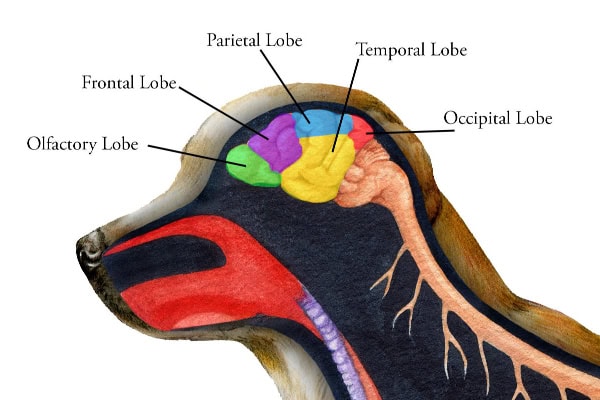
The clinical signs of focal seizures reflect the specific areas of the brain that are affected. For example, a seizure originating in the hypothalamus may be more likely to cause abnormal behaviors like unprovoked aggression if the medial hypothalamus is involved. However, the dog may show repetitive chewing motions if the seizure affects the lateral hypothalamus.
What are the symptoms of focal seizures in dogs?
Focal seizures can take many forms. At first glance, they may simply look like strange behavior to a dog parent. The symptoms seen with focal seizures fall into three main categories:
Motor focal seizures in dogs
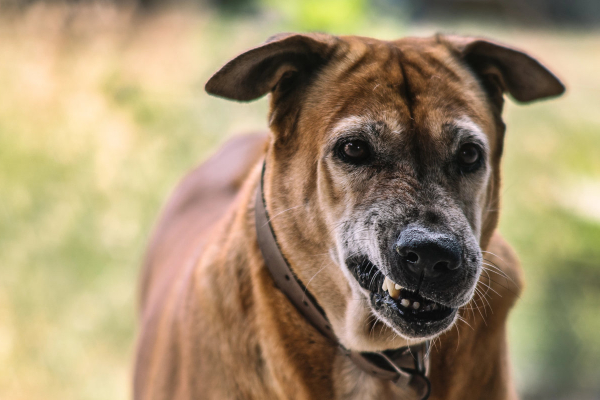
During a motor seizure, the dog may exhibit rhythmic, repeated jerking of the head or another specific body part, repetitive blinking, facial twitching (eyelids, ears, or lips), snapping at the air (fly biting), and chewing motions with nothing in the mouth (chewing gum seizure).
Autonomic focal seizures in dogs
The autonomic nervous system controls automatic functions in the body. Thus, autonomic seizures may occur as a sudden onset of excessive salivation, spontaneous urination, or anal gland expression with no apparent trigger.
Behavioral focal seizures in dogs
Behavioral seizures can be more challenging for dog parents to identify and understand. Affected dogs may appear normal, then begin staring blankly into space (stargazing) or become depressed, unresponsive, or suddenly aggressive with no provocation.
Focal seizures that turn into generalized seizures
In some cases, dogs may only have focal seizure symptoms. However, it is possible for a focal seizure to turn into a generalized seizure. In that case, the dog would move from having focal symptoms to more widespread stiffness, convulsions, loss of consciousness, and a loss of bowel or bladder control.
What should you do if your dog is having a focal seizure?
If you do witness your dog having a focal seizure episode, keep these tips in mind:
- Don’t panic. If needed, take a few deep breaths to help you stay calm.
- Ensure your dog is in a safe space in case the episode progresses to a generalized seizure.
- Make note of your dog’s specific symptoms or behaviors and how long the episode lasts.
- Do NOT try to comfort your dog if he or she seems anxious or begins acting aggressively. This could lead to accidental injury for you and/or your dog.
- If you have a mobile device handy, record a short video clip to share with your veterinarian.
- Keep children and other pets in the home away from your dog until the episode has passed and he or she fully recovers.
- Write down your observations in a seizure journal once the event has ended.
After the first focal seizure event, reach out to your veterinarian. He or she can advise you about the next steps. Sometimes, that is continued observation. Other times, the vet may want to see your dog promptly.

Are focal seizures in dogs dangerous?
Mild or short-lived focal seizures are distressing to watch but fairly harmless. However, focal seizures do have the potential to be dangerous if they progress to generalized seizures.
If the dog has a grand mal seizure that lasts longer than five minutes or multiple grand mal seizures back-to-back without fully regaining consciousness between them, this is status epilepticus, which is an emergency. Left untreated, status epilepticus can lead to brain damage or sometimes even death.
Also, keep in mind that having more than one focal seizure within 24 hours constitutes a cluster seizure event. If your dog experiences cluster seizures, no matter how short the individual episodes are, it is important to alert your veterinarian. He or she may recommend starting your dog on anti-epileptic medication at that point.
What causes focal seizures in dogs?
Focal seizures (whether or not they progress to generalized seizures) are typically due to structural abnormalities within the cerebrum. These structural changes can develop in puppies during development and be present at birth (congenital causes). Or they may occur at various stages of a dog’s life due to infection, inflammation, trauma, or tumor growth in the brain (acquired causes).
Additionally, certain dog breeds have a genetic predisposition to seizures that do not otherwise have an identifiable cause. These seizures fall under the category of idiopathic epilepsy.
Congenital causes of focal seizures in dogs
Congenital conditions that can cause focal seizures include hydrocephalus (water on the brain) and certain storage diseases that are present due to a lack of necessary enzymes.
Acquired causes of focal seizures in dogs
Acquired conditions that cause focal seizures include inflammatory processes such as granulomatous meningoencephalitis (GME in dogs), infections, scar tissue in the brain, hemorrhage, and head trauma.
Additionally, space-occupying lesions like cysts or brain tumors in dogs (which may be primary or metastatic) can also be the culprit. It’s worth noting that focal or generalized seizures may be the ONLY sign of a brain tumor in dogs. This is especially true in dogs with olfactory and frontal lobe tumors.
Stress or excitement can also trigger the onset of focal seizures. An example of this is seizures triggered by eating (STE), which are one of the least understood types of seizures in dogs. STEs start out as focal seizures, but they may evolve into generalized seizure episodes due to excitation at the onset of mealtime.
Idiopathic epilepsy as a cause of focal seizures in dogs
Idiopathic epilepsy, which is a hereditary predisposition to seizure activity, occurs in a variety of dog breeds. Some affected dog breeds tend to have generalized seizures. Others are more likely to have focal seizures or may have a combination of seizure types. Breeds prone to focal seizures from epilepsy include:
- Australian and Belgian Shepherds
- Border Collies
- Cavalier King Charles and English Springer Spaniels
- Dalmatians
- Finnish Spitz
- Lagotto Romagnolos
- Petit Basset Griffon Vendeen (PBGVs)
- Standard Poodles
- Vizslas

For more information about epilepsy in different dog breeds, check out the International Veterinary Epilepsy Task Force’s current understanding of idiopathic epilepsy of genetic or suspected genetic origin in purebred dogs.
How will the vet diagnose the cause of your dog’s focal seizures?
Focal seizures can be challenging to diagnose since they are either idiopathic (of unknown cause) or related to structural defects, injury, or disease in a specific area of the brain. Your veterinarian will likely recommend starting with a basic workup, including:
- Physical examination—The vet will look your dog over from nose to tail and perform a complete neurologic and ophthalmic (eye) examination.
- Lab work—Blood tests for dogs, including a CBC and chemistry panel, electrolytes, thyroid panel, cortisol level, and a urinalysis, can provide a good baseline picture of your dog’s overall metabolic health.
- Blood titers and serologic testing (PCR)—The vet might recommend titers or serologic testing if he or she suspects an underlying inflammatory or infectious disease process.
- Imaging—If metabolic disease or cancer are on the differential diagnosis list, the vet may take X-rays of the chest (three views) and/or perform an ultrasound of the abdomen.
Depending on your dog’s baseline lab results, the next step might be more advanced diagnostic testing with a veterinary neurologist. Possible tests include magnetic resonance imaging (MRI) or cerebrospinal fluid (CSF) collection under sedation.
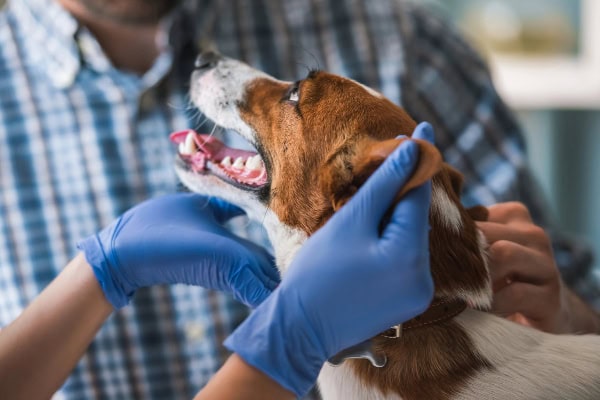
Plus, sometimes the neurologist may recommend an electroencephalogram (EEG). This can be a valuable tool for reaching an accurate diagnosis of focal seizures since it records subtle abnormal electrical activity in the brain. However, the dog would need to be having a focal seizure at the time of the EEG to pick up the seizure activity.
What is the treatment for focal seizures in dogs?
Your veterinarian or veterinary neurologist will use the information he or she collected during the diagnostic process to advise you about the safest course of treatment for your dog.
Sometimes a dog with focal seizures may not initially require anti-seizure medication. Or your dog may never require medication, for that matter. For dogs with mild or infrequent seizure activity, the risks of starting on a daily medication may outweigh the benefits.
However, if your veterinarian does recommend medication to manage your dog’s seizure disorder, there are multiple good options available. The specific therapeutic protocol your veterinarian recommends will likely depend on several factors. One big consideration is any other comorbidities (medical conditions) your dog may have at the time of the seizure diagnosis. For example, some anticonvulsant medications should be used cautiously in cases of liver disease in dogs.
Anti-seizure medications
Phenobarbital is the most common first-line medication for controlling seizures in dogs. It usually has good efficacy overall, but does require regular bloodwork to ensure the phenobarbital levels stay in the therapeutic range. Plus, some dogs may develop a tolerance to phenobarbital with prolonged administration, resulting in breakthrough seizure activity.
If breakthrough seizures do occur, your veterinarian may recommend adjusting the dose of phenobarbital. Or he or she may add on a second anticonvulsant medication, like potassium bromide.
Newer anticonvulsants like levetiracetam (Keppra) and zonisamide for dogs are also effective treatment options for focal seizures and those that progress to generalized events. The vet may use these medications on their own or in combination with other anti-seizure medications.
Note: If you notice any medication side effects or increased seizures, please consult with your veterinarian. It is not a good idea to adjust your dog’s medication dosage or frequency yourself or to suddenly stop giving anticonvulsants.
Foods and supplements to improve brain health and potentially reduce seizures
Another option that can help manage focal seizures is adding an MCT oil supplement, such as Dr. Buzby’s Brain Boost™ Organic MCT Oil for Dogs, to your dog’s regular food. Research demonstrates that MCT oil for dogs can raise the seizure threshold for dogs with epilepsy. This means it takes more stimuli to cause a seizure, which may translate to a decrease in seizure frequency or severity. Additionally, MCT oil helps protect neurons and support overall brain health.
Alternatively, some dog parents may choose to start their dog on a veterinary prescription diet such as Purina Pro Plan® Neurocare™, Purina® Bright Mind, or Hill’s® Prescription Diet® b/d. All three foods contain omega-3 fatty acids for dogs (DHA and EPA), which promote brain health. Plus, both Purina products contain MCT oil.
It is important, however, to realize that supplements and foods are intended to complement, not replace, anti-convulsant therapy.
Can you prevent focal seizures?
It is important to understand that nothing (even medication) is 100% effective in preventing seizures. The key is to be consistent and proactive in your dog’s care to minimize the potential for future episodes.

If your dog is on anti-seizure medication, give the dose(s) consistently each day according to your veterinarian’s instructions. Plus, if you do identify specific situations or triggers that evoke seizures in your dog, try to minimize or eliminate his or her exposure to them whenever possible.
What is the outlook for dogs with focal seizures?
The long-term prognosis for dogs who have focal seizure episodes depends on the underlying cause(s). Dogs with uncomplicated, infrequent focal seizures may achieve their normal life expectancy and maintain a good overall quality of life.
However, seizures due to a space-occupying lesion (cyst or tumor) in the brain carry a more guarded prognosis for long-term survival and overall quality of life. This is the case because there is a potential for the clinical signs to worsen as the mass grows.
Work with your veterinarian
If you’ve noticed strange symptoms or unusual behaviors in your dog and think he or she could be having focal seizures, please schedule an appointment with your veterinarian. If possible, bring a video of the episodes and your seizure journal. That information, plus some diagnostic testing, can help your vet figure out what is going on with your dog.
Understandably, receiving the diagnosis of a seizure disorder can be scary, regardless of your dog’s age. However, by being proactive with your dog’s care and keeping your veterinarian informed of any physical or behavioral health changes, you can help minimize future episodes and maintain the best possible quality of life for your beloved canine companion.
Has your dog experienced focal seizures?
Please comment below.


I have a 7 year old Patterdale,
He’s started with weekly Focal seizures about 8 weeks ago, he then had a grandmal about 4 weeks ago where we spoke to our vet and started Pexion, he’s still having weekly focal seizures.
I’m worried about his prognosis going forward with this still being a weekly thing?
It’s normally on a Friday/ Saturday so I always know it’s coming.
If this continues at a weekly rate, are we likely to see changes within him? I’m obviously concerned that this could be a Brian tumour ?
Thank you for your time.
Dear Kirsty,
I am sorry your boy is enduring these recurring seizures. Neurological issues can be very difficult to predict and I’m not sure what to tell you to expect moving forward. It may be time to ask about a consultation with a veterinary neurology specialist. Hoping they can find a way to offer your pup relief and a better quality of life. Feel free to keep us updated on how things go.
My 8 year old Golden Retriever has had these weird episodes for the last few years where she just seems spaced out while laying on the floor then she urinates. it’s really scaring us!
Hi Td,
I am sorry your girl is experiencing these worrisome episodes. This definitely sounds like something that needs to be investigated. Your vet will probably want to start with a thorough physical exam and routine lab work. Hoping for an easy solution and a better quality of life for your sweet girl. ♥
My 7 month old mini dachshund had his 1st episode bout 2 weeks ago. 5/10/26 approximately 11:30 he had an episode and then again at 3:15 am. I’ve only noticed episodes while we’re all in bed. Calling vet ASAP in AM
Hi Ellen,
I am sorry your puppy is experiencing these worrisome episodes. Hoping your vet can find some answers and wishing you both nothing but the best. ♥
Our Sheltie at age 3 ( he is 5 now) was diagnosed with focal seizures. Normal neurological exam, totally normal between seizures. They have progressed in frequency and just yesterday he had a grand mal. Does this indicate a structural problem? Would tumor grown be this slow growing?
He is on phenobarbital and Keppra we did blood work to evaluate changes in meds.
Hi Denise,
I am so sorry your young dog is experiencing this worsening of his seizures. A tumor could definitely be to blame, but there are other things I would want to rule out as well. For instance, do you happen to know if your boy has the MDR1 gene mutation that can cause neuro issues in herding breeds? If you are not familiar with this condition or are not sure if it affects your pup, I highly recommend you discuss it with your vet. It may be time to consider a consultation with a veterinary neurologist. They would have more insight and could offer a higher level of imaging and testing than is available in general practice. Hoping you can get some answers and restore your boy’s quality of life. Praying for a clear path forward. Bless you both. ♥
My 3.5 year old boxer, the sweetest most cuddly dog I’ve ever owned, has had seizures since he was 1.5 years old,they only ever happened while he was sleeping, usually closer to the morning, between 6 am -8 am. We have managed them with phenobarbital 30 mg every morning and again every night… 2 months ago he had his first cluster seizure. He had 5 seizures in a row with pacing in between. I was devastated, I kept him cool, put ice packs on his head and paws to prevent overheating. We raised his meds to 60mg in the morning and 60 mg at night…..
Two days ago, he had another cluster seizure, this time it was 6 in a row with pacing in between. So we have upped his meds again, in hopes it’ll keep them from happening again.
But now he is drooling, this has never happened before. Could it be brain damage? Or as it is written in the article, focal seizures?
I have realized that both cluster seizures happened a day after I had washed all of our blankets. And knowing that he only ever seized at night.
I wonder and started believing that the laundry detergent I use caused them. I have now switched to unscented tide. Hoping that maybe if this was the cause of his issues, I will do everything possible to help.
Have you ever heard of laundry detergent causing seizures?
Hi Monique,
I am sorry your boy is experiencing this increase in seizure activity. I agree this is concerning and think it is wise you are searching for more information. Without examining your pup myself, it is hard to offer specific advice. It may be time to consider an appointment with a veterinary neurologist. Boxers are well known to be more likely to develop masses and tumors (especially cancerous types) than most other breeds. I would definitely want to rule out the possibility of a brain tumor if the testing is something you can afford financially. Laundry detergent can be a potential seizure trigger as are other strong smells, lights, or excitement. Sometimes it is possible to find a specific seizure trigger but most of the time we don’t know what brings these episodes on. Hoping you can find some answers and offer your sweet boy relief. Praying for a clear path forward and a positive outcome.
Hello, I have a Shih Tzu that we adopted, and he’s about 14 years old. He suffers from seizures that cause him to cry, then his body stiffens for about 10 seconds. About 15 to 20 seconds after the seizure, he reacts, although he seems disoriented. We took him to the vet, and they told us he has hypertension, fluid retention, and a heart problem. However, they prescribed medication for each of these issues. My question is, what quality of life can we expect for my dog even with the treatment? The seizures continue; they usually happen three times a day, mostly after he defecates. Thank you for your response.
Hi Jaime,
I am sorry your senior guy is experiencing these worrisome episodes. From what you describe, I can’t tell if these are truly seizures or if they are heart related (syncope). Did you talk to your vet about these strange symptoms? If you can catch this behavior on video, it could be very helpful in making a definitive diagnosis. If these are seizures, I would ask your vet about staring an anti-seizure medication (usually phenobarbital). Also, you might consider starting your boy on an MCT oil supplement as these have shown great benefits to dogs with seizures disorders. I will attach links to other articles with more information. Praying for answers and relief for your boy.
1. Congestive Heart Failure in Dogs: Signs, Treatment, and Prognosis
2. MCT Oil for Dogs Can Help Dogs with Dementia or Epilepsy
4. Old Dog Seizures: Everything You Need to Know to Help Your Dog
Hello. My 10 year old, very active Chocolate Lab suddenly jumped up from sleeping and started “fly-biting” and looking up toward the ceiling. Then she started running like she was being chased. She seemed distracted. It was on the weekend, so we took her to the ER Vet. They basically told us physically she looked healthy. We saw her regular vet and she suggested bloodwork. It all came out perfect. She also gave my dog Gabapentin. Her vet suggested a consultation with a Neurological Vet. I am hesitant because without expensive testing, I’m not sure if they can help. My dog continues to glance up at the ceiling very often all day long since it all started. She does still trot around seeming a little “out of it” once daily, but not as extreme as the first day. She does sleep well at night. Do you have any advice? Thanks so much!!!
Hi Lisa,
I understand your concern and think it is good you are searching for answers. The main issue with senior dogs developing any type of neurological disorder is that there is always a risk of a brain tumor. I agree that there is the possibility that you would pay for a consultation with a specialist and then still be “stuck” in the same position you are now. You could try adding an MCT oil supplement to see if there is any improvement in your dog’s symptoms. Here is a link to another article with more information: MCT Oil for Dogs Can Help Dogs with Dementia or Epilepsy
Ultimately, a visit with the neurologist may be the only way to get definitive answers. Hoping you can find a way to ensure your girl remains happy and comfortable. Feel free to keep us updated on how things go.
Hello,
My senior Shih Tzu has been having focal seizures (involuntary movement starting with his left paw, body goes stiff, head tilts to the side, eyes wide and then changes to the right paw) since I adopted him approximately 5 years ago. These were misdiagnosed by our previous veterinarian but as of September he has been prescribed half a tablet of Levetiracetam 250mg every 8 hours. Previous to taking the medication it would sometimes be months between me noticing a seizure but now they’re occurring approximately once a week. Any advice you can provide would be appreciated.
Thank you,
Tara
Dear Tara,
I am sorry your boy is experiencing these ongoing neurological issues. From what you describe, this sounds like more than a focal seizure (especially since it involves so many different parts of the body). There is a possibility that your boy just needs a different medication. My concern is that without doing more in-depth testing there is no way to rule out a brain tumor, and they can have very similar symptoms. This would also explain why the seizure episodes are becoming more frequent. I highly recommend you talk to your vet about next steps and make sure they are aware the medication is not working as expected. You may even want to consider a referral to a neurologist. Wishing you both nothing but the best and praying for a positive outcome for your sweet boy.
Hello, we have a 7-year-old 65 lbs. American Bully. About 2-5 times a year he wakes up with a twitch in his right leg. It almost always happens late at night or early morning. He paces the room and can only settle down for minutes at a time. This usually lasts for ~ 1 hour. We have seen multiple vets. His bloodwork is great, and electrolytes are normal. There are no visible injuries to the leg. He is on Bravecto and I’m wondering if I should take him off.
Hi Rob,
I understand your concern for your pup. What you describe has me puzzled and I’m not sure I’ve heard of anything quite like that before. If the episodes do not correspond to the days you are giving the Bravecto, and they are only happening a few times a year, I would not think the Bravecto was to blame. If it gives you peace of mind to switch to a different preventative, don’t hesitate to talk to your vet about alternative options. If this were my own dog, I wouldn’t have an issue with continuing the Bravecto. Hoping your boy remains happy and healthy for many years to come. Best wishes to you both!
My dog only gets seizures at night or early morning as well. Your comment makes me really question the laundry detergent you use. I was loving the scented laundry detergent, like gain…. And I am now wondering if this is part of the problem. So I have now changed to unscented stuff to see if it makes a difference.
What do you use? Does your dog sleep on freshly laundered blankets or dog beds? I read that there is something in the scented stuff that’s bad for dogs…. Maybe there is a connection.
Our 6 year old Boxer had 7 focal fits yesterday over almost 2 hours. The vet witnessed the last one and started her in a 6 day reducing dose of keppra. Only her head seemed to be involved, twisted to the right with her tongue out to the left; lots of lip smacking and episodes lasted 30-60 seconds; she remained conscious and even standing with no loss of control of bladder/bowel; she was even able to react to us and wag her tail during these episodes and the vet said her eyes were not involved. She has had no further episodes since.
They are doing bloods next week. She had a large mammary gland tumour removed about 5 months ago but the margins were clear and they did a laparoscopic Spey at the same time. She has a scarred kidney from recurrent uti as a pup but did not fit the full criteria for a JKD diagnosis. Our last boxer died from a likely brain tumour at 11.5 years old but she had 4 months of full seizures before she went in to status and we had to have her PTS.
I am so worried but the vet we saw yesterday didn’t think this was sinister – should I be asking for more tests or wait and see ?
Dear Fiona,
I am sorry your Boxer endured these scary episodes the other day. It sounds like your vet is taking all the appropriate steps to get answers. I don’t think it is wrong to wait and see how things go, but if more testing would give you better peace of mind don’t hesitate to make your wishes known. To get a definitive diagnosis, it may require advanced imaging such as MRI or CT. Hoping the Keppra will keep things under control and wishing your sweet girl all the best for many happy years ahead.
Our 14-15 year old small mixed breed (terrier-poodle???) started having focal seizures (jerky backward head movements…almost like ‘fly biting’) only outside, and only in the sun (hard to avoid in Arizona) and not ever outside at night. At the same time, we noticed that he was developing hearing loss (perhaps due to age but they seemed to happen simultaneously). The initial round of neurontin did not help him, but the Vet changed to Kepra and the seizures have been well-controlled since. Interestingly, if his dosage is an hour or two late cause he won’t eat/take his pill, he will have break-through seizures so we are very careful about timing now. Kepra has been a miracle for him and we hope it continues to work!
Hi Julie,
I am so glad you figured out what was happening with your boy. Thank goodness the Keppra is working well and has restored his quality of life. I appreciate you taking the time to share your experience as this could be very helpful for others as they face a similar situation with their own dogs. Wishing you and your sweet boy continued success. Keep up the great work!
Remember that many epileptics are triggered by lights and sounds. This means doggie sunglasses might help and definitely staying in a dim light environment. Sound also “washes out” when a seizure is impending, so it might not be “hard of hearing” as much as hard to distinguish the sounds from the attack symptoms. Good luck to you, Keppra is awesome!
Our schnauzer mix had the same head jerk in sunlight when he was about 15. Had lost his hearing a year earlier. Turns out that he had Lafora disease. You may want to look at it if you’re still seeking a diagnosis. All best to you.
My dog is having episodes that might be focal seizures. She is a 7 yo husky-Great Pyrenees mix. She has been having them for maybe two years or …longer? I had no idea these could be seizures until it happened in the dog rehab gym we were in for her sister. Essentially it just looks like she is falling asleep sitting up, and her posture will get quite slumped, lasts about 20-40 seconds, then she will “come to” and be full of energy kind of like the zoomies. I had mentioned this to a vet when it started but they didn’t think anything of it so I just thought it was because we had moved to the city and she was getting less exercise than she used to. After the vet tech saw this I started logging and recording it and I just got a baby cam set up and she had three of these episodes within about 19 hours. Ok I am blathering on. Might be a little stressed! She’s had blood work and I have a referral to a neurologist. My question is – what is the dose on MCT oil? I happen to have some in the house. Thank you so much for what you do here.
Hi Kimiora,
I am sorry your girl is having these ongoing issues. I think it is very wise that you’re planning to take her to a neurologist for an evaluation. Unfortunately, there is no standard dose for MCT oil as each product is different and can contain different combinations of MCTs. I don’t recommend using human products for dogs as they frequently contain C12 which is known to cause GI upset and even pancreatitis in dogs. Because there was not a good MCT oil for dogs on the market that I could recommend, we decided to create our own which is called Dr.Buzby’s Brain Boost. Here is a link to another article with more information: MCT Oil for Dogs Can Help Dogs with Dementia or Epilepsy
Hoping the neurologist will be able to offer guidance and a clear path forward with treatment. Wishing you and your sweet girl all the best.
Hello Dr. Busby,
Thank you so much for taking the time to respond. I really appreciate your thoughtful answers to mine and others’ questions. Zuly has had a full work up including blood work, chest X-rays, abdominal ultrasound, MRI and spinal tap, and everything is perfect. The neurologist suggested she could be experiencing narcolepsy (but she is usually asleep when these episodes occur, rather than excited as happens with narcolepsy I guess, and she doesn’t collapse), focal seizures (but she doesn’t have a pre-ictal period and not a typical post-icral either), or paroxysmal dyskinesia but I have to say the kinds I’ve read about sound a bit different than her episodes. He recommended potassium bromide so I am researching that. In the meantime she is having far fewer episodes than she was when I first set up the security cameras so I am wondering if maybe there was something setting them off that I can avoid. Her last Simparica Trio dose was mid -August. Do you know how long it would take to leave her system? I’m curious about those anti-seizure/brain health diets (I guess for one of the breeds that gets dyskinesia, gluten intolerance is involved!). And thank you so much for the info about MCT oil. I was giving her a product for humans! Gah.
Hi Kimiora,
I am glad to hear Zuly is doing better and that all her testing provided normal results. Even though it was a human MCT product, it is very likely that it provided benefits for your girl’s brain health. I am not sure of the exact time it takes Simparica Trio to completely clear the body. Most preventatives that are labeled for use every 30 days actually work for a bit longer (maybe 45 days?) that way there is some protection if there is a lapse in treatment. Hoping you can continue to partner with the neurologist until a definitive diagnosis can be made. Praying for a clear path forward and many happy days ahead for your sweet girl.
Thank you so much. I am new to your website and I’m curious if you have resources or recommendations for diet, just for generally optimizing health. I just bought some Brain Boost for my girls but I am guessing I might be able to do better than just kibble for their general health. Or is there a kibble you recommend? Thank you and no worries if this is outside your wheelhouse!
Hi Kimiora,
Thank you for the kind words! I think a well-balanced home cooked diet can do amazing things for dogs, but often it can be tricky to ensure they are nutritionally complete. This is why I recommend using a veterinary nutrition specialist or a website such as https://balance.it/ to help formulate a diet. When feeding a kibble, I like to recommend brands that have a board-certified veterinary nutritionist on staff and are able to have all components of the feed on site without having to use a 3rd party for some ingredients (this eliminates many recall issues). The kibble brands I trust the most are Purina and Royal Canin. Even if feeding kibble, it can be easy to supplement with fresh whole foods such as vegetables and fruits. Here are links to other articles with more information:
1. 14 Vegetables Dogs Can Eat (And May Just Love)
2. Homecooked Diets for Your Dog with Dr. Jackie Parr
3. Thanksgiving Food For Dogs: 10 Dogs Can Eat & 10 to Avoid
These were great questions! Best wishes and keep up the good work!
Thank you so much for the diet recommendations! I am excited to dive in and learn more!
My 11 1/2 year old sharpei/basset hound started having episodes on August 5. We brought her into the local vet as we thought her body was shutting down. They gave her an injection of meloxidyl and we brought her home thinking we would put her down later in the day…. She ate a pack of hot dogs and snapped out of it within a couple of hours. The vet we spoke to suggested that she could have Cushings disease.
We since had been doing an oral dose of meloxidyl when we see these “fits” flare up and she usually is better within 12 hours. They were happening 1-2 times a week.
I recently spoke to a different vet on Friday afternoon when I refilled her pain medication who mentioned focal seizures to me. When I pulled up a video it looked very similar to what paisley was experiencing.
Paisley had another episode on Saturday night- I took several videos, gave her a dose of meloxidyl and told my husband we would be bringing her into a new vet Monday morning.
She had made her way onto her dog bed in our bedroom (as she did every evening,) and I assumed she was just resting. When I went to check on her at 12:30am I found that she had passed.
I am hoping and praying that she just fell asleep peacefully in her sleep. I hope the medication kicked in and she was not in any pain.
I need to know for my own peace of mind if there was anything I could have done differently? Do you think she suffered? She wasn’t crying and showed no signed of distress- she literally went right to bed as she did any other night.
This has been a very difficult loss for our family. I wish I would have had more time to research more about focal seizures and get her better treatment
Dear Jocelyn,
I am sorry for your tragic loss of Paisley. Without having been personally involved with her medical care it is hard to offer specific conclusions. From what you described, I am very suspicious she may have had a brain tumor that was causing seizures or other neurological abnormalities. It does sound like her passing was probably peaceful and did not cause any distress. I am glad she was able to spend her final night at home in her own bed where she was most comfortable. While there are medications that can be used to try and minimize symptoms, if this was truly a brain tumor then there wasn’t anything you could have done differently to change the outcome. I hope with time your heart can begin to heal and you can find peace. May Paisley’s memory continue to be a blessing in your life. ♥
Hi. My family has a 7 year old boxer who is absolutely the heart of our family. He is the best boy and very well loved and has always been healthy. Two days ago, he had what appeared to be a leg spasm and was flu-biting. It lasted about 30 mins and then he was fine when we asked him if he wanted to go to the lake (his favorite place). He spent the next 2 days playing with his doggie friends and our kids but he seems sad and a bit clingy. This is our third boxer and the previous two died of seizures at 6 and 12 years old. The last two had the typical seizures that left them unconscious so this is new to us. Our vet suspects he had a focal seizure but wants to wait and see if it happens again before testing further. Is this something European boxers are prone to? We are all devastated and scared he could leave us way too early.
Hi Meagan,
I can only imagine how worried you must be for your pup after losing two others to a similar disorder. While I am not aware of a genetic predisposition of Boxers to develop seizures, that doesn’t mean one does not exist. Is there any chance that all 3 of your Boxers have come from the same breeder or similar blood lines? I agree with your vet that the “wait and see” approach is probably best at this point. Hoping this was a one-time deal and it never happens again. Feel free to keep us updated on how things go!
My miniature schnauzer started an odd behavior at an early age, around 6 months old. Stretching his neck upward like he is looking at the sky and twitching his nose. Mainly it was very intermittent and rare. I researched and talked to the vet about it maybe being a condition called stargazing. She is a young vet with not a lot of experience but concurred and started him on omeprazole 2x day for what she said was probably gastrointestional. It really seemed to help, but his episodes have now progressed to him having “spells” where he is not feeling well all weekend and doing it almost all day and laying around. He usually lives to be outside and he has no interest in it. He doesn’t eat much usually he is a very small eater, but when he isn’t well I give him some boiled chicken and rice and he really enjoys that. She said that since the Stargazing can be gastro to put him on a bland diet when he has episodes. this past weekend he was sick for almost 3 days, not himself, but he then comes around and is feeling better now again. I just don’t know. Is it Stargazing? Focal Seizures? It so weird. He doesn’t seem to be in any pain and does not become aggressive and can be snapped out of it usually. I need help for my Poor Baby. I am going to take him to Univ of IL teaching hospital to see a Neurologist. I just hope it doesn’t cost an arm and a leg, I just turned in my retirement date at work for next Friday.
Hi Winnie,
I understand your concern for your pup and agree this is very worrisome. I have to admit I am at a loss as for what could be causing these strange episodes. I think your choice to see a specialist is very wise and is exactly what I would recommend. Hoping for clear answers and an easy solution. Praying for relief for your sweet boy and many happy days ahead.
My almost 2 year old Australian cattle dog has had a few instances where he has what I think could have been seizures. He would start shaking and drooling a lot and unable to walk so I would hold him to make sure he didn’t fall over. They only last a few minutes and he is typically fine a few minutes later and able to walk. He stays conscious the whole time and responds and looks at us when he talk to him and say his name. I believe it all started happening after he got into some chemicals in my basement while my parents were watching him when I was on vacation last year. I came home to him falling over in the backyard. I have no idea what’s causing them.
Hi Casondra,
I am sorry your young dog is experiencing these seizure episodes. Toxins can definitely cause these types of issues, and it may be your boy is still having problems due to some permanent damage that was done. It would be a good idea to have your vet do a thorough evaluation and run some lab work to rule out the more common causes. As long as the seizures are mild and the frequency is low your boy may not need any treatment at this time. Your vet will be able to guide you through this process and offer advice along the way. Wishing you both all the best for many happy years ahead!
Hello, I have a pit mix that is approximately 4.5 years old. Can’t be sure because she is a rescue. In the 3.5 years I’ve owned her, she has had 2 seizures. At least I think they are seizures. From what I can gather they are focal seizures. The first time (about 9 months ago) I thought she had lost her eyesight because she stumbled, didn’t seem to see me or be able to focus on anything. I rushed her to the vet but when the doc saw her she seemed confident it was a seizure even though the onset was about an hour before I got to the vet and she was still showing those symptoms while I was there..
She had another one yesterday and the symptoms seemed the same, but maybe less intense and spanned over an hour.
I’ve moved since the first episode and called my new vet but they can’t see her for a couple of weeks. Was hoping a tech might be able to explain the duration as I’ve read sometimes the after effects are mistaken for the seizure but are just leftover effects. Anyway, they were unable to have a tech call me back.
I’ve read some articles stating that this type of seizure can last longer than normal but hoping you can better inform me. Thanks in advance. I’m very worried.
Dear Mike,
I am sorry your girl is experiencing these worrisome episodes. To be honest I am not sure what to make of them. They don’t sound typical of a focal seizure but that doesn’t mean they aren’t still some type of abnormal neurological activity. If there is any way you can catch this behavior on video it could be extremely helpful to your new vet as they try to get some answers. Hoping they can make a definitive diagnosis and ensure your girl remains happy and healthy for many years to come. Wishing you both all the best.
my male border collie 4 years old is on anti seizure medication he is classed as managed by my vet as his seizure frequency is less than once a month he first had general but his last one was focal , he also has small spoon full of MCT oil daily , not sure if this helps him but it certainly does no harm , due his blood test shortly ps his focal seizure was brought on by house visitors over excitement too much exercise and not having his usual nap.another PS no seizures since MCT oil but this does not prove anything. it’s hard work ,still learning.
Hi William,
I understand how hard it can be to watch a beloved pup struggling through seizures. It sounds like things are improving and I applaud you for continuing to pursue new ways to help your boy. MCT oil is a great idea and there are actually lots of research papers and scientific studies that have shown MCT oil can reduce seizure frequency and severity. Here is a link to another article with more information: MCT Oil for Dogs Can Help Dogs with Dementia or Epilepsy
Wishing you and your boy continued success and keep up the great work!
hi my dog is three was 23 months old when he started having grand mals
took to the vet blood work was all good
he know take phenobarbital 97.2 2x day
keppra 750 2x day
keppra 500 1x day
cbd 1x day
mct 1 x day
has seizures every 8 to 10 days and clusters often
started having facial sezuires in March sometimes turns into grand mals
sotwo he had a few grand mals took to the vet
she gave me an emergency med valume……give it to him rectal…..came right out of them
14 days later more grand mals…..all week lo g has been having focal seizures and they are not stoping every 2 to 4 hours has an episode….only effects his jaw…..
everytime he tries to rest he has one
called the vet and she said I would need to go to a neurologist….I made the appointment a few weeks ago can’t get into them till November
not sure what I should do I feel so bad
was thinking of taking the trip few hours away to go to there er department
but my money is limited and don’t think I can afford an mri ….not sure what to do…..vet will not add anymore meds to him till the neurologist is seen
im so heart broken 💔
Hi Lisa,
I am so sorry your young dog is experiencing these ongoing issues with seizures. Your pup definitely needs to see the neurologist sooner rather than later. Is there anyway your vet can call them and let them know the urgency of the situation? At the very least the neurologist may be willing to do a phone consultation with your vet to offer some suggestions on how to get things under control until your appointment date arrives. With the severity and frequency of these seizures, you may need to go to the ER. I have to say I am a bit shocked at how much medication your pup is already taking and with the early age of onset I am very concerned that his prognosis could be poor. Praying for comfort and strength as you navigate this emotional path. Bless you and your sweet boy.
I just learned about focal seizures. While researching them, I came across videos which are very similar to what I have observed in my 12 month old St. Bernard, Curtiss. He recently began demonstrating unprovoked aggression, often after a stressful event, such as when the doorbell rings or strangers (to him) come in to my home. Due to his behavior, I’d been working with a trainer, but Curt bit the trainer three days ago. Curtiss has also been diagnosed with HOD. Is there any connection between brain lesions and HOD?
Hi Gina,
I am sorry you are in this difficult situation with Curtiss. I am not aware of any connections between brain lesions and HOD. But HOD is extremely painful, and pain can definitely trigger aggression. It sounds like you may need to pursue some additional testing or even ask about a consultation with a specialist. Hoping there is a solution for your sweet boy that will restore his quality of life and take away the risk of injury or harm to those around him. Feel free to leave an update and let us know how things are going.
I have some 4 weeks old puppys that r having sesurse an dying no baby’s live wen they r born wat can I do please help me I have raised dog all my life never had this to happen.they r pitbull an mountain cure
Dear Gator,
I am so sorry your puppies are suffering such tragic deaths. Without being able to examine them or knowing the mother’s medical history, it is impossible for me to offer the answers you are searching for. This could be due to a virus or other infection or even something genetic passed on from one of the parents. Please take any remaining puppies to your vet to be evaluated. Hoping there is a way to intervene and save a life. ♥
My daughter’s Lab had a mild seizure at age 2. His legs got stiff but he remained alert. This has continued to happen about once every 3 months. We took him to a neurologist and after watching the videos she diagnosed him with paroxysmal dyskinesia. In general it is harmless and some dogs grow out of it. It is still upsetting when it happens!! We have him on cbd oil but may try the mct. I am still suspicious that the Bravecto he was on could have caused this to happen.
Hi Dawn,
I am sorry your daughter’s Lab is living with this condition. But as you mentioned it is usually nonprogressive and doesn’t cause any detrimental effects. If you decide to try MCT oil I would be curious to know if it helps reduce the frequency or severity of the episodes. Wishing you all the best and thanks for sharing your experience with us!