When managing kidney disease in dogs, stage of disease helps inform the treatment plan. Integrative veterinarian Dr. Julie Buzby explains how veterinarians use the IRIS chronic kidney disease staging guidelines. She also discusses how the guidelines can help dog parents know what to expect as they navigate kidney disease with their senior dog.

If your beloved senior dog has just been diagnosed with kidney disease or kidney failure, you may be feeling overwhelmed right about now. Perhaps your mind is swimming with questions and worries. And you wish you could have a clear idea of what the road ahead looks like.
Fortunately, there is a comprehensive set of guidelines that can help you understand how severe your dog’s kidney failure is at the moment. Plus, it lays out treatment guidelines for each stage of kidney disease.
We will talk more about this tool and its uses in a moment. But first we need to pause to take a closer look at some of the kidney-related terms that get thrown around.
Kidney disease, kidney failure, etc.—What does this mean?
Veterinarians often use the terms “kidney failure” and “kidney disease in dogs” somewhat interchangeably. Both phrases indicate that the kidneys are not functioning at their normal capacity. You may also hear or see terms like “renal failure,” “renal disease,” or “renal insufficiency.” Without additional context, these terms don’t tell you much about how severe the problem might be.
It is no surprise then that the veterinary community quickly realized how important it was to have a unified way of describing the severity of kidney disease. Their solution was to simplify things by breaking kidney disease into stages and substages. Thus, the IRIS chronic kidney disease staging guidelines were born.
What is IRIS and what makes their guidelines so useful?
IRIS stands for the International Renal Interest Society. It was created in 1998 by an international group of veterinarians devoted to advancing the scientific understanding of kidney disease in small animals. IRIS is led by a board of 14 independent veterinarians from countries all over the world. Each has expertise in kidney function and kidney disease.

The mission of IRIS is to help veterinary practitioners better diagnose, understand, and treat renal disease in cats and dogs. They knew that to achieve that mission they needed to first establish an internationally recognized set of guidelines on the diagnosis and treatment of kidney disease. That way everyone was speaking the same “kidney disease language.”
I would say they did a pretty good job.
The guidelines IRIS developed help veterinarians communicate clearly among themselves and to pet parents dealing with kidney disease. They accomplish this by providing a clear and systematic way to “stage” the degree of kidney dysfunction.
IRIS is committed to helping pets with kidney disease
In addition to creating these important guidelines, IRIS also investigates ways to accurately diagnose early chronic kidney disease and acute kidney injury (i.e. acute kidney failure). Plus, IRIS researches new treatments to improve the prognosis of dogs and cats diagnosed with these diseases.
Medicine is constantly changing, so these guidelines are always a work in progress. IRIS continues to modify them as researchers develop new tests and treatments and experts learn more about this complex disease process.
IRIS structured their guidelines to encourage and facilitate the diagnosis of chronic kidney disease in its earliest identifiable stages. This is the time when treatments to slow progression can have the greatest impact.
I want to clarify, though, that these guidelines are not a method for DIAGNOSING kidney disease. Instead they are a way to tailor treatment, monitor disease progression, and provide prognostic information AFTER diagnosis.
How is kidney disease diagnosed?
Unfortunately, reaching a diagnosis can be a bit tricky, especially early in the process. You see, your pup was born with plenty of extra kidney function. This is generally good news. But it also means that months to years of kidney damage can accumulate before anyone knows there is a problem.

The first indication of kidney failure in dogs is often abnormally dilute urine. Here’s why. The kidneys are primarily responsible for maintaining the right balance of water, minerals, and electrolytes inside the body. To do this, they get rid of what they do not need by producing urine. Properly functioning kidneys can produce very concentrated urine.
As kidney function decreases, the urine becomes more and more dilute. You may notice increased thirst in dogs because your dog will have to drink more water to avoid becoming dehydrated. By this point, 66% of kidney function has already been lost.
Sometimes, if your dog has a urinalysis at that stage, the vet will diagnose the kidney disease then. Other times, kidney disease doesn’t become evident until your vet runs some screening bloodwork on your dog. By the time your dog has elevations in the kidney values (BUN and creatinine) on standard blood panels, 75% of kidney function has been lost.
We can all agree that not being able to diagnose kidney failure until a dog reaches 66 to 75% kidney function loss is far from ideal. But for a long time, that was just the way it was.
SDMA – the kidney disease diagnosis superhero
Fortunately, veterinary renal experts have developed a relatively new blood test that can help identify kidney disease earlier in the process. This test measures symmetric dimethylarginine (SDMA), a compound that rises in the blood in kidney disease earlier than creatinine. It has the potential to detect kidney disease when as little as 25 to 40% of kidney function is lost.
Since this is a new test, researchers are still determining the best way to use it. But SDMA looks quite promising as a way to detect kidney disease earlier. As such, IRIS recently modified their guidelines to include SDMA values as part of their staging criteria.
What are the IRIS stages of kidney disease in dogs?
After your veterinarian has performed a physical exam, urinalysis, and chemistry panel, he or she can compare these results to the IRIS guidelines. One caveat to that is dogs who are ill or dehydrated at the initial vet visit. In that case, your vet can’t accurately stage your dog’s kidney disease until your dog is rehydrated and feeling better.
The guidelines divide the progression of chronic kidney failure into four sequential stages. IRIS bases the stages on clinical findings plus creatinine and/or SDMA values (preferably both). The stages are as follows:
Stage 1: Creatinine <1.4 mg/dL and/or SDMA <18 µg/dL
You can think of this as early stage kidney disease. Your dog will not feel bad from his or her kidney disease in Stage 1.
Stage 1 can be confusing because a creatinine <1.4 is considered normal. So, if your veterinarian only evaluates creatinine, then your dog must have some other signs of kidney disease to fall within Stage 1. Your dog may have Stage 1 kidney disease if they have a normal creatinine but also have:
- Dilute urine
- Kidneys that feel abnormal on exam
- Kidneys that look abnormal on ultrasound
- Abnormally high amounts of protein within the urine
Alternatively, the normal range for SDMA goes up to 14. So if your veterinarian runs a blood panel that checks SDMA and your dog’s SDMA value falls between 14 and 18, the vet can use this alone to categorize your dog as being in Stage 1.
Stage 2: Creatinine 1.4-2.8 mg/dL and/or SDMA 18-35 µg/dL
Think of this as mild chronic kidney disease. Most dogs in this stage still don’t show any symptoms that they are sick. If they do show signs, they will be mild and might include a decreased appetite or weight loss.
Each of the veterinary laboratories have different cut-offs for what they consider normal creatinine values. The lower values of creatinine for this stage may still be “normal” according to some laboratory reference ranges. But IRIS guidelines still consider dogs with those values to have chronic kidney disease.
Stage 3: Creatinine 2.9-5.0 mg/dL and/or SDMA 36-54 µg/dL
This stage would be classified as moderate chronic kidney disease. At this stage all creatinine values fall outside of “normal” laboratory parameters.
Dogs within this stage tend to have the most variable signs. Some dogs with early Stage 3 chronic kidney disease have mild symptoms like intermittent loss of appetite, change in haircoat, or weight loss. Other dogs, especially those with creatinine values closer to 5, may feel quite unwell. Some dogs may vomit, have diarrhea, or be a lethargic dog.
If your dog has Stage 3 chronic kidney disease your veterinarian will want to monitor other blood values. Additional lab work abnormalities such as high phosphorus levels or low potassium levels are common. These abnormalities can contribute to weakness, nausea, and a decreased appetite.
Stage 4: Creatinine >5.0 mg/dL and/or SDMA >54 µg/dL
This stage would be considered severe chronic kidney disease or late stage kidney disease. Unfortunately, most dogs that fall into this stage show significant clinical signs related to their disease. Once your dog is in the final stages of kidney failure, your veterinarian will work with you to offer supportive care options to keep your dog as comfortable and happy as possible for as long as possible.
What if creatinine and SDMA don’t match?
The guidelines described above are great when every lab test and clinical sign matches up correctly. But what happens if your dog’s creatinine value puts him or her in one stage and SDMA in another? Not all veterinary laboratories perform the SDMA test. But if the laboratory your veterinarian uses includes this test, then this scenario is possible.
Happily, the experts of IRIS have accounted for this situation and provided guidelines to follow if your pup’s results are not so clear-cut.
First off, IRIS guidelines remind vets that creatinine levels can be influenced by muscle mass. So dogs that have lost significant muscle are likely to have a creatinine level that underestimates the severity of their kidney disease. If this is the case for your dog, then your veterinarian will rely on the SDMA level to decide which stage they fall into.
Other times there is not an outwardly obvious reason for the discrepancy. In that case, the IRIS guidelines recommend retesting SDMA and creatinine levels in two to four weeks. At that time, if the values still place your dog into two difference categories, they recommend assigning them to the higher stage.
What are the IRIS substages of kidney disease?
Now that you have the stages down, we will add another layer of complexity. Within each stage, dogs are also substaged based on whether they have protein in the urine (i.e. proteinuria) or increased blood pressure (i.e. hypertension in dogs).
Both proteinuria and hypertension are well-known complications of chronic kidney disease. Also, they are both “chicken and egg” phenomena. In other words, untreated proteinuria or untreated high blood pressure can BE CAUSED BY kidney disease. But they can also CAUSE progressive kidney damage. This is why it is so important to assess and treat for these conditions, and why they are part of the IRIS guidelines. Let’s take a closer look at these two criteria.
Hypertension
Dogs with kidney disease should have their blood pressure checked regularly. Just like people, dogs can suffer from the “white coat effect.” In other words, they have elevated blood pressure readings due to the anxiety surrounding a veterinary visit.
To accurately interpret your dog’s blood pressure, your veterinarian will do everything possible to help ease your dog’s anxiety. This may mean checking your dog’s blood pressure first thing—before an exam or any other diagnostics. Or maybe the vet will place the blood pressure cuff, let your dog acclimate to it for several minutes, then take the reading.
IRIS recommends taking multiple readings and averaging them to help maximize accuracy. Ideally the veterinary team would take readings during different visits on different days. If this is not practical, then the team may perform the readings during the same visit. In that case, the goal is to give your dog a significant period of downtime in between readings.
Interpreting blood pressure results
The vet will interpret the blood pressure based on the following table. Note that this is based on a repeatable blood pressure (i.e. consistently getting numbers in that range, not just a one-time thing).
| Blood pressure | Interpretation |
|---|---|
| <140 mmHg | normal |
| 140-159 mmHg | prehypertensive |
| 160-179 mmHg | hypertensive |
| >180 mmHg | severely hypertensive |
Proteinuria
In addition to keeping fluid and electrolytes within the body, properly functioning kidneys should also prevent protein from leaking into the urine and leaving the body. Losing significant protein within the urine is not normal. But it is not always a sign of kidney disease.
The most common cause of protein within the urine is actually a urinary tract infection (i.e. UTI in dogs). If your dog has a UTI, he or she will have increased white blood cells and red blood cells in the urine. These cells are made of protein, hence the proteinuria.

However, significant protein in the urine without any evidence of an infection, blood, or inflammation is much more concerning. This type of proteinuria, known as renal proteinuria, signifies that the filtering portion of the kidney (i.e. the glomerulus) is not working properly.
All dogs with chronic kidney disease should be screened for the presence of protein in their urine. Your veterinarian will first perform a urinalysis. If the urinalysis indicates proteinuria, your vet will next try to determine if this protein could be due to blood or bacterial infection. Once a UTI is ruled out, your vet will likely recommend a more specific test to quantify the amount of protein being lost. This test is known as a urine protein to creatinine ratio test, or UPC test for short.
Your vet will use the results of this test to determine if your dog needs oral medication to decrease protein loss into the urine. This is important since continued protein loss leads to progressive kidney damage.
Interestingly, the amount of protein lost in the urine can actually decline as renal dysfunction worsens. So proteinuria may be a less frequent finding in dogs that are in Stage 3 or 4 chronic kidney disease.
Interpretation of UPC results
Your vet will use the following table to interpret your dog’s urine protein to creatinine (UPC) results.
| UPC | Interpretation |
|---|---|
| <0.2 | not proteinuric |
| 0.2-0.5 | borderline proteinuric |
| >0.5 | proteinuric |
How does kidney disease stage dictate treatment?
Once your vet assigns your dog a kidney disease stage and substage, it is time to think about treatment. You know that your dog is special and unique. Fortunately, IRIS knows that too. They provide guidelines on treatment for the different stages. But they make an important note that these are merely recommendations that your veterinarian can use to tailor the final treatment plan to your dog’s unique situation.
All these treatments for chronic kidney disease are either aimed at slowing the progression of disease or improving your dog’s quality of life. During Stages 1 and 2, most dogs do not have any signs of illness. So treatments the vet initiates during this time focus on preserving kidney function and slowing disease progression.
In the later stages, treatment shifts to combine both types of treatments—those that slow progression and those that improve signs of illness to support quality of life.
Regardless of the stage, it is vitally important that dogs with kidney disease always have free access to fresh water. Otherwise, the specific stage-related management recommendations are:
Stage 1
- Avoid any medications known to be hard on the kidneys
- Check for any treatable conditions like kidney infections (i.e. pyelonephritis in dogs) or stones within the urinary tract
- Monitor for high blood pressure and protein loss in the urine
- Visit your veterinarian promptly for any illness that might lead to dehydration so the vet can correct dehydration prior to it causing additional kidney damage
Stage 2
- All the recommendations for Stage 1, plus:
- Consider starting a prescription renal diet (usually a lower sodium, lower phosphorus, and moderate protein diet)
- Reduce phosphate intake to keep the blood phosphorus level <4.6 mg/dL
- If a prescription diet alone does not reduce phosphorus, then add in a phosphorus binding oral medication to be given with meals
Stage 3
- All the recommendations for Stage 2, plus:
- Feed a prescription renal diet
- Keep the blood phosphorus level <5 mg/dL
- Treat any nausea or vomiting with anti-nausea medications
- Some dogs with late Stage 3 disease may benefit from regular fluid therapy under their skin (subcutaneously) to help maintain their hydration
- Treat imbalances of the acid/base status (metabolic acidosis) of the blood with oral medication if indicated
- Treat anemia (i.e. low red blood cell numbers) with injectable synthetic hormone medications if indicated due to clinical signs of anemia or a PCV (packed cell volume) <20%
Stage 4
- All the recommendations for Stage 3, plus:
- Keep the blood phosphorus level <6 mg/dL
- Consider adding in the oral medication calcitriol (may prolong survival times in some cases)
- Most dogs with Stage 4 disease will benefit from regularly receiving fluids under their skin (i.e subcutaneous fluids) to help maintain their hydration
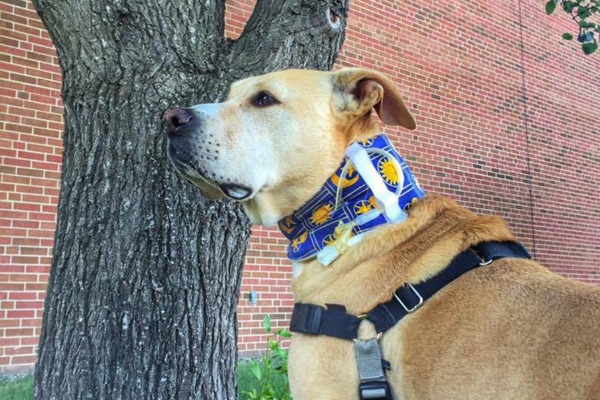
- Prioritize adequate nutrition and consider assisted feeding with a semi-permanent feeding tube if indicated
- Feeding tubes can also assist in maintaining hydration and can ease medication administration (see photo below)
Treatment for hypertension
If your dog’s blood pressure is persistently above 160 mmHg, your veterinarian will want to start treatment. This is the case regardless of what stage of chronic kidney disease your dog is currently in. Your veterinarian will work to reduce your dog’s blood pressure gradually to avoid potentially dangerous drops in blood pressure that can happen with more aggressive treatment.
There are several blood pressure medications available. Your veterinarian may recommend using them individually or in combination, depending on your pup’s specific situation and response to treatment.
Most dogs with chronic kidney disease who also have high blood pressure will need to remain on blood pressure medication for life. Your veterinarian will want to periodically recheck your dog’s blood pressure and may adjust the dose and types of medication over time.
Treatment for proteinuria
As alluded to earlier, the first step for any dog with proteinuria is to rule out any other conditions that might be causing the protein loss. If your dog has borderline renal proteinuria, your vet won’t start him or her on medication yet. However, your dog will require extra monitoring.
Once the UPC is above 0.5, IRIS recommends starting medication to treat proteinuria. Your veterinarian will likely start with a type of medication known as an ACE inhibitor. If this type of medication alone does not improve the protein loss, then your vet may want to add in an additional type of medication known as an angiotensin receptor blocker (ARB).
Like the treatment for high blood pressure, the treatment for proteinuria will likely continue for the remainder of your dog’s life.
How might the stage and substage change over time?
The stages and substages are not permanent classifications and should be revised as needed based on periodic recheck laboratory testing. Chronic kidney disease is a progressive disease process and over time (hopefully a very long time) your dog’s kidney values are likely to worsen as kidney dysfunction worsens.
As the values change, your dog will move up in the classification system. If your dog has either proteinuria or hypertension and medications are used to treat these conditions, then the substage classification may change as well.

What is the prognosis for kidney disease?
Knowing that kidney failure is progressive, it is natural to wonder how long your dog might live with kidney disease. This is a difficult question to answer since the rate of progression varies significantly between individual dogs. IRIS has not provided any specific prognosis or life expectancy for each stage. But in general, you can assume that the prognosis worsens as the stages progress.
With careful monitoring and treatment, some dogs with chronic kidney disease can live for years with a good quality of life. Unfortunately, if your dog is in Stage 3 or Stage 4 at the time of diagnosis, then he or she is more likely to succumb to kidney disease in months rather than years.
An older study gave a median survival time of >400 days for dogs with Stage 1 disease, 200 to 400 days for dogs with Stage 2 disease, 110 to 200 days for dogs with Stage 3 disease, and 14 to 80 days for dogs with Stage 4 disease (end stage kidney failure). But again, this can vary from dog to dog.
Take advantage of this kidney disease roadmap
Even without looking at those survival numbers, it’s understandable to feel worried if your beloved canine is diagnosed with chronic kidney disease. Being handed a new diagnosis of kidney failure is stressful. So is watching your sweet pup deal with chronic kidney disease for an extended period of time. And facing the inevitable progression of your dog’s disease can feel overwhelming at times.
I hope, though, that learning about the stages of kidney disease has given you more hope than heartache. Think about the staging guidelines as your roadmap to living with a dog with kidney disease. They give you an idea of where your dog is, where he or she may be headed, and how to make the path as smooth as possible along the way.
In short, understanding the IRIS guidelines can help you navigate this journey and advocate for your dear dog. And your veterinarian can help too. Together you can use the many kidney disease management tools discussed in the guidelines to help optimize your dog’s quality of life and hopefully give you more good days together.
Have you found the IRIS chronic kidney disease staging guidelines helpful?
Please comment below.


I have a 15-yr old spayed female Chihuahua mix. She is still pretty active and sassy. She is completely asymptomatic- eats well, has maintained a healthy weight, no problems drinking water or urinating, no vomiting or diarrhea, loves to run when we take her for walks.
For over a year now, her Creatinine has been 3.4; her BUN is 54 (also stable, varies between 52 and 54 and we test every 3-4 months)- Her SDMA is only 11, and has been stable also since detecting higher BUN/Creatinine last year-
What stage would you consider her to be in? She eats a Senior food designed for 11+ yr and I give natural homeopathic supplements to her.
Hi Adriana,
I am sorry your senior girl is battling kidney disease but glad she is still feeling well and enjoying life. Since her lab work puts her somewhere in the stage 1-3 range for the IRIS guidelines, I would probably assume she is stage 2 (especially since she doesn’t have any symptoms at this time). But as the article mentions, when the SDMA and creatinine don’t match, you should go with the higher stage to err on the side of caution. Hoping you can continue to give her the support she needs to maintain her quality of life. Wishing you both all the best and keep up the good work!
Hey there, I hope youe dog is doing great. I have 12 year old German Shepherd and he is suffering from the stage 3 Kidney disease. He is first diagnosed with they kidney issue this April. His numbers are rising.
I want to know what natural homeopathic supplements you give to your dog
pls reply once you see this
This will be very helpful.
Thank you and sending lots of love to you and your dog.
We live in Barcelona Spain,
We took our dog to a vet in 18th July 24 because she was limping a bit .
The leg was OK but the X-ray showed that she had kidney stones.
We foolishly thought she might pass them.
She continued to behave a normal so we let her be.
Last November her behaviour changed , less active , and sometimes not eating , when she did eat she would soon afterwards vomit.
We took her to the vet who examined her and a blood test was done , the blood test was a bit worrying and showed one kidney had very little function, the other showed better function but still not 100% .
We also had an ultrasound done , but we weren’t giving any information on that , we were just told if she didn’t eat she would die
He prescribed pills to improve her appetite and pills to stop the vomiting .
The pills for eating worked so that make us happy she was eating.
But the anti vomiting pills made her a bit disoriented , so we stopped .
Things were good until nine days ago February 15th she stopped eating completely , we took her to the vet who checked her out and gave us some drops and said to carry on with the pills to make her eat.
Nothing worked , She died on the 19th of February.
We are wondering why and how did things go terribly wrong ?
Thank you in advance .
Eddie
Dear Eddie,
I am so sorry for the tragic loss of your beloved girl. I understand why you are searching for answers and needing some closure to how things progressed. From all you described, it sounds like your dog’s kidneys made a slow decline after the diagnosis of the kidney stones. The main issue here may be a lack of communication from your vet. I think they were trying their best not to worry you or cause you to panic, but instead did not adequately convey the severity of your pup’s condition which left you unprepared for the outcome. Here is a link to an article that discusses kidney failure: Kidney Failure in Dogs: Signs, Symptoms, and Treatment
I think you will find some of the answers you are seeking, and it may offer some peace of mind. Again, my deepest sympathies on the passing of your sweet girl. Praying for comfort and healing for your heart.
Hello Dr Buzby,
My wife and I have/had 2 dogs. Unfortunately last week we lost the one suddenly, a male GSD/Lab mix of 11 years to possibly heart failure or blood clot (1.5 years after his osteosarcoma amputation it was devastating as we always thought lung Mets would have been the progression), and our other, 8yo female GSD mix (possibly with Collie) about 6 months ago diagnosed with early stage 2 kidney disease.
We were told the raw food diet was more than likely the cause of the kidney disease because of the high protein,. So we switch to a Royal Cannin renal food. Recently we were told she’s improved to stage 1 (possibly early stage 1), but she is very allergic to the food. Rubbing her ears on the ground, excessive scratching of ears, chin and sides, and sometimes acid reflux.
The thing is, we used to feed her TLC kibble and started experiencing the same allergic reactions after many years. So we switched her to raw, which was the same diet that our male was on for four years (as he had issues with kibble and acid reflux as well). She improved – the middles of her paws were no longer red or itchy, the scratching and ear infections, greatly reduced or stopped and her fur coat got much better. And then the kidney disease diagnosis and then we’re back on kibble and back to an allergy problem.
Now we have another new renal cable from Royal Cannin that is hypoallergenic, but it is more expensive than a raw food diet is, and I’m concerned, not nearly as healthy.
My questions are:
1-Is it possible that raw food (Big Country Raw) with the odd banana or peanut butter kong really triggered the kidney disease?
2-What does the change from stage two to stage one mean aside from obviously being at a better stage does it mean that this issue might be a misdiagnosis or a reversible issue?
3-I read a lot about how raw, high-quality protein, and proper vegetables is actually a better diet for kidney disease. Could this be true?
4-I don’t wanna risk my dog’s well being playing around with food that might cause her kidney disease stages to revert, But I’m concerned as well with her reaction to the foods that we’re being given to help her and the additional need for allergy medication (also expensive), that a raw diet might be a better option
5-I read different things about kidney diseases and the different stages and the life expectancy. Some suggest that one is maybe a year or a little bit longer and I hear otherwise it could be longer than that. Could you help me better understand kidney disease, and it’s life expectancy as well as what can be done to slow or revert it?
I know you can only do so much through the Internet without physically seeing or examining my other dog, but after losing one so recently, and so suddenly we want to do whatever we can to help and prolong our sweet girls life and life quality
Hi Patrick,
I understand your concern for your senior girl and think it is great you are advocating for her health and well-being. While these are all great questions, I am not an expert in nutrition or dermatology. So, I will offer the information that I can, but for these kinds of detailed questions you would be best served by a specialist. You can always ask your vet for a consultation or referral if needed. High protein diets may be linked to kidney damage and therefore could cause an elevation in BUN on lab work, but this correlation is still unclear. My assumption about your girl improving from stage 2 to stage 1 was probably due to feeding the renal diet and not that there was a misdiagnosis. A fresh whole food home cooked diet can do amazing things for dogs (and humans), but I am not a fan of raw diets. You can work with a veterinary nutritionist to formulate a home cooked diet for your girl that is nutritionally complete but is also compatible with her medical issues. I am hopeful you can find the answers you need to do what is best for your pup. Keep up the good work and I wish you both all the best.
My dog is a jack russell terrier who is 16 years old, he has recently be diagnosed to stage 2 kidney disease.. the vet had told us to give him anti acid, some other medication for his stomach (probiotics), and potassium oral gel… but it has came to a point where he has completely not want to eat anymore.. and now won’t really drink as much.. it worries me so much, he vomits every time he does eat something out of his own will… and be vomits after drinking water or having any medication.. i dont know what to do anymore.. he is losing weight and has ate a good meal in days.. 🙁
Dear Kelly,
My heart goes out to you as you face this difficult situation with your senior pup. From what you describe, it sounds like his kidney failure may have progressed to end stage and he may be nearing his last days. At this point, treatment may no longer be effective. Saying goodbye may be the most loving option and only way to offer your beloved boy peace and freedom from suffering. I will attach links to other articles with more information and great advice from other readers as well. Hoping you can find the answers you need to make the best choice for everyone involved. Wishing you comfort and clarity. Bless you.
1. Dog Kidney Failure: When to Euthanize Your Dear Dog
2. Using a Quality of Life Scale for Dogs
3. How Will You Know When It’s Time to Euthanize Your Dog? 5 Caring, Heartfelt Messages
4. Preparing for Your Dog’s Euthanasia: 10 Thoughts for Peace
Just to let you know your guide to kidney care in senior dogs is very useful. My 13 year old dog was diagnosed with lung capacity issues in July last year and doing the bloods before she has a lung wash showed she was at stage 2 for her kidney function.( elevated bun cre and glu and protein) No symptoms but she was put on kidney support meds and all was fine. Occasional loss of appetite and scabs sore skin but nothing more. Suddenly she has changed. Lots of vomiting and diarrhoea greasy thinning coat and increased thirst. But energy level remains the same and her loss of appetite comes n goes. She’s always been a greedy girl. So I am guessing we have moved to phase 3. I hope she will continue and be well again and you guide was really useful as I was fearing the worst for her but her sickness is easing off today so hopefully it’s a bout and it will pass. I was worrying that her condition had suddenly progressed as she’s 14 now but it’s good to learn these symptoms can pass .
Dear Sally,
I am sorry your senior pup has been through so much over the past year. Thank you for the kind words and great feedback about the article. I too am hoping this is just a temporary decline and your girl will be able to recover and maintain for a while longer. Praying for healing and many happy days ahead.
In September, I found out my dog, a yorkie terrier mix, that is approximately 15, had raised kidney levels. This was after already year of raised liver enzymes. I changed his diet, and he was doing well, but has had more bouts of diarrhea over the past three months. We went out of town for the holidays and he took a turn for the worse being more lethargic so I took him to the ER vet. After 10 hours there, they got his results and told me he was dehydrated and his BUN was very high and his phosphorus was high. Being higher than his tests results in September. They said he needed IV fluids. I am upset that we were there for hours and they didn’t start him on the IV fluids earlier or even SQ fluids when he was still more alert. I asked to still bring him home which they didn’t recommend, but if this is chronic, I’d rather have time giving him hugs and kisses the ER vet was skeptical and judged me. They gave him SQ fluids before we left. He is drinking water, eating ice and eating small meals. I am going back today (which is the next day) for them to rerun tests. My main goal is to get him back to our home this week but I don’t know if I am making any of the right decisions. Because it’s the holidays, I haven’t been able to tell his primary vet yet. I know the inevitable is coming but I want him to be happy and if the IV will prolong it, I am willing to try but if it more of the same and doesn’t reverse his functions, is there a point?
Dear Sadaf,
I am so sorry for all the worry and stress you endured during this difficult situation with your senior pup. Were you able to get in touch with your regular vet? Did the fluids seem to help at all? I am not sure how things turned out but hope you were able to make the best choice for you and your boy. Feel free to leave an update if you have a chance. Praying for peace and comfort.
I’m confused either my vet’s diagnosis. He said the was in the beginning stages of kidney disease, but ordered an IRIS test. She was also diagnosed with a UTI. If she’s just in the beginning stages, wouldn’t she be generally fine?
Hi Isaac,
I am sorry your pup is facing this difficult disease. I wish I could offer guidance, but without knowing all the details of your girl’s case, it is hard to make specific conclusions. I am not sure if you are referring to the UTI as being a strange symptom with early kidney disease? UTI’s can occur with or without underlying kidney issues and if left untreated can sometimes cause damage to the kidneys. I hope you will get the information you need once the IRIS testing is complete. Hoping for favorable results and praying for a positive outcome for you and your sweet girl.
Hi Julie
My dog is in late stages of kidney failure (so we’re told) she was fine until she went in for her teeth removed but I think the anestetic caused it to get very worse very quickly she has been in twice both for couple days having her kidneys flushed the vet has now said he doesn’t want to do it anymore she is fine for the first 3 days but then deteriorate pretty quickly after that, she was a very healthy dog before all of this and I don’t want to put her to sleep without trying everything I can what can you suggest…….
She was diagnosed with a rinal disease last yeah but wasn’t give a treatment plan or anything like that just a diet change
Hi Jake,
I am sorry your girl’s health is declining, and you are facing this difficult situation. Without playing a personal role in your dog’s medical care it is hard to offer specific recommendations. I will attach links to other articles with more information about kidney disease. Don’t forget you can always ask for a consultation with a specialist if needed. Hoping you can find the answers you are looking for. Wishing you and your sweet girl all the best.
1. Kidney Failure in Dogs: Signs, Symptoms, and Treatment
2. Dog Kidney Failure: When to Euthanize Your Dear Dog
Hi, our 5 year old cavapoo had an acute kidney injury three weeks ago. Kidney function seemed to return to normal after a week in hospital with fluids. But on check up it has risen again. Vet is checking for protein level in urine. If there is permanent damage, does that lead to the progressive condition? Struggling to understand how they link. Thank you
Hi Liz,
So sorry to hear that your dog had an acute kidney injury. I’m sure that was scary! It is hard to say for sure since I didn’t examine or treat your pup, but I am guessing that there might have been some lasting damage that is showing up now that your dog is no longer on IV fluids, that whatever process caused the acute kidney injury is still going on, or a bit of both. Kidney damage can end up being progressive in some situations. For example, if the dog had damage to the tubules of the kidney which caused him or her to leak protein into the urine, the body’s reaction to the proteinuria (protein in the urine) can actually cause more damage. Over time, the changes related to kidney damage can worsen overall kidney function, causing the dog to progress through the different stages of kidney disease. Kidney disease is a huge topic but hopefully this helps a little. Feel free to reach out to your vet or to me if you have more questions. I hope that your dog stabilizes soon and has many wonderful years ahead of him or her!
My little Mini Foxy x Chihuahua is 15.5 yo and has recently (on Saturday) been diagnosed with Stage 2 CKD, with a BUN of 29.12, Creatinine of 211, a BUN/Creatinine ratio of 0.138 and Phosphorus 1.39 – these measurement are all in mmol/l as that is how we report it here in Australia. Pochi’s vet say she isn’t too bad yet and the rest of her blood-work looks fine, too, and she has no heart murmurs and her gut feels soft and easy. She is still active and happy but might have lost some appetite. I have spent the last few days agonising over her condition and scouring the internet for home-cooked recipes kidney friendly food that might help strengthen her kidneys and keep her healthy for a bit more. What is the prognosis for a stage 2 CKD for a little dog with her readings? Many thanks.
Hi Mei,
I am sorry your girl has received this difficult diagnosis. I am glad your vet was able to catch this before it progressed and allow time to try and intervene with treatment. It is hard to make specific conclusions about prognosis because it varies widely from dog to dog. The article does give some insight to this in the section labeled “What is the prognosis for kidney disease?”. I hope Pochi will continue to feel well and maintain her quality of life. Wishing you both the best and praying for many happy days ahead.
My darling labrador was diagnosed last week with Stage 4 Chronic Kidney failure.
We were and still are in shock as I am sure are many other furry pet owners.
His Cre is 5.7 BUN 132 and Phos 11.3. We had no clue he was sick. He went in for some stitches and they did a blood test. The rest is history.
The strangest thing is that he is eating normally with a good appetite, drinks a little less but the weather is getting cooler. His poop and pee are normal, and he is at the same activity level.
We are cooking him home made food per nutritional guidelines on maintaining a healthy and balanced diet for his condition, but it’s only been a week of cooking so we will see.
I keep checking on him all the time because he is at stage 4 and waiting to see a change in his health or mannerisms. Of course, I don’t want to see anything negative and don’t want to talk it up but so far so good.
Hi Susie,
I am sorry your boy has received this difficult diagnosis. He is lucky to have you taking such good care of him and cooking him nutritious meals. What a blessing he is still feeling well and able to enjoy life. Wishing you continued success and many happy days ahead. Bless you. ♥
Wishing your boy all best. I took my Beagle Bella to the vet as she didn’t eat her breakfast which was unheard of. Blood tests shows she was stage 4 of kidney disease and very far gone. We had no idea she was even sick or that she was now dying. We had to say goodbye to her the next day and it’s the hardest thing I have done and she was young at 7. Thanks Dr for your article most informative and your most compassionate to people. I am broken and lost and my heart aches for my best friend .
Hi Rania,
My heart goes out to you on the sudden loss of Bella. It is never easy to lose a beloved furry family member, especially when they seem so healthy and then rapidly decline. I hope that you are able to find a measure of comfort in all the good memories you shared and the wonderful life she had with you. ❤️
this is so sad. IM READING All about ckd as my vet has diagnosed my dog with stage 3.ckd. im reading about viruses and infections too and false diagnosis. its scary. im confused and overwhelmed. i want you to know i feel for you so sorry for youre pain and this premature passing. god bless you .its a silent disease, it seems to be, and we dont know its there, but i think vets should do blood and wee samples routinely surely this would show things earlier AS THERE ARE STAGES, SO ON THE ONE HAND IT SAYS THEY DONT SHOW TILL AT A LATER STAGE . THEN BY DEFINITON IT STATES THERE ARE STAGES. SO YOU WOULD ASSUME THAT THE FIRST TWO STAGES WOULD SHOW THEN OR ELSE WHATS THE POINT OF HAVING STAGES? MUCH LOVE AND HUGS TO YOU XXXXX
Dear Elizabeth,
I am so sorry your dog has received this devastating diagnosis. I agree with everything you said. Most vets do recommend routine yearly or twice-yearly lab work for dogs (frequency depending on age and health status). The problem is getting owners to see the benefit when their dogs are “healthy”, the physical exam is normal, and they have no issues or symptoms. So, while there are stages, we usually don’t catch this until symptoms appear later in the disease process. If owners will do routine wellness lab work, we can in fact catch this early in most cases. Despite consistent lab work and monitoring, there will still be dogs that develop kidney disease quickly and the early stages may be missed between regularly scheduled appointments. Ultimately, the owner and vet have to work together in a partnership to give each pup the best opportunity at a long and healthy life. Thank you for bringing up this important topic! Best wishes to you and your sweet pup.
my dog i just put down yesterday, lived 1 year with stage 4. 5.7 creatine all because of 9ne supplement my vet gave me. until 3 weeks ago, you would never of known he had kidney failure or even stage 4
Hi Robert,
My heart goes out to you with the recent loss of your beloved pup. What a blessing you gained so much extra time with him. Thank you for sharing your experience and offering support to others. Wishing you comfort and peace for your heart. Bless you.
What was the supplement? I was told by my vet this morning that it dog has entered stage 4. I’d like to ask her about it. Thank you ❤️
What was the supplement? If you can share it would be greatly appreciated.
Hello
My 2-year-old Italian Greyhound has been off colour for the past week. She is normally incredibly active and vibrant and like a light switch turned in 24 hours.
Her WBC is very high, as is her Creatinine level, at CKD level 3. She has been admitted for fluids and I am beyond overwhelmed with distress. This girl is my world, she is everything.
What are the chances her just having an acute kidney issue from a UTI, and then normalizing please?
Kindly
Dear Sally-Ann,
I am sorry your young dog is facing these worrisome kidney issues. I wish I had some great insight to this situation, but without being personally involved in your dog’s medical care it is hard to offer specific conclusions. I am hoping that the IV fluids will help stabilize the kidneys and you will start to see improvement. Don’t forget you can ask for more testing (abdominal ultrasound, urinalysis, etc.) or a consultation with a specialist if needed. Wishing your sweet girl all the best and praying for a positive outcome.