Chewing is a natural behavior for dogs. Offering chew toys is the best way to make sure your dog doesn’t spend that energy chewing your shoes. But which chew toys are safe for dogs? Integrative veterinarian Dr. Julie Buzby breaks down which types of chew toys are good investments, and which toys to avoid. Appropriate chew toys are essential to keep your pup happy and healthy!
Safe chew toys for dogs are essential for their health and happiness. Combing through the myriad of chew toy options can be overwhelming and, frankly, sometimes even misleading. Here’s my veterinary advice to help you “chews” wisely.
How to choose safe chew toys for dogs
Several variables can impact which chew toys are best for your dog, including:
Size
If you look in the toy aisle of your local pet store, you will notice that chew toys come in all different shapes and sizes—just like dogs do! Size of the toy can be a safety concern. Giving a dog a toy that is too small may create a dog choking hazard. And if the toy is too large, your dog may not be able to chew it appropriately.
Generally, toy packaging will include a size range for dogs, but if you’re not sure, you can always ask your vet whether a toy would be a good fit for your dog. If it looks like your dog can swallow the toy whole or it could get lodged in the back of the throat, it’s probably too small.
Construction
Chew toys are available in many different materials, from rubber to nylon to plastic, even animal bones and byproducts. Knowing which materials are safe for your dogs to chew on and which may be harmful can help you determine which toys are best.
Type of chewer
Dogs can be bred for different purposes, and chewing style can differ between different types of dogs. Some dogs rarely chew, and some are more aggressive chewers. What type of chewer is your dog?
“Power chewers” generally require stronger chew toys. Just like a toy that’s too small may create a choking hazard, a toy that is easily chewed into smaller pieces can be similarly problematic. We want to make sure our dogs are entertained and enriched, but above all, safe.
Why do dogs need to chew?
Chewing is a rewarding activity for many dogs. Gnawing on a chew toy satisfies the dog’s natural chewing instincts, benefits the teeth and gums, and keeps jaw muscles strong. However, the wrong dog chew toy can cause fractured teeth, pose a choking or obstruction hazard, flare up food allergies, and supply unwelcome calories to a dog’s diet.
What chew toys are safe for dogs?
With a plethora of options to choose from, which dog chew toys or dog chew treats safely satisfy your dog’s instinct to chew? Here is a list of vet recommended dog chew toys:
Kong dog toys
Kong® dog toys are safe and durable. Kong makes toys in different sizes, styles, and for different chewing strengths. Some are also designed to be stuffed with treats, so Kong toys can be a great option to keep dogs busy in crates or when they need a mental stimulation toy for dogs.
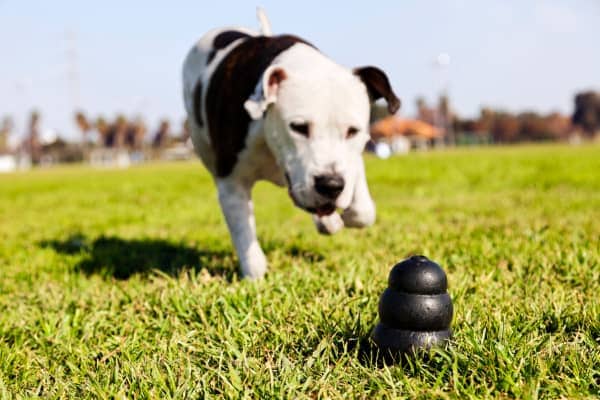
I like to put some peanut butter on the inside of my dog’s Kong toy, then freeze it overnight. It keeps him busy for quite a while!
Planet dog chew toys
Planet Dog also makes durable, eco-friendly chew toys and treat dispensers for dogs. They have a variety of different toy options to suit various applications and types of dogs.
GoughNuts chew toys
GoughNuts chew toys are specifically designed to be safe and durable for dogs who love to chew. They are made of strong rubber, and designed in shapes that are unlikely to cause safety issues.
Zogoflex dog toys by WestPaw
Zogoflex toys are another favorite of mine. They are also made of rubber and stand up to tough chewers.
One of my veterinary behaviorist colleagues recommended the Toppl dog toy to me, and I have loved it for my own dogs. They can be stuffed with treats or regular kibble, and exercise the dogs’ brains as well as their bodies, as they figure out how to get the food out. Once the toy is empty, dogs can chew away safely!
Rawhide*
You may notice that this item comes with an asterisk. This is because not all raw hide chews are created equal.
Softer rawhide toys are generally safe as long as you supervise your dog. I do not give rawhide chews to unsupervised dogs, as they may swallow a large piece, potentially causing choking, GI upset, or obstruction.
Some dog chews are “pressed” rawhide, which I do not recommend (read on for more details).
Dog treats and dog chew toys approved by the Veterinary Oral Health Council
The Veterinary Oral Health Council reviews chew toys to assess whether they help control plaque and tartar in dogs. The VOHC offers a seal of approval to dog food, treats, chew toys, toothbrushes, etc. to let consumers know whether those products are likely to improve dogs’ (and cats’!) periodontal health.
It’s worth noting that many VOHC-approved dog chews are a win-win. Greenies, for example, can be both a fun chew treat for dogs and can help reduce plaque and tartar. Since they have been awarded the VOHC Seal of Approval, we can feel confident that these treats support dental health. However, for an overweight dog, please be aware that these treats do contribute calories.
Also, while these options satisfy a dog’s need to chew and are helpful for plaque and tartar control, they are not able to treat dental disease. Rather, they are part of a comprehensive oral healthcare program that should include daily dog teeth brushing and regular professional examinations and treatment.
What are the risks of giving a dog a hard chew toy?
Unfortunately, just because a dog product or toy has made it to the store shelves does not mean it is safe for dogs. Even if trade magazines, product popularity, and social media suggest otherwise, many hard chew toys pose risks to your dog that need to be taken seriously.
The risks include:
- Fractured or worn teeth
- Foreign body obstruction in the stomach/intestines that requires surgery
- Choking hazards: a chew toy may become lodged in your dog’s mouth or throat
- Damage to the hard palate—the roof of your dog’s mouth
- Damage to the mandible, i.e. lower jaw—smaller hollow bones can get stuck around the jaw
What chew toys are unsafe for dogs?
Knowing that not all chew toys are created equal, how do you know what dog chews to avoid?
To avoid fractured teeth and trips to the emergency room, your best strategy is to steer clear of dog chews and chew toys that present a potential hazard to your dog.
Here is my list of dog chew toys and chews to avoid:
Bones
I once heard a veterinary colleague say that allowing your dog to chew on bones is like playing in traffic. You may get away with it for a while, but eventually, something bad will happen.
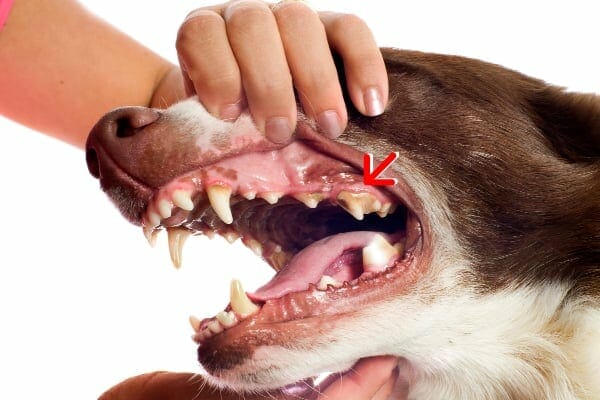
I’ve seen scores of dogs with broken teeth from chewing on bones. (Yes, raw bones, cooked bones, processed bones, and everything in between—there are no safe chew bones for dogs.) Bones are notorious for cracking the crowns off of the big upper 4th premolar (or carnassial) teeth in dogs.
As the picture below shows, if you lift your dog’s upper lip, you can easily identify the carnassial tooth on each side. It looks like a miniature upside-down mountain range, and it’s the biggest tooth in the mouth.
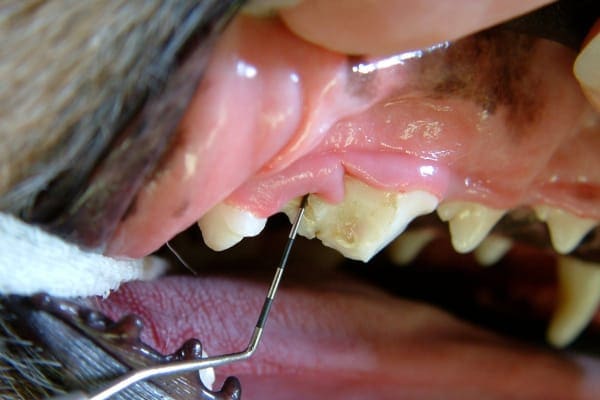
If a dog fractures a tooth, the only way to address it is with a major dental procedure under anesthesia—generally including extraction of the broken tooth. Left alone, a fractured crown is a tooth abscess waiting to happen and is very painful for the dog.
Finally, bones aren’t just a pain in the mouth. They can also cause esophageal or intestinal obstruction, perforation, and constipation. Bones may splinter when chewed, and your dog could swallow a very sharp piece—a ticking time bomb passing through the GI tract.
Antlers
As with bones, beware of antler chews for dogs. I have a personal vendetta against antlers. They seem to be very popular lately as “natural” chew toys, and I bought into the propaganda.
My own young dog, with immaculate healthy teeth, cracked the tips off of five of his premolars in a matter of hours gnawing on an antler. They are absolutely too hard, and this is not just my jaded opinion. You won’t find a board-certified veterinary dentist in the country who would give you a “thumbs up” on antler chews for dogs.
Nylon bones (such as Nylabones)
If actual animal bones are out, you may find yourself wondering, “Are Nylabones safe for dogs?” You’ll see synthetic chew bones in pet stores, pet aisles of grocery stores, online pet supply companies, you name it. Nylabones and other synthetic nylon bones pose similar threats as natural bones. They can cause tooth damage/fracture, and may also become choking hazards. I do not recommend nylon bones for dogs.
Bully sticks
One of the more common chew toys I get asked about in recent years is bully sticks, also known as pizzle sticks. About half the people who ask are dissuaded by gently informing them exactly what bully sticks are. For the other half, I reference a Tufts University study that revealed that bully sticks are surprisingly calorically dense, which can be problematic for our chubbier canine friends. (If you’re unsure whether your dog is overweight, check out how to determine canine body condition score.)
Additionally, bully sticks can be contaminated with bacteria, such as E. coli and MRSA, that can not only make our pets sick, but also can affect humans! And, just like other chews, bully sticks can become choking hazards once pieces are chewed off of them.
Hooves
In theory, I love the idea of using animal byproducts for pet toys. If an animal is used for food, I think we should take every effort to use as many parts of that animal as possible. Like bully sticks, hooves are a part of cows that generally don’t have a whole lot of use for humans, and are therefore wasted. But we must ask, are hooves safe for dogs to chew?
In short, no. Hooves do a fantastic job of protecting the more sensitive interior of cows’ feet. Unfortunately their durability also makes them unsafe for dogs’ teeth. I have seen almost as many fractured teeth from dogs chewing on hooves as I have from bones and antlers.
Pig Ears
Although pig ears are less likely to cause tooth damage than some of the harder products we’ve talked about, they can still make your dog (and you!) sick.
In 2019, the FDA and CDC linked a Salmonella outbreak to pig ear pet products. 143 people in 35 states were affected, 26 of whom were hospitalized. Although the outbreak resolved after a recall was issued, it solidified for me that the risk of bacterial contamination rules out pig ears as chew toys for dogs.
Pressed rawhide
Although the softer rawhide chews are generally tooth-safe, pressed rawhide toys are hard enough to damage dogs’ teeth. They carry the same risks as bones, antlers, and nylon bones.
Tennis balls
If your dog loves to fetch, tennis balls may be a staple in your household. However, these toys can cause problems when chewed. An immaculately clean tennis ball right out of the package isn’t so bad, but the combination of dog slobber and outside play causes dirt and/or sand to stick to the surface of the ball pretty quickly. I would barely get through two to three throws before our tennis balls looked too gross to pick up and toss again.
Therein lies the problem. Once dirt and debris stick to the surface of the tennis ball, it is basically as if your dog is chewing on sandpaper. Chewing on tennis balls wears down the protective enamel on dogs’ teeth. Excessive wear can leave the more sensitive interior part of the tooth that lies under the hard enamel vulnerable to damage. Although fun to chase, tennis balls are not safe chew toys for dogs.
A potential alternative is to play fetch with less “fuzzy” balls. Kong, for instance, makes rubber toys the same size and shape as a tennis ball, but without the dirt-attracting fluff. However, since rubber balls can get slick with saliva, it is critical that you only use ones that are large enough to not pose a choking hazard. A slippery saliva coated rubber ball that is too small for your dog can easily slide back into the throat and block your dog’s airway—often with fatal consequences.
Ice
Ice cubes may seem like a fun, crunchy, calorie-free treat for our pups, but I don’t generally recommend them. Just like other hard items, ice cubes can potentially fracture, chip, or otherwise damage dogs’ teeth. Ice may also be a choking hazard, especially for smaller dogs or voracious eaters.
One question I have been asked is whether to give your dog ice to cool them down. Although this may seem like a good way to keep your dog cool, dogs regulate their body temperatures differently than humans. If you’re worried your dog may be overheating, bring them inside, offer plain water, and contact your vet for advice.
Are yak chews safe for dogs?
A newer (to me, at least!) type of dog treat I’ve come across is yak chews, also called yak cheese chews or cheese bones. Pet product manufacturers are always on the lookout for natural chews or other edible chew toys, and I’m usually hoping for more safe options.
I did some digging to find out whether yak chews make good/safe chew toys for dogs, and was disappointed with the answer.
Yak cheese chews, like other types of bones, are too dense to be safe for dogs. Although they may seem like a tempting treat for our dogs, they are hard enough to cause some serious dental damage.
How to determine if a chew toy is too hard for dogs
Of course these lists are not exhaustive, and new chew toys hit the market all the time. But you can empower yourself to make a judgment on whether a toy is too hard for your dog to chew.
Here are two simple tests you can do on any dog chew toy to determine if it’s too hard for dogs:
1. The kneecap tap test
Would it hurt you if someone hit you on the kneecap with the dog toy? If so, it’s too hard for your dog to chew and, therefore, not a safe chew toy for dogs.
2. The thumbnail press test
Using your thumbnail, can you make an impression on the surface of the dog toy? If not, or if it bends or breaks your nail, it’s too hard for your dog to chew on.
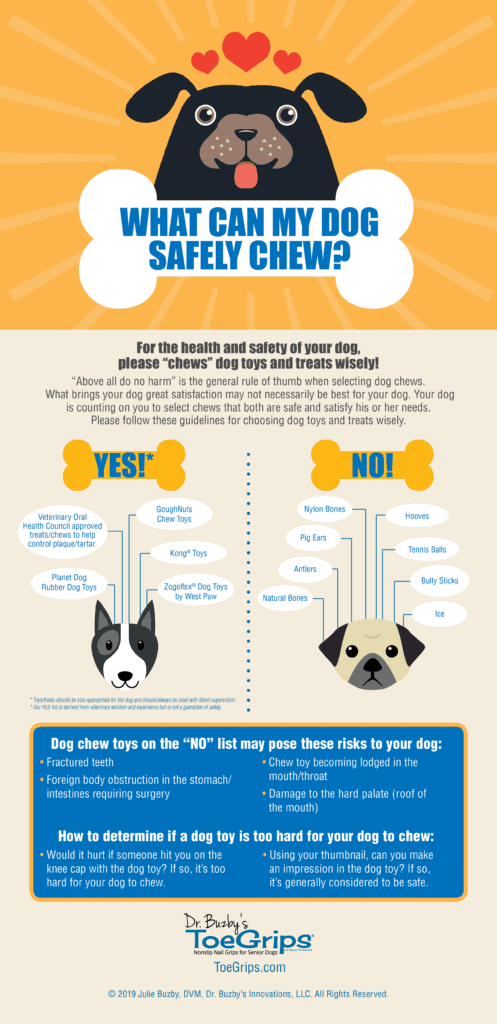
Use this infographic as your quick-reference guide to dog chews
Now that we’ve covered all my tips and tricks, I’d like to share this “What Can My Dog Safely Chew?” infographic with you. I hope it will help you “chews” wisely for the health, happiness, and safety of your dog.
What questions do you have about choosing safe chew toys for dogs?
Please comment below. We can all learn from each other.


Thank you for taking the time to answer questions. This one is a bit off topic, but do you recommend pee pads for puppies? I’ve seen famous dog trainers like Ceaser Milan and Zak George recommend them, but what do you think? I’ve heard that dogs will think that carpeting is like a pee pad because it’s soft like the carpet is. I’ve also read that the dog will always think it’s OK to go inside because of the pad but doesn’t that fit in to the category of potty training anyways? The green turf items are put inside and eventually outside, so why not the pee pads too? I’m torn on what to do and we’re getting a Beagle puppy within a few weeks. Thank you in advance for your advice.
Hello Greg, I have to confess that the question is completely out of the scope of my expertise. I recommend crate training puppies and taking them outside for potty training. Congratulations on your new addition! ♥️
Hi Julie, What is your professional opinion on water additives that claim to help prevent tartar and plaque buildup? Have you had any patients use these with good results? Bad results?
Hello Rick, Water additives are way down on my list of recommended home care options to keep your dog’s mouth healthy. Brushing is by far and away the best option. But to answer your question directly, there is one approved by the Veterinary Oral Health Council, which is a very reputable organization that I trust. On their list of accepted products
http://www.vohc.org/VOHCAcceptedProductsTable_Dogs.pdf is a water additive called Healthy Mouth. I have no personal experience, though.
How about goat horns; safe or no?
Hi Kathleen, I’m sorry to say I have no experience at all with dogs chewing on goat horns. I’m guessing they aren’t as hard as antlers, but I’d still have similar concerns. 😉
I’m struggling with finding something that my 7yo standard poodle will chew on. She likes the nylabone healthy edibles and usually has the very large ones gone within a day or two, she also likes pig ears and bully sticks…all of these given in place of rawhide. I’ve tried the ‘rubber’ flavored bones, but if it’s non-edible she won’t touch it!
Suggestions? Any ideas would be great, I hate spending money on the non-edibles only for them to lay around the house untouched.
Hi Jessica, This is such a tough question because so many of the common “chew toys” for dogs I would consider a hazard (for one reason or another). Please check out the infographic in the blog for approved ideas. Beyond that, I would advise that you take stock in Nylabone and keep supplying her with the Nylabone edibles. 😉
My two Vizsla’s love uncooked beef marrow bones. On cold or rainy days they spend over an hour and a half getting the marrow out, but really don’t chew the bone that much. My boy never had problems but my female chipped a tooth. They ate them for years, until the price went up.
I have given my dogs bully sticks for over 16 years with no problems. They were recommended as a safe chew by an excellent veterinarian. They are very digestible. He said when they chew a bully stick down to the point where it’s only a couple inches long, take it away and give them a new one. I’ve had no problems with seven different dogs over a span of 16 years. And it has kept some of them, who were so inclined, from chewing on truly dangerous things, like door jambs, furniture, etc. I’ll just stick with the bully sticks.
Hi Cydney, Thanks for your comment. I am so happy to hear that your dogs have done so well, and I agree that the complications of chewing on things from the “no no” list are not common. They are uncommon…but can be very serious when they occur. So I’ve elected to err on the side of caution and go with the recommendations of my colleagues from the American College of Veterinary Dentistry. Here’s an interesting article from one of them which mentions bully sticks: https://www.mypetsdentist.com/cage-chewer-syndrome.pml
My GSD is 13 weeks and he is a power chewer. I’ve done all the puppy stage toys of nylabone and he busted through those in one day. So I bought a puppy variety bone pack for light to power chewers. He went through the light chew bones(bully/rabbit roll) in 10 seconds, the medium chewer bone(lamb ear) in 30 seconds and the power chewer bone (split elk antler) is still going strong for a week. We play with a Kong tennis ball but he doesn’t get to chew on it. And he has a tug of what rope. A squeeze monkey and a freezer chew. He’s going through them too fast. What kind of puppy you is good for a power chewer like him?
Hi Ashley, in a case like this, I don’t think the answer lies in a better chew toy. I think the secret may lie in a more tired puppy. 🙂 Beyond my “approved” list in the blog, most notably the Kong® toys, I don’t have any advice. But I would recommend giving this puppy a LOT of opportunity for exercise and play each day, and I suspect you’ll see this chewing issue actually improve.
I completely feel your pain, when my dog was a puppy we’d get him 3 solid hours of excersize a day, plus training and mental stimulation. With all of that, he still chewed a hole a foot in diameter through a wall. Is it possible that your dog is experiencing some anxiety? Once we got to the root of our dog’s issues, the chewing stopped and his energy levels became more reasonable. It’s worth talking to a trainer!
My dog only chews on her soft cloth toys and usually does this at night when I’m sleeping so I’m not able to catch her to scold her. She destroys all her toys. I would like her to sleep with me but she she chews the blankets then and eats whatever she chews! I have not heard of any other dog doing this. Why? Is there anything I can do other than kenneling her or taking away all toys?
Hello Patricia,
As I’m sure you know, the fact that your dog not only destroys toys/blankets, but also EATS them is a huge problem. I would consider her a walking time bomb for a GI obstruction, which is typically a serious surgical condition. My first thought is to make sure you are really tiring your dog out each day. We joke in veterinary medicine that a tired dog is a good dog. Is she a herding breed or other high drive/high energy breed? My top recommendation is to make sure she is getting plenty of exercise daily, with long leash walks being top of the list. Second, please talk to your veterinarian. As I said, I’m genuinely worried about the possibility of GI obstruction and would love for you and your vet to collaborate to see what more can be done to keep her safe. Thank you!
For a future reader with a similar issue my resolution: I adopted a mis-characterized “trained” pup that in reality was fresh off the mean streets of San Antonio, so sleeping inside was a rough transition for her and my wool rugs. A crate was not an option bc her “mid-sized” 55lb puppy body threw the crate over and up and against walls spraining her leg.
Every night at the same time before bedtime I took her and my other dog for a short run from my powered wheelchair. Once back home they went outside to “hurry hurry” (aka go potty); then straight into the kitchen where they watch me prepare/line their Kongs with homemade peanut butter. Once in the bedroom, they each get on their beds and get a special bedtime high value treat for getting on Bed. Then I give each a Kong. Then lights go down.
It was the exact same routine every night until her anxiety was eliminated. At first I had to give multiple treats through the night to get her back on her bed. But over time, her bed became her place of comfort. And now she falls asleep as soon as she finishes her Kong, which is lined only with a single swipe of peanut butter.
My mini Aussie is a tough chewer. Almost all of the things she chews are on the “no list”. The items on the “yes” list were tried when she was younger but she “chewed through them” in minutes so I moved to tougher chews ( no list). The only thing on your yes list that has worked is a black Kong. Ate there other chews I can try?
Hi Susan, Trust me, I feel your pain. And I’ve had clients say, “I understand that I’m taking a risk on teeth fractures, but I’m going to do it anyway because my dog is such an insane chewer.” I don’t have anything more to suggest beyond the toys/chews on the infographic. But in general, keeping your dog “tired” ie. lots of daily activity and exercise should decrease your dog’s need to expend so much energy on chewing and hopefully take it down a notch.
Am I wrong on saying that a dog “chew toy” should be given as a treat and not left alone with also that should be given to him/her for 5 – 10 mins at a time then taken off them? Thats my way anyway! Seen it on TV also when watching the police programs and a police dog has found Drugs, cash or anything else he/she is trained to find and they give them a toy to play with for a short time as their reward or they would bite into it in no time given the chance!
Hello Robert,
Good question and I see your point! I don’t necessarily agree that a chew toy should only be given as a treat and then taken away after a few moments, but where we do completely agree is that all chew toys should be used with supervision. Although they are rare, fatal freak accidents can and do occur with chew toys/treats. Thanks for sharing your experience/perspective!
I just adopted a 3 1/2 month old schnauzer/mix for our local animal shelter, Its been awhile since I have had a puppy and would like to know what chew I can give him while he is kenneled when I am at work. I was going to go for antlers or bully sticks, but after reading you article, I am not,,
What can you recommend for a young puppy. I see my vet next week, and hate to see him without chewing sticks. He does have the appropriate toys, but want to give him something with flavor. Can you help?
Hello Anne. Congratulations on your new adoption! I’m glad that you will discuss this topic with your vet, but in the meantime, I have a list of my “approved” chews/chew toys in the infographic at the bottom of the article. KONG toys are usually a safe bet.