If your beloved dog has lymphoma, you may have more questions than answers. A cancer diagnosis can be scary and overwhelming. Integrative veterinarian Dr. Julie Buzby is here to help, sharing the types, signs, diagnosis, treatment, and prognosis for lymphoma in dogs.

Joshua, a 10-year-old Basset Hound mix, seemed like the picture of good health. When he visited me for his annual exam, he was acting like his normal silly, slobbery self. His parents had no concerns and expected a routine visit. However, their world soon came crashing down around them.
On his physical exam, I discovered significant enlargement of most of Joshua’s external lymph nodes. Unfortunately, cells from those lymph nodes confirmed my suspicion. Their beloved dog had lymphoma.
What is lymphoma in dogs?
Lymphoma in dogs is one of the most commonly diagnosed cancers veterinarians encounter. Although it often affects the external lymph nodes (known as multicentric lymphoma), it can also affect multiple organs and body systems.
Lymphoma is a cancer of the lymphocytes (a type of white blood cells), and can be known as malignant lymphoma, lymphosarcoma, or LSA. It is responsible for up to 24% of canine cancer cases in the U.S. and affects 13 to 24 dogs per 100,000 each year.
To understand lymphoma a little better, it helps to understand lymphocytes themselves. In a normal dog, lymphocytes are an important part of the immune system’s defense against infections. Like other types of white blood cells, they circulate in the blood.
Lymphocytes are also a very important part of the lymphatic system. This system is comprised of tiny vessels that collect fluid that has leaked out of blood vessels (known as lymph). Lymph helps with the body’s fluid balance, and also helps remove foreign substances such as viruses and bacteria from the body.

Along the path of the lymphatic vessels are lymphocyte-rich lymph nodes. Think about lymph nodes as the inspection checkpoints along the lymphatic road. As lymph flows through the lymph node, the immune system cells come in contact with the foreign substances. This allows the body to detect then mount a response against anything it sees as potentially dangerous.
In addition to lymph nodes, the spleen and bone marrow also contain large amounts of lymphatic tissue (i.e. lymphocytes and other immune system cells). However, lymphatic tissue is present to some extent in almost every organ. Thus, lymphoma can develop almost anywhere in the body.
Canine lymphoma is generally grouped into three different categories.
What are the three forms of lymphoma?
Each of the three forms of lymphoma in dogs is defined based on its primary location in the dog’s body:
- Multicentric or nodal lymphoma—Most commonly found in the peripheral lymph nodes, but can also occur in other regions such as bone marrow, liver, or as a cause of splenic masses in dogs
- Gastrointestinal (GI) lymphoma—Affecting the small intestines and/or stomach
- Extranodal lymphoma—Found in a location other than the lymph nodes or GI tract. Extranodal lymphoma is further classified into different subtypes based on location:
- Mediastinal lymphoma—occurs in the chest
- Cutaneous lymphoma—occurs in the skin
- Renal lymphoma—occurs in the kidneys
- Central nervous system lymphoma—occurs in the brain or spinal cord
- Ocular lymphoma—occurs in the eye
Multicentric lymphoma is by far the most common form of lymphoma in dogs, accounting for approximately 80% of cases. GI lymphoma is responsible for about 5 to 7% of lymphoma cases. The remainder fall in the extranodular category.
Because it is the most common, this article will focus primarily on multicentric lymphoma.
What are the signs of lymphoma in dogs?
Clinical signs of lymphoma in dogs may vary based on the form of lymphoma. First, I will touch on the signs of GI lymphoma and extranodal lymphoma before moving on the signs of multicentric lymphoma.
Signs of GI lymphoma in dogs
In dogs with gastrointestinal lymphoma the signs are generally decreased appetite, vomiting, and/or diarrhea.
Signs of extranodal lymphoma in dogs
Dogs with extranodal lymphoma may have signs related to the body system that is affected. For example, sometimes cutaneous lymphoma can cause bumps or masses in the skin. Renal lymphoma may cause increased thirst and urination as the first sign.
In addition, any form of lymphoma may initially present with nonspecific symptoms such as lethargy in dogs,, inappetence, diarrhea, and weight loss.
Next, let’s look at signs of multicentric lymphoma in dogs.
Signs of multicentric lymphoma in dogs
In dogs with multicentric lymphoma, the first sign is usually palpably enlarged lymph nodes. When I say “enlarged,” I don’t mean just slightly bigger than normal. Often these lymph nodes are much larger, potentially the size of a golf ball or bigger, depending on the size of the dog. The lymph nodes are firm and usually not painful when palpated.
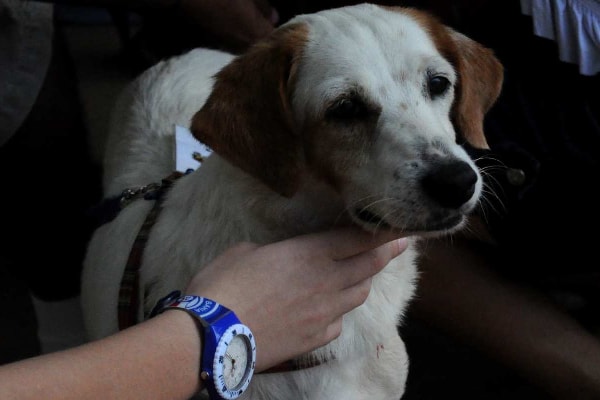
Although there are lymph nodes throughout the body, some are more noticeable than others. The most prominent and easy to feel lymph nodes are:
- Submandibular lymph nodes—located under the jaw where it meets the neck
- Prescapular lymph nodes—in front of the shoulder blade
- Axillary lymph nodes—found in the armpit area
- Inguinal lymph nodes—on the lower abdomen where the legs connect to the body (groin region)
- Popliteal lymph nodes—located on the back side the dog’s knee (stifle)
In some dogs, lymph node enlargement is the only symptom initially seen. Other dogs with multicentric lymphoma have other symptoms such as lethargy, inappetence, heavy breathing, and weight loss.

Other causes of lymph node enlargement
It’s important to note that enlarged lymph nodes don’t always equal lymphoma. Due to their role in the immune response, lymph nodes can react and grow in response to an infection (viral, fungal, or bacterial) or even vaccinations. Vets usually refer to these as “reactive” lymph nodes.
The submandibular lymph nodes are the most likely lymph node to be enlarged due to non-lymphoma causes. This is in part because they filter the blood, and therefore the bacteria, from the mouth.
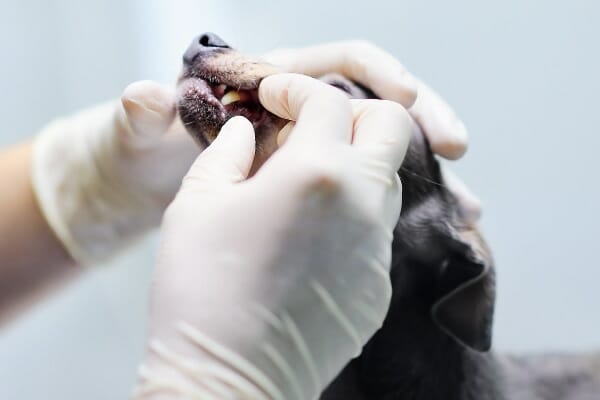
If your dog has dental disease or your older dog is losing teeth, this may be enough to stimulate a response in the lymph nodes and cause enlargement. Thus, finding enlarged lymph notes is suspicious, but not definitive for lymphoma.
How is lymphoma diagnosed?
If your dog has one or more enlarged lymph nodes, your vet may perform a test called a fine needle aspirate. This involves poking a needle into the lymph node multiple times to obtain a sample of cells. Your vet will then examine those cells under a microscope.
A normal lymph node contains primarily small, mature lymphocytes. However, if the vet sees a large number of lymphoblasts (larger, immature lymphocytes), he or she may suspect lymphoma. Many veterinarians will send the slides to a veterinary pathologist to confirm a diagnosis of lymphoma.
Sometimes, even when a veterinary pathologist examines the sample, it can be difficult to definitively determine if a lymph node is cancerous or reactive. In these cases, your veterinarian may want to take a biopsy, or a small piece of tissue from the lymph node, and submit it to a veterinary pathologist.
If your dog has other clinical signs like weight loss, lethargy, and decreased appetite, your vet may want to perform other tests to see what might be going on. Routine diagnostic tests may include blood tests, X-rays, and/or ultrasound, depending on what symptoms your dear dog has.
What is the treatment for lymphoma in dogs?
Treatment for lymphoma in dogs encompasses a few options. If your dog is diagnosed with lymphoma, your veterinarian will advise you about the next steps. Multicentric lymphoma is generally either treated with chemotherapy or with a steroid medication (prednisone).
You may be wondering about surgery as a potential treatment option. Unlike many other types of cancer, surgery cannot cure or treat multicentric lymphoma. The lymphatic system is widespread throughout the body, so by the time of diagnosis, lymphoma has most likely spread to multiple locations. Thus, even if only one or two lymph nodes are enlarged, removal of those lymph nodes is not an effective treatment.
Let’s look at chemotherapy and steroid medication as two medical management options for lymphoma in dogs.
Chemotherapy to treat lymphoma in dogs
Chemotherapy is generally the treatment of choice for canine lymphoma. There are multiple different chemotherapy protocols (i.e. the type of drug or combinations of drugs administered on a set schedule) to treat lymphoma. A veterinary oncologist can discuss different protocols and determine which one is best for your dog.
To learn more, check out Veterinary Partner’s article on common lymphoma chemotherapy medications for cats and dogs.
Laverdia to treat lymphoma in dogs
A new oral chemotherapy medication called Laverdia has been conditionally approved for treatment of lymphoma in dogs. This drug alters the proteins of cancer cells and prevents them from spreading. The most exciting thing about this oral medication is that owners may be able to treat their dogs at home, rather than making frequent trips to the veterinary oncologist for chemotherapy injections.
Laverdia is still new on the veterinary scene, and vets are very excited to see results as more dogs are treated with this innovative medication!
Joshua’s chemotherapy story
Remember Joshua? I referred him to a veterinary oncologist who planned and administered a chemotherapy protocol. Joshua’s lymphoma went into remission, and he had an additional two wonderful years with his family. They were so happy with the time that the chemotherapy gave them with their sweet pup.

Prednisone to treat lymphoma in dogs
If you do not pursue chemotherapy for your dog, prednisone is another treatment/management option. Most dogs will go into partial or complete remission for a time when treated appropriately with the corticosteroid prednisone for dogs (or prednisolone).
Prednisone is a tablet that is readily available at most veterinary hospitals and can be given at home. Note that prednisone does sometimes cause increased thirst and urination, excessive panting, or increased appetite.
Unfortunately, prednisone typically only causes short-lived remission. Typically, the lymphoma develops resistance to prednisone after a couple of months. Another concern with starting prednisone right away is that it makes lymphoma less responsive to chemotherapy in the future.
Before I start any of my patients on prednisone for lymphoma, I always counsel the family on the pros and cons. I also ensure they have no plans of pursuing chemotherapy down the road.
Charlie’s prednisone treatment story
Charlie is a 10-year-old Golden Retriever who came to see me because he was not eating well and seemed lethargic. I discovered his lymph nodes were enlarged. Lymph node aspirates confirmed the diagnosis of lymphoma, unfortunately. He also had high calcium (more on that in a bit).
Referral to an oncologist and chemotherapy was not an option for this family, so we started treatment with prednisolone. I informed his family that the prednisone may make him feel better for one to two months, but then he was likely to relapse. Amazingly, it has been almost five months since Charlie’s diagnosis and he is still happy and active.
I rechecked him last week. His lymph nodes are still very large; he is not in full remission but he is feeling better and is living his best life right now. His family is extremely happy about the extra time with him.
While this 10-year-old Golden Retriever’s story is not typical for dogs with lymphoma who are treated with prednisolone, I wanted to share it to demonstrate that some dogs defy the odds.
What is the life expectancy for multicentric lymphoma in dogs?
If your dog has been diagnosed with lymphoma, a first thought might be wondering how fast lymphoma spreads in dogs. Without any treatment, lymphoma often progresses quickly. Most untreated dogs will succumb to the disease within one to two months of diagnosis.
Treatment with prednisone alone can cause temporary remission and may extend survival time by a few more months.
Treatment with chemotherapy can give your dog a good quality of life for months to years. People understandably tend to worry about the side effects of chemotherapy. If you’ve seen a relative or loved one through chemo, you have probably witnessed serious unpleasant side effects. Fortunately, these side effects are much less common in dogs than they are in people.
When considering the life expectancy of dogs treated with chemotherapy, there are certain factors that affect lymphoma in dogs’ progression, prognosis, and overall outcome. Multicentric lymphoma must be further classified in order to predict prognosis.
Staging
Lymphoma is classified into stages. The lower the stage, the better the prognosis.
- Stage I—only a single lymph node is affected
- Stage II—multiple lymph nodes in the same region of the body are affected
- Stage III—lymph nodes throughout the body are affected
- Stage IV—the liver or spleen is involved
- Stage V—lymphoma is found in the blood or bone marrow
Sub-stage
Dogs with lymphoma are further classified into “Substage A” (patients who appear healthy and have a normal appetite at the time of diagnosis) and “Substage B” (patients who are sick at the time of diagnosis). Dogs who are in Substage A generally have a better prognosis.
Histological grade
The veterinary pathologist will also determine the grade of the lymphoma, based on the mitotic rate (how fast the cancerous cells are dividing). High-grade lymphoma generally behaves more aggressively and progresses more quickly than low-grade lymphoma. Interestingly, high-grade lymphoma is actually more likely to go into remission than low-grade lymphoma.
Phenotype
There are two types of lymphocytes—B-cells and T-cells. B-cells come from the bone marrow and create antibodies (immune system proteins that target specific foreign invaders). T-cells mature in the thymus (immune system tissue in the chest) and help direct the immune reaction or kill infected or abnormal cells.
Dogs with B-cell lymphoma tend to fare better than dogs with T-cell lymphoma. A veterinary pathologist can perform special testing to determine the phenotype (i.e. T-cell or B-cell) of the lymphoma.
Other factors affecting prognosis
The classification of lymphoma is not the only determinant of prognosis. Other factors can help us predict how well a dog may respond to treatment.
Hypercalcemia
Some cancerous cells, including some cancerous lymphocytes, produce a protein that mimics parathyroid hormone (PTH). Normally, PTH helps control calcium levels in the body. When cancer cells make parathyroid hormone-related protein (PTHrP) the body can abnormally retain calcium.
Elevated calcium causes kidney damage, weakness, and a loss of appetite. Dogs with hypercalcemia due to lymphoma often feel sick and have a worse prognosis than dogs with normal calcium levels.
Presence of a mediastinal mass
The thymus is a lymphatic organ located in the center of the chest (mediastinum). If a dog with lymphoma has a mass in its mediastinum (generally seen on X-rays), this indicates that the thymus is probably involved. Thus, T-cell lymphoma is more likely. As mentioned above, T-cell lymphoma does not respond as well to chemotherapy.
Gender
Female dogs tend to respond to treatment better than male dogs.
Dog size
Smaller dogs often have better prognoses than larger dogs.

Previous treatment with prednisone or prednisolone
Lymphoma that has previously been treated with prednisone alone is less likely to respond to chemotherapy.
When trying to decide the best course of action for your dog with lymphoma, I always recommend a consultation with a veterinary oncologist before making treatment decisions. He or she will evaluate your dog and look at the prognostic indicators. This will help determine your dog’s chance of achieving remission and allow the veterinary oncologist to formulate the best treatment plan for your family and your dog.
Frequently asked questions about lymphoma in dogs
Many of my clients who are managing a canine lymphoma diagnosis, have questions. You may have some of the same questions too. Next, let’s look at some commonly asked questions about lymphoma in dogs.
Which dogs are at the highest risk for multicentric lymphoma?
Although mostly diagnosed in middle-aged or older dogs, lymphoma can affect dogs of any age. Unfortunately, I have seen it in dogs as young as nine months old. Lymphoma is equally common in male and female dogs. While it can affect all breeds of dogs (and mixed breeds), some breeds have an increased risk of lymphoma, including:
- Golden Retrievers
- Scottish Terriers
- Bassett Hounds
- Cocker Spaniels
- Poodles

Is lymphoma painful?
Fortunately, multicentric lymphoma is not in itself a painful condition. In advanced cases, lymphoma can make dogs feel generally unwell—this is when we see signs like appetite loss and lethargy. In those cases, veterinarians can take steps to increase a dog’s quality of life.
How to make a dog with lymphoma more comfortable
If your dog has lymphoma and is showing clinical signs, talk with your vet about what you may be able to do. In cases where chemotherapy is not pursued, treatment with prednisone can do wonders to make patients more comfortable.
Many lymphoma patients that are treated with prednisone eat better and regain their “pep.” I’ve had many pet parents report that they wouldn’t even know their dog was sick.
What can I do if my dog with lymphoma isn’t eating?
If your dog has been diagnosed with lymphoma and you notice his or her appetite is off, discuss options with your vet. In addition to prednisone, other medications can help encourage a dog to eat.
Although it’s primarily used to prevent vomiting, Cerenia for dogs can improve appetite in some dogs, particularly if their decreased appetite is caused by mild nausea. Several other appetite stimulation medications are also available to try.
Some dogs also respond well to more palatable foods, such as wet food instead of dry. Be cautious with food changes, however, because some dogs can experience GI upset from sudden diet changes. Your vet will be your best resource for what may help improve your dog’s appetite.
What can I do if my dog with lymphoma has heavy breathing?
In some cases, lymphoma can cause fluid to build up in the chest and put pressure on a dog’s lungs. Additionally, significant swelling of the submandibular lymph nodes can impinge on the trachea. In either of these cases, clinical signs can include difficulty breathing.
If your dog has lymphoma and is breathing heavily, please seek emergency veterinary care. Your vet will assess your dear dog to determine what, if anything, should be done to help him or her.
It is important to note that one of the common side effects of prednisone is panting. If your dog is being treated for lymphoma with prednisone, he or she may pant more frequently than normal. However, panting should be distinguished from respiratory distress or increased respiratory effort. When it comes to heavy breathing, it’s always better to be safe than sorry and have your canine companion checked out by the vet ASAP.
Hope in the midst of the hard times
Even though lymphoma is often a fatal disease, it is not hopeless. Many dogs with lymphoma don’t feel sick during the earlier stages of the disease. Like Joshua, they have no idea anything is wrong with them and may wonder why their parents are so sad and worried.

Additionally, many dogs with lymphoma will respond well to chemotherapy or prednisone. They can have an excellent quality of life during their final weeks, months, or years. Treasure the time. Make a bucket list for your dog and see how many things you can check off of it. Spoil him or her like never before. Keep living and loving until it is time to say goodbye.
Saying goodbye to your dog with lymphoma
This next section might be hard to read, but I think it is worth sharing. Knowing that your dog has a disease that will most likely eventually claim his or her life gives you the chance to prepare for your dog’s euthanasia. Perhaps you want to plan in-home dog euthanasia in your dog’s favorite location, surrounded by the things and people he or she loves. That’s how my family said goodbye to our dog, Luke, who had mediastinal lymphoma.
Or maybe you will say goodbye at the vet’s office, while your dog lies on a favorite bed after just having a meal of all his or her favorite foods (even the usually forbidden ones). The plan may look a bit different for everyone, and that’s ok.
No one wants to have to face losing their beloved dog, but sometimes being able to think about how you want those last days and moments to go—whenever they come—can bring a small measure of comfort.

Has your dog been diagnosed with lymphoma?
Feel free to share his or her story below.


My 12 yo large mixed breed dog Happy was diagnosed with lymphoma after a rapid and pronounced enlargement of the lymph node at her jaw as well as behind her knees. She has significant anxiety, and trips to the vet are very hard on her, she becomes extremely fearful and cowers and shakes, even requiring a muzzle because her extreme fear makes her a bite risk. For this reason, and her age, we have declined any further testing or treatment, and are just spoiling her and doing what we can to make this stage of her life as enjoyable and stress-free as we can. Recently she has begun panting frequently, and has occasionally been losing control of her back legs, unable to get them stable under her and falling over. She has had one fall down the stairs, but thankfully was not injured. Her appetite was poor, but now that we are feeding her wet dog food, she is excited to eat. Still, she has lost a significant amount of weight and muscle mass, and is very thin. We are fully aware of her prognosis, but struggle with when is the right time for humane euthanasia. I don’t want her last days to be painful or scary for her, but we also want as much time as we can get with Happy. Are there particular signs to watch for that would indicate that it is time to say goodbye?
Dear Karen,
I am sorry Happy has received this tragic diagnosis. She is very lucky to have you taking such good care of her and ensuring she is as comfortable as possible. There are some signs that can be helpful in deciding when to say goodbye. I generally watch for a loss of appetite, extreme lethargy (sleeping most of the day and night), no longer enjoying (or able to enjoy) her favorite activities, and a lack or decrease in seeking affection from her favorite people. I will attach links to other articles with more information and great advice from other readers as well. Praying for clarity and strength as you navigate this emotional path. Bless you and your sweet girl. ♥
1. Using a Quality of Life Scale for Dogs
2. Signs A Dog is Dying of Cancer (Plus Advice for 8 Common Cancers)
3. How Will You Know When It’s Time to Euthanize Your Dog? 5 Caring, Heartfelt Messages
4. Preparing for Your Dog’s Euthanasia: 10 Thoughts for Peace
My 8 and a half year old Golden Retriever Mia was diagnosed with lymphoma on October 17th. She started prednisone on the 21st of October. The only symptom she has is that she has enlarged lymph nodes under her jaw, throat, arm pits, groin and behind her “knees”. Her appetite at the time was normal, full of energy and going for hour long walks. Only to come home and have the zoomies!
We did not feel that Chemo would be the best as the closets vet that offers that service is 2.5 hours away. As much as she loves car rides I feel that this would not be a good option where it was so far away. If this would guarantee years I would do it in a heart beat.
The vet and all the literature provided all gave 4-6 weeks. I was devastated. I was thinking that she seemed to happy and energetic to be only given that amount of time. The story mentioned in the beginning about the dog being older and survived 5 months made my heart happy.
We are going day by day and spoiling her even more ( I was not aware that was possible to do). As an example my daughter cooked her bacon and pancakes for breakfast. She has had steak for suppers and cheeseburgers and fries from McDonald’s. Car rides every chance we get. When we have to tell her she can’t come she looks as though we are not coming back lol (drama queen).
She still wants to go for walks so we go for little ones. I am very torn and have no clue how if I should be limiting what she should be doing.
Dear Courtney,
My heart is broken for you and Mia. I am so sorry she has received this tragic diagnosis. You are doing everything right by trying to make the most of the time you are gifted and ensuring every day is filled with joy. I highly recommend you consider working with a hospice veterinarian. They are a great resource that will offer additional peace of mind. Here is a link to another article with more information: Dog Hospice Care Can Bring Peace and Dignity to Your Dog’s Final Days
Wishing you and Mia comfort and peace as you walk this difficult path. Bless you and your sweet girl.
Thank you so very much for this article and detailed discussion of the dreaded Canine Lymphosarcoma.
Some observations and request for your professional thoughts regarding recent signs of progression of the disease–and possible indications (?) that we’re nearing the end of his journey.
My beloved, best-friend 14-year-old GSP mix was diagnosed with lymphosarcoma on Nov. 1 of this year (2024), following a sudden and frightfully pronounced jaw/neck swelling. Prednisone temporarily and immediately reduced swelling.
After testing and cytology results, lymphosarcoma diagnosed. (sub mandibuler nodes location of initial swelling; now nodes in other typical locations.)
Presently, his appetite is good (understatement!) no doubt influenced by 10mg Prednisone daily which began 11/01/24.
– His affect has been excellent until the past week: have had a couple of instances of him stopping during walk, seemingly frozen in space (for a few minutes), and staring into space. Then he “comes out of it’.
– Two instances now (a week apart) of signs of trouble eating–hesitation while “inhaling” the food; a small bit regurgitated; then back to finish his meal in short order
– He’s been a deep-sleeper for a few years, but yesterday it was almost impossible to wake him from a running/loud-snoring dream (he’s not been a snorer until the lymphosarcoma appeared). And when he did awaken, his eyes were open but his limbs were completely nonresponsive when gently moved and about 5 minutes passed before he got up.
– His eyes are now frequently glassy with occasional clear discharge
Just wondering if these latest observations/development signal anything in particular, in your experience, regarding where he is / we are on the downward slide.
Dear Hop,
I am sorry your senior guy has received this devastating diagnosis. While the symptoms you mention are very strange, I don’t think they are related to prognosis and would not allow them to be a source of worry. It is hard to offer guidance as to “where things are” since each dog is different and cancer can do strange things. Try to make the most of the time you are gifted and find joy in each day. Praying for comfort and peace as you navigate this emotional path. Bless you and your sweet boy.
Hi, Dr Buzby, I read your story of treating Charlie. You mentioned that Charlie was on prednisone for 5+ months. Given the long duration, what prednisone dosage regimen did you prescribe?
Thanks so much!
Hi Dmitry,
Prednisone is usually given twice daily during the initial stages and then the frequency can be decreased as needed. I also tend to start out with an anti-inflammatory dosage and can adjust up or down as needed when using it long term for palliative care. Some conditions call for a higher immune suppressive dose, but higher levels also seem to cause more negative side effects. It can be a hard balancing act! All this to say, there is no “one size fits all” when it comes to this type of treatment, and you have to evaluate how the dog is responding (sometimes day by day). Thanks for asking this great question!
Our Basset Hound Wally was diagnosed with lymphoma on July 12. We took him to the vet to get a pedi and expression of anal glands. They noticed he had enlarged lymph nodes and suggested we get him tested for lymphoma. We did the following week and the test came back positive. He was prescribed 20 mg of prednisone once a day and we were told he could live up to 6 mos. I have never been a fan of pred but we put him on it anyway which I now regret as it never shrunk the nodes and the side effects were awful. He slowed down quite a bit, always panted heavily, would no longer sleep on his bed, the couch or any other bed. He was very restless and seemed “frozen” at times too. He would still go on his walks especially to the park but wouldn’t walk long before taking breaks. He still seemed pretty alert and eating was still his favorite thing to do. Saturday evening (8/24/24) he took a turn for the worst. When he woke up I noticed all of this green puss in his eye. As the morning wore on, his eyes turned blood shot read and the film under the eyeball started to literally cover his pupils and so he was walking around with closed eyes. I think they hurt him too much to open them. Then the kicker was that he wouldn’t eat breakfast that morning. He never missed a meal till that day. We just knew in our heart that these were the signs that he was not going to make it much longer. Since it was Sunday, our vet was closed and two at-home euthenasia services we called were unavailable. We had no choice but to take him to a 24-hr vet E.R. I guess my question is why did his eyes get gooky and was it the lymphoma that could have caused the infection? We were sad we had to take him to the 24-hr vet E.R. because it was so cold and hospital like. I thought we would go into a room that had a calming effect with low lighting and maybe candles and just an end-of-life ambiance but not so. It was a cold hospital room with cold floors and nothing inviting about it. It was horrible. The dr. that did the euthanasia was great but like I said, it was a cold and uninviting place that I would never want to go to again. Thank you for your time. Wally lived 6 weeks after his diagnosis. We believe he had the cancer prior and we just didn’t know it.
Dear Sherri,
I am so sorry for your loss of Wally. It is normal to ponder the “what ifs” and have the need to understand how things progressed. Unfortunately, I am not sure what caused the discharge to form in his eyes. I would not think it was related to the lymphoma, but I guess anything is possible. I am sorry the hospital environment was not what you had hoped it would be for your final goodbyes. I am glad the vet did a good job, and you were pleased with them. May Wally’s memory continue to be a blessing in your life, and I wish you brighter days ahead.