If your beloved dog has lymphoma, you may have more questions than answers. A cancer diagnosis can be scary and overwhelming. Integrative veterinarian Dr. Julie Buzby is here to help, sharing the types, signs, diagnosis, treatment, and prognosis for lymphoma in dogs.

Joshua, a 10-year-old Basset Hound mix, seemed like the picture of good health. When he visited me for his annual exam, he was acting like his normal silly, slobbery self. His parents had no concerns and expected a routine visit. However, their world soon came crashing down around them.
On his physical exam, I discovered significant enlargement of most of Joshua’s external lymph nodes. Unfortunately, cells from those lymph nodes confirmed my suspicion. Their beloved dog had lymphoma.
What is lymphoma in dogs?
Lymphoma in dogs is one of the most commonly diagnosed cancers veterinarians encounter. Although it often affects the external lymph nodes (known as multicentric lymphoma), it can also affect multiple organs and body systems.
Lymphoma is a cancer of the lymphocytes (a type of white blood cells), and can be known as malignant lymphoma, lymphosarcoma, or LSA. It is responsible for up to 24% of canine cancer cases in the U.S. and affects 13 to 24 dogs per 100,000 each year.
To understand lymphoma a little better, it helps to understand lymphocytes themselves. In a normal dog, lymphocytes are an important part of the immune system’s defense against infections. Like other types of white blood cells, they circulate in the blood.
Lymphocytes are also a very important part of the lymphatic system. This system is comprised of tiny vessels that collect fluid that has leaked out of blood vessels (known as lymph). Lymph helps with the body’s fluid balance, and also helps remove foreign substances such as viruses and bacteria from the body.

Along the path of the lymphatic vessels are lymphocyte-rich lymph nodes. Think about lymph nodes as the inspection checkpoints along the lymphatic road. As lymph flows through the lymph node, the immune system cells come in contact with the foreign substances. This allows the body to detect then mount a response against anything it sees as potentially dangerous.
In addition to lymph nodes, the spleen and bone marrow also contain large amounts of lymphatic tissue (i.e. lymphocytes and other immune system cells). However, lymphatic tissue is present to some extent in almost every organ. Thus, lymphoma can develop almost anywhere in the body.
Canine lymphoma is generally grouped into three different categories.
What are the three forms of lymphoma?
Each of the three forms of lymphoma in dogs is defined based on its primary location in the dog’s body:
- Multicentric or nodal lymphoma—Most commonly found in the peripheral lymph nodes, but can also occur in other regions such as bone marrow, liver, or as a cause of splenic masses in dogs
- Gastrointestinal (GI) lymphoma—Affecting the small intestines and/or stomach
- Extranodal lymphoma—Found in a location other than the lymph nodes or GI tract. Extranodal lymphoma is further classified into different subtypes based on location:
- Mediastinal lymphoma—occurs in the chest
- Cutaneous lymphoma—occurs in the skin
- Renal lymphoma—occurs in the kidneys
- Central nervous system lymphoma—occurs in the brain or spinal cord
- Ocular lymphoma—occurs in the eye
Multicentric lymphoma is by far the most common form of lymphoma in dogs, accounting for approximately 80% of cases. GI lymphoma is responsible for about 5 to 7% of lymphoma cases. The remainder fall in the extranodular category.
Because it is the most common, this article will focus primarily on multicentric lymphoma.
What are the signs of lymphoma in dogs?
Clinical signs of lymphoma in dogs may vary based on the form of lymphoma. First, I will touch on the signs of GI lymphoma and extranodal lymphoma before moving on the signs of multicentric lymphoma.
Signs of GI lymphoma in dogs
In dogs with gastrointestinal lymphoma the signs are generally decreased appetite, vomiting, and/or diarrhea.
Signs of extranodal lymphoma in dogs
Dogs with extranodal lymphoma may have signs related to the body system that is affected. For example, sometimes cutaneous lymphoma can cause bumps or masses in the skin. Renal lymphoma may cause increased thirst and urination as the first sign.
In addition, any form of lymphoma may initially present with nonspecific symptoms such as lethargy in dogs,, inappetence, diarrhea, and weight loss.
Next, let’s look at signs of multicentric lymphoma in dogs.
Signs of multicentric lymphoma in dogs
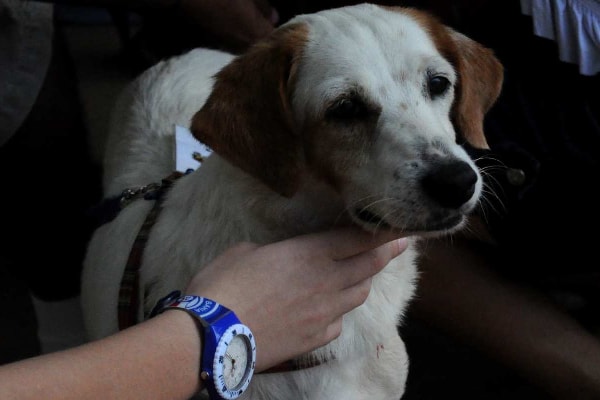
In dogs with multicentric lymphoma, the first sign is usually palpably enlarged lymph nodes. When I say “enlarged,” I don’t mean just slightly bigger than normal. Often these lymph nodes are much larger, potentially the size of a golf ball or bigger, depending on the size of the dog. The lymph nodes are firm and usually not painful when palpated.
Although there are lymph nodes throughout the body, some are more noticeable than others. The most prominent and easy to feel lymph nodes are:
- Submandibular lymph nodes—located under the jaw where it meets the neck
- Prescapular lymph nodes—in front of the shoulder blade
- Axillary lymph nodes—found in the armpit area
- Inguinal lymph nodes—on the lower abdomen where the legs connect to the body (groin region)
- Popliteal lymph nodes—located on the back side the dog’s knee (stifle)
In some dogs, lymph node enlargement is the only symptom initially seen. Other dogs with multicentric lymphoma have other symptoms such as lethargy, inappetence, heavy breathing, and weight loss.

Other causes of lymph node enlargement
It’s important to note that enlarged lymph nodes don’t always equal lymphoma. Due to their role in the immune response, lymph nodes can react and grow in response to an infection (viral, fungal, or bacterial) or even vaccinations. Vets usually refer to these as “reactive” lymph nodes.
The submandibular lymph nodes are the most likely lymph node to be enlarged due to non-lymphoma causes. This is in part because they filter the blood, and therefore the bacteria, from the mouth.
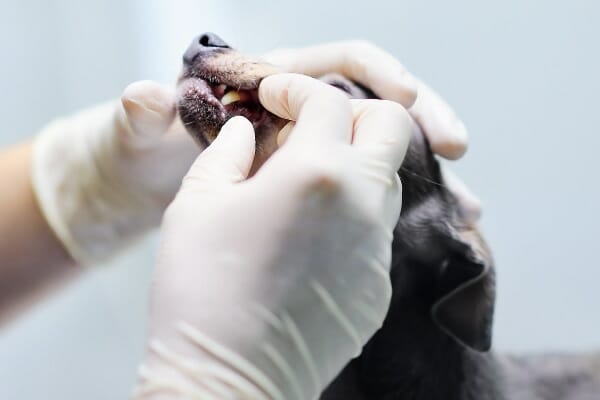
If your dog has dental disease or your older dog is losing teeth, this may be enough to stimulate a response in the lymph nodes and cause enlargement. Thus, finding enlarged lymph notes is suspicious, but not definitive for lymphoma.
How is lymphoma diagnosed?
If your dog has one or more enlarged lymph nodes, your vet may perform a test called a fine needle aspirate. This involves poking a needle into the lymph node multiple times to obtain a sample of cells. Your vet will then examine those cells under a microscope.
A normal lymph node contains primarily small, mature lymphocytes. However, if the vet sees a large number of lymphoblasts (larger, immature lymphocytes), he or she may suspect lymphoma. Many veterinarians will send the slides to a veterinary pathologist to confirm a diagnosis of lymphoma.
Sometimes, even when a veterinary pathologist examines the sample, it can be difficult to definitively determine if a lymph node is cancerous or reactive. In these cases, your veterinarian may want to take a biopsy, or a small piece of tissue from the lymph node, and submit it to a veterinary pathologist.
If your dog has other clinical signs like weight loss, lethargy, and decreased appetite, your vet may want to perform other tests to see what might be going on. Routine diagnostic tests may include blood tests, X-rays, and/or ultrasound, depending on what symptoms your dear dog has.
What is the treatment for lymphoma in dogs?
Treatment for lymphoma in dogs encompasses a few options. If your dog is diagnosed with lymphoma, your veterinarian will advise you about the next steps. Multicentric lymphoma is generally either treated with chemotherapy or with a steroid medication (prednisone).
You may be wondering about surgery as a potential treatment option. Unlike many other types of cancer, surgery cannot cure or treat multicentric lymphoma. The lymphatic system is widespread throughout the body, so by the time of diagnosis, lymphoma has most likely spread to multiple locations. Thus, even if only one or two lymph nodes are enlarged, removal of those lymph nodes is not an effective treatment.
Let’s look at chemotherapy and steroid medication as two medical management options for lymphoma in dogs.
Chemotherapy to treat lymphoma in dogs
Chemotherapy is generally the treatment of choice for canine lymphoma. There are multiple different chemotherapy protocols (i.e. the type of drug or combinations of drugs administered on a set schedule) to treat lymphoma. A veterinary oncologist can discuss different protocols and determine which one is best for your dog.
To learn more, check out Veterinary Partner’s article on common lymphoma chemotherapy medications for cats and dogs.
Laverdia to treat lymphoma in dogs
A new oral chemotherapy medication called Laverdia has been conditionally approved for treatment of lymphoma in dogs. This drug alters the proteins of cancer cells and prevents them from spreading. The most exciting thing about this oral medication is that owners may be able to treat their dogs at home, rather than making frequent trips to the veterinary oncologist for chemotherapy injections.
Laverdia is still new on the veterinary scene, and vets are very excited to see results as more dogs are treated with this innovative medication!
Joshua’s chemotherapy story
Remember Joshua? I referred him to a veterinary oncologist who planned and administered a chemotherapy protocol. Joshua’s lymphoma went into remission, and he had an additional two wonderful years with his family. They were so happy with the time that the chemotherapy gave them with their sweet pup.

Prednisone to treat lymphoma in dogs
If you do not pursue chemotherapy for your dog, prednisone is another treatment/management option. Most dogs will go into partial or complete remission for a time when treated appropriately with the corticosteroid prednisone for dogs (or prednisolone).
Prednisone is a tablet that is readily available at most veterinary hospitals and can be given at home. Note that prednisone does sometimes cause increased thirst and urination, excessive panting, or increased appetite.
Unfortunately, prednisone typically only causes short-lived remission. Typically, the lymphoma develops resistance to prednisone after a couple of months. Another concern with starting prednisone right away is that it makes lymphoma less responsive to chemotherapy in the future.
Before I start any of my patients on prednisone for lymphoma, I always counsel the family on the pros and cons. I also ensure they have no plans of pursuing chemotherapy down the road.
Charlie’s prednisone treatment story
Charlie is a 10-year-old Golden Retriever who came to see me because he was not eating well and seemed lethargic. I discovered his lymph nodes were enlarged. Lymph node aspirates confirmed the diagnosis of lymphoma, unfortunately. He also had high calcium (more on that in a bit).
Referral to an oncologist and chemotherapy was not an option for this family, so we started treatment with prednisolone. I informed his family that the prednisone may make him feel better for one to two months, but then he was likely to relapse. Amazingly, it has been almost five months since Charlie’s diagnosis and he is still happy and active.
I rechecked him last week. His lymph nodes are still very large; he is not in full remission but he is feeling better and is living his best life right now. His family is extremely happy about the extra time with him.
While this 10-year-old Golden Retriever’s story is not typical for dogs with lymphoma who are treated with prednisolone, I wanted to share it to demonstrate that some dogs defy the odds.
What is the life expectancy for multicentric lymphoma in dogs?
If your dog has been diagnosed with lymphoma, a first thought might be wondering how fast lymphoma spreads in dogs. Without any treatment, lymphoma often progresses quickly. Most untreated dogs will succumb to the disease within one to two months of diagnosis.
Treatment with prednisone alone can cause temporary remission and may extend survival time by a few more months.
Treatment with chemotherapy can give your dog a good quality of life for months to years. People understandably tend to worry about the side effects of chemotherapy. If you’ve seen a relative or loved one through chemo, you have probably witnessed serious unpleasant side effects. Fortunately, these side effects are much less common in dogs than they are in people.
When considering the life expectancy of dogs treated with chemotherapy, there are certain factors that affect lymphoma in dogs’ progression, prognosis, and overall outcome. Multicentric lymphoma must be further classified in order to predict prognosis.
Staging
Lymphoma is classified into stages. The lower the stage, the better the prognosis.
- Stage I—only a single lymph node is affected
- Stage II—multiple lymph nodes in the same region of the body are affected
- Stage III—lymph nodes throughout the body are affected
- Stage IV—the liver or spleen is involved
- Stage V—lymphoma is found in the blood or bone marrow
Sub-stage
Dogs with lymphoma are further classified into “Substage A” (patients who appear healthy and have a normal appetite at the time of diagnosis) and “Substage B” (patients who are sick at the time of diagnosis). Dogs who are in Substage A generally have a better prognosis.
Histological grade
The veterinary pathologist will also determine the grade of the lymphoma, based on the mitotic rate (how fast the cancerous cells are dividing). High-grade lymphoma generally behaves more aggressively and progresses more quickly than low-grade lymphoma. Interestingly, high-grade lymphoma is actually more likely to go into remission than low-grade lymphoma.
Phenotype
There are two types of lymphocytes—B-cells and T-cells. B-cells come from the bone marrow and create antibodies (immune system proteins that target specific foreign invaders). T-cells mature in the thymus (immune system tissue in the chest) and help direct the immune reaction or kill infected or abnormal cells.
Dogs with B-cell lymphoma tend to fare better than dogs with T-cell lymphoma. A veterinary pathologist can perform special testing to determine the phenotype (i.e. T-cell or B-cell) of the lymphoma.
Other factors affecting prognosis
The classification of lymphoma is not the only determinant of prognosis. Other factors can help us predict how well a dog may respond to treatment.
Hypercalcemia
Some cancerous cells, including some cancerous lymphocytes, produce a protein that mimics parathyroid hormone (PTH). Normally, PTH helps control calcium levels in the body. When cancer cells make parathyroid hormone-related protein (PTHrP) the body can abnormally retain calcium.
Elevated calcium causes kidney damage, weakness, and a loss of appetite. Dogs with hypercalcemia due to lymphoma often feel sick and have a worse prognosis than dogs with normal calcium levels.
Presence of a mediastinal mass
The thymus is a lymphatic organ located in the center of the chest (mediastinum). If a dog with lymphoma has a mass in its mediastinum (generally seen on X-rays), this indicates that the thymus is probably involved. Thus, T-cell lymphoma is more likely. As mentioned above, T-cell lymphoma does not respond as well to chemotherapy.
Gender
Female dogs tend to respond to treatment better than male dogs.
Dog size
Smaller dogs often have better prognoses than larger dogs.

Previous treatment with prednisone or prednisolone
Lymphoma that has previously been treated with prednisone alone is less likely to respond to chemotherapy.
When trying to decide the best course of action for your dog with lymphoma, I always recommend a consultation with a veterinary oncologist before making treatment decisions. He or she will evaluate your dog and look at the prognostic indicators. This will help determine your dog’s chance of achieving remission and allow the veterinary oncologist to formulate the best treatment plan for your family and your dog.
Frequently asked questions about lymphoma in dogs
Many of my clients who are managing a canine lymphoma diagnosis, have questions. You may have some of the same questions too. Next, let’s look at some commonly asked questions about lymphoma in dogs.
Which dogs are at the highest risk for multicentric lymphoma?
Although mostly diagnosed in middle-aged or older dogs, lymphoma can affect dogs of any age. Unfortunately, I have seen it in dogs as young as nine months old. Lymphoma is equally common in male and female dogs. While it can affect all breeds of dogs (and mixed breeds), some breeds have an increased risk of lymphoma, including:
- Golden Retrievers
- Scottish Terriers
- Bassett Hounds
- Cocker Spaniels
- Poodles

Is lymphoma painful?
Fortunately, multicentric lymphoma is not in itself a painful condition. In advanced cases, lymphoma can make dogs feel generally unwell—this is when we see signs like appetite loss and lethargy. In those cases, veterinarians can take steps to increase a dog’s quality of life.
How to make a dog with lymphoma more comfortable
If your dog has lymphoma and is showing clinical signs, talk with your vet about what you may be able to do. In cases where chemotherapy is not pursued, treatment with prednisone can do wonders to make patients more comfortable.
Many lymphoma patients that are treated with prednisone eat better and regain their “pep.” I’ve had many pet parents report that they wouldn’t even know their dog was sick.
What can I do if my dog with lymphoma isn’t eating?
If your dog has been diagnosed with lymphoma and you notice his or her appetite is off, discuss options with your vet. In addition to prednisone, other medications can help encourage a dog to eat.
Although it’s primarily used to prevent vomiting, Cerenia for dogs can improve appetite in some dogs, particularly if their decreased appetite is caused by mild nausea. Several other appetite stimulation medications are also available to try.
Some dogs also respond well to more palatable foods, such as wet food instead of dry. Be cautious with food changes, however, because some dogs can experience GI upset from sudden diet changes. Your vet will be your best resource for what may help improve your dog’s appetite.
What can I do if my dog with lymphoma has heavy breathing?
In some cases, lymphoma can cause fluid to build up in the chest and put pressure on a dog’s lungs. Additionally, significant swelling of the submandibular lymph nodes can impinge on the trachea. In either of these cases, clinical signs can include difficulty breathing.
If your dog has lymphoma and is breathing heavily, please seek emergency veterinary care. Your vet will assess your dear dog to determine what, if anything, should be done to help him or her.
It is important to note that one of the common side effects of prednisone is panting. If your dog is being treated for lymphoma with prednisone, he or she may pant more frequently than normal. However, panting should be distinguished from respiratory distress or increased respiratory effort. When it comes to heavy breathing, it’s always better to be safe than sorry and have your canine companion checked out by the vet ASAP.
Hope in the midst of the hard times
Even though lymphoma is often a fatal disease, it is not hopeless. Many dogs with lymphoma don’t feel sick during the earlier stages of the disease. Like Joshua, they have no idea anything is wrong with them and may wonder why their parents are so sad and worried.

Additionally, many dogs with lymphoma will respond well to chemotherapy or prednisone. They can have an excellent quality of life during their final weeks, months, or years. Treasure the time. Make a bucket list for your dog and see how many things you can check off of it. Spoil him or her like never before. Keep living and loving until it is time to say goodbye.
Saying goodbye to your dog with lymphoma
This next section might be hard to read, but I think it is worth sharing. Knowing that your dog has a disease that will most likely eventually claim his or her life gives you the chance to prepare for your dog’s euthanasia. Perhaps you want to plan in-home dog euthanasia in your dog’s favorite location, surrounded by the things and people he or she loves. That’s how my family said goodbye to our dog, Luke, who had mediastinal lymphoma.
Or maybe you will say goodbye at the vet’s office, while your dog lies on a favorite bed after just having a meal of all his or her favorite foods (even the usually forbidden ones). The plan may look a bit different for everyone, and that’s ok.
No one wants to have to face losing their beloved dog, but sometimes being able to think about how you want those last days and moments to go—whenever they come—can bring a small measure of comfort.

Has your dog been diagnosed with lymphoma?
Feel free to share his or her story below.


I lost my beloved and only friend Raf, a 3yo Rottweiler on the 7th of December 2023. I still cry every day &night, I’m still unable to understand any of it and haven’t had any vet or expert give me the empathy of explaining how it was definitively stage V lymphoma without a biopsy done,
He was the most active rottie I’d ever had, he had vomited once and been a little of food, had biannual vet checks all bloods good, all my concerns flicked away as being hypochondria. As I was on the Sunday I felt he needed to go to emergency vet as his breath rate was high. First ER ignored for hours, rang second they said would take serious, took him there… they said he just breathing heaving as excited to be at vet, only two vets open in my state on a Sunday n I’d just regrettably walked out of one after Raf reacting at the vet checking his gums and them making me put a tight muzzle on him when he was already struggling to breath,
Second emergency we then had to wait 8 hrs in waiting room, was 40C day outside. Blood tests were done at first ER at around 10am, all day we asked desk at second one if results were sent there yet and we were told they couldnt give them to us (even though we paid $700 for them at first emergency, it wasn’t until 730pm that we were finally called in, told Raf had anaemia, needed to be kept overnight for possible blood transfusion and emergency ultrasound ..cost of $8000… I had mentioned being concerned lymphoma as I was part of rottweiler page for my state and had noticed an alarming number of 3-4yo rotties succumbing to lymphoma.. they said they would send me photo updates through night (as Raf had bit of separation anxiety) I never received one photo ..next morning at 10am the vet called me and said Raf was fine, no blood transfusion yet as not showing triggers, said he was eating, also said she had seen in notes (this was 2nd vet I spoke to ) that I was worried about lymphoma, (he had always had loose skin beneath neck that multiple vets had said was nothing) she also reassured me that he didn’t have symptoms for a dog w lymphoma and not to worry about this, we agreed I could go down to see him that afternoon to visit….
Cut fwd to 6pm that afternoon … (in between unbeknownst to me, the vet had called again at around lunchtime according to my mum, I was not told of this conversation at the time but reportedly mum was informed that he had cancer and she told them she would prefer them to tell me)
I walked into consult room where a third vet appeared eventually, with Raf, who had gone from still being bright and “happy” the day before —— to he stumbled out looking emancipating and staggering, eyes rolling back into head and dropped onto my feet, I was a gasp. I asked what’s happened to him, the vet then bluntly proceeding to tell me without a shred of empathy. That “obviously he has a mass “here here here” pointing at notes I couldn’t see” stage V nothing we can do, can offer euthanasia,…….,there was then the miscommunication of “huh you never spoke to me, last I heard I wasn’t to worry about cancer, are you sure? What’s happened to him? Has he been given a sedative ?” I was told bluntly again “no, he’s just this sick” …. That escalated in 7 hrs! I wasn’t aware at time that plan had changed and he had been knocked out for a CT scan…
2 days later he died suddenly,
I’m never going to heal as I just don’t believe it fully without seeing irrefutable evidence of it, I worry it could have been a brown snake as neighbours dog had died two weeks before, or Lyme that Aus refuses to admit is here.. after he passed he had really foul smelling bloody foam come from his nose that I had been told before working w horses, means likely poison, I just need definite answers for closure, I wasted money being scammed by a lawyer who said they’d help me get answers, and I’ve just been told again what I feared – that “likely lymphoma” but without biopsy not definitive.
I just can’t survive without him and can’t grieve him properly
I’m broken, I just wanted it to be us for a few more years, he’s all I had
Dear Jasmin,
My heart aches for you as you continue to grieve the loss of your beloved Raf. Rest assured your comments were not deleted. All comments remain “pending” until I have a chance to read them and respond. We receive hundreds of comments each month so it can take some time for me to give each one the individual attention they deserve. Thank you for being willing to share your story and feelings with us. I understand how hard it must be to still have more questions than answers about how things progressed with your boy. I wish I could help give you some closure, but without having played a personal role in Raf’s medical care, I can’t make specific conclusions. I pray with time your heart can begin to heal and the grief will fade. May his memory stay with you forever and continue to be a blessing in your life. Wishing you comfort and peace. ♥
my bella turning 4 in Dec. diagnosis w lymphoma on 21Mar. we started her on Prednisone since then. she started diarrhea since yesterday. Not as active. is this due to medicine or lymphoma? any supplement or things I can do to help in her diarrhea?
Hi Claudia,
I am sorry your young dog has received this difficult diagnosis. Without examining her myself it is hard to make specific conclusions about what is causing the diarrhea. A probiotic may help but your girl may also need some additional medications to get things under control. Please reach out to your vet and update them on this new issue. They can offer guidance and find the appropriate treatment for your pup. Wishing you all the best. Bless you and Bella. ♥
My Rottweiler! Was just Diagnosed with TCell Lymphoma 07/15/2024 he had been in and out of vets offices since January to find out what was wrong with him no one would do lab tests to check for anything going on inside only the outside , he’s been on so many antibiotics treatments and steroids until June he got a mass on his prepuce and the tested the skin and it came back with those results he’s only 4 years old
Dear Glenda,
I am so sorry your Rottweiler has received this difficult diagnosis. I can only imagine how worried you must be but am glad you were able to finally get some answers. Hoping he will respond favorably to treatment and his body can stabilize. Wishing you all the best of luck as you navigate this unknown path. Bless you and your sweet boy.
Thank you so much for this. It helped me understand that my beloved Bebe has multicentric lymphoma .
She is 14 years old absolutely beautiful good and white mix and on November 12, 2024 we will celebrate 14 years together. I adopted her when she was 6 months old and we’ve been inseparable since then.
For the past almost two years she’s been panting and I took her to her regular vet as well as other vets for different opinions. While I felt something was wrong they all told me she’s was getting old and this was normal.
Her blood work always came back okay and she had done a cytology in July of 2023 but no cancer was diagnosed.
In December of 2023 I took her again to another vet who took some X-rays and found she had come liquid in her lungs as well as an enlarged heart. Sue was put on vetmedin and lazix.
In March of 2024 I took her again to the vet as I noticed some growth on her neck, both sides, shoulders and back or her legs. She was then diagnosed with lymphoma on March 28th. Took her to an oncologist the next week and we decided to go with steroids. Sadly I had not found this article before. The oncologist didn’t really address the details as well as you did in this articles and I believe I missed the opportunity to try the new chemotherapy treatment.
She has been better some days and panting a lot at night.
It’s difficult to identify what she needs. Sometimes she pants because she’s hungry or wants to go outside. But we never know immediately and she pants for a long time. She is my first dog and I’ve been learning so much with her. All I want is for her to be comfortable and happy and hopefully she will go peacefully without the need of euthanasia. Thank you again for the article. It’s so helpful to at least understand what things are and what to expect. Thank you.
Dear Cris,
I am so sorry Bebe has received this tragic diagnosis. It sounds like you are doing a great job of advocating for her well-being and taking good care of her. Try to make the most of the time you are gifted and find joy in each day. Hoping Bebe can maintain her quality of life for a while longer and wishing her many happy days ahead. Bless you and your sweet girl.
Our sweet 11 years old golden boy Charlie stopped eating and was totally lethargic all of a sudden. we went to the vet the following day and all his palpable lymph nodes were swollen. He got antibiotics and prednisone. The vet was adamant about biopsy and chemotherapy pushing it really hard on us.
The lymph nodes got bigger and bigger… if this were just an infection should they have not shrinked after 10 days of antibiotics?
We won’t do chemotherapy instead we give him all our love, attention and homemade food – I cooked for him before but now it’s just meat and veggies, no kibbles.
He still has moments of enjoying the backyard and chasing squirrels but he is tired most of the time. We are 20 days into prednisone treatment and I hope he will be with us for a few more weeks. Charlie is the best boy ever and our hearts are broken.
Dear Laura,
I am so sorry Charlie received this devastating diagnosis. You are correct in thinking that if this was just due to infection the lymph nodes would have decreased in size after taking antibiotics for 10 days. I hope you can make the most of the time you are gifted. Try to find joy in each day and spoil your boy rotten. Praying for strength and comfort for everyone involved. Bless you and sweet Charlie.
Hi We just lost our dog to lymphoma I dont know what kind nor do I think they were sure, Never had a reason to think anything was wrong with our boy he ws 7 very healthy looked great was due for his annual vet visit in 2 weeks before we got the news, And how we came to bringing him to the vet was became he just started peeing in the house he had no control had his urine checked and they said it was very diluted, rechecked the next day and it was the same, then he started drinking a lot I mean a lot and would have to go pee very couple hours it seemed, then he started acting sick, not well , so they did blood work which was good, but enlarged lymph nodes under neck did the fine needle biopsy that came back negative, still not feeling well they did a x-ray and thought they saw tumors, so we took him to have a ultra sound and they found it was not tumors it was all enlarged lymph nodes, did another biopsy and got the new it was lymphoma, he also had high levels of sodium cause of the way he was peeing, so we admitted him, to get that regulated and start treatment, he never got better and passed away after 3 weeks of trying to help him with prednisone, and even a dose of chop, and elspar but we couldnt get him any better then like I said in a matter of 3 weeks he passes, but nothing ever showed in his bloodwork so they thought it was treatable with chemo, I don’t understand what happened and why we couldnt help him reach remission heart broken He was a Australian Shepard, and he was my sweet dog again he never even had a cold Im so cofused and angry and so very sad.
Dear Lori,
My heart aches for you with the recent loss of your beloved pup. I am sorry things progressed so quickly and he didn’t respond to treatment. I understand your anger and sadness and it is normal to ponder all the “what ifs” while grieving. I hope with time your heart will begin to heal and you can take comfort in knowing you did everything you could. May your boy’s memory stay with you always and continue to be a blessing in your life.
There is lots of information about the staging of multicentric lymphoma, but nothing on the staging of cutaneous lymphoma.. I know this is a comparatively rare form.of canine lymphoma, but my nearly 17yr old Yorkshire Terrier was diagnosed with it 7 weeks ago, and I’m struggling to know how I monitor disease progression.. I have decided against chemotherapy, and he is not currently on any steroid medication.. Most Internet sites seem to suggest a life expectancy of 1 – 2 months without any treatment, but to date I see no material difference in him aside from some red, flaky skin, which doesn’t seem. to particularly trouble him (ie he’s not itching).
Dear Kay,
I am sorry your boy has received this worrisome diagnosis. I did some research to see if I could find staging information. It seems as though with the cutaneous form they don’t do staging but rather determine survival times based on location of the masses/affected tissues. The median survival time for epitheliotropic lymphoma is 5-7 months whereas if the lesions are on the mucous membranes this time increases to a year or more. I would assume as the disease progresses you will be watching for common signs of declining health such as: lethargy, loss of appetite, discomfort, vomiting or diarrhea, etc. I wish you did not have to face the difficult days ahead and can only imagine how stressful this must be. Try to make the most of the time you are gifted. Praying for comfort and peace for you and your sweet boy.
My Beautiful, 6-year-old, female Pitbull Grandfur baby was diagnosed with Lymphoma in early October 2023. Her name is Nellie. My daughter was devastated. She chose not to go the chemotherapy route and instead chose Prednisone. The oncologist recommended putting her to “sleep sooner rather than later”. Nellie’s only symptom was swollen lymph nodes under her jaw. Today is March 12, 2024, and Nellie passed her vet check with flying colors. Her lymph node swelling fluctuates but other than that she is doing great. She has an extremely healthy appetite. She takes her daily walks. Her breathing is normal, and so on. We know we are on borrowed time, with that said, we take it one day at a time, grateful for each moment with her.
Hi Kelly,
I am sorry your grandpup has received this devastating diagnosis but what a blessing you have been gifted with so much extra quality time together! Thank you for sharing your story and offering hope to others facing a similar situation. Wishing many happy days ahead for Nellie and all those who love her. ♥
My 11 yo female lab, she had a huge tumor on her spleen just a few months ago. Not cancerous and it was taken out successfully. She was doing fine until a few days ago. She sleeps with me and the other dog. That night, I woke up in the middle of the night by a sound of her scratching the door, I realized she wants to go to the bathroom so I let her out. This never happened before. She never woke me up. After the bathroom I thought she would come to the upstairs with me but she stayed at downstairs. This never happened. She always followed me. But not that night. In the morning I fed them as usual. She took a few bites and didn’t want to eat anymore. This never happened. She’s always being a food motivated dog. The sound of opening a can, or bags, she runs to the kitchen. And she was standing there and not moving at all. She looked like she’s frozen. So I took her to the vet. This is the second day after I noticed the changes in her behavior. The vet showed me how swollen her lymph nodes were. I touched them and they were like the size of bar soap. We did a poke test and sent to the lab. The vet said both sides of the lymph nodes on her neck and thighs are big and visible/touchable. I didn’t see or feel anything there just a couple days ago as I’m always hugging and touching her. I was devastated. Anyhow, we gave her a prednisone shot.
I’ve read many articles about this since. These articles say she should feel better after the shot but she doesn’t seem to feel any better. At least to me she isn’t. She freezes the same as yesterday, she only gets up when she goes to the bathroom. But once she’s done she just freezes for a few minutes and then go lay down in her doggie bed. I’m feeding her rice, raw food(mixed with canned food and frozen one) and cooked pumpkins so that it’s gentle to her stomach. My biggest concern is that she looks weak even after the prednisone shot, not like everyone is saying their dogs went back to their old self after the med administered but mine is not. The effectiveness of the prednisone or any med is vary, I get it but I was hoping she shows some signs of improvement with prednisone so I just wanted to see if there were some similar cases… am I worrying too much? She acts the same as before taken to the hospital. No improvement at all. She’s weak, her head down, doesn’t move, no energy whatsoever. Her neck is still swollen a bit but not as big as it was 2days ago. She’s drinking a lot of water and pee a lot as expected. Much less hungry but eating.
Anything I should or can do for her? Why the shot isn’t working like everyone? had she gone that bad already and she has no fight left? Or I’m just tripping?
Dear MJ,
I am so sorry your senior girl is not doing well, and the prednisone did not improve her condition as hoped. Not all dogs respond to steroids, and I can assure you your pup is not the only one with a less than favorable response. I am not sure if your girl is still with you, but pray you were able to make the most of the time you shared together. Wishing you comfort and peace.
My dog is a daschund 114 yrs old going blind and deaf he has 2 masts in his stomach and one on outside he got sick last February 2023 and I had an ultrasound done and they were spotted I don’t want them to cut him open so I have an ultrasound done every 6 months and one is the size of a golf ball and the other is small so far they haven’t grown just a tiny bit and not touching any of his organs or lymph nodes it’s the end of January 2024 now and he’s still here amen he’s eating poop and pea is good but their swollen in his neck next to his jaws this is my first dog ever haad him since he was 5 I’m 74 should I go see the vet for this he rubs his head a lot and I can’t hardly touch his mouth ty
Dear Phyllis,
I am so sorry your Dachshund is experiencing these severe symptoms. I do think it would be wise to have him examined by your vet. He may have an abscessed tooth or other issue that is treatable. Hoping you can get some answers quickly and find the best way to offer your boy some relief. Best wishes and take care!
My handsome, talented Boxer boy turned 7 on 6/30 One week later he was hospitalized and nearly died from T cell multicentric lymphoma with CNS involvement He has significant Hypercalcemia,, wouldn’t eat , kidneys were shutting down,and he appeared to not even acknowledge me He was going to die without aggressive treatment The Good news is with Chemo he is still alive 3 months later and is his happy normal self His protocol has switched from weekly Chemo to once every three weeks for 3 more months His oncologist and team are amazed by how well he is doing His prognosis was 2-3 months with Chemo I know his cancer will return but I have had more time to love him and enjoy his enthusiasm
Hi Martha,
What a blessing your boy has responded so well to treatment and is feeling good! Thank you for sharing his story with us. Praying he continues to maintain a good quality of life for as long as possible. Bless you both. ♥
My 7 year old Boxer boy, Carson, was just diagnosed. We are opting to do nothing and everyday I question that decision. Carson’s breathing has definitely changed but he’s still happy and playful. We have decided to wait until he’s not eating, in pain or can’t breathe to euthanize him. But we make the most out of every day we have with him. Spoiling him more now than ever. I do believe in Rainbow bridge and sometimes it’s the only thing that makes this diagnosis bearable. . I just wish I know what lies ahead…how quickly it advances from stage 3 to death. I know the expected life span for him is 1-3 months but how quickly does it get into other organs or bone marrow…..should I put him in a collar to walk him or does that cause pressure on his swollen lymph noid? can a lymph noid burst? … is walking dangerous for him? .all questions I struggle with every day.
Dear Jodi,
My heart goes out to you as you face these final days with your sweet boy. I think your decision to forgo treatment and opt for palliative care is wise and I would have done the same for one of my own. Using a collar should be fine, especially if it is worn further down the neck and not right under the jawline. Lymph nodes do not burst so don’t be in fear of that should you attempt to continue daily walks. Walking is perfectly fine as long as Carson is feeling up to it. Just be prepared he may tire quickly and then need to be carried if too far from the house. Some of my clients use wagons to allow their sick pups to “walk” even when they don’t have the energy to do it themselves. Spoil your boy rotten and make the most of each day you are gifted. Wishing you both peace and comfort. Bless you and your sweet boy. ♥