Dog head tremors can be a bit disconcerting. One minute your dog is normal, and the next he or she seems to be nodding “yes” or shaking “no” on repeat. To put your mind at ease, integrative veterinarian Dr. Julie Buzby explains the causes, symptoms, diagnosis, and treatment of idiopathic head tremors in dogs.
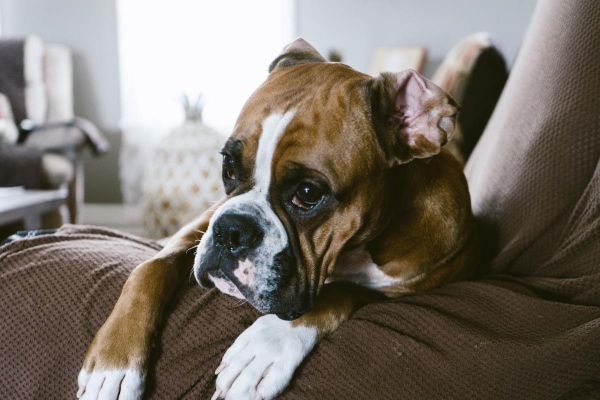
“It was the strangest thing. When I looked over at Dudley, his head was shaking up and down over and over again, almost like one of those bobblehead dolls. After a few minutes, the nodding stopped and he wandered over to play with a toy like nothing had happened.”
As my client said those words to me, the condition that immediately popped into my head was idiopathic head tremors in dogs. But I knew that before jumping to that diagnosis, I needed to gather more information to ensure that her beloved English Bulldog wasn’t suffering from a more serious neurologic condition.
Since dogs can occasionally have seizures that involve the head, the first order of business was to determine if what my client was seeing was truly a head tremor.
What are dog head tremors?
I explained that the term “tremor” describes the involuntary shaking or trembling of a body part. When this trembling is localized to the head, it is called a head tremor.
Head tremors in dogs are considered to be a type of involuntary muscle movement disorder. In other words, your dog cannot control when or how the muscles are moving. Head tremors mostly occur when dogs are awake, but can sometimes happen while a dog is sleeping.
What are the symptoms of head tremors in dogs?
In dogs who are experiencing a head tremor, their head may shake up and down (as if they were nodding “yes”) or side to side (as if they were shaking their head “no”). Occasionally, dogs can also have a rotational tremor. These movements are typically small yet rapid.
While they might look a bit similar at first glance, head tremors are different from seizures because dogs do not lose consciousness with head tremors. Also, seizures in dogs may cause other signs such as twitching of the muscles of the face, loss of bowel or bladder control, or involuntary limb movements. These signs are absent with head tremors.
What causes head tremors?
Unlike in seizures where the causes are better understood, the exact mechanism of action behind head tremors is not clear. However, some researchers have theorized that activation of certain areas of the brain can cause head tremors. More specifically, head tremors may be connected to stimulation of the groups of neurons within the brainstem that helps with patterned motor activity.
In a condition called idiopathic head tremor syndrome, these neurons seem to activate spontaneously and without any obvious trigger. However, there are a variety of neurologic and neuromuscular disorders that can also cause dog head tremors. They include:
- Central nervous system disorders
- Congenital disorders affecting brain development
- Damage or injury to the cerebellum (i.e. the part of the brain that controls coordination)
- Low blood sugar (i.e. hypoglycemia)
- Toxin exposure (e.g., pyrethrin, drug overdoses, various poisons)
For the purposes of this article though, we will focus on idiopathic head tremors.
What are idiopathic head tremors in dogs?
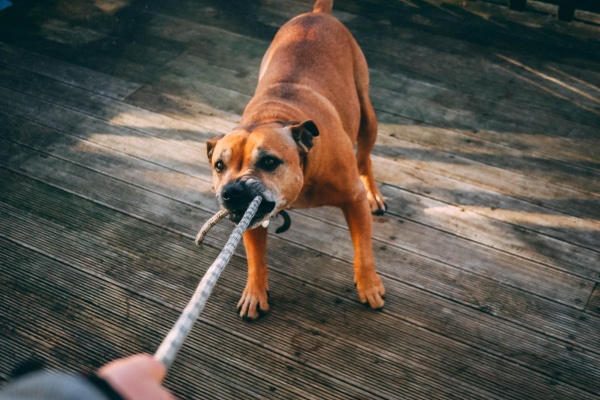
Many of the conditions in the list cause head tremors that are more persistent or chronic. But canine idiopathic head tremor syndrome (IHTS) is characterized by head tremors that are intermittent and self-limiting. They can start and stop at random. And in some instances, you may be able to halt a tremor by drawing your dog’s attention to something else such as a toy or a dog treat.
What causes idiopathic head tremors in dogs?
As alluded to earlier, the term “idiopathic” means that there is no obvious cause for the tremors. However, some veterinary researchers believe these episodes are stress-related. Other studies propose that illness, various medications, heat cycles (in female dogs), and surgery may be triggers for head tremors.
Which dogs are prone to idiopathic head tremors?
There also may be a genetic link as certain dog breeds are more susceptible to IHTS. Predisposed breeds include:
- Boxers
- Doberman Pinschers
- English Bulldogs
- French Bulldogs
- Labrador Retrievers
- Spaniels
While there doesn’t seem to be any sex predisposition for IHTS overall, some reports indicated it is more likely to affect male Doberman dogs than female Doberman dogs. Also, most dogs with idiopathic head tremors will experience their first episode around two to three years of age. But it is possible for older dogs or senior dogs to experience IHTS as well.
What are the tremor episodes like?
These tremors occur spontaneously and may only last for a few minutes at a time. In fact, the majority of idiopathic head tremor episodes last less than five minutes. However, in some cases, the head bobbing may last for up to an hour. And there are a few reports of tremors lasting more than 12 hours per day.
Some dogs may experience idiopathic head tremor episodes multiple times in a day or in a week. But for other dogs, the episodes may be few and far between.
Most dog parents will notice head tremors while their pup is awake. But it is possible to see head tremors in dogs while sleeping. This is different from the limb-twitching or vocalizing that you might notice when your puppy or senior dog sleeps.
The video below illustrates what a tremor episode may look like. If you find this disturbing, you may want to skip this video.
How are idiopathic head tremors in dogs diagnosed?
If you suspect your dog is experiencing head tremors or other neurologic signs, it is important to contact your vet promptly. Based on the information you provide, your vet will advise you on whether you need to make an emergency vet visit, schedule a vet visit during regular business hours, or continue to monitor your dog.
Since idiopathic head tremor syndrome is a diagnosis of exclusion, your vet will want to rule out other causes of your dog’s symptoms before making a diagnosis of IHTS. This usually involves collecting a medical history, performing a physical examination, and running diagnostic tests.
Medical history
A detailed medical history will be important. The more you can remember about what your dog was doing prior to the episode, what you saw during the episode, and how long it lasted, the easier it will be for your vet to figure out what is going on. Also, having a video recording of your dog during one of these episodes can help immensely!
In order to be IHTS, the only clinical sign present should be the head tremor itself. The tremor can be in any direction (vertical, horizontal, or sometimes rotational) and may stop when someone distracts the dog.
On the other hand, if the dog has a history of loss of urinary bladder control, drooling, difficulty walking, or loss of consciousness during the episode, it may be more likely the dog is experiencing seizure activity rather than IHTS. Or, especially in an older dog or senior dog, head shaking, a head tilt, and being a wobbly and off-balance dog could point to old dog vestibular disease (i.e. doggie vertigo), not IHTS.
Physical examination
A comprehensive physical exam, with an emphasis on the neurologic exam, is also an important part of the diagnostic process. Dogs with idiopathic head tremors should not have any persistent neurologic abnormalities or other abnormal findings on their physical exam.
Diagnostic testing
Depending on your dog’s symptoms, your vet may also recommend specialized testing including:
- Bloodwork
- Infectious disease panels
- CT scan
- MRI
- Cerebrospinal fluid (CSF) analysis
For dogs with idiopathic head tremor syndrome, these tests will appear normal, thus ruling out many of the other conditions that can cause head tremors (plus some of those that cause seizures or other neurologic problems).
What is the prognosis for idiopathic head tremors?
In many ways, if your vet diagnoses your dog with idiopathic head tremors, this is good news! Unlike seizures, idiopathic head tremors are not dangerous for dogs. They don’t cause sharp elevations in body temperature. And they shouldn’t cause any bodily harm (like if a dog were to hit their head or fall down the steps during a sudden seizure).
Plus, unlike other causes of head tremors, idiopathic head tremors are not a sign of a bigger and potentially serious problem. They don’t cause pain or discomfort, don’t tend to progress, and don’t require ongoing monitoring.
In fact, some studies show that the tremors may stop altogether in about 66% of affected dogs. But even for those dogs with long-term idiopathic head tremors, their prognosis is still good. These episodes of head tremors do not impact their overall quality of life.
What is the treatment for idiopathic head tremor syndrome?
Since it is such a benign condition, there is usually little reason to attempt to medically treat idiopathic head tremors in dogs. This works out well since there also aren’t any medications, including anti-convulsants, which can effectively and reliably stop the tremors.
Interestingly, while it sounds almost too easy to be true, distraction halted the head shaking in 87% of dogs according to a study in Veterinary Medicine International. Therefore, the main “treatment” is to remain calm and try to distract the dog with a toy or treat to see if the head tremor stops.
Speak with your veterinarian
Idiopathic head tremors may look a bit odd, but they are nothing to fear. Other causes of head tremors, however, can be more serious. If your dog starts shaking his or her head side to side or up and down, or showing other neurologic signs, head to your veterinarian to get some answers.
Hopefully, just like my sweet Bulldog patient that I told you about earlier, it will turn out that your dog has idiopathic head tremors. If that is the case, you can breathe a sigh of relief. Chances are good that the head tremor may bother you more than it bothers your dog. And like I told my client, IHTS doesn’t pose any danger to your dog and shouldn’t interfere with him or her continuing to live life to the fullest.
Does your dog have idiopathic head tremors?
Please comment below.


My 20 month old female boxer, Sox, has these head trimmers. She had them about a year ago just for a day and they stopped but yesterday they started again. I have no idea why they started again, but they have been happening with shocking frequency. I have had boxers for 40 years, mostly rescues, but she and her brother I have had since they were puppies at eight weeks old. While I would question the health and caring of the breeding situation that they were, in they’ve had great care since I adopted them.
She definitely comes out of the tremors when I distract her with a treat or a toy or even by petting her. For the most part, they happen when she is resting or sleeping. There’s no lethargy or confusion when she comes out of it, she snaps right into playing, barking or just getting on with her normal activities. I have caught her on video having these tremors and the vet doesn’t seem to be concerned, but did not give me a reason. Which is why I came online to see if I could figure it out. This seems to explain what is happening to her. But it is still scary and disheartening to watch happen. I wish there was something I could do to make it stop.
Hi Julie,
I am sorry Sox is experiencing these ongoing issues with head tremors. I am glad your vet is not worried and that the episodes don’t seem to negatively impact Sox’s quality of life. I understand your concern and think it would be good to keep a journal of this activity to monitor for changes in frequency. Don’t forget you can always ask for a consultation with a neurology specialist if that would help with peace of mind. Your girl is lucky to have you taking such good care of her and advocating for her health and well-being. Wishing you both many happy days ahead and keep up the good work!
Hi, my dog is Boston Terrier and has had episodes of what I assume are idiopathic head tremors on and off for the past 5 years. Recently they have gotten. more frequent and seem to happen when he is sleeping. I have an appointment with a Neurologist, couldnt get one until November, but was wondering if this is common for them to get more frequent over time? Some days he doesn’t have them at all but this week he has had them 3 times and they are coming on sporadically over 4 hour periods. He has no other side effects after the episodes, his blood panel came back clear and his ears seem to be fine. He’s 7 years old.
Hi Katie,
I am sorry your Boston is starting to have increased frequency of these head tremor episodes. I am glad you already have an appointment scheduled with the neurologist (that’s such a long wait!) but understand your concern for his well-being in the meantime. It is definitely possible for the tremors to increase with time but not necessarily “common”. Hoping you can get the answers you need and praying for a positive outcome for your sweet boy.
My Pug, rescued in 2017 at estimated age of 3 years, started having head tremors about 6 or so months ago.They were very noticeable to me; however, he seemed totally unaware of them. At first they were frequent but only when he was awake, and by the time the vet was able to schedule us in for an appointment, they had diminished and were barely nooticeable at all. She tentatively diagnosed him with ideopathic head tremors but advised me that we could schedule an MRI at the specialty hospital at a cost of over $2,000.00 or, in the alternative, since he was otherwise fine, just monitor him and postpone doing an MRI. We decided to wait. Within a couple of weeks, the tremors were completely gone. They have never returned. He is currently somewhere between 11 and 13 years old and according to his complete geriatric profile done just a few weeks ago, he’s in great shape.
Hi Sandra,
I am glad to hear your boy has made a full recovery and is no longer experiencing the head tremors. What a blessing you didn’t have to pursue the expensive testing at the specialty hospital. Thank you for sharing your experience with our readers. This will definitely offer hope to others facing a similar situation. Wishing you and your sweet boy all the best for many happy days ahead.
Thank you for writing this. My dog has experienced idiopathic head tremors since before I adopted her at 9 years old from an overcrowded shelter. I suspect she has some kind of PTSD. Even though every vet and every bit of research I’ve seen says essentially the same thing, I still occasionally go searching online for anything that can help. Even an emergency vet – when she had an especially long episode – reassured me that I was more distressed than she was.
Because I suspected PTSD was a contributing factor (i.e., a dysregulated nervous system), I found a calming supplement that contains a lot of ingredients that humans take for stress & anxiety: l-theanine, GABA, tryptophan, ashwaganda, magnesium, et al. (not sure I can say the brand here).
She is 13 now and still has them, but it certainly seemed to reduce the frequency of episodes.
I still go searching for information when she has a particularly long one, like today – it continued throughout an entire hour-long walk (I pull her in a wagon, as she also has arthritis), before finally stopping after returning home.
That’s when I found this page, and once again read that the tremors are not negatively affecting her (she did seem as happy as usual in her wagon, despite the shaking). And this is the first time I read someone say with certainty that they won’t affect the length or quality of her life. So I just wanted to say thank you for the peace of mind when I needed it.
Hi Elaine,
I understand your concern for your girl and think it is great you are searching for ways to improve her health. The supplements you mentioned sound wonderful and please always feel free to share brand names or websites you have found to be helpful. One additional thing you might want to look into would be an MCT oil supplement. It has been shown to do great things for dogs with certain neurological issues. Here is a link to another article with more information: MCT Oil for Dogs Can Help Dogs with Dementia or Epilepsy
Wishing you and your pup all the best for many happy days ahead and keep up the good work!
Hi.
My 2 year labrador had Head tremors that started today. really scary to watch. we have seen our vet who initially went down the lines of epilepsy but having read this article it definitely fits with what he was displaying he didn’t loose consciousness and the tremors are isolated to the head and neck and when i dstracted him he came out of tremor but has had multiple tremors today , The vet has given us 5 days of diazapam just to see if this helps.
it doesn’t help he is scare by people so examination was tricky.
I was wondering if TTOUCH would help? I was also wondering as he is very active if this is something he will be able to keep doing?
Thanks
Hi Alwyna,
I am sorry your young dog has started experiencing these worrisome episodes. While I am familiar with what TTOUCH is, I do not have any personal experience with it. So, I can’t say for sure if it would be helpful in this situation or not. Most dogs with head tremors go on to live happy and full lives. I don’t see any reason why this wouldn’t be the case for your pup as well. Due to his young age, I do think it would be a good idea to ask for a consultation with a neurologist. They can let you know if any other testing is available and possibly offer other suggestions for treatments. Wishing your sweet boy all the best and keep up the good work!
Hi! My two and half year old lab just started this last night. Scared me! He had about three episodes that lasted from seconds to a couple minutes. I took him to urgent care last night and they diagnosed him with Idiopathic head tremor syndrome. She also said that while in vet school, her Doberman did this and she had a full work up on him including CT, MRI, bloodwork, you name it, and all came back normal!
Hi Heather,
I understand your concern for your pup. So glad the ER vet was able to make a diagnosis and ensure nothing more serious was happening. Thanks for sharing and wishing you both nothing but the best.
We have a male Border Collie x breed who will be turning 2 in July 2025.
We have noticed that when he’s going to sleep OR waking up as well as when he’s placing his head in awkward positions that his head bobbles side to side a which was concerning to us but wouldn’t last more than a minute at a time.
Whenever we’d try to catch video evidence of it of course he’d stop or we wouldn’t catch it in time.
When we say his name OR distract him in some way it immediately stops and he’s back to his cheeky ways.
We contacted our local vets and they did a thorough HealthCheck and blood tests which came back negative.
The vet couldn’t really provide us with a diagnosis except to scare us by suggesting it could be Epilepsy and wanting to give us medications to stop the symptoms if one occurs.
I contacted the breeder we got him from and they asked what worming tablets we had him on as said certain ingredients in them can be the cause for it.
We’ve switched him to another brand but it keeps happening. What should we do?
Hi Rebecca,
I understand your concern for your pup with this odd behavior he is exhibiting. I am glad his blood work and physical exam were normal. Without being able to witness these events myself, it is hard to offer specific recommendations. I am not sure if this is something to be worried about or not. While strange, this could be “normal” for your pup. You can ask for a consultation with a specialist, but without some very expensive testing (MRI, CT, etc.) I am not sure they will be able to offer answers. Your best bet is to keep trying to catch one of these episodes on video. Hoping all is well. Feel free to leave an update if you have a chance.
I am a LVT and have a 3 year female Labrador Retriever. Her first episode of this was when she was about 10 months old and it was vertical. I have not seen it since then but just this week she’s had a couple more episodes that appear horizontal. They only last a couple seconds and she will come right out of it when we acknowledge her. Interestingly enough they tend to happen when she is relaxed or about to fall asleep, never when she is awake and walking around. I consulted with a veterinary neurologist when they first happened and he felt based on the signs and her breed, this was likely the diagnosis. I’m wondering if it’s common for there to be such a long period between the episodes as the last one I saw was two years ago. Thanks!
Hi Carly,
I am sorry your pup has started having these episodes again. While it isn’t common for them to have such a long period in between, it is possible. I am glad you are paying such close attention to this issue and recommend you keep a journal of the events surrounding the head tremors. I know you already mentioned they seem to occur when your girl is relaxed, but I also wonder if there are any other common factors such as stress, exercise, medications, food changes, etc. If the tremors continue to be more frequent, it might be worth another talk with the neurologist just to err on the side of caution. Thanks for commenting and sharing your experience with us. Wishing you and your sweet girl all the best!
My 1 yr old Basset has had head tremors in his sleep. I noticed it at about 5 months old. His chin moves back and forth when he’s sleeping. It happens often, a couple time a day, usually when he is in a deep sleep. He never has them when awake, only in his sleep. They last for about a minute or less and then he wakes up… If I say his name he wakes up. There is no pain, stress or poisoning.
I am going to get that neurological blood work you recommended to be able to rule anything serious out. But it doesn’t bother him at all when it’s happening or when he wakes up. He is from a ver responsible breeder who does all the testing on the dogs prior to breeding, ‘m not sure if this is hereditary?
I really appreciate this article, thank you so much!
Hi Jill,
I understand your concern for your young pup and think it is great you are searching for advice. I agree it would be best to discuss this with your vet and have your boy thoroughly examined. If you can get a video of these tremors, it could be very helpful to your vet when trying to make a diagnosis. Since you mentioned this only happens in deep sleep, I am a bit suspicious this could just be normal dreaming behavior. Hoping all is well and you can get the answers you need. Feel free to leave an update and let us know how things are going.
This is a great article. I’m almost 100% my minibullterrier has IHTS. She’s my 16 1/2, and had pre testesting with a cardiologist to give the ok for surgery with local anesthesia. After the surgery she started gettingnhealt tremors… my vet thought it was seizures from the video, I said there’s no way, I’d have noticed before, and that I think it’s from the after effects of the sedation or lidocaine. it actually only happened for a week, stopped for 2 months and just had another. if I wave treats in front of her, she snaps out immediately. So, if any of you panic, try waving food or treats in front of their nose… it really does work in my situation. 😊
thanx for this informative article!
Dez & Dizzy
Hi Desiree,
I am glad you have found a way to quickly get your girl’s attention and stop the head tremors. Thank you for sharing your experience with us! Wishing you and Dizzy all the best for continued success.
My Libra dog is only 5 months old or is suffering from gastro or is undergoing treatment but during this time his head shakes, sometimes it shakes and then stops, what does this mean?
Hi Sapna,
I understand your concern for your young pup. Unfortunately, without personally witnessing this behavior and examining your dog myself, it is hard to make specific conclusions and recommendations. I think it would be best to discuss this odd behavior with your vet. If you can get one of these episodes on video to show your vet, it could be very helpful. Best wishes to you and Libra. Bless you.
Thank you madam but he is no more. He fought a lot with gastro disease but he died. But I need some help from you. If I get another dog, can you give me a diary?In which it is written about the health of the dogs like what to give, what to eat, at what time, which medicine to give, in which month the injection should be given. Please give me such a diary.So that I can take care of my dog. 🙏🏻
Dear Sapna,
My heart aches for you with your recent loss of Libra. I am so sorry he lost his battle with his gastro disease. I think it is good you are thinking ahead and trying to be prepared and informed before getting another puppy. Unfortunately, what you are asking includes a TON of information and I am not sure it is found all in one place. I can attach links to other articles that may cover most of the basic things that I think are important. If there are any other topics you want to learn about, I encourage you to talk to your vet. They should be able to discuss puppy care recommendations or at least point you to some good resources. Most vets have informative handouts or brochures that they can give to clients. Wishing you all the best of luck as you consider adding another dog to your home. May Libra’s memory be with you always and bring you joy.
1. New Puppy Checklist: 6 Things Only a Veterinarian Will Tell You
2. How Often Should I Take My Dog to the Vet? Answers By Age
3. Which Dog Vaccines Are Absolutely Necessary?
4. Fecal Test for Dogs: 10 Myths Dispelled
5. Heartworm Disease in Dogs: The 10 Deadly Myths
My 13 yr old black labseems to have head tremors. I do not havecthe funds for the needed testing. But at times her head shakes as in the video above. Usually fir a couple of seconds and then she goes back to what she was doing. She does not loose bladder control ever. She is having trouble at times breathing. The vet said a flap in her throat is sticking at times. I just want her to be comfortable. Anything I can do to help her?
Thank you,
Barbara
Hi Barbara,
I understand your concern for your senior girl. I wish I had some great advice but unfortunately, without playing a personal role in your dog’s medical care, it is hard to offer specific recommendations. I am not sure what could be causing the tremors, but it sounds like your vet is suspicious of laryngeal paralysis causing the breathing trouble you are noticing at home. Here is a link to another article with more information on that condition: Laryngeal Paralysis in Dogs: The Ultimate Guide
Hoping you can get some answers and find a way to offer relief. Wishing you both all the best.
My English Bulldog has head tremors, and when she does I find it important to keep calm because if she senses my anxiety it makes them worse. I usually distract her with a treat or Peanut butter, or if none are in, I find holding/supporting her head gently and distracting her with kisses helps (the first time I did this it stopped the tremors immediately)
Hope this helps other furbabies out there!!
Hi Hayley,
This is great advice. Thank you for sharing your experience with us! Best wishes and keep up the good work. ♥