Is your older dog suddenly hungry all the time? Integrative veterinarian Dr. Julie Buzby explains that increased hunger shouldn’t be ignored because it can signal a variety of health issues. Learn 10 reasons for an older dog to be hungry all the time and what to do about it.
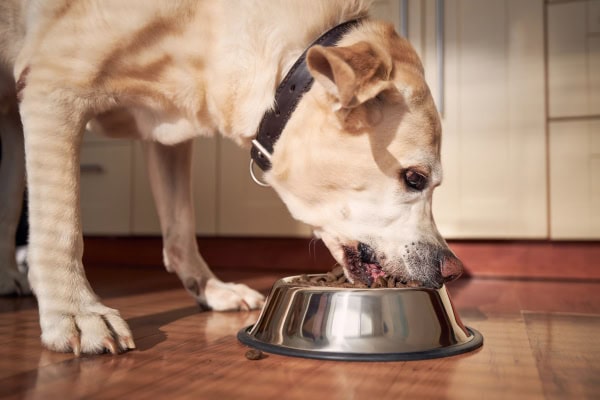
When I talk to senior pet parents, I frequently ask about their dog’s appetite and diet. Most of the time, if they report a change in appetite, it’s that their senior pup is eating less than normal. But occasionally, the opposite is true…their dog is hungry all the time.
Is it normal for older dogs to suddenly act hungry all the time?
While some dogs might simply be hungrier in their golden years, a sudden increase in appetite can also be an indicator that something has changed about the dog’s health status.
To assess your dog’s change in appetite, consider the answers to the following questions:
- Have I recently changed to a new food that might have a different caloric density or nutrient profile than the old food?
- Does it seem like my dog lost his or her appetite and now it is coming back again? Or was my dog’s appetite at the baseline level before, and now it has increased?
- How much does my dog’s appetite usually vary? Do I have a dog who barely eats one day and then scarfs food down like he or she is starving the next day? Or does my dog normally eat the same amount of food with the same behaviors around eating at each meal, and now is suddenly hungrier?
- Is my dog being treated for any concurrent medical conditions that could have affected his or her appetite?
- Does it seem like the increased hunger was an isolated incident or has it been fairly consistent? How long has it been going on?
- What hunger behaviors am I seeing? Is my dog just more enthusiastic about eating or asking to be fed sooner in the day? Or is he or she suddenly raiding the trash can and counter surfing in a desperate attempt to get food?
- Am I noticing other changes in my dog’s behavior, appearance, habits, ability to maintain a healthy weight, etc.?
Sometimes that information can provide clues for you or your vet as to the cause of your senior dog’s increased appetite.
10 reasons for an older dog suddenly to be hungry all the time
If your senior dog is suddenly hungry all the time, one of the following 10 situations or health conditions could be the culprit.
#1: Diabetes mellitus
Diabetes in dogs (diabetes mellitus) occurs when the pancreas doesn’t produce enough insulin to drive glucose from the bloodstream into the cells, where it can be used for energy. As a result, the dog’s blood sugar levels become high, and the cells are starved for energy. This leads to symptoms such as:
- Increased or insatiable appetite
- Increased thirst in dogs
- Production of a larger volume of urine
- Dog losing weight but eating well
- Decreased energy
- Cloudy eyes due to cataracts in dogs
- Poor coat health
- Recurring or persistent infections (like skin infections or urinary tract infections)
If your dog is experiencing increased hunger and any of these other signs, please make an appointment with your veterinarian promptly. He or she will likely perform a physical exam and urine and blood tests for dogs to reach a diabetes diagnosis.
Treatment involves life-long administration of insulin (usually twice a day at the same time as the meals). Plus, your vet may recommend feeding your dog a diet that is specifically formulated for diabetic dogs.
While diabetic dogs do require close monitoring, the good news is that many of them can still have a great quality of life.
#2: Cushing’s disease
Cushing’s disease in dogs (hyperadrenocorticism) occurs when the adrenal glands produce too much of the stress hormone cortisol. Cortisol is necessary for everyday life and helps regulate important body functions like metabolism, immune responses, blood pressure, inflammation, and more. But if cortisol gets too high, it can become dangerous for the dog.

Some potential symptoms of Cushing’s disease include:
- Being hungry all the time
- Increased thirst (seen in 80-90% of dogs with Cushing’s)
- Increased urination (also seen in 80-90% of dogs with Cushing’s)
- Restlessness and increased panting
- Being a lethargic dog
- Muscle wasting and back leg weakness
- Weight gain and pot-bellied dog appearance
- Thinning of the skin, dog losing hair, or calcinosis cutis in dogs (firm, calcified areas in the skin)
- Seizures, circling, or other neurologic symptoms
- Increased number of infections of the skin, urinary tract, etc.
If your dog is suddenly hungry more often and experiencing any of these other symptoms, it is important to schedule a veterinary exam. Left untreated, Cushing’s disease can progress and continue to weaken your dog’s body.
The vet will use the physical exam findings and results of several specialized blood tests (ACTH stim, LDDS test, etc.) to reach a diagnosis. Treatment of Cushing’s disease requires lifelong medications to control cortisol levels. Your dog will also need periodic monitoring to ensure the medication is working appropriately.
#3: Anxiety or stress
Anxiety and stress are interesting because sometimes they cause older dogs to eat less, and other times the dog seems hungry all the time. Every dog will react differently.
Thus, it is important to watch for other signs of anxiety, including:
- Excessive panting
- Pacing
- Excessive drooling in dogs
- Appearing fearful, especially in new situations
- Separation anxiety in older dogs
- Resource guarding (protecting items like food, toys, beds, or people)
- Wide eyes with whites showing
- Excessive grooming
- Defecating or urinating in the home (especially in the same location each time)
- Vocalizing more often
If you suspect your dog is eating more because he or she is suddenly anxious, please discuss the changes you are seeing with your veterinarian. Anxiety is not life-threatening, but it does decrease your dog’s quality of life. That’s why managing it is advantageous for your dog.
Thankfully, there are many options for decreasing anxiety, ranging from supplements and pheromones to anti-anxiety medications like fluoxetine for dogs.
Pro tips: If your dog is showing specific behaviors at home, try to catch them on video to share with your veterinarian at the appointment. It can also be helpful to keep a journal of what was going on when your dog seemed most anxious.
#4: Canine cognitive dysfunction (CCD)
Canine cognitive dysfunction (CCD) involves a decline in cognitive function as a result of changes in the brain. In some cases, senior dogs with CCD may have an increased appetite. Additionally, you may see other signs of dementia in dogs, such as:
- Anxiety: Increased panting or pacing, being unable to relax, and developing new separation anxiety or fear of certain noises can all be signs of CCD.
- Decreased engagement: Your dog may not be as interested in playing or spending time with you. Or he or she may even appear to forget you or other loved ones.
- Pacing: You may notice your dog keeps walking in circles or he or she is repetitively pacing around the house.
- Disorientation: Your dog may forget the layout of your home or where items like the food and water dish or dog bed are. He or she may also get stuck in corners or appear lost.
- House soiling: A previously potty-trained dog may suddenly start having accidents in the home.
- Change in sleep-wake cycles: CCD is also called sundowners in dogs because dogs may suddenly be awake and pacing or vocalizing (whining, whimpering, barking, or howling) at night.
Diagnosis and management
If you are seeing some of the signs of dementia in your dog, please reach out to your vet. He or she will likely perform a comprehensive physical exam to rule out physical problems. And your vet may also have you fill out a canine cognitive dysfunction checklist.
If your dog is diagnosed with dementia, there are a wide variety of environmental changes, supplements such as Dr. Buzby’s Brain Boost™ organic MCT oil for dogs, anti-anxiety medications, mental stimulation toys and games for dogs, and other tools that can help manage the condition.
Unfortunately, it isn’t possible to cure CCD. But working closely with your vet and putting some management strategies in place may improve your dog’s quality of life (and yours, too).
#5: Digestive issues
When something is off with your dog’s digestion, he or she might not be getting enough nutrients from the food. This can lead to your dog acting hungrier in an attempt to meet that need.
Some potential digestive problems that can lead to an increased appetite include:
- Improper diet: If your dog’s diet is not appropriate for their activity, size, and life stage (being a senior dog), he or she may always be hungry. This is easily remedied by changing the diet.
- Inflammatory bowel disease (IBD): Chronic inflammation of the GI tract due to IBD in dogs can lead to decreased absorption of nutrients, pain, diarrhea, or constipation.
- Chronic diarrhea: Diarrhea that persists for more than three weeks or comes back repeatedly can cause loss of water and nutrients in the diarrhea. This may make the dog feel hungry more often.
- Exocrine pancreatic insufficiency (EPI): In EPI in dogs, the pancreas doesn’t make enough of the digestive enzymes necessary to break down fats, protein, and carbohydrates. This may lead to weight loss despite a ravenous appetite since the dog isn’t absorbing nutrients from the food.
The symptoms can vary from one condition to another. But in general, with digestive issues, you will see weight loss (or gain), vomiting, flatulence, loose or watery stools, dog diarrhea with blood, or inappropriate defecation.
If you suspect your dog could be suffering from a digestive problem, please make an appointment with your veterinarian. He or she will examine your dog and perform diagnostics such as fecal tests for dogs, blood tests, X-rays, or abdominal ultrasound. Then the vet can work with you to create a treatment plan for your dog.
#6: Intestinal parasites
Roundworms, tapeworms, or other intestinal parasites take nutrients from the dog to feed themselves. Because dogs are losing nutrients to the parasites, they may be extra hungry. Additionally, in more severe cases of intestinal parasitism, the dog will lose weight, vomit, and/or have diarrhea.
Should you see parasites in the stool or suspect that your dog has them, make an appointment with your vet. If possible, bring a fresh (less than 24 hours old) fecal sample with you. Your veterinarian can submit it for testing to detect evidence of parasites.
While intestinal parasites are unpleasant, thankfully, they are often easy to treat with proper deworming. Then you can focus on preventing them in the future. A good way to do this (and reduce the risk of heartworm disease in dogs) might be to give your dog a heartworm preventive that controls intestinal parasites, too. Your vet can help you figure out which product is right for your dog.
#7: Cancer
With senior dogs, unfortunately, cancer of some type also has to be on the table when noticing changes in appetite. Depending on the type of cancer and how your dog is feeling, he or she may have an increased or decreased appetite.
With a cancer that is growing rapidly and requires a lot of energy, the dog may act hungrier. However, if the dog is painful, nauseous, or the cancer impacts the GI system, the dog may not want to eat.
If you are worried about your dog, make an appointment with your vet. He or she can perform a physical exam, run blood work and a urinalysis, perform imaging, or take other steps to assess your dog’s health and look for cancer.
In the event your dog is currently being treated for cancer, and you notice a concerning change in appetite, please contact your veterinary oncologist for advice.
#8: Medication side effects
Senior dogs may end up in a situation where they are taking a medication to address another condition, and that medication alters their appetite. For example, prednisone for dogs can cause increased hunger as well as increased thirst and urination.
In the event that your dog is on a new medication and starts exhibiting side effects, please contact your vet. He or she can advise you about the next best steps.
#9: Learned behavior
Sometimes, seeming extra hungry can be a learned behavior in older dogs. This could result from problems like not receiving proper nutrients, consistently being overfed, or competing with other dogs for food (especially if it is harder for your senior dog to walk to the food bowl). Or your dog may have simply learned that begging for food or treats is worthwhile because he or she usually gets some.
It may be helpful to ask yourself these questions:
- Does my dog seem to act hungrier if another dog is around? Am I noticing food guarding in dogs?
- Despite being fed an appropriate amount of food, does my dog look undernourished?
- Does my dog’s body condition score (BCS) put him or her in the overweight or obese category?
- When my dog asks for food or a treat, do I frequently comply?
If you answered yes to any of these questions, your dog might be overeating because he or she learned that it was necessary or beneficial to do so. To remedy this problem, you can make some changes in the home.
If the dogs are competing for food, consider feeding them in separate rooms. Or you may need to determine if your senior dog is getting too little or too much food and adjust accordingly. For overweight dogs, this could involve feeding them smaller portions more frequently and fewer calories overall. Not giving in to those pleading puppy dog eyes can also help your dog learn that acting hungry doesn’t always get him or her a tasty snack.
However, if you aren’t sure your dog’s increased appetite is a learned behavior, it is best to contact your vet. He or she can help rule out medical problems and work with you to create a plan for your dog.
#10. Normal behavior
Finally, if medical and behavioral reasons are ruled out, it is possible that your dog is hungry all the time simply due to the aging process. As our dogs age, their metabolisms change, and so do their energy requirements. This means that some dogs may need less food as they get older, and other dogs may need more food.
However, anytime there is a change in appetite (or a sudden weight change), it is important to consult your veterinarian. Ruling out other possible causes, like the other nine reasons we discussed above, is the best way to know whether your dog’s increased appetite is a cause for concern.
Also, remember that if your dog develops other symptoms later, it is important to have him or her re-examined. This helps ensure that a new disease or condition isn’t at play.
If your older dog is suddenly hungry, consult your vet
A wide range of conditions and situations can impact your dog’s appetite. Understandably, then, it can be hard to know how worried you should be if your older dog is suddenly hungry all the time.
If you find yourself in that situation, first pause and observe your dog. Note any other symptoms or changes and ask yourself some of the questions mentioned earlier in this article. Then, based on the information you have gathered, make a decision about how to proceed.
If in doubt, go ahead and make an appointment with your vet. It can be a good way to get an overview of your dog’s health, catch any problems early, and come away with a plan that can help your dog. You know your dog, so if you think something is off, don’t hesitate to say something.
How is your senior dog’s appetite?
Please comment below.