If your older dog is “lumpy and bumpy,” lipomas are a common culprit. But how do you know if a new lump is just a benign lipoma in dogs or a more dangerous mass? Help is here. Dr. Jennifer Shepherd (friend and colleague of Dr. Julie Buzby) shares the causes, diagnosis, and treatment for lipomas (fatty tumors) in dogs. Also, through images, pictures and video, you’ll know exactly what to expect if your veterinarian suggests a fine needle aspirate for your dog’s suspected lipoma.
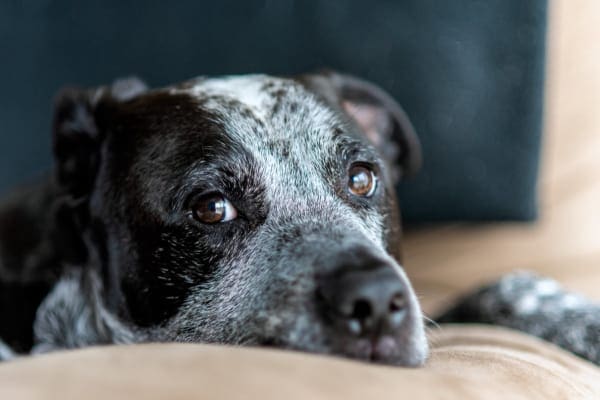
A lump the size of a softball—Is it a dog lipoma?
Before we get into the causes, diagnosis, and treatment of lipoma in dogs, let’s meet a 12-year-old Pit Bull mix named Maggie. Until now, she had always been in good health.
However, over the last couple of weeks, this sweet senior dog seemed relentlessly plagued by a nagging cough. Maggie’s mom was worried not only about the cough, but also about the softball-sized lump on her beloved dog’s chest that she had discovered six months prior. It appeared to be growing.
Day after day, one thought cycled through the dog mom’s mind: Could the lump on her dog’s chest be pressing into the lungs and causing the cough? Even more fundamental—what was this mass?
My conscientious client scheduled a veterinary exam with me. As I examined my patient, it wasn’t hard to find the mass. It was almost five inches in diameter, soft, and located just under the skin on top of the muscle. Although I thought I knew what the mass was and was fairly confident it didn’t enter the chest, I ordered X-rays because I knew we needed to get to the bottom of this sweet dog’s cough and congestion.
Getting to the bottom of the mass on the dog’s chest
The X-rays confirmed my suspicions. The source of my patient’s cough was bronchitis. And while the mass was there, it was on the outside of the chest wall, growing away from the chest cavity. My client was visibly relieved.
Next, to put to rest my client’s fears, it was time to investigate my patient’s softball-sized growth.
In Maggie’s case, based on the shape and feel of the mass, I strongly suspected it was a lipoma (fatty tumor). But a physical exam alone simply is not enough to determine the identity of the mass.
I knew she needed a fine needle aspiration (i.e., extraction of cells using a small needle and examination under the microscope) of the mass to rule out a mast cell tumor, soft tissue sarcoma, or other concerning tumor types and to confirm a diagnosis of a lipoma.
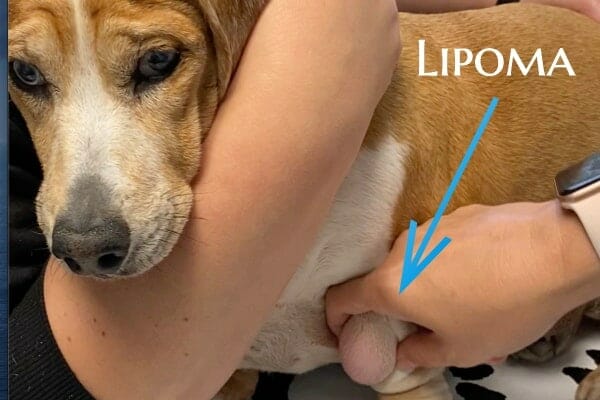
What is a lipoma in dogs?
A lipoma is a common benign (non-cancerous) tumor of adipocytes, which are fat cells. Lipomas usually have well-defined boundaries and typically do not invade the underlying tissue. They are commonly located on dogs just below the skin of the trunk and limbs of the dog’s body. However, in some cases, a dog may have a lipoma in the chest or abdominal cavity, or one may grow between the muscles of the leg.
Occasionally, a dog may have an infiltrative lipoma—one that invades muscle, bone, nerves, or other tissues. While benign, infiltrative lipomas do disrupt the adjacent tissues more than other lipoma types. They are especially problematic if they cause spinal cord compression or invade muscle tissue.
What causes lipomas in dogs?
It is uncertain what causes lipomas. As with many conditions, the causes are often multifactorial, with environmental and genetic factors likely playing a role as risk factors. These fatty tumors are more common in senior dogs but can occur at any age. While any dog breed may have a lipoma, the following breeds are more likely to develop lipomas:
- Labrador Retrievers
- Beagles
- Doberman Pinschers
- Miniature Schnauzers
- Cocker Spaniels
- Weimaraners
- Dachshunds
How do you diagnose a lipoma?
A physical exam is not sufficient to diagnose a lipoma. This is a critical point that I can’t emphasize enough. Your dog needs a fine needle aspiration or biopsy of the lump to be able to definitively diagnose it as a lipoma.
Even a board-certified veterinary oncologist cannot diagnose a lipoma simply by looking and feeling. A fine needle aspiration is critical to rule out other below-the-skin tumors that can be of far greater concern, such as mast cell tumors in dogs and soft tissue sarcomas.
Fine needle aspiration
A fine needle aspiration (FNA) is a simple diagnostic test your vet can typically perform in the exam room on an alert and conscious dog. Although watching the FNA may be unsettling for owners since it involves a needle, most dogs remain calm and react to the procedure no more than they do when receiving a vaccine.
To perform a fine needle aspiration, your veterinarian:
- Inserts a needle into the mass
- Redirects it multiple times to gather cells
- Removes it with a sample of the tumor’s tissue
Watch a fine needle aspiration on a dog’s lipoma in this video…
As you can see in the next video, the vet will use an air-filled syringe to spray the collected material onto a slide, spread it out, and then examine it under the microscope.
Microscopic characteristics of lipoma in dogs
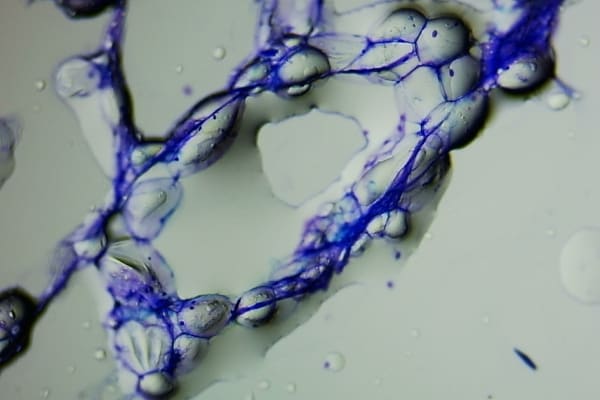
Because lipomas in dogs are mostly fat cells, the material on the slide often looks like oil. The image below shows how the lipoma aspirate looks when smeared on a slide.

Although it may be tempting to assume it is a lipoma based on the visual appearance of the material on the slide, a microscopic evaluation is still necessary. Other tumor types can occasionally have a “fatty appearance”, too.
When the vet stains and observes the material under the microscope, he or she will see adipocytes (fat cells) and sometimes red blood cells if the tumor is a benign lipoma. However, if he or she sees other cell types in addition to the adipocytes and red blood cells, this suggests the tumor is not in fact a lipoma and bears further investigation.
What is the treatment for lipomas in dogs?
Many pet owners find masses on their dogs and become concerned that their dog has cancer or that the mass is going to compress vital organs. But lipomas are often asymptomatic and usually do not cause any problems with a pet’s health. The exception to this would be infiltrative lipomas and those in the chest, abdomen, or between muscles.
Lipoma removal in dogs
In some cases, lipomas in dogs can grow large and, based on location, interfere with a dog’s mobility. For your dog’s comfort, it’s best to remove these lipomas surgically. It’s important to note that the surgical removal of one lipoma does not prevent another lipoma from developing in a different area.
If the lipoma is relatively large, your vet may need to temporarily place a drain in the surgical site. This can help prevent a seroma, which is a large pocket of fluid that fills the space where the mass used to be.
It is important to follow your vet’s instructions about incision care, exercise restriction, and use of an E-collar after lipoma removal. And if you have any concerns about how the incision looks or how your dog is acting, don’t hesitate to contact your vet.
Infiltrative lipomas in dogs—aggressive treatment approach
Infiltrative lipomas often require a more aggressive surgical approach and occasionally multiple surgeries or even a dog leg amputation. If the veterinarian is not able to remove the whole infiltrative lipoma, it is likely to recur. Radiation therapy (either on its own or combined with surgery) can also be effective in controlling these types of lipomas.
FAQs about lipomas in dogs
There are common questions and concerns that many pet parents have about lipomas. You may have some of the same questions. So, let’s get answers to some frequently asked questions about lipomas.
Q: Can you shrink a lipoma in dogs?
Unfortunately, at this point, surgery is really the only way to get rid of a lipoma. There are no commonly available or practical solutions to shrink a lipoma.
One small study of 15 dogs did indicate that injecting a steroid (triamcinolone acetonide) into the lipoma under ultrasound guidance could either shrink the tumor or cause it to regress completely. Unfortunately, some of these lipomas later recurred. A paper detailing the study entitled “Canine Lipomas Treated with Steroid Injections: Clinical Findings” is available if you want to read more about it. At this point, it is not a common procedure.
Previously, some vets tried injecting calcium chloride into subcutaneous (under the skin) lipomas. However, this method has fallen out of favor because it has the potential for complications such as necrosis (death) of the skin and irritation.
Q: Are lipomas in dogs dangerous? Harmful?
A: All lipomas are benign, and most are harmless—they don’t cause any symptoms. However, if they grow in the abdominal or chest cavity or the spinal canal, they can compress other organs and cause clinical abnormalities such as neurological issues in dogs.
Occasionally, dogs may develop an intermuscular lipoma—a lipoma that grows between muscle layers. This type of lipoma most commonly occurs in the back of the thigh and causes lameness or impedes movement.
Q: Do lipomas on dogs go away?
Generally, once a lipoma is present, it will typically either stay a similar size or, more often, continue to slowly grow larger over time. They don’t usually go away on their own.
Q: Can dog lipomas turn malignant?
Lipomas are common benign fatty tumors. They are not malignant and cannot become malignant. Since they are benign, they also can’t metastasize (spread) to other parts of the body. It is important to note that this doesn’t mean that the dog won’t get other lipomas. It simply means that any future lipomas did not come from the lipomas that were already present.
Lipomas should not be confused with liposarcomas, which are very rare, malignant tumors of fat cells. Unlike a lipoma, a liposarcoma is locally invasive and often spreads to other parts of the body. You do not have to worry about your dog’s lipoma turning into a liposarcoma, as they are completely different tumors.
Q: What should I do if I find a lump on my dog?
If you find a new lump on your dog or if you notice that an existing lump is growing rapidly, you should schedule an appointment with your veterinarian. He or she will most likely perform a fine needle aspiration (FNA) to determine if the mass is a lipoma or another tumor type. Once the tumor has been classified, your vet will explain whether or not your dog needs surgery to remove it.
If your dog has multiple masses, it’s helpful to have a “body map” showing the location and size of all the masses on your dog. This will allow you to determine if a mass is new or if an older mass has grown in size. Your veterinarian will likely keep a body map in your dog’s medical record. But you can also keep one in your dog’s health journal to note changes at home.
Q: My dog is covered in lipomas, and I just found another one. Does it need to be aspirated?
In short, yes. Let me explain my answer through the story of one of my canine patients.
I had previously diagnosed Chloe, a 9-year-old black Labrador Retriever, with a handful of lipomas. When she came to the animal hospital for her annual exam, I found a quarter-sized mass in front of her shoulder. (This is one of the many reasons I cannot overstate the importance of taking your dog to the vet for wellness exams.)
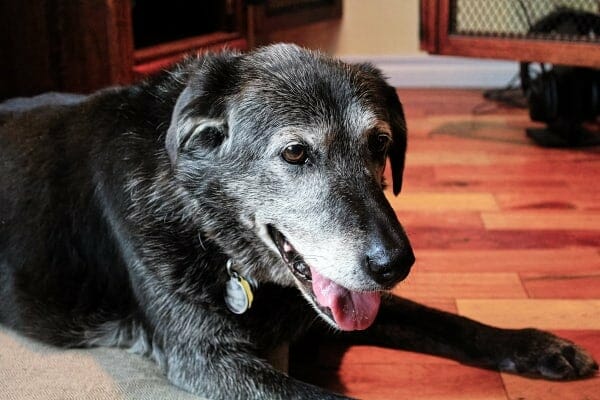
Scanning her records from last year, I didn’t see a mass noted in this location. Although it felt like a lipoma, I wanted to be thorough.
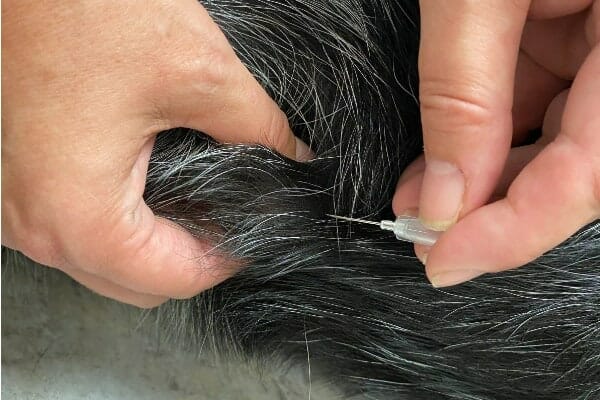
I performed a fine needle aspiration to collect a sample. The image below demonstrates this procedure.
After I smeared the sample on a slide, I saw the classic oily appearance with what appeared to be red blood cells mixed in. Upon examination under the microscope, however, the material that looked like blood was actually a mixture of red blood cells and neoplastic (cancerous) round cells.
My patient’s new mass was not a lipoma—it was a soft tissue sarcoma, which is a malignant (cancerous) tumor. I advised surgical removal at the next possible opportunity.
This story serves as a good reminder of the importance of having your vet aspirate every new lump. Even if the first dozen growths have been lipomas, you never know when the next lump will be something concerning, where early detection can make a huge difference in the outcome.
Since this is so important, I’ll say it one more time. If you find a new lump on your dog that your veterinarian hasn’t previously documented and tested, please make an appointment with your vet promptly.
Lipomas are common in senior dogs
Lipomas are very common fatty tumors in senior dogs. Understandably, I have had numerous dog owners tell me that they are scared their “lumpy bumpy” older dogs are filled with cancer. Thankfully, more often than not, these masses are nothing more than harmless, benign lipomas and unlikely to cause any adverse health symptoms.
As always, though, make an appointment with your veterinarian any time you observe something new or “off” with your dog. Just like Maggie’s mom, it will help you put your worries to rest. Or perhaps, like Chloe’s story, it will allow for early diagnosis and treatment of genuine concerns. Either way, that vet visit and fine needle aspirate are critical.

P.S. Why lumps and bumps need to be checked by a vet
I can’t stress enough the importance of seeing your vet if you think your dog has a lipoma. In taking the videos for this blog post, Dr. Jennifer Shepherd did an actual fine needle aspiration (FNA) on one of her patients with what was assumed to be a lipoma so that we could share this procedure with our readers. Later, I received this message from Dr. Shepherd: “I may have saved a life thanks to you! I saw a dog today, and the owner said that the lumps had been looked at before. So, I assumed one was previously diagnosed as a lipoma. I decided to aspirate, just to make a video for you. Turns out it’s probably soft tissue sarcoma. I’m removing it on Wednesday.” Dr. Shepherd’s message reinforces the importance of getting your dog’s lumps and bumps checked. ~ Dr. Julie Buzby, integrative veterinarian
Have you ever found a lump in your senior dog? Was it a lipoma?
Share your experience in the comments below. Finding a lump can be scary—so let’s encourage and support one another.


Hi Dr Buzby, I have a 13.5 year old American Pit Bull Terrier who has a lump in the back right side, lower area of her neck (pretty close to her shoulder). It is for the most part soft and does not hurt her to touch. It is completely under her skin. It is about the size of a half tangerine and has been that way for a long time. While I know it’s ridiculous to ignore the situation because of fear of the diagnosis, is it necessary to bring her to get that checked? It does not hurt her, she is in exceptional health for her age, and has no real concerns that aren’t normal for a dog her age. I likely will not choose to do an invasive and risky surgery on her because I want her to live her life in happiness and pain free and don’t want to ruin the precious time she has left with me (I did this in the past and while I don’t regret trying to help my cat, she had no idea she was even sick until I messed with her and she declined RAPIDLY – I can’t do that to my dog 🙁 it is just not fair to her..) Do you think that her lump could be lipoma if it is not outside her skin? I will ask her vet to aspirate at her next appointment in the fall. Is there something I could do (maybe fish oil?) to try to help the size go down at all? I love her with my whole heart and will do anything to make sure she has a happy rest of her golden years, so any thoughts would be welcome. She is my best friend and I am not prepared to say goodbye to her. Thank you!
Hi Alix,
I understand why you are worried about your girl with this unknown lump on her neck. I wish I could offer some reassurance, but without doing some testing, there really is no way to know what this mass could be or if it is cause for concern. Fish oil is a great supplement and does wonders for skin and joints, but I am not aware of any beneficial effects it would have on a mass. I think your best course of action is to schedule an appointment with your vet. Even if you choose to forgo treatment, it may bring peace of mind to know exactly what you are facing. Hoping for answers and a clear path forward. Wishing you both all the best for many happy days ahead.
thank you!
I have a 5 year old white Westie/ Maltese guy named Augustus. (aka”Gus”)
He has a lipoma on his tail. High up towards butt. Diagnosed by FNA.
No need for surgery unless it bothers him or ruptures.
The surgery would unfortunately be a tail amputation.
I love this little pooch like crazy. I figure same dog, shorter tail.
My question is not diagnostic, but more recovery based.
Will it be more like a tail docking? If so, barring complications, just a cone, dressing change, and antibiotics? I figure to get clear margins ( not sure if needed for Lipoma) they will take the amputation down to nearly his rump.
Have total confidence in vet, she saved him from Parvo at 8 weeks.
Just interested in tail amputation advice?
Hi Elizabeth,
I am sorry Gus is facing this difficult situation with the mass on his tail. Unfortunately, this type of procedure has to be done from time to time and while it is not a complicated surgery, it does have its own set of possible complications. Tail docking in puppies is performed at a specific early age when the spinal cord has not yet extended down into the tail. Removing the tail from an older dog does require transecting the spinal cord which will need appropriate pain control post-op. The tricky part is making sure not to remove the tail at a location too far forward (toward the head). You run the risk of damaging some of the nerves that extend from the spinal cord and then innervate other tissues. The post-op care shouldn’t be too difficult. The thing that can get frustrating is trying to keep it clean and free of fecal matter and dirt. Hoping Gus’ surgery is successful, and recovery is smooth. Wishing you both nothing but the best and feel free to leave an update and let us know how things go!
My 8 year old mini golden doodle had a lump from her back (between shoulder blades) removed and labs have revealed it is an infiltrative lipoma. Currently she acts totally normal, happy, energetic dog she always has been. Removal of the lump was not completely successful as they couldn’t get clear margins. Is it worth it to put her through radiation or just wait until reoccurrence for further treatment?
Hi Lexi,
I am sorry your girl is facing this difficult situation. Without being personally involved in her medical care it is hard to make specific recommendations. Did the pathologist’s report give any indication of how aggressive this tumor might be? I think you will be able to get the best answers from a veterinary oncologist. You can ask your vet for a referral or to schedule a consultation. The specialist will be able to give you all the details about treatment options and prognosis with each. Hoping you can get the answers you need to find a clear path forward. Wishing you and your sweet girl all the best as you navigate this unknown path.
Hello! My 16 year old Bulldog has a tennis ball sized lipoma on his right arm pit area. It does not interfere with his ability to walk. Do you know where I can get a support strap or band that he can wear to help hold it in? Since he is short, I feel he can easily bump it and I wonder if it feels heavy? I looked online and I was unable to find anything like this available.
Thanks!
Heather
Hi Heather,
I am sorry your senior guy is dealing with this large mass in his armpit area. Unfortunately, I am not aware of any such devices or supports as you are searching for. Would he be willing to wear a t-shirt to help keep this area protected? Hoping you can find a good solution and wishing you all the best!
Our 10 yr old Wheaten Terrier developed a golf ball size lump on the backside of her left elbow which caused her to limp slightly and raise her paw up when standing still. Our vet aspirated in the office but said the results were inconclusive. We were told the lump location was terrible due to tendons, muscle, nerves running through the elbow. Despite the location, he recommended surgery to confirm its a lipoma, then remove. If the diagnosis was cancer, he did not want to risk removing it. Thankfully the lump was confirmed as lipoma, however after making one incision he felt continuing with a lengthy surgery to alleviate a slight limp would not be worth the risk. We agreed. However, 6 weeks later the lump is growing, the limp has worsened, and her energy level and desire to go outside has significantly decreased. We’re not sure what to do. We’re considering getting a second opinion on the viability of surgery.
Hi Rich,
I am sorry your senior girl is dealing with this worrisome mass on her elbow. I understand why you are concerned, especially since it seems to have progressed quickly over the last few weeks. A second opinion may be a good idea. Don’t forget you can always ask for a consultation with a specialist if needed. Hoping for answers and a clear path forward. Best wishes to you and your sweet girl.
Hello,
My dog has a lipoma which is where the hip and leg meet on his back left leg. He is a 15 year old terrier and it does not interfere with his mobility ( he has excellent mobility for a dog his age). He is seemingly unbothered and has no issues with me touching the area. I am wondering how you may suggest proceeding with a lipoma in that area since I know surgery could potentially hinder his mobility due to the location of the lipoma. When he is very mobile (runs, jumps to heights three times his size, etc), I am concerned about taking a chance with his age,
Thank you for your time.
Hi Kellyn,
I understand your concern for your senior guy and think you are asking some great questions. Without examining your pup myself, it is hard to offer specific advice, but I can give you general guidance. Has the mass indeed been identified as a lipoma or is it just suspected to be one? The reason I ask, is the type of tumor can vairy the recommendation of whether to have it removed or wait and watch. If it is a lipoma and is relatively small and has not changed in a long time, it may be best to just keep an eye on it. If the mass is larger or is growing rapidly, then removal may be in your boy’s best interest. As long as the tumor is just under the skin and is not attached to underlying tissues/muscle, it should not cause any mobility issues after surgical removal. While senior dogs can have other health concerns that make anesthesia risky, this is not always the case. As long as the necessary pre-operative lab work is performed and passes with no abnormalities, age alone should not prevent you moving forward with surgery. Here is a link to another article with more information: Is My Dog Too Old for Surgery?
Hoping you can find the advice you need to make the best choice for everyone involved. Take care and good luck!
My mini Phoebe has had three previous surgeries for an infiltrative lipoma but each time it’s grown back much bigger.
She had a hind leg amputation in August and was coping quite well. However the vet hospital also found it in her abdomen and pelvic canal but the leg surgery was too difficult for them to do any more on her.
She now appears to be quite pot bellied but is otherwise ok, eating and exercising a little. There was an indication of some cancer cells amidst the fat and really unsure where to go with this now
Dear Andrea,
My heart goes out to you as you face this difficult situation with your pup. I understand your concern and wish I had some great advice to give. Unfortunately, I am at a loss as to what would be best. Without playing a personal role in Phoebe’s medical care it is hard to make specific recommendations. If you have not consulted with an oncology specialist, that may be the best way to proceed. They have lots of experience dealing with complicated and rare cases. I hope you are able to find the answers you need to ensure your girl remains happy and comfortable for as long as possible. Praying for clarity and strength as you walk this emotional path. Bless you. ♥
My 12 year old MinPin has had a lipoma on the side of her rib, which was checked by her vet 2 years ago just by palpitation- no FNA. It was the size of a small door knob and soft. I noticed a few days ago this door knob looking lipoma/bump has now popped out and looks more like a golf ball. I also noticed on the side of the lipoma/bump, her skin looks bruised / blueish on her stomach. I will be contacting her vet, but in the meantime, I’m sick. A bruised area by a lipoma?
Hi Karen,
I understand your concern for your senior girl with these new changes to the lump on her side. Without examining it myself, it is hard to make specific conclusions. There are different types of masses that can cause bruising and other inflammatory changes to the adjacent tissues. Also, the bluish color you are seeing could be the formation of blood vessels to the tumor. Either way, these are all indications that this mass may not be a lipoma after all and would require some more in-depth investigation. I am glad you are planning to contact your vet. Hoping you can get some answers soon and find the best way to ensure your girl remains happy and healthy.
We have a senior Labrador Retriever. She is approaching 12.5 years.
She has a very large softball size lipoma on her chest near front legs. It recently became infected and was treated with antibiotics.
Our vet performed a Cytology. She has suggested surgery to remove it.
Given her age and life expectancy, we are reluctant to have the surgery as her mobility has not been affected.
She is otherwise healthy but we are concerned about the surgery and especially the recovery?
Hi Peter,
I am sorry your senior Lab is dealing with this worrisome mass on her chest. I understand how difficult it can be making these kinds of decisions. I know you mentioned that your dog’s mobility has not been affected at this point, but I think the infection is the biggest cause for concern. If the mass was infected previously, it is likely this will occur again. Chronic infection can have devastating consequences and be life threatening. The thing I worry most about when considering removing a larger mass is if there will be enough skin left over to completely close the incision site. I would talk with your vet or the surgery specialist that would perform the procedure and get their expert opinion. Be honest about your concerns and goals/wishes. It is always ok to forgo treatment and pursue palliative care. Your girl’s comfort is of utmost importance and as long as she is happy and pain free, the rest doesn’t matter so much. You have to decide if you are focused on quality or quantity of life. I hope you can find the answers you need to make the best decision for everyone involved. Wishing your sweet girl all the best and praying for clarity.
My partner has a 15 year old mini sheltie who has a gigantic growth on the right flank or abdomen that feels encapsulated like a lipoma. It measures at 30cm long and 19cm wide which is huge on this dog. My partner states he has been told by his vet that the growth is most likely benign and that it wasn’t something to worry about previously when it was smaller. It has now gotten so large that the dog cannot walk without a limp and doesn’t walk long before laying down. The dogs health otherwise is fine except for showing signs of being a very geriatric dog with arthritis clearly in all for legs and frail body. His legs intermittently shake with use. He takes gabapentin and the dog nsaid (I forget the rx name at the moment) daily. Personally I feel like the dogs recovery will be very harsh removing this very large growth on this very small frame that seems very delicate already. His blood work has been normal besides a little elevation of liver enzymes and WBC. I feel evil for thinking that surgery may not be in the dogs best interest. Can you give me insight from a professional point of view on what recovery really looks like for something like this.
Thank you.
Dear Glenna,
I understand your concern for your partner and his senior Sheltie. I agree that this sounds like a major surgery and has the potential for many complications. Of course, without examining your pup myself, it is hard to make specific conclusions and recommendations. The thing I would be most concerned about is the size of the mass. While it may be possible to remove the mass, there may not be much skin left at the edges after removal, and this could make closure of the surgical site very difficult if not impossible. If the skin cannot be closed completely, surgeons have to utilize skin flaps or even leave the incision site open a bit and then cover it with bandages to allow the tissue to fill in on its own over time. I would talk with your vet or the surgery specialist that would perform the procedure and get their expert opinion. They may tell you that surgery is not an option. Ultimately, you have to go with your own intuition as you know your girl better than anyone. It is ok to forgo treatment and focus on quality of life. Palliative care is always a good option. I encourage you to discuss your concerns with your vet and be honest about your goals and wishes. They can help you navigate this difficult path and ensure your pup remains comfortable during these last years of life. Wishing you all many happy days ahead. Bless you. ♥
I strongly suspect my 9.5-year-old Cavalier King Charles Spaniel has an infiltrative lipoma. we have a meeting with the surgeon coming up but i am nervous of course. A chest x-ray compared between November and just now showed a confirmed fatty tissue that has grown over the last 4 months. The issue is that it is located in her chest cavity. The regular vet has said it cannot move “out” because of her ribcage. We are being told it is taking up space between her heart and lungs which gets in the way as the lungs pump and expand. We feel as if her breathing is becoming a bit compromised and she sometimes has a weird cough. Other times she seems fine. I cannot imagine putting her through surgery and radiation. Should I prepare for bad news?
Dear Jody,
I am sorry you are facing this tragic situation with your senior pup. While I can’t make specific conclusions without personally examining your girl, it sounds like she may be nearing her final days. No matter what kind of tumor it turns out to be, if it is growing rapidly, causing respiratory distress, and is not treated with surgery or chemo/radiation, then it will likely prove to be fatal. I encourage you to talk to your vet about hospice and palliative care. Now is the time to make sure your girl is as comfortable as possible and make the most of the time you are gifted with her. Praying for comfort and peace as you navigate this emotional path. Bless you.