If your beloved dog has lymphoma, you may have more questions than answers. A cancer diagnosis can be scary and overwhelming. Integrative veterinarian Dr. Julie Buzby is here to help, sharing the types, signs, diagnosis, treatment, and prognosis for lymphoma in dogs.

Joshua, a 10-year-old Basset Hound mix, seemed like the picture of good health. When he visited me for his annual exam, he was acting like his normal silly, slobbery self. His parents had no concerns and expected a routine visit. However, their world soon came crashing down around them.
On his physical exam, I discovered significant enlargement of most of Joshua’s external lymph nodes. Unfortunately, cells from those lymph nodes confirmed my suspicion. Their beloved dog had lymphoma.
What is lymphoma in dogs?
Lymphoma in dogs is one of the most commonly diagnosed cancers veterinarians encounter. Although it often affects the external lymph nodes (known as multicentric lymphoma), it can also affect multiple organs and body systems.
Lymphoma is a cancer of the lymphocytes (a type of white blood cells), and can be known as malignant lymphoma, lymphosarcoma, or LSA. It is responsible for up to 24% of canine cancer cases in the U.S. and affects 13 to 24 dogs per 100,000 each year.
To understand lymphoma a little better, it helps to understand lymphocytes themselves. In a normal dog, lymphocytes are an important part of the immune system’s defense against infections. Like other types of white blood cells, they circulate in the blood.
Lymphocytes are also a very important part of the lymphatic system. This system is comprised of tiny vessels that collect fluid that has leaked out of blood vessels (known as lymph). Lymph helps with the body’s fluid balance, and also helps remove foreign substances such as viruses and bacteria from the body.

Along the path of the lymphatic vessels are lymphocyte-rich lymph nodes. Think about lymph nodes as the inspection checkpoints along the lymphatic road. As lymph flows through the lymph node, the immune system cells come in contact with the foreign substances. This allows the body to detect then mount a response against anything it sees as potentially dangerous.
In addition to lymph nodes, the spleen and bone marrow also contain large amounts of lymphatic tissue (i.e. lymphocytes and other immune system cells). However, lymphatic tissue is present to some extent in almost every organ. Thus, lymphoma can develop almost anywhere in the body.
Canine lymphoma is generally grouped into three different categories.
What are the three forms of lymphoma?
Each of the three forms of lymphoma in dogs is defined based on its primary location in the dog’s body:
- Multicentric or nodal lymphoma—Most commonly found in the peripheral lymph nodes, but can also occur in other regions such as bone marrow, liver, or as a cause of splenic masses in dogs
- Gastrointestinal (GI) lymphoma—Affecting the small intestines and/or stomach
- Extranodal lymphoma—Found in a location other than the lymph nodes or GI tract. Extranodal lymphoma is further classified into different subtypes based on location:
- Mediastinal lymphoma—occurs in the chest
- Cutaneous lymphoma—occurs in the skin
- Renal lymphoma—occurs in the kidneys
- Central nervous system lymphoma—occurs in the brain or spinal cord
- Ocular lymphoma—occurs in the eye
Multicentric lymphoma is by far the most common form of lymphoma in dogs, accounting for approximately 80% of cases. GI lymphoma is responsible for about 5 to 7% of lymphoma cases. The remainder fall in the extranodular category.
Because it is the most common, this article will focus primarily on multicentric lymphoma.
What are the signs of lymphoma in dogs?
Clinical signs of lymphoma in dogs may vary based on the form of lymphoma. First, I will touch on the signs of GI lymphoma and extranodal lymphoma before moving on the signs of multicentric lymphoma.
Signs of GI lymphoma in dogs
In dogs with gastrointestinal lymphoma the signs are generally decreased appetite, vomiting, and/or diarrhea.
Signs of extranodal lymphoma in dogs
Dogs with extranodal lymphoma may have signs related to the body system that is affected. For example, sometimes cutaneous lymphoma can cause bumps or masses in the skin. Renal lymphoma may cause increased thirst and urination as the first sign.
In addition, any form of lymphoma may initially present with nonspecific symptoms such as lethargy in dogs,, inappetence, diarrhea, and weight loss.
Next, let’s look at signs of multicentric lymphoma in dogs.
Signs of multicentric lymphoma in dogs
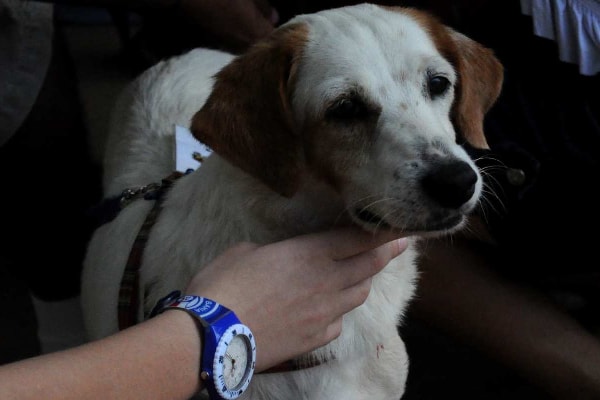
In dogs with multicentric lymphoma, the first sign is usually palpably enlarged lymph nodes. When I say “enlarged,” I don’t mean just slightly bigger than normal. Often these lymph nodes are much larger, potentially the size of a golf ball or bigger, depending on the size of the dog. The lymph nodes are firm and usually not painful when palpated.
Although there are lymph nodes throughout the body, some are more noticeable than others. The most prominent and easy to feel lymph nodes are:
- Submandibular lymph nodes—located under the jaw where it meets the neck
- Prescapular lymph nodes—in front of the shoulder blade
- Axillary lymph nodes—found in the armpit area
- Inguinal lymph nodes—on the lower abdomen where the legs connect to the body (groin region)
- Popliteal lymph nodes—located on the back side the dog’s knee (stifle)
In some dogs, lymph node enlargement is the only symptom initially seen. Other dogs with multicentric lymphoma have other symptoms such as lethargy, inappetence, heavy breathing, and weight loss.

Other causes of lymph node enlargement
It’s important to note that enlarged lymph nodes don’t always equal lymphoma. Due to their role in the immune response, lymph nodes can react and grow in response to an infection (viral, fungal, or bacterial) or even vaccinations. Vets usually refer to these as “reactive” lymph nodes.
The submandibular lymph nodes are the most likely lymph node to be enlarged due to non-lymphoma causes. This is in part because they filter the blood, and therefore the bacteria, from the mouth.
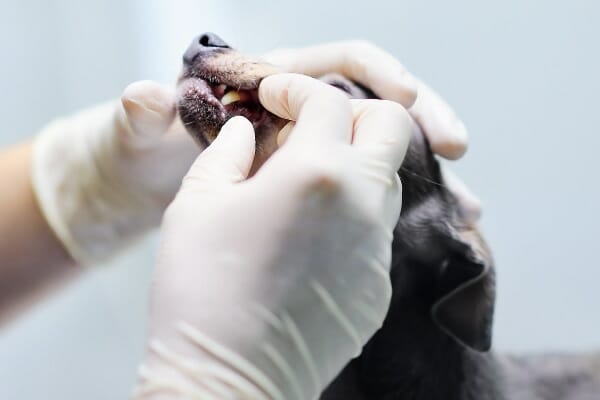
If your dog has dental disease or your older dog is losing teeth, this may be enough to stimulate a response in the lymph nodes and cause enlargement. Thus, finding enlarged lymph notes is suspicious, but not definitive for lymphoma.
How is lymphoma diagnosed?
If your dog has one or more enlarged lymph nodes, your vet may perform a test called a fine needle aspirate. This involves poking a needle into the lymph node multiple times to obtain a sample of cells. Your vet will then examine those cells under a microscope.
A normal lymph node contains primarily small, mature lymphocytes. However, if the vet sees a large number of lymphoblasts (larger, immature lymphocytes), he or she may suspect lymphoma. Many veterinarians will send the slides to a veterinary pathologist to confirm a diagnosis of lymphoma.
Sometimes, even when a veterinary pathologist examines the sample, it can be difficult to definitively determine if a lymph node is cancerous or reactive. In these cases, your veterinarian may want to take a biopsy, or a small piece of tissue from the lymph node, and submit it to a veterinary pathologist.
If your dog has other clinical signs like weight loss, lethargy, and decreased appetite, your vet may want to perform other tests to see what might be going on. Routine diagnostic tests may include blood tests, X-rays, and/or ultrasound, depending on what symptoms your dear dog has.
What is the treatment for lymphoma in dogs?
Treatment for lymphoma in dogs encompasses a few options. If your dog is diagnosed with lymphoma, your veterinarian will advise you about the next steps. Multicentric lymphoma is generally either treated with chemotherapy or with a steroid medication (prednisone).
You may be wondering about surgery as a potential treatment option. Unlike many other types of cancer, surgery cannot cure or treat multicentric lymphoma. The lymphatic system is widespread throughout the body, so by the time of diagnosis, lymphoma has most likely spread to multiple locations. Thus, even if only one or two lymph nodes are enlarged, removal of those lymph nodes is not an effective treatment.
Let’s look at chemotherapy and steroid medication as two medical management options for lymphoma in dogs.
Chemotherapy to treat lymphoma in dogs
Chemotherapy is generally the treatment of choice for canine lymphoma. There are multiple different chemotherapy protocols (i.e. the type of drug or combinations of drugs administered on a set schedule) to treat lymphoma. A veterinary oncologist can discuss different protocols and determine which one is best for your dog.
To learn more, check out Veterinary Partner’s article on common lymphoma chemotherapy medications for cats and dogs.
Laverdia to treat lymphoma in dogs
A new oral chemotherapy medication called Laverdia has been conditionally approved for treatment of lymphoma in dogs. This drug alters the proteins of cancer cells and prevents them from spreading. The most exciting thing about this oral medication is that owners may be able to treat their dogs at home, rather than making frequent trips to the veterinary oncologist for chemotherapy injections.
Laverdia is still new on the veterinary scene, and vets are very excited to see results as more dogs are treated with this innovative medication!
Joshua’s chemotherapy story
Remember Joshua? I referred him to a veterinary oncologist who planned and administered a chemotherapy protocol. Joshua’s lymphoma went into remission, and he had an additional two wonderful years with his family. They were so happy with the time that the chemotherapy gave them with their sweet pup.

Prednisone to treat lymphoma in dogs
If you do not pursue chemotherapy for your dog, prednisone is another treatment/management option. Most dogs will go into partial or complete remission for a time when treated appropriately with the corticosteroid prednisone for dogs (or prednisolone).
Prednisone is a tablet that is readily available at most veterinary hospitals and can be given at home. Note that prednisone does sometimes cause increased thirst and urination, excessive panting, or increased appetite.
Unfortunately, prednisone typically only causes short-lived remission. Typically, the lymphoma develops resistance to prednisone after a couple of months. Another concern with starting prednisone right away is that it makes lymphoma less responsive to chemotherapy in the future.
Before I start any of my patients on prednisone for lymphoma, I always counsel the family on the pros and cons. I also ensure they have no plans of pursuing chemotherapy down the road.
Charlie’s prednisone treatment story
Charlie is a 10-year-old Golden Retriever who came to see me because he was not eating well and seemed lethargic. I discovered his lymph nodes were enlarged. Lymph node aspirates confirmed the diagnosis of lymphoma, unfortunately. He also had high calcium (more on that in a bit).
Referral to an oncologist and chemotherapy was not an option for this family, so we started treatment with prednisolone. I informed his family that the prednisone may make him feel better for one to two months, but then he was likely to relapse. Amazingly, it has been almost five months since Charlie’s diagnosis and he is still happy and active.
I rechecked him last week. His lymph nodes are still very large; he is not in full remission but he is feeling better and is living his best life right now. His family is extremely happy about the extra time with him.
While this 10-year-old Golden Retriever’s story is not typical for dogs with lymphoma who are treated with prednisolone, I wanted to share it to demonstrate that some dogs defy the odds.
What is the life expectancy for multicentric lymphoma in dogs?
If your dog has been diagnosed with lymphoma, a first thought might be wondering how fast lymphoma spreads in dogs. Without any treatment, lymphoma often progresses quickly. Most untreated dogs will succumb to the disease within one to two months of diagnosis.
Treatment with prednisone alone can cause temporary remission and may extend survival time by a few more months.
Treatment with chemotherapy can give your dog a good quality of life for months to years. People understandably tend to worry about the side effects of chemotherapy. If you’ve seen a relative or loved one through chemo, you have probably witnessed serious unpleasant side effects. Fortunately, these side effects are much less common in dogs than they are in people.
When considering the life expectancy of dogs treated with chemotherapy, there are certain factors that affect lymphoma in dogs’ progression, prognosis, and overall outcome. Multicentric lymphoma must be further classified in order to predict prognosis.
Staging
Lymphoma is classified into stages. The lower the stage, the better the prognosis.
- Stage I—only a single lymph node is affected
- Stage II—multiple lymph nodes in the same region of the body are affected
- Stage III—lymph nodes throughout the body are affected
- Stage IV—the liver or spleen is involved
- Stage V—lymphoma is found in the blood or bone marrow
Sub-stage
Dogs with lymphoma are further classified into “Substage A” (patients who appear healthy and have a normal appetite at the time of diagnosis) and “Substage B” (patients who are sick at the time of diagnosis). Dogs who are in Substage A generally have a better prognosis.
Histological grade
The veterinary pathologist will also determine the grade of the lymphoma, based on the mitotic rate (how fast the cancerous cells are dividing). High-grade lymphoma generally behaves more aggressively and progresses more quickly than low-grade lymphoma. Interestingly, high-grade lymphoma is actually more likely to go into remission than low-grade lymphoma.
Phenotype
There are two types of lymphocytes—B-cells and T-cells. B-cells come from the bone marrow and create antibodies (immune system proteins that target specific foreign invaders). T-cells mature in the thymus (immune system tissue in the chest) and help direct the immune reaction or kill infected or abnormal cells.
Dogs with B-cell lymphoma tend to fare better than dogs with T-cell lymphoma. A veterinary pathologist can perform special testing to determine the phenotype (i.e. T-cell or B-cell) of the lymphoma.
Other factors affecting prognosis
The classification of lymphoma is not the only determinant of prognosis. Other factors can help us predict how well a dog may respond to treatment.
Hypercalcemia
Some cancerous cells, including some cancerous lymphocytes, produce a protein that mimics parathyroid hormone (PTH). Normally, PTH helps control calcium levels in the body. When cancer cells make parathyroid hormone-related protein (PTHrP) the body can abnormally retain calcium.
Elevated calcium causes kidney damage, weakness, and a loss of appetite. Dogs with hypercalcemia due to lymphoma often feel sick and have a worse prognosis than dogs with normal calcium levels.
Presence of a mediastinal mass
The thymus is a lymphatic organ located in the center of the chest (mediastinum). If a dog with lymphoma has a mass in its mediastinum (generally seen on X-rays), this indicates that the thymus is probably involved. Thus, T-cell lymphoma is more likely. As mentioned above, T-cell lymphoma does not respond as well to chemotherapy.
Gender
Female dogs tend to respond to treatment better than male dogs.
Dog size
Smaller dogs often have better prognoses than larger dogs.

Previous treatment with prednisone or prednisolone
Lymphoma that has previously been treated with prednisone alone is less likely to respond to chemotherapy.
When trying to decide the best course of action for your dog with lymphoma, I always recommend a consultation with a veterinary oncologist before making treatment decisions. He or she will evaluate your dog and look at the prognostic indicators. This will help determine your dog’s chance of achieving remission and allow the veterinary oncologist to formulate the best treatment plan for your family and your dog.
Frequently asked questions about lymphoma in dogs
Many of my clients who are managing a canine lymphoma diagnosis, have questions. You may have some of the same questions too. Next, let’s look at some commonly asked questions about lymphoma in dogs.
Which dogs are at the highest risk for multicentric lymphoma?
Although mostly diagnosed in middle-aged or older dogs, lymphoma can affect dogs of any age. Unfortunately, I have seen it in dogs as young as nine months old. Lymphoma is equally common in male and female dogs. While it can affect all breeds of dogs (and mixed breeds), some breeds have an increased risk of lymphoma, including:
- Golden Retrievers
- Scottish Terriers
- Bassett Hounds
- Cocker Spaniels
- Poodles

Is lymphoma painful?
Fortunately, multicentric lymphoma is not in itself a painful condition. In advanced cases, lymphoma can make dogs feel generally unwell—this is when we see signs like appetite loss and lethargy. In those cases, veterinarians can take steps to increase a dog’s quality of life.
How to make a dog with lymphoma more comfortable
If your dog has lymphoma and is showing clinical signs, talk with your vet about what you may be able to do. In cases where chemotherapy is not pursued, treatment with prednisone can do wonders to make patients more comfortable.
Many lymphoma patients that are treated with prednisone eat better and regain their “pep.” I’ve had many pet parents report that they wouldn’t even know their dog was sick.
What can I do if my dog with lymphoma isn’t eating?
If your dog has been diagnosed with lymphoma and you notice his or her appetite is off, discuss options with your vet. In addition to prednisone, other medications can help encourage a dog to eat.
Although it’s primarily used to prevent vomiting, Cerenia for dogs can improve appetite in some dogs, particularly if their decreased appetite is caused by mild nausea. Several other appetite stimulation medications are also available to try.
Some dogs also respond well to more palatable foods, such as wet food instead of dry. Be cautious with food changes, however, because some dogs can experience GI upset from sudden diet changes. Your vet will be your best resource for what may help improve your dog’s appetite.
What can I do if my dog with lymphoma has heavy breathing?
In some cases, lymphoma can cause fluid to build up in the chest and put pressure on a dog’s lungs. Additionally, significant swelling of the submandibular lymph nodes can impinge on the trachea. In either of these cases, clinical signs can include difficulty breathing.
If your dog has lymphoma and is breathing heavily, please seek emergency veterinary care. Your vet will assess your dear dog to determine what, if anything, should be done to help him or her.
It is important to note that one of the common side effects of prednisone is panting. If your dog is being treated for lymphoma with prednisone, he or she may pant more frequently than normal. However, panting should be distinguished from respiratory distress or increased respiratory effort. When it comes to heavy breathing, it’s always better to be safe than sorry and have your canine companion checked out by the vet ASAP.
Hope in the midst of the hard times
Even though lymphoma is often a fatal disease, it is not hopeless. Many dogs with lymphoma don’t feel sick during the earlier stages of the disease. Like Joshua, they have no idea anything is wrong with them and may wonder why their parents are so sad and worried.

Additionally, many dogs with lymphoma will respond well to chemotherapy or prednisone. They can have an excellent quality of life during their final weeks, months, or years. Treasure the time. Make a bucket list for your dog and see how many things you can check off of it. Spoil him or her like never before. Keep living and loving until it is time to say goodbye.
Saying goodbye to your dog with lymphoma
This next section might be hard to read, but I think it is worth sharing. Knowing that your dog has a disease that will most likely eventually claim his or her life gives you the chance to prepare for your dog’s euthanasia. Perhaps you want to plan in-home dog euthanasia in your dog’s favorite location, surrounded by the things and people he or she loves. That’s how my family said goodbye to our dog, Luke, who had mediastinal lymphoma.
Or maybe you will say goodbye at the vet’s office, while your dog lies on a favorite bed after just having a meal of all his or her favorite foods (even the usually forbidden ones). The plan may look a bit different for everyone, and that’s ok.
No one wants to have to face losing their beloved dog, but sometimes being able to think about how you want those last days and moments to go—whenever they come—can bring a small measure of comfort.

Has your dog been diagnosed with lymphoma?
Feel free to share his or her story below.


We love your writings. They are so helpful and clearly written.
We live in a rural area and do not have access to a good, let alone integrative, vet. Is there a way you could have a button to make your articles into pdf? Then I could download them for future reference and home care.
Hi Tamara,
I am glad you brought this to my attention. Currently our site is not set up to have a PDF version of the articles available. You can however copy and paste the material into a document on your computer and save it or print it from there. I passed this request along to our tech team. We may start to investigate how much of an undertaking it would be to add a PDF option to the website. Thank you for the kind words and positive feedback!
My Daisy Mae was diagnosed today with Lymphoma. Im still grasping at straws ? reaching out hoping praying it is a misdiagnosing. Daisy has a bad tooth infection and thats why we took her to vet. last week. we noticed she was having mouth pain and her glands where swollen. last week we wad given antibiotics and told to come back in a week.
She did throw up most of the antibiotics or wouldn’t allow me to give them to her. So we go back today ?glands still swollen some possibly bigger.
so we got told she most likely has Lymphoma and maybe months left. but most likely weeks.
we are very low income and limited funds. so we cant afford the chemo. And was told it probably wouldn’t be that affective for her. so she was sent home with prednisone and new antibiotics. they gave her a shot for nausea and some liquid cause of dehydration.
Im heartbroken. Im feeling like i failed her.
I would die for her if it would make her better
Dear Melissa,
My heart aches for you as you face this tragic diagnosis Daisy Mae has received. I know you would do anything to give her more time. It is clear she is dearly loved, and I am certain she knows. Don’t let these last weeks go by without making the most of them. Each day is a gift and try to enjoy every moment you are blessed with. Spoil your girl rotten and make sure she is happy and comfortable. Praying for your strength and peace for your heart. ♥
Hi, my Daisy was diagnosed w b-cell lymphoma. Before even starting treatment I put her on the 5 defenders mushrooms from REALMUSHROOM..COM
900mg per day ( like 1/4 tsp
For a 65 lb dog) and olive leaf extract 1000mg per day. Her lymph nodes reduced DRASTICALLY almost non existent in 3 weeks time. Try it
My mix Bella turned 13 in August. About 2 weeks ago I noticed that she wasn’t eating and she was breathing hard even in the house and she was moving slowly. I noticed a lump under her chin and on her groin. I took her to the vet and he said it was lymphoma. He gave me prednisone and appetite stimulants.
She improved and was eating for about 3 days. Then she got worse. She was not eating normally. I gave her cream cheese and chicken and sausages. Then over the weekend she became weak. She couldn’t stand on her own, her back legs wouldn’t get her up. I had to help her up. On Monday of this week, other than her being weak, she was normal. Then at night she was laying on the floor on her blankets in the bedroom. During the night she got up and wandered to a far room where I found her and brought her to her blankets and pillows in the livingroom. At that point it was like she was paralyzed. She could only breathe. Her heart and lungs were the only things working. She wouldn’t eat or drink. Her head wouldn’t even hold up. Twelve hours later, she she ran out of energy and breathed her last breath.
As they say, this thing happens fast and is unexpected.
Dear Steve,
My heart aches for you with your recent loss of Bella. I know it must have been terrible to watch her health decline so rapidly but what a blessing you were able to be with her in her final moments. It is clear Bella was dearly loved and I am certain your presence was a comfort to her. Thank you for being willing to share your experience with us. May Bella’s memory stay with you always and be a source of comfort and joy in your life.
My 10 yo mini poodle was diagnosed with Stage 3 multi centric lymphoma in December 2022. The vet put him on 10 msg of prednisone twice a day.. The prescription was fora six month period and after six month she extended the prescription without a vet visit. My boy is still here, but has developed Cushing, is losing his hair and has all kinds of bumps that erupt and ooze and bleed. I never was told or considered lowering his dose until now. He’s currently getting 10mg in the am and 10 in the pm every fourth day. I’m doing this on my own as my vet won’t see until November.. .What would a maintenance dose be? I’m lowering things every two weeks.
Hi Wendy,
I am sorry your senior pup is dealing with these severe side effects from the prednisone. Unfortunately, without playing a personal role in your dog’s medical care, I can’t offer advice on adjusting his medications. There is no way to know what the threshold is for this medication and when it will stop being effective at keeping the cancer at bay. It seems as though you are caught between two rocks in trying to maximize the benefits and also minimize the negative effects at the same time. Is your vet aware of the severity of your boy’s issues at this point? Even if the regularly scheduled recheck isn’t until November, there could be a chance they would fit him in earlier if his health is declining. I hope you can find the best way to maintain your dog’s quality of life for as long as possible. Wishing you all the best and praying for a positive outcome.
My 10.5 year old pitbull was diagnosed with lymphoma today. His chest X-ray showed a lymphoma in his chest, his submandibular lymph nodes are swollen as well as his hind leg. We are waiting for pathology, but initial glance from vet FNA showed cancer cells. I keep reading dogs with no treatment last 1-2 months. Oncology appointments are not easy to get by me and I want to do chemo. If we wait two weeks for an appointment will it progress beyond treatment? I do t want to start prednisone as I don’t want to interfere with chemo. I’m concerned for the timeline because I don’t know how fast it’s going to happen. He’s currently acting his normal self. First signs of this was 4 days ago when his neck swelled.
Hi Marissa,
I understand why you are concerned and the urgency to get treatment started is valid. Waiting two weeks is not ideal but I am not sure you really have an option if you want to pursue chemo. I strongly advise you or your vet to go ahead and reach out to the oncologist and see if they have any recommendations of medications or supplements that could be initiated during this waiting period that could help keep things under control. I know there is talk of things like Turkey Tail Mushroom supplements and such that help boost the immune system and increases survival time for certain cancer types. You would have to ensure that any supplement given would not interfere with the chemo just the same as we are cautious with starting prednisone. I hope your sweet boy can fight this and gain more quality time. Praying for a positive outcome and wishing you both the best. ♥
my 12 year old girl yellow lab Ginger was just diagnosed with Lymphoma. she went to the vet for booster shots. 3 days prior I noticed her sneezing and blood tinged mucus dripping from her nose. her appetite has decreased also but we thought she was just being picky again and wanted a food change. she has done this often for years. however my vet gave her a good check since she weigh in at 86lbs.. a 10 pound loss from last check up but she was classified as overweight. the Dr found a thickness knot on her left under her rib he got an xray and confirmed a very large spleen. Bloodwork was done. today we got the call. WBC highest he ever seen..said 300,000. a little kidney failure and lymphocytes elevated high. he diagnosed her with Lymphoma. He said he could recommend a vet oncologist. and that’s where we stand. I am a Non-Hodgkins Lymphoma survivor and 17 years remission! is remission possible for my 12 year old labrador? Should I seek out treatment for her & if so where do I start? I am so lost at this point! I needed a bone marrow biopsy to confirm my Lymphoma, shouldn’t Ginger have one as well? I’m so confused.. not ignorant to the disease in humans but so much indeed in dogs! I don’t want her in pain..
please advise..
thank you
Hi Janey,
I am sorry you are facing this worrisome situation with Ginger. The best place to start is to get the referral to the veterinary oncology specialist. They can tell you what testing is needed and go over all your treatment options. They can also give you an idea about the prognosis for each treatment option and help guide you in the decision-making process. I am hopeful you will find the best way to proceed and ensure your sweet girl maintains her quality of life. Wishing you both the best for many happy days ahead.
Thank you so much for all of the information you have provided. My 14-year-old mixed breed Fred was diagnosed in February of this year. I took him in because his appetite had decreased and he had started snoring loudly which was unusual. I should have taken him in sooner because the appetite changes happened several months before the snoring appeared, but hindsight is 20/20. I decided to do chemotherapy because I was not ready to let him go. He was started on the CHOP protocol along with prednisone (for the first month). He went into full remission quickly and stayed there for about 5 months. Unfortunately he came out of remission before the entire CHOP cycle was completed but the oncologist changed to a different chemotherapy drug along with prednisone. He went back into remission for another 6 weeks. Last week he started snoring again and I discovered the nodes under his jaw were once again inflamed. I contacted the oncologist and they increased his prednisone until I take him for his treatment next week. I am curious if they will want to continue the chemo, since he has come out of remission, or do another treatment and keep him on prednisone to see what happens. Thats my current anxiety. I do know this is the last chemotherapy drug we plan to do. I hope if the chemo is stopped that prednisone alone will give him (and me) a little more time. As everybody knows, it is very hard to accept, even considering he is a senior dog. Even though he did have significant side effects with the chemo at first, until they adjusted the dose, I do not regret taking that route because he has had many more good days than bad. I’m also grateful I have been able to afford it. To me it has been worth every penny. I am now starting to make plans for how I want his earthly exit to happen, as it is very important to me to do what’s right for him because he’s been so good to me. Thank you for allowing me to comment and to see what other people have shared as it helps me not feel so alone in this journey.
Hi Kathy,
What a journey you have been on with Fred’s lymphoma. I’m glad that he went into remission for 5 months but sorry to hear that he is no longer in remission. Hopefully your appointment with the oncologist was able to address your questions and you were able to come up with a plan to buy Fred some more good quality time. Thank you for sharing his story with us! It is such a help to other dog parents to read about Fred’s journey and to know that you have no regrets about choosing to pursue chemo despite the fact that it was rough at first.
Sending love as you treasure the days you have left with Fred and start thinking about how you want the end of his life to go. You are not alone, and you can get through whatever the next days or months hold. ❤️
Lisa Woodley
February 26, 2024
My sweet Pippa was a 9 yr. Old mix breed, 49 lbs. best dog ever. She had multicentric lymphoma. I Noticed the groin area enlarged and then under her jaw line. Quickly looked up the symptoms and was so shocked reading it could be lymphoma. Got her into the vet and he did an aspiration and of course it was aggressive lymphoma. That was January 27th. I opted not to do any chemotherapy, and at the time did not want to do prednisone as my other dog going through allergies was on it for four months. It was awful for him. Going through it with side effects. I just thought she didn’t need to deal with that too. For about two weeks after diagnosis, she was still very happy Go lucky and going for her much loved walks. Soon there after her appetite dropped, and she had stopped eating. I had to feed her by hand for her to get to eat anything. She did become very lethargic during the day, but if you gave her those eyes for that walk, she would’ve gone miles. February 20 I decided to put her on prednisone and she truly was like a new dog. I was so thrilled to see the old Pippa. Unfortunately that didn’t last long and she had some bad days in between. On the 23rd. She really wasn’t feeling well. We put her in her crate for bed that night and in the morning she had thrown up in her crate, and could barely walk when she got out of it.. she went out to pee, barely walking and threw up again I had my husband rush to pick her up and bring her in and when I felt her lymph nodes, they had tripled in size. She was not breathing well, and I just knew this was it for her. Thank God we were able to get a vet to the house.. February 24th, She didn’t even live one month after her diagnosis. I never knew my heart could be so broken. She really was the best dog ever.! Pippa Sue you are so missed .
Dear Lisa,
My heart aches for you with your recent loss of Pippa. I am sorry things progressed so quickly, but what a blessing the prednisone was able to offer her a few more happy days with her family. I am certain that Pippa knew how much she was loved and that your presence was a comfort in her final moments. I hope with time your heart will begin to heal. May her memory stay with you always and continue to be a blessing in your life. ♥
My baby angel got her diagnosis last year at 3 years old she’s a jack Russel she has had the first round of chop and is in remission she has stage 3 type a so I’m hopefull she will be ok for a while she has been in remission since the first treatment and a month since the last
Hi Steph,
What a blessing the treatment is working well, and you have gained so much extra quality time with your pup. Thank you for sharing your experience with us. This will certainly offer hope to others in a similar situation. Wishing you and your sweet girl the best. Bless you!
Hello, Dr. Buzby –
Can you provide an update on 10 year old Charlie? My Rottie-boy Lincon is 6 and we just started prednisone – other than the forward lymph nodes swelling (which have completely gone back to normal size after just 2 days of pred), you wouldn’t know cancer was present. I know the drill, and that the likelihood is we’ve bought him a couple of months but I do hold onto Charlie-type hope that he can defy the odds. He is still active, eating, drinking, eliminating etc like nothing is up and I’ve changed his diet to high fiber, high protein, low fat to try and extend his time and keep his strength up.
How long did Charlie’s humans have him with them, please?
Thanks,
Julia from Ontario, Canada 🇨🇦
Hi Julia,
Charlie lived about seven months. He was very happy and healthy up until the last week. It was good, quality time with his family. I hope Lincon is still feeling good and finding joy in his days. Bless you both. ♥
This seem to be a treacharous disease. I so wish like you described that we also had the time to prepare, however that was never really the case. our 14 year old amstaff dog where seemingly doing fine and were considered healthy for her age (we visited the vet each couple months to monitor her health because she had mastcell tumors one year befort sucessfully removed), she was running around playing and still almost as active as a young dog, when suddenly one sad day she collapsed and became weak with fever vomited and lost her appetite from then on. it all happened during just a weeks time, no real warning, then we were forced to let her go. she never started eating again and she got more weak , she was diagnosed three days after first obvious sign with lymphoma large lymphoblasts in the spleen and also cancerous cells in her blood (no typical finding in lymphnodes). they said it was at stage 5… she also had an enlarged pancreas and spleen according to ultrasound. on her last day in life she hardly could walk straight and were showing signs of anemia so our vet believed starting with treatment (chemo) would be pointless. can’t really comprehend how it could become or develop so super fast. we feel we never got rhat precious time to neither help her nor say goodbye… the what ifs are also so very strong in our case, did we accept the right way forward or should we have tried treating her. either way totally devastating and excruciating after so many years together!! life can really be so cruel and unfair. atleast she lived a relatively long life even rhough one always hope for more…
Dear Daniel,
I am sorry for your loss of your senior girl. Cancer can be so very cruel, especially when it develops at a rapid rate with little to no warning. With what you describe, I am confident you made the best decision for your dog. Saying goodbye is the hardest thing, but it was the most loving choice and the only way to give your pup peace and relief from her suffering. I hope with time your heart will heal from her absence. May the memories of the good days be a blessing and a comfort.