Noticing a skin rash on your dog’s stomach can understandably spark concern in many dog parents. To help you navigate this common issue, integrative veterinarian Dr. Julie Buzby discusses what the rash may look like, seven potential causes for the rash, and what to do if you notice a skin rash on your dog’s stomach.
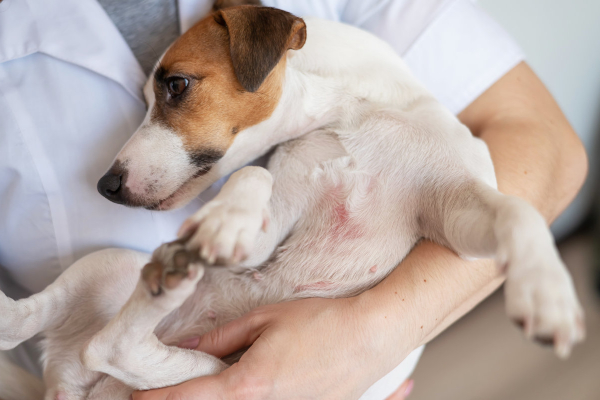
Giving your dog a belly rub might be one of the highlights of your day and your dog’s day too. But what if one day when your dog joyfully flops over for a belly rub, you notice a skin rash on his or her stomach? If you are like many dog parents, noticing a rash on your dog can quickly turn a snuggle session into a stress session.
What is a skin rash?
Broadly speaking, a rash is any sort of redness or irritation over the outermost layer of a dog’s skin. However, the exact appearance can vary. A skin rash may be:
- Tiny red dots or larger red splotches
- Raised or flat
- Itchy or not itchy
- Light pink to darker red
- Scabby, scaly, crusty, dry, pimple-like, bumpy, or smooth
- Painful or non-painful
- Foul smelling or have no abnormal odor
- Covered by the fur or in an area of hair loss
Rashes can occur anywhere on the body. But they are more noticeable in areas where there is naturally little to no fur such as the dog’s stomach, armpits, and groin. Sometimes your dog will just have a rash in one area, such as the belly. But other times it may affect other parts of the body too.
Why do dogs get skin rashes?
Many different conditions, from allergies to immune system disorders, can cause a skin rash on a dog’s stomach or other areas of the body. The following seven diseases or situations may be reasons why your pup’s skin has developed a rash.
7 Causes of a skin rash on a dog’s stomach
1. Environmental allergies or food allergies
Dogs may be allergic to various things in the environment such as pollen, grasses, weeds, and trees. And dogs can also develop food allergies, especially to proteins like meat or soy. First the dog will get itchy. And then as a result of the dog licking, scratching, biting, and otherwise traumatizing the skin, the dog may develop a secondary bacterial skin infection (i.e. pyoderma in dogs) or yeast infection.

Often the infection causes a red, itchy skin rash. The rash may be confined to one area such as the dog’s belly or armpits. Or it may extend over much of the dog’s skin.
Sometimes instead of a more widespread skin condition, the dog could also develop a dog hot spot. This is a solitary area of reddish to yellowish moist painful skin which shows up rapidly. Additionally, dogs with allergies may be prone to ear infections (i.e. otitis in dogs) or dog anal gland issues.
2. Contact dermatitis
Rather than having a systemic allergic reaction to an allergen, dogs can also have a localized contact reaction to chemical irritants or plants that touch their skin. This could be a floor cleaner, detergent, lawn fertilizer, or other chemical. Plus, plants such as poison ivy and poison oak can cause itchy skin rashes in some dogs.
Rashes due to a contact reaction (i.e. contact dermatitis) generally occur on poorly-haired areas of skin such as the belly, feet, and groin. These are also the areas that would be the most likely to come in contact with the irritant. Other areas of the body are better protected due to thicker fur or not in a location that frequently contacts the ground.
3. Parasites
A variety of parasites can cause rashes in dogs. Fleas are one of the most common external parasites. Some dogs develop flea allergy dermatitis or FAD (i.e. an allergy to flea saliva that causes skin problems). FAD tends to show up as a bumpy itchy rash on a dog’s lower back and stomach. This is why it is important to prevent fleas when possible and to understand how to know if your dog has fleas. Plus, other parasites like sarcoptic mange and demodectic mange can cause skin rashes and hair loss too.
Although not a true parasite, the black fly is also worth mentioning. Black flies can bite dogs, causing multiple dark circular skin rashes on your dog’s belly. Black flies are more active in the early summer, and they breed in running water. Therefore, it is best to avoid rivers and streams during May and June.
4. Skin infections
Just like in humans, there are naturally-occurring bacteria and yeast on a dog’s skin. These microorganisms are not a problem on the skin’s surface normally. But itching, trauma, or other diseases can cause a breakdown in the skin’s barrier abilities. Plus, they decrease skin health. As a result, bacteria and yeast can get a foothold to cause bacterial infections and yeast infections on a dog’s paw or elsewhere. Plus, other invaders like the fungi that cause ringworm can also attack the skin.
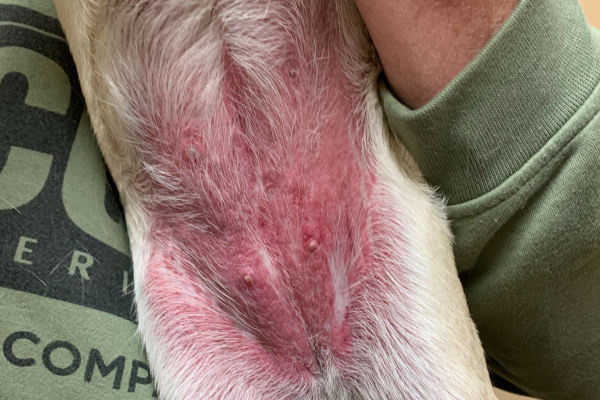
A skin infection tends to look like a rash which may be red, scabby, flaky, or crusty. Sometimes you may see little pustules (i.e. pimples). While the rash may be anywhere on the dog’s body, it is a lot easier to see on the belly, armpits, groin, or inner thighs. If the feet are involved, the dog may also have itchy dog paws or interdigital cysts in dogs.
5. Hormonal imbalances
A dog’s endocrine system is in charge of releasing hormones, which are chemical messengers signaling various functions in the body. When there is too much or too little of a certain hormone, the dog may develop skin issues.
Cushing’s disease in dogs (i.e. excess production of the hormone cortisol) can cause flaky skin, poor hair growth, and sometimes a rash on a dog’s stomach. The same is true for dogs with insufficient thyroid hormone (i.e. hypothyroidism in dogs). Hypothyroidism can also cause hyperpigmentation, a darkening of the skin that may look like a brown rash. Strictly speaking, it isn’t a rash, though.
6. Autoimmune disorders
An autoimmune disorder is a type of illness where the immune system mounts an inappropriate response against healthy cells in the body. Examples of autoimmune conditions that can cause dog belly rashes and skin problems in other areas include systemic lupus erythematosus in dogs and some forms of pemphigus.
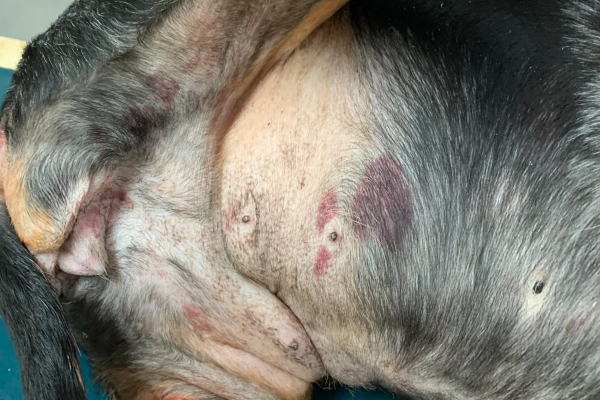
Additionally, immune-mediated thrombocytopenia (ITP in dogs) and other causes of low platelets in dogs can cause pinpoint bruises (petechia) or larger bruises (ecchymoses) on a dog’s skin due to spontaneous bleeding. This may look like a flat red to purple rash. ITP can be life-threatening. So if you see bruising on your dog’s belly, inner ears, gums, or anywhere else, please make an emergency vet visit.
7. Heat and humidity
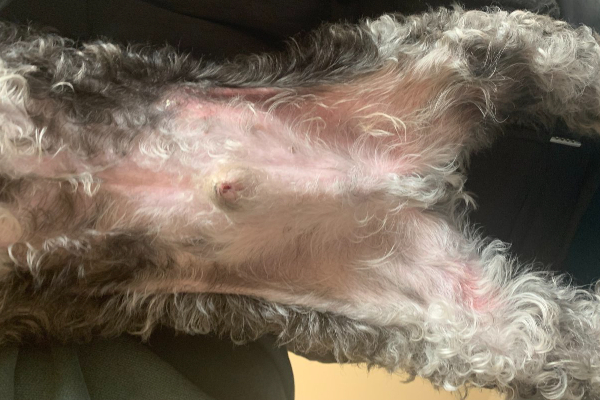
Especially when it is hot and humid, moisture can get trapped in a dog’s skin folds and cause irritation. This tends to happen in dog breeds with more skin folds or overweight dogs. As the hot moist skin folds rub against each other, the skin may become red, painful, or develop a rash.
The skin folds are also a perfect environment for bacteria and yeast to thrive. So secondary infections commonly accompany a heat rash.
What should you do if you see a skin rash on your dog’s stomach?
It is best to contact your veterinarian if you are seeing signs of a rash on your dog’s stomach or elsewhere on the skin. He or she can perform a physical exam, assess the rash, and carry out any necessary diagnostics.
For example, vets often perform a skin cytology for dogs with a belly rash. This simple in-clinic diagnostic test involves collecting a sample from the affected area of the skin. Then the vet will examine the sample under the microscope for bacteria or yeast. This information can help your vet determine how best to treat your dog’s rash.
What is the treatment for a rash on a dog’s stomach?
Treatment will depend on the results of the cytology or other diagnostics and the severity of the rash. Dogs with minor itchiness and a rash that only covers a small area may only need topical therapies like ointments, sprays, or wipes.
But bigger skin rashes or more significant infections or itchiness may require systemic treatment as well as topical treatment. The dog might need oral antibiotics or antifungals, allergy medicine for dogs like Apoquel® or Cytopoint®, or other medications. Plus, they still benefit from topical therapies like medicated shampoos, sprays, or mousses.
Additionally, if the vet suspects an underlying endocrine disease and confirms it with blood tests for dogs, he or she will also start the dog on medication to control the Cushing’s disease or hypothyroidism. Or in the case of external parasites, he or she may use anti-parasitic medications to control fleas, scabies, or demodex.
Finally, if your dog is scratching or licking the area with the rash, sometimes your vet will recommend using an Elizabethan collar or other lick-deterrent. This helps protect the skin from further trauma while it heals.
Track your dog’s progress and follow up with the vet when recommended
In order to determine if treatment is working, you will need to follow up with your veterinarian periodically. It also helps to take photos of the rash each day so you can track the healing process. If the skin rash isn’t resolving, the vet may recommend additional diagnostics such as allergy testing, skin biopsies, or cultures to get to the root of the problem.
Are there home remedies for dog skin rashes?
While waiting for a vet appointment, there are several home remedies you can try to help your dog in the meantime. However, it is important to note that these suggestions are unlikely to resolve anything but a very minor rash on their own. Thus, they are not a replacement for a vet visit. Some potential home remedies include:
- Using topical ointments such as Neosporin® (triple antibiotic) or hydrocortisone cream—after applying a thin layer, distract your dog with a walk or some mental stimulation toys for dogs so he or she doesn’t lick it off
- Bathing your dog with an oatmeal shampoo or anti-itch shampoo—this is soothing and can remove some topical allergens or irritants
- Applying coconut oil, petroleum jelly, or Aquaphor® to the affected area—but in some cases this can trap moisture and actually make the rash worse
- Using aloe vera gel to decrease itching—it is soothing but can be toxic when consumed so don’t let your dog lick it off
While you may have read about apple cider vinegar as another home remedy for skin issues on dogs, it is best to avoid using it. Apple cider vinegar can actually irritate delicate skin, making the inflammation worse.
When you see a skin rash on your dog’s stomach, go see a vet
As you can see, there are a variety of reasons a dog may develop a skin rash. Thus, your vet is the best person to help you figure out how to get your dog’s skin back to normal again. Thankfully, with the exception of ITP, most causes of skin rashes are not immediately life-threatening. Some, like allergies or endocrine disease, may require life-long management, though.
If your dog does develop a skin rash on his or her belly (or elsewhere), scheduling a vet appointment, diligently adhering to your dog’s treatment plan, and following up with your vet as necessary are the best ways to help your dog. With the combination of your dedicated care and your vet’s expertise, you and your dog can soon be enjoying belly rub time again.
What was the cause of the rash on your dog’s stomach?
Please comment below.


Our black Lab Sasha has had a rash and hot spots on her groin and abdomen. Could it be related to flea bites? Last year our Vet gave her Bravecto Chew. This past week I have treated it with Vetericyn Plus anti-microbial spray and that has solved most of the problem except for a large moist maroon-colored area remaining on her inner rear thigh. She didn’t appear to have food allergies and as a pup had Purina Pro Plan chicken and rice. She has enjoyed rotisserie chicken topper over Purina One Lamb formula but I took her off the chicken to test if it was the cause (I recently heard Lab’s can be allergic to chicken). I alternate fish oil capsules and egg as toppers now. I will be using Frontline Plus since the last product (NextStar) seemed to be painful when I applied it. Very grateful for your advice!
Hi Anne,
I understand your concern for Sasha and hope I will be able to offer some insight. From what you describe, I would not expect this rash on your dog’s abdomen to be related to a food allergy. While I can’t make specific conclusions without examining her myself, this is not the typical presentation for a food allergy. Also, any dog can develop an allergy to an ingredient in their food (usually the protein source or the carbohydrate) and I would not try to avoid chicken if you don’t have a definitive allergy diagnosis for your pup. Flea bites are a possible cause of a rash and inflammation but due to there being SO MANY other possible causes, it would be best to have your vet do an exam. They can let you know if antibiotics or other treatments are needed to get things under control. I always recommend year-round flea prevention (with only a very few exceptions for dogs that live in very cold climates/countries) and tend to prefer oral preventatives instead of topical products. You can talk to your vet about which product is right for your girl. Hoping you can get the answers you need to offer Sasha relief and comfort. Best wishes to you both.
I took my dog to a dog dermatologist. They did some testing and he was allergic to beef and cheese. After that, I changed his diet. He did get medication that he had to take but his hair loss, red blistering with pus ended. It was well worth finding out the source of his allergy. I spent a lot of money on trips to two different vets, and neither one of them ever found the root of the problem. If you love your dog, take him to a dog dermatologist and have a true understanding of the source of his or her issues..
Hi Denise,
YES!!! I cannot agree with you more! It is so hard to get clients to understand that while a visit to a specialist is expensive, it is cheaper in the long run. After spending months/years paying for vet visits, medications, and treatments that only treat the symptoms and not the underlying cause, getting a definitive diagnosis from the dermatologist is well worth it. Thank you for sharing your experience and I wish you all the best!
I have 13 yr old dog she has scratched her belly every time we take her outside to pee she comes in scratching worse I’ve put thin layer of antibiotic on it I don’t have any money to spare I’m on a tight budget .is there so.e home remedies I can do to help her
Hi Her name is sable,
I am sorry your senior girl is suffering with this chronic itching on her belly. I would love to offer a solution, but without knowing the underlying cause of the itching, it is hard to give specific recommendations. If you think the grass is causing a contact allergy, you could try putting a shirt on her before she goes outside and then wiping her down with a towel or wipes once she comes back inside. You can also try an over-the-counter allergy pill. Your vet can tell you which one they prefer and what your pup’s ideal dosage would be. These symptoms can also be a side effect of fleas in your yard. If your girl is not taking a monthly preventative, I would encourage you to start one and use it on a routine basis. Hoping you can find a way to give your girl relief and restore her quality of life. Wishing you all the best of luck.
I’m now convinced people have no clue about what causes or helps a dog suffering from reacting belly rashes, which only seem to get worse with every$1000’s of dollars I’ve spent at the vet! Quill helped for a few months, but now he’s even worse! To the point I may consider putting him down to stop his suffering! Which will take my heart with him! I’m desperate! And am stating to believe it may be vaccine(poison) related. He’s had skin scrapes , blood tests, medicines , topicals, antibiotics, steroids, probiotics, nothing is working ! He will be 2 in November! And is a big 85 lb bird dog that can’t even enjoy hunting because he’s to busy scratching his sides! Please someone suggest something . Lidocaine only is a temporary soothing!
Hi Katy,
I am sorry your boy is suffering with these severe allergy issues. I wanted you to know that I saw both of the comments you posted but will respond here just to make things easier. The gold standard of treatment for this issue would be to do intradermal skin testing with a veterinary dermatologist. That will allow definitive answers as to what your pup is actually allergic to and allow the specialist to start desensitization injections just like is done in human medicine. The only problem is most clients are not willing to pay to see the dermatologist. But if you have spent thousands on treatments that don’t work and are desperate and considering euthanasia, it may be a good time to consider this alternative path. Your vet should be able to make a referral if needed. Hoping you can find the answers you seek and praying for relief for your sweet boy.
No one ever mentions diet. I fixed my own health by changing my diet to protein and veggies and fasting. Then I changed my dogs diets to real food and their health improved drastically
My 14 year old bestie Westie gets Collarettes in Spring and Summer. It’s a vicious cycle. I use his vet recommended shampoo, but it doesn’t do much. I hate having to put him on antibiotics every time.
Hi Dee,
I understand your concern and frustration with these recurring skin issues in your pup. My best advice is to try and be proactive instead of reactive. If there is a predictable seasonal pattern to the collarettes, then see if you can start a preventative treatment before they form. Maybe start giving an allergy pill a month before the start of spring or use some of the newer products that help to maintain the natural protective skin barrier (sprays, shampoos, or foam with ceramides or the Atopivet collar). These are all things you can discuss with your vet. I am hopeful you can find a way to give your boy lasting relief. Best wishes to you both!
My 5 year old straight coat Cavoodle has chronic dermatitis – environmental and this has been an ongoing issue since he was 9 months old. He is on Cytopoint , Neocort Creams and he wears a medical collar to stop licking when severe. He is also on prednisone when he has a severe bout which works a treat but once the course has been completed he begins to itch again after a week . My vet has recommended starting the course again but I fear that this will be a vicious circle . Can a dog continue on half a tablet a day long term as they end the course.? I really don’t know what to do.
Dear Nadia,
I am sorry your pup is experiencing ongoing issues with dermatitis. It is possible for dogs to stay on prednisone long term, but things have to be monitored very closely to ensure it does not start to cause an issue with the liver. It may be time to consider taking your dog to a veterinary dermatologist. They can do allergy testing and help pinpoint the underlying cause of these issues. They can offer desensitization injections/immunotherapy (just like humans get for their allergies) and have a wide range of therapies that may not be readily available in general practice. There are also hypoallergenic foods, collars that help to maintain a healthy skin barrier, supplements and medicated shampoos/sprays/mousse/wipes that can be used daily. I hope you can partner with your vet to find the best solution for everyone involved. Take care and keep up the good work.