Can dogs eat vegetables? Absolutely! Many nutrient-rich veggies make great doggie snacks. But which ones are safe for dogs? And which ones are not? Integrative veterinarian Dr. Julie Buzby helps you discover 14 vegetables most dogs can eat and how to prepare them. Plus, she shares four vegetables you should never feed your dog.
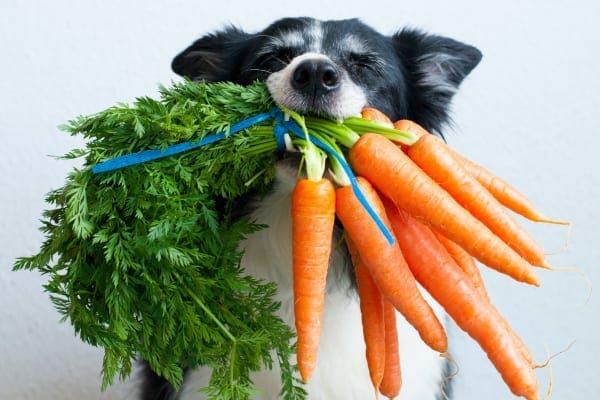
Although humans and dogs have different nutritional needs, we can all benefit from eating our vegetables. Vegetables are good for dogs in all stages of life, from puppies to grey-muzzled seniors.
What are some of the benefits of giving dogs vegetables?
Veggies are delicious and nutritious, whether given as snacks or as supplements to your dog’s normal diet. Here are just a few of the general benefits:
- Weight management—Dogs who are overweight benefit from veggie treats because they’re low in calories and help them feel full faster. When your dog feels satisfied, he or she is less likely to overeat or act like he or she is starving. I often recommend a “green bean diet” (adding a portion of green beans with each meal) to help my overweight doggy patients combat hunger while reducing calorie intake.
- Digestive health—The fiber found in vegetables promotes healthy digestive tract and dog anal gland function, and helps prevent constipation in dogs.
- Immune health—Vegetables have important nutrients that can help boost the immune system and fight off illness.
- Diabetes management—Vegetables can help regulate blood sugar levels in dogs with diabetes.
- Anti-oxidants—Vegetables are natural anti-oxidants that help reduce the risk of some diseases.
- Training rewards—Veggies can make excellent treats to give during training. Crunchy vegetables like carrots can be an especially motivating reward for some dogs.
14 vegetables safe for dogs to eat
As you probably know, not all “human food” is safe for dogs. Before giving your dog anything outside of his or her normal diet, you should always make sure it is safe. There are many vegetables dogs can eat. The following are my top 14 favorites to share with my clients.
1. Pumpkin
Ignoring debate over whether pumpkins are technically fruits or vegetables, they are #1 on my list of dog-safe veggies!
Your senior dog can benefit from pumpkin, because it’s high in fiber and can help combat stool problems. If your dog has diarrhea, the fiber will help thicken his or her stool by absorbing water. Conversely, if your canine companion is constipated, the extra fiber will help move things along.
Pumpkin also contains pepita oil, which is a type of omega-6 fatty acid known as linoleic acid. This particular fatty acid is shown to have anti-inflammatory effects, especially for your dog’s skin.

Cooked or canned pumpkin is the best (and easiest) way to serve pumpkin to your dog. When shopping for pumpkin, pay close attention. Plain canned pumpkin is my recommendation. Make sure you don’t inadvertently pick up pumpkin pie filling, which is loaded with added sugar and spices.
Introduce pumpkin to your dog’s diet by offering one to two tablespoons of it mixed with his or her other food. Don’t be alarmed if your dog’s stool color turns a bit orange.
2. Broccoli
Broccoli is another one of my favorite vegetables that dogs can eat. It is an excellent source of fiber and can also provide vitamin C, which is essential for a healthy immune system.
It’s best served cooked with no seasonings. However, small pieces of raw broccoli stalks also get a thumbs up. Dogs love a good crunchy treat, and this makes a great low-cal snack.
Be sure to serve bite-sized pieces so they do not become a choking hazard, especially if you have a small breed dog.
Dogs should eat broccoli in limited quantities because it can cause irritation to the lining of the esophagus and stomach if eaten in excess. Additionally, too much broccoli can give your dog stinky gas.
3. Carrots
I love giving carrots to dogs. Carrots are a good source of potassium, vitamin B6, and an excellent source of beta-carotene.

Beta-carotene gives carrots their signature orange color. This compound is used in the production of vitamin A, an essential vitamin that helps your dog’s immune system and vision. A deficiency in vitamin A can lead to night blindness.
Many dog owners serve carrots steamed or boiled. A one-ounce serving of carrots contains ten calories. This is a very filling, low calorie meal that is ideal for dogs that need to lose weight. Personally, I love feeding my dogs raw carrots. They’re great crunchy treats that dogs love.
To prevent choking, always supervise your dog and serve appropriately sized carrot pieces.
While carrots are low in calories, they are high in sugar. So you’ll want to avoid giving carrots to your dog if he or she is diabetic.
4. Green beans
As mentioned in our post on how to host a happy and nutritious Thanksgiving for dogs, green beans are a great source of vitamins A, C, and K. Green beans also provide minerals like iron and calcium.
Due to their low-calorie, high-fiber content, they can be very beneficial for dogs with diabetes. In addition, green beans are a go-to for dieting dogs because they help them feel full, are low in calories, and are fiber rich.
Green beans can be served boiled, steamed, or chopped. Avoid adding seasonings, and also steer clear of canned green beans that contain large amounts of salt. Start by giving your dog two to three green beans a day, making sure the amount of treats never tops ten percent of his or her diet, unless otherwise directed by your veterinarian.
5. Kale and spinach
Dark leafy greens like spinach and kale are an excellent choice of vegetables for your dog. These vegetables are high in:
- Calcium—Important for healthy bones
- Vitamin K—Crucial for the blood’s ability to clot
- Vitamin A—Supports your dog’s vision
- Iron—Integral component of hemoglobin, which helps red blood cells carry oxygen to tissues in the body
- Folate—Necessary to facilitate absorption of nutrients from food into the small intestines
Kale and spinach can be served steamed or raw, but don’t add any seasonings. One or two raw leaves are perfect for a snack, or you can shred the leaves and add them to your dog’s bowl at mealtime.
Too much kale can contribute to urinary problems and bladder stones due to its high-calcium content. Like any treat, give in moderation. If your dog is prone to bladder stones or if you have any questions about kale for your dog, please speak with your veterinarian.

6. Brussels sprouts
Brussels sprouts are another high-fiber vegetable. They contain vitamins C and K, and trace minerals like magnesium, which supports cellular metabolism and muscle function.
When preparing Brussels sprouts for your dog, avoid using any oils or seasonings. When feeding, start with one or two Brussels sprouts at a time. If your dog eats too many Brussels sprouts, he or she can become gassy and bloated, leading to abdominal discomfort.
Serve Brussels sprouts steamed or boiled for your dog. Cut each one into smaller pieces since whole, round Brussels sprouts pose a choking hazard for small and medium-sized dogs.
7. Zucchini
Zucchini contains calcium, iron, magnesium, and fiber, promoting a healthy gastrointestinal tract.
Serve zucchini raw or steamed. Steaming makes them softer and easier to chew if your dog prefers a less crunchy treat.
Start with three to four slices at a time and avoid zucchini that has seasonings or salad dressings. Many of these flavorings contain garlic and onions which are toxic for dogs (more on that below). Some dressings also contain an ingredient called xylitol (or birch sugar) that is extremely toxic to dogs. Xylitol toxicity in dogs can cause hypoglycemia (low blood sugar), seizures, liver failure, and, unfortunately, even death.
8. Sweet potatoes
Sweet potatoes are another high-fiber food that make for a very tasty treat. Found in many commercial dog foods, sweet potatoes are a great source of vitamins A, B6, and C.
There are many ways to serve sweet potatoes to dogs. If fed raw, they should be chopped into small cubes. Steaming or roasting the sweet potato makes them much softer, tastier, and less of a choking hazard. Introduce sweet potatoes by giving your dog three or four slices at a time.
Like carrots, sweet potatoes are high in sugar content, so overweight and diabetic dogs should avoid them in their diets.
9. Peas
Snow peas and sugar peas are great for your dog! They’re a good source of vitamins A and B and minerals like potassium and magnesium. Zinc is another mineral in peas that plays a role in a healthy immune system and thyroid gland function.
To feed your dog peas, steam or boil them. A one-ounce serving of peas contains just twenty calories— making them a perfect low-calorie snack.

Avoid canned peas with high salt contents. Peas also contain purines, a type of protein, so dogs with urinary incontinence and kidney issues should avoid them.
10. Corn
Corn is another vegetable that is very common in dog food. Although it is sometimes villainized as a “filler,” corn has many nutritional benefits, including:
- Easily digestible carbohydrates that serve as a great energy source for dogs
- Linoleic acid: This nutrient is not produced by dogs. Supplementing through corn is a great way to help your dog maintain healthy skin, coat, and immune system
- Rich in fiber that supports digestive health and motility
While corn is safe, corn on the cob is not. Corn on the cob should never be fed to dogs because the cob is not digestible. If your dog eats a corn cob, it can get lodged in the stomach or intestines, causing damage to the gastric lining or even requiring emergency surgery.
If you want to give your dog corn, steamed kernels are best. Always check the corn first to make sure it does not have extra seasoning or high salt content. And remember to leave off the butter for your dog’s portion.
11. Celery
Like many of the other vegetables discussed, celery is low in calories, fat, and cholesterol. This makes it another great veggie treat for dogs on a diet.
Celery should be thoroughly washed and fed raw. Dogs who love a good crunch are often celery fans. However, it is not as flavorful as some of the other vegetables. So, don’t be surprised if your dog isn’t interested in eating it.
12. Cooked white potatoes
Cooked white potatoes are another safe vegetable for dogs. They are an excellent source of vitamin C, vitamin B6, iron, and magnesium—which are important for your dog’s immune system and nervous system. However, the operative word here is “cooked.”
Raw potatoes are toxic for dogs. They are part of the nightshade family and contain a substance called solanine. Cooking removes the solanine from the potato. Otherwise, the solanine causes stomach upset, vomiting, and possible bloating.
13. Cauliflower
Cauliflower is a super vegetable because it contains a wide variety of healthy nutrients, including:
- Fiber
- Vitamin K
- Antioxidants
- Vitamin A
- Vitamin C
- Beta-carotene
- Minerals like potassium, calcium, and magnesium
Cauliflower can be fed cooked or raw, and should be cut into bite-sized florets.
While cauliflower is a great addition to your dog’s diet, it is important not feed too much of it. Because cauliflower is so fibrous, dogs may choke on it or develop an upset stomach.
14. Beets
Beets are one of the most anti-oxidant rich vegetables. With an 88% water content, beets also contain folate, fiber, vitamin C, and essential minerals. Therefore, beets are very beneficial for your dog’s skin and coat health.
Don’t panic if you see small amounts of red or pink coloring in your dog’s urine after he or she eats beets. They contain a pigment that can affect the color of urine. Consult your veterinarian if your dog’s urine remains discolored 48 hours after discontinuing feeding beets.

What vegetables should dogs not eat?
Now that we have discussed vegetables that are safe and tasty for your dog, let’s briefly talk about some vegetables that should never be fed to your dog.
1. Onions, garlic, chives, and shallots
Vegetables in the Allium family are toxic for dogs as they can damage red blood cells. Vegetables in this family include:
- Onions
- Garlic
- Chives
- Shallots
If your dog consumes one of these foods, please consult your veterinarian immediately. Your dog may need emergency treatment, otherwise he or she could become anemic. Signs of illness can take days to present, so call your vet right away if you think your dog may have eaten one of these vegetables.
2. Mushrooms
While some mushrooms might be safer than others, it is generally a good idea to avoid giving any mushrooms to your dog. Some mushrooms can cause your dog to experience diarrhea, stomach pain, and nausea. Other mushrooms are even more toxic to your dog, resulting in severe life-threatening illness.
For example, some mushrooms that might be found in your yard or along a hiking trail, can cause liver failure, kidney disease, lethargy, seizures, and even death. With many different species appearing similarly, wild mushrooms can be especially dangerous to dogs. To be safe, I recommend avoiding mushrooms altogether.
3. Unripe tomatoes
Just like potatoes, tomatoes are part of the nightshade family. The nightshade toxins are most prominent in unripe tomatoes and tomato plants. Therefore, it is important that your dog never consume tomato plant leaves/stem or green, unripe tomatoes.
If your dog does manage to get a hold of a tomato plant, I recommend consulting your veterinarian immediately. Clinical signs that you might see in your dog include:
- Gastrointestinal upset (vomiting, diarrhea)
- Dilated (enlarged) pupils
- Depression
- Decreased energy
- Increased heart rate
4. Any vegetables that pose a choking hazard
Throughout this article I mentioned the importance of cutting vegetables into bite-sized pieces and properly cooking them to avoid a choking hazard. This is very important because choking can become a serious emergency. Fibrous vegetables that are hard to chew like cauliflower and celery call for extra caution. Also, monitor your dog closely.
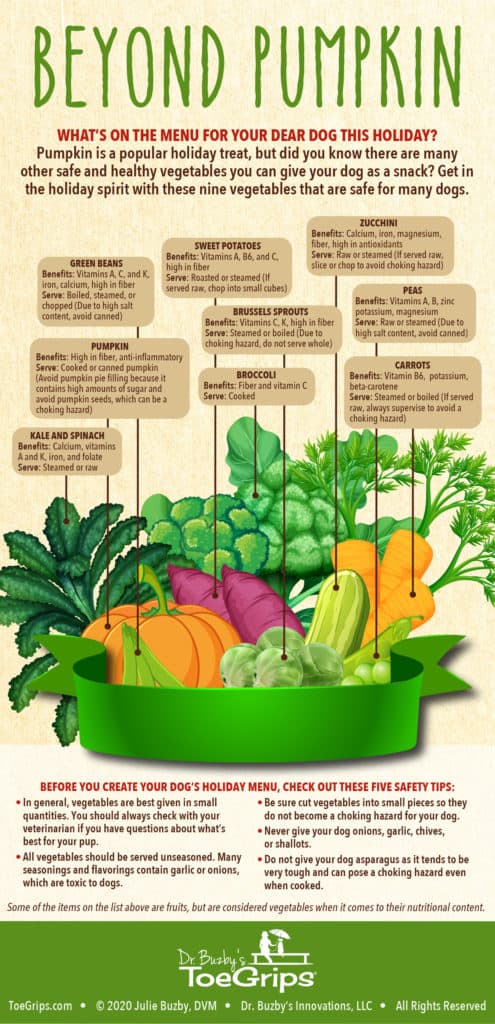
How do I prepare vegetables for dogs to eat?
Steamed. Boiled. Raw. When it comes to preparing vegetables for dogs, there are many options. Preparation methods vary based on the type of vegetable, the way it is being fed, and your dog’s preference.
If your dog turns up his or her nose at vegetables, I recommend switching up how they are prepared. Personally, my dog and I won’t eat raw broccoli. But, we both love steamed broccoli. The same may be true for you and your dog, too!
The following are some general ideas on how to prepare vegetables as a snack for your dog. However, some veggies do have “best practices” for preparation, as mentioned above.
Raw
Raw vegetables make perfect treats. They are easy to grab, and you can take them with you anywhere. Baby carrots are a favorite for my dog!
When feeding raw veggies, properly cleaning them is extremely important. Cooked vegetables are exposed to higher temperatures that kill bacteria and microbes. Obviously, raw vegetables are not.
The only way to remove bacteria is by properly washing the vegetables before giving them to your dog. Proper scrubbing and washing will also remove dirt and pesticides.
Steamed
Steaming is a great way to prepare vegetables for your dog. I love this option because it is fast, easy, and preserves nutrients.
Here are a few tips for steaming:
- Wash the vegetables thoroughly before steaming.
- Chop the vegetables into uniform, bite-sized pieces for consistency in cooking time.
- Once steamed, be sure to cool the veggies so your dog does not burn his or her mouth.
Steamed vegetables are cooked just long enough to heat them up. While being slightly softer than raw, the vegetables still have a crisp texture.
Boiled
If your dog is missing teeth or has a sensitive mouth, boiled vegetables might be a good option. Boiled vegetables are softer than raw or steamed vegetables—making them easier to chew. Because boiling involves a higher temperature and submerging the vegetables in water, they will be somewhat less nutrient dense. All of the same tips on steaming vegetables (listed above) apply to boiling vegetables.

Are there other ways to prepare vegetables for dogs to eat?
Maybe your dog isn’t a fan of vegetables, and you want to get creative with your cooking. Here are some of my favorite tricks for preparing vegetables for my senior dog:
- Pureed—Use a blender to mash-up thoroughly washed vegetables. Some dogs prefer the applesauce-like texture of pureed vegetables. Pureed vegetables can also be easily mixed in with regular dog food.
- Frozen—Frozen vegetables are a great summer treat! Most fresh vegetables should be washed thoroughly and then cooked prior to freezing.
With your list of vegetables dogs can eat, you can chews wisely
Even if your senior dog enjoys a high-quality commercial diet, vegetables have numerous health advantages that make them a beneficial (and tasty) supplemental treat. Keep in mind that these vegetables are not intended to provide a fully balanced diet for your dog, and should not be his or her sole food group!
Try out a variety of vegetables to learn which ones your dog loves the most. And remember, if you’re trying a new dog-safe vegetable, always offer a very limited amount at first. If you’re not sure whether a vegetable is safe given your dog’s background and health history, ask your veterinarian for advice and guidance.
Does your dog love veggies? Which ones?
Share in the comments below — and let us know your quick preparation tips. We’d love to hear!


My Labrador is starving … at least he thinks he is, so a third of his bowl is veggie. I buy large bags of frozen mixed vegetables (broccoli, cauliflower, carrots) at Costco or Walmart, as well as frozen chicken breasts. There is no need to cook the vegetables; just thaw them. The next third of the bowl is chicken or fish that I’ve cooked. The final third of the bowl is a high-quality, weight-management kibble. To all of this, I add about 3 squirts of Wild Alaskan Salmon Oil and a scoop of Green Lipped Mussel powder. I know it sounds like a lot, but he looks and acts much younger than his 10 years. His vet is pleased with his weight and condition.
Hi Eleta,
Your boy is very lucky to have you taking such great care of him! I am glad you have found some healthy foods he enjoys and that he is living life to the fullest. Thanks for sharing with us and keep up the good work!
Have been fixing home made veggies etc for about two weeks. I mix veggies with their regular food. They absolutely love it. Thank you for all the wonderful information above. I would love any additional information you might have. Thank you and have a blessed day
Hi Jan,
I’m so glad you enjoyed the article. Here are a few other articles that discuss the topic of food for dogs:
1. Thanksgiving Food For Dogs: 10 Dogs Can Eat & 10 to Avoid
2. Pup-kin Dog Cookies: A Great Holiday Dog Treat
3. Holiday Foods You Should Hide From Your Dog
Thank you for the kind words and wishing all the best to you and yours!
I started fixing my babies homemade food about 12 yrs ago and pretty much the same as above. We lost our precious Pug 2 yrs ago at age 16 1/3 & most live to be 12 to 13 if a bigger breed. We have a 9yr old Shih now because her siblings of different and mixed breeds have passed on. They deserve the Best we can do for them, love, affection, vet attention, diet and overall care like family.
My dog, a cockapoo, LOVES green peppers. I put down her usual beef treat and a green pepper and she chose the green pepper every time.
Hi Sharon,
It sounds like your pup has good taste. Thanks for sharing!
After being referred to for two years as first – my 9 year old puppy then my 10 year old puppy, my girl is less than one and a half month from being called my 11 year old puppy. When it snows you can see her slide tracks from the top of the deck that is three steps high to the kitchen door because she prefers to skip using the steps both up and down. She can still jump quite high to snatch a ball thrown high to watch how high she can jump. She’ll eat any vegetable I have given her except she does not like leafy greens. She does, however, like cabbage cooked or raw. She especially loves berries in or out of yogurt and will eat plain yogurt. She also loves peaches and apples and pineapple with pumpkin her favorite. She also likes cranberries and bananas. I studied nutrition in college so keep a close eye on her diet and weight.
Hi Linda,
It sounds like your girl is enjoying lots of healthy snacks and treats. Keep up the good work and I wish her all the best as she nears her 11th birthday!
Thankyou for this very informative article. I have a English pointer/ cross. He is a gorgeous boy and loves his vegetables raw or cooked especially carrot and cabbage. The only thing he won’t eat is lettuce.I have never given him mushrooms as I don’t personally like them therefore never buy them. He loves pieces of apple asa treat.
Hi Irene,
It sounds like your boy has a very healthy diet and is well taken care of. I wish you both all the best and thanks for sharing!
Thank you so much for this very informative list. My Shih Tzu’s favorite vegetable is carrots. I didn’t see where you mentioned bell peppers, she used to beg me for a piece of one when I made a big salad for our lunches. I’m glad to know about mushrooms, but we never did offer those to the dogs. My Corgi loves broccoli and green beans. Actually, if Mommy is eating it, she thinks it must be good. But, those are her two favorites. We recently rescued a little Snorkie puppy who was dumped in a park nearby. The vet thinks she is about a year old. She is actually a good eater, but she loves to shred any type of paper she can find and is ingesting a little of it. We are working on this right now. Big sister is showing her the ropes that food is better than paper!
Hi Tanya,
Yes, bell peppers are ok for dogs! Your girls are lucky to have access to so many nutritious foods. Keep up the good work and wishing you all the best with your new puppy. ♥
i stumbled on this site while researching foods my babygirl (2year old pit) can eat.
i feel so guilty when im eating and shes sitting there begging me with her big green eyes and the only thing i know is she one under no circumstances can she have chocolate and two she can have peanut butter as long as it dont have that Xylitol birch sugar.
so finding your sight has truly enlightened me to a wide range of food for my baby thank you so much. and im sure my Zena will thank you as well.
Hi Sabrina,
I am so glad you found the article to be helpful and enlightening. Thank you for the kind words and I wish you and sweet Zena all the best!
I have a Pomeranian that will be 9 soon. She is overweight, but I can’t get her to eat any veggies 😔.
I have a 2 yr old Chiweenie that doesn’t like them either. How can I change that?
Hi Brenda,
I am sorry that your dogs don’t seem to enjoy eating their veggies. Some dogs just don’t like the taste of certain foods and I am not sure there is any way to change it. You wouldn’t want to add anything to the vegetables to make them taste “better” as this will take away the healthy benefits of feeding vegetables in the first place. You can try changing the texture to see if it makes them more appealing by freezing them or even turning them into a puree. A low calorie fiber dense dog food may be the best way to go but you can talk to your vet to see what they recommend. Wising you all the best of luck.
My German Short Haired pointer loves all fruits, and most vegetables. He recently stole an entire papaya off of the bench top and ate it skin, seeds and all. He once devoured a whole, peeled grapefruit. Tonight he tried to steal a bag of kale. He likes to chew on the raw stems… I feed him quite a bit of his beloved fruits and veggies, but he always seems to crave more. He is very slim, always on the move, a gorgeous dog. After reading this article I plan to indulge his cravings even more.
Hi Catherine,
Your pup sounds like a very lucky boy to have you offering him so many tasty fruits and vegetables. Thank you for sharing your experience with us. Wishing you both all the best for many happy days ahead!
I have 2-8 month old boxers. Siblings, one male and one female. My dogs really don’t have no health problems once we found the right dog food to put them on. However treats are expensive so I was looking for fruits and veggies that they could safely eat.
I work so much that I don’t have time to prepare their meals all human foods. My husband is disabled so he stays home with them and they are spoiled to their bed time snack.
In my search I found this site and for the last hour I have been reading they all the comments to get some ideas. I have learned so much about what they can have and what they can’t. This gave me the most information and mainly because I’m reading comments from other dog owners and their experiences.
Now I am super excited and I want to try other things. They hate broccoli and Carrots but love apples and bananas. This site gave me tons of ideas of other things they can eat and actually how to prepare them so thank you for providing this site. It is very informative.
Hi Elizabeth,
I am so glad you found the article to be informative, and you gained some insight from the comments of other readers. Thank you for sharing this great feedback. Wishing you all the best and give your pups a hug for me!
Hi there and thanks again for the information. We have a 11-1/2 y.o. girl who really isn’t a fan of veg’s but will eat carrots raw. She only eats vegetables if they’re cooked or stewed in some yummy meat or chicken, haha ….. I found a recipe a while back that ensures she gets a broader variety of vegetables and includes 1 lb. ground turkey breast. She really enjoys it and is a nice change from her usual menu. The recipe contains a 1/2 cup of almond flour, 2 TBSP ground flaxseed, 1 cup diced celery, 1/2 cup diced carrots, 1/2 cup diced broccoli, 1/4 cup chopped parsley and 1/2 cup diced red bell pepper, and 2 whole eggs. As a variation when I don’t have broccoli or celery I will substitute some zucchini and kale, also basil and ginger. All the veg’s are combined with the flour and flaxseed, then added to turkey and the eggs. I make it either as a meatloaf or tiny bite-sized medallions baking in a 250° oven, about 30 minutes for the medallions and around an hour for the meatloaf, depending on your oven.
Hi Lisa,
Your pup is very lucky that you are willing to spend so much time making these home cooked meals. They sound amazing! Thanks for sharing and keep up the great work!
Ive been up all night researching what human food my dog can eat. dog food is so expensive. i knew it was just didnt realize how so until i realized how much my babygirl eats 😂. but reading your comment and others its good to know i can give my girl 🍏 apples. thank you for sharing. makes 1st time dog mom like me more at ease when my baby sees me or granddaughter with something she can have ill give it to her thanks again.
Our almost 2 year old Westie loves her veggies! She loves cucumbers, carrots, green peppers and red peppers, green beans and peas. She also loves apples and bananas. She picks out all the veggies or fruits. Then she will eat her canned food, which we don’t give her too much of and her dry food. She is not over weight, she weighs 17 pounds and is so healthy and we love watching her enjoy her lunch and dinner.
Hi Cathy,
Your Westie sounds like a very lucky girl. Thanks for sharing with us and keep up the great work!
thankyou for sharing ive saved this and going to try the recipes with Boston My soul dog as he has a persistent limp in his front left leg ive been giving him rosehip powder and its brilliant but I want to do home style foods he’s loosing weight good will help in conjunction with healthy eating I would love to know is water melon is good dogs as well as yoghurt and what type if any
Hi Max,
I am sorry your pup is dealing with this unknown lameness in his front left leg. I do think it would be a good idea to have your vet evaluate your pup to find out what is causing this issue. But good nutrition can definitely do wonderful things for the body and help the healing process. Watermelon is not toxic to dogs but also does not offer much in the way of nutrition. Yogurt is great but you need to be certain it does not contain any xylitol (birch sugar) which is commonly used as a sugar substitute and is very toxic to dogs. Hoping you can find some good ideas of ways to improve your pup’s diet and keep him healthy and happy. Best wishes to you both!
Max My dog got to the point he could barely walk, down in his back hips, he was losing weight bad. A friend said I should put him down. I started giving him this stuff called (Extend). Now he is back to his normal weight, his hip are ok he runs and plays and back to his old self. I also started making my dogs homemade food. One meal is either Tuna or chicken mixed with rice and mixed peas&carrots. I buy all frozen vegetables and cook them. I top the tuna with sardines. Another meal is beef liver with a side of any green vegetable and pumpkin. They eat better then me ha ha. I put out dry food that has NO CORN, WHEAT, OR SOY.. It’s called Country Vet Naturals. Contains Omega 3&6 Glucosamine,Chondroitin,Chelated Trace Minerals. it’s small bits. I get it at a feed store in Oklahoma. 712-255-6927 www CountryVetPetFeed.com. If your interested. But for sure get the Extend it works wonders.