When your diabetic dog won’t eat, it is natural to become worried and to wonder what you should do next. Integrative veterinarian Dr. Julie Buzby provides an easy-to-follow framework for discovering what might be dampening your senior diabetic dog’s appetite. Plus, she offers some practical guidance about how to get your pup eating again, and when to call the veterinarian.
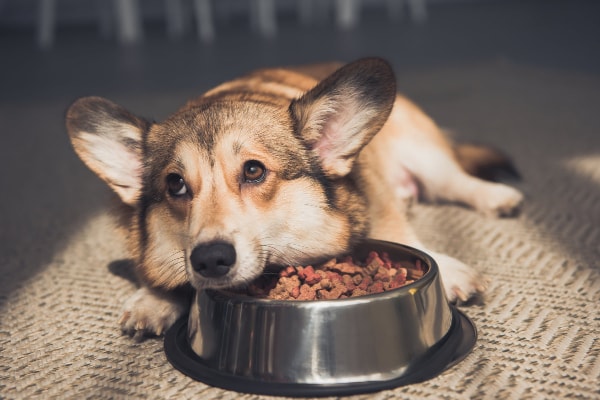
I once had a dog who did not one, not two, but three little jump-spins every single morning and every single evening between the time I filled the bowl and the time I set it on the ground for him. We called it his “happy dance.”
I couldn’t help but smile each time I saw it. And I’m going to guess that many of you also take great joy in watching your own dogs do their “happy dance” at mealtimes.
But what happens when suddenly your dog couldn’t care less about his or her food? And what if your dog has diabetes mellitus and needs to eat in order to receive his or her insulin? That can be an extremely stressful situation. And it can be easy to feel scared or helpless.
However, knowing why your diabetic dog might not be eating, how to encourage him or her to eat, what to do about his or her insulin, and when to call your veterinarian, can go a long way toward helping you feel prepared.
Why does it matter if a diabetic dog won’t eat?
When the veterinary team was teaching you how to administer insulin to your diabetic dog, they probably stressed to you several times the importance of giving insulin right after a meal. And they probably recommended feeding your dog two distinct meals a day. To understand why, let’s take a look at what happens when a dog eats.
Eating + insulin = normal blood sugar
Normally, glucose (i.e. sugar) from the food enters the bloodstream. Then the pancreas releases the hormone insulin, which helps the sugar enter the cells where it can be used for energy. This keeps the dog’s blood sugar at a normal safe level and provides plenty of fuel for the cells.
However, a diabetic dog’s pancreas stops producing insulin. Without insulin, glucose can’t enter the cells, so it builds up in the blood. This leads to dangerously high blood sugar levels, that, over time, cause their own set of problems. And these problems are on top of the fact that all the cells of the body are left starving for energy.
For most diabetic dogs, insulin injections provide the easiest and most effective solution to this dilemma. The supplemental insulin helps transport glucose into the cells, where it can be used for all the vital processes associated with daily life. And the insulin injection also normalizes the dog’s blood sugar.
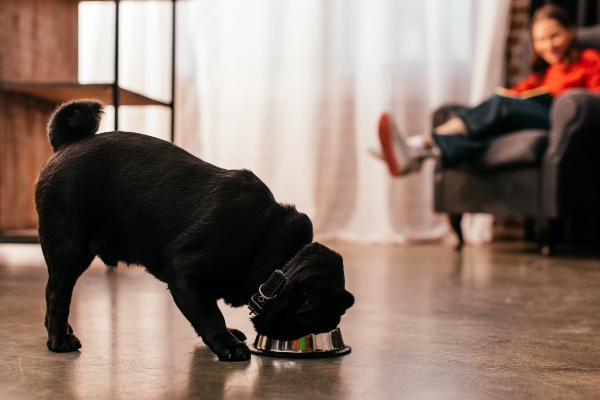
Not eating + insulin injection = low blood sugar
Due to how insulin works, you shouldn’t give insulin on an empty stomach. It is important that a diabetic dog has eaten prior to receiving insulin. Otherwise, without the influx of glucose from the food, the insulin injection can drop the blood glucose levels too low. Left untreated, low blood sugar (i.e. hypoglycemia) can be dangerous.
Therefore, it is so important to feed a diabetic dog first and ensure that he or she has finished the food. Then, only after you are sure your dog has eaten, should you give the insulin injection.
Additionally, since you must feed your dog a meal, then give insulin, your veterinarian will likely recommend your dog be “meal fed.” In other words, instead of leaving food out all day so your dog can nibble a few bites here and there, you should give your dog a measured amount of food twice per day as two distinct meals. And you should not leave any food out between these mealtimes.
For best blood sugar control, your dog’s meals should be roughly 12 hours apart. This is the case because most long-acting insulin injections work for about 12 hours.
Why won’t a diabetic dog eat?
Based on what we have discussed, if your diabetic dog isn’t eating his or her food, this could be a problem. But you (plus your vet) can get to the bottom of it and find some good solutions.
The first step is to do some sleuthing to try to determine why your diabetic dog isn’t eating. I like to break up the potential causes into three main categories—food-related causes, behavior-related causes, and medical causes. I will pair each one with some questions to ask yourself. Often, the answers can help you determine the cause of your dog’s inappetence.
Food-related reasons your diabetic dog won’t eat
Ask yourself:
- Have you recently changed foods?
- Does the food seem spoiled?
- Is the food past its expiration date?
- Is your dog filling up on treats or table scraps outside of mealtime?
Consider recent food changes
A healthy dog shouldn’t normally stop eating simply because he or she is tired of the food you are offering. But just like humans, dogs can have food preferences too. If you have recently switched from canned food to dry food, to a different brand of food, or to a prescription dog food, it is possible that your dog isn’t a fan of the new diet. In this situation, if there isn’t a medical reason to stay on the new food, consider trying to switch back to the old diet. Sometimes, that is all it takes to get your diabetic dog eating again.
Check for expired or spoiled food
If you haven’t recently switched diets, do a quick visual and sniff check to make sure your pup’s food doesn’t seem spoiled. If there are no new offending odors or signs of spoilage, also check the expiration date to ensure the food isn’t out of date.
Tally your dog’s treats and table food
Once you have ensured the food isn’t spoiled or expired, start thinking about whether your pup might be filling up on other food during the day. Sometimes your furry family member can eat a lot of treats and table scraps. And then he or she isn’t hungry for his or her regular food at mealtimes.

For most dogs, a few small, low-calorie treats throughout the day are just fine. But as a rule, treats shouldn’t account for more than about 10% of a dog’s caloric needs. And we must be even more judicious about treats in diabetic dogs as they can interfere with diabetic control.
While investigating, you might want to check with everyone in the family about treats and table scraps. I have seen many cases where each family member was giving treats in an amount that seemed reasonable. But when combined, it was too many calories.
Along the same lines, small dogs don’t need very many calories. This means that even a seemingly small number of treats can be too many.
Luckily, if you are worried that excess treats may be contributing to your dog not eating meals, this is an easy fix. Simply scale back significantly on treats and tables scraps in your diabetic dog’s diet, and see if your dog’s appetite improves.
If none of these food-related causes seem to be at play, move down the list to determine if a behavior-related issue might be the culprit.
Behavior-related reasons your diabetic dog won’t eat
Ask yourself:
- Has your dog always exhibited signs of “pickiness,” or is this a new issue?
- Will your dog willingly eat treats or table scraps but not his or her normal food?
- Have there been any major changes lately in your home or lifestyle that might be contributing to your dog feeling stressed, fearful, or anxious?
- Is your dog exhibiting any other new signs of stress, fear, or anxiety such as hiding, skittishness, or separation anxiety? (To help recognize the signs, check out this graphic about the spectrum of fear, anxiety, and stress in dogs.)
Consider your pup’s pickiness score
Most of my family’s dogs have been the type to never miss a meal. They would be more likely to gorge themselves silly on any food left in sight than to skip dinner. But there are plenty of other dogs out there who are not as food-motivated.
If your dog skipped some meals or was generally picky prior to being diagnosed with diabetes in dogs, then this behavior might be typical for him or her. Try to work with your veterinarian to find a diet that your dog likes and will reliably eat. And ideally, one that is also relatively diabetic-friendly.
If your dog wasn’t a fussy eater before, then it is more likely that something else is at play. And it is worth investigating his or her newly reduced appetite a bit further.
Identify stress, fear, or anxiety
Have you ever felt so stressed or upset that you lost your appetite? Did you know the same thing can happen with our beloved canine companions? Big environmental or life changes can sometimes cause stressed pups to skip a meal or two. Common culprits might include boarding away from home, moving to a new home, or the addition of a new pet or family member.
Additionally, some diabetic dogs have previously demonstrated anxiety related to a specific trigger, such as separation or storms. Therefore, it would not be surprising for them to skip a meal if they were exposed to those anxiety-inducing situations.

If you suspect that anxiety might be related to your diabetic dog’s lack of appetite, talk to your vet. Together, you can discuss general solutions for your dog’s anxiety. And your vet can help you decide whether anti-anxiety medication like trazodone for dogs might be beneficial.
Medical reasons a diabetic dog won’t eat
Ask yourself:
- Does your dog have a history of any other medical issues besides diabetes?
- Did your dog eat anything that could have caused GI upset?
- Is your dog exhibiting any other signs of illness like vomiting, diarrhea, or lethargy?
- Is your dog exhibiting any new symptoms of dental disease like foul breath or excessive drooling?
Remember that some medical conditions are more common in diabetic dogs
A diagnosis of diabetes is normally met with understandable stress on the part of the dog’s parent. I try to immediately follow this heavy news with the good news that most diabetic dogs can live a long and full life with diligent medical care. However, despite offering that reassurance, I do also want dog parents to know that diabetic dogs are predisposed to a few medical issues that can lead to a decreased appetite.
The two conditions that top the list are pancreatitis in dogs and diabetic ketoacidosis (DKA) in dogs. With these conditions, you would expect to see other signs of illness in addition to a decreased appetite. Some of the most common symptoms include:
- Signs of nausea (e.g., dog keeps licking lips)
- Vomiting
- Diarrhea
- Decreased energy (being a lethargic dog)
- Abdominal pain (in the case of pancreatitis)
Both conditions require prompt evaluation (potentially as an emergency vet visit) and careful veterinary care to increase the chances of your beloved dog making a full recovery.
Consider these additional medical conditions
There are also plenty of other medical conditions that can cause a decreased appetite and are common in both diabetic and non-diabetic dogs.
Some additional medical issues that might make your diabetic dog reluctant to eat include:
- Acute Gastrointestinal (GI) Disease
- Non-specific gastroenteritis
- Dietary indiscretion
- GI parasites
- GI foreign bodies
- Chronic Gastrointestinal Disease
- Inflammatory bowel disease (IBD in dogs)
- Gastrointestinal cancer
- Oral pain or dental disease in dogs
- Liver disease in dogs
- Kidney failure in dogs
- Cancer
Remember that this is not an exhaustive list. A good rule of thumb is that if your diabetic dog skips a meal and is displaying any other concerning signs, the safest thing to do is to call your veterinarian for advice.
What should you do if your diabetic dog won’t eat?
If your diabetic dog turns up his or her nose at either breakfast or dinner, first take a deep breath. Work through the questions and causes we have just discussed. And then consider trying one of the following four tricks to try to get your diabetic dog to eat.
PLEASE NOTE: If your dog has skipped more than one meal, or otherwise seems to be feeling poorly, skip to the next section. Missing multiple meals and/or acting sick is a good reason to contact your veterinarian promptly.
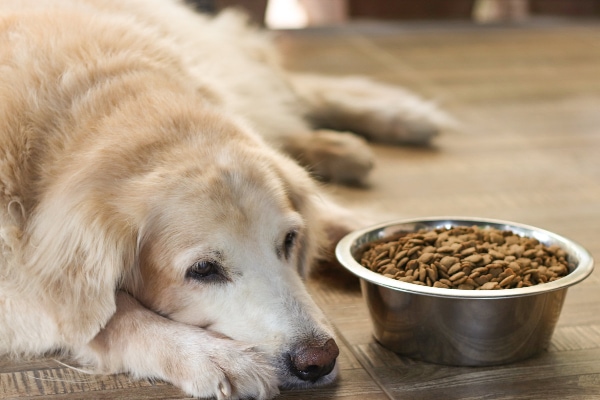
1. Add a tempting but safe topper
Adding a desirable topping is an easy first step when trying to get your diabetic dog interested in his or her meal. You want to steer clear of anything too rich or fatty because of the risk of pancreatitis. But that still leaves you with plenty of options.
You may want to try adding some canned dog food if dry kibble is your dog’s normal fare. And you can even consider heating the entire concoction in the microwave for 10 seconds or so to make it extra smelly and enticing. Just be careful to stir up the food and check the temperature prior to feeding it to your dog. Microwaves can sometimes heat unevenly and create dangerously-hot pockets of food that could burn your dog’s mouth.
If that doesn’t work, low-sodium chicken broth, a tablespoon or two of plain meat baby food, or a bit of shredded cooked boneless skinless chicken breast are also good options. Just ensure those toppers don’t contain any garlic or onions. While flavorful for humans, these can be toxic to dogs.
Finally, using a small amount of plain non-fat, or low-fat yogurt or even a sprinkle of grated parmesan cheese on the food is also a safe way to tempt a diabetic dog that won’t eat.
2. Try hand-feeding your dog
This one doesn’t make very much logical sense. But I have seen it work successfully too many times for reluctant-to-eat hospitalized patients to not to share it with you. It also has the added benefit of being very simple.
All you need to do is try to gently coax your pup to eat by hand-feeding him or her. Just don’t get too overzealous and venture into force-feeding territory. Force-feeding is not recommended since it can cause aspiration pneumonia and food aversions.
3. Check your dog’s blood glucose
This tip won’t necessarily get your diabetic dog to eat. But it can give you helpful information so you can determine if you need to visit a veterinarian sooner rather than later. And don’t worry, this tip only applies if you already have blood sugar monitoring equipment at home. If you don’t have the right supplies or know how to check your dog’s blood sugar, then it is perfectly fine to skip this step.
However, if you do have a blood glucose monitor and you know how to check your dog’s blood sugar, go ahead and see if the blood glucose is worrisomely high (>400 mg/dL) or dangerously low (<80 mg/dL). Blood glucose readings that fall in those danger zones should prompt a call to your veterinarian to discuss what to do next.
4. Give a reduced dose of insulin
Deciding whether to give insulin may be the most anxiety-inducing part of having a diabetic dog who won’t eat. At this point, you are probably well-versed in why diabetic dogs need insulin. And you also know why insulin must be given with food.
Therefore it proves to be quite a pickle if you have a diabetic dog who won’t eat. But luckily, it is one that often isn’t overly complicated to sort out in the short term. If your dog skips ONE meal, then you can give half of the normal dose of insulin. If their dose is an odd number of units, simply round down to the nearest whole unit instead of trying to measure half unit in your insulin syringe.
PLEASE NOTE: This advice is only good if your dog skips a single meal, otherwise seems to be feeling fine, and your vet hasn’t advised you differently. If you give half the dose of insulin and your pup skips a second meal, do not give any insulin. Instead, call or visit your veterinarian.
When should you call your vet?
If you have been paying attention to the warnings along the way, you already know that all the advice so far is centered on the assumption that your pup has skipped just one meal and is feeling and acting normal. However, that isn’t always going to be the case. So I want to also provide you with a quick reference guide for when to involve your vet.
Your dog skips two consecutive meals
If your diabetic dog skips more than one meal in a row, the best thing you can do is call your veterinarian. This helps ensure none of the more serious medical issues are at play. Prolonged inappetence is especially problematic for diabetic dogs since they cannot receive their insulin regularly if they don’t eat. And some of the conditions diabetic dogs are predisposed to, like diabetic ketoacidosis, can even be fatal without prompt and aggressive veterinary care.
I don’t say this to scare you. Rather, I hope to impress upon you the gravity of the situation if a diabetic dog doesn’t want to eat. You have a bit more leeway with a non-diabetic dog who won’t eat. But with a diabetic dog, skipping more than one meal is truly a medical emergency.
Your dog is acting sick (even if he or she only skipped one meal)
Additionally, if your diabetic dog is showing signs that he or she isn’t feeling well, you should go ahead and get the ball rolling to see a veterinarian. This is the case even if your dog only skips a single meal or is still eating.
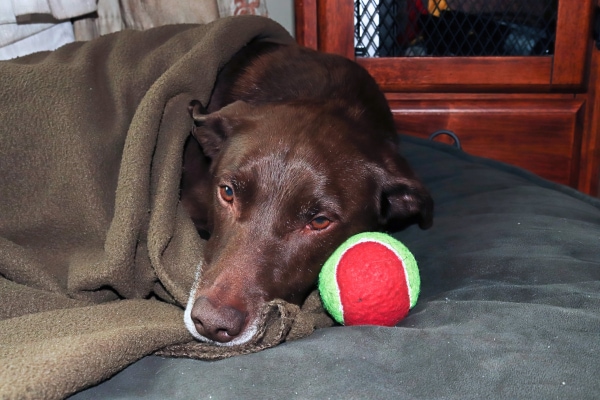
Some symptoms that should spur you toward more immediate action include:
- Not drinking in addition to not eating
- Any amount of throwing up
- Multiple episodes of diarrhea
- Any significant change in behavior or lack of energy
Your veterinarian can help
If you find yourself in this situation, your veterinarian can perform a thorough physical exam on your dog and run tests to check for underlying medical conditions. Sometimes this uncovers a problem that the vet will then address.
But even if it doesn’t, going to the vet offers peace of mind and access to additional medical therapies to improve your dog’s appetite. Useful tools in the vet’s toolbox include prescription antinausea medications (like cerenia for dogs) and appetite stimulants for dogs. Sometimes those medications can jumpstart your pup’s appetite.
If your furry family member still won’t eat despite outpatient treatments, then your veterinarian can discuss the option of hospitalization. This gives the vet the ability to administer IV fluids, monitor your dog’s blood glucose, and use injectable short-acting insulin that is safer and easier to titrate for dogs who aren’t reliably eating. The combination of these therapies can help get your diabetic dog feeling and eating, better.
Occasionally, if a diabetic dog is recovering from a serious concurrent medical issue that might negatively affect his or her appetite for a longer period, the vet may also recommend placing an esophageal feeding tube. If your canine companion is in this situation, rest assured that your veterinarian will discuss the ins and outs of this option with you at length.
The right amount of concern when your diabetic dog isn’t eating
It would be great if I could tell you that you don’t have to worry at all if your diabetic dog isn’t eating, but that simply isn’t true. As we have discussed, not eating can quickly become dangerous for diabetic dogs. And it may be an indicator of other medical problems too.
However, that doesn’t mean you need to let fear and stress damage your relationship with your diabetic dog. You can, and should, still enjoy watching his or her adorable mealtime antics. And if one day your diabetic dog doesn’t eat a meal, take a deep breath and calmly work through the steps in this article.
Maybe you find a simple solution and your dog goes right back to eating like clockwork. If so, that is great! But, if he or she refuses the second meal in a row or is acting sick, don’t delay in consulting with your veterinarian. The sooner you take action, the sooner you and your dog can get back to doing the mealtime “happy dance” again.
How do you monitor your diabetic dog’s eating without becoming stressed about it?
Please share below.



Good morning, our beautiful fur baby Macchiato (he’s a Pug) was diagnosed with diabetes about 6 months ago. he is on 9 ml insulin twice a day and he handles the injections like a champ. We keep his meals and injections 12 hours apart, however lately he just isn’t a morning person and breakfast is getting harder and harder. He likes the food as he eats everything at dinner. I am so worried I even tried to give him a scrambled egg which was his favourite before he got sick ( only got it on his birthday and Christmas ). I tried hand feeding. I’m just worried because I am missing the 12 hour window. What should I do.
Hi Angela,
I understand your concern for Macchiato and agree this is concerning. Please call your vet and let them know about this decrease in his appetite. It is possible he will need his insulin adjusted or some testing to make sure nothing else is going on. Hoping for clear answers and a positive outcome. Wishing you and your sweet boy all the best.
just would like to say your amazing,thank you for all the great advice u give x
Hi Gina,
Thank you for the kind words. Merry Christmas! ♥