Fecal incontinence in dogs, or loss of voluntary bowel control, can be distressing for your dog and challenging to manage as a dog parent. Integrative veterinarian Dr. Julie Buzby explains the difference between fecal incontinence and “accidents” in the house and then discusses the health problems that may cause fecal incontinence. Plus, she explains what to expect at the vet visit and provides 10 tips for managing fecal incontinence at home.
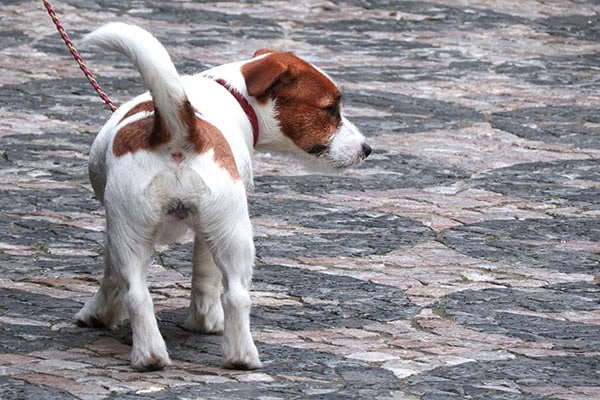
When you have an adult dog, it can be easy to take for granted his or her ability to make it outside to poop. It’s probably been a while since you had to reach for the paper towels or pull out the carpet cleaner.
However, adult or senior dogs can sometimes develop fecal incontinence. This can be stressful, to say the least. But thankfully, there are some ways to make fecal incontinence a bit more manageable.
What is fecal incontinence in dogs?
Fecal incontinence in dogs is the inability to control defecation, resulting in stool leakage or total loss of bowel control.
Fecal incontinence vs. fecal accidents
It is important to note that true fecal incontinence in dogs is not the same as having accidents in the house. With potty accidents, the dog voluntarily relaxes the anal sphincter to release stool that was stored in the rectum. They know they are pooping and could stop themselves, but choose to keep defecating.
On the other hand, dogs with fecal incontinence are unable to control their bowel movements. They may realize they are pooping but are powerless to stop, or may poop without even realizing it’s happening.
What are the symptoms of fecal incontinence in dogs?
Fecally incontinent dogs may pass feces as they walk or bark, or leave pieces of feces where they sit or lie down. Dog parents may also notice poop smears on the floor, bedding, or furniture. Sometimes the dog may also have feces stuck to the fur around the anus and tail.
Depending on the underlying cause of the incontinence, the dog may also be:
- Licking the anal region and/or scooting frequently
- Having trouble standing or walking
- Holding himself or herself in an abnormal position
- Acting painful
- Having diarrhea or soft stool
- Seeming weak or off balance
Sometimes the dog loses the ability to control bowel movements slowly, or it only happens occasionally. Other times, the dog rapidly develops incontinence. It all comes down to why the incontinence is happening in the first place.
What are the causes of fecal incontinence in dogs?
Bowel incontinence in dogs occurs due to problems that interfere with the dog’s ability to store feces in the rectum (reservoir incontinence) and/or to keep the anal sphincter closed to hold the feces in the rectum until it is time to release them (anal sphincter dysfunction).
Inability to store feces in the rectum (reservoir incontinence)
When a dog doesn’t have enough room to store stool in the rectum, the urge to defecate becomes overwhelming. And he or she loses the ability to stop the feces from leaking out.
Some of the more common conditions leading to reservoir incontinence in dogs include:
- Profuse diarrhea: Ever had a case of diarrhea so bad that you couldn’t make it to the bathroom? It happens to dogs sometimes, too!
- Inflammatory bowel disease (IBD): IBD in dogs causes chronic diarrhea and inflammation of the gastrointestinal tract. This may make it difficult for the dog to control defecation.
- Intestinal parasites: If the dog has diarrhea due to parasites, he or she may not be able to “hold it.”
- Colitis: Inflammation of the colon (colitis) often causes diarrhea and may also lead to incontinence.
- Masses in the colon or rectum: Tumors (cancerous or benign) that take up space or interfere with the function of the rectum may make it hard for the dog to control defecation.
The good news about many of these conditions that include diarrhea as a symptom is that if you address the diarrhea, the incontinence may resolve.
Neurologic causes of anal sphincter dysfunction
The nervous system regulates stool storage and the process of defecation. Thus, fecal incontinence may result from neurological issues in dogs such as:
- Injury to the pelvis or spinal cord: Vertebral or pelvic fractures, severe wounds, or other types of trauma may interrupt nerve transmission to and from the rectum and anal sphincter.
- Degenerative myelopathy: A progressive condition that affects the spinal cord, degenerative myelopathy in dogs starts off by causing weakness in the hind limbs. But in the later stages, it can affect control of defecation.
- Intervertebral disc diseases (IVDD): Depending on how severe the compression is, IVDD in dogs may cause fecal incontinence. Sometimes affected dogs drop feces without being aware. Others have the sudden urge to defecate and recognize that sensation, but are powerless to stop defecation from occurring.
- Lumbosacral disease: The nerves running to the rectum and anal sphincter exit the spinal cord in the lumbosacral region. Thus, damage to this area can affect their function.
- Spinal tumors: Tumors in and around the spinal cord have the potential to interfere with bowel control.
- Wobbler’s syndrome: Cervical vertebral spondylomyelopathy (Wobbler’s syndrome) causes compression of the spinal cord in the neck. While symptoms involving the limbs are more common, some dogs may also struggle with fecal incontinence.
- Fibrocartilaginous embolism (FCE): A spinal stroke in dogs (also known as an FCE) occurs when a piece of disc material lodges in a vessel supplying the spinal cord, cutting off the blood supply. Occasionally, this may lead to poor control of defecation.
- Infections: Infections like rabies, distemper, or neosporosis that affect the neurologic system can potentially cause fecal incontinence as one of the symptoms.
- Congenital disorders: Dogs who are born with a spinal malformations may struggle to control defecation.
Non-neurological causes of anal sphincter dysfunction
On the other hand, conditions that affect the integrity of the anal sphincter and or cause inflammation and pain in that region may also make it hard for dogs to control their bowels. Potential culprits include:
- Prior anal gland or rectal surgery: Cutting through the muscles and tissues of the anus or rectum may compromise their function. Thankfully, in some cases, this sort of incontinence may only last a few weeks.
- Trauma to the rectum and anus: Bites, gunshot wounds, being hit by a car, and other trauma centered around the back end may interfere with proper defecation.
- Anal gland problems: The anal glands are sandwiched between the internal and external anal sphincter muscles and have openings on either side of the anus. As a result, anal gland issues in dogs such as infections, impaction, and abscesses may lead to more difficulty with bowel control.
- Rectal prolapse: If a rectal prolapse in dogs causes significant damage to the muscles and nerves or requires surgery to resect a portion of the rectum, the dog may show some fecal incontinence.
- Perianal fistulas: Anal furunculosis in dogs (perianal fistula) is a painful, draining tract that develops around the anus. Understandably, this can affect anal function.
- Medication or toxin side effect: Interestingly, fecal incontinence is a potential side effect of certain medications like the chemotherapeutic drug vincristine. It may also accompany macadamia nut or organophosphate toxicity.
Does dementia cause fecal incontinence in dogs?
While you might find feces in the house if your dog has canine cognitive dysfunction (CCD), strictly speaking, it is more likely to be a fecal accident rather than true fecal incontinence. Dementia may make dogs confused about where to go to the bathroom or forget their housebreaking. But it shouldn’t change their ability to physically control the act of defecation.
That being said, some might argue that since dementia makes it hard for the dog to mentally regulate when and where they poop, they do have fecal incontinence. Either way, the important thing to know is that if you are seeing signs of dementia in dogs and finding stool in the house, it would be wise to consult your vet. There are many ways to manage dementia to improve your dog’s quality of life.
What should you do if you are worried your dog may have fecal incontinence?
Should your dog suddenly have trouble controlling his or her bowels (and possibly showing other symptoms), the best thing you can do is make an appointment with your vet. As you have learned, fecal incontinence is a symptom of a bigger problem. The sooner you know what the root issue is, the sooner you can address it.
How will the vet diagnose fecal incontinence in dogs?
Fecal incontinence in dogs is diagnosed by its symptoms—mainly the inability to control bowel movements. But it’s also important to identify the underlying cause of the bowel incontinence because much of the treatment hinges on knowing what caused it in the first place. You can expect the diagnostic process to typically include:
Gathering a history
Your vet will want to know how long your dog has been leaking stool and if you are noticing other symptoms. Plus, he or she may ask about the stool appearance and consistency. This sort of information helps your vet distinguish between accidents and incontinence. And it may give clues about the cause.
Physical exam
Next, the vet will carefully examine your dog from nose to tail. This includes checking reflexes, assessing for spinal or neck pain, testing conscious proprioception in dogs, and other methods to evaluate the dog’s neurologic status. The vet will also take a good look at the skin around the anus. And he or she may perform a rectal exam to check for masses or other abnormalities.
Diagnostic tests
Depending on the results of the exam and history, the vet may recommend various tests:
- Fecal tests: Fecal tests for dogs are a good way to check for internal parasites or other disease-causing organisms.
- Blood tests: The vet may recommend blood tests for dogs to get a better idea of your dog’s overall health. Specialized blood tests also help your vet rule in/out conditions causing diarrhea, like EPI in dogs (exocrine pancreatic insufficiency).
- X-rays or ultrasound: Evaluating the bones and internal organs using an X-ray and/or ultrasound can provide clues as to the reason for the incontinence.
- CT or MRI: If the vet suspects a neurological component, he or she might recommend a CT or MRI. These tests are a good way to assess the vertebrae, discs, spinal cord, and soft tissues.
Based on all this information, the vet can diagnose your dog with fecal incontinence and (hopefully) give you an idea of the cause. Sometimes it takes more tests or time than others to figure out the “why” aspect of incontinence. And occasionally, the cause remains unknown.
What is the treatment for fecal incontinence in dogs?
Fecal incontinence treatment is dependent upon the underlying cause. Since fecal incontinence is really a symptom of something else going on, the best approach is to address the cause of the incontinence when possible.
Treating reservoir incontinence
If a dog has reservoir incontinence due to diarrhea, treatment may be as simple as resolving the diarrhea and maintaining normal stool consistency. Some helpful tactics that the vet may suggest include:
- Diet changes (bland diet for dogs, low-fat diet, prescription diet, etc.)
- Increased fiber for dogs
- Antiparasitic medications
- Probiotics for dogs
- Other methods for improving gut health for dogs
- Pancreatic enzymes for dogs with EPI
- Immunosuppressive medications and other treatments for IBD
Treating anal sphincter dysfunction
Anal sphincter dysfunction is often a little more challenging to treat.
Neurologic issues in dogs can be multifaceted, and some continue to progress no matter what you do. Once the vet diagnoses your dog with a particular neurological condition, he or she will let you know what to expect as far as treatment or management. It may involve surgery (such as in some cases of IVDD or Wobbler’s syndrome), time and supportive care, or other approaches.
Addressing the anal gland problems, rectal prolapse, or perianal fistulas may help with those causes of non-neurologic fecal incontinence.
10 tips for managing fecal incontinence at home
Unfortunately, fecal incontinence in dogs may or may not fully resolve. And cleaning up fecal messes can easily put a strain on your relationship with your dog. Thus, it is important to know how to best manage a fecally incontinent dog at home. The following 10 tips may help.
1. Take your dog out for a potty break right after meals
Eating often stimulates your dog’s need to defecate. Thus, if you get your dog outside shortly after he or she eats, this increases the chances he or she will poop outside rather than in your home.
2. Consider changing your dog’s food (with the help of your veterinarian)
Feeding your dog a high-fiber food may make the stools firmer and easier to pick up. Or a highly digestible diet may decrease the overall volume of the stools. Your vet can help you determine which type of diet might be right for your dog.
3. Make it easy for your dog to get outside to go potty
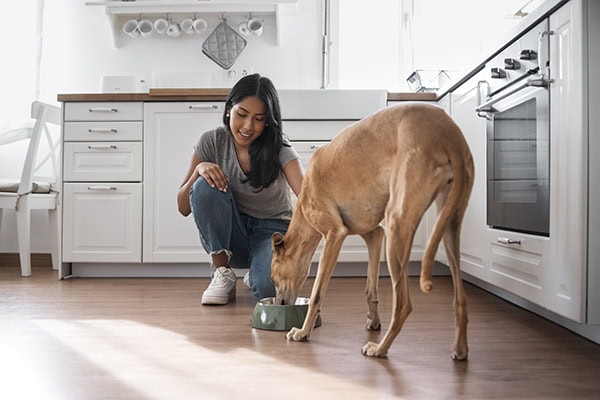
If you can do so safely, consider giving your dog lots of outdoor time or a doggie door. This is especially helpful for dogs who know they need to go but can’t hold it. (Frequently finding feces by the door may indicate this is the case.) However, it is important to be mindful of the dangers your dog could encounter when outside alone, such as heatstroke in dogs, wild animals, getting lost, bodies of water, etc.
4. Help your dog stand up and get outside
If your dog is experiencing fecal incontinence due to a neurological issue, he or she may need help getting outside and/or posturing to defecate. Mobility aids such as the Help ‘Em Up Harness may be beneficial in those cases. Additionally, Dr. Buzby’s ToeGrips® dog nail grips may help improve your dog’s traction and sense of where his or her feet are.
5. Give your dog a sanitary trim
Especially with a long-haired dog, shaving the fur around the anal opening can make it easier to keep your dog clean. And it also helps prevent stool from sticking to the hair and then leaving little poop prints every time your dog sits down.
6. Use disposable puppy pads or washable waterproof covers on furniture
Keep several layers of puppy pads or washable covers on your dog’s bed or favorite resting spots. That way, when your dog leaks stool, you can quickly grab the top pad and dispose of it or wash it. And you already have another one in that spot ready to go.
7. Do NOT use doggie diapers
I want to caution against the use of diapers for fecal incontinence. I know the first reaction is to try to contain the mess. But feces are full of bacteria, and prolonged contact with the skin can cause pain, inflammation, and infection. Plus, diapers hold stool right near the vulva, which can predispose female dogs to urinary tract infections (UTIs in dogs).
8. Make a “bottom bath bucket”
Keeping your dog’s rear end clean is important for your dog’s health (and for the cleanliness of your house). To make it easier to clean your dog up, consider creating a container or bucket filled with the supplies you will need. That way, you can grab it quickly and have the tools you need at the ready.
9. Create a cozy, easy-to-clean space where your dog spends time
Sometimes designating certain areas of the house as places your dog spends time can be helpful. Keeping your dog out of some of the carpeted areas or off the good furniture may decrease the toll of the inevitable accidental poops. And intentionally spending time with him or her in areas that are easy to clean may make those times more enjoyable and less stressful.
10. Ask your vet about stimulating your dog to defecate
In some cases, taking your dog outside and then stimulating him or her to defecate can help keep more of the poop outside and less in your house. This is not something you should do without your vet’s approval. He or she will let you know if it would be appropriate for your dog and teach you how to do it safely.
What is the outlook for dogs with fecal incontinence?
The outlook for dogs with fecal incontinence varies significantly depending on the cause. Sometimes your dog has temporary fecal incontinence that resolves with time, surgery to address the underlying cause, or improved gut health. But other times, the fecal incontinence is here to stay. And your dog may also be dealing with weakness, paralysis, and/or progression of the disease that lead to the incontinence. That can understandably make the prognosis much less favorable.
Fecal incontinence can put a strain on your bond with your dog
There are ways to lighten the load. But sometimes having a dog with fecal incontinence just plain stinks, both literally and figuratively. It is hard to constantly be cleaning up messes, doing laundry, and washing your dog’s back end. Plus, smelling and finding feces is trying for even the most dedicated dog parent. All of those factors can contribute significantly to your pet caregiver burden, not to mention cause disagreements between members of the family.
If this sounds like you, know that you are not alone, and give yourself some grace. Please voice these feelings to supportive family or friends and your veterinarian, and then make a plan from there.
Especially if your dog has severe neurological impairments in addition to the fecal incontinence, it may be time to consider euthanasia. This isn’t the “easy way out” or because you are tired of cleaning up after your dog. Rather, it comes from a place of understanding that the fecal incontinence and the associated disease are hard on your dog, too, and are likely to continue to worsen.
Be kind to yourself
It isn’t easy to have a dog with ongoing fecal incontinence, so above all, remember to be kind to yourself. If you are feeling frustrated about the messes and all the extra work that fecal incontinence brings, that doesn’t mean you love your dog any less. You are a good dog parent. And being overwhelmed or resentful at times with the hand your dog has been dealt doesn’t make you any less of one. It just makes you human.
What has worked well when caring for your dog with fecal incontinence?
Please comment below.