Finding out your senior dog’s blood work showed a high ALP can be confusing and concerning. Thankfully, integrative veterinarian Dr. Julie Buzby is here to help you make sense of high ALP in dogs. She explains what it is, why it can sometimes be elevated, and what the next steps might be.
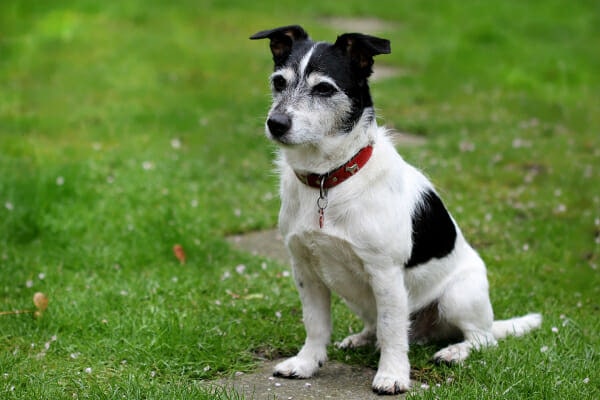
Sampson, a 12-year-old Jack Russell Terrier mix with a zest for chewing sticks and chasing squirrels, was in to visit me recently. During a particularly vigorous stick chewing session he had cracked a tooth. As a result, he needed a dental procedure under anesthesia to remove the damaged tooth and clean the rest of his teeth.
I always recommend some basic bloodwork prior to any of my older doggy patients going under general anesthesia. Pre-anesthetic lab work helps ensure a dog isn’t at an increased risk for complications with anesthesia or the specific procedure. It also has the added benefit of occasionally picking up on medical issues before they become a bigger problem. That was how we found that Sampson’s ALP, while normal on his last yearly bloodwork, was now moderately high.
Sampson’s dog mom, Sarah, was the proactive type and had many questions about ALP. I answered her questions in detail before we formulated a plan.
What is ALP in dogs?
The abbreviation “ALP” stands for alkaline phosphatase, which is an enzyme many routine blood panels may measure. Primarily, the liver produces ALP, though there are other sources too. We will come back to this later in the article because it is important.
Within the liver, ALP is found along the outer layer of the liver cells. Even more specifically, it is associated with the liver cells that line the bile ducts. Alkaline Phosphatase’s normal job in the body is complicated, and actually isn’t critical to understand here. But what is important to understand about ALP is that it is a sensitive indicator of liver or gallbladder dysfunction.
A brief physiology lesson
The liver is an amazing organ that has, by many estimates, over 500 critical jobs in the body. To name a few, the liver is responsible for:
- Removing toxins from the bloodstream
- Regulating blood sugar (along with the pancreas)
- Taking old red blood cells out of circulation
- Releasing clotting factors
The liver is also responsible for making bile, which flows through ducts in the liver to the gallbladder. Bile is then released from the gallbladder into the GI tract where it helps with digestion.

With all these important functions, it would only make sense that keeping tabs on your dog’s liver is an important part of keeping him or her healthy. This is where ALP liver enzymes (among other liver enzymes) comes in.
How would the vet detect high ALP levels in dogs?
When your veterinarian performs general wellness blood work on your dog, either as part of a yearly exam or as part of a pre-anesthetic check-up, chances are the blood work will include a chemistry panel. This test measures protein and electrolyte levels. It also includes values that can offer clues about the function of the liver, kidneys, and pancreas.
For a chemistry panel, the vet or vet nurse will draw a small amount of blood from your dog and place in a test tube. Then, your veterinarian may sometimes perform the blood tests with an in-house laboratory machine. Alternatively, he or she can send your dog’s blood to an outside veterinary diagnostic lab. If your veterinarian runs these tests in-house, your results may be ready the same day. But if your vet sends the blood out, it can take several days for the final results to be available.
Liver values
The markers related to the liver on a chemistry panel include ALP, ALT, GGT, and total bilirubin. The liver also makes glucose, cholesterol, albumin, and BUN. These levels can give clues to how well the liver is functioning.
ALT, or alanine transferase, is what is known as a “hepatocellular” liver enzyme. When the cells of the liver are damaged, this enzyme leaks out into the blood. Elevated ALT is often more worrisome than high ALP to veterinarians since it indicates ongoing damage to the liver cells.
ALP and GGT are what are known as “cholestatic” enzymes. This means that elevations predominantly occur if there are issues with the flow of bile, either within the liver, or as it leaves the gallbladder.
Forms of ALP
Earlier we touched on the fact that the liver makes alkaline phosphatase (ALP), but other places in the body make it too. The three most important forms are ALP from the liver (L-ALP), ALP made in the bone (B-ALP), and ALP that is released in response to excess levels of corticosteroids (C-ALP). A chemistry panel measures all three of these forms together as ALP. Therefore, based on the chemistry panel alone, it is not possible to determine which form is contributing most to an elevated ALP.
Liver ALP
As the name implies, L-ALP elevations are often related to issues with the liver. This is the focus of much of the rest of the article.
Bone ALP
Increased ALP activity is common in young dogs who are growing rapidly because normal bone growth releases B-ALP. Generally, these dogs are less than a year old. In a young dog, a mild elevation in ALP is not a worrisome finding if the remainder of the liver values are normal and the dog is otherwise feeling well. However, conditions that cause ongoing damage to the bones, such as bone cancer (i.e. osteosarcoma) or infections within the bone (i.e. osteomyelitis), can also cause elevations in B-ALP levels.

Corticosteroid ALP
The liver produces corticosteroid-induced ALP in response to elevated blood steroid levels. These high C-ALP levels can either be due to the body producing increased amounts of steroids, as with Cushing’s Disease in dogs, or they can be from oral or topical steroid-containing medications.
What causes high ALP in dogs?
Many times, a vet will find high ALP in senior dogs. In fact, it is one of the most common lab work abnormalities in older dogs. An elevated ALP is very sensitive in its ability to assess for hepatobiliary disease (i.e. diseases affecting the liver, gallbladder, or bile ducts) in dogs and cats.
This means that most dogs with significant liver disease will have an elevated ALP. That sounds like great news, right? If that’s the case, an ALP blood test should be the perfect way to help decide if your dog has liver disease.
Unfortunately, it is not quite that simple. While a high alkaline phosphatase level is very sensitive, it is not also a non-specific finding. This means that lots of other conditions aside from liver disease can cause an elevation in ALP. The list of conditions that can cause an elevated ALP includes:
Liver or gallbladder conditions
Any disease that causes a back-up of the flow of bile (i.e. cholestasis) will cause increased serum ALP levels in dogs. Cholestasis can be due to primary liver disease in dogs. Structural problems that block the flow of bile out of the liver, into the gallbladder, or from the gallbladder into the intestinal tract, can also cause a high ALP in dogs. Finally, secondary liver diseases (i.e. other conditions that cause ongoing damage to the liver) also will cause an elevated ALP level.
Primary liver diseases include:
- Infectious hepatitis due to ascending bacterial infections, Leptospirosis (lepto in dogs), etc.
- Chronic active hepatitis
- Copper storage disease
- Benign nodular hyperplasia
- Vacuolar hepatopathy in dogs
- Hepatocellular carcinoma (i.e. a type of liver cancer)
Gallbladder diseases include:
- Cholelithiasis (i.e. gallstones)
- Cholecystitis (i.e. gallbladder infection)
- Gallbladder mucocele in dogs
- Bile duct carcinoma (i.e. cancer of bile ducts)
Other medical conditions
Many medical conditions that are unrelated to the liver itself can also cause a high ALP. They range from non-worrisome to very concerning. Some of these include:
Endocrine diseases:
- Diabetes mellitus
- Hypothyroidism in dogs
- Cushing’s disease
- Hyperparathyroidism
Non-liver cancers:
- Lymphoma in dogs
- Pancreatic carcinoma
- Osteosarcoma (i.e. bone cancer)
Other diseases:
- Pancreatitis in dogs
- Gastroenteritis (I.e. inflammation of the stomach and intestines from various causes)
- Osteomyelitis (i.e. bone infection)
Toxins
Any toxins that cause substantial liver damage can also cause a high ALP in dogs. However, these elevations will not normally be as significant as the increases in ALT levels. Some toxins that cause liver damage are:
- Xylitol toxicity in dogs
- Cycad palms (i.e. sago palms)
- Zinc
- Aflatoxin
- Amanita mushrooms
- Blue Green algae toxicity in dogs

Breed-related elevations
Certain dog breeds can have increased ALP levels without it being a problem. The most common breed-related cause of increased ALP is Benign Familial Hyperphosphatasemia in Siberian Huskies. Scottish Terriers can also have a similar condition.
Medications
Some medications also are connected with elevated ALP in dogs. Two of the most common are:
Phenobarbital
This is a common medication vets use to treat dog seizures that can benignly increase L-ALP levels. However, phenobarbital can also occasionally cause damage to the liver. This means that if a dog taking phenobarbital has a high ALP, it can be hard to determine if the ALP elevation is no big deal, or if it might indicate a bad reaction to this medication.
If you find your dear dog in this situation, your veterinarian will likely start by evaluating how your dog is feeling. He or she will also look at the levels of the other liver values on the chemistry panel. In cases where the ALP elevation is severe, your dog is feeling poorly, or your dog has other liver enzyme elevations, then your veterinarian may recommend additional liver function testing.
In some cases, dogs will need to stop phenobarbital due to concerns about liver damage. The good news is that in most dogs, the liver values quickly go back to normal when the vet weans them off phenobarbital and onto one of the other medications available to help control seizures.
Steroids
Oral steroids, like prednisone for dogs, commonly cause moderate to severe elevations in ALP. Higher doses of steroids, such as those used for immunosuppression in cases of IMHA in dogs or other immune-mediated conditions, tend to cause higher ALP elevations.
Luckily, the increase in ALP from steroids does not generally correlate with long-term liver damage or liver dysfunction. However, it is important to know that once the dog stops taking steroids, it can take much longer—up to several months—for the ALP levels to normalize.
If your dog has an elevated ALP level, ensure you tell your veterinarian about all the medications your dog is taking or has recently taken. Some eye and ear medications and skin sprays or ointments contain steroids. Even these topical steroids can lead to ALP elevations during or after treatment.
Is a higher ALP automatically worse for dogs?
You may be wondering if you can use the degree of ALP elevation to tell you how bad the underlying problem might be. It would be easy to think that if a dog has a very severely elevated ALP, her or she might have a worse prognosis. Happily, this is not always the case.
Some benign and completely reversible issues, like taking high doses of steroids, can cause very severe elevations in ALP. However, if there is not an obvious reason for the high ALP (like taking a course of steroids), then your veterinarian may use the degree of elevation to help decide how aggressive to be with additional diagnostic testing.
What are the next steps for a dog with a high ALP?
If your dog has a high ALP, your veterinarian will start with a detailed medical history and thorough physical examination. In many cases, clues from the exam and history can help point your veterinarian to the next best diagnostic test to perform.
Every case is different, but the most common and least invasive next step is often to perform full lab work. This typically includes a CBC (i.e. complete blood count), full chemistry panel (if the ALP elevation was found on a “short” panel), T4 level, and urinalysis. If the remainder of your dog’s lab work is normal, he or she is otherwise feeling well, and the physical exam reveals no major concerning changes, then your veterinarian may elect for the “watchful waiting” approach.
With this approach, your veterinarian would hold off on performing any additional diagnostic testing right now. He or she will repeat lab work periodically to monitor trends in the ALP and other liver values. If the ALP improves or remains mildly elevated, then together you may elect for continued “watchful waiting.” If the ALP elevation gets worse, repeat bloodwork shows other abnormalities, or your dog develops any new medical symptoms, then your veterinarian will likely recommend additional diagnostic testing.
Liver function testing
One additional non-invasive lab test that your veterinarian might recommend is a liver function test which measures bile acid levels. Bile acids are made in the liver, stored in the gallbladder, and released into the intestines to help digest fat after you, or your dog, eats a meal. If the liver is working well, these bile acids are pulled back out of the bloodstream to be recycled and used again. However, if the liver is not functioning well, it is unable to remove the bile acids from the bloodstream and the bile acid levels will be high.
Your veterinarian can measure bile acid levels by taking two blood samples and sending them to an outside veterinary diagnostic lab. Your dog must have fasted for 12 hours prior to the first blood draw. Then your veterinarian will feed your dog a small snack, which should cause the gallbladder to release bile acids. Next, the vet will take another blood sample two hours later to see if the liver was able to remove the released bile acids from the bloodstream.
Elevated bile acid levels tell your veterinarian that your dog has a significant problem with his or her liver. But it does not provide any information about the underlying cause of the liver problem. If your dog has elevated bile acid levels, your veterinarian will likely recommend additional testing or referral to an internal medicine specialist.
Imaging
Your veterinarian may also recommend some liver imaging. In general, X-rays and ultrasound are the two most common types of imaging offered in veterinary medicine. While X-rays are a useful tool for many issues, they have limited ability to evaluate the liver.
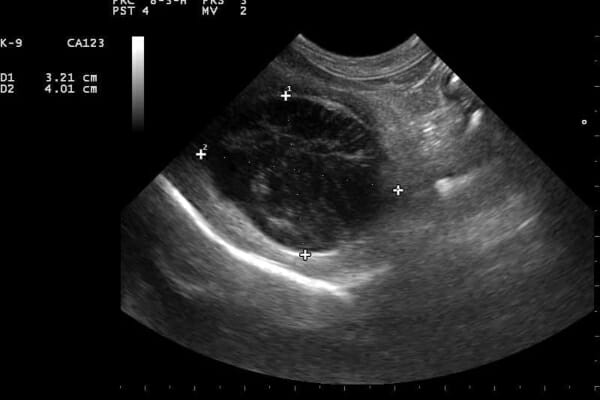
An abdominal ultrasound is much more useful in this regard. An ultrasound can evaluate for masses or nodules in the liver and can also assess the gallbladder for signs of infection, gallstones, or a mucocele. Plus, ultrasound can help determine if there might be other medical conditions like pancreatitis or Cushing’s disease that are causing a high ALP.

Liver sampling
One limitation to ultrasound is that while it can determine if the liver looks abnormal, it cannot definitively pinpoint the underlying cause of masses, nodules, or other abnormalities. Some nodules are benign changes, while others represent cancer. There may be clues on ultrasound that a mass or nodule is benign or malignant. But to know for sure the vet must take a sample of the liver. The two ways to sample the liver are fine needle aspiration or biopsy.
Fine needle aspirate
If your veterinarian finds nodules, masses, or other liver abnormalities, he or she may recommend a fine needle aspirate as the next diagnostic step. To perform an aspirate, your veterinarian will use an ultrasound probe to guide a small needle into the area of concern in the liver. Once the vet gathers the cells in the hub of the needle, he or she will squirt them onto a glass microscope slide. Then your vet will submit the slide to a veterinary pathologist for review.
In veterinary medicine we often start with fine needle aspirates over biopsies. This is because this testing is less expensive, less invasive, and the vet can do it while your dog is awake or with just mild sedation. The drawback of aspirates is that they do not always yield a diagnosis. If results are inconclusive, the vet may still recommend a liver biopsy.
Liver biopsy
A liver biopsy is the most definitive way to determine the underlying cause of liver enzyme elevations. However, it is more invasive than many of the other tests. To perform a liver biopsy, the vet will remove a small piece of the liver and submit it to a veterinary pathologist. Your vet may obtain the sample through an open abdominal surgery or laparoscopic surgery. Alternatively, your vet may use a large needle tool (i.e. the Tru-cut biopsy technique) which is significantly bigger than the needle for a fine needle aspirate.
Unlike a fine needle aspirate, which your vet can do on an awake dog, the vet will always perform the biopsy under general anesthesia. Although it may raise the question in some dog parents’ minds of “Is my dog too old for anesthesia,” a biopsy can be a very useful tool. It allows the vet to submit an actual chunk of liver tissue for evaluation. This can give a clearer idea of what is going on in the liver than a fine needle aspirate can.
Since biopsies are a more aggressive test, they may not be warranted in cases of mild or even moderate ALP elevations where the dog isn’t symptomatic and/or doesn’t have elevations in other liver enzymes. However, every dog and every case is unique. Your veterinarian will take your furry family member’s medical history, exam findings, and full lab work results into account when making his or her recommendations.

Back to my patient, Sampson
I am sure at this point you are wondering what happened to Sampson. We did perform full lab work, which aside from the ALP elevation, was beautifully normal. Apart from his sore tooth, Sampson was his normal squirrel-chasing self. He was energetic and had a great appetite.
We knew that his tooth was uncomfortable. Together his mom, Sarah, and I decided it was best to go ahead with his dental procedure. I am happy to report that the procedure went great. Sampson recovered uneventfully and is back to enjoying his crunchy dog biscuits and even the occasional stick (although sticks are not on my list of safe chew toys for dogs).
We rechecked lab work a month after his procedure and the ALP elevation was still there. Since Sarah is the proactive type, we decided to schedule an ultrasound for Sampson. The radiologist reported changes in the appearance of his liver that looked consistent with benign nodular hyperplasia, which was good news
I let Sarah know that benign nodular hyperplasia is very common condition in many senior dogs. It causes benign nodules to form in the liver and a mild to moderate ALP elevation without an elevation in the ALT. Changes on ultrasound can make the radiologist suspect this condition. But ultimately it would take a liver biopsy to rule out more nefarious causes of nodules.
After weighing the pros and cons, Sarah decided to continue monitoring for now. Sampson will come back in a month to monitor his ALP value. And then in a few more months he will have another ultrasound. I have a hunch that this is just going to be a blip on the radar for good old Sampson, and that the local squirrels won’t be able to rest anytime soon.
Talk to your vet
If like Sampson, your dog’s blood work showed a high ALP level, the best thing you can do is have an in-depth conversation with your veterinarian. Sometime being presented with all the different diagnostic options can feel a bit overwhelming. But at the end of the day, you and your trusted vet should be able to work together to create a plan for your dog—be it a “watchful waiting” approach or further diagnostics—that you feel confident about.
Hopefully, the elevated ALP will turn out to be nothing significant for your senior dog. But even if it does indicate a more serious problem, remember that your dog has a great ally in you and your veterinarian. Together, you can tackle whatever the future brings and keep making memories in the process.
Has the vet ever found a high ALP level in your senior dog’s blood work?
Please comment below to share your dog’s story.


Hi,
My Siberian Husky male is 4 yrs 9 months old. We usually do annual blood work for him. In 2023 he started having seizures so we started giving him phenobarbital, after 6 months we did blood work found he has high ALP 582 doctor suggested to change from phenobarbital to kepra. After using kepra for 6 months we again did blood work his ALP was 205 U/L. After 1 year i.e., Feb 2025 we did annual blood work his ALP was 266 waited for a months and did one more blood work in Mar 2025 his ALP reduced to 10 points now it is 258 U/L. Vet suggest for ultrasound. Can you suggest us if we need to do ultrasound or watch and do blood work next month april to see if it is normal? what do you suggest?
Hi Sunitha,
I understand your concern for your Husky with how his ALP levels keep changing. I think the ultrasound is a good idea. The problem is you may not get any definitive answers. The reason your vet is recommending this more in-depth testing (if I had to assume) is they are trying to be proactive. I would hate for there to be something serious going on that is remaining hidden for now, that you might be able to catch early and effectively treat but end up missing it and allowing it to progress just because you decided to forgo the ultrasound. Waiting for the next blood work recheck is fine. But if these liver values continue to rise, I would not ignore them for long. Hoping for favorable results and a clear path forward.
My Lab mix, Jack, is almost 11 years old. In January he was straining to defecate and developed an anal prolapse. That was fixed and our vet suggested that he be on MyraLax and soft food for a week following as the prolapse healed. Then we were to gradually re-introduce his kibble along with the soft food. He started straining again and we took him back for a recheck 10 days later. It hadn’t prolapsed again. He was given metronidazole on Jan 23 because of a concern about colitis. He finished that medication and his stools started to firm up in February but not normal by any means. We noticed he started drinking a lot of water and would urinate what seemed to be a excessive amount but we thought it might be due to the medication. Then on Feb. 21, he started having watery diarrhea again. We took him back to our vet on Feb 24. He did an exam and found what he felt was a small anal sack tumor. We had brought in a urine sample with us and our vet also ordered a full chem panel. We got the results the next day. Albumin was low at 2.4 g/dl, Globulin was high at 3.8 g/dl, AST was high at 70 IU/L, ALT was high at 142 IU/L, ALK Phos was very high at 621 IU/L, GGT was high at 34 IU/L, and Total Billirubin was slightly high at 0.5 Mg/dL. Calcium was slightly low at 82 mg/dL. Our vet expected the Calcium to be high because of the anal sack tumor. The UA came back with cocci observed so a suspected UTI. Our vet suggested that we have an ultrasound to check for an spread of disease and to check his liver.. We are taking Jack in this morning for the ultrasound and we are both worried about what finding they may report.
Dear Kay,
My heart goes out to you as you face this worrisome situation with Jack. I am glad your vet has been proactive and is ordering these extra tests. Hoping for definitive answers and favorable results. Feel free to keep us updated on how things go. Wishing your sweet boy all the best.
Our 12 year old pitbull Sadie was diagnosed with Cushings disease in Nov 2024 after she started to have increased thirst and urination. She was put on 60mg of Vetoryl as she was 64 lbs. ALT was 204, ALP 461 and GGT was 33 (Lipase was 333). January 15th, she was incredibly unstable and had a seizure so we immediately stopped Vetoryl and her vet gave her a steroid injection and gave her 2.5mg of prednisone for 3 days to counteract the Addisons crisis. Those few days, we had our Sadie girl back. She was energetic, happy, silly.
Jan 30th, our vet started her on 30mg of Vetoryl and within 4 days we were told to stop it again as she was shaking quite bad, wasn’t eating, was lethargic, etc.
February 12, we did an ACTH which now came back as normal, not cushings, so vet suggested we do a complete panel again. ALT was 129, ALP was 403 and GGT was 14 (Lipase was 409). We were told her liver values were improving which was a good thing.
Fast forward 2 weeks, her shoulders/front legs are spasming whenever she is trying to relax and she is groaning and moaning anytime she is trying to lie down like she can’t get comfy.
Feb 23rd we rushed her to an ER after several hours of discomfort. ER ran complete panel again and now her ALT is 268, ALP is 853 and GGT is 29 (Lipase is now 1,945). They did an ultrasound and they did find a mass on her liver and they did a needle aspirate of but they don’t believe that is causing her the discomfort and are urging us to have her tested for cushings again as her adrendal glands were also thickened. All other organs were fine. We have an appointment with internal medicine tomorrow but am wondering what could have caused her numbers to double + in two short weeks. She went downhill so quickly and everyone just tells us “she’s a special case”.
Dear Meg,
I am sorry Sadie is having these ongoing issues with her liver. I agree, her situation has me puzzled and not sure what sort of advice to offer. I think partnering with a specialist is the best course of action. How did the appointment go? Were they able to offer suggestions about testing to treatment? Hoping there is a clear plan moving forward and praying for a positive outcome for your sweet girl.
My dear sweet Sasha has an alkaline phosphate level ALP of 3334. They want me to do an LMy dear sweet Sasha has an alkaline phosphate level ALP of 3334. They want me to do an LDDST test. Alt is 203. She is very fearful and they always sedate her. I would rather see an ultrasound than leave her at vet entire day, not many bushings. Symptoms. She has gained weight and does pant at rest but happy active pooch that loves walks. What is your advise? That level is off the charts!
Hi Sandee,
I am sorry Sasha is dealing with these elevated liver enzymes. While an ultrasound could be helpful, I also think the Cushing’s testing is a good idea. Your vet could probably get both done in one day and spare your girl from having to make multiple visits. There are options for anti-anxiety medications that could help make her visit less stressful for everyone involved. Hoping you can get the answers needed to ensure Sasha remains happy and healthy.
Wow! Thank you for this informative read! My almost 10 year old golden/husky mix had her annual labs (including urine) and her ALP was the only abnormality. It jumped from 500 in late 2023 to 800 as of yesterday so our vet is concerned for atypical Cushing’s disease. She has no other symptoms and the only medications she gets is Claritin daily for allergies and Meloxicam as needed, usually no more than once a week, often less. The diagnostic options he provided were sending out a test for Cushing’s or an abdominal ultrasound to rule out tumors or anything else that may be wrong with her liver. I am leaning towards the ultrasound, but wondering if that provides any value to diagnosing Cushing’s if that is indeed what she has? She has a history of arthritis and focal seizures (very infrequent, only maybe 1x per every 2 years). Is there anything else we should ask our vet about? Thank you, Amanda
Hi Amanda,
I understand your concern for your pup and think she is lucky to have you advocating for her health and well-being. It sounds like your vet is being very proactive and thorough with testing and diagnostics. I think the ultrasound is a great idea. If your girl does have Cushing’s they may be able to spot an enlarged adrenal gland. You can always ask for a consultation with an internal medicine specialist if needed, but I think you are on the right track. Hoping for clear answers and an easy solution. Wishing your girl all the best for many happy days ahead.
Hi there!
My ~9 year old Shih Tzu/Cairn Terrior/Pekignese mix (we did a DNA test), Pumpkin got bloodwork done prior to her dental cleaning in November of 2023. During this test, they realized that her ALT was slightly elevated (around 200) so she went on Denamarin and we monitored bloodwork. The levels only went down slightly (by ~10), so we did an ultrasound and the doctor didn’t find anything. They then told us further intervention wasn’t needed and that we should continue the Denamarin and do bloodwork every 6 months. Now it is January of 2025, a little over a year later, and our vet finally recommended seeing an internal doctor (I had asked multiple times in the past, but they said it wasn’t needed until now). The internal doctor did bloodwork and another ultrasound, as quite some time has gone by since the last one. The ALT remained the same—only slightly elevated (and around 10 less than the original bloodwork a year prior); however, the ALP is now ~400. The most recent ultrasound still didn’t find anything wrong. They want to test for Cushing’s, so we will be doing that next week. She has some of the symptoms, but most of which, have been present since we adopted her at three years old. She’s always had a little potbelly, has always panted/overheated easily, has always been lethargic when she isn’t going on a walk (she loves her daily mile walk and peps right up for this), and has always consumed an excessive amount of water (but no excessive urination ever). So, I was wondering if you had insight on what else could be going on with her? I love her so, so much and I feel so badly she has to go through this and go to so many appointments. Any help would be greatly appreciated.
One other thing I should note is that a few months before discovering any of these elevated levels in 2023, she was bit by a tick (in CT). The bite site looked swollen after and she had a swollen lymph node. It was winter and I hadn’t given her the Simpirico that month, so I was very concerned that she had Lyme Disease. I brought her to the vet and they treated her with antibiotics. After this, they did a Lyme Quant C6 Antibody test and the result was <10, so they weren’t concerned. I figured I’d mention this though because I saw you mention tick borne illnesses in other comments. If this was the case, what are the possible illnesses she could have? Again, any and all help is greatly appreciated. Our little dogs have always lived long lives (15 years plus) and I have been sick over the thought that something could be seriously wrong with Pumpkin at age 9. Thank you so much for your time and help in this matter!
Dear Brittney,
I understand your concern for Pumpkin and think it is good you are searching for answers. She is very lucky to have you taking such good care of her and advocating for her health and well-being. I think it is wise to move forward with the Cushing’s testing and would also encourage you to discuss the possibility of retesting for Lyme (as long as the last testing was not recent). Other tick-borne diseases commonly diagnosed are anaplasmosis and ehrlichia. I am glad you are working with a specialist and hope you can start to unravel this puzzling situation. Hoping for clear answers and a straightforward plan for treatment. Feel free to keep us updated on how things go. Praying for a positive outcome for your sweet girl.
My 5 yo dog Nash began to vomit periodically in June, 2024. He also seemed to have less energy and began sleeping more. An ultrasound showed an enlarged liver but no tumors. His ALP has increased from 1,030 in September to 1,729 in December. He was placed on Ursodiol in November when his ALP was 1,669. Although the medication seemed to slow the increasing levels, he is being tested for Cushing’s in 2 days. Based on the forgoing, is there anything else you would recommend? Nash is an 18 lb Maltese/Havanese mix.
Hi Laura,
I am sorry Nash has been through so much over the past few months. From what you have mentioned it sounds like your vet is being proactive and has already done all the testing I would normally recommend. It may be worth repeating the ultrasound at some point to see if anything has changed. How did the Cushing’s testing turn out? Hoping you can get the answers needed to ensure your pup is on the right course of treatment. Wishing you both the best of luck and feel free to leave an update if you have a chance.
Our Lucy is 12.5 and a 32lb. Corgi lab mix we think. 6 weeks ago she quit eating her normal dry dog food and is picky about the chicken/turkey and white rice we now feed her. She still gets excited for walks and loves chasing cats and treats and her energy level has not changed. She just has eating issues. Her blood test came back with an ALT level of 173 and her ALP level was 313. Her ultrasound revealed two small masses on her liver of 3.9 cm and 4.1 cm . We don’t know if an aspiration is necessary because if they’re benign we probably won’t do anything because we are afraid of anesthesia at her age and if they’re cancerous we probably won’t do anything. Is a liver sample necessary to see what’s going on?
Hi Heather,
I am sorry you are facing this difficult situation with Lucy. While a liver aspirate may offer additional information, you still might not get a definitive diagnosis. If you were planning to pursue surgery or chemo (or whatever the treatment recommendation may be) then getting a diagnosis would be very beneficial. But if you are leaning toward palliative care and treating symptoms, then I am not sure the additional information is needed. How are things today? Praying Lucy’s condition has stabilized, and her appetite has returned. Feel free to leave an update if you have a chance. Bless you both.
My 12 year old Golden Retriever had an elevated APL test today. She will be 13 in April. Her blood work in May was perfect and everything else on her blood work was good, She has an under active thyroid and is currently on thyroid medication. She has also been given Rimadyl to take as needed for her mild arthritic stiffness and soreness. Our vet ordered a urinalysis today to rule out Cushings. She does pant off and on but has for a couple years now – it mostly seems tk be related to temperature as she tends to get too warm. Our vet says the elevated APL is not necessarily indicative of disease and may just be because she is a Thyroid dog and her liver is just working harder. She doesn’t appear to have excessive thirst or hunger. I don’t notice a “pot belly” or any hair or skin changes…although she does tend to be more unsure or unsteady on our tile floor… so I am hopeful. I am pretty nervous and scared. I have had a Cushings dog and it’s not fun. Thank you for you informative read.
Hi Stacey,
I understand your concern for your senior girl with these recent changes to her liver. I am glad your vet is running some tests to rule out Cushing’s and other possible causes. Also, be aware that NSAIDs such as Rimadyl can cause liver issues in some dogs. It may be worth discussing this with your vet. Hoping for quick answers and a clear path forward. Bless you and your sweet girl. ♥
My five-year-old Yorkshire terrier needed dental work so the vet did a full blood panel found an elevated ALP 1999, after dental procedure and several teeth removed we waited six weeks and tested again. ALP dropped slightly. Waited another six months and now ALP is over 2000.. not sure what to do next
Hi Jennifer,
I understand your concern for your young pup. From what you describe it does sound like more in-depth testing will be needed to try and get some answers. Your vet may decide to send off additional lab work or recommend an abdominal ultrasound. Have you started your dog on a liver supplement? Sometimes they can make a big difference in liver health and function. Hoping you can continue to partner with your vet to resolve this problem. Praying for a positive outcome for your pup and many happy years ahead.
C 9 yr old cavapoo has addisons ( monthly zycortal 0.33 and daily 0.5mg pred) and IBD which is controlled with a fully hydrolyzed diet ( zd). 3 weeks ago she jumped off the bed and hurt her shoulder, later that night I gave her pardale and she was sick with stomach cramps. Took to oncall vet ALP usually 250 for her normal was now 600. ALT lower end normal value as previous. WCC normal and electrolyte ratio normal. all other bloods from FBC normal. After another dose of pardale as advised she was sick again. After this I ceased pardale and increased her daily steriods instead to help inflammation to 1mg per day. She was back to normal within 12 hrs no more stomach pain and shoulder limp cleared within 3 days. During this time they also noted ear yeast infection they issued surolan steriod ear drops 2 x daily both ears, they repeated bloods 10 days later and all still normal apart from ALP now 1000. The following week after this she is still asymptomatic and good appetite and lots of energy and no more sick than the 2 episodes after pardale they carried out ultrasound and all normal in spleen, gallbladder and liver. The vet is still concerned regarding the solely raised ALP incase diffuse liver condition that was not evident on ultrasound despite no further symptoms and doesn’t feel the increased prednisolone dosage and steriod ear drops could create such an increase in ALP and feels if further increase in few weeks wishes to do liver biopsy. I’m anxious regarding this as been told in past very risky for Addison dog and with her general health she has not dealt well with even minor sedation previously and allergic to painkillers and vaccines. Can doubling her steriods and using otic steriod drops along side potentially have the ability to cause this spike and would 3 weeks be enough time to see it stabilise or reduce. many thanks x
Hi Anna,
Goodness, your poor pup has been through so much over the past few months. I am sorry you are facing this worrisome situation with her liver. I would not think the increased prednisone or eye medications would make this drastic of a change on blood work in such a short period of time, but I guess anything is possible. I am glad your vet is being so proactive and recommended the ultrasound. If you are not already working with an internal medicine specialist, it may be time to consider asking for a referral or consultation. How did things look at the recheck? Hoping for answers and a clear path forward. Praying for a positive outcome for your sweet girl.