Knuckling in dogs can signal a variety of conditions. A number of neurologic and musculoskeletal issues can cause dogs to drag one or more of their paws as they stand or walk. Integrative veterinarian Dr. Julie Buzby discusses some of the reasons a dog may start knuckling on a front or back leg and shares some advice about caring for affected dogs.
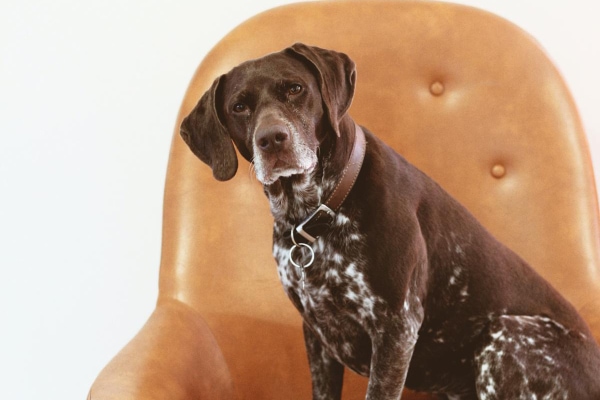
Lameness or trouble walking is one of the most common reasons for dogs to see their veterinarians. When I see these patients in practice, most of them are limping or seem painful. Some dogs make it obvious which leg is affected. They might put a little bit of weight on the leg or none at all.
However, limping is distinguishable from knuckling, where the dog is not positioning one or more of their paws correctly on the ground when they stand or walk. Generally this sign leads to different diagnostic tests and treatment options than limping caused by pain or injury. Let’s take a look at some common causes of knuckling in dogs, and what we can do to help our furry friends.
A case of a knuckling dog
Marie was a seven-year-old German Shepherd dog who presented to my clinic for limping on her right hind leg. Marie’s mom was very concerned about her normally active pup on this particular day.
On physical exam, my German Shepherd patient seemed normal except for mild limping on the right hind limb whenever she took a step forward. It seemed like she was dropping her hip as she stepped. However, her hips flexed and extended well during my orthopedic evaluation.
After gathering more information, I recommended X-rays. Thankfully, I didn’t see anything out of the ordinary. I didn’t notice any signs of hip dysplasia in dogs or bone tumors. Her knees were also healthy so a torn ACL in dogs seemed less likely. I recommended an anti-inflammatory medication for Marie and talked to her mom about restricting exercise for a week or two to help facilitate healing.
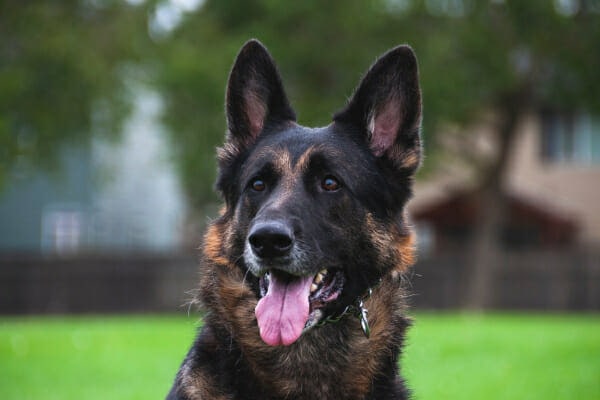
Unfortunately, my patient wasn’t any better at her recheck. In fact she was worse. She was still limping on the right hind limb but also seemed to be losing feeling in her leg. Her right rear paw was now knuckling and she was starting to show similar signs on the left hind leg. She was also wobbling when she walked. Marie’s mom mentioned that Marie seemed a little more lethargic. The big question in my mind was, “What is causing the knuckling and rapid progression of signs?”
What is knuckling in dogs?
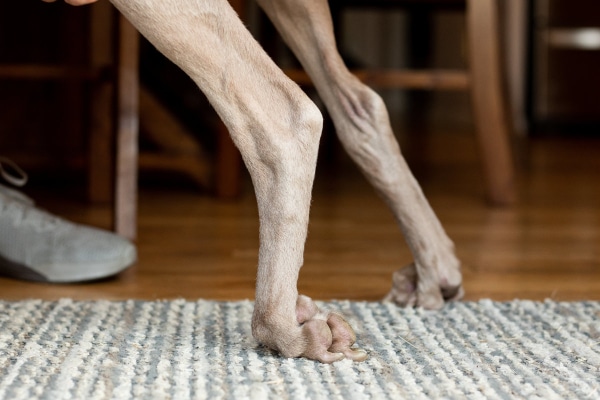
When a dog’s foot rolls under as he or she stands or walks, this is referred to as knuckling. Because the dog may end up dragging the foot, paw knuckling can cause physical injury to the top or sides of the foot. This is due to the dog standing on the top of their paw rather than on the paw pad.
Overall, knuckling is far less common in dogs than true limping, but it is still important to recognize.
What are the signs of knuckling in dogs?
Of course, knuckling itself is a symptom of another issue, but what are some secondary signs of knuckling?
Early signs of knuckling
Sometimes knuckling starts subtly or intermittently. A dog may miss a step here or there, but a majority of the time has proper paw placement. Early signs of knuckling may include:
- Frayed toenail tips
- Occasional dragging of one or more paws, or abnormal gait
- Difficulty rising
- Weakness in one or more legs
Other symptoms of knuckling
Many of the causes of knuckling are progressive, so you may notice some of these early signs are followed by other symptoms of knuckling, such as:
- Consistently uncoordinated gait
- Sores on the tops or sides of the paw(s)
- Scuffed toenails
- Difficulty gaining traction on slippery surfaces such as hard floors
If you notice any of these signs, pay close attention to how your dog places his or her paws down when walking or standing. If they’re bearing weight on the tops of their paws rather than the paw pads, it’s time for a vet appointment.
Why might a dog knuckle?
In some cases, paw knuckling occurs due to a problem with the dog’s nervous system. Normally, signals are sent through the nerves in the leg to the spinal cord and brain. This input is used to determine the position of the dog’s foot—is it upside down, right side up, being held up, etc. The term conscious proprioception describes the nervous system’s coordination of signals to identify the position of a dog’s limb.
In a healthy dog, if they place their paw down in an abnormal position, those neural pathways will send a message to the brain and the dog will quickly correct the position. If something interrupts the signaling pathway, the dog will not know where the limb is in space or how it is positioned. This causes proprioceptive deficits, such as:
- Knuckling
- Abnormal paw positioning when standing
- Paw dragging when walking
- An uneven gait (a dog that is wobbly and off balance)
Alternatively, a knuckling dog may have a normal neurologic system but their ligaments, tendons, or muscles are weak and cannot support their weight. Knuckling in puppies, for example, may be caused by nutritional issues or congenital problems. Frail senior dogs may also walk on the top of their paws occasionally due to weakness.
Now that we have discussed some general reasons a dog may knuckle, let’s move on to some of the specific conditions that may cause knuckling in dogs..
What causes knuckling in dogs?
Knuckling in dogs can most commonly be caused by neurological disorders such as:
- IVDD
- Degenerative myelopathy
- Spinal stroke
- Genetics
- Poor nutrition
- Injury or trauma
- Neoplasia (cancer)
- Obesity
If your dog is walking on the top of one or more paws, consult your vet to determine what may be going on. Let’s take a closer look at some of the more common causes of dog knuckling.
Neurological conditions causing paw knuckling
1. Spinal stroke (Fibrocartilaginous embolism or FCE)
Many individual bones known as vertebrae surround and protect the spinal cord. Cartilaginous discs sit between the vertebrae to act as shock absorbers and to give the dog’s back and neck the ability to flex, extend, and move side to side. These discs are great when they are healthy but can create quite a problem if they rupture.
Sometimes a small piece of a ruptured disc enters the blood stream and obstructs one of the small vessels that supplies blood to a certain part of the spinal cord. This is known as a fibrocartilaginous embolism (FCE) or spinal stroke in dogs. FCEs are more common in young giant and large breed dogs. However, they may also occur in some small breed dogs, especially Shelties and Schnauzers.
Affected dogs may suddenly cry out when running, jumping, or playing then immediately become weak or paralyzed. They may knuckle on one or more limbs, have an uncoordinated gait, and sometimes be unable to walk at all. After the initial moment of pain, dogs with an FCE are generally non-painful. This is one of the things that may make a vet suspicious of an FCE (rather than a different, more painful cause of spinal cord trauma) during the physical exam.
Your veterinarian may recommend X-rays, which are usually normal in cases of FCE, but can rule out other conditions with similar signs. Definitive diagnosis requires an MRI. This usually means referral to a veterinary neurology specialist.
Unfortunately, there is no definitive treatment for FCE except for supportive care and time. Some dogs may recover over several days to weeks but others may remain permanently paralyzed.
2. Intervertebral disc disease (IVDD)
In addition to causing a FCE, those discs can also contribute to intervertebral disc disease( IVDD) in dogs, which is divided into two types:
- Type I IVDD: The disc acutely ruptures into the spinal canal
- Type II IVDD: The disc degenerates over time and begins to bulge
Both of these situations put pressure on the spinal cord, which sits just above the disc. While IVDD can occur anywhere in the spine, it happens most often in the cervical (i.e. neck) or thoracolumbar area (i.e. mid-back near the junction of the last rib and the first few lumbar vertebrae).

Affected dogs may become weak or paralyzed in their rear limbs (if the problem is in the thoracolumbar region) or all four limbs (if the problem is in the neck). They are often painful in their back or neck and may knuckle or drag their feet. Severely affected dogs may be paralyzed and in some cases are unable to urinate on their own.
If your dog develops signs of IVDD, your veterinarian may recommend X-rays to look for signs of a ruptured or mineralized disc. Sometimes, a veterinary neurologist may inject dye around the spinal cord then take an X-ray (a test known as a myelogram) or use an MRI or CT to find the area(s) of compression.
IVDD treatment
Some dogs with IVDD can recover without surgery after strict rest, medications and supportive care (more on that later). However, others will need IVDD surgery for dogs to remove the ruptured portion of the disc and take pressure off the spinal cord. For a paralyzed dog, emergency back or neck surgery gives the best chances of walking again. Without surgery, paralysis may be permanent. Sometimes even after surgery, some degree of weakness or paralysis may persist with severe spinal cord injuries.
3. Degenerative Myelopathy
Degenerative myelopathy in dogs is a chronic disease of the spinal cord that causes progressive paralysis. It can start out looking like arthritis or hip dysplasia, which makes it difficult to diagnose right away. Dogs may initially just be limping on one of their hind limbs but otherwise appear normal.
However, as this spinal condition progresses, it affects the other hind leg and causes a dog to be weak, have a wobbly gait, and knuckle on one or both rear legs. Eventually, the dog becomes completely paralyzed and unable to control his or her bowels or bladder.
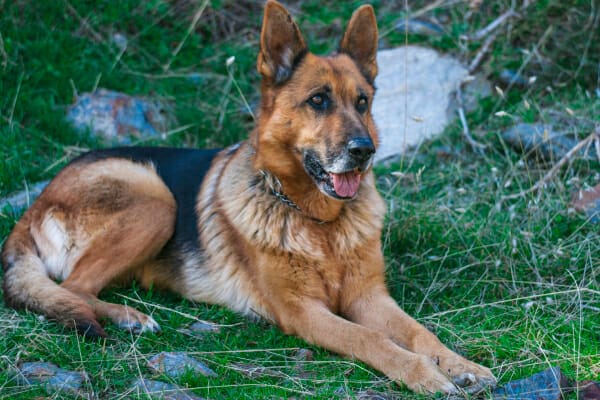
Degenerative myelopathy affects middle-aged and older dogs. It is most common in German Shepherds, Huskies, Retrievers, and Corgis. The exact cause of degenerative myelopathy is unknown. However, a mutated gene known as SOD-1 puts dogs at high risk for developing degenerative myelopathy.
There is no definitive test for degenerative myelopathy. Blood testing can look for the presence of the mutated gene. The presence of the gene plus signs consistent with degenerative myelopathy make it the most likely diagnosis.
Unfortunately, clinical signs can progress over the span of a few weeks to several months in most cases. The overall prognosis is poor because there is no cure. Therapy with aminocaproic acid, n-acetylcysteine, prednisone for dogs, and vitamin supplements may possibly help slow the progression of degenerative myelopathy, but none of those are curative.
Remember our friend Marie the German Shepherd? Unfortunately, she ended up having degenerative myelopathy. We submitted a blood sample for gene testing, and it came back positive for the SOD-1 mutation. Marie’s mom made sure to keep her comfortable and spoiled for the following two months of her dear dog’s life.
4. Wobbler Syndrome
This condition gets its name from the wobbly gait that most affected dogs exhibit. The exact cause is still undetermined, but it is possible that it may have a genetic basis since it is most common in Great Danes and Dobermans.
Dogs with wobbler syndrome typically have spinal cord compression in their neck from either an abnormally narrow spinal canal plus intervertebral disc herniation, or from a narrowed spinal canal due to changes to the surrounding bone. In addition to compressing the spinal cord, these changes may also put pressure on the nerves as they exit the spinal cord.
Dogs with wobblers tend to have an unsteady gait which is more pronounced in the rear legs. They may also knuckle their paws, have difficulty getting up, or appear weak. Nerve damage and compression can cause significant pain and affected dogs may walk with their heads lowered. Signs tend to show up in Great Danes around the age of three years and Dobermans around six years on average.
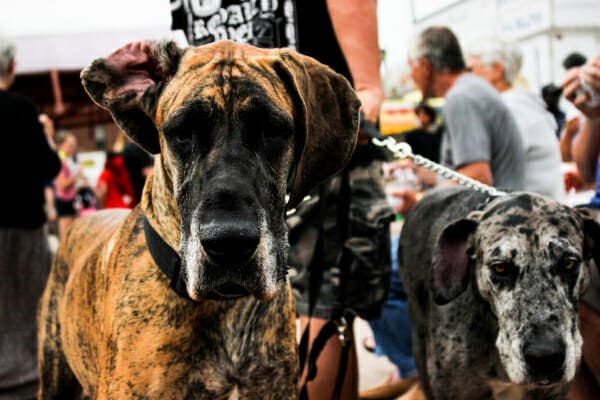
If your vet suspects your dog may have wobbler syndrome he or she will most likely start by taking X-rays to look for any bone changes or signs of other conditions. Then he or she may refer you to a veterinary neurologist for advanced imaging such as a myelogram, CT, or MRI.
Some dogs with wobblers will do well with medications, supportive care, and lifestyle changes such as avoiding leashes that go around the neck. Other dogs may benefit from surgery. A study in the Journal of the American Veterinary Medical Association demonstrated that the average survival time for dogs with wobblers is approximately four years regardless of whether they had medical or surgical management.
Other causes of knuckling in dogs
1. Carpal flexural deformity
Carpal flexural deformity is a bit different than the other conditions discussed because it doesn’t come from a problem with the nervous system. The exact cause is unknown. However, researchers believe it may result from some combination of genetic predisposition plus nutritional factors in rapidly growing puppies. A diet with excess protein and few other core elements like carbohydrates can cause painful growth spurts that contribute to this condition.
Carpal flexural deformity mostly affects large and giant breed puppies, usually younger than four months of age. As the name indicates, it affects the puppy’s carpus (i.e. wrist—the joint on the front leg between the elbow and the foot). The puppy may have hyperextension, hyperflexion or general laxity (i.e. looseness) of the carpus. Additionally, the carpus could be bowed inward (i.e. varus deformity) or outward (i.e. valgus deformity). This combination of changes may cause front paw knuckling.
The good news is that most affected dogs improve within one to three weeks of diagnosis. Sometimes a diet change (i.e. to a balanced or energy restricted diet) and/or soft splints to support the legs may be beneficial during the recovery period.
2. Trauma or injury
If a dog has a paw pad injury, they may not want to bear weight directly on that foot. Sometimes this can cause limping or completely holding up one paw, but sometimes it can present as knuckling on one or more paws. Some injuries that may cause this include:
- Thorns or sharp objects embedded in paw pads
- Burned paw pads from standing on hot surfaces
- Insect bite or sting
- Broken toenail
If your dog is suddenly knuckling, especially if it’s only on one paw, check the paw for any obvious injuries.
3. Neoplasia
Unfortunately, cancer is almost always on the list of differential diagnoses. Tumors can grow on nerves, bones, or muscles and can cause weakness or loss of proprioception. While it’s not as common as some of the other neurological conditions discussed above, it is a possible cause of knuckling in dogs.
How to treat knuckling in dogs
As you can see, there are many reasons a dog may be knuckling. Some may resolve with supportive care and time while others may require surgery. And still others may never completely resolve. There are many ways you can support your dog after he or she is diagnosed with a condition that causes knuckling.

1. Give the gift of traction
Dogs with neurologic conditions or other issues causing knuckling often have a hard time gaining traction when standing or walking. Without the paw pad making contact with the ground, dogs may slip or feel unsteady on their feet.
My signature product, Dr. Buzby’s ToeGrips® dog nail grips, can work wonders for dogs who have an unsteady gait and are knuckling, prone to slipping, or weak. They can help your dog regain traction and walk with confidence on slippery floors that otherwise might pose a mobility problem.
Plus, ToeGrips somehow seem to provide feedback to the brain and spinal cord to help enhance a dog’s conscious proprioception. If you remember from the beginning, conscious proprioception is the nervous system’s way of telling where a dog’s limbs are in space. Dogs who are knuckling usually do so because they have altered conscious proprioception. ToeGrips may help them by reminding the dog’s brain to pick up the paws, thus improving the dog’s gait.
ToeGrips not only help these dogs with stability and confidence, they can also serve to take the brunt of chronic trauma to the nails from dragging. Over time, if the dog’s conscious proprioception does not improve, the nails can start to wear in a funny pattern or even wear back to bloody “stumps.” ToeGrips, when glued in place, can protect the nail from this demise.
For dogs who are scuffing or dragging their feet, we recommend an alternative application method—affixing ToeGrips to the nails with super glue. This is not necessary for most dogs, but for dogs who drag/scuff their paws, that altered gait tends to tug the ToeGrips off the nails. Super Glue is the simple solution to keep the ToeGrips securely in position. I demonstrate application of ToeGrips using glue in this video:
2. Reduce inflammation and pain
Some conditions such as IVDD and wobbler syndrome may cause considerable pain and inflammation. Thus, your vet may prescribe medications such as non-steroidal anti-inflammatories (NSAIDs), tramadol for dogs, gabapentin for dogs, steroids like prednisone, or other medications.
Always give all medications as directed and notify your vet immediately if you notice any concerning side effects. Don’t abruptly stop any medications without first consulting your vet. Never decide to give your dog your own pain medications as human pain-relievers like Advil can be toxic for dogs.
Some dogs may also benefit from laser therapy for dogs, which has several benefits including:
- Pain relief
- Improved healing
- Decreased swelling and inflammation
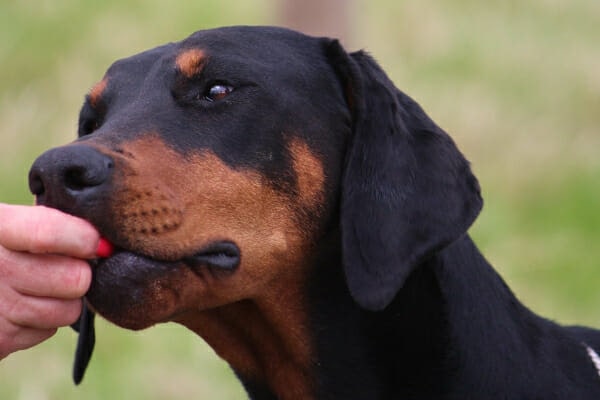
3. Help your dog get up and walk
Some dogs who are knuckling may also be weak or paralyzed, making it difficult for them to stand up or move from place to place. Two of my favorite mobility aids are the GingerLead® Support and Rehabilitation Harness, and the Help ‘Em Up® Mobility Harness. Both products can help save your back and are much more comfortable for you and your dog than using a towel as a sling (although that does work in a pinch).
Permanently paralyzed or significantly weak dogs may also do well with a wheelchair in some situations. Your vet can recommend some good companies to purchase a wheelchair from. Alternatively, there are plans online for making a doggy wheelchair. Always ensure the wheelchair fits your dog well (which is where purchasing it through a reputable company with good customer support can help) and check your dog frequently for any rub sores.
4. Find a rehab vet
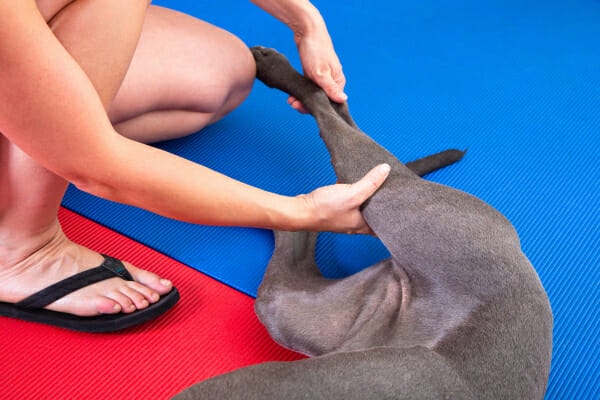
One of the best ways to help knuckling in dogs is to visit a rehab vet. In many situations, dogs can benefit from physical therapy just like people do. You may be able to find a veterinary professional who specializes in rehabilitation and physical therapy in your area. Alternatively, some general practice vets also provide rehab services.
A rehab vet can evaluate your dog and help design an exercise program specifically for him or her. They will most likely do some exercises with your dog and teach you how to do the exercises at home too. Some rehab vets may also have an underwater treadmill or a hydrotherapy pool. Both of these can be very beneficial as the buoyancy of the water will help support your dog. Plus, many dogs quite enjoy their time in the water!
5. Protect your dog’s feet
If your dog is dragging his or her feet or knuckling, sometimes the tops or side of the feet may get scraped up. This can be exacerbated if a dog walks on more abrasive surfaces like concrete. To protect your dog’s feet, try to stick to soft surfaces like grass while outside.
If your dog requires hind end support for walking, try to hold him or her in a position where the rear paws aren’t dragging but the dog can still attempt to walk to build strength (if appropriate).
For a short-term solution, you may be able to wrap your dog’s sore paw to prevent it from getting worse. Placing a piece of gauze and then gently wrapping the paw with Coban or Vet Wrap can act as a Band-Aid for urgent situations. If employing this method, you must be sure the wrap is not too tight, as it can act as a compression bandage, and it should not stay on for longer than a few hours.
Another alternative to cover your dog’s paws for short periods of time is PawZ Boots. They are thin (think latex balloon) so they don’t pose as big of a tripping hazard as bigger bulky booties but still offer some protection. I always caution owners to read the instructions carefully when using PawZ, because they do have the potential to effect obstruct circulation to the paw and are not intended to be left on continuously.
Diagnosis of knuckling in dogs
Unfortunately, there is no singular dog knuckling test. The causes are so varied, and so are the diagnostics. A thorough orthopedic and neurologic exam is a great place to start, and then your vet will have a better idea of what the most likely differentials are.
Your vet may then recommend diagnostic tests such as:
- X-rays
- MRI
- CT scan
- Myelogram
- Blood tests
Some of these tests can be performed at a general practice, but some may require referral to a specialist. Your vet will be your best guide to determine which test(s) will give you the most valuable information to reach a diagnosis.
If you notice knuckling, contact your vet
The most important thing you can do for your dog is to stay in close contact with your vet and any specialists you are working with. Since there are a variety of causes of knuckling with different outlooks and treatments, the first step is to get a diagnosis as soon as possible.
Once you know what you are dealing with, ask all your questions and do your research (using reputable sources) to find out as much as possible about your dog’s condition and how you can help. And of course, keep loving on your dog and treasure the time you have together. Have confidence that you can tackle whatever is in front of you.

Have you noticed your dog knuckling?
What was the cause and how did you help your pup? Please comment below.


Hi Dr.Buzby,
My 14 year old boy Hershey was diagnosed with arthritis and a fused spine 2 years ago. He still walked about in a stompy fashion ever since. Our vet gave him pentosan early this year to see if his mobility improved, it did for 4 months, but about 3 months ago his right paw started to swell up a lot and he slowly developed knuckling on both hind legs. We treated the swelling every time it happened (about 4 times now) after consulting our vet but the knuckling was on and off. About 2 weeks ago he completely lost mobility of his hind legs and the vet just gave us the news that it only gets worse from here and that there’s nothing more we can do. He gave us another week to decide on whether we’d prefer more steroids for him (with a warning that the side effects for a dog his age won’t be pleasant) or to pamper him silly and let him rest from the pain he’s enduring and that which he’s about to endure. I trust our vet, I really do! I guess I’m just here to vent with a little hope that perhaps there’s something we haven’t tried for him yet. Thank you for being such a support to us worried pet parents. Love from India x.
Hi Val,
I am sorry Hershey’s health is declining and he is struggling with the loss of mobility. Unfortunately, since I haven’t examined your dog myself, I can’t make specific recommendations about alternative treatment options. What was the cause of the swelling? I am having trouble piecing together how the arthritis has caused paralysis. It may be a good idea to schedule a consult with a veterinary neurology specialist to gather more information and get some answers for your lingering questions. If you have exhausted your treatment options and Hershey’s quality of life is poor, saying goodbye may be the most loving choice. I hope you can find the best way to offer your sweet boy peace and rest. Wishing you strength and comfort as you navigate this difficult path.
My 9 year old chihuahua Ellie, went to a new vet (since we moved states) for routine vaccinations and came home knuckling her back left leg. The vet tech is trying to convince me that nothing went wrong during the vaccinations but I can’t believe that when she went in fully functioning and now is having trouble walking and her knuckles are getting sore . Where do we go from here? It’s been almost a week. Appreciate your support 🙂
Hi Hannah,
I am sorry your senior girl is having issues with her left rear leg. You are right to be concerned and this may need some more investigation. Even when everything is done perfectly, there is still a chance that unwanted side effects can occur when vaccines or medications are administered. Sometimes when an injection is given, if the fluid is close to a nerve, it can cause a temporary numbing effect and look like a partial paralysis. This usually resolves on its own over a few days. I have seen this a few times in my own patients. Also, a vaccine is specifically made to stimulate the immune system. Occasionally the body overreacts when stimulated and can cause any number of strange symptoms or syndromes. The vet tech is probably correct that the vaccinations and treatments preformed on Ellie were routine and occurred without any issue. That doesn’t mean that Ellie’s body is responding in the usual predicted way. It would be a good idea to call your vet and discuss your concerns. They may need to do an exam or testing to evaluate Ellie thoroughly. If needed, you can always schedule a consult with a specialist. I always welcome second opinions as there is no such thing as too much information when it comes to advocating for your pup’s health and wellbeing. I hope Ellie is feeling better and her knuckling is starting to resolve. Feel free to leave an update if you have a chance.
My 4yo lab mix was running tonight for her ball. She loves the ball and she’s been chasing and jumping for bubbles recently. Tonight she stopped running for the ball, was panting heavily, and then was dragging/knuckling both back legs and a bit wobbly. She was very warm and did eventually lay down on her side with her legs out to the one side. I gave her a lot of water and she was beginning to cool down. I haven’t had her sit up yet, but I’m worried about her and will take her to the vet tomorrow. What should I ask my vet?
Thanks
Hi Kim,
You are right to be concerned about these worrisome symptoms in your dog. I hope you were able to get her evaluated by your vet on Wednesday. What did you find out? This definitely sounds like it could be neurologic in nature or even an issue with a blood clot. Since I haven’t examined your pup myself, I can’t make specific conclusions. My best recommendation is to get her to your vet ASAP if you haven’t already done so. I hope you were able to get some answers. Praying your girl is feeling better today and will make a full recovery.
Hi, my dog is 1 and a half years old. Mixed of maltese shihtzu. We noticed that he is knuckling on his left hind feet after getting a shot of antibiotic that his vet gave. It’s been a week now. He also drags it to walk, the reason it has wounds now. What should we do? 🙁
Hi Lei,
I am sorry your pup is struggling with hind limb weakness. I am concerned that this may be a neurological issue and the wounds are very worrisome. I highly recommend you contact your vet as soon as possible and discuss these issues. They may want to have your dog come in for an exam or refer you to a neurology specialist. Either way, I think this should be evaluated as soon as possible to prevent further complications.
I never heard of this before, so I suddenly learned about it when trying to google for similar words and looking at pictures.
My 14 year old dog showed this symptoms/behavior her last two days in life (knuckling) with bad balance when taking short walks in the yard. She walked slow, swaying her back part like She was drunk . A couple lf times She actually walked forward but sideways, it all was very distressing to see… The thing is, she was only knuckling her paws when i were lifting her up and letting her down again, not when she stood up on her own or walked. I had to correct all her paws when letting her down on the Floor after carrying her down the stairs.
She was diagnosed with lymphoma stage 5 (found in spleen and blood stream) before these last symptoms showed. She hadnt been eating and was lethargic for days before.. I suspect it was caused by the cancer, but do you have any thought why or how it could have caused this?
Hi Marko,
I am sorry you had to say goodbye to your senior girl. Lymphoma can do some strange things during its final stages. Since I did not examine your pup myself, it is hard to make specific conclusions. It is possible the cancer spread to the brain or spinal cord, or the lymph nodes were enlarged enough to interfere with the nerves. And what you describe with the knuckling only happening when she was lowered to the ground is usually what is seen with the first stages of proprioception loss (brain doesn’t know where the feet are placed in relation to the body). As proprioception loss advances, you would have started to see knuckling when walking, stumbling, and even partial paralysis of the legs. It sounds like you made the best decision for your beloved girl and allowed her to find peace and rest and took away her struggling. I hope your heart will find comfort in knowing you gave her a happy life. Bless you.
Hi Dr, Buzby, a couple weeks ago I noticed my 9.5 year old Rhodesian Ridgeback started knuckling her back paw towards the end of walks. Our vet did X-rays (which looked good), but she worried it may be a nerve issue like degenerative myelopathy. We opted to start her on gabapentin and see if that helped before taking her to a neurologist. As the week progressed her hind legs completely stopped working, she was no longer able to stand on her own, and couldn’t control her bowels – 1 week! My husband and I made the difficult decision to put her to sleep as we were so concerned about quality of life and how quickly her health deteriorated. She has been gone a couple days and I cannot shake the extreme guilt that we didn’t try to do more for her like prednisone or cbd oils after reading a lot about different people’s experiences. Also guilt that I didn’t notice how much weaker her back leg had gotten leading up to the knuckling (just a few weeks ago she was running like her normal, happy self in the backyard). I guess I just wanted to come here to share our awful experience, vent my emotions, and also to thank you for all of your articles. They have all helped tremendously and I am grateful for your forums to hear other’s experiences as well too. Respectfully, Marian.
Dear Marian,
I am so sorry you had to say goodbye to your sweet girl. It sounds like you made a loving choice to prevent unnecessary suffering and pain. Letting go is never easy, but especially when things progress so quickly you hardly have time to process it all. Thank you for being willing to share your experience with our readers as it may help someone else in a similar situation. I pray with time your heart will heal. May the memories of the good days be a comfort to your soul. ♥
Hi,
My dog knuckles under at times, in her hind leg, and walks with a twist of her paw. Her leg is stiff and she has difficulty lifting it. Her other leg has since also gotten stiff. The vet examined and x-rayed her with no trouble found. Prior to this lameness her hind legs splayed out sideways on laminate flooring and we had to help her get up. We don’t know if this caused her trouble or occurred because of a degenerative condition. If I knew which joint was involved I’d like to try a brace. Any idea?
Thanks
Mike
Hi Mike,
It sounds like your dog is a bit of a tricky case. I am concerned about a neurological issue or a problem with other soft tissue structures, such as tendons and ligaments, since your vet did not find any bone abnormalities on the x-rays. X-rays are good for evaluating bone but less efficient when looking at soft tissues. It might be a good idea to have your pup examined by a veterinary neurologist. Also, no matter what the cause is found to be, a rehabilitation/physical therapy vet may be able to help restore some mobility and function to your girl’s rear legs. A rehab vet can also let you know if a brace is a good idea. They will measure your pup and get one ordered that is right for your dog’s specific needs. Best wishes to you and your sweet girl.
I have a 7 month old great Dane mix. 1.5 weeks ago he started showing a the signs of Myelopathy except for no worn toe nails. I had him to the vet. They did some blood work, took x-rays and found nothing to indicate anything specifically wrong. Currently he is on 2 antibiotics ( 5 days no improvement). The vet said if after a week w no improvement we would try steroids. Today I had him tested for Lyme disease and that was negative. Where do I go next?
Hi Barbara,
I am sorry your Dane pup is having so much trouble. It is hard to watch them struggle especially when they are so young. Since I haven’t examined him myself, I can’t make specific conclusions. I am suspicious about a condition that is more common in large breed dogs called Wobbler Syndrome. Here is a link to a site with more information:
With that being said, I highly recommend you have him evaluated by a veterinary neurologist. They have lots of experience with complicated cases and access to testing and treatments that can be cost prohibitive in general practice. I hope you can find the help your sweet boy needs. Praying for a quick and complete recovery.
I have a 95 pound, almost 12 year old Viszla/Sharpei mix. She started knuckling in the front left leg about 6 months ago. We’ve tried splints, glucosamine/chrondoitin, flaxseed, sling strap. It’s just getting worse. Unfortunately we live in a 3rd floor apartment with no option to move right now. She doesn’t want to go down the 3 flights of stairs…thus I’m putting out potty pads (which she’s too embarrassed to use even with coaxing) and not eating regularly (she knows food = poop=stairs). Any suggestions? I’ve ordered a doggie type athletic tape with a boot style splint that should be here in a couple of days. This is heartbreaking!!!
Hi Kari,
I can only imagine how nervous your poor girl must be thinking about three flights of stairs to go potty. You are right to be concerned and it is wonderful you are being her advocate and searching for answers. Since I haven’t examined your dog myself, it is difficult to make specific recommendations. I am curious if she has been given a specific diagnosis for the knuckling? If not, it might be a good idea to schedule a consult with a veterinary neurologist. Once you have a diagnosis and know “why” the knuckling is happening, it would be much easier to come up with a comprehensive treatment plan. I also highly recommend rehabilitation and physical therapy. There are ways to help strengthen her muscles and give her more confidence while trying to improve her mobility. I hope you can find a solution that works for you and your girl. She deserves to be happy and comfortable in her home. I wish you the best of luck as you navigate this difficult road ahead.
Hi!
My 8 year old boxer is 2weeks post FHO procedure. He is not weight bearing as of yet.. I have noticed when he does attempt to bear weight he has been knuckling on the operative leg since his surgery 🙁 I really hope this resolves with the NSAID he has been prescribed. We are also going cold laser therapy treatments. Any other thoughts on this post FHO procedure?
Hi Alex,
I am glad the surgery went well. It sounds like your boy is progressing just as expected for 2 weeks post-op. The laser therapy is a great choice! The only other recommendation I have is to consult with a veterinary rehabilitation specialist if you haven’t already. They can assess how the healing process is going and assign home exercises to practice that will help your boy recover faster. Wishing your pup the best and praying for a complete recovery.