Melatonin for dogs? You’re probably familiar with melatonin as a common over-the-counter sleeping aid for humans. But did you know this hormone also has benefits for our canine friends? It is great for decreasing anxiety, promoting normal sleep-wake cycles, and helping to manage certain conditions. Integrative veterinarian Dr. Julie Buzby answers your questions: what is melatonin, is melatonin safe for dogs, how can melatonin help my dog, what are the pros and cons, and more.
- What is melatonin?
- Can dogs take melatonin?
- Melatonin production in the body
- What are the benefits of melatonin for dogs?
- What conditions is melatonin used for in dogs?
- Melatonin for anxious dogs
- Melatonin for dogs with hair loss
- Melatonin may potentially help dogs with Cushing's disease
- Melatonin for dogs to sleep better
- Melatonin for ITP in dogs
- Melatonin as an adjunctive therapy for some cancers in dogs
- Is melatonin safe for dogs?
- Is human melatonin safe for dogs?
- What are the best types of melatonin supplements for dogs?
- Are there dogs who shouldn't take melatonin?
- What are the potential side effects of melatonin in dogs?
- Are there drugs that interact poorly with melatonin?
- How much melatonin can I give my dog?
- How quickly will melatonin start to work?
- What are the pros and cons of melatonin for dogs?
- Talk to your vet about melatonin for dogs
- What questions do you have about melatonin for dogs?
Several years ago, my family adopted our dog, Zeke, from animal control. He was a shy, black mutt whose haunting eyes conveyed a checkered past.
Although Zeke was now living his best life with us, he continued to struggle with anxiety, especially separation anxiety. Normally, as a veterinarian, I wouldn’t necessarily reach for melatonin as a first-line treatment for anxiety. But I did for Zeke, and it ended up being enough to “take the edge off.” Thanks to melatonin, Zeke began to realize his crate was a safe space, and his separation anxiety decreased.
My own dog’s success story prompted me to research and share all the marvels of melatonin and its many uses in both humans and our pets. Let’s take a look at how it might help some of our canine companions.
What is melatonin?
Melatonin is a naturally occurring hormone most well-known for managing sleep-wake cycles. However, it can also reduce anxiety, support the immune system, act as an antioxidant, and potentially play a role in treating conditions like cancer, immune-mediated thrombocytopenia, and atypical Cushing’s disease.
Can dogs take melatonin?
Dogs’ bodies already produce melatonin, but they can also benefit from taking a melatonin supplement in certain situations. As an integrative veterinarian with a passion for senior dogs, I love recommending melatonin for my patients. It is inexpensive, has minimal side effects, is safe for most dogs (with a few exceptions that we will discuss in a bit), and has many useful applications in veterinary medicine.
Before we dive into how melatonin can help your dog, it is important to understand a bit about melatonin production.
Melatonin production in the body
Melatonin is produced by the pineal gland in the brain of humans and many animals, including dogs.1,2,3,4,5,6 The pineal gland is responsible for managing sleep-wake cycles (AKA our circadian rhythm).4
Other organs such as the eyes, skin, bones, gastrointestinal tract, platelets, and thymus all produce melatonin, but to a much lesser degree than the pineal gland.5
Exposure to darkness tells the pineal gland to produce melatonin, and exposure to light turns off melatonin production. 1,3,6 It’s no surprise then that levels of melatonin are ten times higher at night than they are during the day.6 (As an aside, exposure to light from electronics at night can cause sleep issues in people by blocking melatonin production.)
The seasons also affect melatonin production, with overall melatonin levels starting to rise in the autumn as daylight grows shorter. These levels peak at the shortest day of the year, the winter solstice.3
After the pineal gland produces melatonin, it crosses the blood-brain barrier and enters the body and cerebrospinal fluid (CSF).6 It binds receptors throughout the body to exert its many effects.
What are the benefits of melatonin for dogs?
There are many benefits of melatonin, with more continuing to be added to the list all the time. Below are the various functions of melatonin that are being investigated in dogs, humans, and other species.5
- Controls sleep/wake cycles
- Promotes regrowth of hair
- Reduces anxiety
- Positively impacts gut-microbiome-brain axis
- Acts an an antioxidant—dogs who received melatonin prior to a routine spay had increased levels of antioxidant enzymes and decreased oxidative stress13
- Protects the nervous system components
- Balances and supports the immune response
- Protects the GI system
- Regulates mood
- Helps control reproduction
- May have some anti-inflammatory properties
What conditions is melatonin used for in dogs?
Initially, melatonin was primarily viewed as a solution for sleeping disorders. But its usefulness extends far beyond helping you or your dog have a good night’s snooze. Dogs may take melatonin for a variety of problems. Let’s look at the most common ones.
Melatonin for anxious dogs
Melatonin has the potential to decrease anxiety in dogs via several pathways. One of the effects of melatonin is a reduction in the brain chemical dopamine. Too much dopamine can lead to anxiety. Thus, reducing dopamine levels can decrease signs of anxiety, particularly separation anxiety, in some dogs.
Additionally, melatonin can interact with the GABA system in the brain. GABA is an inhibitory neurotransmitter (brain chemical) that turns down the signals in the brain to create a sense of calm. Therefore, melatonin’s influence on the GABA system provides anti-anxiety effects.
Melatonin for dogs reduces vet visit anxiety in combination with gabapentin and acepromazine
Several studies have demonstrated the favorable effects of melatonin on dogs with anxiety. One study looked at using melatonin in combination with gabapentin for dogs and acepromazine (the “chill protocol”) as a way to reduce fear and anxiety during vet visits.10 In the study, dogs who were previously fearful and/or aggressive during veterinary visits showed a decreased stress score while on this combination of medications.
Melatonin wasn’t working alone in this situation, but this study still shows that it can play a supporting role in reducing anxiety in dogs.
Melatonin decreases pre-surgical anxiety and anesthetic dose in dogs
In another study, researchers looked at the effects of administering melatonin to dogs prior to anesthesia for elective surgeries.11 Dogs were categorized as “trustful” or “skeptical” based on their attitude. Trustful dogs who received melatonin before surgery required a lower dose of propofol, a drug used to induce anesthesia, than those who did not. Plus, the skeptical dogs who were administered melatonin were calmer than those who had not received it.
This indicates that melatonin may have merits in reducing anxiety before surgery.
Reducing anxiety in dogs often takes a combination of approaches
However, I want to be clear that melatonin is not the new wonder drug for anxious dogs. It could certainly be of benefit for some dogs with mild anxiety, but it probably isn’t going to be sufficient on its own for dogs with more significant anxiety.
Environmental enrichment, medications such as fluoxetine for dogs or trazodone for dogs, supplements like melatonin, calming probiotics for dogs, and other approaches all play a role in reducing anxiety. This is another area where I strongly encourage you to work with your vet to create a plan for your dog.
Melatonin for dogs with hair loss
Melatonin can also be helpful when a dog is losing hair. Exactly how melatonin influences hair growth is still being investigated, but it seems to promote the growth phase of hair (anagen) while also providing antioxidant effects to protect the hair follicle.
Some dogs experience seasonal flank alopecia, where their hair thins or falls out during the winter months when days are shorter. Just like it can help level out seasonal disturbances in circadian rhythm, melatonin supplements can help to lessen the effects of seasonal alopecia in dogs. Additionally, melatonin may be helpful for dogs who have alopecia X. The exact cause of the hair loss in alopecia X is unknown, but melatonin does seem to help the hair regrow.
This is such a big topic that I’ve dedicated an entire blog post to it. To learn more, check out my article on melatonin for dogs with hair loss.
Melatonin may potentially help dogs with Cushing’s disease
Traditionally, Cushing’s disease in dogs causes elevated levels of the hormone cortisol. However, there are also some dogs who look like they have Cushing’s disease but don’t test positive for it on the available screening tests. These dogs tend to have elevated levels of adrenal hormones other than cortisol and are said to have “atypical Cushing’s disease.”
(Note: There is a bit of uncertainty in the veterinary community surrounding what constitutes atypical Cushing’s disease and if it is truly a distinct disease entity.)
Melatonin plus lignans as a proposed treatment for atypical Cushing’s disease in dogs
Melatonin in combination with lignans (SDG lignan or HMR lignan) has been proposed by the University of Tennessee College of Veterinary Medicine as a potential treatment for atypical Cushing’s disease. They published a paper showing that melatonin plus lignans decreased the secretion of several adrenal steroid hormones in human adrenal carcinoma cells.12
Based on that information, the researchers extrapolated that this combination of lignans and melatonin could be effective for atypical (or maybe even typical) Cushing’s disease. However, currently, there is no clinical data to support the efficacy of this treatment. More research is needed.
If you are considering trying melatonin plus lignans for your dog with Cushing’s disease, please talk to your veterinarian about the pros and cons.
All this aside, melatonin can still be a useful addition to traditional Cushing’s disease treatment. Since one of the symptoms we commonly see in dogs with Cushing’s disease is hair loss, melatonin may help with hair regrowth.
Melatonin for dogs to sleep better
Melatonin’s best-known claim to fame is helping promote proper sleep-wake cycles. There are two situations in particular where the sleep-boosting properties of melatonin can come in handy.
Melatonin for dogs with canine cognitive dysfunction
In my current veterinary practice, which primarily serves senior dogs, I routinely find myself recommending melatonin supplements for my patients who are showing signs of dementia in dogs. Among a host of other symptoms, dogs with canine cognitive dysfunction (dementia) may have disrupted sleep patterns. This can lead to signs of senior dog anxiety at night, such as panting, pacing, barking, and generally acting upset or confused.
For more on how melatonin supplements and other solutions can help restore quality of life in dogs with dementia, please read my article on canine cognitive dysfunction in dogs.
Melatonin for blind dogs
The interplay of darkness and light normally helps control melatonin secretion from the pineal gland. However, because blind dogs can’t necessarily detect the light and dark cycles, their melatonin regulation may be abnormal. This can understandably lead to sleep problems. Giving supplemental melatonin may help balance these levels out so that blind dogs can sleep through the night more consistently.

Melatonin for ITP in dogs
Dogs and humans can develop immune-mediated thrombocytopenia (ITP in dogs)—a condition where the body attacks and destroys its own platelets. Platelets are blood cells that are critically important for blood clotting. So with low platelets in dogs, the patient can experience severe bruising and bleeding.
A study in humans diagnosed with difficult-to-control ITP showed improved ability to clot and to stop bleeding when melatonin was added to their treatment protocol.1 Researchers believe melatonin helps ITP patients by encouraging the cells that produce platelets in the bone marrow, megakaryocytes, to reproduce more quickly.1,4,5 In other words, melatonin appears to stimulate platelet production in immune-mediated thrombocytopenia.
We don’t yet have much data on using melatonin to treat ITP in dogs, but it is possible to extrapolate so much from human medicine into veterinary medicine. Melatonin has a high safety index, and ITP can be fatal. So, there are very few contraindications for at least giving it a try in dogs with ITP (as long as the vet has ruled out other medical conditions).
Note: It appears melatonin may be a helpful additional therapy for ITP, not a replacement for traditional treatment of ITP— immunosuppressant medications. I’m excited to keep watch for more research on using melatonin to treat ITP in dogs.
Melatonin as an adjunctive therapy for some cancers in dogs
There may be benefits to using melatonin, in combination with other treatments, for the management of certain cancers. Melatonin can be especially useful in helping with the treatment of hormone-mediated cancers, such as mammary cancer.
Some studies have shown that melatonin may have antioxidant properties to counteract the effects of chemotherapy, and it also may help prevent the spread of certain types of cancer.6,8
Other studies indicate that melatonin may sensitize some cancers to chemotherapy, allowing for the treatment of some resistant tumors.7 In mice, melatonin helped improve anemia caused by chemotherapy medications.1
Is melatonin safe for dogs?
I always recommend talking to your veterinarian to determine whether melatonin is safe or appropriate for your dog.
The good news is that, in general, melatonin is safe for most dogs. When dogs take melatonin, the side effects tend to be minimal, and overall, it remains in the body for a very short period of time. The half-life of melatonin is only 18.6 minutes in the dog, which means it is rapidly cleared from the body.5 Usually, it is completely out of the body within 24 hours.
Also, while most dogs can have melatonin without a problem, there are a few important exceptions, which I explain further down in this article.
Is human melatonin safe for dogs?
Generally speaking, as a veterinarian, I consider human melatonin safe for dogs—as long as it doesn’t contain the sugar substitute xylitol (birch sugar), or other potentially harmful ingredients. The biggest product to watch out for is melatonin gummies or chews. Some gummies contain xylitol, which is harmless in people but incredibly toxic to dogs.
Beware of xylitol in the human melatonin supplements you give your dog
It is critical that pet parents read the label carefully and only give their dogs melatonin without xylitol (birch sugar). While melatonin itself is safe, xylitol is HIGHLY toxic to dogs.
What are the best types of melatonin supplements for dogs?
When thinking about giving your dog a melatonin supplement, it’s important to remember that, unlike prescription medications, melatonin is considered a dietary supplement. Therefore, the FDA does not regulate melatonin supplements. Unfortunately, without FDA regulation, we can see variability in some nutraceuticals, and melatonin is no exception.
Melatonin products may contain a far different amount of melatonin than what the label claims. In a study analyzing 25 commercially available melatonin supplements made for humans in the US, the actual amount of melatonin varied anywhere from 74% to 347% of the labeled quantity.14 Additionally, some melatonin supplements are more bioavailable (usable by the body) than others.
Thus, it is important to ensure you’re buying a brand of melatonin that is well-known and trusted by your veterinarian. If shopping for one on your own, look for a human product that meets the guidelines for the United States Pharmacopoeia (USP) Dietary Supplement Verification program or NSF Certification. Or look for a dog product that has the National Animal Supplement Council (NASC) quality seal.
Should you use a melatonin supplement made for humans or dogs?
It doesn’t matter as much if you buy a dog-specific melatonin supplement or a human one as long as you buy a quality product that is safe, effective, and right for your dog. When picking a melatonin supplement for your dog, be it a human product or a dog-specific product, keep these tips in mind:
- Read the list of ingredients. Some human products may contain xylitol, which is toxic to dogs. Additionally, both human and dog melatonin products sometimes contain other active ingredients or supplements. Additional active ingredients may change the overall effect the product has on your dog or the safety of the product.
- Look for a quality seal. Products approved by the NASC, USP, or NSF are ideal because they are the most likely to conform closely to the label in terms of ingredients and quantities. This isn’t to say that supplements without those certifications are bad, just that they can be more of an unknown in terms of quality.
- Consider what form you want to give the melatonin in. There are various forms of melatonin supplements for both humans and dogs—capsules, tablets, chews—and even a liquid melatonin for dogs! One benefit of dog-specific products is that they may have tasty flavorings. This can make them appealing to dogs who don’t take pills well. Alternatively, liquids are great for other dogs, and some dogs will eat a pill without thinking twice.
- Look for “regular”, not “extended release” melatonin. The extended-release products created for humans may pass through your dog’s GI tract too quickly to release all the melatonin, making them potentially less effective or variable in their efficacy. Thus, it is best to stick to “regular” melatonin supplements for dogs.
Product recommendations
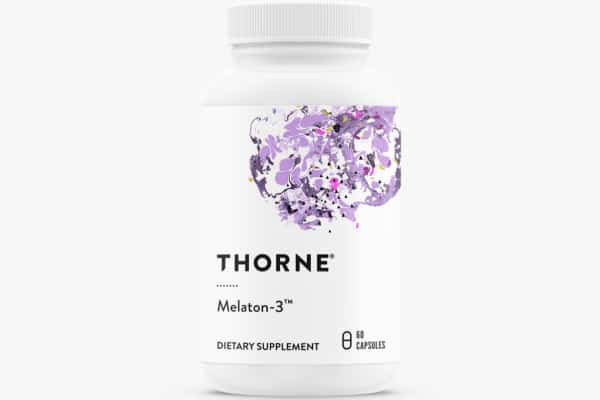
Nature’s Bounty® melatonin 3 mg (a human product) seems to be an overarching favorite brand for many veterinarians. Additionally, I am a fan of Thorne® Melaton-3™ Dietary Supplement. However, the best melatonin supplement is the one your vet recommends for your dog’s situation (and is xylitol-free). Please work with your vet to find a product that is right for your dog.
Are there dogs who shouldn’t take melatonin?
While most dogs can have melatonin without a problem, there are a few exceptions.
- Because melatonin is metabolized in the liver and eliminated through the urine and feces, caution is advised in liver disease in dogs or kidney disease in dogs.4,5,6
- Working dogs should not take melatonin as it can interfere with psychomotor vigilance (the ability to stay focused and alert for a sustained time).5
- Dogs who are on medications that boost serotonin levels in the body should take melatonin with caution (more on this in a bit).
- Higher doses of melatonin may negatively impact ovulation and the production of sperm, so it should be avoided in breeding animals.5
A note about the use of melatonin in dogs with seizures
Melatonin has been shown to have both anticonvulsant and proconvulsant properties in humans and laboratory animals. Anecdotally, the same seems to be true of dogs. Some veterinarians reported that starting melatonin for another issue (e.g., seasonal alopecia) in dogs with a history of seizures may have increased the dog’s seizure frequency. However, others felt that it may have helped control their patients’ seizures (in combination with other anti-seizure medications).
It is hard to know for sure what, if any, relationship melatonin has with seizures since seizures are a complex entity. Thus, if your dog has a history of seizures, it is best to talk to your vet before starting melatonin.
What are the potential side effects of melatonin in dogs?
In dogs, the side effects of melatonin are typically minimal, but any medication or supplement can have potential side effects. I recommend speaking with your veterinarian before giving your dog a melatonin supplement (or any other supplement or medication).
Here are some possible side effects of melatonin in dogs:
- Drowsiness or lethargy—Because melatonin is the hormone responsible for sleep, increased sleepiness and a calmer demeanor are to be expected.
- Decreased fertility—Melatonin impacts sex hormones which can lead to poor fertility.
- GI upset—Some dogs may be nauseous (drooling or licking lips) or have mild vomiting or a decreased appetite. Giving melatonin supplements with food may decrease the impact on the GI tract.
- Itchiness, decreased or elevated heart rate, and dizziness are melatonin side effects in humans but it is unknown if the same happens with dogs.
As a point of interest, one of the veterinary pharmaceutical handbooks advised treating dogs who had eaten a large quantity of melatonin by pumping the stomach.5 However, the reason they advised pumping the stomach was not because of the toxic effects of melatonin. Rather, it was to prevent a “stone” from forming in the gastrointestinal tract from the inactive ingredients used in the tablets.5
You know it’s a safe medication when the reference guide is more concerned about the tablets creating a “foreign body” than the drug itself!
Are there drugs that interact poorly with melatonin?
That being said, melatonin may not “play well with” certain medications. Thus, it is extremely important to tell your vet about any medications or supplements your dog is currently on before starting melatonin.
Medications or supplements that increase serotonin levels
Serotonin is a precursor to melatonin, and some melatonin supplements are contaminated with serotonin. Thus, giving your dog melatonin and a medication or supplement that increases serotonin levels in the body could potentially put him or her at risk for dangerously high levels of serotonin (serotonin syndrome). There is a long list of serotonin-increasing substances, but some of the more common ones include anti-anxiety medications like trazodone, fluoxetine, or clomipramine. Selegiline for dogs, a medication used for canine cognitive dysfunction, is also on that list.
To be clear, this isn’t to say that you absolutely should not use melatonin supplements if your dog is on a medication that increases serotonin, just that it is critical to consult your vet before doing so. Your vet can advise you about the risk vs. reward for your dog’s situation.
Other medications
Additionally, the following drugs may interact poorly with melatonin:
- NSAIDS—Giving non-steroidal anti-inflammatory drugs may decrease melatonin levels in the body
- Steroids—Melatonin may interfere with the effectiveness of steroids or other immunosuppressant medications
- Blood pressure medications or medications used for heart problems
- Benzodiazepines
- Succinylcholine
- Warfarin
Note: Some of these drug interactions are extrapolated from data in humans. This is not an exhaustive list.
How much melatonin can I give my dog?
While there are a variety of melatonin dosages for dogs listed online, the best thing you can do is talk to your veterinarian if you think your dog could benefit from melatonin. Not only can your vet confirm that melatonin would be a good choice for your dog, but he or she can also recommend the correct dosage.
Depending on what you are using the melatonin for, your dog may take it every 8 to 24 hours and/or only before specific events. There really isn’t a one-size-fits-all answer for the melatonin dosage and administration instructions. That’s why your vet needs to be involved in the process.
How quickly will melatonin start to work?
The good news is that melatonin gets to work quickly—usually within 1-2 hours. However, you may not see results right away, especially if you are using it for something like hair loss in dogs.
What are the pros and cons of melatonin for dogs?
To summarize, there are many pros and few cons of melatonin for dogs.
| PROS | CONS |
| Can help treat a number of conditions: dementia, anxiety, hair loss, cancer, and maybe others | Can cause drowsiness |
| Large margin of safety in dogs | May cause drug interactions with certain other medications |
| Inexpensive | Not FDA regulated, so the actual melatonin content may vary |
| Comes in a variety of formulations | Certain formulations contain xylitol, which is not safe for dogs |
| Does not require a prescription | |
| Few and generally mild side effects | |
| Short acting | |
| Widely available |
Talk to your vet about melatonin for dogs
My dog Zeke’s success with melatonin prompted me to spend quite a bit of time researching this marvelous hormone. I was stunned by all the studies I found about the uses for melatonin that extend far beyond promoting sleep. And it is exciting to think about all the potential applications for melatonin that have yet to be fully explored.
Whether your grey-muzzled companion is feeling anxious or needs nighttime rest, melatonin might be just what you are looking for. But before you pick up melatonin at the store or order some online, remember to talk to your vet. He or she can advise you about whether trying melatonin is a good idea, help you find a safe and effective melatonin product, and recommend a dose and schedule that is best for your dog.
What questions do you have about melatonin for dogs?
Please comment below. We can all learn from each other.
Sources:
- Byers, C G. “Just Ask the Expert: Is There a Role for Melatonin in Dogs and Cats with IMHA?” DVM360, 27 July 2017, veterinarymedicine.dvm360.com/just-ask-expert-there-role-melatonin-dogs-and-cats-with-imha.
- Jeromin, A M. “Seasonal Affective Disorder Can Be Culprit for Canine Hair Loss.” DVM360, 1 Apr. 2003, veterinarynews.dvm360.com/seasonal-affective-disorder-can-be-culprit-canine-hair-loss.
- “Melatonin and Seasonal Alopecias.” Veterinary Practice, 1 Nov. 2013, veterinary-practice.com/article/melatonin-and-seasonal-alopecias.
- “Melatonin.” Plumb’s Veterinary Drug Handbook, Veterinary Information Network, 1 Jan. 2015, www.vin.com/members/cms/project/defaultadv1.aspx?id=4692338&pid=451&.
- “Melatonin.” VIN Veterinary Drug Handbook, Veterinary Information Network, 30 June 2017, revised 02 December 2024www.vin.com/members/cms/project/defaultadv1.aspx?pId=13468&id=7868548.
- “Melatonin: Side Effects, Uses, Dosage (Kids/Adults).” Edited by L Anderson, Drugs.com, 26 Mar. 2019, www.drugs.com/melatonin.html.
- Reiter, R J, et al. “Melatonin, a Full Service Anti-Cancer Agent: Inhibition of Initiation, Progression and Metastasis.” Int J Mol Sci, vol. 18, no. 4, 2017, doi:10.3390.
- Rosenthal, M. “When Pets Lose Their Sense Of Place.” Veterinary Practice News, 9 July 2013, www.veterinarypracticenews.com/when-pets-lose-their-sense-of-place/.
- Lopes, J R, et al. “Evaluation of melatonin treatment in primary culture of canine mammary tumors.” Oncol Rep, vol. 33, no. 1, 2015, doi:10.3892.
- Costa, R S, et al. “Gabapentin, melatonin, and acepromazine combination prior to hospital visits decreased stress scores in aggressive and anxious dogs in a prospective clinical trial.” J Am Vet Med Assoc., vol. 216, no. 11, 2023, doi: 10.2460/javma.23.02.0067. PMID: 37495226.
- Niggemann J R, et. al. “Preoperative calming effect of melatonin and its influence on propofol dose for anesthesia induction in healthy dogs.” Vet Anaesth Analg. vol. 46, no 5. 2019, doi: 10.1016/j.vaa.2019.02.009. PMID: 31351807.
- Fecteau K A, et. al. “Effect of combined lignan phytoestrogen and melatonin treatment on secretion of steroid hormones by adrenal carcinoma cells.” Am J Vet Res., vol. 72, no. 5, 2011, doi: 10.2460/ajvr.72.5.675. PMID: 21529220.
- Salavati, S. et al. “The effects of melatonin treatment on oxidative stress induced by ovariohysterectomy in dogs.” BMC Vet Res Vol. 17 no. 181, 2021, . https://doi.org/10.1186/s12917-021-02882-1
- Cohen P A, et al. “Quantity of Melatonin and CBD in Melatonin Gummies Sold in the US”. JAMA. vol 329 no. 16. 2023. doi:10.1001/jama.2023.2296
This post was originally published on October 6, 2022 and updated on November 10, 2025.


With which active ingredient of a blood pressure lowering agent does melatonin interact?
Hi Christine,
This is a great question but unfortunately one that does not have a specific answer. The research is a bit fuzzy as to whether melatonin causes an issue with blood pressure medications or not. Some studies have shown that melatonin reduces the effectiveness of blood pressure meds, causing blood pressure to rise. The specific active ingredient of the blood pressure medication doesn’t seem to make a difference. There is also research that shows some forms of melatonin (slow release vs. fast acting) can actually lower blood pressure especially during the night. So, to err on the side of caution, I do not recommend giving melatonin to a dog that is currently taking blood pressure medications. I hope this helps clear things up a bit. Thanks for bringing up this important topic!
I’ve been advised to give my dog melatonin to help with seasonal alopecia. There are so many different formulas on the market. Is it best to give the drug free formula or not? I know to stay away from anything with xylitol in it. Please help.
Hi Katie,
You are right, there are TONS of options when it comes to melatonin! I understand how this can be very confusing and stressful when trying to choose a product for your dog. All melatonin should be “drug free”. The meaning of having this on the label is just to let consumers know that melatonin is not considered a drug but is labeled as a supplement and is therefore not regulated by the FDA. My advice is to go with a brand you know and trust. Your vet may have a favorite and could guide you in the selection process. Hoping this will help make your decision making go a bit smoother. Best of luck to you and your pup!
Hi Dr Busby, can we give 2mg slow release melatonin rather than the standard melatonin to a senior Maltese with cushings disease? He weighs 6 kgs. Thanks
Your feedback would be greatly appreciated
Hi Susan,
I hope you saw my reply to your first question that I responded to on 12/19. Extended-release melatonin is not recommended for dogs as it could pass through their GI tract too quickly to have its full effect. As always, if you have concerns about your dog’s medications it would be best to discuss them with your vet. Best wishes to you and your senior pup.
Hi, why do you not recommend prolonged release melatonin for senior dogs with cushings? What is the difference between the prolonged release and normal melatonin.. Thanks
Hi Susan,
Thank you for bringing up this important point! Normal melatonin is considered “instant release”, and you get the full effect right away. Extended release allows the medication to be slowly absorbed by the body and takes much longer for the full dose to become available. The reason why extended-release formulas of melatonin are not recommended for dogs has to do with the specific way their bodies function. The transit time for food or medications to move completely through a human body takes longer than it does for dogs. Because things move through a dog’s GI tract faster, there is a chance the extended-release medication could come out in the feces before it has time to deliver the full dose needed. Also, the transit time through a dog’s GI tract can vary from day to day depending on what the dog’s diet consists of. So, with extended-release medications, you run the risk that they will vary in their effectiveness if they even work at all. I am so glad you asked this question and we have updated the article to address this in more detail. Again, thank you! And best wishes!
Hi Dr Buzby- I wanted to point out that if a drug “lowers the seizure threshold” that means seizure frequency will increase, not decrease. So a dog with seizures should not be taking melatonin – it will definitely not treat seizures. You may want to change your article because the current advice could be dangerous.
Hi Deborah,
Thank you for bringing this to our attention! The wording has been changed and article updated to reflect the most current information available. I appreciate your honest concern for other readers and their beloved pups!
My pups have a hard time sleeping and their weight is around 12 to 15 lbs and I give them 3mg of melatonin at night before bed but it only seems to work for around 3 hours, why is that when I have friends that give their even larger dog less and it seems to work all night for them?
Hi JC,
I am sorry the melatonin is not producing the results you had hoped for. Every dog is different and may not respond the same way. I recommend you discuss these concerns with your vet. They can evaluate the dosage and see if it needs to be changed or if a different course of treatment would work better for your dogs. Hoping you can all get some rest soon!
sounds like a great safe hormone. thank you
Hi Dr. Julie,
My 12 year old Maltese is diabetic and blind which all came on quite suddenly. He has a hard time relaxing and also startled from sleep and panics and these episodes can last anywhere from an hour to three or more. Vets have prescribed Gabapentin and Trazadone and Alprazolam which helped right away but started to not work so well except for causing him to stumble and be out of it. My new vet suggested melatonin and I started using it and it had better results than I had seen with other meds. However I was unaware of checking for xylitol and realized the one I was giving had it so stopped and switched immediately. However, I joined a diabetic dog group who suddenly told me melatonin is not safe for diabetic dogs as it can cause them to be insulin resistant. I asked my vet and she said she didn’t agree. I wanted to know your take on this by chance? I stopped giving it to him but he’s back to struggling again and I’d love to give him a natural supplement other than strong meds. Thank you!
Hi Andrea,
Sorry to hear that your Maltese is struggling with the adjustment to being blind and having trouble resting at night. That is difficult for everyone! It is good that the melatonin was helping him and I’m glad that you noticed the xylitol before it created any problems. There is nothing in our veterinary drug handbook that says that melatonin is contraindicated in diabetic dogs. Also, there have been some studies that indicate that melatonin may actually be helpful in the treatment of diabetes. It may have protective effects on the heart and pancreas, decrease oxidative stress (i.e. imbalance between free radicals and anti-oxidants in the body), and decrease the risk of diabetic neuropathy (i.e. nerve issues). Based on that, I would agree with your vet who recommended using melatonin for your pup. Did your Facebook group happen to mention where they found the information that melatonin may promote insulin resistance?
Here are a few other articles that might be helpful to you as well:
1) Senior Dog Anxiety at Night? 6 Solutions for Better Sleep
2)7 Tips For Living With A Blind Dog
3) For Blind Dogs – a portion of our site devoted to how ToeGrips can help blind dogs feel more confident
4) Also be on the lookout for our article on cataracts which is publishing next month and has a big section on helping your dog adjust to being blind.
Hope that you and your sweet pup are able to have more restful nights soon and he begins to get more comfortable navigating and living as a blind dog. These dogs can still have a wonderful quality of life, but it does sometimes take some time for them to adjust.❤
Our 15 yr old Aussie is pacing and panting most of the night. She is already on Gabapentin 300 mg 2 x day and Trazodone 50 mg 2 x day. It helped in the early days of giving her these meds (per our vet) but it does not seem to be enough now. We could up Trazodone however, she becomes very drugged and stumbles. We have stairs so that is not safe. Could the Melatonin have a different effect? I’m not getting much sleep. My fear is she has to go out to potty so I sleep with one eye open. She is having accidents. ?
Sandy,
What a difficult and exhausting situation for both of you. What you are describing could be classic canine cognitive dysfunction (CCD) but it could also be other things, including pain, so I would urge you to make an appointment with your veterinarian to get their opinion too. If this is CCD, there are a variety of treatments ranging from veterinary pharmaceuticals to more holistic options and also routine/environmental modifications you can make. Melatonin (with your veterinarian’s blessing) could certainly be worth a try. My blog Managing Canine Cognitive Dysfunction in Dogs: Signs, Symptoms, Solutions may help you learn a bit more about CCD and the role of melatonin in CCD. I have also seen pain medication made a world of difference in dogs with similar signs so it will definitely be good to get your veterinarian’s input. I hope that you and your sweet old girl have many restful nights ahead of you soon, and hang in there in the meantime! ❤
I want to give my dog Meletonin, for loud noise and anxiety. But all meletonin products contain xylitol.
Are there melatonin products sold without xylitol??.
Hi Stan, the majority of melatonin tablets do NOT contain xylitol. I think it’s mostly the “sweetened” product formulations, like gummy chews that do. So I’d say keep trying and great job reading the labels! As always, please talk to your veterinarian before administering anything new to your dog. 🙂
This is fascinating Dr. Julie, and could be so helpful for not only anxious pups but I’ll be interested to hear the benefits for senior dogs! How long does it take to work? Does the first dose show a difference or is it something that needs to build up in the body to present its usefulness? I noticed you mentioned it’s helpful for hair loss as well as in some cases, Cushing’s. What is the connection there since it seems to be a “rest” hormone? Keep this good information coming!
Hi Denise, Thanks so much for your curiousity and questions! Here’s our most recent article on melatonin for senior dogs with cognitive dysfunction: https://toegrips.com/canine-cognitive-dysfunction-in-dogs-signs-solutions/ To be honest, I’m not sure we know all the answers to your questions here, but here’s what I can tell you. Melatonin works fast. It is distributed very quickly into the CNS after IV administration in studies. I don’t think we have those types of studies for oral administration, but it works fast after administration and there would not need to be a “loading dose” of several days to see effect for the properties of helping with sleep. (For hair issues related to atypical Cushing’s, it’s a different story, of course) To clarify, it’s not the standard “run of the mill” Cushing’s we’re using melatonin for. It is thought to be helpful in skin conditions such as “alopecia X” and “follicular dysplasia”. More blogs to come with deeper explanations, I promise! 🙂