Senior dog anesthesia can be a stressful subject. Is your dog is too old for anesthesia? Is living with the status quo better than risking anesthesia? Integrative veterinarian Dr. Julie Buzby guides you through how to make this decision in the best interest of your dear old dog.
When is a dog too old for anesthesia?
As much as I wish I could give a definite age beyond which anesthesia is unsafe for dogs, there is no universal number. While certain conditions make the risk of anesthesia for older dogs far greater than the reward, age alone is not the only factor that counts. Senior dog anesthesia is a calculated risk. For dogs of any age, we always want to make sure the benefits of the procedure outweigh the inherent risks of anesthesia.
As a veterinarian, I have a healthy respect for anesthesia and understand my clients’ fears. Anesthesia is essentially the process of taking a living being to the brink of death—obliterating many life-preserving reflexes—and then bringing that being back to life again. It is never, ever without risk. I calculate that risk for any dog undergoing anesthesia—weighing risk versus reward.
Senior dog anesthesia is a calculated risk
More often than not, when I tell people I’m a veterinarian, their first reaction is to tell me that they love animals, but could never have worked in veterinary medicine because dog euthanasia is too sad. While I obviously wish all dogs lived forever, euthanasia is not where the biggest gut-punch lies for me. Losing a patient under anesthesia is what I lose sleep over.
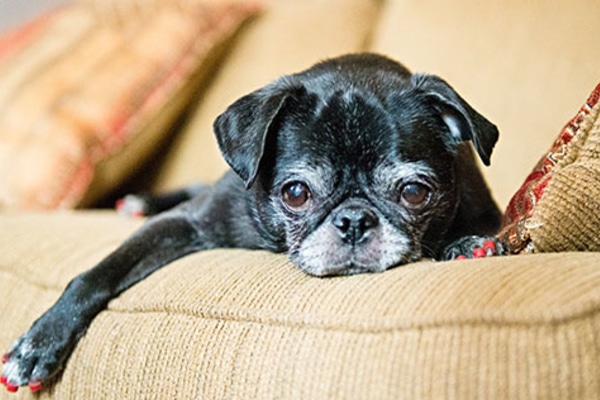
A decade ago, I lost a patient named Teddy under anesthesia. Teddy the Pug would probably have been considered over 100 in “human years,” which, of course, was a concern as we considered anesthesia for an elective procedure.
By this point, he had more rotten teeth than healthy ones. So it was my professional opinion that the benefits of managing dental disease in dogs outweighed the risks. I can say with confidence it’s what I would have done for my own dog.
Anesthesia for oral surgery in senior dogs
Teddy’s mom agreed that her senior dog was in a lot of pain and that the anesthesia for oral surgery was a risk worth taking. He might have been in his golden years—when many would argue anesthesia is just not worth it—but the hope of eliminating his pain made the decision an obvious one.
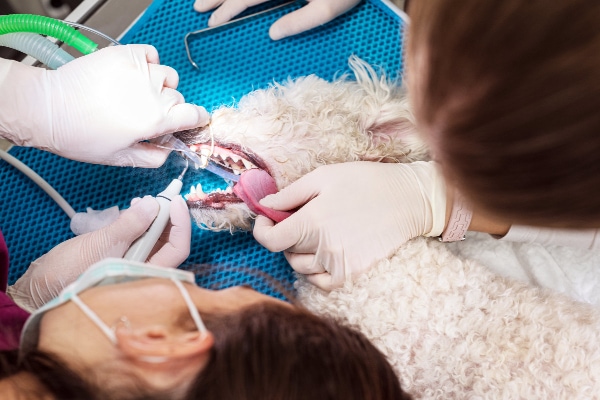
The dental procedure took over two hours and Teddy’s vital signs were perfect the entire time. I worked as swiftly as I could to extract the abscessed teeth and suture the flaps of gum left behind. Meanwhile, my conscientious technician monitored my patient’s anesthetic depth, heart rate, respiratory rate, body temperature, blood pressure, and oxygen levels. We made adjustments in anesthesia accordingly.
When the unexpected happens…
Despite everything looking great during surgery, after we turned off the anesthetic gas, Teddy veered off the normal path of recovery. Instead of slowly waking up…Teddy died.
Alarm bells sounded on our anesthetic monitoring machines. He had no heart rate. No pulse. No respiratory rate. We immediately began CPR. We had all hands on deck as we attempted to restart his heart.
Loss and love…grief and grace
As the scene unfolded, my mind jumped to Teddy’s family. Here he was, dying in my care, and his family was elsewhere, going about their day, unaware of the crisis. While we worked on Teddy, we got a family member on the line so I could briefly alert them that Teddy had taken a turn for the worse.
By the time they arrived, Teddy was officially gone. The grief in our office was palpable. I will never forget the reaction of Teddy’s parents, which I was dreading. They wept with us—and they extended an incredible amount of grace. They knew we did our best and they told us so.
Once we were able to see past our grief, we took another look at Teddy’s anesthetic protocol to see if there was anything we could have done differently. We discovered that Teddy had most likely suffered a pulmonary embolism—a clot which blocked blood supply between the heart and lungs. We couldn’t have foreseen this.
There was nothing that we could have done differently. But that didn’t change that fact that Teddy was gone, and I had been responsible for his life that afternoon.
While this situation was incredibly tragic, what happened to Teddy is not common. Studies show that approximately 99.8% of healthy dogs that are anesthetized live to tell about it.
While it’s true that age and infirmity are risk factors that make the odds less rosy, through custom-tailored anesthetic protocols and diligent monitoring of patients under anesthesia and in recovery, I believe the rewards often outweigh the risks.
Next, let’s learn some protocols that you can discuss with your veterinarian to help reduce those risks.
Older dog sedation protocol: 5 ways to reduce the risks of anesthesia for older dogs
1. A thorough pre-anesthetic work-up
Any dog undergoing anesthesia should have a diagnostic evaluation directed by his or her veterinarian. Generally anesthetic work-ups include a physical exam and blood work (complete blood count, blood chemistry). In individual cases, more advanced diagnostics such as X-rays or ultrasound may be indicated. These recommendations can vary based on your dog’s age, breed, overall health, and what procedure he or she is undergoing anesthesia for.
Typically, geriatric patients will have a more advanced work-up than young, healthy dogs.
Have a discussion with your vet about what tests may be recommended for your dog prior to anesthesia. Veterinarians can tailor anesthetic drugs and procedures based on the results of these tests to minimize the risks associated with anesthesia.
2. Anesthetic monitoring
All dogs should be monitored under anesthesia, but this is especially crucial for older dogs who may have sudden issues with their vitals. Anesthetic monitoring can be anything from a dedicated technician monitoring heart and respiration rate, to a pulse oximeter measuring oxygen saturation, to an EKG, a capnograph measuring carbon dioxide output, blood pressure monitoring, and more.
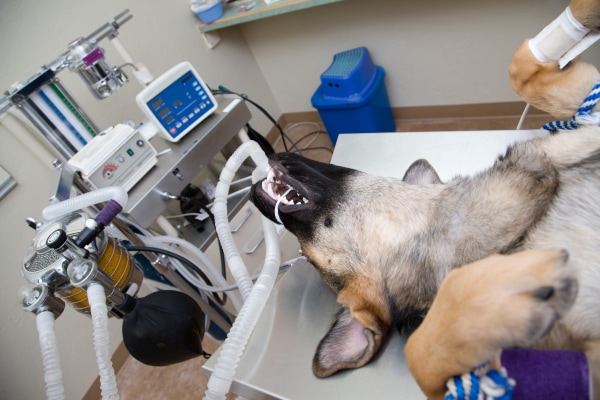
Some of these tests require special equipment, and not all veterinary practices have advanced monitoring. Before your dog has an anesthetic procedure, have a conversation with your veterinarian about how your dear old dog will be monitored during the procedure.
For some dogs, it may be prudent to have the procedure done at a specialty referral hospital, where they have more advanced equipment and even board-certified veterinary anesthesiologists to monitor patients.
3. Stabilize underlying health conditions
Anesthetic risk increases with age, but underlying medical conditions can exacerbate this risk. Some of these conditions include:
- Heart disease
- Diabetes
- Cushing’s disease in dogs
- Thyroid disease
- Kidney disease
- Liver damage
- Seizure disorders
Veterinarians can manage most of these conditions with medications, and try to make sure things are stable before proceeding with anesthesia whenever possible. Geriatric dogs with chronic medical conditions may also require more specialized blood tests as part of their pre-anesthetic work ups.
If your dog has any manageable chronic conditions, it is always a good idea to get them to a stable point in their disease management before undergoing anesthesia, unless the procedure is an emergency.
4. Post-op monitoring: senior dog anesthesia recovery
You may be surprised to hear that the most dangerous time for anesthesia is actually the first three hours after the procedure is completed. Statistically, this is when most animals have adverse anesthetic events. Just like what happened with senior patient, animals can do great during surgery and then have life-threatening complications during recovery from anesthesia.
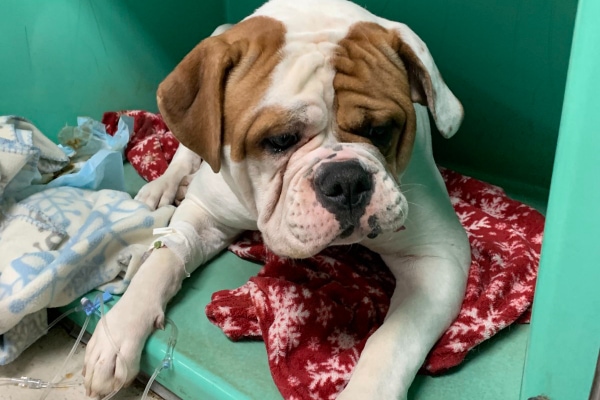
Post-operative monitoring is critical for any patient, and this is even more important in older dogs who may have more trouble with breathing and circulation. Your vet will have a plan for pre-operative testing, intra-operative monitoring, and a post-op plan as well. For more intensive procedures, he or she may recommend your dog stay overnight, or be transferred to a 24-hour facility if needed.
5. Avoid it: Skip elective or cosmetic procedures
Every anesthetic procedure involves a risk/benefit analysis. In older dogs, the risk is higher, so we need to make sure the benefit of what we’re trying to do is greater as well. Cosmetic or elective procedures may not be worth it.
Of course, for lifesaving procedures, or procedures where the quality of life improvement warrants the risk (like with my patient’s dental), anesthesia may not be avoidable and can be under the guidance of your veterinarian.
Caring for a senior dog often means making difficult choices
Although the risks associated with anesthesia can be scary, please don’t miss my take-home message:
Age is not an excuse to do nothing.
Living with pain in dogs doesn’t have to be the case. Even though Teddy’s case ended tragically, I do not think we made the wrong decision to move forward with his dental surgery. We had the opportunity—and good odds—to dramatically change Teddy’s quality of life for his remaining days, months, and years. If I could do it over, I would make the same choice.
Anesthesia for dogs is not determined by age alone
I love my senior dog patients, and I want what’s best for them. I find myself frequently having conversations with pet parents convincing them that their dogs don’t need to live in discomfort because they are “too old to do anything about it.”
While certain variables make the risk of anesthesia for dogs far greater than the reward, age alone is not the only factor that shuts the door on the possibility of anesthesia.
Frequently asked questions about anesthesia for senior dogs
While each patient and anesthetic procedure have their own considerations, there are some common questions that should be addressed if your older dog is undergoing anesthesia.
What are the side effects of anesthesia in older dogs?
Anesthesia does carry some expected side effects. Some of those are more pronounced or more dangerous in older dogs, especially if they have other underlying conditions. These effects may include:
- Low heart rate (bradycardia)
- Low blood pressure (hypotension)
- Low blood oxygen (hypoxemia)
- Low body temperature (hypothermia)
- Prolonged recovery
These are expected effects of anesthesia, but if left unchecked can become life-threatening. This is why careful anesthetic monitoring is so important.
How long does it take an older dog to recover from anesthesia?
It is common for older dogs to take longer to recover from anesthesia than their younger counterparts. Their metabolisms are slower, and that includes more than just processing food. Many organ systems slow down a bit as dogs age. With kidneys and livers that may not be 100%—even if we don’t see bloodwork changes—older dogs generally take longer to metabolize and clear anesthetic drugs.
Recovery time varies. It not only depends on the patient’s age and condition, but also on the types of medications used and the length of the anesthetic procedure. The longer a dog is under, the longer it will take them to wake up.
Some of the anesthetic medications we use are reversible, so if a dog is experiencing a prolonged recovery, we may be able to give them a reversal medication to counteract the effects of the anesthesia. This is one of the considerations veterinarians take into account when developing an individual anesthetic plan.
How does anesthesia affect older dogs?
Older dogs are more likely to have organ dysfunction that may decrease their ability to handle anesthetic agents. Unfortunately, bloodwork is not sensitive enough to detect very mild organ damage. So even a patient with perfect bloodwork may have some troubles with metabolizing anesthetic drugs.
Generally older dogs don’t have a lot of unique anesthetic risks based on their age, they just have an increased chance of having side effects. Higher risks of effects like hypotension and hypoxemia can be dangerous in our older patients.
Sometimes older dogs can experience more confusion as they wake up from anesthesia. This confusion usually resolves within a few hours of waking up, but sometimes can last for a day or two.
What should I expect as my senior dog recovers from anesthesia?
Each dog handles anesthesia differently. Some dogs pop right up like nothing happened, and some take hours to fully recover.
Senior dogs often take a bit to recover from anesthesia. Sometimes they are even still groggy for a day or two after surgery. Your dog may be extra tired, sleep longer and/or heavier, and may seem confused. These effects are temporary, and your pup should be back to his or herself in no time.
Some of the anesthetic drugs can cause nausea and vomiting. Your dog may throw up after surgery (even several hours later), and may have a decreased appetite for a day or so.
I sometimes get asked about dogs’ bathroom habits after surgery. A gross detail I’ll share with you is that dogs’ bodies relax during anesthesia—their whole bodies, including the colon. Most dogs poop under anesthesia. Additionally, opiate medications, which are often used for surgery in dogs, tend to slow down the GI tract a bit. Combining the effects from the medications with a pretty cleaned out colon means it is perfectly normal for dogs not to poop for a few days after surgery.
Can anesthesia have long-term effects on dogs?
In healthy dogs who have uncomplicated anesthetic procedures, there should be no long-term effects from anesthesia itself.
Because blood pressure is lowered under anesthesia, it is possible that some organs, such as the kidneys, don’t get enough oxygen delivered to them. If this happens, those organs could sustain long-term damage. This is one of the reasons pre-operative bloodwork is so important. We want to make sure all organ systems are in tip-top shape to be able to handle anesthesia.
One of the organs that can sustain long-term damage from hypoxemia is the brain. If a dog’s blood pressure or heart rate get too slow under anesthesia, the brain may be deprived of oxygen for a period of time. If that happens, long-term effects can include seizures, blindness, cognitive impairment, and even death.
Keep in mind, though, that those complications happen very rarely—and good monitoring of vitals during surgery can catch issues before they cause any permanent damage.
Speak with your vet about anesthesia for your old dog
If you’ve been nervous about anesthetizing your senior dog for a recommended procedure, I have some homework for you. Talk to your vet. Have a frank discussion with him or her about your concerns and learn about the risk-reward ratio. You may be surprised at the possibilities!
Are you considering anesthesia for your senior dog?
Please comment below.


I really need your advise – my almost 16 year old mini daxie has bladder stones for the 3rd time (2 previous surgeries) – she has had blood works with good results except her liver enzymes which are a little high but apparently not unusual in a dog her age – her diet has been changed and she has been on meds to try and disolve the stones but on a second scan it shows the stones have not reduced in size – the scan also showed a small growth in the lining of her bladder and one on her kidney – the vet has said she can operate on her to remove the stones and take a look at the growth on her bladder but will not look at the growth on her kidney – or we can continue with palliative care and do nothing. Her urine flow is much better than it was and she can do a good stream where as a few weeks ago she was struggling to go for a wee. We are torn as to whether we should go ahead with the surgery of just give palliative care. We have been made aware that the anaesthetic is always a risk and that there is also a risk of the bladder rupturing if the stones get bigger or she devolops more with no surgery. She is taking Pottasium Citrate twice a day and Loxicon once a day.
Hi Susan,
I understand your worry with this difficult decision you are facing for your senior girl. Situations like this are hard because there truly is no straight forward right or wrong choice. It really is all about how far you want to go with treatment and what your goals are for your sweet girl. Are you trying to reduce pain? Prevent future complications? Focusing on her quality of life and comfort? Once you identify the goal behind the treatment, it will make the decisions a bit easier to navigate. Palliative care is always a great option, and you shouldn’t feel like you are letting your pup down by choosing that route. I hope you can find the answers you need to make the best decision for everyone involved. Praying for comfort and clarity and wishing you the best.
My almost 13 year old Chipoo is currently slowly recovering from major dental work. Her regular vet advice it was not worth the risk because of her medical conditions and age: Epilepsy, Heart Valve Disease with a grade 4 murmur, possible Cushing’s, past mammary malignant tumors, among other little stuff. However, her cardiologist noted her periodontal disease was just getting worse and advice it was now the time to do anything with her teeth. I took the big step and decided to go forward with the procedure. I was a nervous wreck that day imagining the worst. Around the time I was hoping to receive the call that she was in recovery and all had gone well I got a call and was told that they needed more time and and my persmission or an extra hour of anesthetic to complete the procedure. In total, I think she was under about 6 hrs +, I was told everything went well but they found a mass they needed to remove for biopsy, in addition to her teeth. Thank God she is now home. Unfortunately, her right eye was noted to swell and a lot of sclera bleeding. She’s been very lethargic and just miserable (only gets a little happy at feeding time and her potty breaks) and I am just hoping she bounces to her normal self soon and has no negative impact! She was prescribed antibiotic, an eye drop, in addition to taking her normal medications.
Hi Claudia,
Wow! I am so glad your senior girl did well with the anesthesia and her dental procedure was successful! How is she feeling today? I am hoping the eye issues have resolved and her energy level has returned to normal. Thank you for sharing your experience with our readers. There are so many facing a similar situation, and this will offer some encouragement. Best wishes and bless you both.
Hey! My sure I’m in the right place considering some of the comments I’ve read have all been regarding dogs with far more serious needs that mine but maybe you can advise. I have a female rescue Staffordshire bull terrier that turned 10 a few months ago, she is desperately needing her nails trimmed and I make no exaggeration when I say I have tried absolutely everything. She has always had this done under anaesthetic before due to just completely freaking out at any attempt to do it without, but due to her age and the fact the vets is also an extremely stressful place for her I was hopeful to avoid this. She was prescribed gabapentin in the hopes it would calm her enough to cut her nails at home but it had 0 effect on her at all, I’m at a complete dead end here and the vets just keep reeling off more pill to try which is not only costing a fortune but also putting her through extra stress every time I have to try another medication and then have a go at home again. As she is only just considered in the senior category is it worth just booking her in to be out under anaesthetic in the surgery and get it out the way rather than put her through all of this? She is extremely anxious in the vets and needs to be muzzled and held to be seen but she is in desperate need of having her nails trimmed now. Any advice would be appreciated.
Hi Tamara,
I am sorry your Staffordshire girl has so much anxiety around nail trims. If this was a one time and done event, I would recommend the sedation at your vet’s office. Unfortunately, nail trims will have to be repeated frequently so I am not sure anesthesia is a great solution. I feel like your best bet is to start reconditioning your girl to have positive experiences with nail trims with you at home. This may require some assistance from a veterinary behaviorist. I don’t think it is a bad idea to try different anxiety medications in hopes to find one that will work for your dog. This may be something that is needed on a daily basis, not just for particularly stressful events. Also, we do offer a nail trimming course for dog owners here on the ToeGrips website. Here is the link in case you are interested: Master the Secrets to DIY Dog Nail Trims
I will also leave links to other articles that may offer additional information and support. I am hopeful you will find the best way to tackle this tricky situation with your senior pup. Wishing you all the best!
1. 7 Tips for Successful Dog Nail Trims
2. Dog Toenail Anatomy 101
3. Recipe for Dog Nail Trimming
4. Clipped Your Dog’s Toenail Too Short? Here Are Sure-Fire Tips on How to Stop a Dog’s Nail From Bleeding
Have you heard of scratchboards? I use them for my Staffy girl. She does her front ones but you can train them to do the back as well by placing the front paws on a bucket. There are also harnesses that you can get to hold them up but obviously cooperative and gently training the dog is best.
Hi Dr. Bubzy,
I have an 8 pound chihuahua who is 10-years-old. She’s been with me since she was a puppy. The only time she has been to the vet is to get a foxtail out of her eye and to have a tumor under her tongue tested, which turned out to be benign and not harmful. She has been healthy besides this, and two months ago I got her blood work. The vet said that her kidney seems to be fine, and everything he saw seems to be a normal kidney for a puppy girl of 10. I began brushing her teeth a few months ago as well. While some of her teeth seem fine, others seem to have severe tartar build up and some teeth look to have inflamed gums beneath them. She also has a hole in her right upper canine. I am worried that these things will eventually cause her pain, as I hope to have many more years with her. I am terrified of losing her to anesthesia, and while there are always risk factors, I would really like a vets opinion to eliminate some of my anxiety. Do you think she is an alright candidate for dental work/anesthesia?
Thank you!
Hi Anna,
I understand your concern about anesthesia. Unfortunately, without examining your dog myself, I can’t make specific conclusions or recommendations. These would be great questions for your vet. As long as the necessary preoperative testing and lab work have been performed and no abnormalities are noted, I am not sure what other risk factors would play a part in your dog’s ability to undergo this dental procedure. When it comes to dental disease, I do think prevention is best. I would prefer to do a cleaning now rather than extensive extractions with the risk of infection later. Please make sure to reach out to your vet and discuss your questions and concerns. I am hopeful you will find the answers you need to make the best choice for your little pup.
my 11 year maltipoo, has to have an x-ray on his knee. he was recently diagnosed with cognitive decline. my concern is his cognitive decline becoming worse because of the anesthesia. can you help me with this? thank you.
Debbie Snyder
Hi Deborah,
There is some risk of making dementia worse with anesthesia, but this is not always the case. And the sedation used for obtaining x-rays should be very mild and very short lasting. I recommend you talk to your vet about your concerns as they may be able to give you more information that could help put your mind at ease. Best wishes to you and your senior pup.
Hi, I’m hoping you can help or at least share your knowledge with me. You won’t remember but my little old lady had her spleen out in June last year due to finding a mass (benign thankfully) she recovered well from the surgery but has now been diagnosed with Cushing’s. We have her booked in for some dental work in a few days as her gum around her canine is protruding and the vet wants to have a proper look with the view of taking a biopsy and/or take the tooth. She’s not on any medication for the Cushing’s just yet as her levels are still very low, she has adrenal origin (tumour found a couple of years ago as an incidental finding). My question is, she’s 12 with Cushing’s, is the anaesthetic safe? I know you have said that Cushing’s can cause complications with the anaesthesia and I’ve been thinking the same and worried. Any light you could shed, why does it make it more risky and is there anything we can do to limit the risks? It definitely looks sore so certainly isn’t for cosmetic reasons, otherwise I wouldn’t of agreed to it. She’s having what they’re calling “a mini dental” where they won’t look at her other teeth etc and just focus on this canine/gum. Any help would be greatly appreciated, as I’m a worried wreck about my little old lady.
Hi Mrs,
Yes! I remember your story! You lost your male dog to a ruptured splenic tumor a couple years ago and then were faced with a similar situation with your Staffy girl. I am glad she made a full recovery from her splenectomy and the histopathology results gave you some great news. You are correct that Cushing’s disease does make anesthesia a bit riskier. The high levels of cortisol in the blood stream can cause changes in blood pressure and hydration status/blood volume. These changes can then lead to other problems like heart arrhythmias. With that being said, all these parameters are closely monitored during anesthesia and can be managed with medications and fluids. So, while it does increase the anesthetic risk, it does not prevent your girl from proceeding with the dental cleaning and assessment. The best way to minimize the risks is to have all the necessary preoperative testing done. If your vet has checked recent lab work and everything else looks ok, then I would proceed with their recommendation to have the dental preformed. I hope this helps a bit. Praying all goes smoothly and your sweet girl will be feeling great again in no time. Feel free to leave an update if you have a chance!
I’m so sorry, I’ve only just seen your reply! An update on my little old lady, the dental didn’t go as planned as her horner’s syndrome came back the day before the planned procedure, the vet thinks she could have had some sort of stroke, so she was sedated and the lump removed and sent off to the lab, that unfortunately came back as malignant but touchwood so far so good and it doesn’t seem to be returning. Unfortunately though she suffered a slipped disc a couple of weeks later and she has been diagnosed with TCC of the bladder a few weeks ago, the mass isn’t in the trigone area so is favourable but she’s too risky for surgery, so she’s now taking Piroxicam daily in the hope to at least slow the growth down. She’s currently on antibiotics for a recurrent UTI, She’s still herself, recovering well from the slipped disc as she’s still ambulatory thankfully, has a great quality of life still, so for now we’re just enjoying each and every moment we have left with her, no matter how short that time may be.
I’d just like to say thankyou so so much for all your informative blogs on a range of different subject matters, you’ve been a wealth of information for me with regards to my little old lady and for that I am so appreciative .
Hi Mrs,
Thank you for the update. I am sorry your senior girl is dealing with so many issues at once, but glad that despite all these setbacks she is feeling better and acting like herself. Keep making the most of each day you are gifted. Hoping you have many happy days ahead. Bless you both!
Hi Dr Buzby. My 12 year old boxer, soon to be 13 in February, has IMHA Immune Mediated Hemolytic Anemia. The vets I have taken him to don’t think it would be good for him to be under anesthesia for dental clean ( severe dental issues) due to this condition. Just two days ago he was diagnosed with moth eaten distal femur and proximal tibia with fracture of distal femur and the assessment based on x-ray shows neoplasia (cancer vs infection or other. He was given 3 weeks. My dog can’t walk on his right hind leg. I feel so sad for him. Is it really dangerous for him to have surgery at this stage? I don’t know how to help him as he limps around and sleeps all day. He was eating well up to the point I took him to the emergency vet. After that visit he doesn’t want to eat ( only one day so far). Can you offer any suggestions? Thank you.
Hi Darlene,
I am so sorry your Boxer has received such a devastating diagnosis. I understand you want to do anything you can to improve his quality of life and prolong his life. Since I haven’t examined your dog myself, I can’t make specific recommendations or conclusions. Unfortunately, bone cancer usually does not have a good outcome even with surgery. You may be facing a situation where saying goodbye is the only option left to give your sweet boy peace and freedom from his struggles. My best advice is to schedule a consult with a specialist. They can let you know if there are still treatment options available for your dog’s specific situation. I will attach links to other articles with more information. I hope you can find the answers you need to make the best decision for you and your sweet boy. Bless you both.
1. Osteosarcoma in Dogs: Symptoms, Treatment, Prognosis
2. Using a Quality of Life Scale for Dogs
3. IMHA in Dogs: A Comprehensive Guide
4. Preparing for Your Dog’s Euthanasia: 10 Thoughts for Peace
I have an almost 14-year-old Schnauzer mix. Over the years, at each checkup, my vet would casually mention that I might want to consider scheduling a dental – but no rush. It never seemed urgent, and he never gave me an estimate or explained the process. My dog has never had one, ever (none of my family dogs growing up ever had dental issues, so I was unfamiliar with it). Well, now her teeth are in seriously bad shape but her overall health has always been fine. Unrelated: About a year ago, she underwent anesthesia (for the first and only time) to remove a benign tumor from her neck. In the months that followed, she developed canine cognitive dysfunction, according to my vet, and she is taking Anipryl and fish oil, which has helped with her sundowning (panting and pacing at night, sometimes full-on panic attacks). I had no idea there could be a connection between CCD and anesthesia until I read one of your responses on here! Is there anything more you can tell me about that? My dilemma now is deciding whether to put her under again for a dental (she was only under for about 30 minutes the first time). Will it worsen her cognitive condition? I know that her teeth will only get worse and cause physical pain and disease. I want her final years to be as happy and pain-free as possible, but also free of confusion and the severe anxiety I have seen her endure. What do you think?
Hi Emily,
I understand your concern with anesthesia and your senior pup. Since I haven’t examined your dog myself, I can’t give you specific recommendations. There is some evidence that anesthesia can worsen dementia symptoms and in most cases it is temporary. With that being said, as long as the pre-anesthetic lab work and testing is all normal, you have done everything you can to minimize risks. I know there is no way to know for sure how things will turn out, but we do know that the dental disease will continue to progress if not managed at this point. I have actually made this exact choice for my own senior pups with CCD and had them undergo anesthesia for dental procedures with good results. Ultimately, you will have to make the choice with which you are most comfortable. Don’t hesitate to reach out to a dentistry specialist or veterinary anesthesiologist for a second opinion. You can never have too much information when making these kinds of tough decisions. Wishing you the best. Feel free to leave an update and let me know which path you choose!
I have a 16 year old Pekingese mix that has a grade 3/4 heart murmur. His bloodwork came back and they said everything looked great. His teeth are in bad shape and I’m assuming he’ll need some teeth extracted along with his dental cleaning. I am so worried about putting him under anesthesia. Do you think this is a safe procedure for him considering his age and his heart condition?
Hi Izzy,
I understand your concern with anesthesia and your senior guy. Unfortunately, there are no guarantees with any anesthetic procedure. I am glad your pup’s bloodwork looked good and this definitely decreases the potential risk. You may want to talk to your vet about additional testing to evaluate your dog’s heart such as ultrasound, x-rays, or a cardiac specific blood test called the Cardiopet ProBNP. Ultimately, you will have to decide what you are comfortable with based on the information you have gathered and the advice and recommendations from your vet. Praying for clarity and strength during this decision-making process. Best wishes!
I’ve just had my 14 year old chorkie under anaesthetic for major dental work she had quite a few extractions and is now left with only 8 teeth. She’s got diabetes and Cushing disease and a heart murmur.
We’re in the recovery stages now but just like Teddy her quality of life outweighed the risks of surgery and it was our only option. It was a nerve wracking day but she’s hopefully going to feel so much better in a few days when she’s all healed and hopefully be a much happier old lady.
Hi Amy,
Thank you so much for taking the time to share your experience with our readers. I see comments every day from others who are worried about anesthesia and dental procedures for senior dogs with underlying health concerns. I am positive your words will give hope to those in a similar situation. I am so glad to hear your girl made it through her procedure and is recovering at home. Best wishes for many happy days ahead. Bless you both!
Hi Dr Buzby,
Thank you for writing this article and taking time to respond to questions. I have an 8,5 year old mini dachshund. He had perennial surgery in January of this year and was diagnosed with advanced heart murmur (stage 5-6) and MVD (Stage 2.) surgery was risky, but he made it. He was prescribed pimobedan. His teeth are in bad shape and I only managed to get him one non-anesthesia cleaning two year ago. A year later he didn’t cooperate at all and the clinic refused to do a cleaning for him. Now his teeth are in really bad shape and I noticed a week ago that he was in discomfort for a couple of days. I took him to a vet who said he’s not a candidate for anesthesia due to his heart condition and he would not be taking that risk under any condition. He prescribed furosemide and enalapril, gave him an antibiotic shot and 2 weeks of liquid antibiotics. I asked what can be done for teeth and he kept saying nothing. I braced and asked what’s the life expectancy with his heart diagnosis and he said 3-4 years. I clarified whether my dog is in heart failure already and he said no, but he is accumulating some liquid in his lungs. I left without clear understanding or direction for what can be done. The doctor didn’t offer any options besides temporary antibiotics to treat infection. Could you please share your thoughts or any ideas? Right now he’s eating and drinking fine and is not showing any signs of discomfort although I understand he might be in pain. He definitely needs extractions (confirmed by another vet) but I don’t understand how I will be able to manage this for him with his heart condition. Thank you in advance!
Dear Alina,
I am sorry your little guy is struggling with severe dental disease. From what you are describing, I agree that your pup may not be an anesthesia candidate. With a grade 6 heart murmur and fluid accumulating in his lungs, it sounds like congestive heart failure is already a big issue. Since I haven’t examined your dog myself, it is hard to make specific recommendations. I am afraid there really may not be any good treatment options at this point. Your best bet is to schedule a consult with a specialist. They can let you know if there is a medical option to try or if palliative care would be the most loving choice. I am hopeful that you can find a solution to restore your sweet boy’s quality of life. Praying for a positive outcome.
Hello Dr. Buzby,
Thank you for your article. My almost 17 year old Bichon has had an open mass the size of a chickpea growing near his eye that has been continuously bleeding for several months. It hasn’t healed with topical or oral antibiotics and keeps changing in size and appearance. We’re not sure if the mass is benign or malignant, but the only way to know is to remove it. Other than his decline in vision/hearing, he is healthy with perfect blood work. I even recently took him to a cardiologist last month to make sure his heart is healthy enough for anesthesia. The cardiologist said everything looked good and cleared him for anesthesia. Even though he’s had anesthesia every year for dental cleanings/extractions, this time I’m very nervous about it since he’s nearly 17. The vet said the removal shouldn’t take more than 30 minutes. I’m still very nervous and I can’t decide whether the removal of this mass outweighs the risks of anesthesia considering his age. Any guidance is appreciated.
Hi Sandra,
I understand your concern with anesthesia and your senior pup. It sounds like you have been very thorough with having everything checked to make sure no surprises are found that would increase the risk of this anesthetic event. If all the testing has come back normal, then age alone is not a reason to forgo surgery. I would rather remove a mass while it is small, and the dog is healthy than wait till the mass has grown to an unmanageable size and or the dog has abnormalities show up on lab work. Ultimately, you have to make the decision with which you are most comfortable. I hope you can find the advice you need to be at peace with your choices. Bless you and your sweet boy.
Thank you for your reply! We had his surgery done and everything went smoothly 🙂 Just waiting on the biopsy results.
Hi Sandra,
That is great news! Thank you for the update. Praying for good results from the pathologist!