Do you know the tick bite symptoms in dogs? Being able to recognize the signs that may occur shortly after a tick bites your dog and also in the weeks or months following the bite is important. Integrative veterinarian Dr. Julie Buzby discusses the symptoms of infected tick bites and of the various tick-borne diseases. Plus, she explains what to do about them.

One of my favorite things about being a dog parent is getting to spend quality time outside with our dogs. But you want to know what we don’t love about being outside? Ticks!
Unfortunately, ticks live in most parts of the United States, and in many other countries, too. Thus, it is essential that dog parents have a working knowledge of ticks, including the most common tick bite symptoms in dogs.
What are ticks?
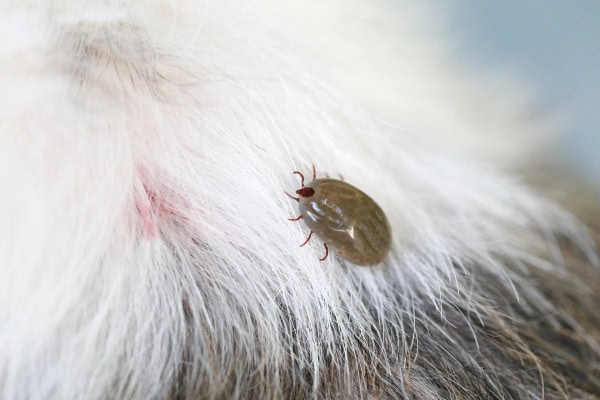
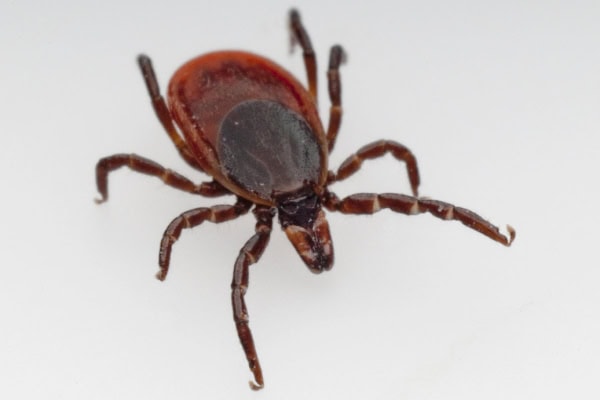
Ticks are small parasites that attach themselves to a host (an animal or person) and feed on the host’s blood. Before they consume any blood, they are dark brown or black, oval-shaped, and somewhat flat. (Picture an apple seed.) However, when a tick is done feeding, it is engorged (swollen with blood) and greyish in color.
Ticks are considered arachnids, like spiders. They have six legs as a larva and eight legs as a nymph or adult.
There are several different types of ticks that could make their way onto your unsuspecting dog. The type of tick your dog picks up is heavily dependent on what part of the country (or world) you live in. There are more than 15 different species of ticks found in the United States. But certain ones are more common, such as:
- Brown dog tick
- Lone star tick
- Rocky mountain wood tick
- Eastern black-legged tick (deer tick)
- Asian long horned tick
- Gulf coast tick
- American dog tick
- Western black-legged tick
Different types of ticks may carry various diseases. Therefore, the diseases your dog is at risk of developing from a tick bite can also depend on your location.
What are tick bite symptoms in dogs?
Tick bite symptoms in dogs fall into two main categories: those that are related to an infected bite and those that are due to tick-borne diseases. But before we can talk about tick bite signs, you first need to understand what a normal tick bite looks like.
What does a tick bite look like on a dog?
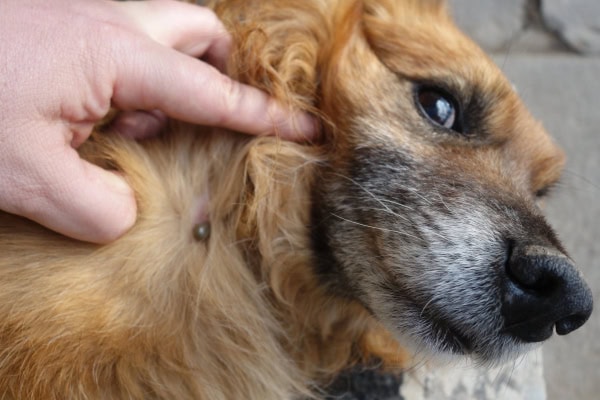
A normal and non-infected tick bite can look like a small, red, raised bump on your dog’s skin. It almost looks like a mosquito, spider, or other bug bite. Sometimes you can also see a small hole in the center of the bite where the tick was attached to your dog. Additionally, the area around the bite may be itchy or irritated.
If the tick bite is a little bit older, it could appear as a small mark on your dog, a scabbed-over wound, or a small area of dry skin.
Symptoms of an infected tick bite on a dog
Sometimes a tick bite can become infected. Common symptoms of an infected tick bite include:
- The area around the bite is red, swollen, raised, or hot
- Red discharge or white-yellow pus coming from the bite
- Pain around the area of the bite
- Excessive licking, biting, or scratching at the tick bite
- Decreased eating or drinking
If you notice any signs of infection in your dog’s tick bite, it is important to let your veterinarian know right away. He or she can assess the tick bite wound and then prescribe treatment such as antibiotics.
Symptoms of a tick-borne illness in dogs
Alternatively, a dog could develop symptoms due to a disease transmitted by the tick. The amount of time a tick must be attached to spread disease varies by infection and can range from as little as 2 hours to as long as 96 hours.
Many of the tick-borne diseases in dogs cause non-specific signs such as fever, swollen lymph nodes, being a lethargic dog, lack of appetite, and weight loss. However, each of the diseases also has symptoms that are more distinct. Those are the symptoms we will highlight when discussing the diseases below.
Lyme disease in dogs
Lyme disease is the most common tick-borne disease in dogs. It is caused by the bacteria Borrelia burgdorferi and is spread by deer ticks. Most dogs infected with Lyme disease will never show symptoms. However, if the dog does become symptomatic, the signs generally appear two to five months after a deer tick bites a dog.
Dogs with Lyme disease may have lameness and joint swelling that shifts from joint to joint or leg to leg. Plus, some of them develop the classic bull’s eye rash around the bite, but that is much less common than in humans. Lyme disease can also damage the kidneys, leading to signs of kidney failure in dogs.
Ehrlichiosis
Ehrlichia canis and Ehrlichia ewingii are the primary bacteria responsible for Ehrlichiosis in dogs. They are transmitted by the brown dog tick and the lone star tick. Typically, it takes about one to three weeks after the tick bite for the dog to start showing signs.
Some of the more distinctive symptoms of Ehrlichia canis include bleeding problems due to low platelets in dogs, joint inflammation, and neurologic signs. Dogs with chronic ehrlichiosis may also have uveitis in dogs and continued problems from low platelets. Plus, they may develop urinary protein loss due to damage to the filtration unit of the kidneys (glomerulonephritis).
Dogs with Ehrlichia ewingii generally don’t get as sick, but if they do, they may have swollen, stiff joints.
Anaplasmosis
Anaplasma phagocytophilum and Anaplasma platys cause anaplasmosis in dogs. These bacteria are transmitted via the bite of an infected deer tick, black-legged tick, or brown dog tick. Typically, it takes about one to two weeks after the tick bite for a dog to start showing symptoms. However, many infected dogs never develop signs of anaplasmosis.
Some potential symptoms from Anaplasma phagocytophilum include lameness and joint pain, vomiting and diarrhea, or difficulty breathing.
Anaplasma platys targets the platelets, which are necessary for blood clotting. Thus, infected dogs may experience nose bleeds in dogs, reddish purple dots on the gums, or a red rash on the dog’s stomach due to abnormal bleeding.
Babesiosis
Babesiosis is a tick-borne disease caused by Babesia organisms, which typically infect red blood cells. Many different species of ticks transmit it to dogs. In some cases, babesiosis can also spread directly from one dog to another, from a pregnant dog to her unborn puppies, or through blood transfusions.
Signs typically occur 10-28 days after the tick bite. Babesia infections lead to anemia in dogs due to the destruction of infected red blood cells. Sometimes the immune system goes overboard and destroys normal red blood cells, too (immune-mediated hemolytic anemia or IMHA in dogs). Plus, dogs with babesiosis may have low platelets, neurologic signs, yellowing of the skin (jaundice), and discolored urine.
Rocky Mountain spotted fever
The bite of the American dog tick, brown dog tick, and Rocky Mountain wood tick can transmit Rickettsia rickettsii, which causes Rocky Mountain spotted fever (RMSF) in dogs and humans. Unlike many of the other tick-borne diseases, symptoms associated with RMSF begin sooner—typically 2-14 days after a tick bites a dog. Plus, depending on the situation, ticks may be able to transmit RMSF after as little as two to three hours of attachment.
Rickettsia rickettsii targets the blood vessels in all the organs. This leads to symptoms such as nose bleeds, coughing, tiny bruises on the skin, swelling of the face or limbs, or neurological signs.
Bartonellosis
Bartonella species are best known for causing cat scratch fever in humans and bartonellosis in cats. However, dogs can also contract bartonellosis from ticks, fleas, lice, and biting flies. Common symptoms of Bartonella infections in dogs include joint and muscle pain, nasal discharge or nose bleeds, or vomiting and diarrhea. Due to heart inflammation, dogs with bartonellosis may also faint or struggle to breathe.
Interestingly, a study of 110 dogs with hemangiosarcoma demonstrated that 73% of tissue samples from dogs with this aggressive blood vessel cancer were positive for Bartonella DNA. Further research is needed to investigate the potential connection between Bartonella and hemangiosarcoma in dogs.
Co-infection with multiple tick-borne diseases
Sometimes ticks transmit multiple tick-borne diseases while they are feeding on a dog. Or a dog can get bitten by several ticks that might be carrying different diseases. This complicates matters because the dog could be showing symptoms of more than one disease at the same time.
Tick paralysis
Tick paralysis (or tick bite paralysis) occurs in some dogs when they are bitten by certain species of female ticks. In North America, culprits include Ixodes (deer tick), Dermacentor (American dog tick), and Amblyomma (Gulf Coast tick and lone star tick) species.
During feeding, these female ticks can release chemicals (neurotoxins) in their saliva that attack your dog’s nerve cells, causing paralysis. Typically, the symptoms begin three to nine days after a tick attaches to your dog. Once symptoms start, they can progress very quickly.
Dogs with tick paralysis may show weakness and incoordination, which starts in the back legs and moves to the front legs. In time, they can become completely paralyzed. Additionally, dogs may experience voice changes, difficulty swallowing, and problems moving the jaw due to the effects of the toxin on the nerves of the face and neck. The dog may have dilated pupils (mydriasis), too. Severely affected dogs can also have trouble breathing due to paralysis of the respiratory muscles.
If your dog is showing these symptoms, make an emergency vet visit. In many cases, the symptoms begin to improve about 24 hours after removing the tick. However, dogs who are experiencing difficulty breathing may not make a full recovery or could have a poor prognosis.
Hepatozoonosis
This last disease, hepatozoonosis, is a bit different than the other ones we have discussed. Instead of being associated with a tick bite, the dog must eat a Gulf coast tick carrying Hepatozoon americanum or a brown dog tick carrying Hepatozoon canis to become infected.
H. canis tends to cause less severe signs. Infected dogs may be asymptomatic or have pale gums from anemia. On the other hand, H. americanum can cause muscle, joint, or bone pain. Both forms of hepatozoonosis are challenging to treat.
What should you do if you are seeing tick bite symptoms in dogs?
Whether you think your dog has an infected tick bite or a tick-borne disease, the best thing you can do is make an appointment with the veterinarian or head to the pet ER. The symptoms your dog is experiencing will dictate how quickly you need to see the vet.
Make an appointment with your regular vet for these tick bite symptoms
The following signs of a tick bite need to be addressed, but can generally wait for an appointment with your regular vet:
- Inflamed tick bite—The area around the bite is red, hot, swollen, itchy, or painful.
- Swollen lymph nodes—When feeling at the dog lymph node locations, the lymph nodes may be more prominent. Sometimes, you can even see them without touching your dog.
- Lethargy or fatigue—If your dog is lying around more, uninterested in daily activities, and lacking in energy, this can point to a whole host of problems.
- Joint or muscle pain—The dog might be limping, having trouble getting up, or standing with an abnormal posture. You may also notice joint or limb swelling.
- Fever—Many tick-borne infections can cause a fever as the immune system targets the causative organism.
- Poor appetite—When a dog isn’t feeling well, he or she may not want to eat as much or may not eat at all.
- Weight loss—Many different conditions, not just tick bites, can cause a dog to lose weight despite no changes in diet or exercise levels.
Keep in mind, these are just general guidelines. If your dog seems to be getting worse quickly or you are worried about him or her, please don’t hesitate to seek veterinary care more urgently.
While waiting for the appointment, you can clean the bite wound with mild soap and water if the bite itself seems problematic. Otherwise, good nursing care (comfortable bed, plenty of water, etc.) can help your dog feel better in the meantime. Ultimately, though, there aren’t good home remedies for dog tick bite symptoms, so you need to get your dog to the vet for diagnostics and treatment.

Head to the vet immediately if you see these tick bite symptoms
On the other hand, the following tick bite symptoms necessitate an immediate trip to the vet or ER:
- Bleeding—If your dog is having nose bleeds, bloody vomit or diarrhea, discolored or bloody urine, or has bruises on his or her gums and skin, this could signal a serious problem with blood clotting.
- Pale gums—Dogs with anemia tend to have pale pink to white gums. If your dog is also weak and tired, pale gums necessitate urgent treatment.
- Trouble breathing—A dog breathing fast or turning blue, increased respiratory effort, or abnormal breathing sounds could all indicate respiratory distress.
- Weakness, neurologic signs, or paralysis—If the dog is having trouble walking or moving the legs, or is stumbling and falling, having grand mal seizures in dogs, or acting confused, he or she needs medical attention quickly.
Again, this is not an exhaustive list of symptoms that constitute an emergency. If in doubt, call your vet and ask his or her advice about how urgently your dog needs to be seen. Or head to the ER.
How will the vet find the cause of the dog’s symptoms?
Once at the vet, he or she will ask you about your dog’s history and perform a physical exam. Then the vet will talk to you about any recommended diagnostics. For example, there are quick in-clinic blood tests for dogs that can screen for anaplasmosis, ehrlichiosis, and Lyme disease. Or the vet may recommend a complete blood count (CBC) to check platelet and red blood cell levels, or a chemistry panel to look for signs of damage to organs.
What is the treatment for tick bite symptoms?
Once your veterinarian reaches a diagnosis, he or she will develop the treatment plan. This may involve antibiotics and supportive care for many of the tick-borne diseases. Additionally, your vet will address how to decrease the risk of tick bite symptoms in the future.
How do you prevent ticks?
Since tick-borne diseases can sometimes have lasting effects, it is important to prevent ticks from feeding on your dog long enough to transmit diseases.
Check your dog for ticks daily
If ticks are common in your area or you do a lot of hiking or camping, it is important to know how to check a dog for ticks. In short, you part the fur and inspect every inch of your dog’s body for ticks first. Then you go back and look and feel again at the places ticks like to hide—ears and eyelids, neck, belly, armpits/ groin, around the tail, and between the toes.
Especially in high tick areas, daily tick checks are a good idea. However, your vet can let you know what is appropriate for your dog’s location and tick risk factors.
Know how to remove a tick safely if you find one
Once you find a tick, you need to remove it quickly and safely. The best options for how to remove a tick from a dog are to use tweezers or a tick removal tool. Put on gloves, part the dog’s hair to visualize the tick, grasp it close to the skin with the tweezers, and pull it out of the skin with one gentle but firm upward motion.
Using a tick removal tool is similar. However, the tool manufacturer will provide instructions on how to operate the tool to remove the tick.
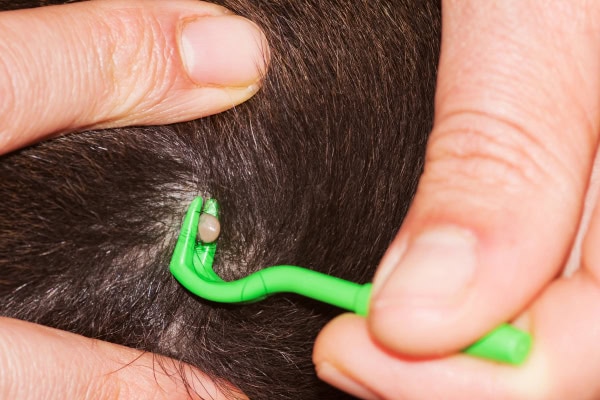
With either method, ensure you have removed the whole tick, including the head. Then wash the bite wound with soap and water to decrease the risk of an infected tick bite. (Wash your hands, too.) Finally, stick the tick in a jar of isopropyl alcohol. This kills the tick and preserves it for identification.
Keep you dog on tick preventives year round
Finding and removing ticks is great, but the final (and arguably most important) step for protecting your dog against tick-borne diseases is to give your dog veterinarian-prescribed tick preventives year-round. These medications repel and/or kill ticks to prevent them from feeding long enough to transmit diseases.
Tick preventives come in topical liquids, oral chews, and collars. You can also get combination preventive products that also protect against fleas, heartworm disease in dogs, and intestinal parasites. Your veterinarian can help you figure out which product is right for your dog.
A word of advice about over-the-counter (OTC) tick products: I caution my clients against buying OTC tick preventives, because they may not be as effective as the veterinary prescription options. It is worth the extra money to buy a product from your vet that is safe, effective, and appropriate for your dog.
Partner with your vet
If you are concerned your dog might be showing tick bite symptoms, check in with your vet. He or she can help get to the bottom of the issue so that (hopefully) your dog can start feeling better soon.
Keep in mind, though, that preventing tick problems is a whole lot better for your dog than having to treat them. If you don’t already have a good tick preventive plan in place, work with your vet to set one up. That way, you can enjoy the outdoors without the fear of tick bite symptoms getting in the way.
Has your dog ever shown tick bite symptoms?
Please share your experience below.