A torn ACL in dogs (technically called a CCL or cranial cruciate ligament) is a common condition. However, that doesn’t make it less scary when it’s your dog who is limping. Integrative veterinarian Dr. Julie Buzby shares symptoms, causes, surgical treatment options, and post-operative recovery for ACL injuries. Learn the facts in this comprehensive guide that includes images of dog ACL X-rays and video of a veterinarian checking the health of a dog’s CCL.
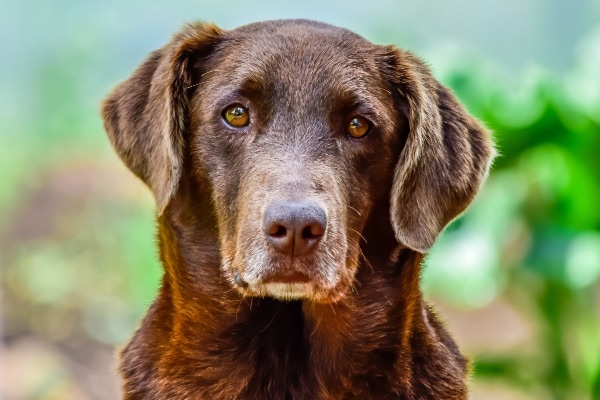
- Bailey, a Labrador Retriever dog with a torn ACL
- What is a torn ACL in dogs?
- What causes a torn ACL in dogs?
- Which dog breeds are at increased risk for an ACL injury?
- What are the symptoms of a torn ACL in dogs?
- How is a torn ACL in dogs diagnosed by your veterinarian?
- What are the treatment options for a torn ACL in dogs?
- Surgical options for repairing a dog's ACL
- Recovery and caring for your dog following ACL surgery
- The rest of Bailey's story
- Can ACL tears be prevented?
- Speak with your veterinarian about treatment options for ACL injuries in dogs
Bailey, a Labrador Retriever dog with a torn ACL
First, to understand how a torn ACL in dogs may happen, let’s meet my veterinary patient, Bailey. This 13-year-old, rotund Labrador Retriever preferred couch dwelling to outdoor adventures. One day, Bailey hopped down from the couch, walked a few steps, and then stopped. Randy, his pet parent, noticed that Bailey was favoring his left hind leg. In fact, he held it dangling in the air. He’d favored it very slightly in years past. But now, Bailey wouldn’t touch the back paw to the ground. That’s why his doting dad brought him to my veterinary office.
A veterinary exam and a diagnosis of CCL
After a complete head-to-tail physical exam and listening to my client’s story, I suspected a torn cruciate ligament. When I’d examined my patient’s left rear leg, the dog’s left knee was thickened and very firm. I suspected that the sweet dog had lived with a partial tear for years, and the tear had now become complete.
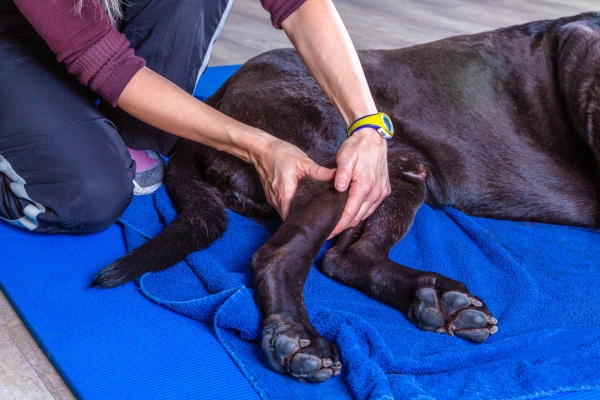
Next, with Bailey on his side enjoying a tasty peanut butter distraction, I placed one hand on the dog’s stifle and the other on the bottom of his foot, flexing his hock and knee. I checked for abnormal movement.
Bailey was fairly relaxed, but when I attempted to maneuver his knee, he lifted his head to inspect my work, indicating discomfort. I was not surprised. It is challenging to assess cranial drawer in an awake dog who is painful. X-rays would be needed to confirm my physical exam findings.
I shared my suspicion of a torn cruciate ligament (commonly called a torn ACL in dogs) with my client, and gave him a detailed explanation like the one below.
What is a torn ACL in dogs?
You’re probably familiar with the term ACL from witnessing a player injured in a football or soccer game. But what is a torn ACL?
ACL stands for anterior cruciate ligament, and it is an important stabilizing structure in the human knee. Dogs have a very similar ligament, technically called the cranial cruciate ligament (CCL). Even though “anterior” and “cranial” are basically synonyms, the term is different between humans and dogs. Both indicate a location closer to the head. But “anterior” is used in humans and “cranial” refers to the same direction/position in animals.
Because most people are familiar with the term ACL and they have similar meanings, ACL is often used more than CCL. With this in mind, I’ll use the terms “anterior cruciate ligament in dogs” or “ACL in dogs” and “cranial cruciate ligament in dogs” or “CCL in dogs” interchangeably throughout this article.
Understanding the cranial cruciate ligament
While you have probably heard of an ACL before, you might not fully understand what this important ligament does.
A dog’s cranial cruciate ligament has three critical functions:
- Preventing the tibia from thrusting forward in relation to the femur.
- Preventing the dog’s knee from hyperextending.
- Preventing the tibia from rotating internally.
What causes a torn ACL in dogs?
In humans, tearing an ACL is generally associated with trauma—like the sports scenario I mentioned above. This is usually not the case in our canine companions.
In dogs, the CCL tends to weaken over time. As this ligament weakens, it wears down and becomes more fragile. As this happens, the CCL becomes more susceptible to tearing. Unfortunately, we don’t fully understand why.
Current research focuses on whether early spay and neuter could predispose to this. The role of hormones in the development and health of ligaments is poorly understood in dogs, as is the risk of taking those hormones away at a young age. We do know that hormones are important for growth and regulating many parts of the body. We also suspect that hormones can play a role in human ACL tears, so it’s natural to conclude that they would for dogs, too.
A review of over one million dogs from the 1960s to 2000 showed that spaying or neutering increased the risk of suffering a torn ACL in dogs. Also, females were slightly more likely than males to tear an ACL. (The gender distribution holds true for humans, too.)
Additionally, we know that age and being overweight can be factors that contribute to the wearing of the ligament over time. This is partly due to the fact that bearing extra weight adds to the normal “wear” that the ligament encounters.
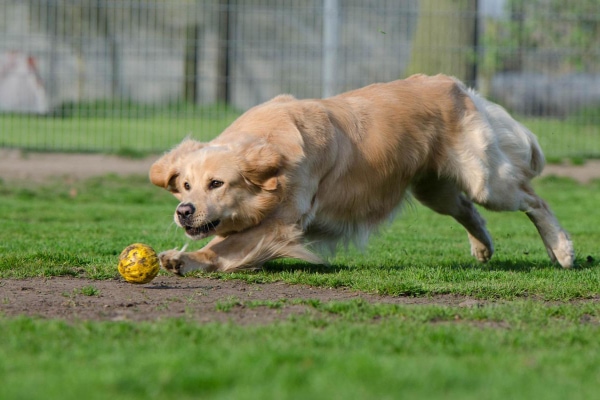
All of these factors indicate that—just like with many other injuries—the cause of a torn ACL in dogs is multifaceted. Therefore, if your dog experiences trauma to the knee (like slipping on the hardwood floor or ice), the trauma could be the final straw to cause a tear.
Which dog breeds are at increased risk for an ACL injury?
As more research is being done, we are learning that genetics play a role in CCL tears in dogs. While I’ve diagnosed a torn ACL in dogs of all sizes and shapes (and even cats), large breed dogs older than four years of age are most often affected.
The following breeds appear to be at increased risk for ACL injury:
- Labrador Retriever
- Golden Retriever
- Neapolitan Mastiff
- Newfoundland
- Akita
- St. Bernard
- Rottweiler
- Chesapeake Bay Retriever
- American Staffordshire Terrier
Since Labrador Retrievers are the most common breed affected, there is a new genetic test for Labradors to help detect if your dog is at risk of developing a torn ACL. Right now, this test is only available for purebred Labs. Hopefully, as research improves, it will become available for other breeds of dogs, too.

What are the symptoms of a torn ACL in dogs?
Now that we have talked about what causes a CCL tear, let’s discuss what symptoms you might observe as a pet parent of a dog with a torn CCL.
Just like in humans, an ACL tear is painful for your dog. Therefore, dogs try to protect their injured leg by not using it. Especially in dogs with a sudden acute injury, limping is the most common and easiest sign for owners to notice.
In addition to limping, other symptoms of a torn ACL in dogs include:
- Difficulty standing up from a sitting position
- Trouble jumping onto furniture or into the car
- Decreased walking/activity/play behavior
- Toe touching
- Stiffness
- Muscle loss around the knee or whole leg
- Swelling near the knee
- Increased licking of the knee/leg (can be a sign your dog is in pain)
- Decreased range of motion for the knee
- A “popping” sound or movement when walking or moving the knee
If you have noticed any of these symptoms in your dog, please schedule an appointment with your veterinarian. CCL tears are very painful and shouldn’t be ignored.
How is a torn ACL in dogs diagnosed by your veterinarian?
The diagnosis of a torn ACL in dogs is made based on several things.
First, your veterinarian will get your dog’s “history,” meaning back story. Often, dogs with complete cruciate tears will have a history of mild lameness and stiffness that comes and goes in a hind leg.
Some dogs may have previously been treated with a combination of non-steroidal anti-inflammatory medications, joint supplements for dogs, physical therapy, acupuncture, and/or laser therapy. This is because chronic inflammation and cruciate degeneration often happen over time. Eventually, a complete tear occurs.
After getting a thorough history of your dog, the physical exam is next. Your vet may include a gaiting exam, so he or she can watch your dog walk. If the lameness is not super obvious, I take my patients out to the parking lot and ask the owners to pretend like they are in the ring at Westminster, so I can watch the dog travel at a walk and a trot.
Your vet will observe your dog for signs of a torn ACL
Finally, a thorough orthopedic exam of the leg(s) and pelvis will be done. The following findings increase the suspicion for a torn ACL in dogs:
- Decreased comfortable range of motion in the affected (injured) leg.
- Decreased thigh muscle circumference in the affected leg (due to disuse/favoring the leg). We call this muscle atrophy.
- An awkward sitting posture in which the painful leg is held out to the side or the dog refuses to sit squarely.
- The presence of a medial buttress, which is a thickening on the medial (inner) surface of the leg indicating long-standing inflammation. This bony remodeling occurs in a knee with a chronic cruciate problem creating inflammation over time.
- A positive cranial drawer test. This test is best accomplished with sedation because pain can make it difficult to perform with accurate results. The dog will be placed in lateral recumbency (lying on his or her side). One hand should be placed on the patella (kneecap) and the other on the tibia. With pressure, the joint should feel tight and stable. If there is significant movement of the tibia forward in relation to the patella, this is considered a positive cranial drawer sign. (It mimics a drawer opening from a dresser).
- Tibial thrust also can be checked under sedation. One hand is placed over the stifle, and the foot is flexed with the other hand. If there is strong movement of the dog’s tibia forward in relation to the patella, this is considered positive.
I mention the details of the last two signs of a torn ACL in dogs, not to teach you how to perform them or expect you to fully understand them. (Please do not try this on your own dog at home. Like I mentioned, this can be extremely painful for your dog.) Rather, the details illustrate that the best way to diagnose a torn ACL in dogs is through a hands-on exam and diagnostic manipulation by your veterinarian.
Watch the video below of a cranial drawer and tibial thrust performed by a veterinarian…
Can an X-ray show a torn ACL in a dog?
X-rays can help rule out other conditions and support the physical exam findings. If your vet is going to palpate the knee and take X-rays, he or she will probably sedate your dog for these procedures. Even in the calmest dogs, sedation is important to help relieve pain. It’s hard (and unkind) to torque a painful dog’s leg into the perfect position for an X-ray while the dog is fully conscious.
To take X-rays and palpate the dog’s knee, your vet will give your dog an IV sedative and pain reliever. Once your dog is sedated and relaxed, your vet’s assistants will position your dog. Now, your vet will be better able to palpate your dog’s leg and feel a positive cranial drawer sign.
As I’ve already mentioned, this positive test is enough to diagnose a torn ACL. However, I have personally misdiagnosed a dog with a ruptured ACL, who actually had bone cancer, and I know colleagues who have done the same.
This is why X-rays can be very helpful. While a vet might not always be able to see the torn CCL on X-rays, they can make sure that there are no other conditions (like bone cancer) causing the same symptoms.
Key point: Radiographs (X-rays) help support the torn ACL diagnosis and rule out other conditions that can cause the same symptoms.
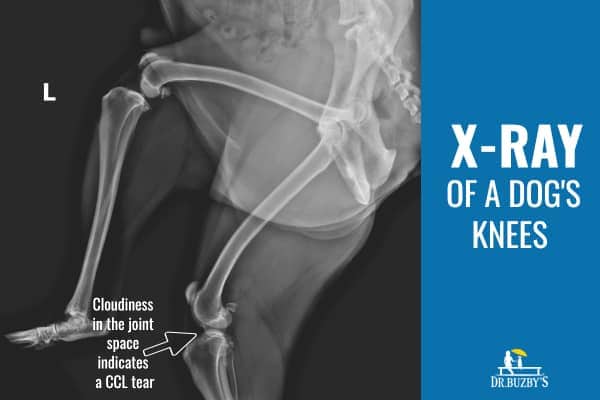
Additionally, veterinarians often try to position both knees on at least one X-ray image. By doing so, the dog’s two legs can be compared. This makes it easier to spot abnormalities in your dog’s knees. The X-ray below is a good example of this…
Also, X-rays can also be beneficial for treatment planning, especially if your veterinarian recommends surgery for your dog.
What are the treatment options for a torn ACL in dogs?
Unfortunately, treatment for a torn ACL is not cut and dry. As you can see from the list below, the number of treatment options are through the roof. Your veterinarian will be your best guide in developing a plan based on your dog’s specific condition. He or she may talk with you about some of these treatment options:
- Five different surgery options (explained below)
- Supplements
- Medications
- Physical therapy
- Rehabilitation
- Acupuncture for dogs
- Laser treatment
- Dog ACL braces (In general, I don’t recommend braces).
Also, treatment options will vary depending on the size of dog and the type of tear (partial versus complete). Next, let’s discuss the differences between a partial and a complete tear.
ACL in dogs: Partial tear versus complete tear
As the cranial cruciate ligament begins to wear down and become more delicate, the ligament continues to deteriorate and the risk for a tear increases.
When your dog runs, walks, jumps, or slips on his or her back legs, weight is put on the ligament. Eventually, it will tear due to these forces. If it tears incompletely, this is called a partial tear. But over time, the tear could continue through the whole ligament. It is now a complete tear, or a rupture.
Additionally, once a dog has a CCL tear in one knee, there is a 25-50% chance that the other knee will tear in the next 12 to 16 months.
Dog ACL tear conservative treatment
In small dogs (less than 15 kg or 33 pounds) who have a comparably small amount of mass to move around, conservative treatment with rest and pain management may be an acceptable approach. Unfortunately, no studies exist that compare this option to others, so it remains up for debate.
In one older study from 1984, less than 20% of dogs over 15 kg had an acceptable outcome when employing conservative management. As a result, surgery is the treatment of choice for most larger dogs.
But which surgery? If you put 10 veterinary orthopedic surgeons in a room, you’ll likely get 11 different opinions! Let’s review five surgical treatment options.
Surgical options for repairing a dog’s ACL
There are several surgical options available for repairing a torn ACL in dogs. Despite what you may read on the internet, none of these is the perfect surgery. (If there were one perfect treatment option, we wouldn’t have several surgical options to choose from.)
Treatment should be tailored to your dog. It is dependent on breed, size, and lifestyle. A large, athletic dog that competes in agility will need a different approach than a couch potato Pug that goes on walks twice a day!
Your veterinarian may discuss one or more of the following surgical treatment options with you:
1. TPLO (tibial plateau leveling osteotomy)
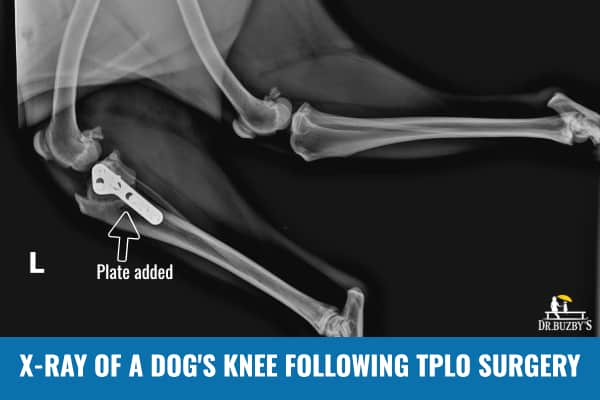
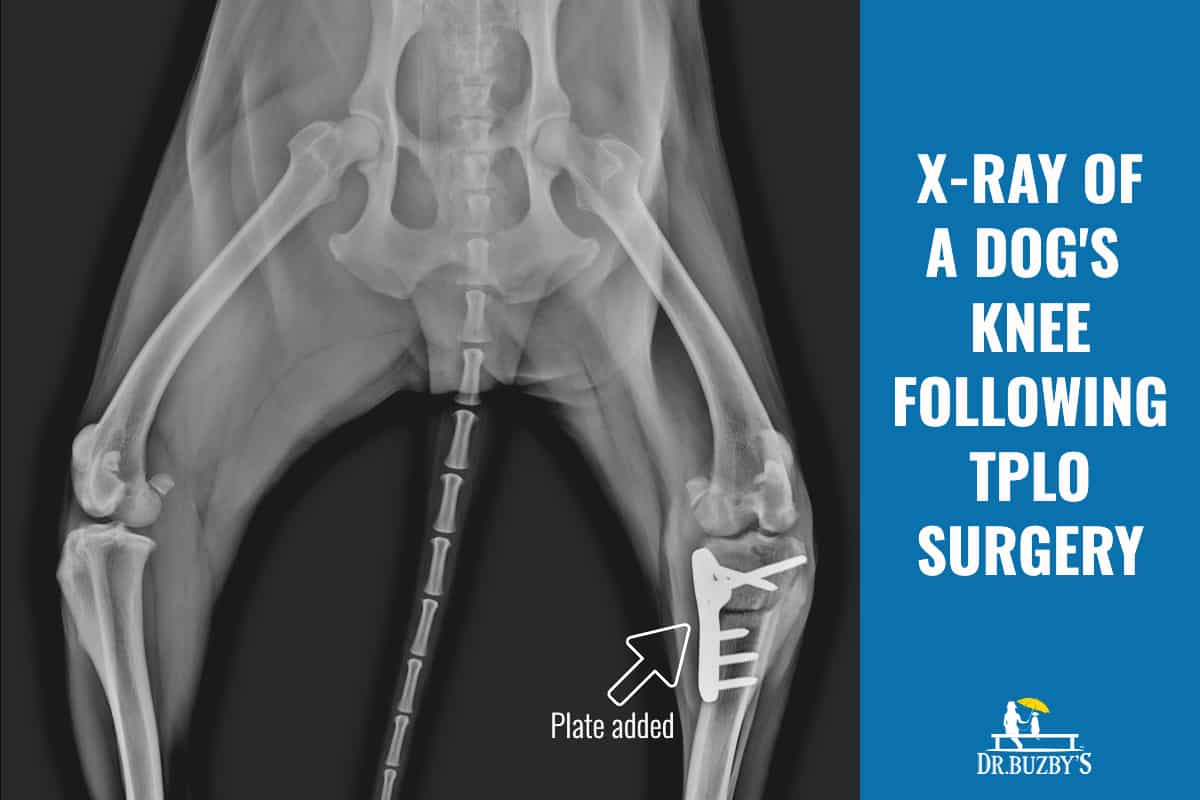
As a veterinary student, I was taught about the tibial plateau leveling osteotomy procedure, which is commonly called TPLO surgery for dogs. In this common procedure, a piece of the tibia is cut, rotated to a specific angle, and reattached with a plate and screws. This changes the dynamics of the knee so that when weight is borne, the tibia doesn’t thrust forward, inherently making the knee more stable.
The X-rays below show a dog’s knee with a plate implanted during a TPLO surgery…
2. TTA (tibial tuberosity advancement)
Like TPLO surgery, TTA surgery involves removing and reattaching a piece (called the tuberosity) of the dog’s tibia in a different orientation. This increases stability in the knee joint, which is lacking the cruciate ligament.
3. aCBLO (anatomic cora-based leveling osteotomy)
As the name indicates, this is another osteotomy (bone cutting) procedure which uses another approach to reduce instability in the dog’s knee.
4. Tightrope® (lateral fabella suture)
Developed as an alternative to the TPLO and TTA, which cut and rearrange the dog’s tibia, this technique uses an implant to create stability.
5. Simitri Stable in Stride
In 2016, the Journal of Veterinary published a study on a very promising new procedure called the Simitri Stable in Stride—an implant placed in the knee that stabilizes the joint. While early results are promising, wide use of this procedure is not common.
Recovery and caring for your dog following ACL surgery
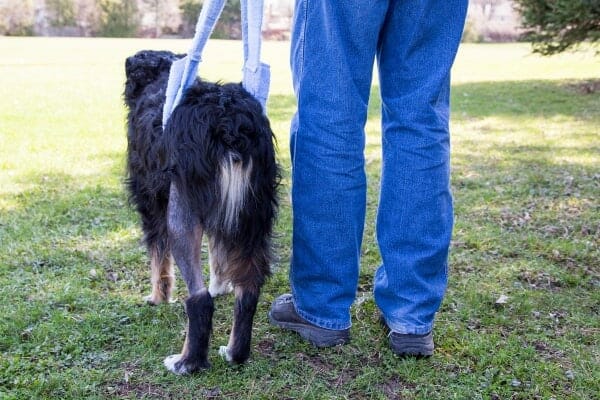
Following surgery, it’s important to follow your veterinarian’s aftercare instructions closely. Your vet may recommend six to eight weeks of strict rest post-operatively for your dog. Also, you may expect to limit your dog’s activity to short leash walks outside to use the bathroom. Your vet may also give strict orders to avoid water activities and getting your dog wet. This would include no bathing, grooming appointments, or swimming.
Post-surgical complications
There are two most common post-surgery complications of stifle repair: infection and re-injury. But the good news is that they are both avoidable.
Infection of the incision
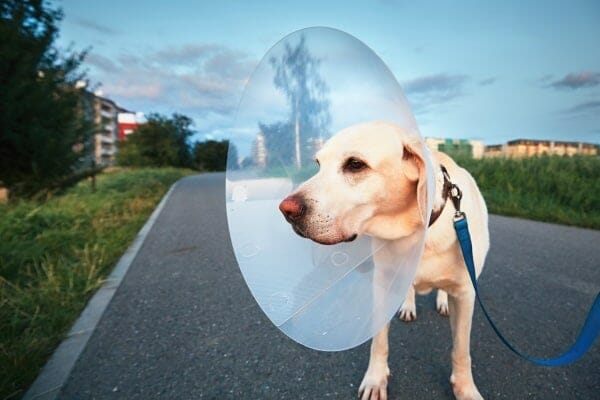
An infection is usually due to a dog chewing and licking at the incision. To avoid this, monitor your canine companion closely and be sure to keep a cone (or E-collar) on him or her.
Re-injury due to too much activity during recovery
Repairs made via surgery can fail or be re-injured if a dog is allowed to be active too soon after surgery. One of my dearest patients had this experience. Though her intentions were pure, the dog’s parent only half-heartedly restricted her activity post TPLO surgery and the plate shifted. The dog spent the rest of her life challenged by this, but her story has a happy ending. You can read it in my article, A Foreshadowed Hope.
How to avoid re-injury
After your dog has made it through surgery and post-op recovery, it is important to avoid a re-injury of the knee. So even after surgery, follow-up visits are necessary to ensure that everything is healing appropriately.
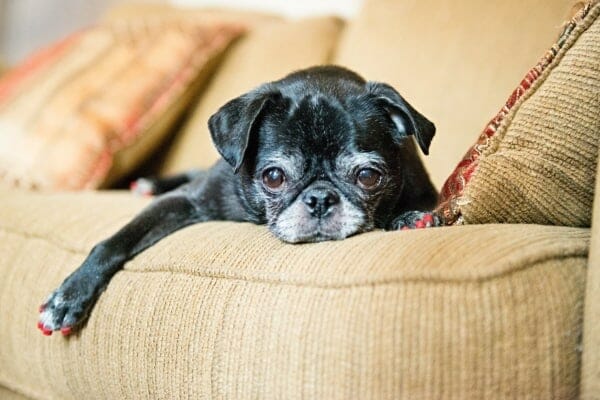
In addition to regular checks by your veterinarian, I often recommend ToeGrips® dog nail grips as an adjunctive therapy for my CCL patients. The non-slip grips fit on a dog’s toenails to reduce slip-and-fall injuries by improving traction on hardwood floors. For one account of how ToeGrips helped a senior dog who suffered a cruciate ligament injury, read ToeGrips for Older Dogs: Bigsby’s Story.
Pain medications and supplements following surgery for a torn ACL in dogs
Another way to avoid complications, is through proper pain management. Post-operative pain medications usually include a non-steroidal anti-inflammatory, like carprofen or deracoxib, as well as gabapentin for dogs and/or tramadol for dogs. It’s important to follow your veterinarian’s instructions to diligently manage pain medication.
Your vet may also discuss adjunctive modalities like laser therapy and acupuncture. Also, in my experience, joint supplements for dogs such as New Zealand deer velvet, glucosamine/chondroitin, and green lipped mussel for dogs are also valuable (although data is lacking on these therapies).
Personally, I recommend Dr. Buzby’s Encore Mobility™ hip and joint supplement for dogs to my clients. With New Zealand deer velvet and green-lipped mussel, it helps maintain and support healthy cartilage and joints. Not only is this vital to the health of the damaged joint, but also it’s vital to the joints of the other hind leg which is compensating.
Save 10% on Encore Mobility™ Joint Supplement for Dogs
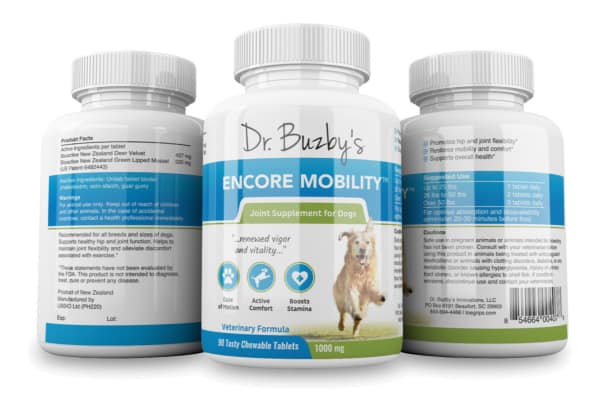
Give your dog more good days.
Use promo code HAPPY to save 10% on Encore Mobility.
Physical therapy following CCL surgery in dogs
In human medicine, it is assumed that rehab or physical therapy will be a part of the recovery process following surgery. Veterinary rehabilitation for dogs is one of the fastest-growing aspects of veterinary medicine. It is now recommended by many veterinary orthopedic surgeons after the initial healing period.
Doggie physical therapy can speed up recovery by building muscle tone and improving strength and balance. There are many different exercises that can be used including some techniques that you can do at home or even the use of an underwater treadmill for dogs.
To learn if rehab is available in your area, you can search the American Association of Rehabilitation Veterinarians’ list of certified rehabilitation practitioners by state.
The rest of Bailey’s story
You may be wondering what happened to my veterinary patient Bailey. X-rays of Bailey’s knees showed cloudiness in the joint space and the tibia looked displaced. In comparison, Bailey’s right knee looked normal. Everything pointed to an ACL tear.
I relayed this information to my client. We had some decisions to make. His senior dog was 13, and surgery in older dogs is no small undertaking.
But, without surgery, Bailey’s body would start to scar over the tear and stabilize the joint by laying down extra bone. He would eventually be able to use the leg again, though it would always be his “Achilles heel,” prone to reinjury. Also, eventually signs of canine arthritis would set in, causing chronic pain and lessening his quality of life.
On top of that, often when one cruciate tears, the other usually follows within a one-year period. If that happened, Bailey would have two bum hind legs. So, the best option was surgery.
My client decided to take Bailey to a board-certified orthopedic surgeon for a consultation and surgery. Bailey’s surgeon elected to repair his cruciate rupture with TPLO surgery, which was a huge success!
This was in large part due to the dedication of Randy. He followed post-op instructions to the letter, including strict rest for six weeks and constant Elizabethan collar wearing. His diligence played a critical role in his dog’s success.
Can ACL tears be prevented?
Finally, one of the hazards of being a conscientious pet parent is a propensity toward “dog parent guilt.” When I diagnosed Bailey, my client wanted to know if he’d inadvertently contributed to the injury or could have prevented it. You may have the same question.
Cranial cruciate ruptures aren’t well understood. The causes are multifactorial, as mentioned above. But one risk factor is known and within your control—obesity in dogs!
In one study, obesity quadrupled the risk of a cranial cruciate tear. Keeping dogs slim and fit is certainly helpful in not only preventing cruciate tears but also in preventing many other disease processes. To learn more about keeping your dog fit, please learn how to assess your dog’s canine body condition score.
Speak with your veterinarian about treatment options for ACL injuries in dogs
As a veterinarian who has practiced for over 25 years, I have seen hundreds upon hundreds of partial and complete ACL tears in dogs. If your dog has been diagnosed with a torn ACL, I want you to know you’re not alone. This is a very common condition in dogs. Thankfully, it’s one for which excellent treatment options exist. Your dog can recover from this injury and go on to lead a happy, active life —running on all four paws.
What questions do you have about a torn ACL in dogs?
Please comment below. We can all learn from each other.


I can not get my Rottweiler out of her crate after ACL surgery. She will not take any of her meds no matter what we have tried which is everything in the book. It’s been three days now since her surgery
Hi David,
I am sorry things are not going well during these initial days of recovery. Please make sure your vet is aware of these issues. They may be able to get the same medications in a liquid form or even give your girl an injection. In the meantime here are two articles with more suggestions for how to get pills into your pup:
1. Your Dog Won’t Take Pills? 5 Easy Solutions for Uncooperative Pooches
2. 11 Best Foods to Hide Dog Pills In: A Vet’s Recommendations
Hoping things will start to improve and wishing you all the best.
I have a jack russell cross thats 15 this year.
He had TPLO on his 1 hind leg last Jan and needs it again on the other side.
However, i’m nervous for him to go under again to get the other one done..
he’s perfectly healthy otherwise..
Should I get it done? Will be somewhat “recover” to live out the rest of his life without?
Hi Chris,
I understand your concern with having your senior guy go under anesthesia. If things went well last year and nothing has changed since, then I would assume there would be a similar outcome this year. There are ways to try and get the inflammation and pain under control without surgery, but this would require some physical therapy. Here is a link to another article with more information: Dog Torn ACL Treatment Without Surgery: A Rehab Vet’s Approach
Ultimately, you have to do what you feel most comfortable with. You know your boy better than anyone! It is ok if you decide to forgo surgery and focus on comfort care as long as his quality of life can be maintained. Praying you can get the answers you need to find a clear path forward. Best wishes to you and your sweet boy.
We have a 1yo Pomeranian that will favor his back leg when standing. He still will jump and play and show no signs of pain or anything. A vet said he has a torn ACL and should have it surgically repaired and if we let it heal he could be disabled later. Its just weird how he shows no sign of discomfort and the only reason we were concerned was him holding it up when standing. Just wanted to get your thoughts on this.
Hi Michelle,
I understand your concern for your young dog with this severe knee injury. Dogs are great at masking pain and discomfort, but please know if your boy is not willing to bear weight on the leg while standing then he is definitely painful. It is true that without early intervention, an ACL tear can lead to arthritis formation and scar tissue in the joint. There are ways to promote healing without surgery, but rehabilitation and physical therapy play a major role. I will attach links to other articles with more information. Hoping you can find the answers you need to make the best choice for your pup. Praying for healing and a positive outcome.
Hi. My 7 rear old lab, Cooper, was just tentatively diagnosed with an ACl rear. We are scheduling x rays to confirm. I have a Bemer at home. Wondering if it’s ok to pre treat Cooper with PEMF as recommended in the article above. He has anti inflammatory and pain meds but would love to increase blood flow and reduce his pain if it’s safe for him to use it. I know they use it on horses. Thanks.
Hi Julia,
I am sorry your Lab is facing this worrisome knee injury. I think using PEMF is a great idea. There are only a few instances where I would shy away from utilizing this therapy. I encourage you to discuss it with your vet just to make sure there are no contraindications. Wishing you all the best of luck and praying your boy can make a full recovery!
I would add MMT (Modified Maquet technique) to this list. It’s common in Europe, and much less so in the US, but it was worth it to me as the bone cut it fitted with a titanium foam wedge that the bone can grow through, and requires only a pin and staple (or two) depending on the size of the dog. I traveled from Western Washington to Canada for the first, and then Oregon for the second one. My 150 lb Newfoundland has had both knees done with this procedure. He walked out to the car on the second one (better anesthesia) and was lifting his other leg within a day or so. Our vet at home was so impressed with the surgery that she decided to learn the procedure and get the equipment. 4 years after the second surgery, our vet says his knees don’t even feel like he’s had a surgery, they just feel like slightly older knees. Worth a look!
Hi Amy,
Thank you for mentioning this surgical procedure and sharing your experience with us. There are so many different surgical techniques out there it makes it hard to include them all. We try and provide information about the most common procedures, but it may be a good idea to add this one to the list as well. I will bring it up with the blog team and see if we need to update the article. I appreciate your feedback and willingness to offer guidance and advice to others! Bless you. ♥
My reactive dog is believed to have a torn ligament, she is on loxicom and has been for 5 months.
the vet is worried about operations as she is very worried that it will do her more harm then good as she is terrified of the vet. we aren’t sure what to do.
she is a big dog
Hi Jane,
I understand your concern for your pup and can see how her anxiety could turn a difficult situation into a nightmare. There are many options for medications that can be given the night before and the morning of a vet visit to help reduce stress and hopefully prevent a negative reaction. I definitely don’t think this should prevent a much-needed surgery. You can take some time to try different supplements and therapies to see what works best and come up with a game plan. You can even ask for a consultation with a board-certified veterinary behaviorist to see what they would recommend. I will attach links to other articles with more information and things you can discuss with your vet. I am hopeful you can find a way to provide the care your girl needs and keep the peace in your home.
1. Trazodone for Dogs: Uses and Side Effects
2. CBD Oil for Dogs: Facts, Benefits, Concerns [2024]
3. Dog ACL Brace? Veterinarians Share Answers
4. Dog Torn ACL Treatment Without Surgery: A Rehab Vet’s Approach
My 13 y/o Labrador retriever had left leg TPLO (8 mm rotation) surgery 5 weeks ago and the damaged meniscus was removed, but she has been deteriorating ever since. We’ve followed the vets advice 100%. Her leg now juts out at an obtuse angle like a pit bull and pivots/wobbles when she tries to walk. It’s painful to watch. Her hips are fine, no dysplasia per X-rays. Now, they’re recommending lateral suture surgery. It looks like another ordeal. Her right leg was compromised by a break 12 years ago that never set properly so it’s slightly bowed. Should they have compensated for this and done only 6 mm or even 10 mm rotation instead of the 8 mm TPLO that they did? Is Extracapsular Lateral Suture Stabilization surgery the way to go? I’m at a loss and resources are scarce in my remote area. Help?
Hi Janice,
I am sorry your senior girl is having these strange complications since her TPLO surgery was performed. Honestly, most orthopedic procedures of this type are done by specialists, and I would not be able to offer a critique or suggestions as to how the surgery could be done differently. I would have to defer to the surgeon and have them give you their expert opinion and advice. I hope you can find the answers you need to feel confident moving forward with treatment. Wishing you all the best and praying for a positive outcome.