A dog nose bleed can be upsetting (and messy). To help you feel prepared should your dog’s nose ever start bleeding unexpectedly, integrative veterinarian Dr. Julie Buzby explains how to stop a nose bleed at home and discusses 13 causes of dog nose bleeds.
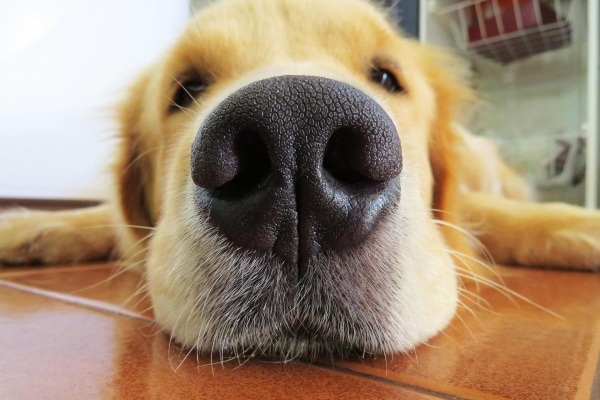
Nose bleeds in people can be common occurrences. If you’ve ever accidentally been hit in the nose, you may have experienced a nose bleed. And some people may develop them in the wintertime due to the presence of dry air. But what does it mean when your dog has a nose bleed? And how do you stop a dog nose bleed?
What is a dog nose bleed?
As the name would indicate, a nose bleed involves blood or bloody nasal discharge coming from your dog’s nose. The technical term for a nose bleed is “epistaxis.” Depending on the underlying cause, the blood can come out of one or both nostrils. The source of the blood may be the nostrils, nasal passages, or nasopharynx (back of the throat adjacent to the nasal passages).
Nose bleeds can be very mild and short-lived, or they can be intense and result in severe blood loss. Some nose bleeds will not be very noticeable until the dog sneezes and little droplets of blood come out of his or her nostrils. Other times the blood may be steadily pouring out onto the floor.
How do you treat a dog’s nose bleed at home?
If you notice your dog is having a nose bleed, the first question on your mind is probably how to make it stop. You might not have to worry about doing much if there is only a drop or two of blood. But if there is more blood, follow these steps to help stop a dog’s nose from bleeding:
1. Remain calm
Try to bring your furry friend away from any noisy, busy areas. Look for somewhere quiet, especially if you’re at home. Stress and excitement can raise your dog’s blood pressure and make him or her bleed more.
2. Apply an ice pack to the bridge of the nose
Grab an ice pack (or a Ziploc bag filled with ice will do in a pinch), wrap it in paper towels or a washcloth and then gently apply it to the bridge of your pup’s nose. The cold will slow the bleeding by constricting local blood vessels.
Word of warning—if you have a short-nosed dog, ensure that you are not making it hard for your dog to breathe by obstructing the nostrils with the ice pack.
3. Avoid sticking anything in your dog’s nose
Don’t stick anything up your dog’s nose to stop the bleeding. I know it might be tempting because people do it for their nose bleeds. But stuffing gauze, tissues, etc. up a dog’s nose is irritating and may make him or her sneeze, which can worsen the bleeding.
4. Follow up with your vet
If your dog is bleeding heavily, the bleeding lasts longer than a few minutes without showing signs of stopping, or your dog is showing any other signs of illness or injury, your may need to make an emergency vet visit to get the bleeding under control and find and treat the underlying cause. Even if you get the bleeding to stop and your dog seems fine, it is usually still a good idea to check in with your vet during his or her regular business hours. That way your vet can run any needed diagnostic to help get to the bottom of why your dog had a bloody nose.
What can cause nose bleeds in dogs?
There are times when the cause for a dog’s nose bleed can be very obvious and times when it is not. If your pup has a nose bleed after he or she went excitedly careening across the room and ran face-first into the wall or doorframe, you can probably put two and two together. However, there are other situations where the cause may not be so clear. That is when it will be up to your veterinarian to help you look for it. Some of the causes of a nose bleed in dogs include:
#1: Trauma
We might as well start with trauma because, according to a 2007 study in the Journal of the American Veterinary Medical Association (JAVMA), trauma and nasal tumors are the top two causes of nose bleeds in dogs.
Sometimes trauma can be as simple as your excitable canine companion not being able to “hit the brakes” fast enough when doing zoomies in the house or not noticing that the clear sliding glass door was closed and hitting his or her head. Examples of more intense trauma include falling from great heights or being hit by a car. If the nose was traumatized in these examples, a nose bleed is very likely to occur.

#2: Nasal tumors or cancer
The other top cause of epistaxis in the 2007 JAVMA article was nasal tumors. Nasal adenocarcinoma, a locally aggressive kind of cancer, is the most common type of nasal tumor. It can affect one or both sides of the nose.
This means a dog nose bleed on one side may be more indicative of a local tumor (or other local issue) instead of other body-wide causes of nose bleeds that would affect both sides.
There are also many different non-nasal cancers that can increase the risk of epistaxis. These include:
- Lymphoma in dogs
- Hemangiosarcoma in dogs
- Multiple myeloma
- Leukemia
#3: Medications and drug reactions
The use of non-steroidal anti-inflammatory drugs (NSAIDs) may increase the risk of nose bleeds because they can inactivate blood clotting factors. This makes it easier for bleeding to occur from the delicate mucous membranes within the nose. There are several different NSAIDs that are made specifically for dogs (e.g., firocoxib, carprofen). Thankfully, nose bleeds tend to be a rare side effect of these drugs.
Adverse reactions to other medications are also rare but possible. Certain hormone therapies and chemotherapeutic drugs have been known to cause nose bleeds. A specific antibiotic drug class known as the sulfonamides (aka sulfa drugs) can also result in epistaxis.
#4: Toxin exposure
There are any number of toxic chemicals that have been known to affect an animal’s blood clotting abilities. This in turn could lead to nose bleeds as well as bleeding from other locations in the body.
Rat poison (i.e. rodenticide) works by decreasing a rodent’s ability to clot blood, leading to fatal internal hemorrhaging. Unfortunately, many commercially available rodenticides can cause the same terrible death in dogs and cats. It is important to keep these poisons far out of reach of your dog.
#5: Foreign bodies
It is possible for a foreign object to find its way up your pup’s nose. In the Western United States, spiky plant material known as grass awns can be a big problem. Some examples of grass awns include foxtails and cheatgrass. These sharp, stiff pieces of grass are barbed in such a way that pulling them out of a dog’s nasal passages can be extremely painful. It is no wonder they can irritate the tissue and cause nose bleeds.
#6: Dental disease
In the average dog skull, there is a thin plate of bone that separates the nasal cavity from the oral cavity below. When periodontal disease (i.e. dental disease in dogs) is present, it can lead to significant bone infection or even bone loss beneath the surface of the gums.
Thus, dental disease affecting the teeth in the upper portions of the mouth can lead to problems within the nasal cavity. One such example is an oronasal fistula, a tiny open communication between the nasal cavity and the oral cavity. This communication can result in infection and nose bleeds.
#7: Fungal infections
While transmission of certain bacterial and viral infections through nasal inhalation of particles is possible, the inhalation of fungal spores tends to be much more devastating. Fungal infections such as Aspergillus fumigatus, Blastomyces dermatitidis, and certain Penicillium species can invade the nasal cavity as well as other parts of the upper and lower respiratory tracts.
The end results of these fungal infections are pneumonia-like symptoms, nose bleeds, and various other clinical signs. It can take months for a dog to undergo treatment, and some infections may be lifelong.
#8: Tick-borne illnesses
Tick-borne diseases in dogs such as Ehrlichia canis and Babesia gibsoni can cause several clinical symptoms such as fever, lameness, and lethargy. Because these types of infections can affect a dog’s blood-clotting abilities, tick-borne diseases can also cause nose bleeds.
#9: Autoimmune diseases
If a dog has an autoimmune disorder, it means that the immune system is mounting an inappropriate response to the dog’s own cells. In other words, immune system complexes that would normally attack foreign invaders are attacking normal parts of the dog’s body instead.
Patients with immune-mediated thrombocytopenia (ITP) suffer from low platelet counts. This is because the immune system attacks and destroys platelets, a type of cell that helps to form blood clots. Without enough platelets to help the blood clot, nose bleeds are possible.

#10: Bone marrow disorders
Your dog’s bones do a lot more than just form his or her skeleton. In the center of the bones, there is a spongy, vascular tissue called bone marrow. Among other things, bone marrow is responsible for the creation of platelets. It houses large precursor cells called a megakaryocytes, which eventually break down to create hundreds of little platelets.
Certain diseases and drugs that inhibit or suppress the bone marrow can lead to overall decreased platelet production, thus increasing the risk of epistaxis.
#11: Hyperviscosity syndrome
Hyperviscosity syndrome occurs when there are very high levels of protein in a dog’s blood. It is difficult to know the true reason this happens. But certain diseases like amyloidosis (i.e. a condition where the body deposits a protein called amyloid in various locations) and monoclonal gammopathies (i.e. a condition where the body makes too much of one type of immune system protein called immunoglobulins) are thought to be factors.
When there is too much protein in the blood, there isn’t enough room for the fluid component (i.e. plasma) so the blood becomes very thick or viscous. The increased pressure from this thicker fluid results in blood vessels rupturing, which leads to blood loss. Nose bleeds are one way the body may lose blood.
#12: Blood clotting disorders
Blood clotting is controlled by the interplay of numerous proteins known as coagulation factors. If one of those factors is deficient, it can cause a bleeding disorder.
Various inherited conditions can negatively impact clotting ability. For example, hemophilia A results in a deficiency of coagulation factor VIII. This causes anything from a mild nose bleeds to extreme blood loss. As another example, Doberman Pinschers are at an increased risk of inheriting von Willebrand disease. This condition causes platelets to lose the protein that makes them “sticky” enough to form blood clots. Affected dogs are at a higher risk of abnormal bleeding.
Clotting issues can also be acquired. When there is serious damage to the internal organs—due to things like infection, inflammation, or heat stroke in dogs—the body can enter a state called disseminated intravascular coagulation (DIC). In DIC, the clotting system, which normally regulates how clots form and break down, goes haywire. Thus, a dog with DIC might suffer from clots in all the wrong places or bleeding from anywhere, especially the nose.
#13: Liver failure or kidney failure
When important internal organs like the liver and kidneys can no longer function properly, there can be problems that lead to bleeding. The liver creates the majority of the coagulation factors, so understandably, liver disease in dogs can lead to decreased coagulation factor production. Without coagulation factors, blood cannot clot and the dog is prone to spontaneous bleeding like nose bleeds.
Chronic kidney failure in dogs may lead to high blood pressure (i.e. hypertension in dogs). The increased pressure in the vessels may make the capillaries more fragile and therefore, prone to rupturing. This can cause bleeding in various locations, including the nose.
What other symptoms go along with a nose bleed?
As you can see from this list, there are many different reasons a dog may get a bloody nose. Sometimes you might only see the bloody nasal discharge. Other times there are additional clinical signs such as:
- A firm swelling that appears over the bridge of the nose or next to the eyes, eye discharge or a protruding third eyelid, and/or more frequent sneezing in dogs with a nasal tumor.
- Pale gums, black/tarry stools, unexplained bruising under the skin, difficult or heavy breathing, dog is breathing fast, and/or becoming a pot-bellied dog if there are issues with clotting factors or platelet numbers.
- Sudden onset sneezing and pawing at the nose in dogs who have a nasal foreign body.
- Bad breath, old dog losing teeth, dog tooth abscesses and/or oral pain if the dog has dental disease.
- Increased thirst in dogs, increased urination, vomiting, and/or weight loss in a dog with kidney disease.
If your dog is having nose bleeds, please also report any other symptoms to your vet. That will make it easier for your vet to get to the bottom of why the nose bleeds are happening.
What diagnostics might the vet run?
In addition to gathering your dog’s history (including travel history, symptoms, etc.) and doing a complete physical exam, your vet may suggest several other tests. Often, he or she will start with some blood tests. This may include a complete blood count (CBC) and blood chemistry profile. These tests are a useful way to evaluate red blood cell and platelet numbers, measure proteins and globulins (for hyperviscosity syndrome), and look at liver and kidney enzyme levels. Urine testing is also a part of this minimum database of information.
Additionally, the vet may decide to run tick titers to look for the presence of tick-borne illnesses or coagulation tests to check for blood clotting issues or DIC. The vet might also suggest basic imaging like X-rays and ultrasound to look for evidence of cancer, fungal infections, and internal bleeding.
If the vet suspects a nasal tumor, he or she will probably recommend advanced imaging such as a CT and MRI. These modalities are better at detecting nasal tumors than X-rays alone. The vet also may suggest a thorough oral exam under general anesthesia (including dental X-rays) if he or she thinks dental disease may be contributing to the nose bleeds.
Some dogs will end up needing a rhinoscopy to figure out why they are having nose bleeds. Rhinoscopy is a procedure where the veterinarian inserts a special scope into the nasal cavity to look for signs of trauma, tumors, fungal infections, or foreign bodies. In some cases, the vet may decide to take biopsy samples during the rhinoscopy. However, you should be aware that local inflammation and the tendency for nasal tissue to bleed easily can make it hard to get good samples.
What is the treatment for nose bleeds?
Once your vet reaches a diagnosis, he or she will work with you to come up with a treatment plan. The vet will need to address issues like infections, inflammatory conditions, and organ damage with additional therapy. If the epistaxis resulted from the use of certain medications, the vet may advise you to stop giving those medications.
A dog with a nasal foreign body requires surgical removal of the offending object before it causes further damage. If there is a nasal tumor, the vet may recommend referral to a board-certified oncologist for surgery and/or radiation.
Your veterinarian may also recommend a Chinese herbal supplement called Yunnan Baiyao for dogs if your dog suffers from chronic nose bleeds. Yunnan Baiyao seems to have almost magical clotting properties.
What is the outlook for dogs with nose bleeds?
As you can imagine, the prognosis varies depending on why the dog is having nose bleeds. Most dogs with minor nose bleeds due to trauma or a mild infection have a very good prognosis. However, chronic illnesses like liver failure and kidney failure will have guarded to poor prognoses. Locally aggressive nasal cancers also carry a poor to grave prognosis, especially if left untreated.
Don’t let nose bleeds get you down
I know it can be alarming to see your dog’s nose suddenly dripping blood or to have him or her sneezing blood. But if your dog starts to have a nose bleed, remember to remain calm, apply ice to the bridge of the nose, and then get in contact with your vet.
There are a wide range of reasons for a nose bleed, and some are worse than others. Regardless of what the cause may be, work closely with your veterinarian and follow his or her advice. Together you can hopefully reduce or maybe even eliminate your dog’s nose bleeds. That way you and your dog can keep enjoying life together without nose bleeds getting in the way.
Has your dog ever had a nose bleed?
Please share your experience below.


Our 2 yr old male golden retriever mix started showing signs of bleeding several months ago. We would find small amounts of blood on our bedspread, but were puzzled where it was coming from. He has a tendency to chew on his paws so we thought that was the source of the blood, but we could never find any blood on his paws. More recently we discovered more pronounced blood on the bedding and significant blood pools on the floor dripping down from the bed. We finally realized the blood was coming from his left nostril. We immediately took him to the vet who did blood work that was all normal. He’s been on Vitamin K bid for 2 days along with an antibiotic bid. He has not improved and seems to be sneezing more and spraying blood. Vet advised to give it a couple more days. If no improvement then she’ll sedate him and do a rhinoscopy. He shows no other signs or symptoms of illness. One worry that’s nagging me is last spring we found a raw potato and an orange in our dog fenced area. We didn’t think he ate any of it, but if that was laced with rat poison could this be the cause of this bleeding now? We examined the items and didn’t see anything suspicious, but I don’t really know if it could have been tainted. Should I be worried this could possibly be poisoning?
Hi Gloria,
I understand your concern about these bleeding episodes in your young pup. If the potato and orange that were found in his area last spring were poisoned, it definitely would not have taken this long to see symptoms. Even delayed symptoms from rat poison are usually seen within weeks. That doesn’t rule out the possibility that someone isn’t still giving him things he shouldn’t have. But if rat poison was the culprit, then there are blood tests that can be done to show clotting abnormalities which would allow for a diagnosis. I am leaning more toward where your vet is headed with the rhinoscopy. I am suspicious that there is a mass or polyp in the nasal cavity causing the bleeding. I hope the scoping procedure will give you the answers needed to pursue an effective treatment. Praying for a positive outcome and a full recovery for your sweet boy.
Hello! My 17 year old bichon mix is having a nosebleed as I write this. She started having them about 6-8 months ago and has 4 or 5 now. They’re never heavy – just drops that she licks off her nose. and some drops on the floor.. There seems to be no reason when they happen. She’s been taking Galliprant 20 mg every morning for over a year. Could that be causing it? She’s in good health otherwise and sees the vet regularly.. I’ve forgotten to mention it when there!
Thanks for any advice.
Hi Karen,
I understand your concern with these episodes of nose bleeding in your senior pup. I do think you should let your vet know sooner rather than later. It would be a good idea to have some lab work or other testing preformed to rule out some of the more serious potential causes. I wouldn’t think this would be a side effect of the Galliprant. Hoping you can get some answers and find an easy solution.
We have a about 12yr old 15lb silky terrier. A couple of yrs ago he started reverse sneezing when he got excited. It eventually evolved into regular sneezing, but with these violent head shakes. Now blood has become a part of it. It stops almost as soon as it starts. I try to rush him outside until he is done.
The first time we were walking and we thought he bit his tongue. The second time we only saw him sneeze and small streaks of blood came out. He ends up with half his mustache covered in blood and he won’t let you wash it off with a cloth. Another similar episode and then this morning he rubbed his nose and then started sneezing. The chain of events is def that he felt something, the blood started and that made him sneeze. It stopped quickly but it looked like more blood than before.
He has had regular vet visits (currently they won’t see him until late Nov) and so any tooth decay or some of the other possible causes, I think they would have found before. Is there something I can do or something I should say to the vet to be helpful. I may not have given enough info, but I just don’t know what to do. Any advice is helpful.
Hi Stephanie,
I too am concerned about these bleeding episodes in your senior boy. I understand than many veterinary clinics are overwhelmed with workload, and it can take a while to get an appointment. With that being said, I think your dog needs to be evaluated sooner rather than later. Since I haven’t examined your pup myself, I can’t make specific conclusions, but I am suspicious of a mass or cancerous process. If there is a mass in the nasal cavity, I would hate for it to have two months to grow before a diagnosis is made. I recommend you contact your vet and make sure they understand the details and your concerns. You may have to see if you can get your pup seen faster at another clinic. I hope you can get some answers and find a treatment to help relieve these bleeding issues. Praying for a positive outcome for you and your little guy.
Hi, I have a 9+years of golden cream labrador her name is Sofia., form past 3 week she is not eating anything .from.past 2 week I concern with my vet as she is diagnosed with kidney failure in ultrasound also her creatinine level is 24 .doctor told us it is a very high level of creatinine present in her body. we lost all hopes and praying to God and caring alot by giving her liquid diet by syringe and giving her food forcefully and giving her medicines too,but today I saw her nose bleeding to much my hands were shivering I consult her vet as he hold me that it is a multi organ damage .what precautions or steps we can do to make her in a peaceful condition we lost all our hopes to saw her happy with a smile her nose is bleeding too much doctor can you give me advice.its a humble request.
Hi Kashish,
I am sorry your senior dog is suffering from multi organ failure and nearing the end of her life. Since I haven’t examined your dog myself, I have no way of knowing what the options are for pain control and comfort. This would be a great question to ask your vet. Also, it might be a good idea to contact a hospice veterinarian. From what you are describing, I am concerned that efforts to keep your girl comfortable may be in vain and that choosing euthanasia might be the most loving choice at this point. Saying goodbye will allow Sofia to find peace and rest and end her struggling and discomfort. My heart goes out to you as you face these difficult decisions. Bless you both.
Hello. Our Dog Cook (8 1/2) has recently had cruciate ligament surgery and week into rehabilitation, a reoccurring nose bleed started for two nights running. He also has a heart murmur and is subscribed Vetmedin 10mg twice a day) for this. The first night the blood was poring for a few hours. It then clotted, but because he was sneezing it continued the cycle. After a few hours it stopped until the next night when it started again but this time the intensity was down about 50%. We initially thought that the inflammatory drugs (Pardale V 500mg) twice a day) we’re having an impact. The vet changed the medication to (Tramvetol 50mg 1.5 tablets every 8 hours) We’re waiting tonight to see if we have a reoccurrence. Any advice would be appreciated. Best Mark
Hi Mark,
You are right to be concerned about these bleeding events in your senior dog. I am glad you have talked to your vet, and they have already changed his medication to see if that solves the problem. If the nosebleeds continue, it will probably mean you are headed for lab work and some testing. Your vet may decide to check Cook’s platelets and other blood cell counts. High blood pressure can also cause these symptoms. X-rays may be needed to evaluate what the inside of your dog’s nose looks like and to rule out the possibility of a mass. My best advice is to make sure your sweet boy is as calm and anxiety free as possible. I hope the medication change will be the quick fix we are all hoping for. Feel free to leave an update if you have a chance. Best wishes!
My 11 year old Dachshund started having a continual nasal discharge several months ago which gradually became pink and now deep red. It only comes from the right nostril. He makes snorting and gurgling sounds as it affects his breathing. Because he has heart problems, the vet doesn’t want to do an MRI so no diagnosis has been made. He is on heart and blood pressure meds but continues to seep from the nostril. Can anything be done?
Hi Nancy,
I understand your concern with these chronic nose bleeds and discharge from the right nostril of your senior guy. Unfortunately, without a definitive diagnosis it is difficult to make specific treatment recommendations. It might be a good idea to schedule a consult with a specialist. If a mass is suspected, it may be worth trying a course of steroids. The anti-inflammatory action of the steroids can sometimes temporarily shrink the size of tumors, offering a better quality of life. Steroids are not the best for dogs with heart issues, but I am not sure what kind of prognosis your boy has been given. If your vet is thinking this could progress and eventually become life threatening, it could be a good time to discuss palliative care. I would also ask if you could try the herbal remedy mentioned in the article, Yunnan Baiyao. I hope you are able to find the answers you need to give your sweet boy some relief. Bless you both.
hello I’m trying to help my brother figure out what my be happening to his dog she is a belgian malinois puppy he took her to her spay appointment while she was there her nose starts to bleed they call my brother letting him know what is goingon and they are trying to figure out why her nose started bleeding and trying to stop it they end up giving her epinephrine shots to stop bleeding and he picks her up now she is not the same shoemaker weird noises out of her nose because it sounds like she is struggling to breath her nose is constantly running sometimes it is green they are wanting to charge him 6000.00 for a cat scan to MAYBE see if they can figure it out..I look at like when he brought her there she was fine during a procedure they were preforming something happened with her nose now it is my brother’s responsibility to figure it out and pay for it I feel like something they did caused it and was wanting to know what advice I could get to try to help him
Hi Jennifer,
I am sorry your brother’s dog is dealing with these worrisome symptoms. There is nothing done in the normal routine of spaying a dog (pre-op, during surgery, or post-op) that should involve the nose. I can’t imagine how the veterinary staff could have caused what you are describing. I am inclined to think that the nosebleed and subsequent symptoms would have happened no matter where the puppy was, and it was lucky she was at a veterinary facility so treatment could be initiated right away. Since I haven’t examined the dog myself, it is hard to make specific conclusions. Due to the green discharge and noises heard while breathing, I am suspicious of a mass like lesion in the sinus cavity or a bacterial/fungal infection. Fungal infections are very common depending on which area of the country you are located. A CT may be the only way to get a definitive diagnosis, but your brother could ask to start with x-rays. I recommend scheduling a consult with an internal medicine specialist. They can let you know how to prioritize the testing to save money and maximize the benefits and may offer treatment options that could be cost prohibitive in general practice. I hope you can find the answers you need to make the best choices for everyone involved. Praying for a positive outcome for this little pup.
Hi, our dog is 11 yrs old. Her nose started bleeding a little last week and then two days later just started pouring blood. Rushed her to vet and they ran all blood work. Everything was normal. We were told that she probably has a tumor. They put her on the Chinese herb meds and doxy. And said she had maybe 3 months to live. We are devastated to say the least. Any thoughts would be appreciated. Thank you!
Hi Gretchen,
I am so sorry your senior girl has received such a devastating prognosis. Since I haven’t personally examined your dog, it is hard to make specific conclusions or recommendations. Without a definitive diagnosis, there is really no way to know if other treatments or therapies would help prolong your pup’s life. It might be a good idea to schedule a consult with a veterinary oncologist. They could let you know if there is something else you should be doing or help guide you toward a vet that can help with palliative care. Has your dog had x-rays taken to try and visualize the mass? Sometimes prednisone can be used to temporarily shrink the size of some tumors to allow for a little extra quality time. I hope you can find the answers you need to make the best choices for you and your sweet girl. Praying for comfort for your heart.
Dominic had a crazy nose bleed as he is on antibiotics for sinus infection. We got it to subside but now it seems that it may be starting up again. He has had ear infection we have been battling and it sounds like he has drainage. I may he at fault bc he had drainage and I went into his nose with a moist cloth. Could this be due to my fault or allergies and sneezing. Never happened before.
Hi Keisha,
I understand your concern and worry over the nosebleed Dominic is experiencing. Since I haven’t examined him myself, I can’t make specific conclusions and recommendations. I wouldn’t think a moist cloth would cause bleeding, but it also depends on how far into the nasal passages the cloth was put. Anything placed far enough into the nose can potentially cause bleeding. I highly recommend you call your vet and have Dominic evaluated as soon as possible. I hope he is doing better today, and the bleeding has stopped. Bless you both.
Hi taking a chance you may read this. My dog dozer lost a nail a few weeks back he was put on a antibiotic and inflammatory pill, we have finished the antibiotics and got a refill for the inflammatory . Dozer had a nose bleed last night and again this morning we got it to stop but I am concerned that it could be the ant inflammatory that could be causing it. It is Sunday and the vet is not in what should I do?
Hi Lynda,
Since the anti-inflammatory medication was originally prescribed for the torn nail, and it has been a few weeks since the incident, I think it would be ok to stop the medication. These drugs are not common causes of nose bleeds, but it is still a possibility. Please make sure to reach out to your vet tomorrow or as soon as possible. They may want to have Dozer come in for an exam and some testing.
This article was very timely for us. My Molly, an 18-year old Coton Du Tulear has had a couple nosebleeds over the last 6 months or so. Of course we consulted our Vet and we tried some non-invasive things to mitigate, but the other night she had another nosebleed. It trickled on throughout the night, and required icing on and off. Luckily, our K9 chiropractor who is also a Vet Tech was scheduled to come to the house the next night. Upon investigation, she found hard, heavy tartar on Molly’s incisor/canine teeth. She was able to manually remove this, and we are very hopeful that this (along with an antibiotic) have us on the road to healing. Molly is still making odd nasal snorting sounds at night, but at 18 we have to balance interventions right???
Hi Stephanie,
I am glad you were able to get the bleeding to stop. While it is true that dental infections can lead to nose bleeds, they usually do not resolve without a full dental cleaning and extractions. If you are concerned about an abscessed tooth or other dental issue, I highly recommend you have you pup evaluated by your vet. Since I haven’t examined your girl myself, it is difficult to make specific conclusions. I am concerned there may be something else going on that is contributing to the nose bleeds you have noticed over the last 6 moths. It might be a good idea to talk to a veterinary internal medicine specialist. They can let you know what testing is best to get a diagnosis and then form a treatment plan for Molly’s specific situation. I hope you can find the answers you need to prevent any further complications. Wishing you both the best!