A dog nose bleed can be upsetting (and messy). To help you feel prepared should your dog’s nose ever start bleeding unexpectedly, integrative veterinarian Dr. Julie Buzby explains how to stop a nose bleed at home and discusses 13 causes of dog nose bleeds.
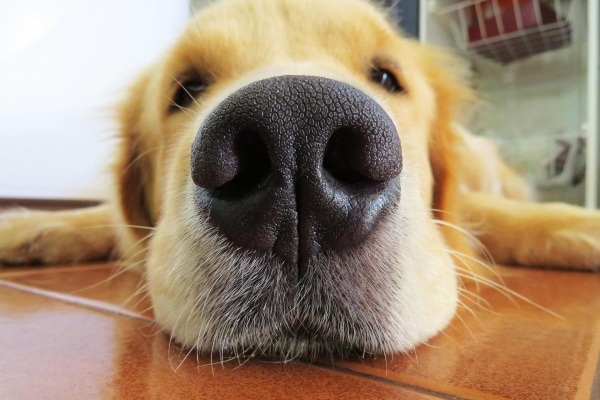
Nose bleeds in people can be common occurrences. If you’ve ever accidentally been hit in the nose, you may have experienced a nose bleed. And some people may develop them in the wintertime due to the presence of dry air. But what does it mean when your dog has a nose bleed? And how do you stop a dog nose bleed?
What is a dog nose bleed?
As the name would indicate, a nose bleed involves blood or bloody nasal discharge coming from your dog’s nose. The technical term for a nose bleed is “epistaxis.” Depending on the underlying cause, the blood can come out of one or both nostrils. The source of the blood may be the nostrils, nasal passages, or nasopharynx (back of the throat adjacent to the nasal passages).
Nose bleeds can be very mild and short-lived, or they can be intense and result in severe blood loss. Some nose bleeds will not be very noticeable until the dog sneezes and little droplets of blood come out of his or her nostrils. Other times the blood may be steadily pouring out onto the floor.
How do you treat a dog’s nose bleed at home?
If you notice your dog is having a nose bleed, the first question on your mind is probably how to make it stop. You might not have to worry about doing much if there is only a drop or two of blood. But if there is more blood, follow these steps to help stop a dog’s nose from bleeding:
1. Remain calm
Try to bring your furry friend away from any noisy, busy areas. Look for somewhere quiet, especially if you’re at home. Stress and excitement can raise your dog’s blood pressure and make him or her bleed more.
2. Apply an ice pack to the bridge of the nose
Grab an ice pack (or a Ziploc bag filled with ice will do in a pinch), wrap it in paper towels or a washcloth and then gently apply it to the bridge of your pup’s nose. The cold will slow the bleeding by constricting local blood vessels.
Word of warning—if you have a short-nosed dog, ensure that you are not making it hard for your dog to breathe by obstructing the nostrils with the ice pack.
3. Avoid sticking anything in your dog’s nose
Don’t stick anything up your dog’s nose to stop the bleeding. I know it might be tempting because people do it for their nose bleeds. But stuffing gauze, tissues, etc. up a dog’s nose is irritating and may make him or her sneeze, which can worsen the bleeding.
4. Follow up with your vet
If your dog is bleeding heavily, the bleeding lasts longer than a few minutes without showing signs of stopping, or your dog is showing any other signs of illness or injury, your may need to make an emergency vet visit to get the bleeding under control and find and treat the underlying cause. Even if you get the bleeding to stop and your dog seems fine, it is usually still a good idea to check in with your vet during his or her regular business hours. That way your vet can run any needed diagnostic to help get to the bottom of why your dog had a bloody nose.
What can cause nose bleeds in dogs?
There are times when the cause for a dog’s nose bleed can be very obvious and times when it is not. If your pup has a nose bleed after he or she went excitedly careening across the room and ran face-first into the wall or doorframe, you can probably put two and two together. However, there are other situations where the cause may not be so clear. That is when it will be up to your veterinarian to help you look for it. Some of the causes of a nose bleed in dogs include:
#1: Trauma
We might as well start with trauma because, according to a 2007 study in the Journal of the American Veterinary Medical Association (JAVMA), trauma and nasal tumors are the top two causes of nose bleeds in dogs.
Sometimes trauma can be as simple as your excitable canine companion not being able to “hit the brakes” fast enough when doing zoomies in the house or not noticing that the clear sliding glass door was closed and hitting his or her head. Examples of more intense trauma include falling from great heights or being hit by a car. If the nose was traumatized in these examples, a nose bleed is very likely to occur.

#2: Nasal tumors or cancer
The other top cause of epistaxis in the 2007 JAVMA article was nasal tumors. Nasal adenocarcinoma, a locally aggressive kind of cancer, is the most common type of nasal tumor. It can affect one or both sides of the nose.
This means a dog nose bleed on one side may be more indicative of a local tumor (or other local issue) instead of other body-wide causes of nose bleeds that would affect both sides.
There are also many different non-nasal cancers that can increase the risk of epistaxis. These include:
- Lymphoma in dogs
- Hemangiosarcoma in dogs
- Multiple myeloma
- Leukemia
#3: Medications and drug reactions
The use of non-steroidal anti-inflammatory drugs (NSAIDs) may increase the risk of nose bleeds because they can inactivate blood clotting factors. This makes it easier for bleeding to occur from the delicate mucous membranes within the nose. There are several different NSAIDs that are made specifically for dogs (e.g., firocoxib, carprofen). Thankfully, nose bleeds tend to be a rare side effect of these drugs.
Adverse reactions to other medications are also rare but possible. Certain hormone therapies and chemotherapeutic drugs have been known to cause nose bleeds. A specific antibiotic drug class known as the sulfonamides (aka sulfa drugs) can also result in epistaxis.
#4: Toxin exposure
There are any number of toxic chemicals that have been known to affect an animal’s blood clotting abilities. This in turn could lead to nose bleeds as well as bleeding from other locations in the body.
Rat poison (i.e. rodenticide) works by decreasing a rodent’s ability to clot blood, leading to fatal internal hemorrhaging. Unfortunately, many commercially available rodenticides can cause the same terrible death in dogs and cats. It is important to keep these poisons far out of reach of your dog.
#5: Foreign bodies
It is possible for a foreign object to find its way up your pup’s nose. In the Western United States, spiky plant material known as grass awns can be a big problem. Some examples of grass awns include foxtails and cheatgrass. These sharp, stiff pieces of grass are barbed in such a way that pulling them out of a dog’s nasal passages can be extremely painful. It is no wonder they can irritate the tissue and cause nose bleeds.
#6: Dental disease
In the average dog skull, there is a thin plate of bone that separates the nasal cavity from the oral cavity below. When periodontal disease (i.e. dental disease in dogs) is present, it can lead to significant bone infection or even bone loss beneath the surface of the gums.
Thus, dental disease affecting the teeth in the upper portions of the mouth can lead to problems within the nasal cavity. One such example is an oronasal fistula, a tiny open communication between the nasal cavity and the oral cavity. This communication can result in infection and nose bleeds.
#7: Fungal infections
While transmission of certain bacterial and viral infections through nasal inhalation of particles is possible, the inhalation of fungal spores tends to be much more devastating. Fungal infections such as Aspergillus fumigatus, Blastomyces dermatitidis, and certain Penicillium species can invade the nasal cavity as well as other parts of the upper and lower respiratory tracts.
The end results of these fungal infections are pneumonia-like symptoms, nose bleeds, and various other clinical signs. It can take months for a dog to undergo treatment, and some infections may be lifelong.
#8: Tick-borne illnesses
Tick-borne diseases in dogs such as Ehrlichia canis and Babesia gibsoni can cause several clinical symptoms such as fever, lameness, and lethargy. Because these types of infections can affect a dog’s blood-clotting abilities, tick-borne diseases can also cause nose bleeds.
#9: Autoimmune diseases
If a dog has an autoimmune disorder, it means that the immune system is mounting an inappropriate response to the dog’s own cells. In other words, immune system complexes that would normally attack foreign invaders are attacking normal parts of the dog’s body instead.
Patients with immune-mediated thrombocytopenia (ITP) suffer from low platelet counts. This is because the immune system attacks and destroys platelets, a type of cell that helps to form blood clots. Without enough platelets to help the blood clot, nose bleeds are possible.

#10: Bone marrow disorders
Your dog’s bones do a lot more than just form his or her skeleton. In the center of the bones, there is a spongy, vascular tissue called bone marrow. Among other things, bone marrow is responsible for the creation of platelets. It houses large precursor cells called a megakaryocytes, which eventually break down to create hundreds of little platelets.
Certain diseases and drugs that inhibit or suppress the bone marrow can lead to overall decreased platelet production, thus increasing the risk of epistaxis.
#11: Hyperviscosity syndrome
Hyperviscosity syndrome occurs when there are very high levels of protein in a dog’s blood. It is difficult to know the true reason this happens. But certain diseases like amyloidosis (i.e. a condition where the body deposits a protein called amyloid in various locations) and monoclonal gammopathies (i.e. a condition where the body makes too much of one type of immune system protein called immunoglobulins) are thought to be factors.
When there is too much protein in the blood, there isn’t enough room for the fluid component (i.e. plasma) so the blood becomes very thick or viscous. The increased pressure from this thicker fluid results in blood vessels rupturing, which leads to blood loss. Nose bleeds are one way the body may lose blood.
#12: Blood clotting disorders
Blood clotting is controlled by the interplay of numerous proteins known as coagulation factors. If one of those factors is deficient, it can cause a bleeding disorder.
Various inherited conditions can negatively impact clotting ability. For example, hemophilia A results in a deficiency of coagulation factor VIII. This causes anything from a mild nose bleeds to extreme blood loss. As another example, Doberman Pinschers are at an increased risk of inheriting von Willebrand disease. This condition causes platelets to lose the protein that makes them “sticky” enough to form blood clots. Affected dogs are at a higher risk of abnormal bleeding.
Clotting issues can also be acquired. When there is serious damage to the internal organs—due to things like infection, inflammation, or heat stroke in dogs—the body can enter a state called disseminated intravascular coagulation (DIC). In DIC, the clotting system, which normally regulates how clots form and break down, goes haywire. Thus, a dog with DIC might suffer from clots in all the wrong places or bleeding from anywhere, especially the nose.
#13: Liver failure or kidney failure
When important internal organs like the liver and kidneys can no longer function properly, there can be problems that lead to bleeding. The liver creates the majority of the coagulation factors, so understandably, liver disease in dogs can lead to decreased coagulation factor production. Without coagulation factors, blood cannot clot and the dog is prone to spontaneous bleeding like nose bleeds.
Chronic kidney failure in dogs may lead to high blood pressure (i.e. hypertension in dogs). The increased pressure in the vessels may make the capillaries more fragile and therefore, prone to rupturing. This can cause bleeding in various locations, including the nose.
What other symptoms go along with a nose bleed?
As you can see from this list, there are many different reasons a dog may get a bloody nose. Sometimes you might only see the bloody nasal discharge. Other times there are additional clinical signs such as:
- A firm swelling that appears over the bridge of the nose or next to the eyes, eye discharge or a protruding third eyelid, and/or more frequent sneezing in dogs with a nasal tumor.
- Pale gums, black/tarry stools, unexplained bruising under the skin, difficult or heavy breathing, dog is breathing fast, and/or becoming a pot-bellied dog if there are issues with clotting factors or platelet numbers.
- Sudden onset sneezing and pawing at the nose in dogs who have a nasal foreign body.
- Bad breath, old dog losing teeth, dog tooth abscesses and/or oral pain if the dog has dental disease.
- Increased thirst in dogs, increased urination, vomiting, and/or weight loss in a dog with kidney disease.
If your dog is having nose bleeds, please also report any other symptoms to your vet. That will make it easier for your vet to get to the bottom of why the nose bleeds are happening.
What diagnostics might the vet run?
In addition to gathering your dog’s history (including travel history, symptoms, etc.) and doing a complete physical exam, your vet may suggest several other tests. Often, he or she will start with some blood tests. This may include a complete blood count (CBC) and blood chemistry profile. These tests are a useful way to evaluate red blood cell and platelet numbers, measure proteins and globulins (for hyperviscosity syndrome), and look at liver and kidney enzyme levels. Urine testing is also a part of this minimum database of information.
Additionally, the vet may decide to run tick titers to look for the presence of tick-borne illnesses or coagulation tests to check for blood clotting issues or DIC. The vet might also suggest basic imaging like X-rays and ultrasound to look for evidence of cancer, fungal infections, and internal bleeding.
If the vet suspects a nasal tumor, he or she will probably recommend advanced imaging such as a CT and MRI. These modalities are better at detecting nasal tumors than X-rays alone. The vet also may suggest a thorough oral exam under general anesthesia (including dental X-rays) if he or she thinks dental disease may be contributing to the nose bleeds.
Some dogs will end up needing a rhinoscopy to figure out why they are having nose bleeds. Rhinoscopy is a procedure where the veterinarian inserts a special scope into the nasal cavity to look for signs of trauma, tumors, fungal infections, or foreign bodies. In some cases, the vet may decide to take biopsy samples during the rhinoscopy. However, you should be aware that local inflammation and the tendency for nasal tissue to bleed easily can make it hard to get good samples.
What is the treatment for nose bleeds?
Once your vet reaches a diagnosis, he or she will work with you to come up with a treatment plan. The vet will need to address issues like infections, inflammatory conditions, and organ damage with additional therapy. If the epistaxis resulted from the use of certain medications, the vet may advise you to stop giving those medications.
A dog with a nasal foreign body requires surgical removal of the offending object before it causes further damage. If there is a nasal tumor, the vet may recommend referral to a board-certified oncologist for surgery and/or radiation.
Your veterinarian may also recommend a Chinese herbal supplement called Yunnan Baiyao for dogs if your dog suffers from chronic nose bleeds. Yunnan Baiyao seems to have almost magical clotting properties.
What is the outlook for dogs with nose bleeds?
As you can imagine, the prognosis varies depending on why the dog is having nose bleeds. Most dogs with minor nose bleeds due to trauma or a mild infection have a very good prognosis. However, chronic illnesses like liver failure and kidney failure will have guarded to poor prognoses. Locally aggressive nasal cancers also carry a poor to grave prognosis, especially if left untreated.
Don’t let nose bleeds get you down
I know it can be alarming to see your dog’s nose suddenly dripping blood or to have him or her sneezing blood. But if your dog starts to have a nose bleed, remember to remain calm, apply ice to the bridge of the nose, and then get in contact with your vet.
There are a wide range of reasons for a nose bleed, and some are worse than others. Regardless of what the cause may be, work closely with your veterinarian and follow his or her advice. Together you can hopefully reduce or maybe even eliminate your dog’s nose bleeds. That way you and your dog can keep enjoying life together without nose bleeds getting in the way.
Has your dog ever had a nose bleed?
Please share your experience below.


We have a 5 Year old Airedale Terrier and has nose bleeds mostly down one Nostril. He has been fully scanned from head to toe and everything is Ok also blood teat are all Ok . He rubs his nose alot. The bleeds last for about 1hr or so but he is full of health aprt from the Bleeds
Hi Rodney,
I am glad your Airedale’s testing revealed all normal results. Thank you for sharing your story with us. Wishing you both the best for a long and happy life together.
I have a 30lb terrier mix who is almost 14 1/2 years old. He’s started having thick bloody discharge on and off a couple of months ago. Today when we were out walking he had a sneezing fit and his nose started bleeding profusely and did so for nearly an hour. He’s been showing his age for the past several months and we’ve spent over $600 this past summer for various infections. The nose discharge started right after he finished his meds and we thought it might be a side effect of the drugs but he’s been off those for 6 weeks. At his age and physical condition I don’t think he has a lot longer to live. Not sure what to do at this point.
Hi Tim,
I understand your concern for your senior dog and these scary bleeding episodes. Without examining your pup myself, I can’t make specific recommendations. I am slightly suspicious of some kind of nasal tumor that could be growing and causing erosion inside the sinuses. You can always ask your vet if they think skull x-rays would offer some answers or help guide treatment recommendations. It is also ok to pursue hospice/palliative care if you want to focus on comfort and quality of life. I hope you can find the advice you need to make the best decisions for you and your sweet boy. Wishing you both the best. Bless you.
Dear Dr. Buzby,
Thank you for this helpful site and thorough article on nose bleeds for dogs. Our 3 year old Vizsla just went in for a laprascopic spay. We took Amber to the same place and Dr. of our other Vizsla who had no issues at all. Post op initially she was fine. The Vet called and said all went well. He then called an hour later and said she doesn’t look good has a fever and wbc count is severely low, other blood counts were normal. Chest xray was negative for infiltrate. He recommended we hospitalize Amber overnight for iv fluids and iv antx. We did that. While at ER Amber developed a nose bleed. I picked her up the next morning, still with fever, nose bleed but wbc count normal. I took her to her regular vet who put her on oral antx, bld work again with wbc slightly low and another chest xray showed mild infiltrate from possible aspiration but so mild that it didn’texplainthe nose bleed.,, Today is day 3. She still has a nose bleed… watery mucus, blood tinged trickle. I think the fever may be gone or less. She has a good appetite but super lethargic, to be expected after surgery maybe? Any thoughts would be appreciated. All the docs said they couldn’t explain her nose bleed or even why she declined after surgery. The antx are for possible aspiration pneumonia. Thank you for your thoughts. Susan
Hi Susan,
I am sorry you are dealing with these bleeding issues and complications after your dog’s recent surgery. Without examining your dog myself, it is hard to make conclusions about what could be happening. This case is puzzling and sounds like the vets have done all the standard testing to try and find some answers. How are things today? If these symptoms are persisting, it may be time to consider a consult with a specialist. I hope Amber is feeling better and has fully recovered from her ordeal. Feel free to leave an update if you have a chance.
Sadie is our 9 year old American. Bulldog who began having nose bleeds about 6months ago and has at least 6. They seem to happen like clock work every 3-4 weeks, last a couple of hours and then go away. They range from light to very extremely heavy. The last two have been really bad and huge blood clots are being blown out when she sneezes. We have been to the vet.. initial blood work and exam are normal.. a slightly high white blood cell count so she was given antibiotics and steroid but it happened again in 3 weeks and went back to the vet. He saledated and X rayed her nose area and found nothing unusual. Today she sneezed hard which started her nose bleeding again and it was horrible. Free bleeding. I used cold wet clothes and tried to calm her. Eventually she sneezed out a huge blood clot and the bleeding stopped like switching on a switch. She has acted normal since and always acts normal between episodes. We are so puzzled. Any suggestions or thoughts?
Hi Stephanie,
I am sorry you are dealing with these worrisome bleeding episodes in your senior girl. It sounds like your vet has done all of the recommended initial testing for an issue like this, but the diagnosis is still not clear. It may be time to schedule a consult with a specialist. They have a great deal of experience dealing with complicated cases like Sadie seems to be. They can let you know what next steps are recommended to find the cause for Sadie’s nose bleeds. I am hopeful you will find some answers soon and praying for a positive outcome. Best wishes to you both and feel free to leave an update as new information comes to light.
One of our dogs puppies, was 3yrs old. Just outta blue got bloody noses, over short period time they got worse, vet said couldn’t find anything. In less then two weeks, she had gotten so bad her parents said she just looked at sky, bleeds was so bad his room looked like murder sight see on TV. This was an active, bright eyed playful pup who enjoyed life an visits here w mom dog and daddy dog. Went from that to so bad off in less two weeks she had to be put to sleep. I wasn’t there for most vets appt, but once did pick her up she acted normal, following week dead. They said she was just suffering, wasn’t there anymore. what could have caused a young normally healthy dog to get that bad in such short period time
Hi Terry,
What a tragic end to a young dog’s life. I am so sorry you experienced this and had to watch your pup’s health deteriorate so quickly. Without examining the dog, myself, I can’t really make conclusions. There are just too many possibilities. It isn’t uncommon for a dog to have symptoms like these and still have no abnormalities on a physical exam. To get a diagnosis it often requires a great deal of diagnostic testing. Sometimes complicated cases even have to be referred to specialists. I am not sure how much investigating your vet was able to do before the puppy passed. We will probably never know for sure what happened. I hope you are able to find comfort in knowing you did all you could. Wishing you happier days ahead.
Hi we have a 12 month old XL bully x Staff and for the last month or so his nose is constantly dripping with clear liquid and dark blood, we took him to the vets two weeks ago as he doesn’t seem his usual giddy hyper self and we we’re prescribed antibiotics, ear wash, ear drops and anti inflammatorys. He is still the same and no change, still dripping blood. When he sneezes blood sprays over the floor and up the walls, when I go to feed him there’s blood in his bowl and on his bedding. We have put him on an allergy food and increased him to 4 meals a day but he doesn’t gain weight. For a dog that is meant to be chunky and solid he looks like a greyhound.
We’re in the uk so no tics the same here, only thing I can think is it’s something very serious
Or the lemon scented conifer tree he’s always
rubbing himself on in the garden.
Our vet said he’s the worst inflamed ears he’s ever seen and he sees a lot of old dogs and ours has just turned 1.
We’re back at the vet again tomorrow, any advice would be appreciated. Thanks.
Hi Dawn,
I understand your concern about these bleeding issues in your young dog. I am glad you planned a follow up visit with your vet. What did you find out? Since I haven’t examined your pup myself, it is hard to make specific conclusions. I too am worried there is something more serious going on and think it needs some more investigation. Is it possible to have your dog evaluated by an internal medicine specialist? Have you had any lab work performed? While ticks may not be as prevalent in some areas of the UK, you still share some of the same tick-borne diseases as what we battle here in the US such as Lyme and Anaplasmosis. I hope you can continue to search for more information and find some answers. Praying for a definitive diagnosis and options for treatment that will improve your dog’s quality of life.
I have a 10 year old husky/pit mix. Over the last few years, it seems like around the fall and winter he gets occasional swelling with a light nose bleed. The nose bleeds are always quick and very light. The swelling lasts a few days with no other symptoms. I normally give him Benadryl for 2 days and it clears up. Could this be like a sinus infection for him since it only occurs in the fall and winter months? thank you.
Hi Angela,
That is very interesting. I wouldn’t think this could be an infection since it is seasonal and clears up without antibiotics. Without examining your dog myself, it is hard to make specific conclusions. Have you talked to your vet about this recurring issue? It might be a good idea to have some testing done to rule out more serious problems. I am glad your senior guy doesn’t seem to be severely affected by these episodes. Hoping you can find some answers and praying for a positive outcome.
Hi. We have a 7 and a half year old Goldendoodle. In July this year, he started sneezing a lot. We took him to vet, blood test showed negative for fungus. Put on antibiotic and Benadryl. Stopped excessive sneezing within a day or two. When at groomer in mid August, we were told he had a nose bleed. Didn’t think much of it. He started favoring back right leg, took him to vet on Aug 24. Vet said he had nose bleed while they were trying to take X-ray. Told him of prior nose bleed. Vet did blood and urine test. Results good again for clotting and other things tested. I noticed our dog has a small white discoloration on the inside of his right nostril. Vet indicated possible fungus.
Finally able to get him scheduled for Ct scan and rhinoplasty end of November. All specialty places booked until then. In mean time three more nose bleeds. One mid October found 3 small blood spots on floor. Nov 3 another partially wet drop of blood on floor. The last on Nov 5 when I found him licking blood on his front paw and a few drops of blood on floor.
Our baby has been taking breveto since he was 6 month old. Concerned possible exposure to fertilizers on walks. And most dreaded cancer.
Since puppy, he has had what I would describe as occasional nasal congested breathing. Vets (3) have said, no congestion they hear, lungs sound good. Said if and when time comes to clean teeth, can probe further.
Our boy has good energy and acts normal. He is being treated for a partial tear in right back knee. So we are limiting his walks and doing water therapy to treat knee. Also vet advised diet to lose 20 lbs. He is currently hovering around 90 lb. and slowly losing weight. Is there anything else we should do while awaiting Ct scan and rhinoplasty?
Hi Cathy,
I understand your concern for your sweet boy and these bleeding episodes you are noticing. I applaud you for paying such close attention and catching this while the symptoms are so mild. It sounds like you are already doing everything you can. I am not sure there would be any additional treatments you could try while waiting for your appointment with the specialist at the end of the month. I hope the CT will give you some answers and allow the vet to decide on a course of treatment to give your pup some relief. Praying for a positive outcome and a diagnosis that can be cured. Please keep us updated! Bless you both. ♥
Hi. Thanks for response. Unfortunately, they are telling me my baby has nose cancer even though biopsy came back negative. Had two other vets look at results and they feel the same. He is having occasional nose bleeds and gets anxious at times. But otherwise gratefully he is acting normal. I am giving him CBD chew that has ginger and turmeric.
Don’t know what to expect but praying for good results or anything that would make him as happy and comfortable going forward. They offer radiation but I don’t see putting my boy through this for a possibly another year. I want him as pain free and happy as possible.
Dear Cathy,
I am so sorry your sweet boy has received such a difficult diagnosis. I think your plan to keep him happy and comfortable will offer you both the most quality time possible. You might want to see if there is a house call vet in your area that practices hospice/palliative care. I am glad you have some answers for why these bleeding episodes are happening. Hoping your boy will continue to feel good and find joy in his days. Keep us updated. Bless you both. ♥
My dog prince is 9 …a retriever mix and has been having light nose bleeds for the past two weeks. The last few nights the blood loss is more than a drip on his bedding. He is also sneezing, shaking on and off and looks like he has a bulge under his eye on his cheek. We took him to the vet yesterday who ran bloods and advised he has a 0 platelet count indicative of cancer. We have to make a decision now as further tests will just show where it is but not change the prognosis. He is home with nasal bleeding ongoing and a change in his breathing. We are devastated but need to do what’s best for him. Any advice welcome.
Hi Suzanne,
I am so sorry Prince has received such a devastating diagnosis. Did your vet give you anything (like yunnan baiyao) in case of a bleeding emergency at home? It sounds like your sweet boy may be nearing the end of his life. I highly recommend you contact a hospice vet in your area. They can partner with you to make sure Prince is comfortable and these last days are peaceful and happy. Then when the time comes, you can say goodbye knowing you did everything you could. My heart goes out to you as you face these tough decisions. Praying for your strength. Bless you both.
Dear Dr. Buzby:
I just tripped over your site concerning dogs nose bleeds. We have a 10yrs. old black lab. and recently moved back to Maine from New Mexico where we had a small two (2) horse ranch. We rescued Shadow from his next-day being put down so we brought him to our ranch/home where he responded very positively with the horses.
Well, we have been back in Maine for 4yrs. to date & did recognized back at the ranch that Shadows outside nose was becoming dry & cracking. We applied Olive Oil, Coconut Oil, Bagbalm, etc., & worked for a while. Recently, we’ve notice that very small pieces of his outside nose had bright pink blotches (where possibly parts of his nose were being scratched off) which looked like an old dried up ‘cork’!! We tried keeping the nose oiled but to no avail. Early this week my wife woke up to trails of blood & areas of a blood pool as if a “blood-letting” took place. Bedroom carpet, hall way, stairs, downstairs, dining room, kitchen to breeze-way!! We got the bleeding to stop with a pressure pack but would bleed at anytime.
Night before last pretty much the same thing, called our Vet. & I took him in yesterday morning, of course, blood in the truck. The Vet gave me some medication & some ointment; Medication-Cephalexin 500mgs., Ointment-Tacrolimus 0.1% 30gm. Having to apply this to his nose & then blow on it for 10mins. is quite a chore & Shadow wonders what’s going on? Do you have any other recommendations that we can apply to decrease the ‘nose bleeds’ or I’ve mentioned just “cauterizing’ his outer nose from his constant squirting the blood flow?? I feel so limited to help Shadow & he doesn’t deserve this, nor us, & he feels he is being punished?? Can you really help us out??? He’s my best buddy—we both suffer with Chronic PTSD, I’m a 100% disabled Nam veteran-with little funding–Shadow needs to be helped & the problem resolved.
Many thanks,
Brad
Hi Brad,
I understand your concern with these bleeding issues. I can only imagine the stress this has caused you and your pup over the last few weeks. Have you noticed any improvement since starting the medications your vet prescribed? Since I haven’t examined your dog myself, I can’t make specific conclusions. With that being said, I am suspicious there may be something else causing a problem such as an immune mediated disease (lupus, pemphigus, etc.) Make sure you keep your vet updated on how this is progressing. If you don’t see results as expected, it might be a good idea to consult with an internal medicine specialist. If a specialist would cause a strain with your finances, your vet may be able to try a course of immunosuppressive medications to see if your dog responds favorably. I hope you can find the answers you need to help restore your sweet boy’s quality of life. Wishing you both the best and feel free to leave an update if you have a chance.
Hello, I am so glad to have found this article. My 15 year old pug had a nose bleed 6 months ago, and the vet did some bloodwork and everything came back fine. But the last week, his nose has been bleed on and off through the day but it’s doesn’t drip or anything. Just stays around his nostril. He acts normal and has not other symptoms. He suggested it could be a tumor in his nasal passage, but that would required a mri or ct. Due to my pug’s age and other issues such as his heart as well as his blood pressure raising lately when stressed, we believe that anesthesia/sedation would be dangerous. If it is a tumor or maybe even dental disease, could anything be done without sedation? I worry that there might not be anything I can do for him.
Hi Britt,
I understand your concern with your pug and these bleeding issues. Unfortunately, since I haven’t personally examined your dog, I can’t make specific conclusions and recommendations. You could talk to your vet about the possibility of trying a course of steroids. If there is a nasal tumor, it may be able to temporarily shrink it and lessen the severity of the bleeding side effects. Just be aware that steroids can cause an infection to worsen, and these medications have a long list of potential side effects. You and your vet will have to partner together to weight the benefits verses the risks and decide on the best course of action. It is ok to pursue palliative care if your main goal is to keep your pup comfortable. Also, you could request a consult with a specialist to find out what treatment options are available for your dog’s specific case. I hope you can find the answers you need to make the best choices for you and your senior guy. Bless you both.