A dog nose bleed can be upsetting (and messy). To help you feel prepared should your dog’s nose ever start bleeding unexpectedly, integrative veterinarian Dr. Julie Buzby explains how to stop a nose bleed at home and discusses 13 causes of dog nose bleeds.
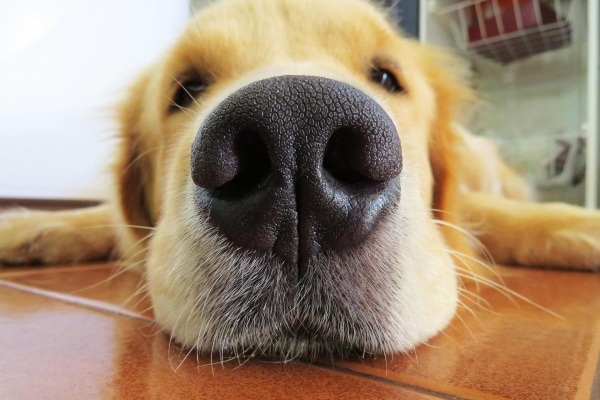
Nose bleeds in people can be common occurrences. If you’ve ever accidentally been hit in the nose, you may have experienced a nose bleed. And some people may develop them in the wintertime due to the presence of dry air. But what does it mean when your dog has a nose bleed? And how do you stop a dog nose bleed?
What is a dog nose bleed?
As the name would indicate, a nose bleed involves blood or bloody nasal discharge coming from your dog’s nose. The technical term for a nose bleed is “epistaxis.” Depending on the underlying cause, the blood can come out of one or both nostrils. The source of the blood may be the nostrils, nasal passages, or nasopharynx (back of the throat adjacent to the nasal passages).
Nose bleeds can be very mild and short-lived, or they can be intense and result in severe blood loss. Some nose bleeds will not be very noticeable until the dog sneezes and little droplets of blood come out of his or her nostrils. Other times the blood may be steadily pouring out onto the floor.
How do you treat a dog’s nose bleed at home?
If you notice your dog is having a nose bleed, the first question on your mind is probably how to make it stop. You might not have to worry about doing much if there is only a drop or two of blood. But if there is more blood, follow these steps to help stop a dog’s nose from bleeding:
1. Remain calm
Try to bring your furry friend away from any noisy, busy areas. Look for somewhere quiet, especially if you’re at home. Stress and excitement can raise your dog’s blood pressure and make him or her bleed more.
2. Apply an ice pack to the bridge of the nose
Grab an ice pack (or a Ziploc bag filled with ice will do in a pinch), wrap it in paper towels or a washcloth and then gently apply it to the bridge of your pup’s nose. The cold will slow the bleeding by constricting local blood vessels.
Word of warning—if you have a short-nosed dog, ensure that you are not making it hard for your dog to breathe by obstructing the nostrils with the ice pack.
3. Avoid sticking anything in your dog’s nose
Don’t stick anything up your dog’s nose to stop the bleeding. I know it might be tempting because people do it for their nose bleeds. But stuffing gauze, tissues, etc. up a dog’s nose is irritating and may make him or her sneeze, which can worsen the bleeding.
4. Follow up with your vet
If your dog is bleeding heavily, the bleeding lasts longer than a few minutes without showing signs of stopping, or your dog is showing any other signs of illness or injury, your may need to make an emergency vet visit to get the bleeding under control and find and treat the underlying cause. Even if you get the bleeding to stop and your dog seems fine, it is usually still a good idea to check in with your vet during his or her regular business hours. That way your vet can run any needed diagnostic to help get to the bottom of why your dog had a bloody nose.
What can cause nose bleeds in dogs?
There are times when the cause for a dog’s nose bleed can be very obvious and times when it is not. If your pup has a nose bleed after he or she went excitedly careening across the room and ran face-first into the wall or doorframe, you can probably put two and two together. However, there are other situations where the cause may not be so clear. That is when it will be up to your veterinarian to help you look for it. Some of the causes of a nose bleed in dogs include:
#1: Trauma
We might as well start with trauma because, according to a 2007 study in the Journal of the American Veterinary Medical Association (JAVMA), trauma and nasal tumors are the top two causes of nose bleeds in dogs.
Sometimes trauma can be as simple as your excitable canine companion not being able to “hit the brakes” fast enough when doing zoomies in the house or not noticing that the clear sliding glass door was closed and hitting his or her head. Examples of more intense trauma include falling from great heights or being hit by a car. If the nose was traumatized in these examples, a nose bleed is very likely to occur.
#2: Nasal tumors or cancer
The other top cause of epistaxis in the 2007 JAVMA article was nasal tumors. Nasal adenocarcinoma, a locally aggressive kind of cancer, is the most common type of nasal tumor. It can affect one or both sides of the nose.
This means a dog nose bleed on one side may be more indicative of a local tumor (or other local issue) instead of other body-wide causes of nose bleeds that would affect both sides.
There are also many different non-nasal cancers that can increase the risk of epistaxis. These include:
- Lymphoma in dogs
- Hemangiosarcoma in dogs
- Multiple myeloma
- Leukemia
#3: Medications and drug reactions
The use of non-steroidal anti-inflammatory drugs (NSAIDs) may increase the risk of nose bleeds because they can inactivate blood clotting factors. This makes it easier for bleeding to occur from the delicate mucous membranes within the nose. There are several different NSAIDs that are made specifically for dogs (e.g., firocoxib, carprofen). Thankfully, nose bleeds tend to be a rare side effect of these drugs.
Adverse reactions to other medications are also rare but possible. Certain hormone therapies and chemotherapeutic drugs have been known to cause nose bleeds. A specific antibiotic drug class known as the sulfonamides (aka sulfa drugs) can also result in epistaxis.
#4: Toxin exposure
There are any number of toxic chemicals that have been known to affect an animal’s blood clotting abilities. This in turn could lead to nose bleeds as well as bleeding from other locations in the body.
Rat poison (i.e. rodenticide) works by decreasing a rodent’s ability to clot blood, leading to fatal internal hemorrhaging. Unfortunately, many commercially available rodenticides can cause the same terrible death in dogs and cats. It is important to keep these poisons far out of reach of your dog.
#5: Foreign bodies
It is possible for a foreign object to find its way up your pup’s nose. In the Western United States, spiky plant material known as grass awns can be a big problem. Some examples of grass awns include foxtails and cheatgrass. These sharp, stiff pieces of grass are barbed in such a way that pulling them out of a dog’s nasal passages can be extremely painful. It is no wonder they can irritate the tissue and cause nose bleeds.
#6: Dental disease
In the average dog skull, there is a thin plate of bone that separates the nasal cavity from the oral cavity below. When periodontal disease (i.e. dental disease in dogs) is present, it can lead to significant bone infection or even bone loss beneath the surface of the gums.
Thus, dental disease affecting the teeth in the upper portions of the mouth can lead to problems within the nasal cavity. One such example is an oronasal fistula, a tiny open communication between the nasal cavity and the oral cavity. This communication can result in infection and nose bleeds.
#7: Fungal infections
While transmission of certain bacterial and viral infections through nasal inhalation of particles is possible, the inhalation of fungal spores tends to be much more devastating. Fungal infections such as Aspergillus fumigatus, Blastomyces dermatitidis, and certain Penicillium species can invade the nasal cavity as well as other parts of the upper and lower respiratory tracts.
The end results of these fungal infections are pneumonia-like symptoms, nose bleeds, and various other clinical signs. It can take months for a dog to undergo treatment, and some infections may be lifelong.
#8: Tick-borne illnesses
Tick-borne diseases in dogs such as Ehrlichia canis and Babesia gibsoni can cause several clinical symptoms such as fever, lameness, and lethargy. Because these types of infections can affect a dog’s blood-clotting abilities, tick-borne diseases can also cause nose bleeds.
#9: Autoimmune diseases
If a dog has an autoimmune disorder, it means that the immune system is mounting an inappropriate response to the dog’s own cells. In other words, immune system complexes that would normally attack foreign invaders are attacking normal parts of the dog’s body instead.
Patients with immune-mediated thrombocytopenia (ITP) suffer from low platelet counts. This is because the immune system attacks and destroys platelets, a type of cell that helps to form blood clots. Without enough platelets to help the blood clot, nose bleeds are possible.
#10: Bone marrow disorders
Your dog’s bones do a lot more than just form his or her skeleton. In the center of the bones, there is a spongy, vascular tissue called bone marrow. Among other things, bone marrow is responsible for the creation of platelets. It houses large precursor cells called a megakaryocytes, which eventually break down to create hundreds of little platelets.
Certain diseases and drugs that inhibit or suppress the bone marrow can lead to overall decreased platelet production, thus increasing the risk of epistaxis.
#11: Hyperviscosity syndrome
Hyperviscosity syndrome occurs when there are very high levels of protein in a dog’s blood. It is difficult to know the true reason this happens. But certain diseases like amyloidosis (i.e. a condition where the body deposits a protein called amyloid in various locations) and monoclonal gammopathies (i.e. a condition where the body makes too much of one type of immune system protein called immunoglobulins) are thought to be factors.
When there is too much protein in the blood, there isn’t enough room for the fluid component (i.e. plasma) so the blood becomes very thick or viscous. The increased pressure from this thicker fluid results in blood vessels rupturing, which leads to blood loss. Nose bleeds are one way the body may lose blood.
#12: Blood clotting disorders
Blood clotting is controlled by the interplay of numerous proteins known as coagulation factors. If one of those factors is deficient, it can cause a bleeding disorder.
Various inherited conditions can negatively impact clotting ability. For example, hemophilia A results in a deficiency of coagulation factor VIII. This causes anything from a mild nose bleeds to extreme blood loss. As another example, Doberman Pinschers are at an increased risk of inheriting von Willebrand disease. This condition causes platelets to lose the protein that makes them “sticky” enough to form blood clots. Affected dogs are at a higher risk of abnormal bleeding.
Clotting issues can also be acquired. When there is serious damage to the internal organs—due to things like infection, inflammation, or heat stroke in dogs—the body can enter a state called disseminated intravascular coagulation (DIC). In DIC, the clotting system, which normally regulates how clots form and break down, goes haywire. Thus, a dog with DIC might suffer from clots in all the wrong places or bleeding from anywhere, especially the nose.
#13: Liver failure or kidney failure
When important internal organs like the liver and kidneys can no longer function properly, there can be problems that lead to bleeding. The liver creates the majority of the coagulation factors, so understandably, liver disease in dogs can lead to decreased coagulation factor production. Without coagulation factors, blood cannot clot and the dog is prone to spontaneous bleeding like nose bleeds.
Chronic kidney failure in dogs may lead to high blood pressure (i.e. hypertension in dogs). The increased pressure in the vessels may make the capillaries more fragile and therefore, prone to rupturing. This can cause bleeding in various locations, including the nose.
What other symptoms go along with a nose bleed?
As you can see from this list, there are many different reasons a dog may get a bloody nose. Sometimes you might only see the bloody nasal discharge. Other times there are additional clinical signs such as:
- A firm swelling that appears over the bridge of the nose or next to the eyes, eye discharge or a protruding third eyelid, and/or more frequent sneezing in dogs with a nasal tumor.
- Pale gums, black/tarry stools, unexplained bruising under the skin, difficult or heavy breathing, dog is breathing fast, and/or becoming a pot-bellied dog if there are issues with clotting factors or platelet numbers.
- Sudden onset sneezing and pawing at the nose in dogs who have a nasal foreign body.
- Bad breath, old dog losing teeth, dog tooth abscesses and/or oral pain if the dog has dental disease.
- Increased thirst in dogs, increased urination, vomiting, and/or weight loss in a dog with kidney disease.
If your dog is having nose bleeds, please also report any other symptoms to your vet. That will make it easier for your vet to get to the bottom of why the nose bleeds are happening.
What diagnostics might the vet run?
In addition to gathering your dog’s history (including travel history, symptoms, etc.) and doing a complete physical exam, your vet may suggest several other tests. Often, he or she will start with some blood tests. This may include a complete blood count (CBC) and blood chemistry profile. These tests are a useful way to evaluate red blood cell and platelet numbers, measure proteins and globulins (for hyperviscosity syndrome), and look at liver and kidney enzyme levels. Urine testing is also a part of this minimum database of information.
Additionally, the vet may decide to run tick titers to look for the presence of tick-borne illnesses or coagulation tests to check for blood clotting issues or DIC. The vet might also suggest basic imaging like X-rays and ultrasound to look for evidence of cancer, fungal infections, and internal bleeding.
If the vet suspects a nasal tumor, he or she will probably recommend advanced imaging such as a CT and MRI. These modalities are better at detecting nasal tumors than X-rays alone. The vet also may suggest a thorough oral exam under general anesthesia (including dental X-rays) if he or she thinks dental disease may be contributing to the nose bleeds.
Some dogs will end up needing a rhinoscopy to figure out why they are having nose bleeds. Rhinoscopy is a procedure where the veterinarian inserts a special scope into the nasal cavity to look for signs of trauma, tumors, fungal infections, or foreign bodies. In some cases, the vet may decide to take biopsy samples during the rhinoscopy. However, you should be aware that local inflammation and the tendency for nasal tissue to bleed easily can make it hard to get good samples.
What is the treatment for nose bleeds?
Once your vet reaches a diagnosis, he or she will work with you to come up with a treatment plan. The vet will need to address issues like infections, inflammatory conditions, and organ damage with additional therapy. If the epistaxis resulted from the use of certain medications, the vet may advise you to stop giving those medications.
A dog with a nasal foreign body requires surgical removal of the offending object before it causes further damage. If there is a nasal tumor, the vet may recommend referral to a board-certified oncologist for surgery and/or radiation.
Your veterinarian may also recommend a Chinese herbal supplement called Yunnan Baiyao for dogs if your dog suffers from chronic nose bleeds. Yunnan Baiyao seems to have almost magical clotting properties.
What is the outlook for dogs with nose bleeds?
As you can imagine, the prognosis varies depending on why the dog is having nose bleeds. Most dogs with minor nose bleeds due to trauma or a mild infection have a very good prognosis. However, chronic illnesses like liver failure and kidney failure will have guarded to poor prognoses. Locally aggressive nasal cancers also carry a poor to grave prognosis, especially if left untreated.
Don’t let nose bleeds get you down
I know it can be alarming to see your dog’s nose suddenly dripping blood or to have him or her sneezing blood. But if your dog starts to have a nose bleed, remember to remain calm, apply ice to the bridge of the nose, and then get in contact with your vet.
There are a wide range of reasons for a nose bleed, and some are worse than others. Regardless of what the cause may be, work closely with your veterinarian and follow his or her advice. Together you can hopefully reduce or maybe even eliminate your dog’s nose bleeds. That way you and your dog can keep enjoying life together without nose bleeds getting in the way.
Has your dog ever had a nose bleed?
Please share your experience below.


Hello,
I have a rescued pitbull who at the time of rescue was very healthy but. eventually fell sick and was led fo diagnosis of kidney failure and non re generative anemia.
We have been prescribed long term treatment and we put on an IVY on her every alternate day. Her nose bleedings started a month back but they were minor and all of a suden in the last two weeks the volume and frequency of the nose bleeds have increased alot.
We used KStat and Bostorate vials as per vet’s prescription however, it still doesn’t seem to be helping as much.
What can we do to make the situation better? please help me out.
Hi Vidushi,
I am so sorry your sweet girl is dealing with such severe symptoms. You are already doing just about everything I would normally recommend. The only other thing I can think of is to try the herbal supplement Yunnan Baiyao. I am not sure if I have used it for nose bleeds, but it has worked wonders for my patients with internal bleeding from splenic tumors and such. It definitely won’t hurt. Don’t forget you can always ask for a consultation with a specialist if needed. They may have ideas about treatments or therapies that are not readily available in general practice. Hoping your girl can maintain her quality of life and have many happy days ahead. Wishing you both the best.
Hi, my Stuart is a 5.5 yr old black lab-shepherd mix. He started with sneezing a lot with clear nasal discharge from right nostril and gradually thick yellowish discharge to blood tinged and to heavy bleeding multiple at times since then. His CBC and PTT tests, fungal blood test, head x-ray, CT scan and biopsy all came back normal The vet prescribed Doxycycline and Yunnan Bieyoe both did’t help, then went to see another vet who prescribed Amoxicillin and Animax ointment for the ulcer/discoloration on the outer part of his nostril, both helped a little. For couple of weeks he didnt bleed but his bleeding is back since Wednesday and he has bleed heavily three time until this morning today is Friday. I dont know what to do, I took him to the vet yesterday, but the vet says he does not know what to do either. Please kindly help me to help my dog. I want my dog to get better and I would do anything to get him back to normal. Please let me know if anyone else have a similar experience and got the treatment. please please please. thank you.
Dear Tenkun,
I am quite puzzled as to what could be causing the bleeding you describe. Your vet has already preformed all the tests I can think of to recommend. I am surprised that all the results have been normal. With how thorough your vet has been, I would have expected something to show up by now. I am hoping other readers will see your post and be able to offer some additional information and support. Praying for answers and a positive outcome. ♥
I am goin through the same situation. they don’t know what causes the bleeding. dont know what to do. helpless .anyone can please help
Dear Cynthia,
My heart goes out to you as you face this difficult situation with your pup. Praying for answers and comfort for you both. ♥
Hello. I have been through this with my German shepherd. He was about 4.5 when he got his first nosebleed and it was GUSHING out of his right nostril for 20-30 mins at a time. I took him in and they preformed all the tests, rhinoscopy, ct scan, biopsies. EVERYTHING came back normal. No foreign object, no fungal infection, no cancer, no tumors, no valley fever. The only thing that stopped them was yunnan baiyao and after 5 days on that they completely stopped. Well, for 2.5 years. November 13,2023 they started again. Same exact thing but only 1-5 mins at a time, day one probably 30 times that day. I immediately ordered the yunnan baiyao again and started him on that and they stopped after I believe 3 weeks. I didn’t take him in this time cuz I didn’t have the $4000 to spend on the same testing to be told they don’t know why it’s happening. I did order a dna/health swab kit to test for Vonwillibrands, canine scott syndrome and a couple other blood clotting disorder genes and he doesn’t have any of them. I’m completely at a loss with him but glad they have stopped again. Hoping we go another 2.5 years without them cuz when they come on, they are ROUGH!
Hi Ashlee,
Thank you for sharing your experience with us! I am so glad you have found what works for your Shepherd. Praying he will get some long-lasting relief from the nosebleeds and wishing you both the best for many happy years ahead.
Ashlee,
I have a German shepherd going through this exact thing. She, too, is 4.5 yrs old and we’re waiting to get results from the rhinoscopy exam she had last Friday. Would you let me know what you find out from your tests? I’m concerned they aren’t going to find out anything either and I don’t have the thousands of dollars needed to have more tests done. But, my girl is sick and something is wrong. Her nose bleeds have stopped, but they occurred when her nose was hit, for example, playing with dogs and the bleeding was horrific. If she plays at all, I’m concerned her nose will bleed.
Dear Debra,
My heart aches for you as you anxiously await these results. Praying you get some definitive answers and that there will be a clear path forward. Feel free to leave an update if you have a chance. Bless you and your sweet girl. ♥
Hi,
I have been dealing with an almost situation as to you..I have a four year old yellow lab and her nose bleeds from her left nostril. Had a rhinoscopy about two years ago at blue pearl, results sent to another lab for further review and inflammation in her left nostril (Epistaxis). Tried the same herbal blood clotting Yunnan, giving her apoquel for allergies, tried about everything possible.. I am at my breaking point and do not know what to do but took the advice from a speciality doctor were working with and taking her to University of Florida for another rhinoscopy with their advanced technology.. It’s just so hard and frustrating for me, and I’m so sad for my dog as shes my life and I hate seeing her in discomfort. I was told that although its not cancer right now, all the inflammation in the nose can and will increase chances of cancer.
Dear Hillary,
I am sorry your pup is having these issues and understand why you are concerned. I am glad you are pursuing the rhinoscopy at UF and pray you get the answers you need. Feel free to leave an update if you have a chance. Wishing you and your sweet boy all the best.
I found a dog who looked like he was hit by a car or beaten and left .he has head wounds and other visible booboos . We brought him home he was doing great until the moose was outside then got the first nose bleed that didn’t stop for over 5hours .I took him to the emergency they cleaned his head wounds but the nose has not stopped it’s now day 6 .. I don’t have money to keep taking him .what can I do to help him .
Hi Jen,
I understand why you are concerned about this continued bleeding. It does make me worried there is something serious that hasn’t been found or diagnosed yet. Unfortunately, since I haven’t personally examined your dog, I can’t make specific conclusions. Without knowing why the bleeding is occurring there is no way to know what treatment to recommend to stop it. Have you talked to your general practice veterinarian about this? Many times, an ER will stabilize a pet until it can bet transferred back to the regular vet for continued workup and care. I think this situation needs more investigation and your GP vet would be the best way to go especially if you have financial concerns. Hoping you can get some answers soon. Feel free to leave an update if you have a chance.
Hi. my shih tzu puppy recently got tick fever. suddenly she got nose bleeding very heavy. i bring to vet and doctor treated her to stop bleeding and and she is in medication for her tick fever/ infection. im not sure how long she was infected tick fever. she was very healthy and didn’t show any symptoms like no energy. her nose start bleeds if she sneeze, stress, eat solid food or active play. does nose bleeding is serious or very common cause tick fever ?
how long will take to 100% cure when she having all this symptoms. I’m too much worrying and stress out to see her in this situation.
Hi Sub,
I understand why you are worried and your concerns for your puppy are valid. Unfortunately, without playing a personal role in your dog’s medical care and examining her myself, I can’t make specific conclusions or recommendations. Have you asked your vet these questions? They should be able to give you a timeline and tell you what they expect as things progress. How is your puppy feeling today? Hoping she is well and has been able to make a full recovery. Feel free to leave an update if you have a chance.
Today I was playing with my German Shepherd outside. It is quite warm out and he never gives up playing even when he is panting alot but I called a time out to go in and rest get water and lay by the fan. Well when I looked at his face there was a drop of blood coming out of one nostril scared me cause that never happened before. I wiped it with a cloth and it was mixed with fluid he has allergies it stopped right away but was very scary to say the least. He did go to the bathroom so maybe something in the grass got up his nose.
Hi Brenda,
I understand why this bleeding had you concerned. That would have been alarming to me as well. Has your Shepherd had any other bleeding events since then? Even though the bleeding stopped, and your dog seemed to feel ok, I recommend you mention this occurrence to your vet. They can make a note of it in your dog’s medical record and monitor him for any further problems. Hoping all is well and your sweet boy is living his best life. Wishing you both many happy days ahead.
I have a 7 year old boxer/hound mix. He has started having nose bleeds. They squirt out of one nostril. He can bleed enough to look like a massacre. I’ve talked to our vet and he tells me that tumors are likely
Hi Angela,
I am sorry your dog is having these severe nose bleeds. I agree, a tumor would be high on the list of things to rule out. Hoping you can partner with your vet and get some answers. Praying for a clear path forward.
My dog experienced bleeding a while ago, I don’t really know what’s the reason. I always give my dog a water so that she will not be dehydrated. Last day, I saw her sitting, and beside her there’s a portion of an animal’s organ (maybe a liver or lungs). I can’t really tell if it’s her organ or other animals’ organ. Please I need help, I don’t want to lose my dog. 🙁
Hi Yoki,
I understand that you are worried about your dog. Without examining her myself, I can’t make specific conclusions. I can say that I do not think a dog would be able to have an organ come out of their body and them still be alive or showing no signs of distress. It is still a good idea to have your vet take a look at your pup and do a thorough evaluation. Hoping all is well and you can get some answers. Best wishes.
My 10 1/2 year old male Doberman, Rebound. About a month ago we started seeing blood drops on the floor. We have 2 Dobermans, we checked both dogs for feet bleeding but found nothing. Finally my older pup sneezed in front of my husband and he saw blood coming out of his nose. The left side of his nose seemed plugged except for the blood dripping occasionally. I took him to the vet where they did blood work which all seemed good. However upon her examining his heart determined he had DCM. She was concerned about doing the rhinoplasty procedure due to this new diagnosis, but we went through with it. He did great, no heart issues!! However, they only could see an abnormality on x-ray.. She sent out the nose discharge for a biopsy. My question is, will his nose ever stop bleeding. Since the procedure his nose discharge is more like snot with a tinge of blood. And much more discharge than before. His poor nostril is sore because of the constant wiping. I don’t feel he can breathe out of this nostril still. Awaiting the results of the biopsy, we do use a freezer pack to help with the bleeding, It seems like he likes it when we put the freezer pack on his nose. I think his nose might hurt him because he rubs his nose with his paw.
Hi Mary Jo,
I’m sorry to hear that Rebound was having nose bleeds and then also got diagnosed with DCM, but I’m glad he did so well during the rhinoscopy. I’m guessing that some of the increased discharge from the nose may have been due to irritation from the scope plus whatever was causing the nose bleeds in the first place, but since I haven’t examined him or looked at his diagnostics, I can say for sure or give you a clear idea of how long it should last. It sounds like you were doing all the right things to keep him comfortable while you waited for results. Hopefully the biopsy was able to give you some more clues as to what was causing the nosebleed and keeping him from breathing well out of that side. Please feel free to give us an update about what you found out and how he is doing now!
Hello, my 13 year old pit/lab has had spouts of serious kidney disease and pancreatitis. He doesn’t get full nose bleeds, I just saw today that on each side of his nose is exactly the same spots there were dots of blood that keep popping up. Not even a ton just little drips not big enough to drop. I hope it’s not from his kidneys failing I’m so scared I’d do anything for him, including already spending 6000 for his vet bills ☹️
Hi Anna,
I understand your concerns about this blood you are seeing around your dog’s nose. I am not sure if this could be due to progression of his kidney disease or something else entirely. If you have not discussed this with your vet already, I highly recommend you give them a call. Hoping all is well and your senior guy is living his best life. Feel free to leave an update if you have a chance.
Hi! I have a 10 year old GSD who has had a dry nose for years, maybe 4-5 years. Six months ago he had his first nose bleed. Took him to the vet they said he seems fine and ran bloodwork and it’s all normal. Since then he will have an average of 2 days a week with major nose bleeds and those two days he will have 4-8 separate bleeds each time. It’s heartbreaking and I’m not sure where to go from here. One vet told me if his bloodwork is fine it might be ‘just him’. I’ve tried steroids, CBD, humidifiers, etc and nothing helps. The vet doesn’t seem to help either. I am booking another appointment today and demanding more work like scans, blood pressure, another round of bloodwork be done so we can get to the bottom of this. It’s so stressful for all of us 🙁
Hi Kelly,
I understand your concern and frustration over these recurring nose bleeds in your Shepherd. I think you are correct to ask for a recheck with some more in-depth testing. Don’t forget you can always request a referral to a specialist. Internal medicine vets are very familiar with complicated cases like this and may have recommendations for testing or therapies that can sometimes be cost prohibitive in a general practice setting. I hope you were able to find the answers you needed to resolve this worrisome issue. Feel free to leave an update if you have a chance.
Hi there’s alot of chlorine in tap water lately aswell as other chemicals, could that cause the nose bleeds?
Hi Terence,
I don’t have any definite data to speak of related to this. With that being said, I would not suspect tap water to be a cause of nose bleeds. If this were the case, I would think the incidence of nose bleeds would be much higher in my own patients.
have they tested him for Scott syndrome? my German shepherd gets nosebleeds and bad ones and it’s hard to stop them do to the blood not clotting. right now I have been dealing with that with my german shepherd.
Same here with our GSD. We give her two Yunnan Baio capsules twice a day which does help clot. It’s chinese herbs not drugs which I am happy about. It smells very strong we had no luck hiding in steak so we just manually give to her and she is used it now. She is no longer bleeding from nostril but she has a pinhole that bleeds out on the outside of her nose between her nostrils. Is there a way to cauterize that?
Hi Larisa,
I am glad the Yunnan Baiyao is helping, and your pup has gotten used to the smell and will tolerate the supplement. It may be possible to cauterize the “hole” you mentioned, but without examining your dog myself I can’t say for sure. This would be a great question for your vet. You can even discuss the option with a specialist if needed. Wishing you both the best. Thanks for sharing your experience with us!
Larissa my GSD is bleeding like your and has a pin hole blood squirts out.
So glad but a little confused that I found this stream! Has some people have unresolved stories, which is were mine is going I believe…….
9yr old Rottie x Staff, recently started having nose bleeds, two small ones and two quite big ones. Have stated when asleep and also out walking.
Been to the vets had whole body xray, vet said he is in perfect health! £520 later!
What do we do!?
Hi Claire,
I am sorry your dog is having issues with nosebleeds and the cause has not been determined. Sometimes we never find answers to this type of thing. With that being said, it may be time to ask for a referral to a specialist. There can be nasal tumors that do not readily show up on x-ray and may need a form of higher imaging such as CT or MRI. How is your senior guy doing today? Praying you can find some answers and wishing you the best.
I had 16 year old mixed terrier female dog as of today. My pets name was Penny. She was found out in the street by my niece when she was a baby. At age 16 Penny all of a sudden started having nose bleeds. The first one wasn’t long at all, it lasted about less than a minute. we didn’t think much of it. Then about a month later she had another nosebleed. It didn’t last long either. The nosebleeds started getting more frequent, like every other day. All of a sudden my Penny started walking with difficulty like she had a limp on her hind legs. I took her to a vet and she said it could be a nasal tumor or an upper respiratory infection or a tooth infection. No blood work was performed. The vet said she would give her an antibiotic to see if that would help. A week went by and Penny was getting worse with walking. I took her to an Urgent care and they did xrays and found arthritis on her back and legs. They gave her two medications one for pain and another for inflammation. Penny did good for about three days but then she went back to walking problems. I took her another vet. This vet ran blood work and found High levels in Bun and creatinine which meant kidney failure. It took three vets to finally get the final picture. I did alot of reading in the internet my dog was bleeding from one side of the nose which is indicative of a probably cancer nasal tumor. The nose bleed probably because her liver and kidneys were failing. Also the stumbling and difficulty walking is indicative of kidney failure. I wish I would have taken her for more check ups so that I could have put her on medication. Penny was fine but started feeling sick all of a sudden. If you have pets it wouldn’t hurt to get blood work even if your pet looks and feels fine. I know my Penny was 16 years old but I had a pet that was 20 years old when he past away.
Dear Belinda,
My heart aches for you with your loss of Penny. While grieving it is normal to consider all the “what ifs”, but please don’t carry around the unnecessary burden of guilt. It is clear Penny was well loved and I am certain she knew. May her memory live on and be a blessing in your life. Praying for your comfort and peace. ♥